Close-ups
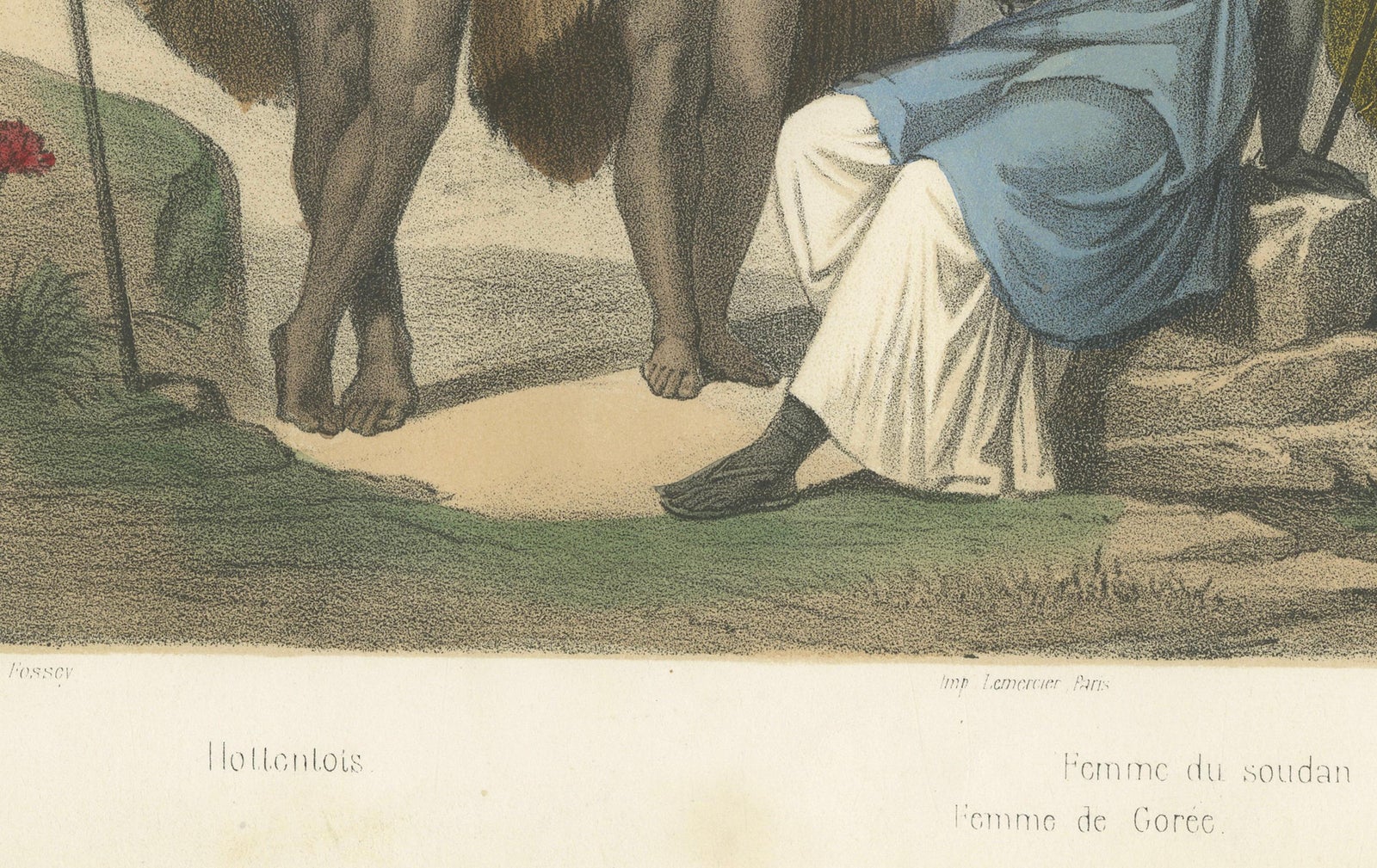
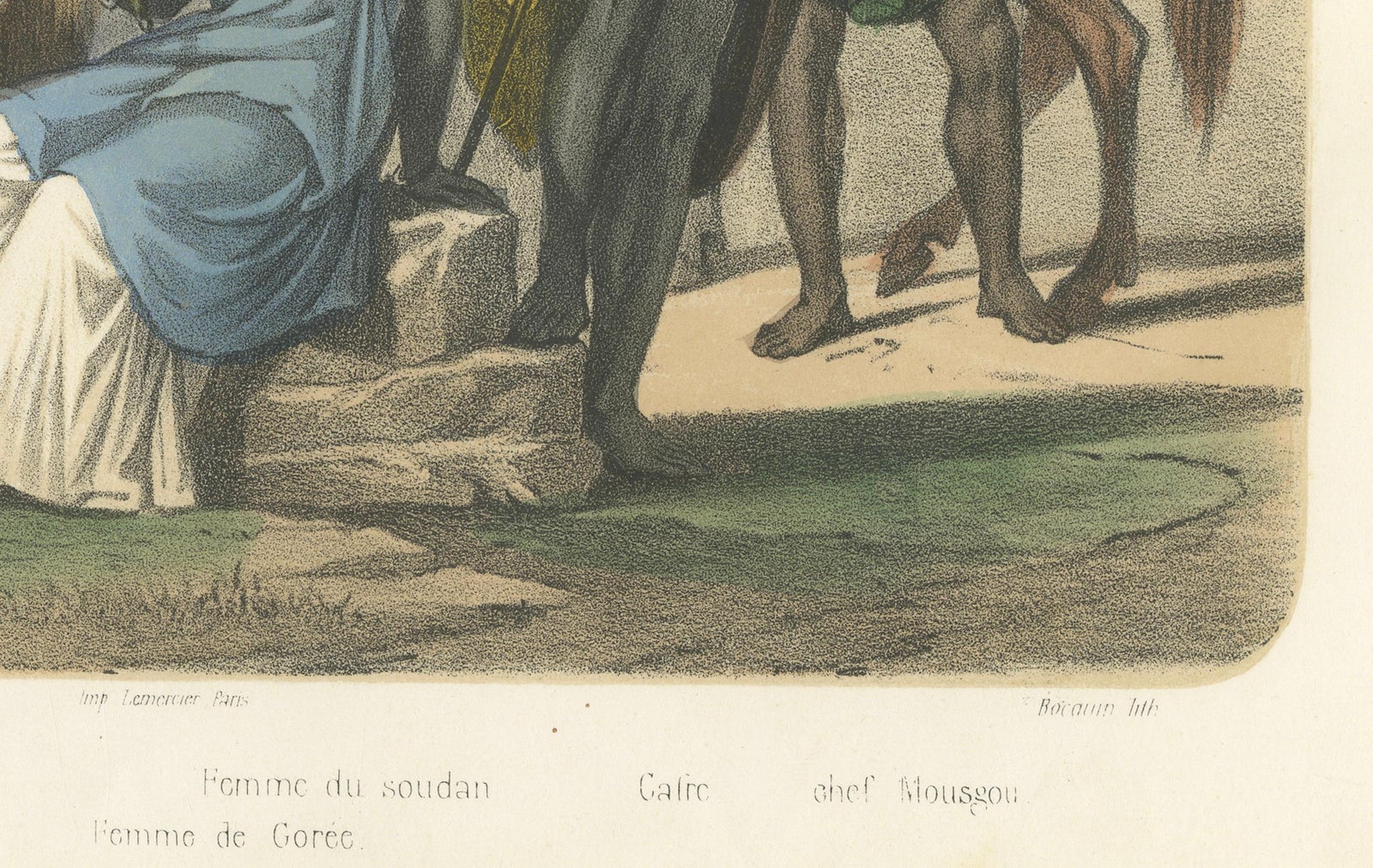
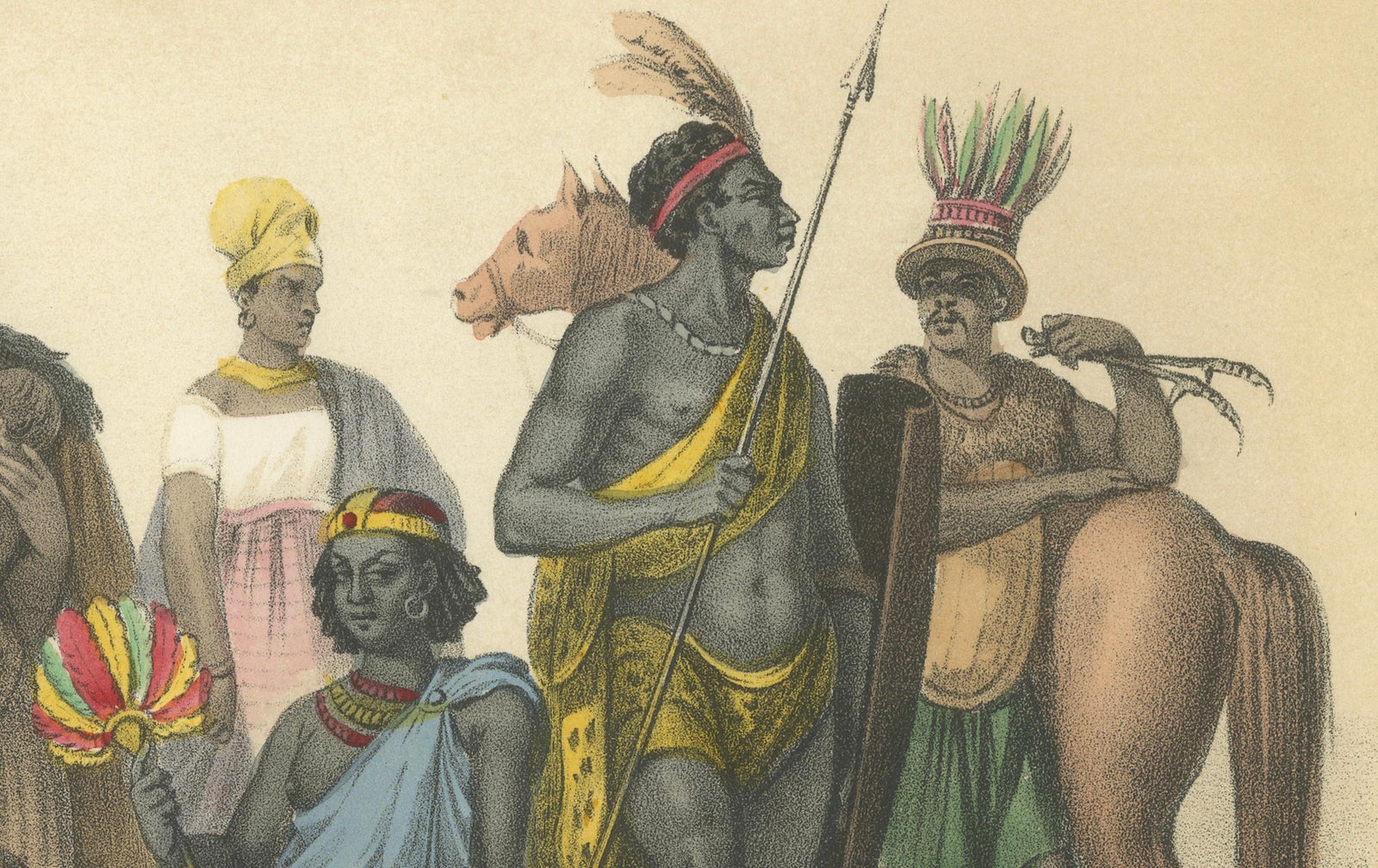
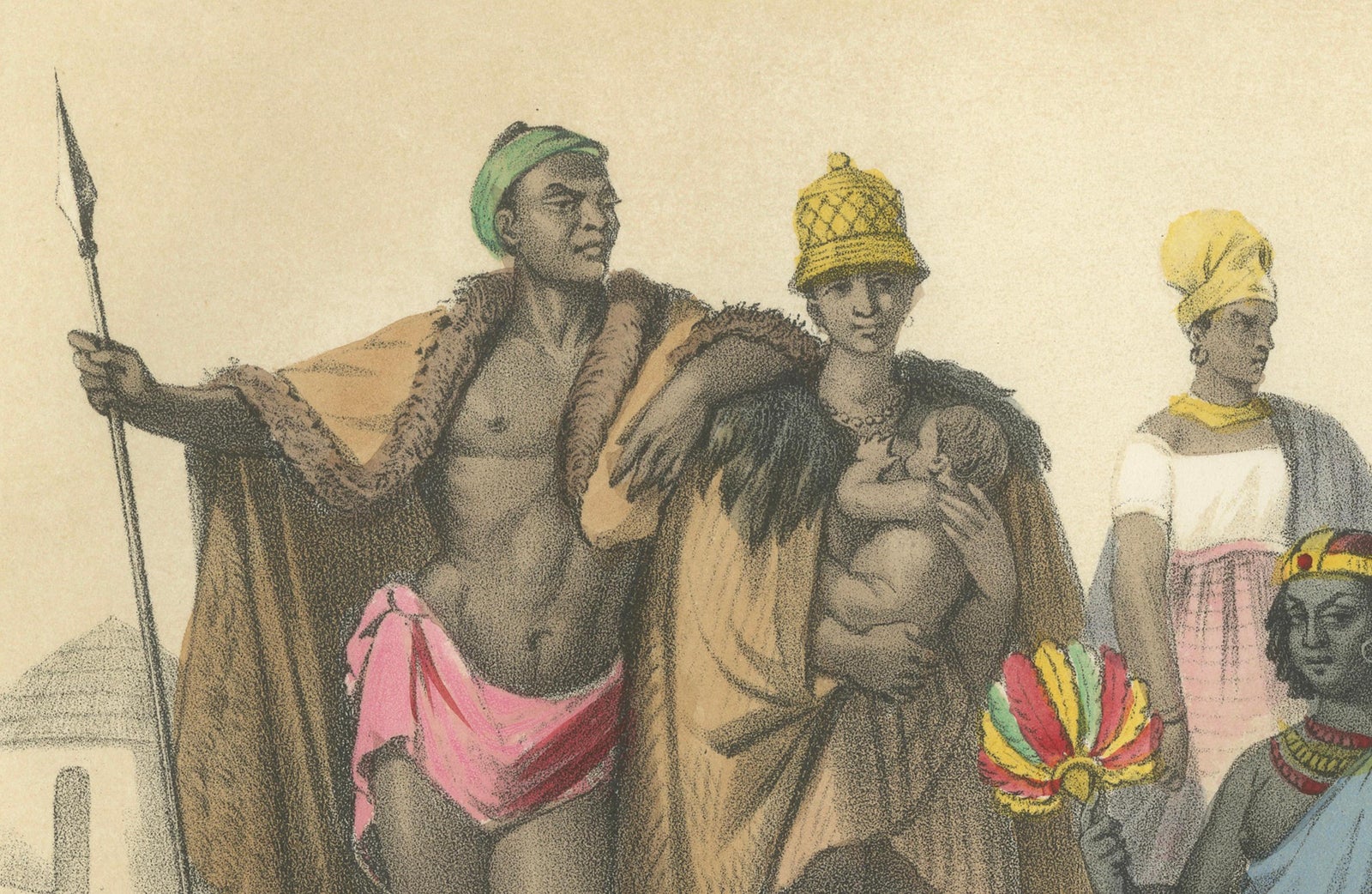
Framed and on the wall

Frame and rooms are illustrations of how the print could look; the description says what is included.
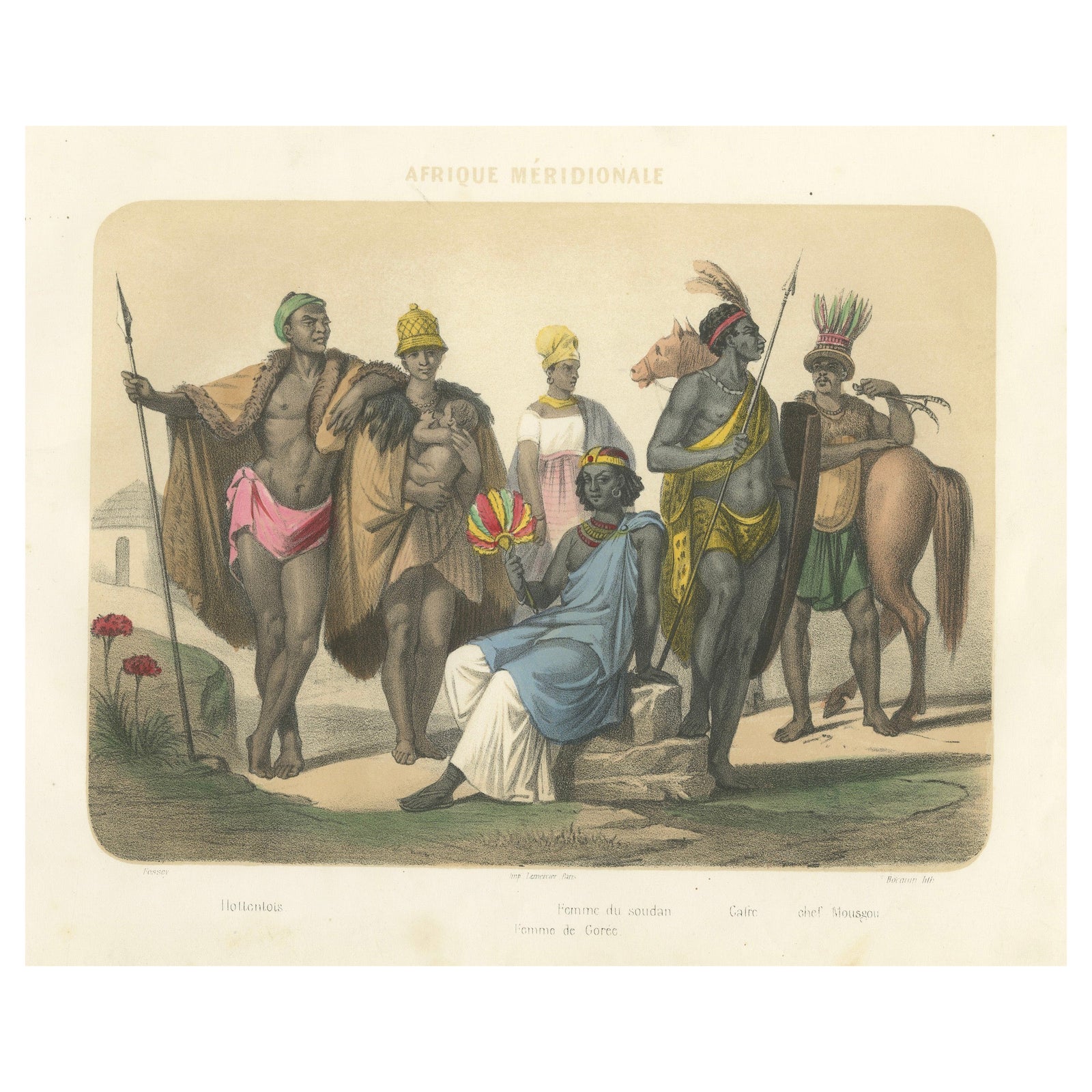
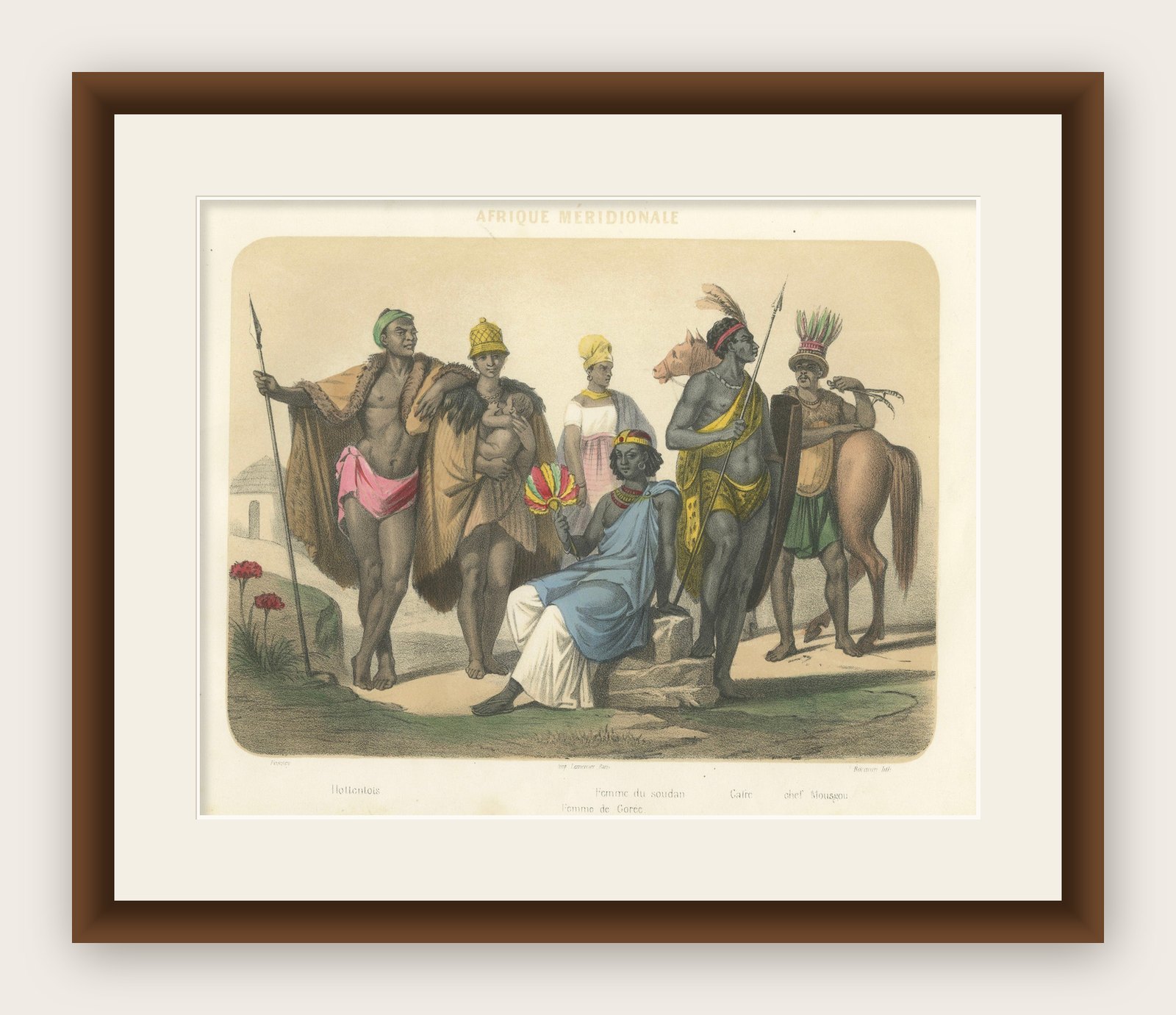
South African Costumes, Hottentots, Sudanese Women, and Chief Moussaou, c.1845
$270
€240 · £205
Original print, not a reproduction.
Ships worldwide from the Netherlands, flat, insured and tracked. 14-day returns. To buy, use Ask a question and we will reserve the print for you.
- Date
- 1845
- Sheet size
- 9.1 × 11.8 in (23 × 30 cm)
- Condition
- Good. Condition report: Good impression with fresh, well-preserved hand-coloring. Light foxing and age toning confined to the margins. Image area clean and bright with wide borders.
- Wardrobe
- Far & away
- Era
- 1840 to 1870, Crinoline
- Stock no.
- f_47441232
South African Costumes, Hottentots, Sudanese Women, and Chief Moussaou, c.1845
Description:
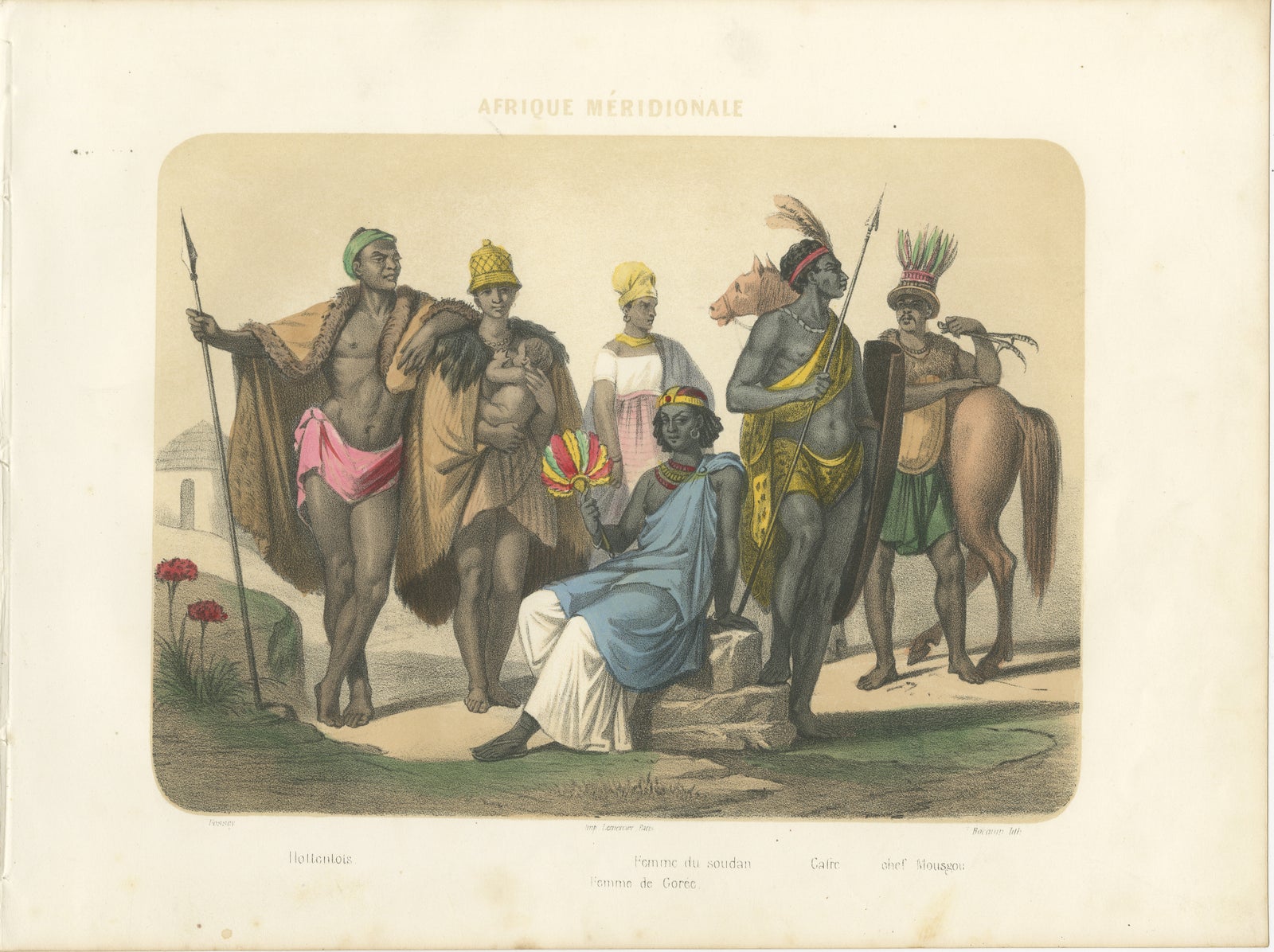
This striking hand-colored lithograph, titled “Afrique Méridionale,” originates from Le Monde en Estampes: Types et Costumes des Principaux Peuples de l’Univers, published in Paris circa 1845–1850 by Amédée Bedelet. Drawn by Fossey, lithographed by J. Bocquin, and printed by Lemercier, this series represents one of the most sophisticated mid-19th-century visual studies of world costumes, produced at the height of Romantic ethnographic art in France.
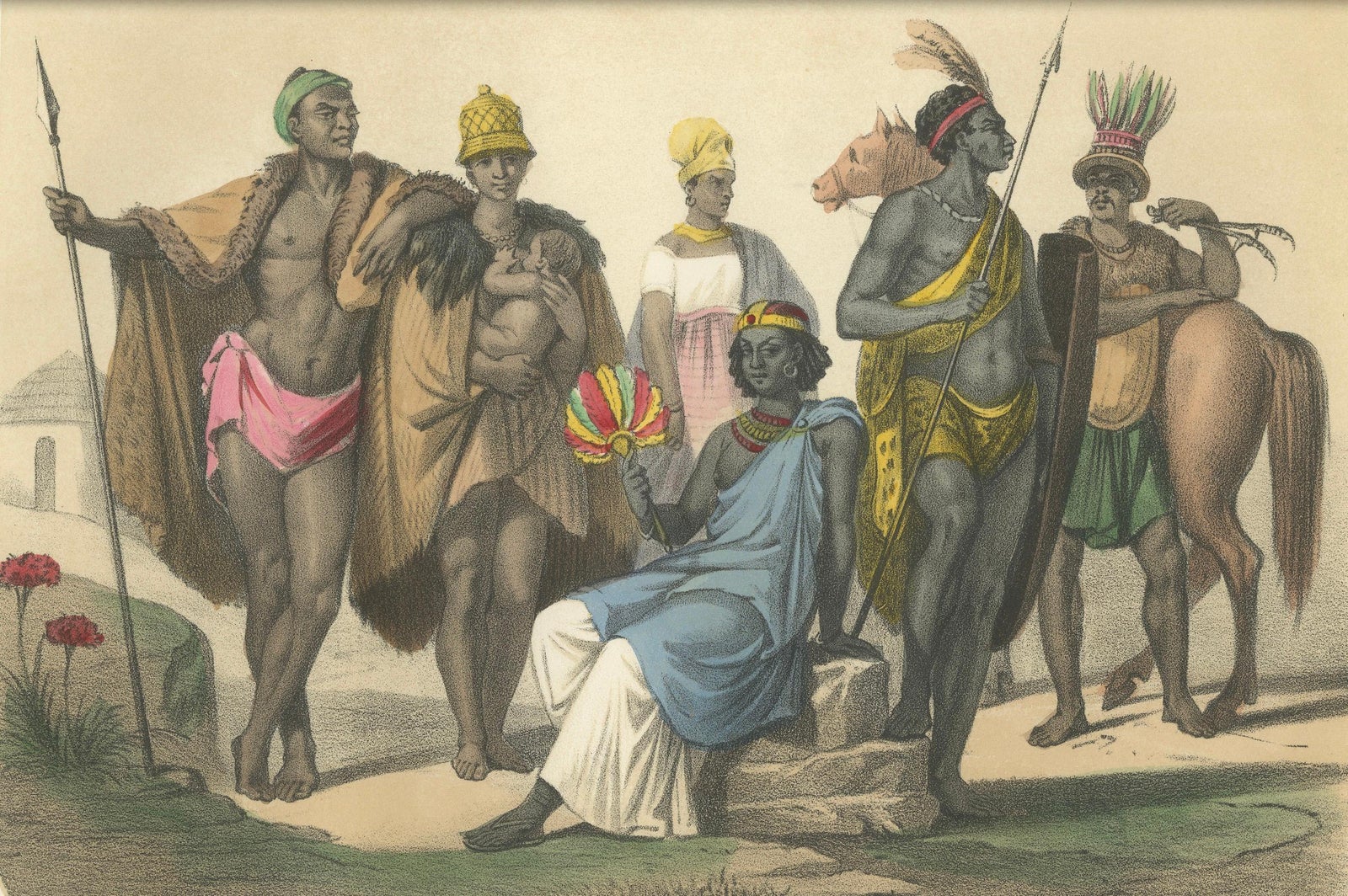
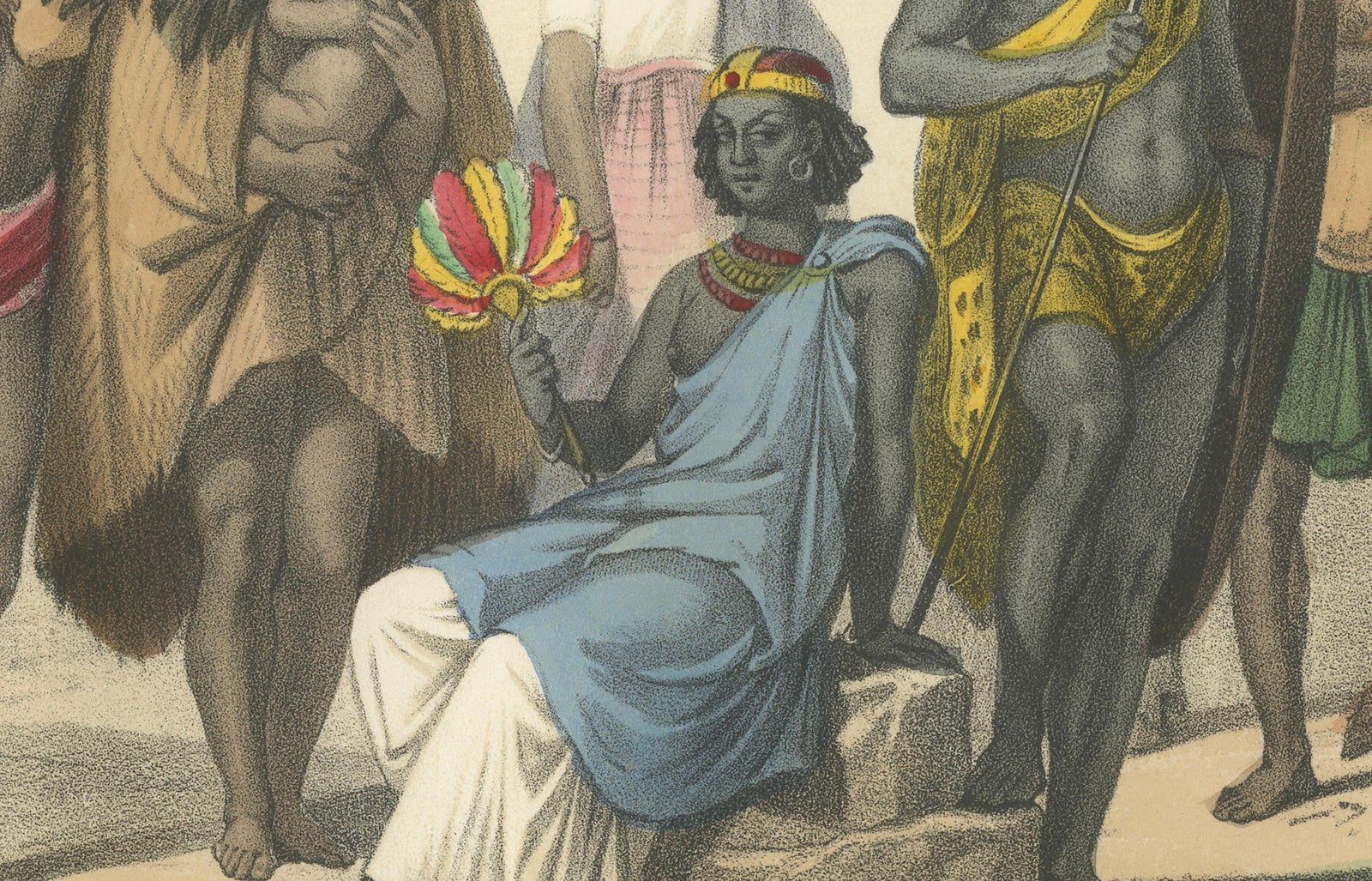
The composition portrays a vivid and idealized view of African peoples from the southern regions of the continent. At the left stands a Hottentot (Khoikhoi man), wrapped in an animal-skin cloak and carrying a long spear. Next to him, a mother cradles her child beneath a similar cloak, symbolizing familial life and the endurance of traditional customs. At the center, a seated Femme du Soudan or femme de Gorée (Sudanese or Senegalese woman) appears in a blue robe, holding a colorful fan, her elegant posture and calm expression suggesting dignity and nobility. Behind her stands another woman, dressed in a bright yellow skirt and headscarf, representing the diverse cultures of sub-Saharan Africa.
To the right, a tall warrior labeled Cafre (a now obsolete 19th-century French term for southern African peoples) stands proudly with shield and spear, his yellow sash and upright stance evoking strength and leadership. Beside him, a chef Moussaou (chief) wears a feathered headdress and carries a bow, his figure accompanied by a horse and young attendant, elements conveying status and mobility.
This composition combines ethnographic observation with the aesthetic conventions of French Romanticism. It reflects how 19th-century European artists viewed Africa as both exotic and noble, often blending real cultural references with artistic imagination. The detailed hand-coloring, contrasting earth tones with vivid reds, pinks, and blues, enhances the print’s visual dynamism and elegance. Lemercier’s refined lithographic technique lends soft shading and precision to the figures, giving the scene a sense of harmony and vitality.
As part of Le Monde en Estampes, this plate stands as both a historical artifact and a work of art, illustrating European interest in the cultural diversity of Africa during an era of exploration and colonial expansion.
Condition report: Good impression with fresh, well-preserved hand-coloring. Light foxing and age toning confined to the margins. Image area clean and bright with wide borders.
Framing tips: This plate presents beautifully with a warm ivory or pale ochre mat and a dark mahogany or giltwood frame. A subtle red or green inner mat can bring out the rich tones of the fabrics and feathers.
Technique: Hand-colored lithograph
Maker: J. Bocquin after Fossey, printed by Lemercier, Paris, circa 1845