Close-ups
Framed and on the wall

Frame and rooms are illustrations of how the print could look; the description says what is included.
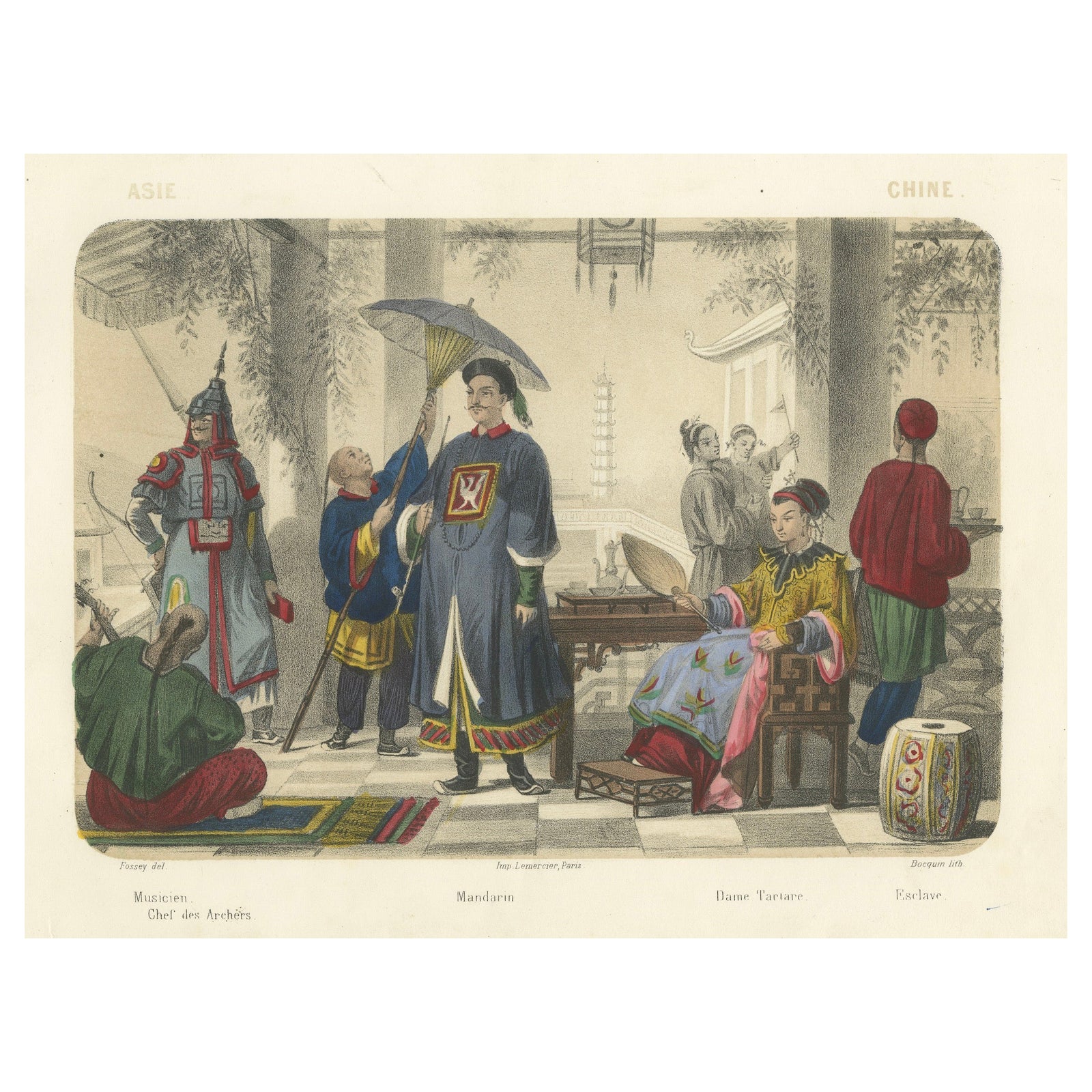
Chinese Costumes, Mandarin, Tartar Lady and Musicians, c.1845
£205
$270 · €240
Original print, not a reproduction.
Ships worldwide from the Netherlands, flat, insured and tracked. 14-day returns. To buy, use Ask a question and we will reserve the print for you.
- Date
- 1845
- Sheet size
- 9.1 × 11.8 in (23 × 30 cm)
- Condition
- Good. Condition report: Very good condition with mild foxing and light toning, primarily in the margins. The image itself remains bright and clean with vivid hand-coloring and full borders preserved.
- Wardrobe
- Far & away
- Era
- 1840 to 1870, Crinoline
- Stock no.
- f_47441122
Title: Chinese Costumes, Mandarin, Tartar Lady and Musicians, c.1845
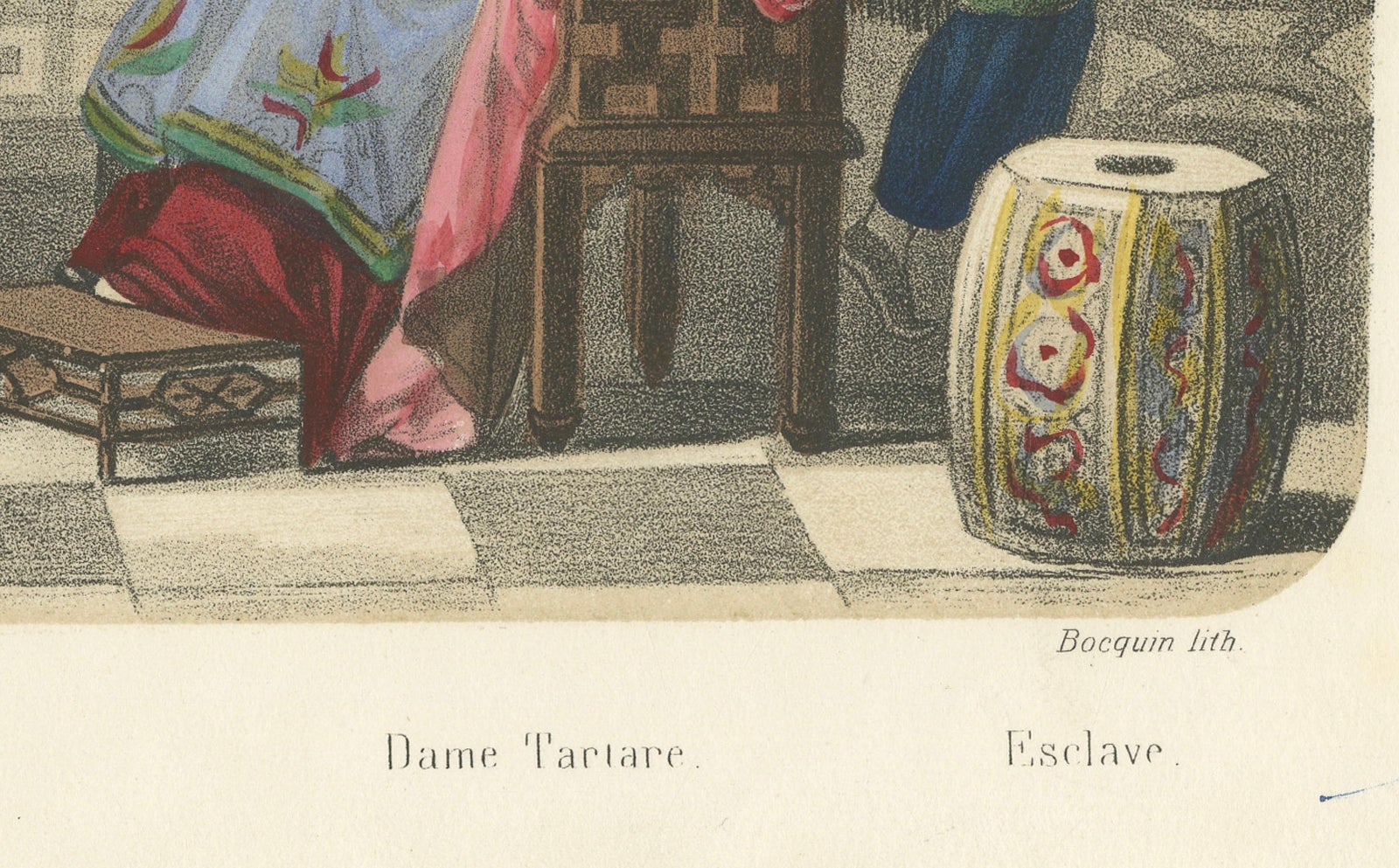
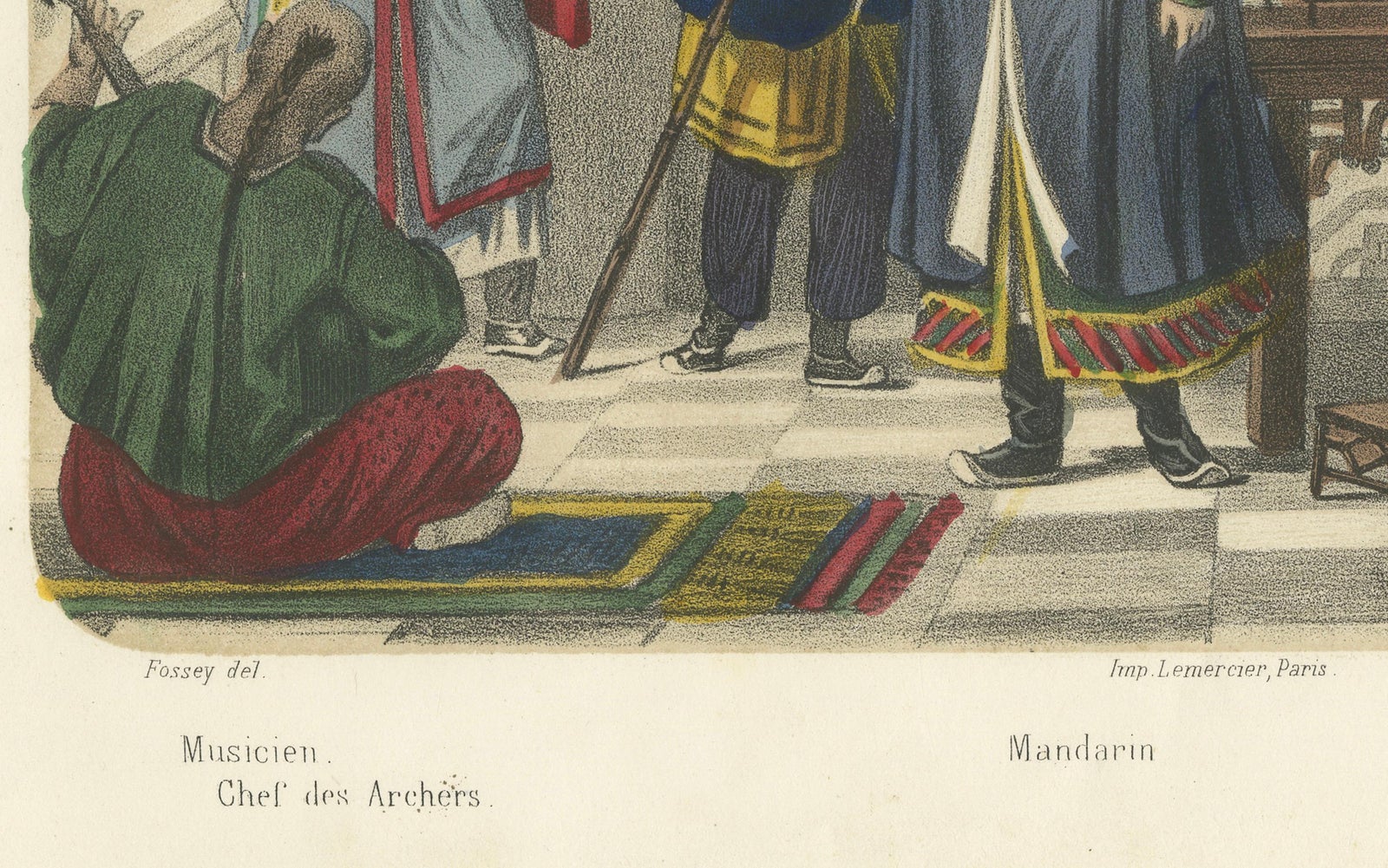
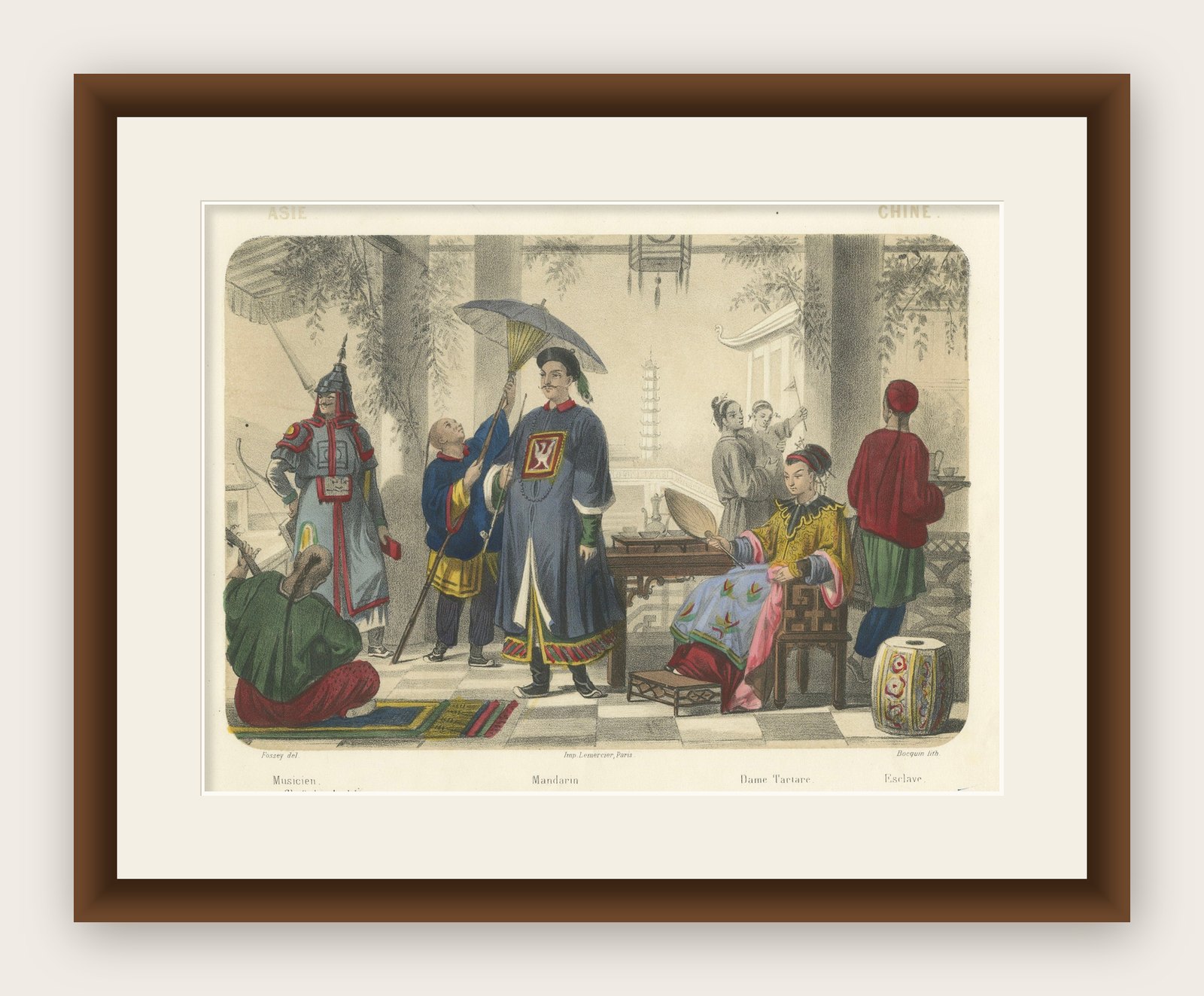
This vibrant hand-colored lithograph, titled “Asie, Chine,” comes from *Le Monde en Estampes: Types et Costumes des Principaux Peuples de l’Univers*, a beautifully illustrated French work published in Paris circa 1845–1850 by Amédée Bedelet. The plate was drawn by Fossey, lithographed by J. Bocquin, and printed by Lemercier, whose workshop was the finest in Paris for color lithography during the mid-19th century.
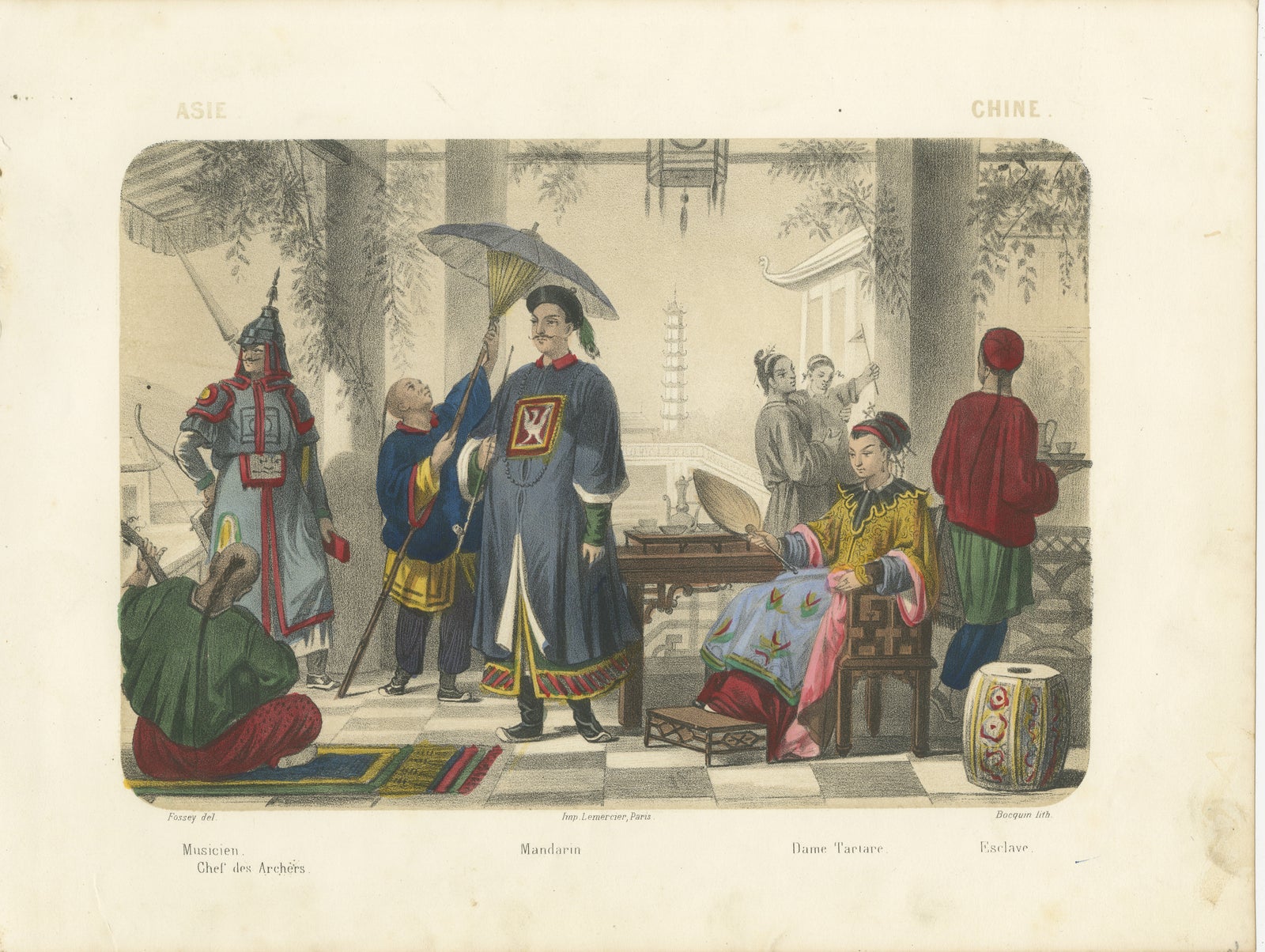
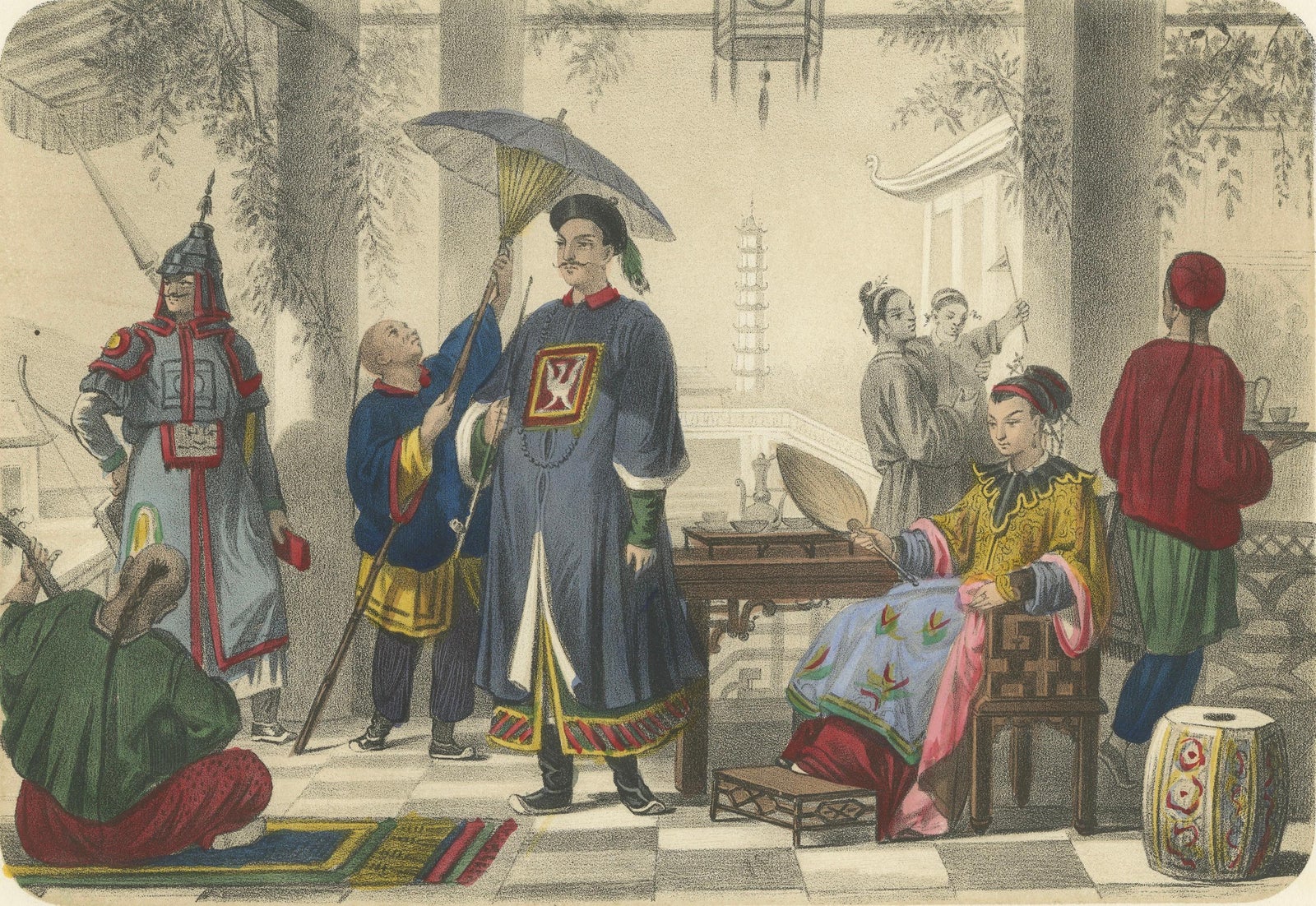
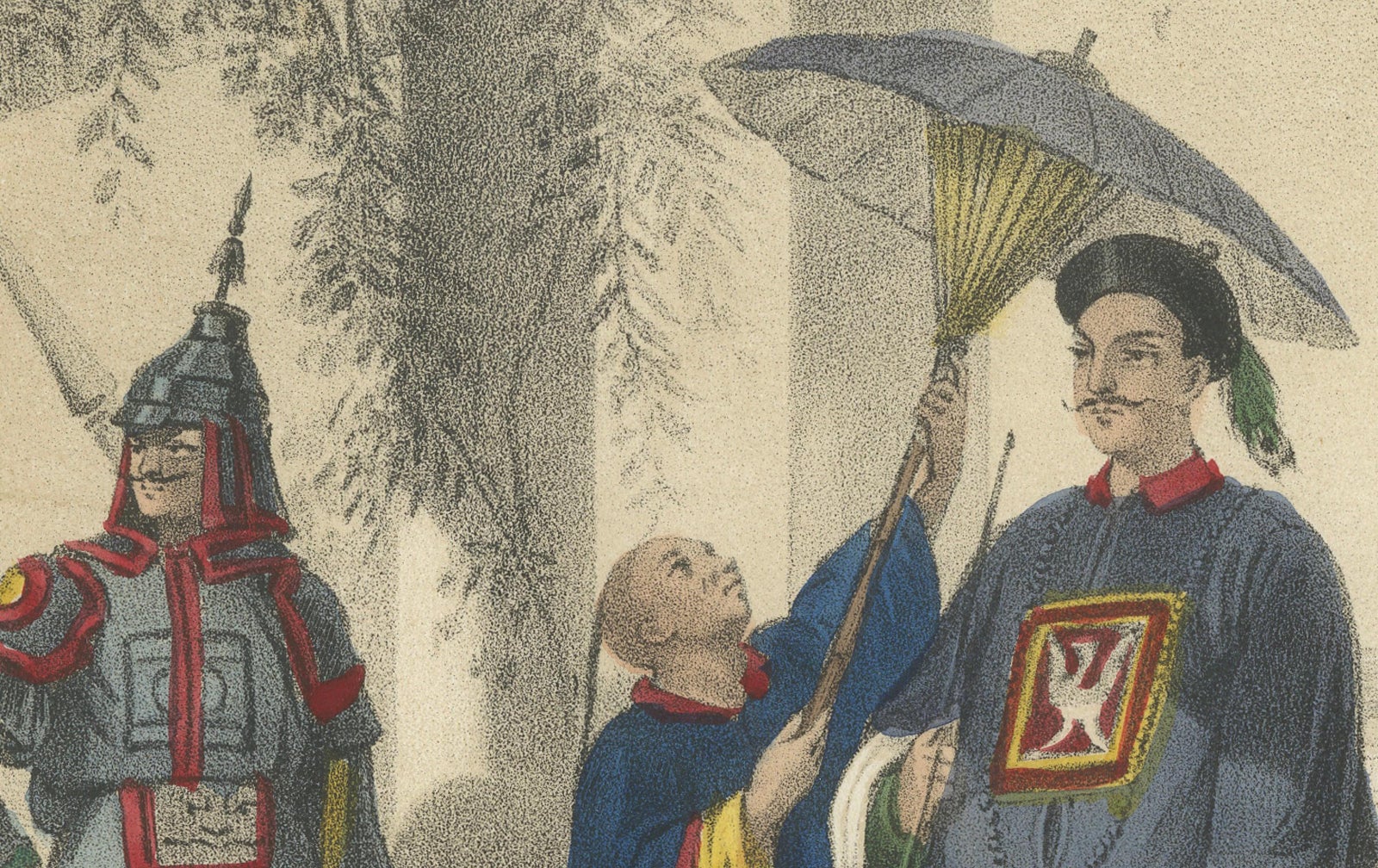
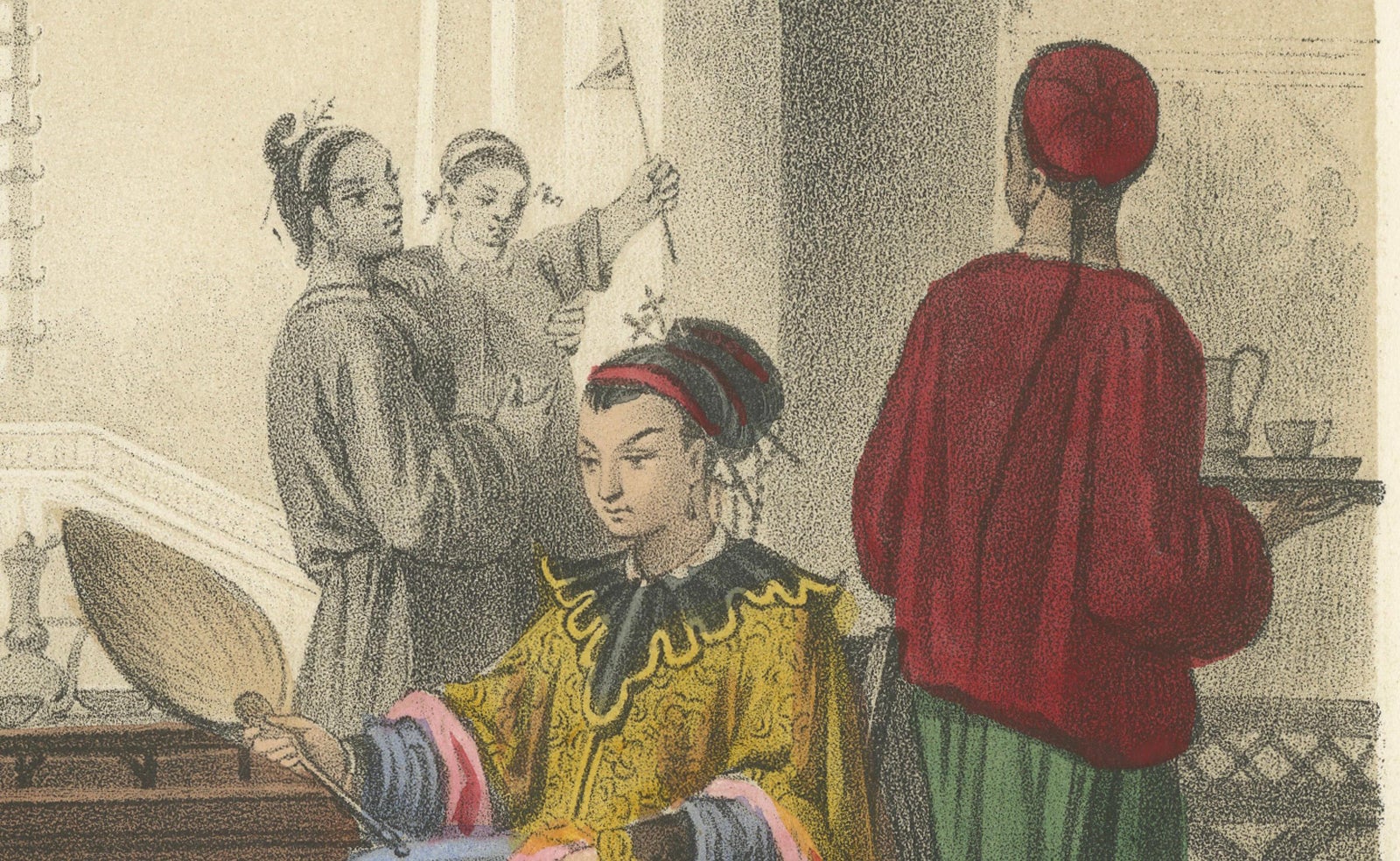
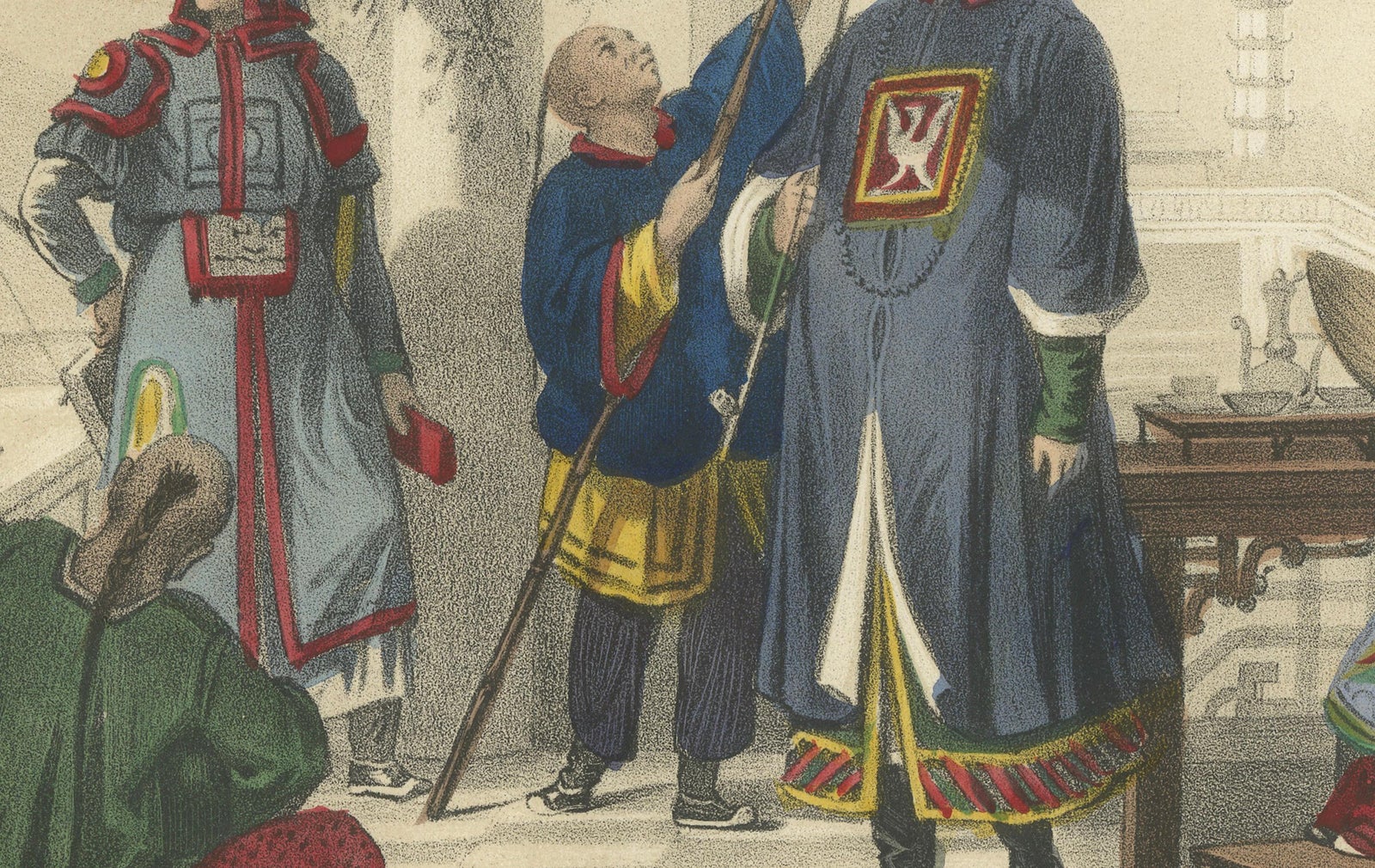
The composition depicts an elegant domestic scene illustrating the refinement and hierarchy of Chinese society as imagined through a Romantic European lens. At the center stands a *Mandarin* in his ceremonial robe of deep blue silk, his chest emblazoned with an embroidered insignia of rank. A servant holds a parasol above his head, symbolizing authority and status. To his left stands the *Chef des Archers*, resplendent in armor and helmet, while a *Musicien* kneels in the foreground playing a stringed instrument, perhaps an erhu or pipa, adding an air of calm and grace to the scene.
To the right, a *Dame Tartare* (Tartar lady) is seated elegantly, dressed in a richly embroidered yellow and pink robe decorated with floral motifs, holding a delicate fan. Her poised demeanor and fine surroundings reflect the opulence of Qing courtly life. An *Esclave* (servant), dressed in red and green, stands nearby holding a tray. Behind them, the tranquil setting of a Chinese garden unfolds, complete with a pagoda, stone balustrade, and ornamental trees, framing the group in an atmosphere of serenity and sophistication.
The plate captures both ethnographic curiosity and the European fascination with the East that characterized mid-19th-century Orientalism. Each figure is rendered with precision, the fabrics and colors vividly hand-tinted in blues, reds, and golds, giving texture and richness to the composition. The lithograph not only documents attire but also serves as a visual meditation on order, culture, and refinement within Chinese society as perceived in the Romantic period.
Condition report: Very good condition with mild foxing and light toning, primarily in the margins. The image itself remains bright and clean with vivid hand-coloring and full borders preserved.
Framing tips: Ideally presented with a light cream or pale gray mat in a gilt or rosewood frame. The print’s rich palette also pairs beautifully with a deep red or ebony inner mat to emphasize the luxurious robes of the Mandarin and Tartar lady.
Technique: Hand-colored lithograph
Maker: J. Bocquin after Fossey, printed by Lemercier, Paris, circa 1845