Close-ups
Framed and on the wall
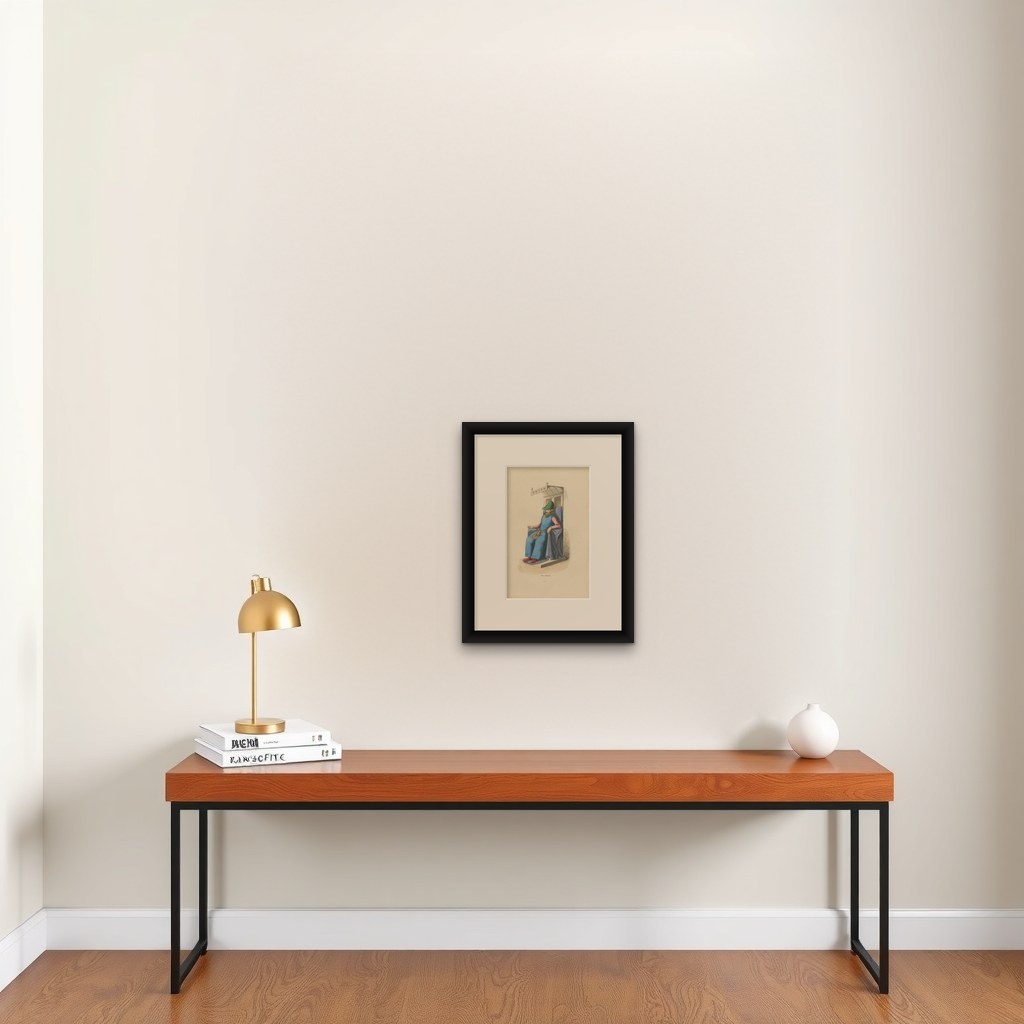

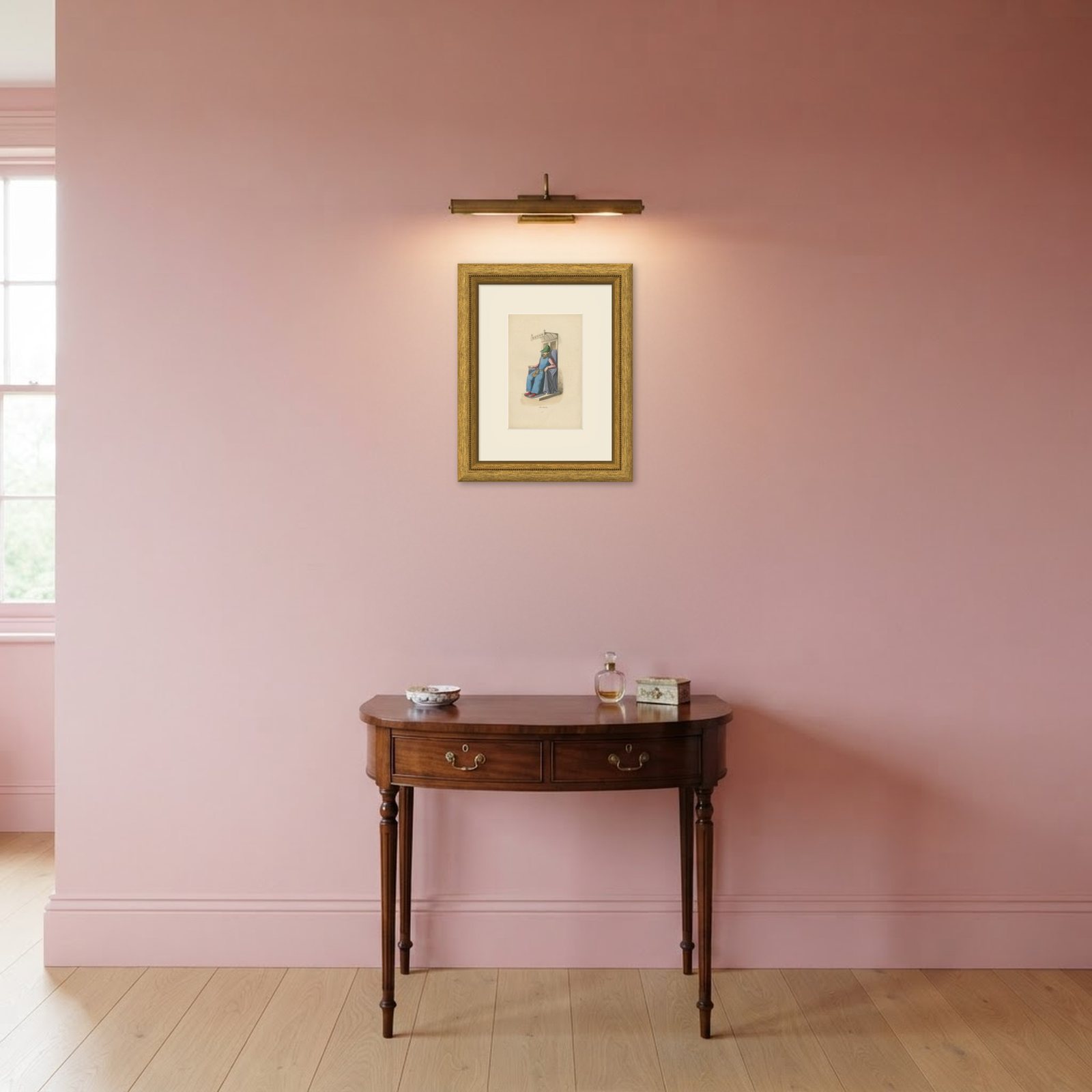
Frame and rooms are illustrations of how the print could look; the description says what is included.
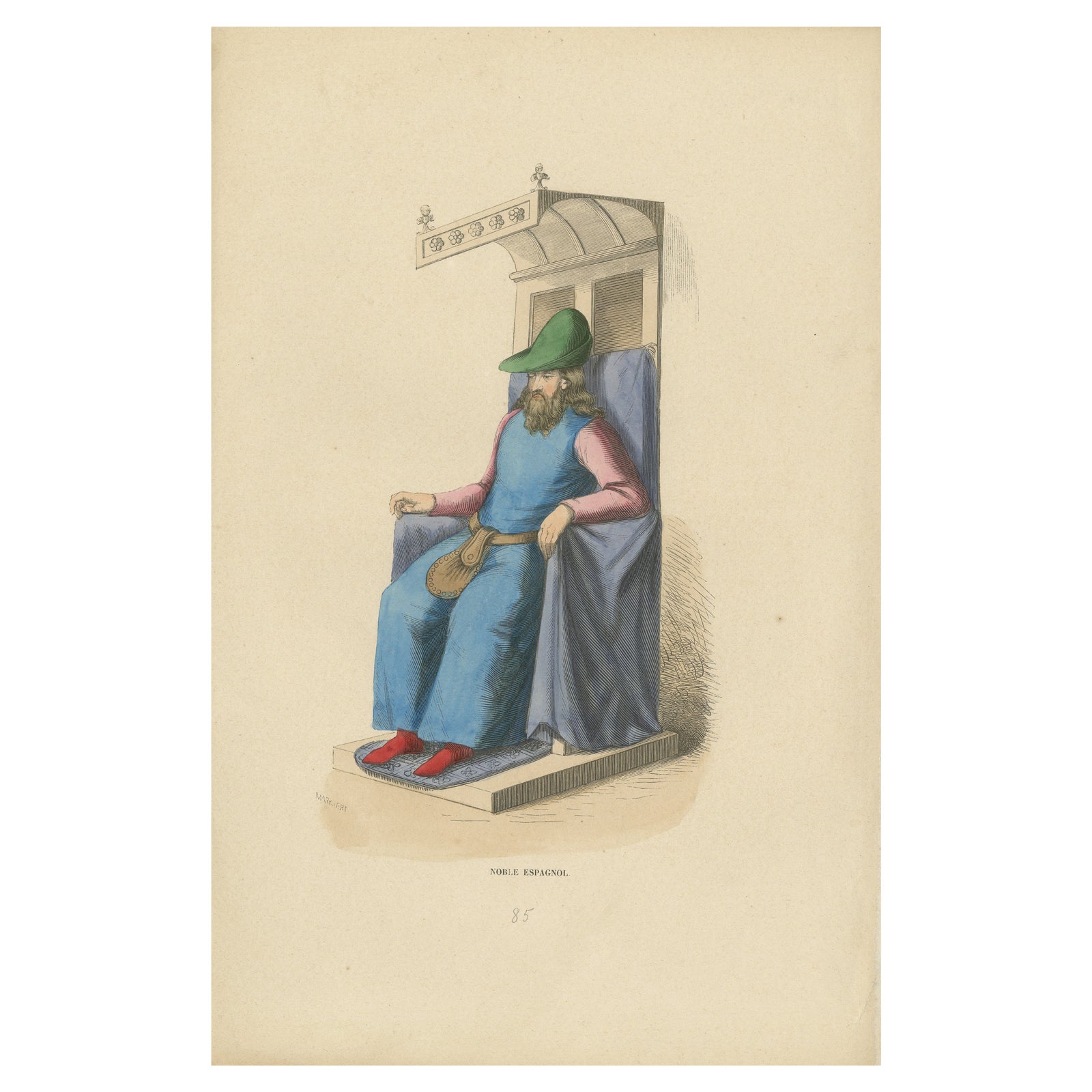
Seated Spanish Nobleman: The Visage of Authority, 1847
$175$12530% off
€112 · £95
Original print, not a reproduction.
Ships worldwide from the Netherlands, flat or rolled, insured and tracked. 14-day returns.
- Date
- 1847
- Sheet size
- 10.6 × 7.1 in (27 × 18 cm)
- Condition
- Good. Good. Overal light toning and light soiling but the image itself clean and hand-colored almost 200 years ago and still in expliciet colors. Aged paper with typically warm, yellowish-brown hue, mostly around the edges. Study the images carefully.
- Wardrobe
- Court & couture
- Era
- 1840 to 1870, Crinoline
- Stock no.
- BG-13635-67
What the condition grades mean
- Excellent
- Bright and clean, with no faults worth mentioning.
- Very good
- Only light signs of age, such as faint toning.
- Good
- Normal signs of age for a sheet of this period: toning, some foxing, small marks or neat old repairs.
- Fair
- Clear faults such as staining, tears or repairs, priced to match.
Every fault we see is written in the condition note, and the whole sheet is shown uncropped in the photos.
Title: "Seated Spanish Nobleman: The Visage of Authority"
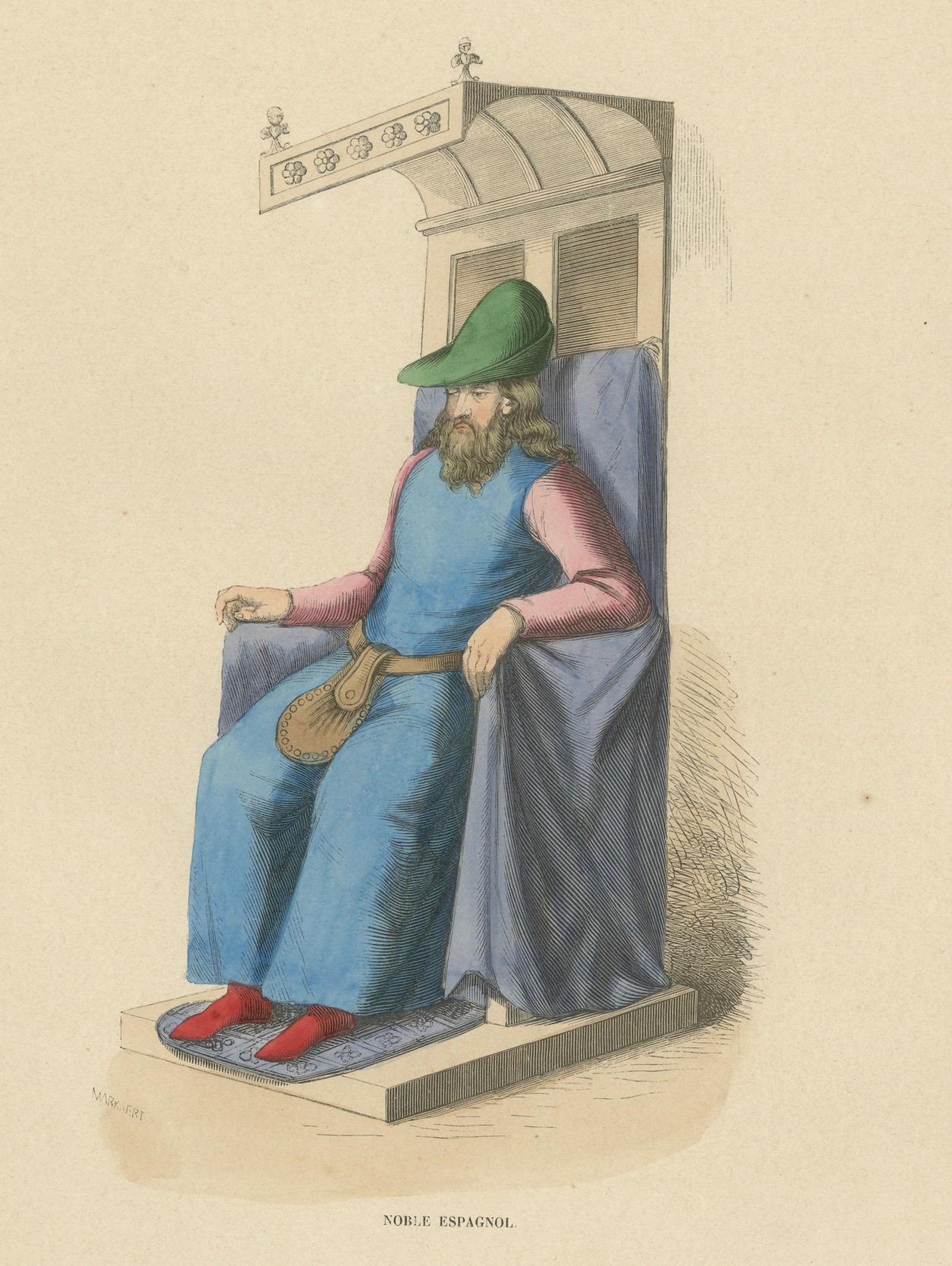
Description: This original antique detailed print portrays a Spanish nobleman from the Middle Ages, seated in a commanding position that denotes his high social status and authority. He is depicted in a stately pose, exuding an air of confident repose that reflects his powerful position within the societal hierarchy.
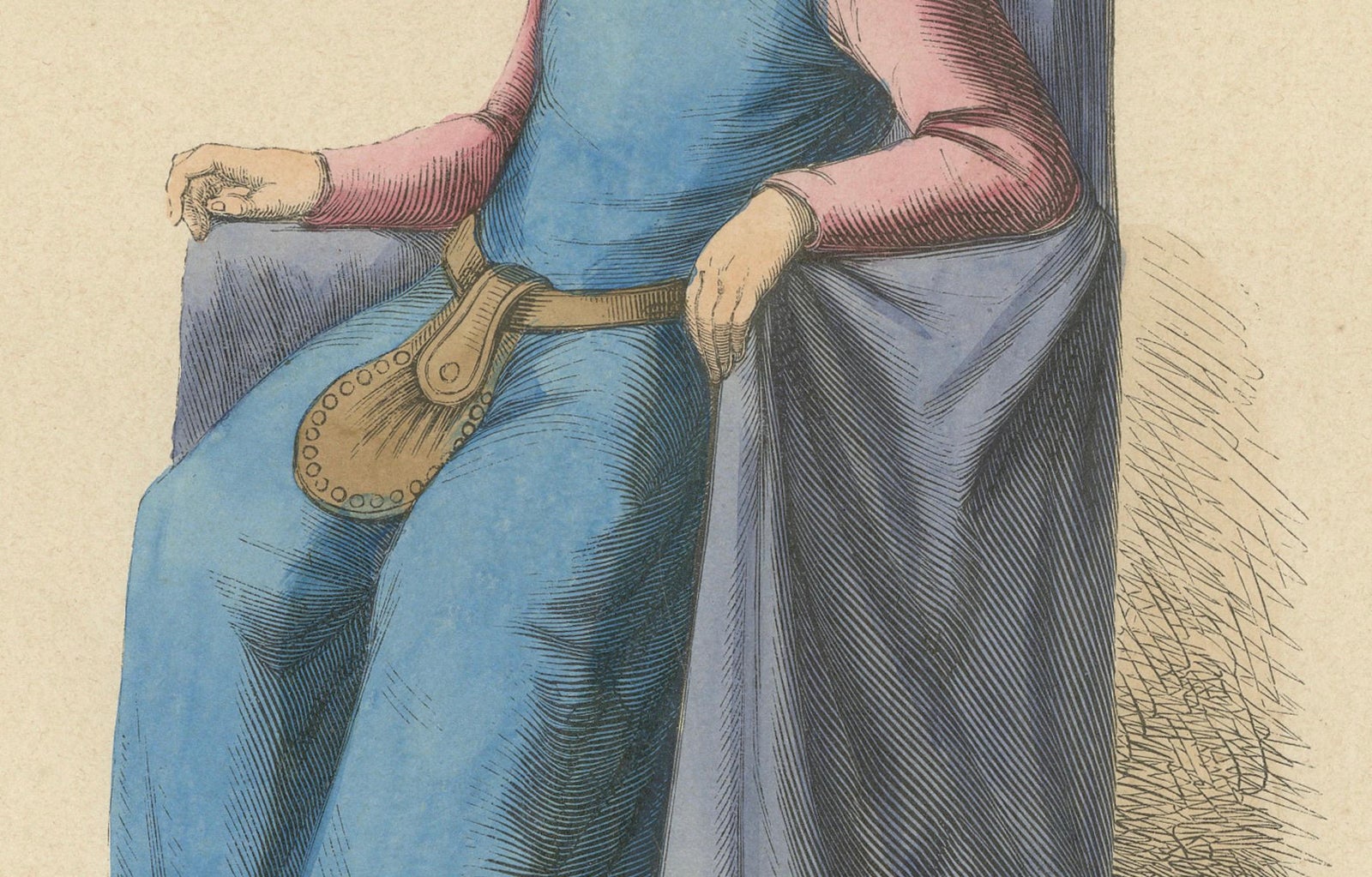
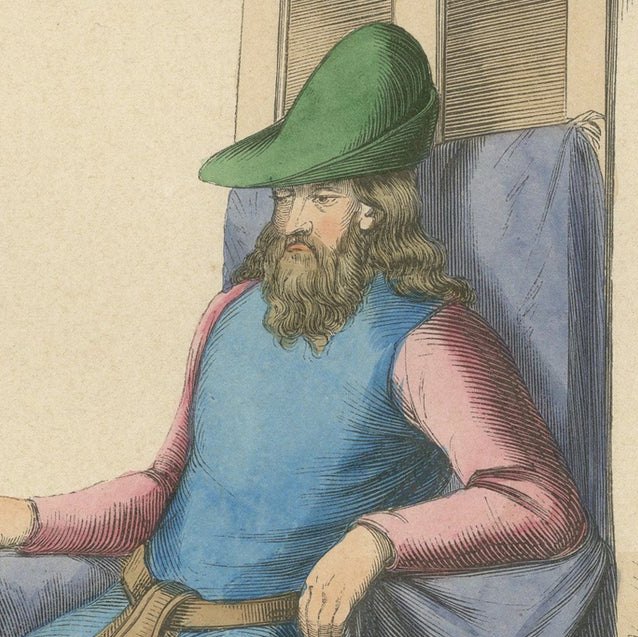
The nobleman is dressed in a long blue tunic, a color often associated with nobility and depth of character. His tunic is complemented by a rose-colored undershirt, a combination that suggests both wealth and taste. Over his attire drapes a heavy, deep blue cloak, a mark of his status, which provides both warmth and an impression of gravitas.
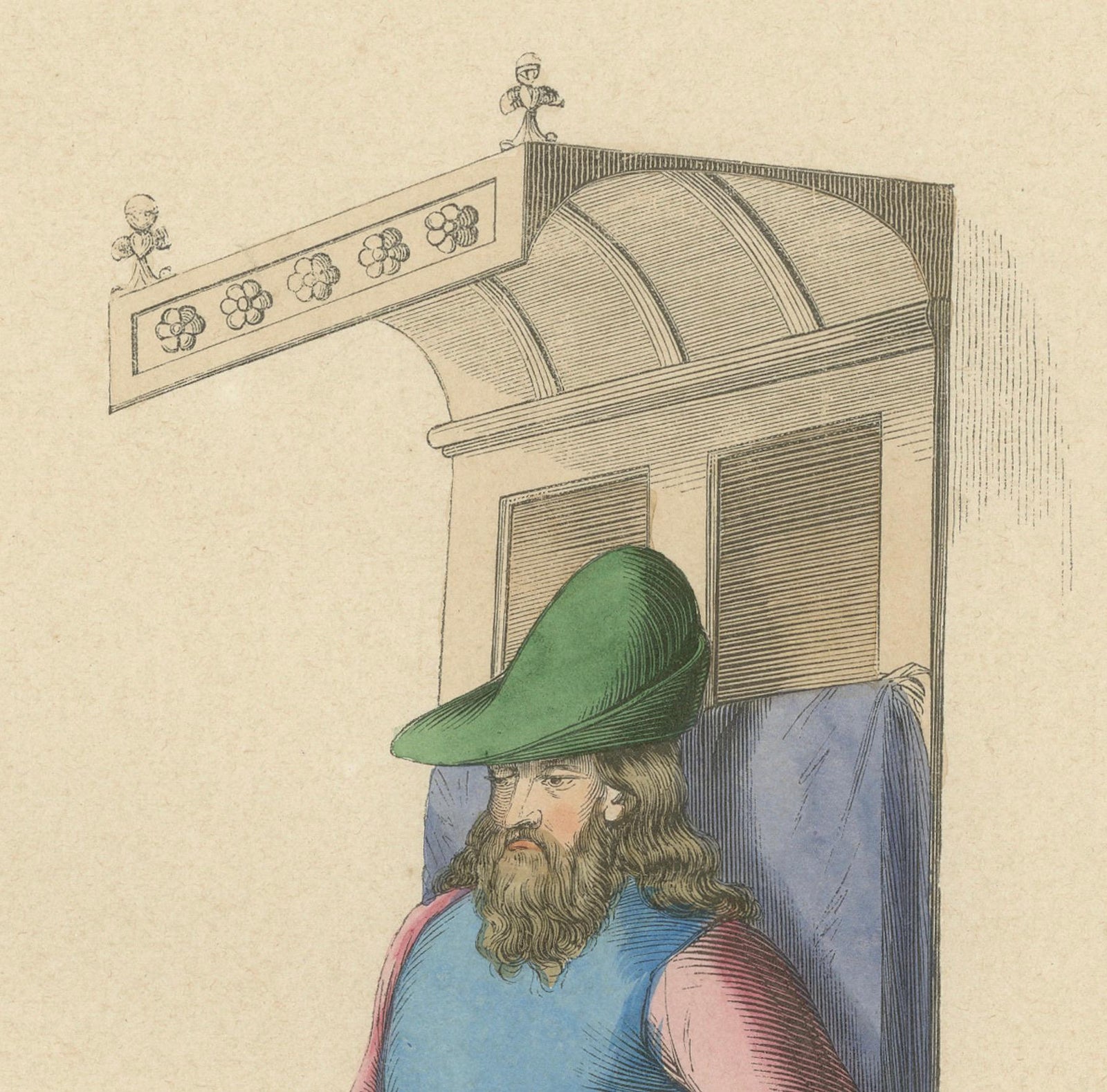
On his head, he wears a broad-brimmed green hat, which is both a stylish and practical accessory, shading his eyes and symbolizing his affinity with the outdoors and perhaps his participation in hunting, a favorite pastime of the nobility.
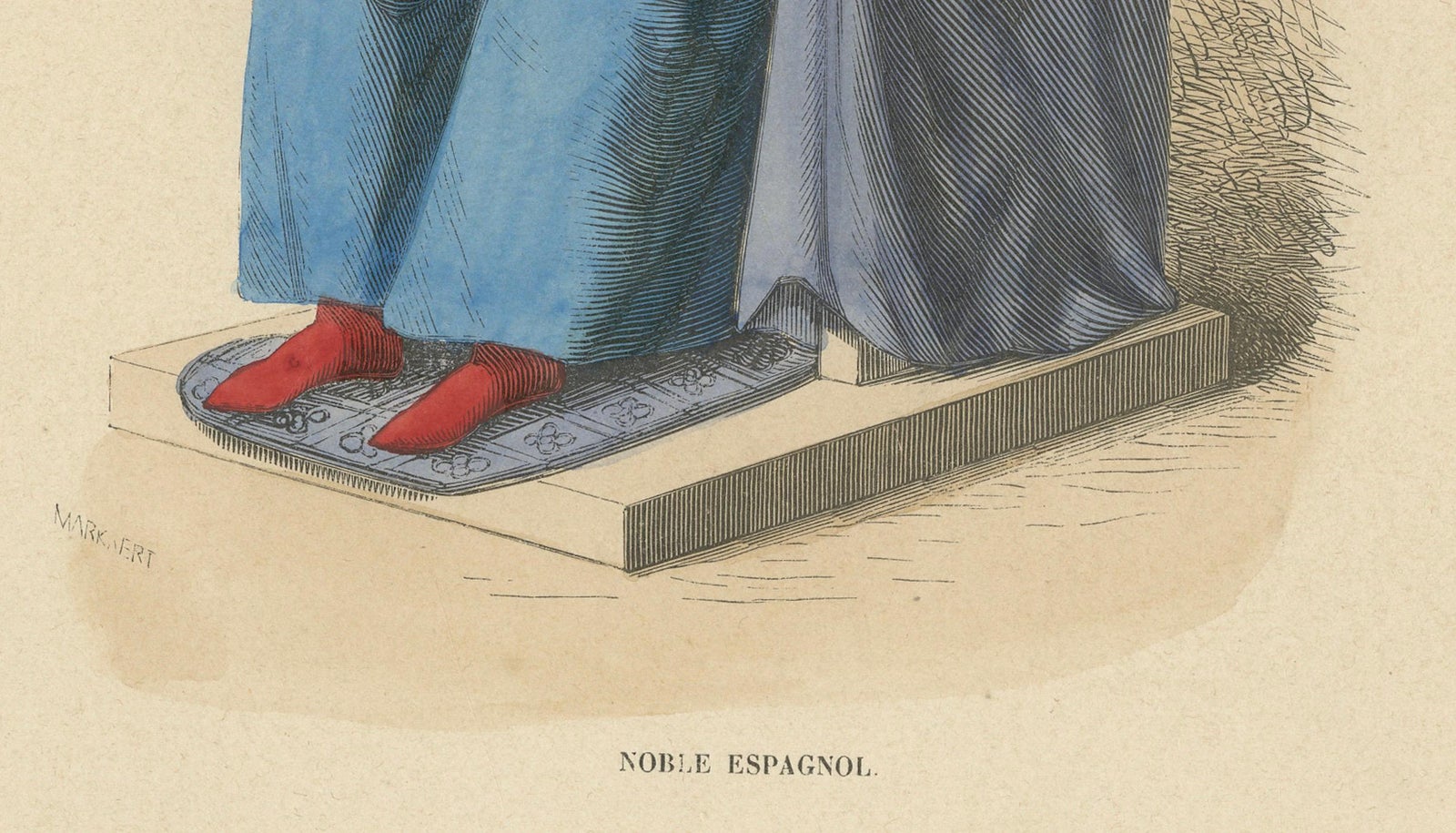
His footwear consists of red shoes, possibly made of fine leather or velvet, adding a striking contrast to his ensemble. The nobleman's demeanor is one of contemplation, with a hand resting on a money pouch at his belt, indicating his control over wealth and economic affairs.
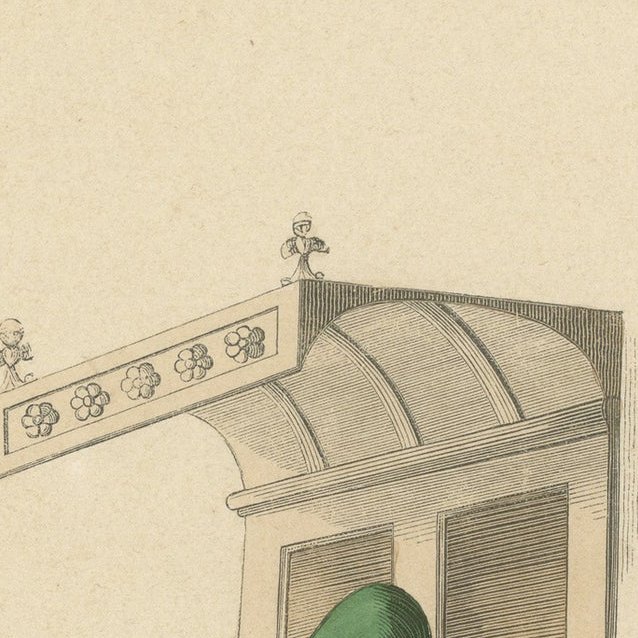
The chair in which he sits is adorned with simple yet elegant ornamentation, including a valance with floral motifs, signifying a connection to nature and his domain. The setting is minimalistic, focusing the viewer’s attention on the nobleman’s figure and attire.
Through this print, we gain insight into the fashion and symbols of status that were prevalent among the Spanish nobility during the Middle Ages. It is a snapshot of power, heritage, and the cultural significance of attire as a reflection of one's role in society.
The colors have a nice glow over them. Historically, egg whites, known as glair, and sometimes egg yolk were indeed used in illumination and painting, particularly in manuscripts, to give colors a brighter appearance and to add a sheen or gloss to the work. This technique was quite common during the Middle Ages and into the Renaissance.
Egg whites can be applied as a varnish over pigments to enhance their brightness and to protect the colors. This application could make the colors appear more vivid and also add a slight glossy sheen to the surface of the image.
Egg yolk, on the other hand, was commonly used as a binding agent in paint. It forms the basis of tempera paint, a medium that was widely used before the advent of oil painting. Egg yolk helps to create a durable and long-lasting color that adheres well to various surfaces.
In the context of the print from 1847, it's less likely that egg whites or yolks were used directly on the print, as by that time, commercial printing processes would have been more advanced and less reliant on such manual methods. However, if this print is a representation of an earlier style or is meant to mimic the appearance of hand-painted manuscripts, the original artists might have employed techniques or materials that gave a similar effect to those achieved with egg-based binders and varnishes.