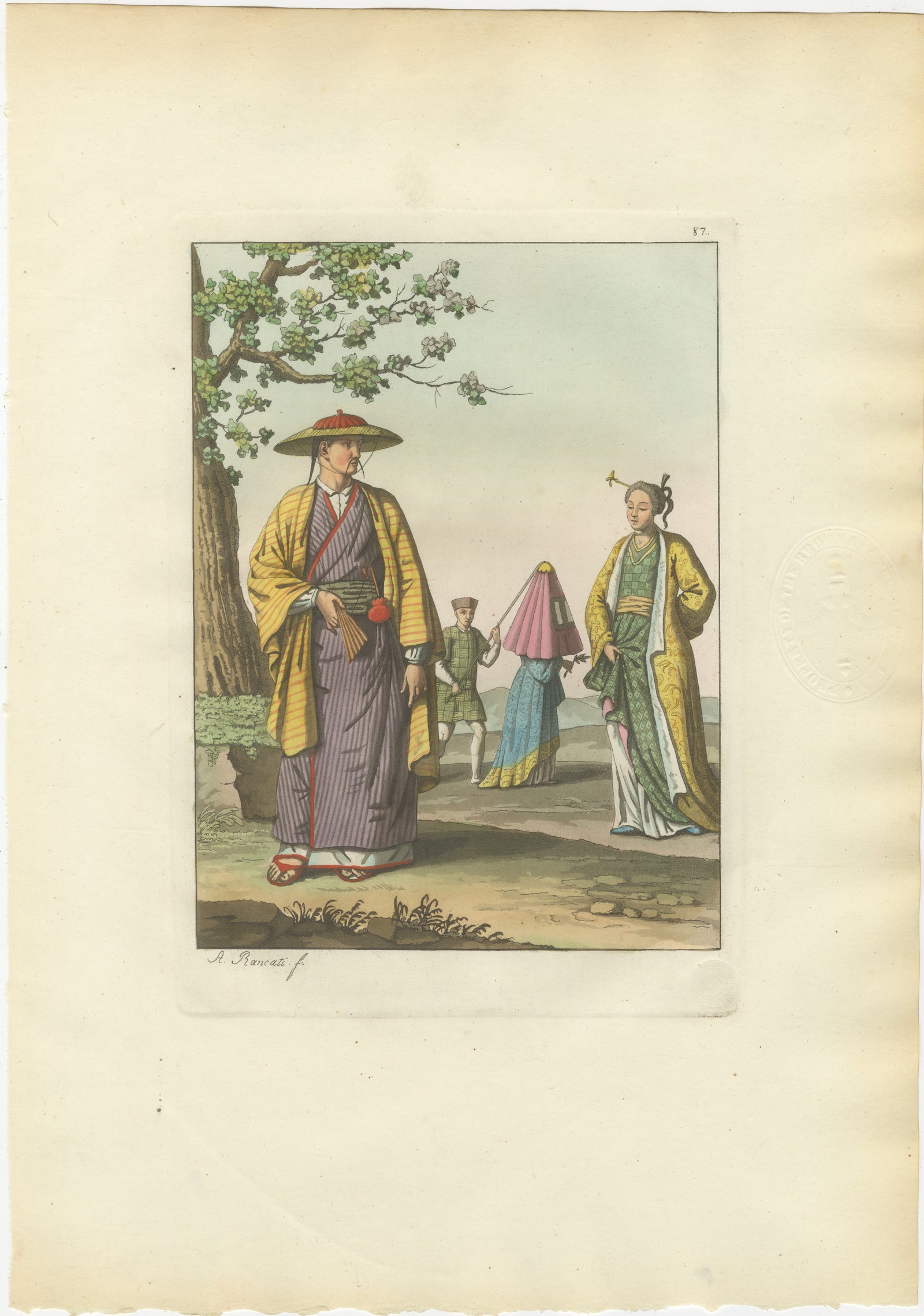
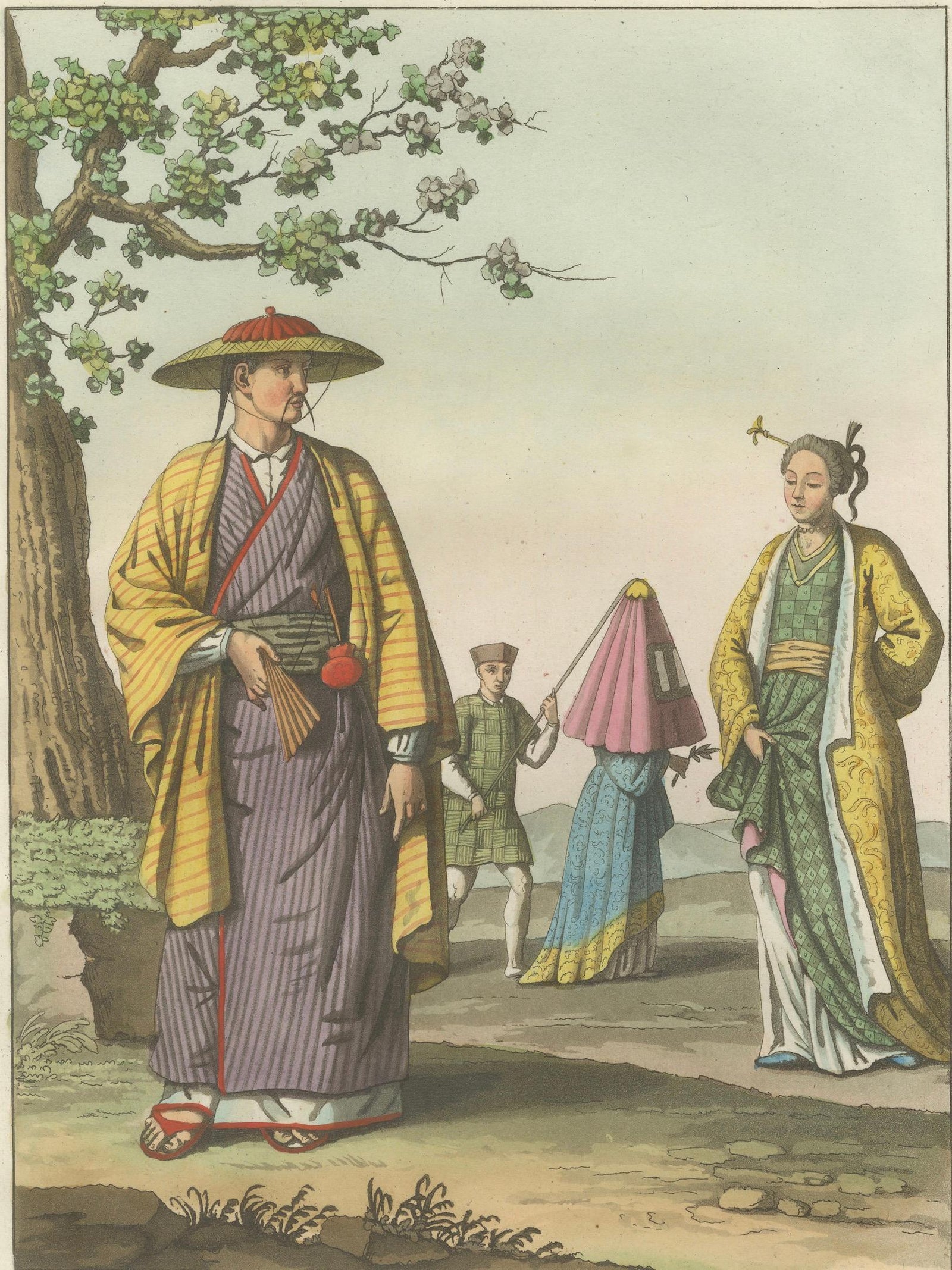
Close-ups
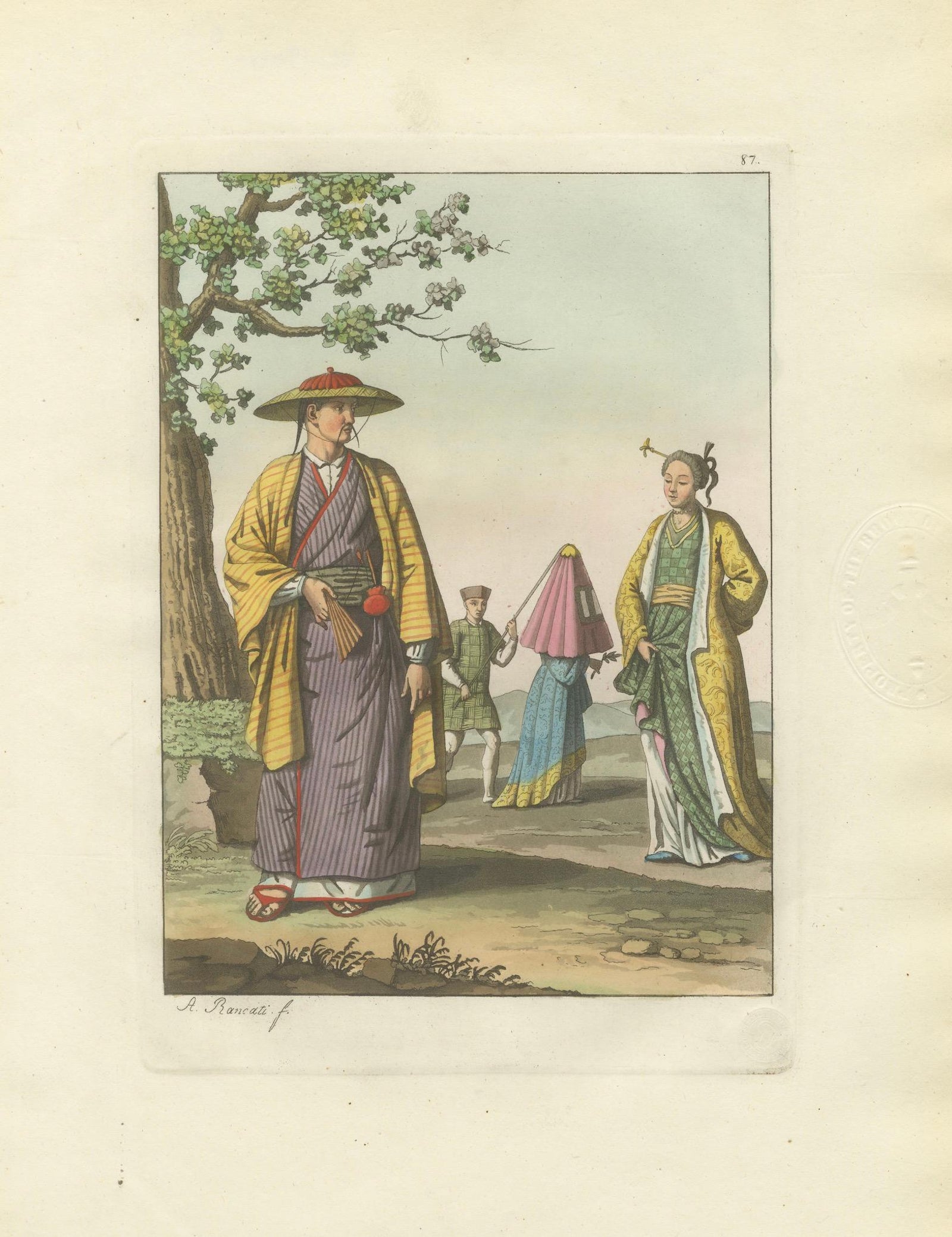
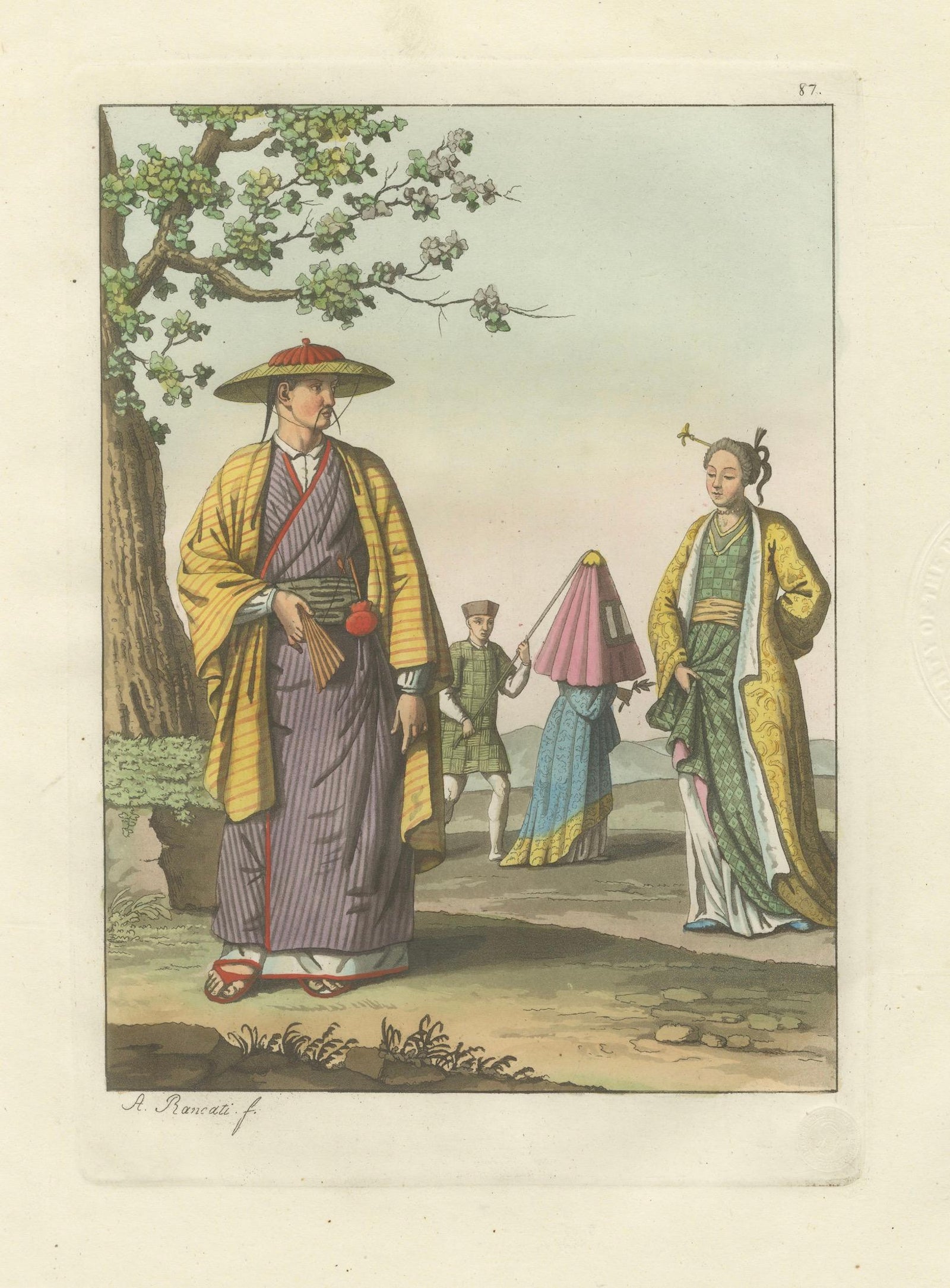
Framed and on the wall
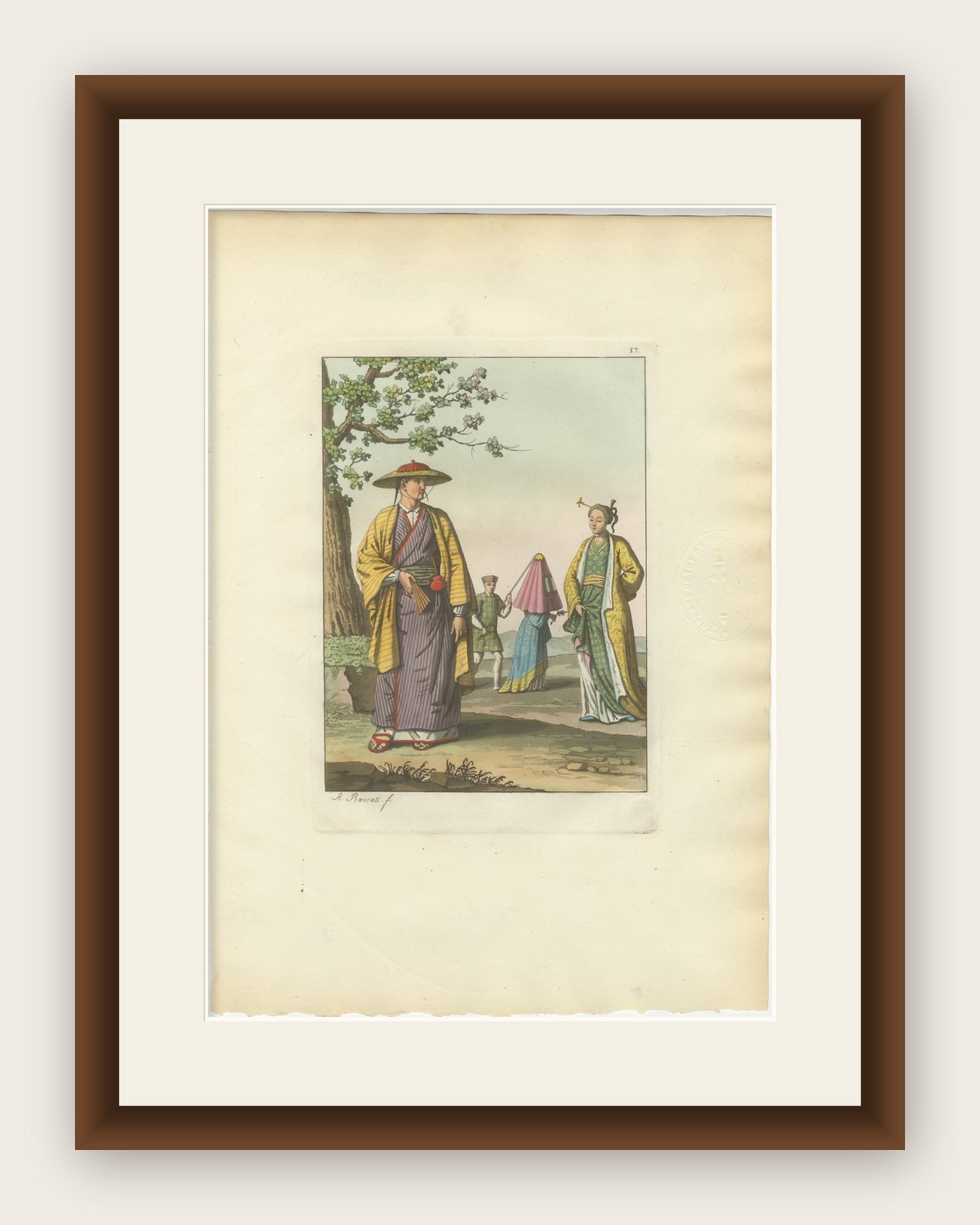
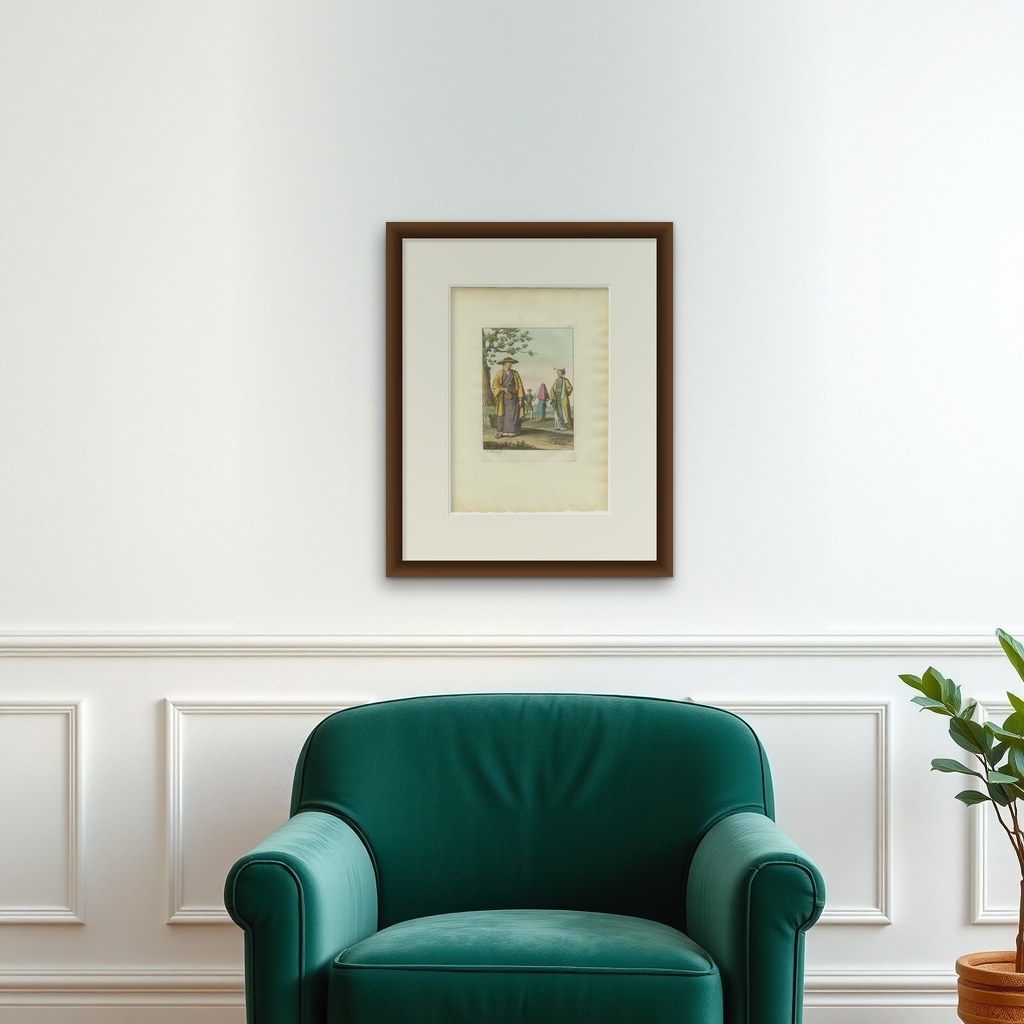

Frame and rooms are illustrations of how the print could look; the description says what is included.
Japanese Costume Scene Edo Period, Ferrario Il Costume Antico e Moderno, 1815
€260
$290 · £220
Original print, not a reproduction.
Ships worldwide from the Netherlands, flat, insured and tracked. 14-day returns. To buy, use Ask a question and we will reserve the print for you.
- Date
- 1815
- Sheet size
- 13.9 × 10 in (35.4 × 25.4 cm)
- Condition
- Good. Good condition for a print of this age. Light age toning with occasional minor foxing in the margins. The plate mark remains clearly visible around the engraved image.
- Wardrobe
- Far & away
- Era
- 1790 to 1840, Empire and Romantic
- Stock no.
- f_49125492
Japanese Costume Scene Edo Period, Ferrario Il Costume Antico e Moderno, 1815
Description:
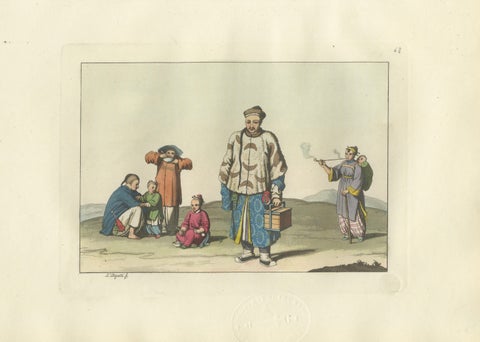
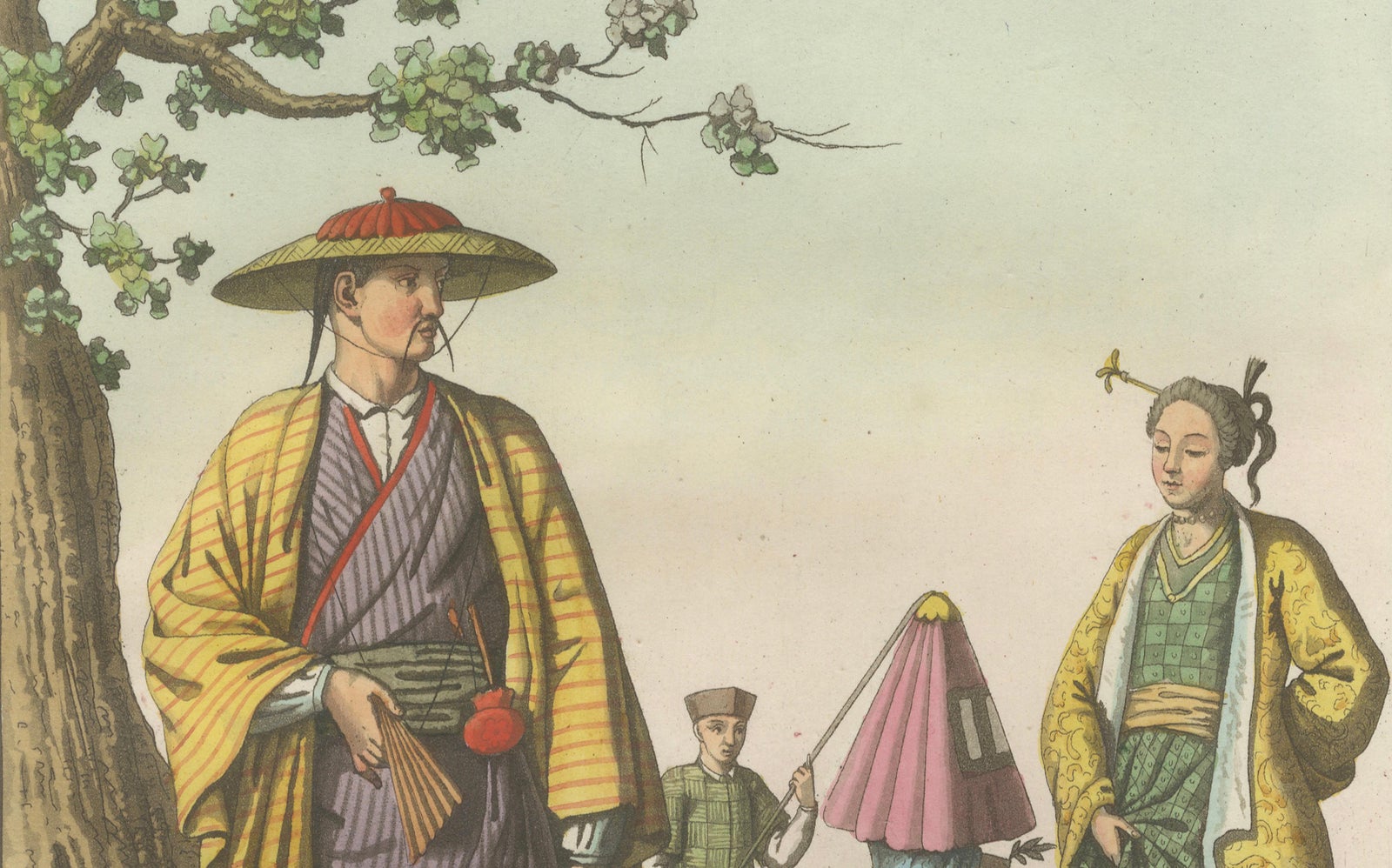
This finely hand-colored copperplate engraving depicts figures in traditional Japanese dress and originates from the monumental ethnographic publication Il Costume Antico e Moderno di Tutti i Popoli by Giulio Ferrario. Published in Milan beginning around 1815, Ferrario’s ambitious multi-volume work sought to document the architecture, dress, customs, and daily life of cultures across the world. The richly illustrated volumes devoted to Asia introduced European audiences to visual interpretations of societies that were still relatively little known in the West.
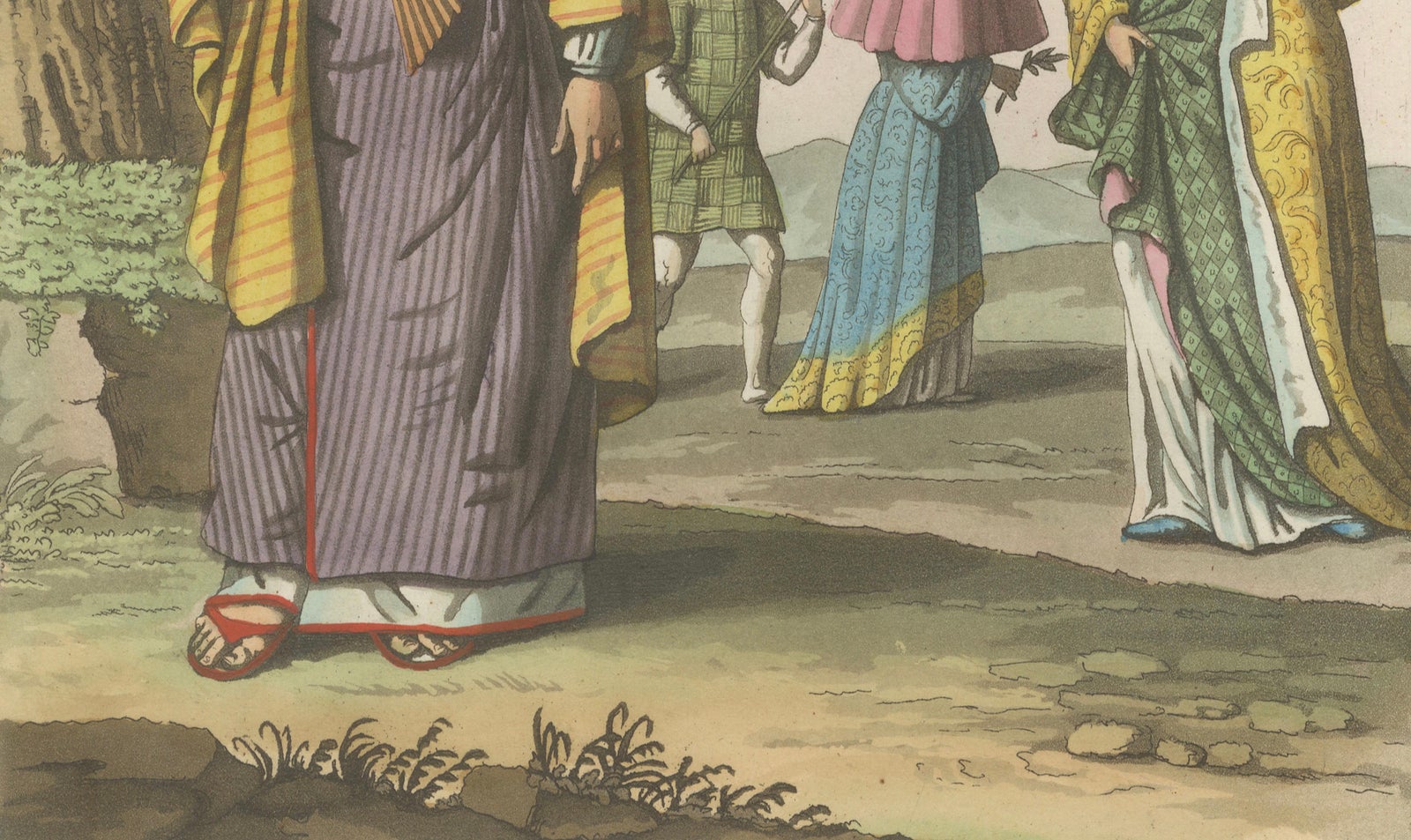
The scene presents several figures dressed in elegant garments associated with Japan’s Edo period (1603–1868). In the foreground stands a man wearing a broad-brimmed straw hat and a striped kimono layered with an outer robe. He carries a folding fan and wears traditional sandals, details that reflect the careful observation of everyday attire that characterized Ferrario’s costume plates. His composed posture and refined clothing suggest a figure of respectable social standing.
Opposite him stands a woman dressed in richly layered robes decorated with delicate patterns, her hair styled in an elaborate coiffure adorned with ornamental hairpins. The depiction reflects the elegance associated with Japanese fashion of the period, where silk garments, layered fabrics, and carefully arranged hairstyles formed essential elements of personal appearance and social identity.
In the background, a particularly intriguing detail is shown: a woman walking while shielded by a servant holding a pink protective covering with a small viewing opening. Such coverings were sometimes used to preserve modesty or protect women of status from public attention, illustrating how Ferrario’s plates often attempted to portray distinctive cultural practices as understood through travel accounts and earlier sources.
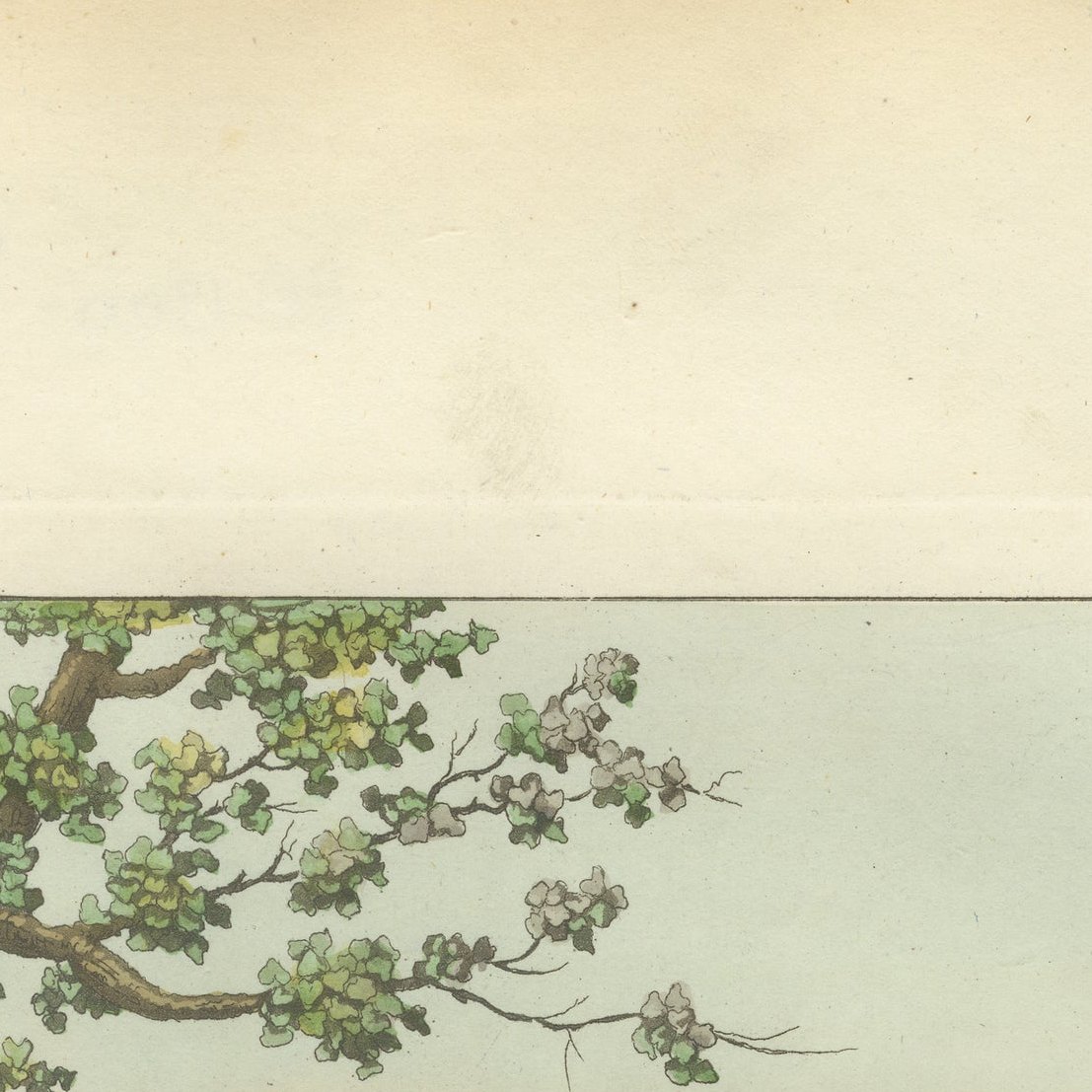
The figures are placed within a tranquil outdoor setting, framed by a flowering tree and distant landscape. This natural backdrop adds a sense of calm refinement and reinforces the aesthetic harmony associated with East Asian artistic traditions as interpreted by European illustrators of the period.
The engraving itself was executed with precise copperplate line work and later enhanced with delicate hand coloring applied at the time of publication. The subtle palette of greens, yellows, and soft reds gives the composition both historical authenticity and decorative appeal. Plates from Ferrario’s Il Costume Antico e Moderno remain highly collectible today for their blend of ethnographic curiosity, artistic refinement, and early nineteenth-century European interpretations of global cultures.
This example is an original antique engraving with original hand coloring applied at the time of publication. It is not a modern reproduction. Any presentation images showing the print framed are for visual inspiration only. The print is supplied unframed.
Condition:
Good condition for a print of this age. Light age toning with occasional minor foxing in the margins. The plate mark remains clearly visible around the engraved image.
Framing tips:
This print frames beautifully with a warm ivory mat that complements the natural tone of the antique paper. A dark walnut or black frame highlights the delicate hand coloring and works well with both classical and contemporary interiors. The print also pairs attractively with other Ferrario costume plates depicting Asian cultures.
Technique: Hand-colored copperplate engraving
Maker: Andrea Bernieri after designs for Giulio Ferrario, Milan, circa 1815–1820s