Close-ups
Framed and on the wall

Frame and rooms are illustrations of how the print could look; the description says what is included.
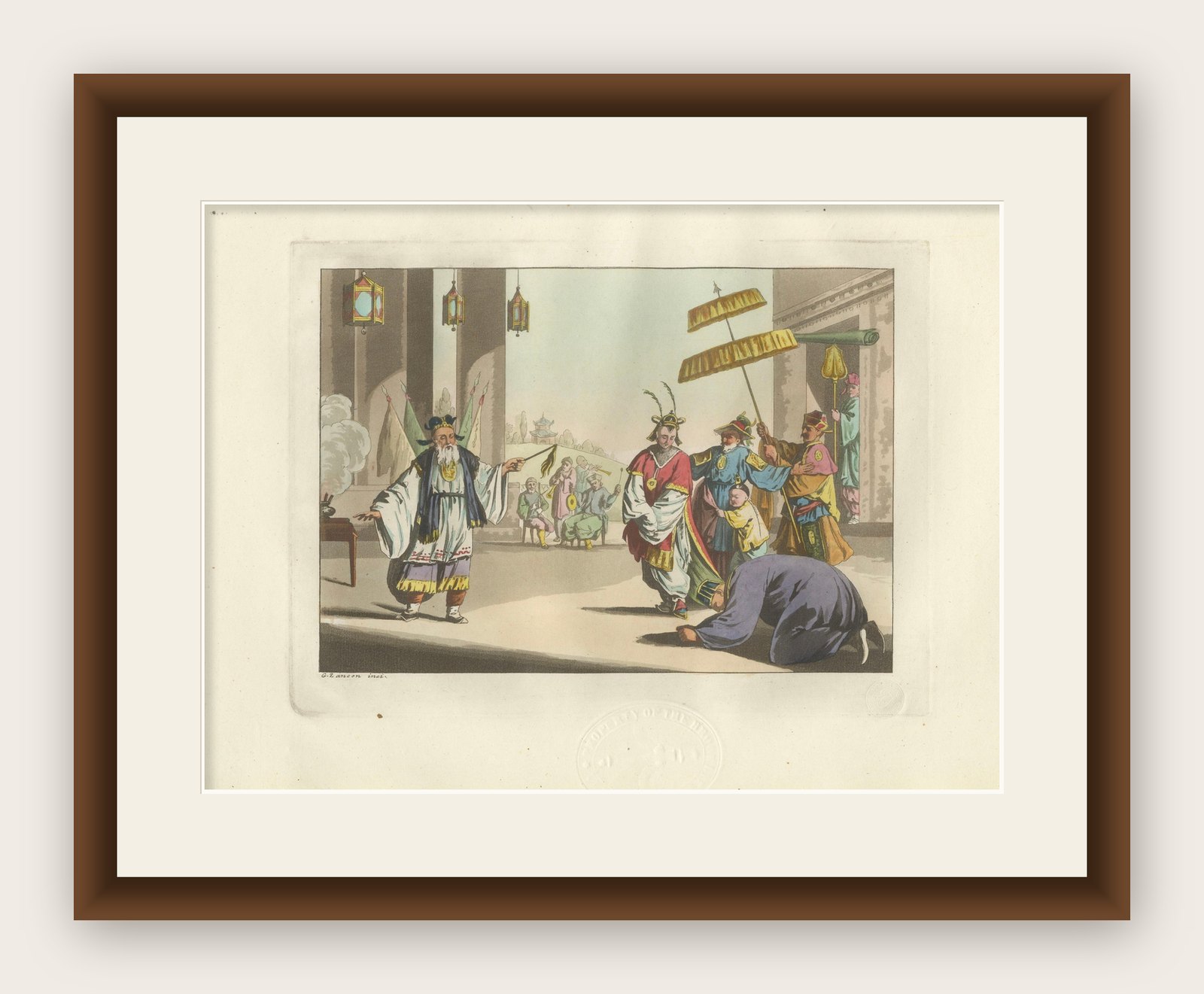
Chinese Peking Opera Scene, Ferrario Costume Print, Hand-Colored c.1815
£245
$325 · €288
Original print, not a reproduction.
Ships worldwide from the Netherlands, flat, insured and tracked. 14-day returns. To buy, use Ask a question and we will reserve the print for you.
- Date
- 1815
- Sheet size
- 10 × 13.9 in (25.4 × 35.4 cm)
- Condition
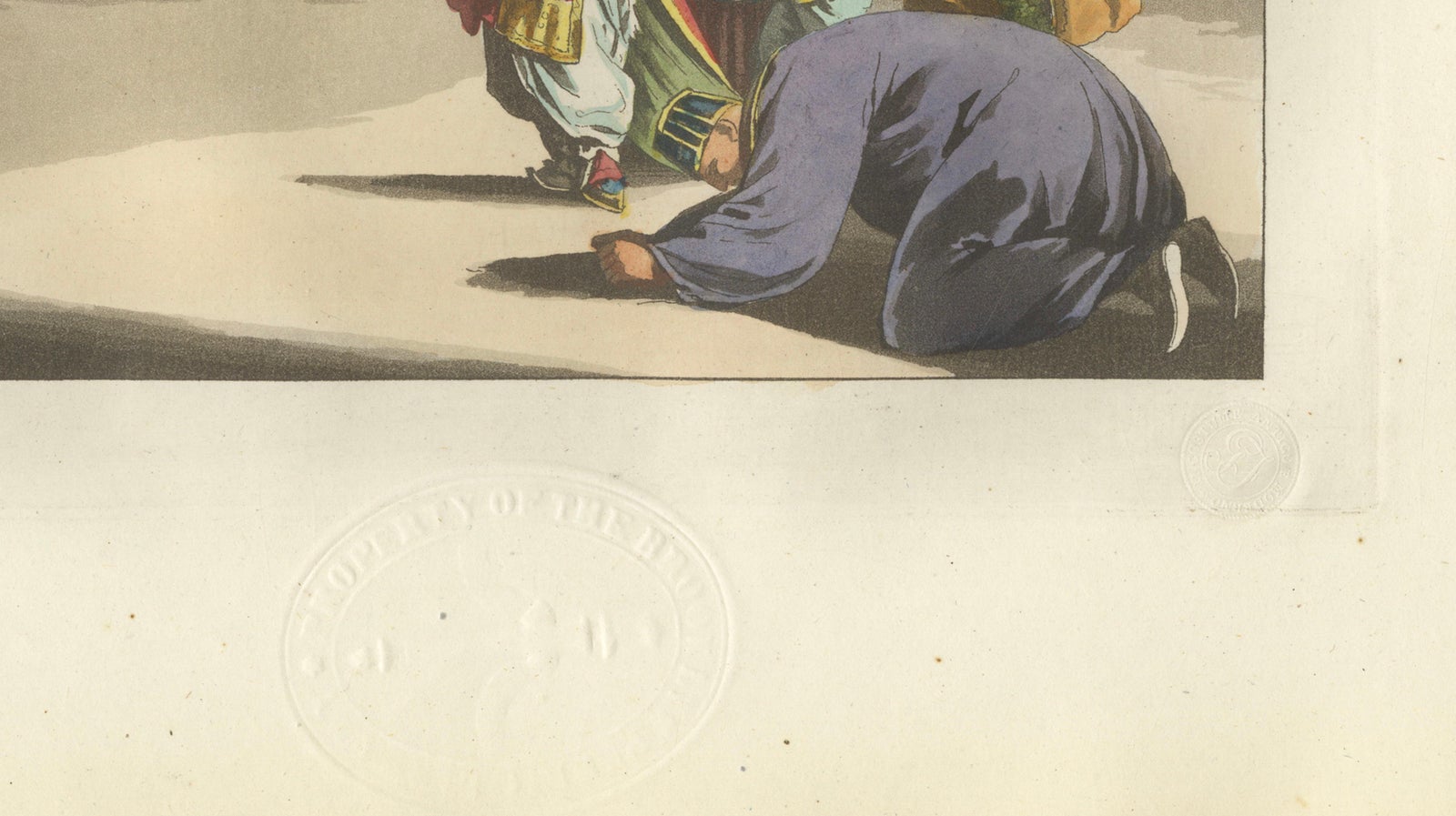
- Good. Good antique condition with general age-related toning and light scattered spotting to the margins. Plate mark clearly visible. Original embossed blind stamps visible as issued.
- Wardrobe
- Far & away
- Era
- 1790 to 1840, Empire and Romantic
- Stock no.
- f_49053752
Title: Chinese Peking Opera Scene, Ferrario Costume Print, Hand-Colored c.1815
Description:
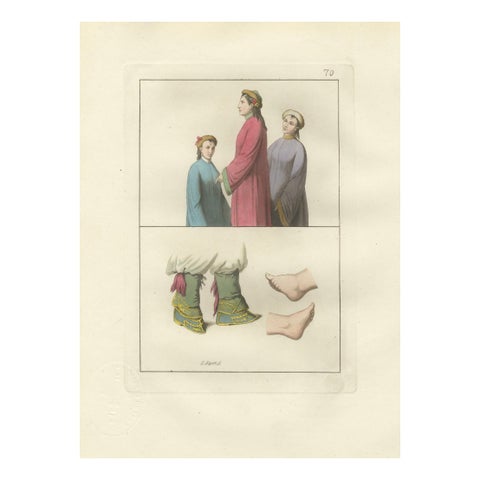
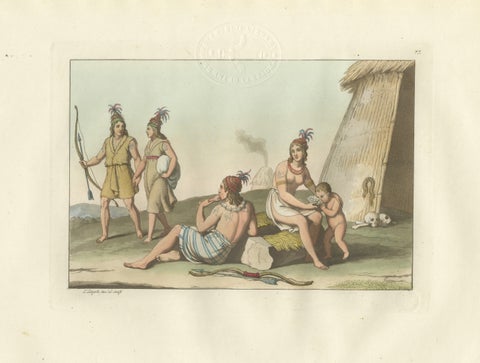
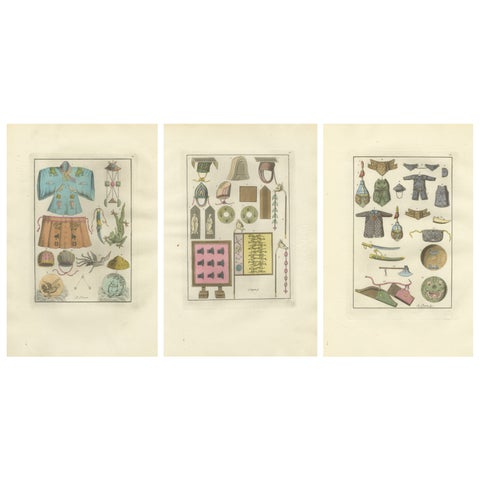
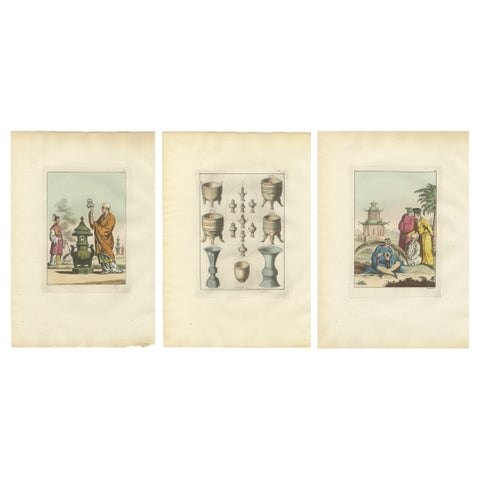
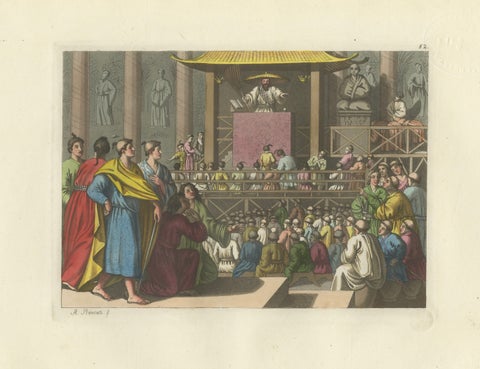
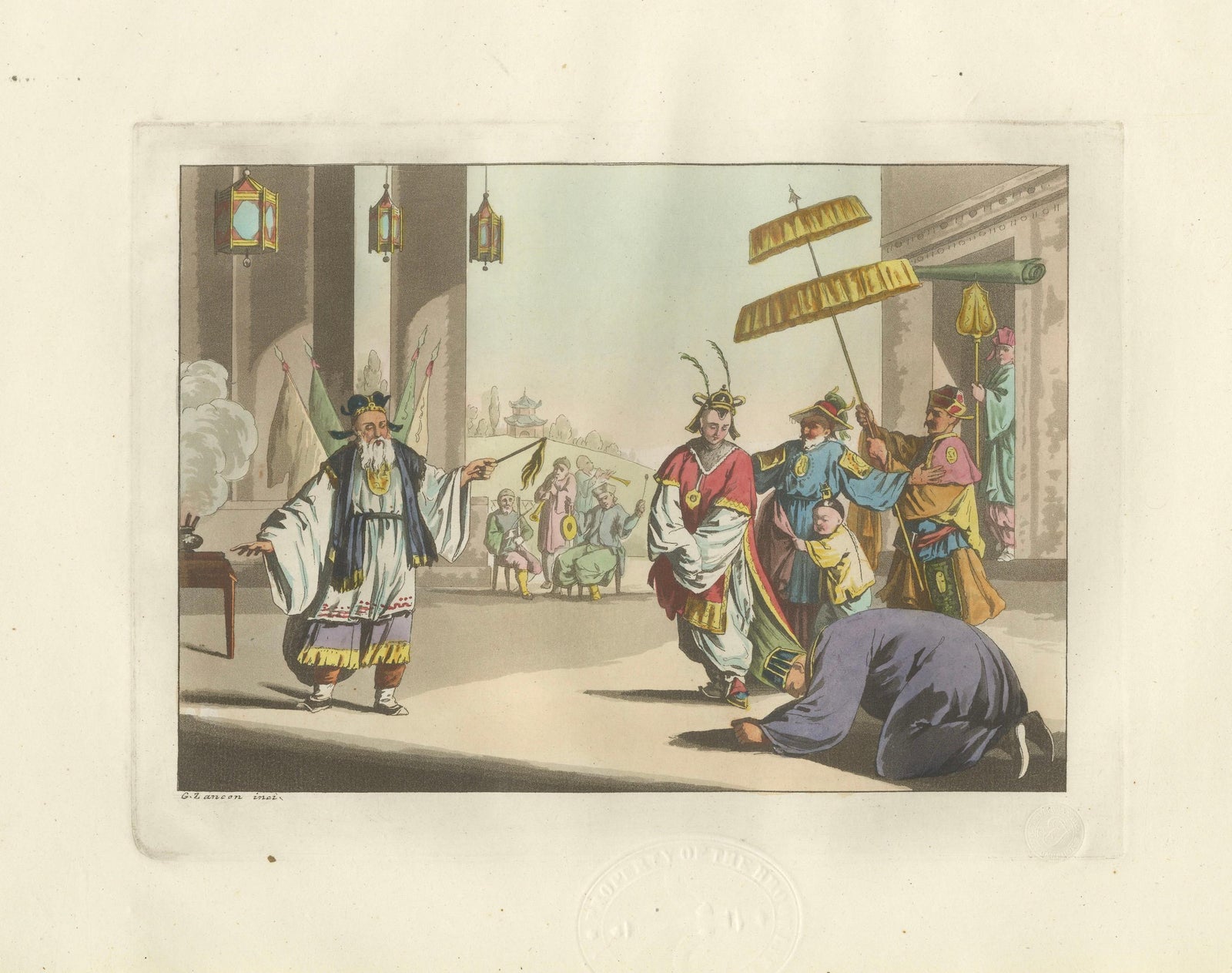
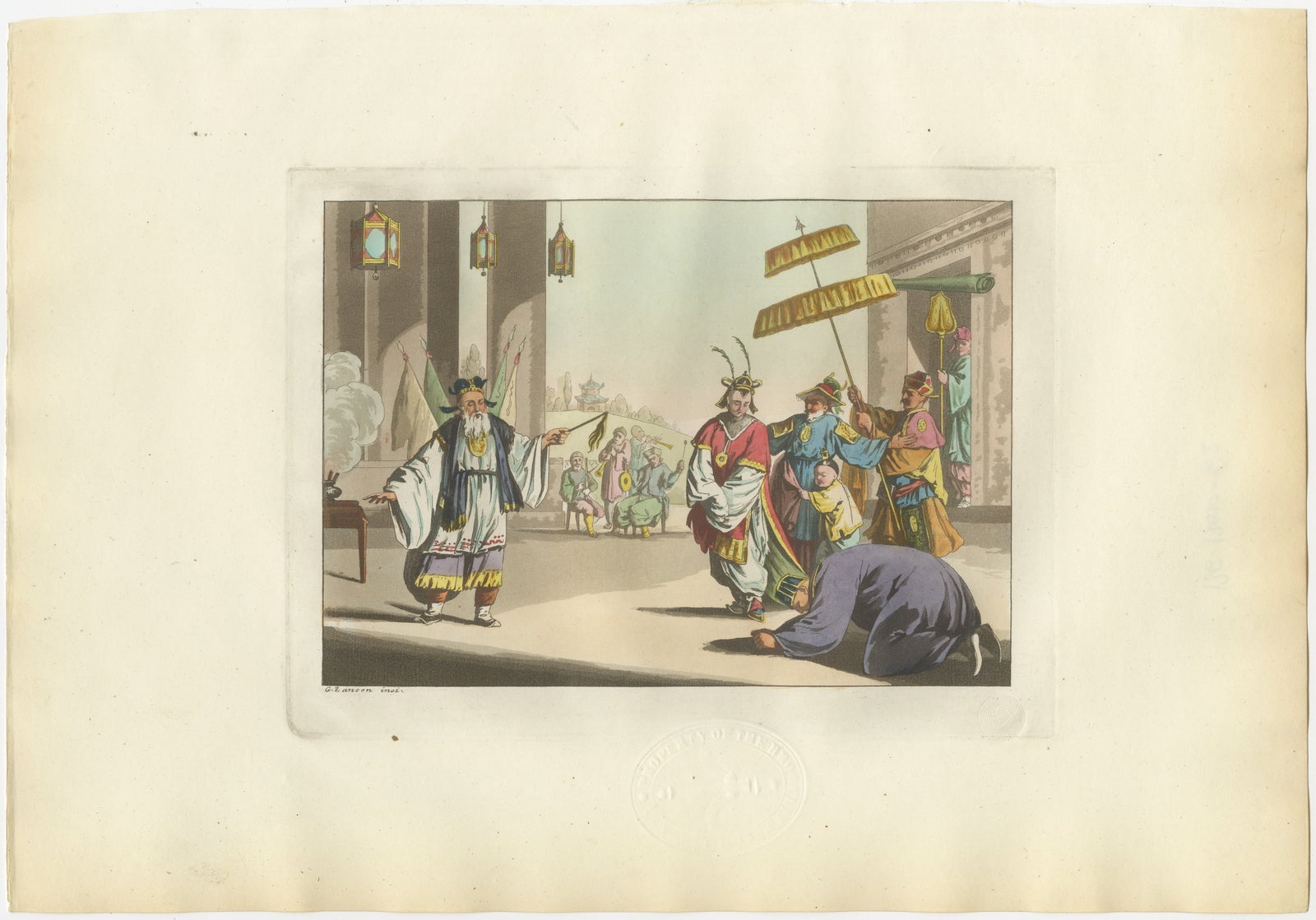
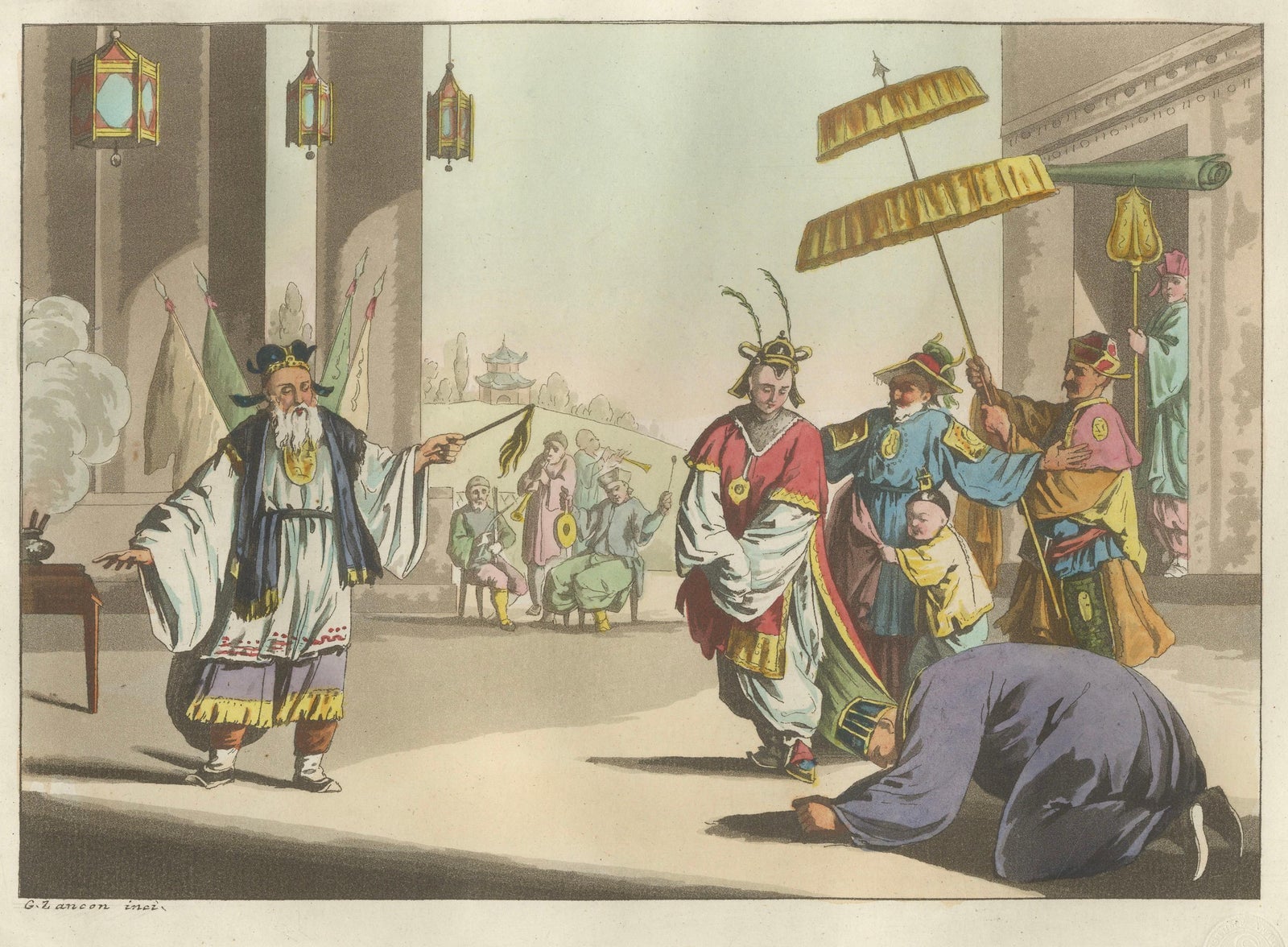
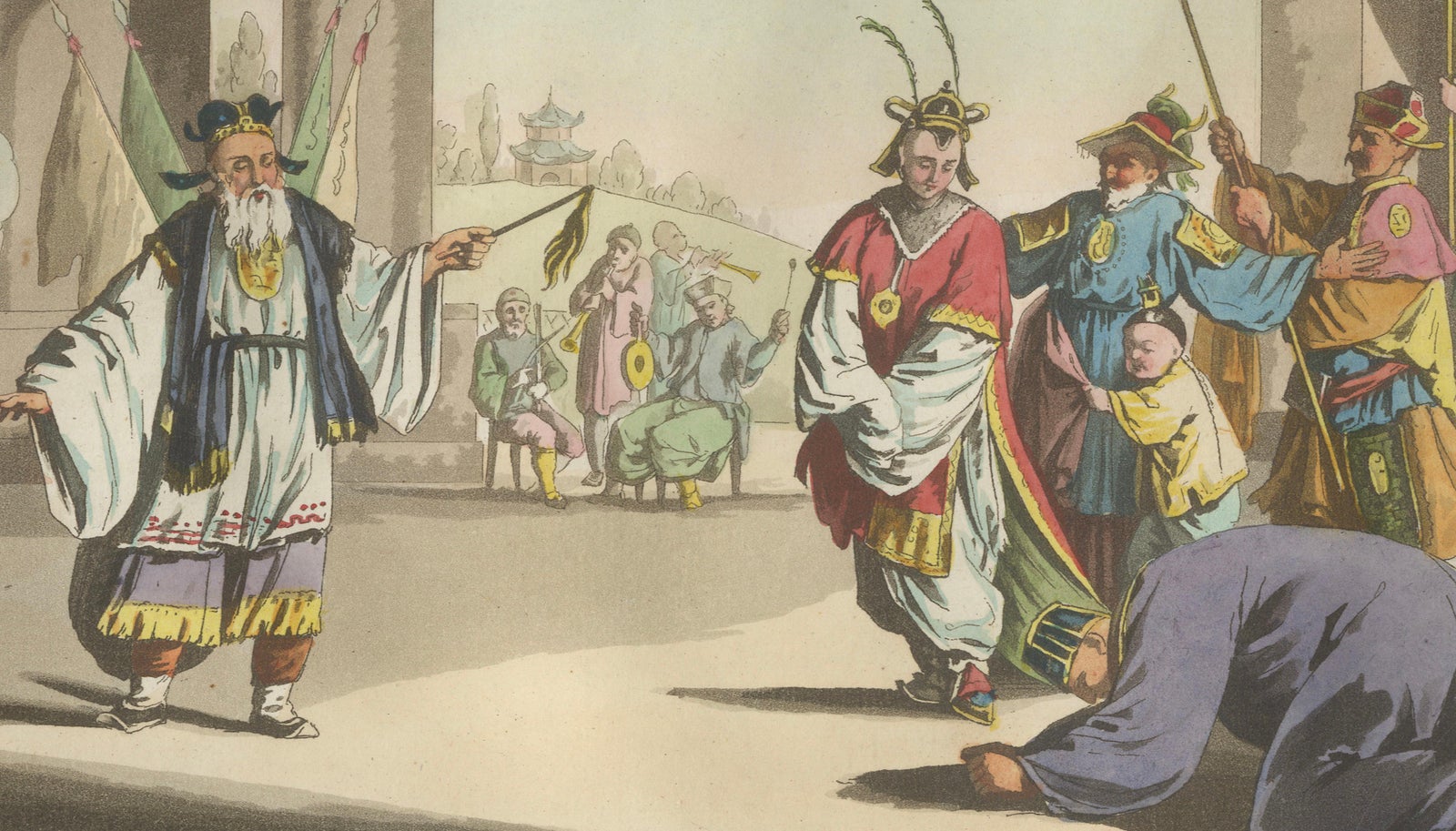
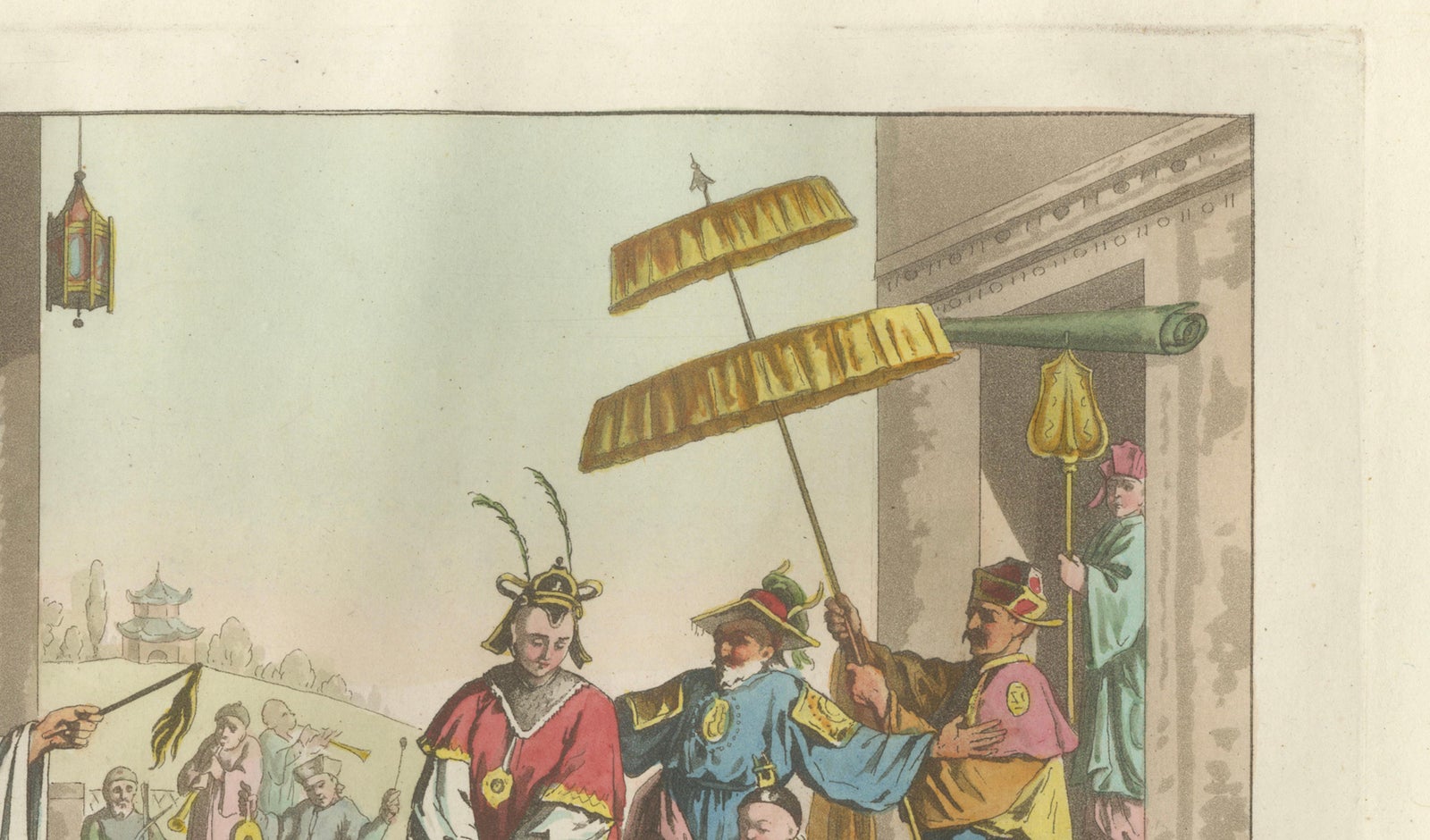
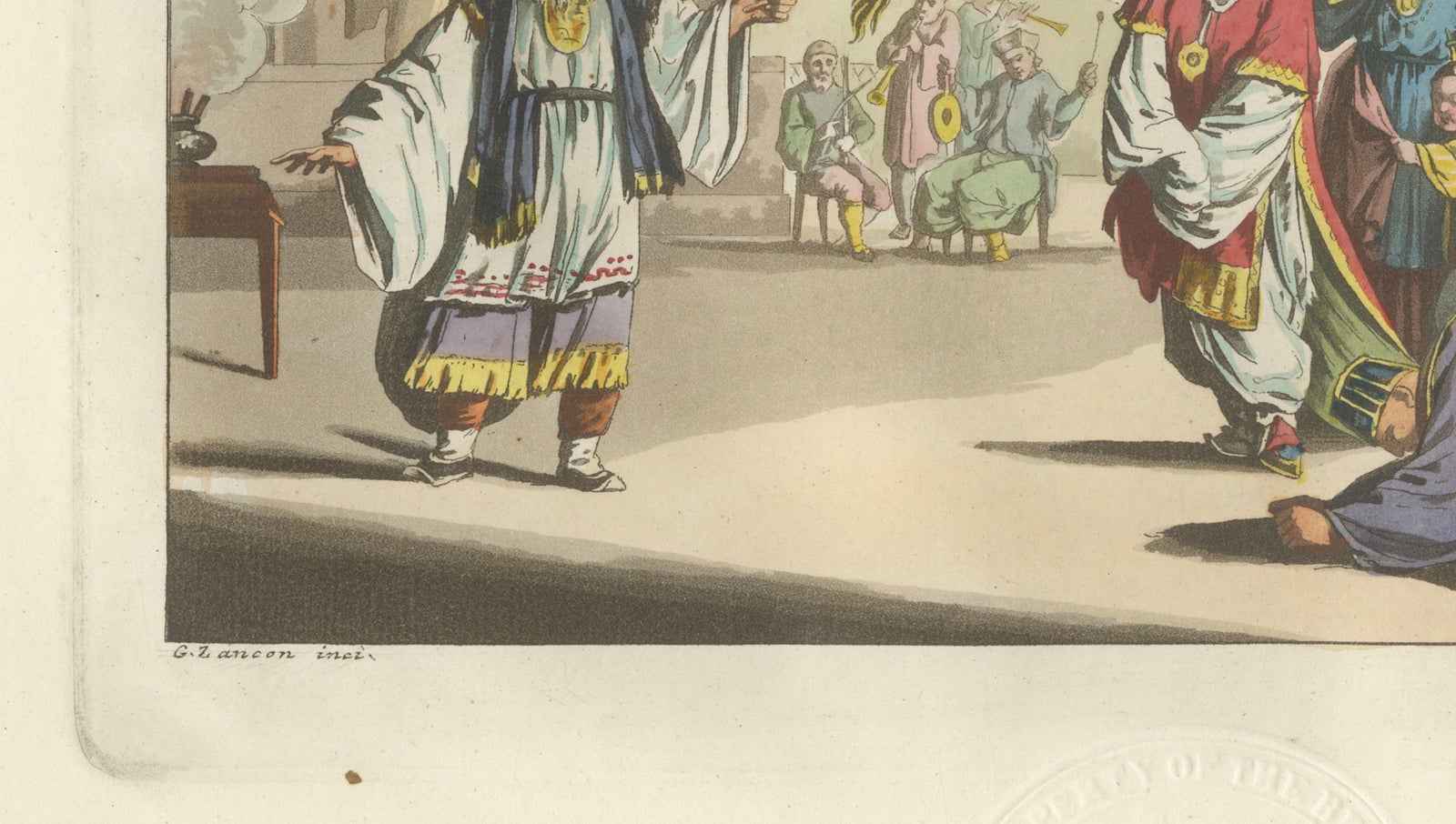
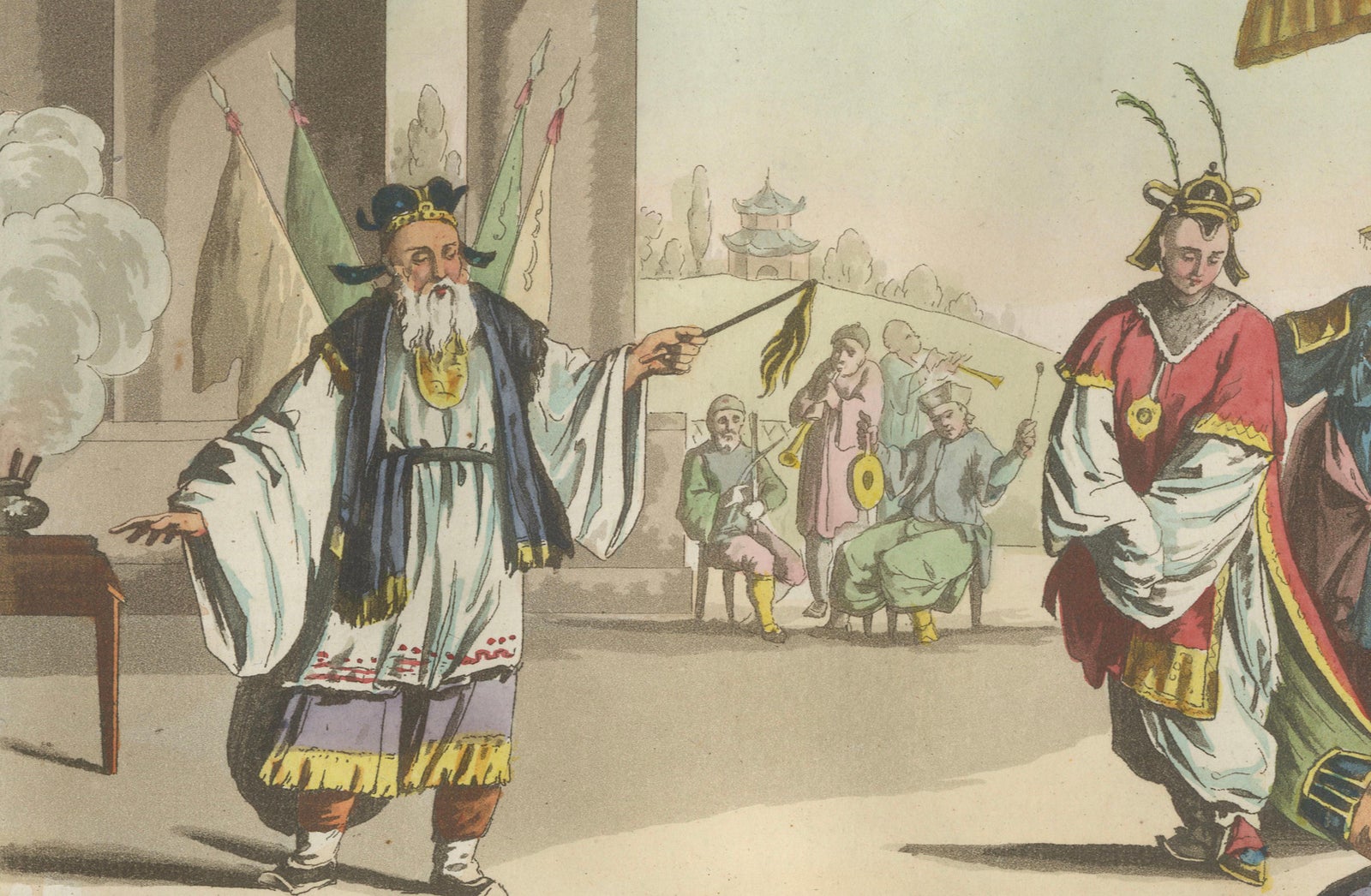
This finely hand-coloured copperplate engraving depicts a dramatic theatrical moment from a traditional Chinese Peking opera performance, rendered with remarkable clarity and narrative energy. The composition presents a ceremonial stage scene populated by elaborately dressed figures wearing richly detailed robes, official headdresses, and symbolic accessories, including ceremonial parasols held aloft behind the principal actors. One figure kneels in reverence while another gestures authoritatively, capturing the heightened drama and stylized gesture characteristic of classical Chinese opera traditions.
The print originates from Giulio Ferrario’s monumental ethnographic publication *Il Costume Antico e Moderno di Tutti i Popoli* (Costumes Ancient and Modern of All Peoples), issued in Milan circa 1815. Ferrario’s ambitious encyclopedic project sought to introduce European audiences to the diversity of global cultures during the Enlightenment and early nineteenth century. Combining scholarship, travel accounts, and artistic interpretation, the work became one of the most visually important costume publications of its era, documenting dress, ceremony, architecture, and social customs from across the world.
The artwork was drawn by Andrea Bernieri, one of the principal artists contributing to the series. Rather than functioning as a literal documentary image, the scene reflects the European fascination with Asian theatre and court culture, presenting an idealized yet carefully observed interpretation of Chinese performance traditions. The balanced composition, theatrical lighting, and refined hand colouring enhance the sense of staged spectacle, while architectural elements and lanterns provide depth and atmosphere.
Ferrario plates are especially valued today for their combination of ethnographic curiosity and refined early nineteenth-century engraving technique. The delicate hand colouring remains an essential feature, applied individually at the time of publication, ensuring each impression possesses subtle variations. The engraving works equally well as a standalone decorative piece or within a curated group of Asian or theatrical subjects, appealing to collectors of costume prints, theatre history, and early European representations of Asia.
The engraving is offered unframed, allowing flexibility to select a presentation suited to a modern, classical, or interior-designer setting.
Condition:
Title: Chinese Peking Opera Scene, Ferrario Costume Print, Hand-Colored c.1815
Description:
This finely hand-coloured copperplate engraving depicts a dramatic theatrical moment from a traditional Chinese Peking opera performance, rendered with remarkable clarity and narrative energy. The composition presents a ceremonial stage scene populated by elaborately dressed figures wearing richly detailed robes, official headdresses, and symbolic accessories, including ceremonial parasols held aloft behind the principal actors. One figure kneels in reverence while another gestures authoritatively, capturing the heightened drama and stylized gesture characteristic of classical Chinese opera traditions.
The print originates from Giulio Ferrario’s monumental ethnographic publication *Il Costume Antico e Moderno di Tutti i Popoli* (Costumes Ancient and Modern of All Peoples), issued in Milan circa 1815. Ferrario’s ambitious encyclopedic project sought to introduce European audiences to the diversity of global cultures during the Enlightenment and early nineteenth century. Combining scholarship, travel accounts, and artistic interpretation, the work became one of the most visually important costume publications of its era, documenting dress, ceremony, architecture, and social customs from across the world.
The artwork was drawn by Andrea Bernieri, one of the principal artists contributing to the series. Rather than functioning as a literal documentary image, the scene reflects the European fascination with Asian theatre and court culture, presenting an idealized yet carefully observed interpretation of Chinese performance traditions. The balanced composition, theatrical lighting, and refined hand colouring enhance the sense of staged spectacle, while architectural elements and lanterns provide depth and atmosphere.
Ferrario plates are especially valued today for their combination of ethnographic curiosity and refined early nineteenth-century engraving technique. The delicate hand colouring remains an essential feature, applied individually at the time of publication, ensuring each impression possesses subtle variations. The engraving works equally well as a standalone decorative piece or within a curated group of Asian or theatrical subjects, appealing to collectors of costume prints, theatre history, and early European representations of Asia.
The engraving is offered unframed, allowing flexibility to select a presentation...