Close-ups
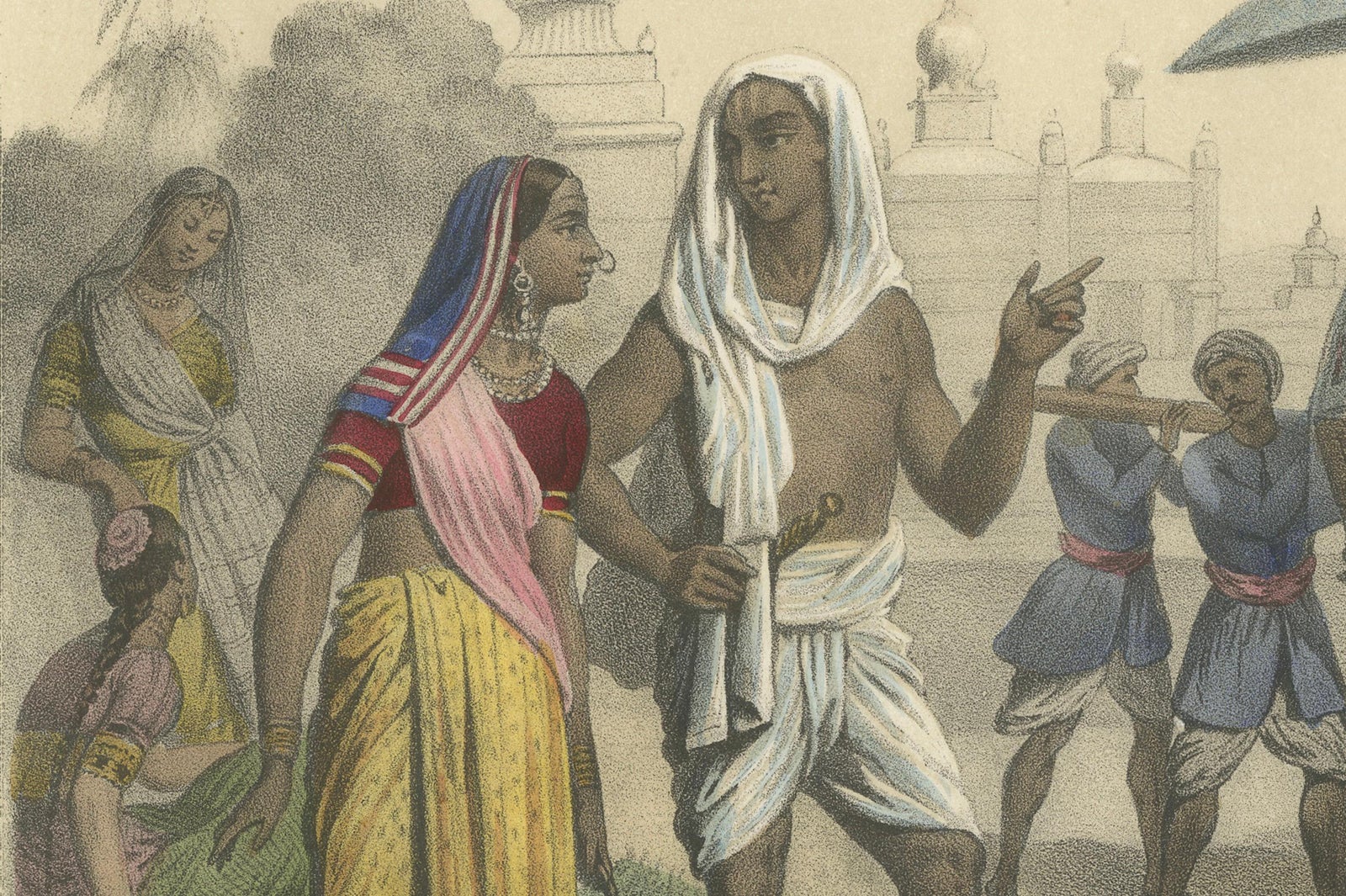
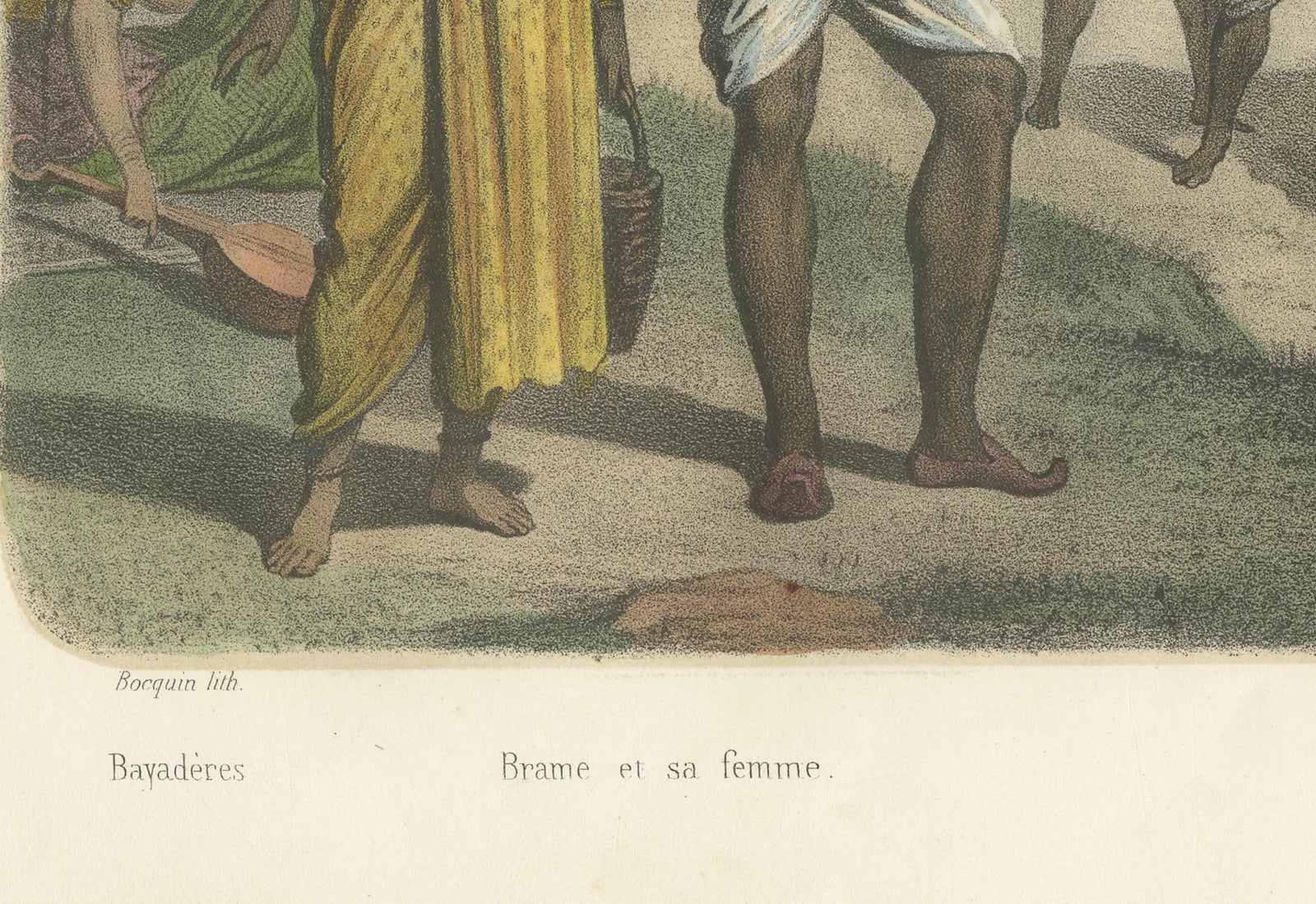
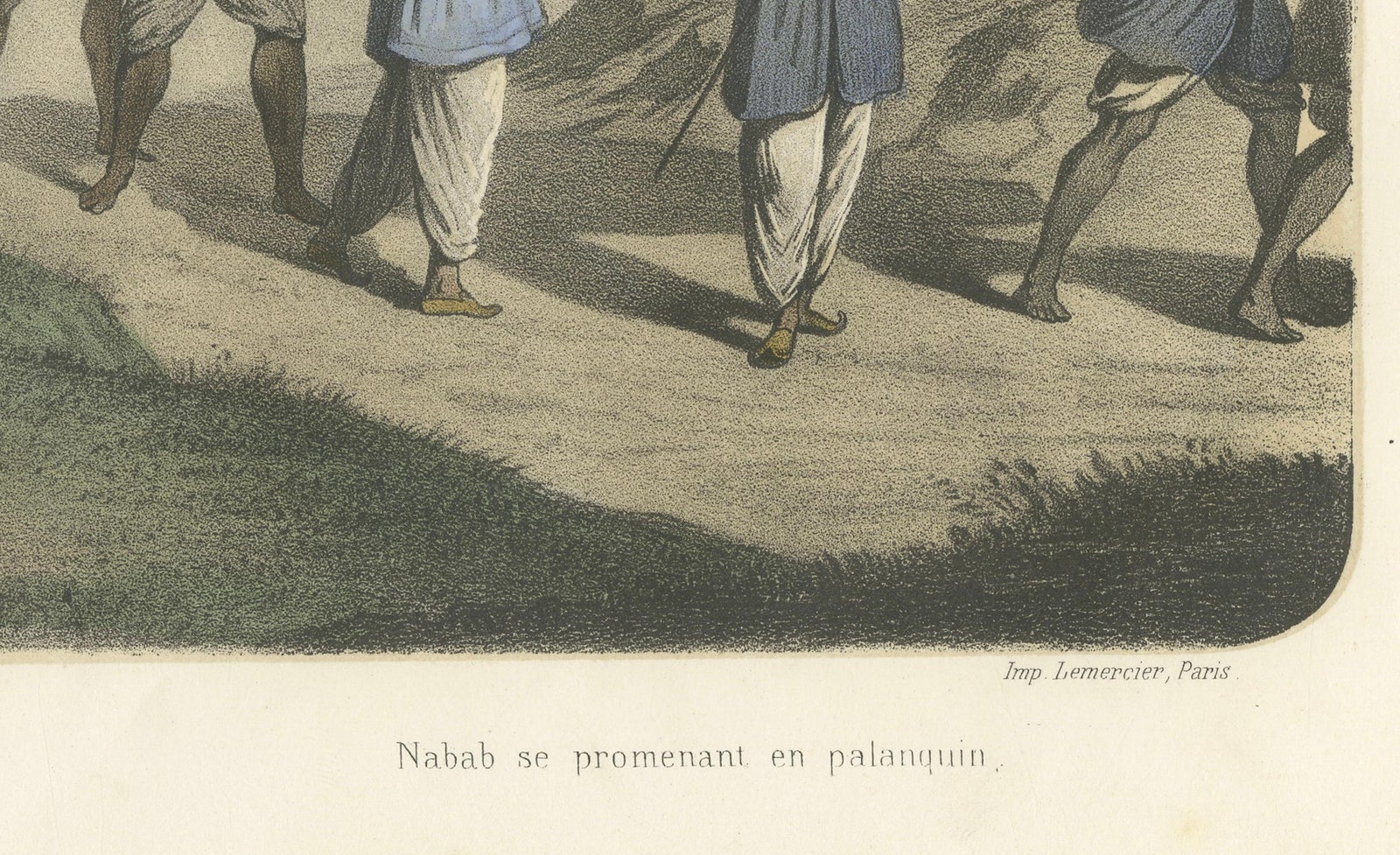
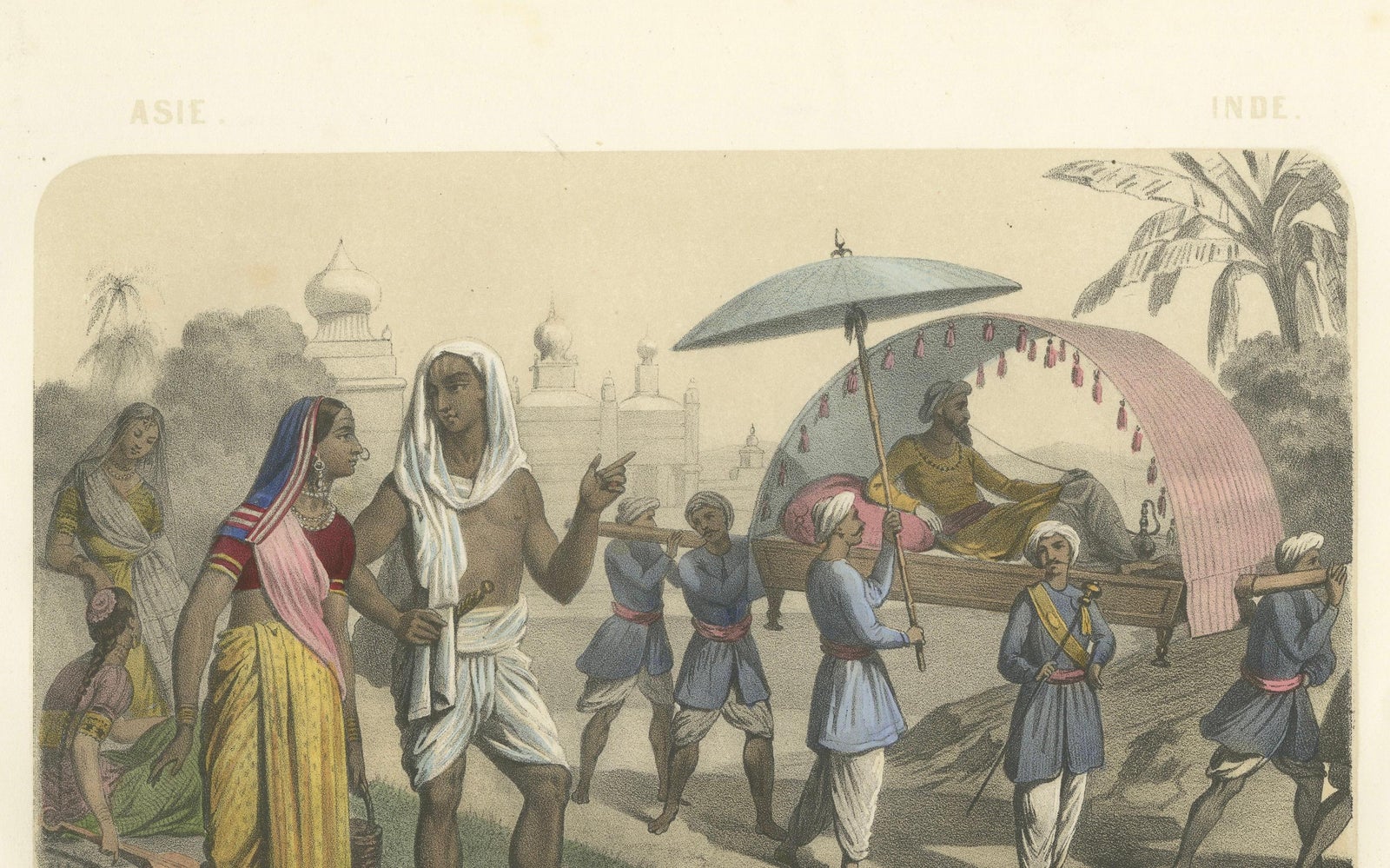
Framed and on the wall
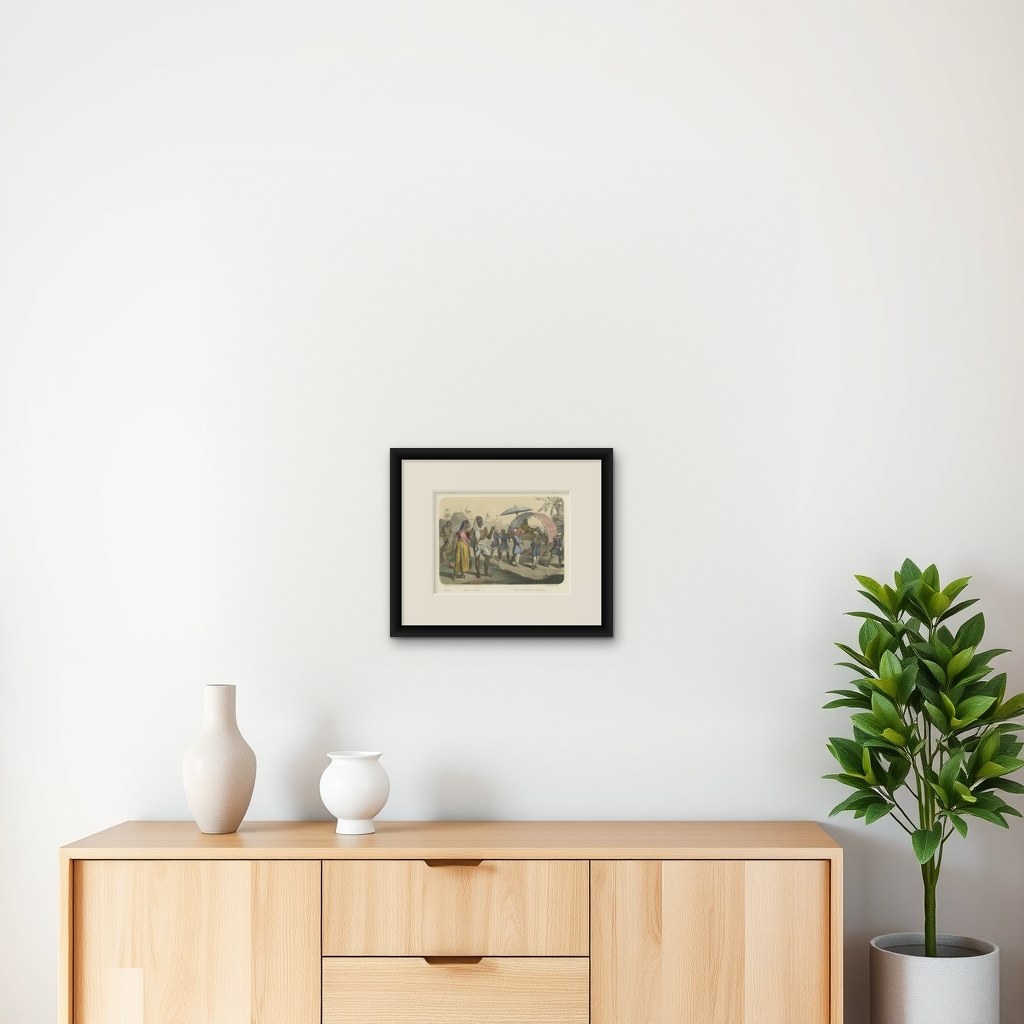

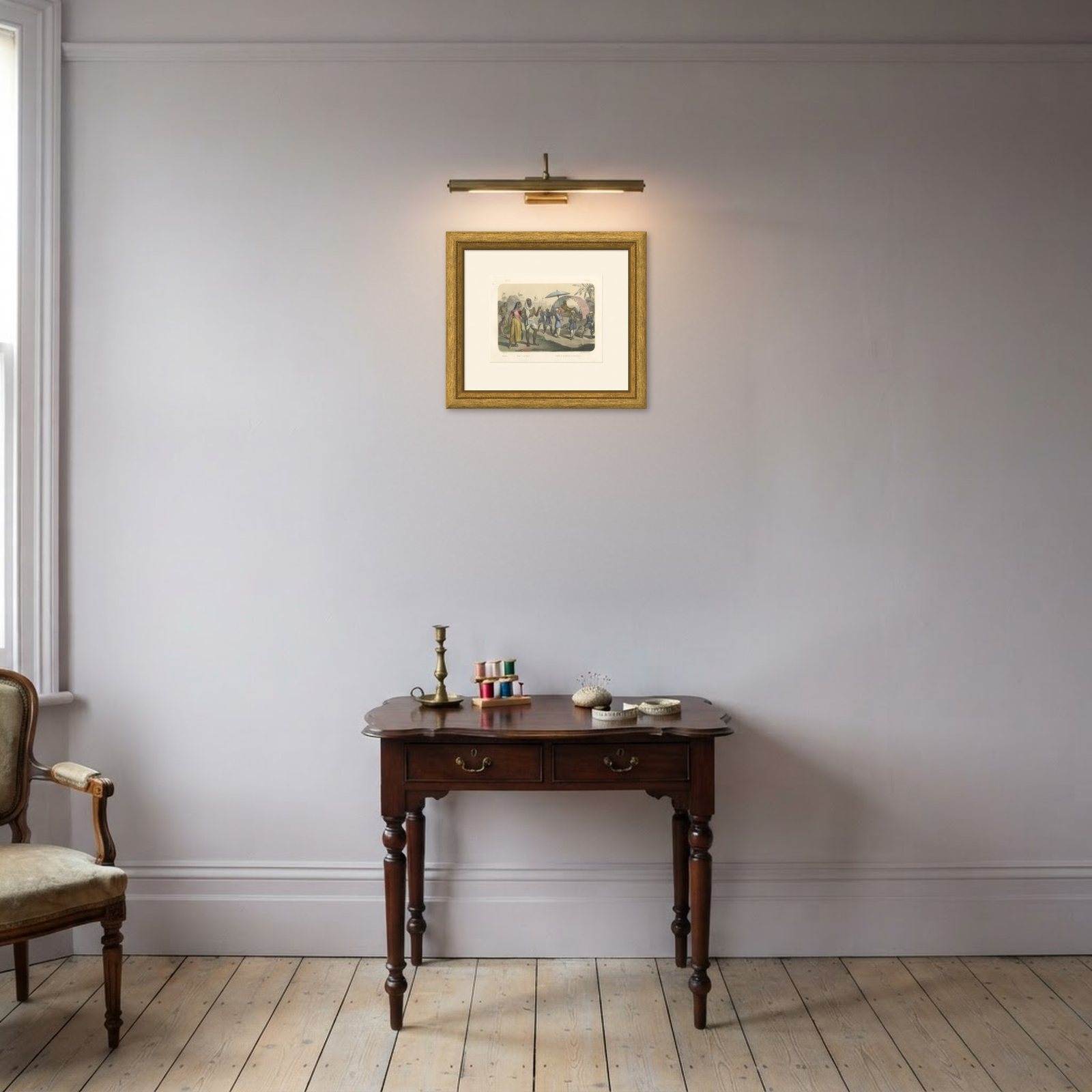
Frame and rooms are illustrations of how the print could look; the description says what is included.
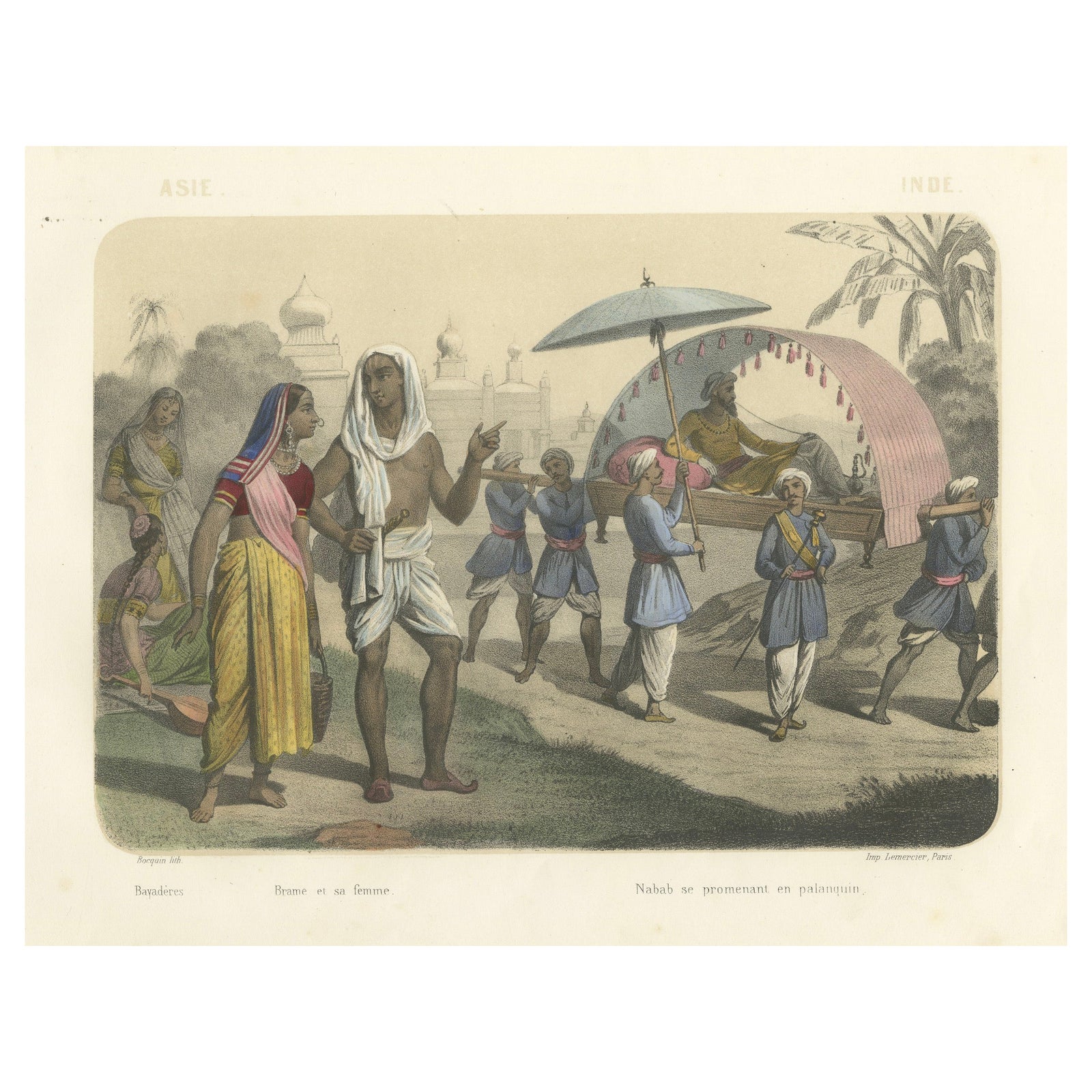
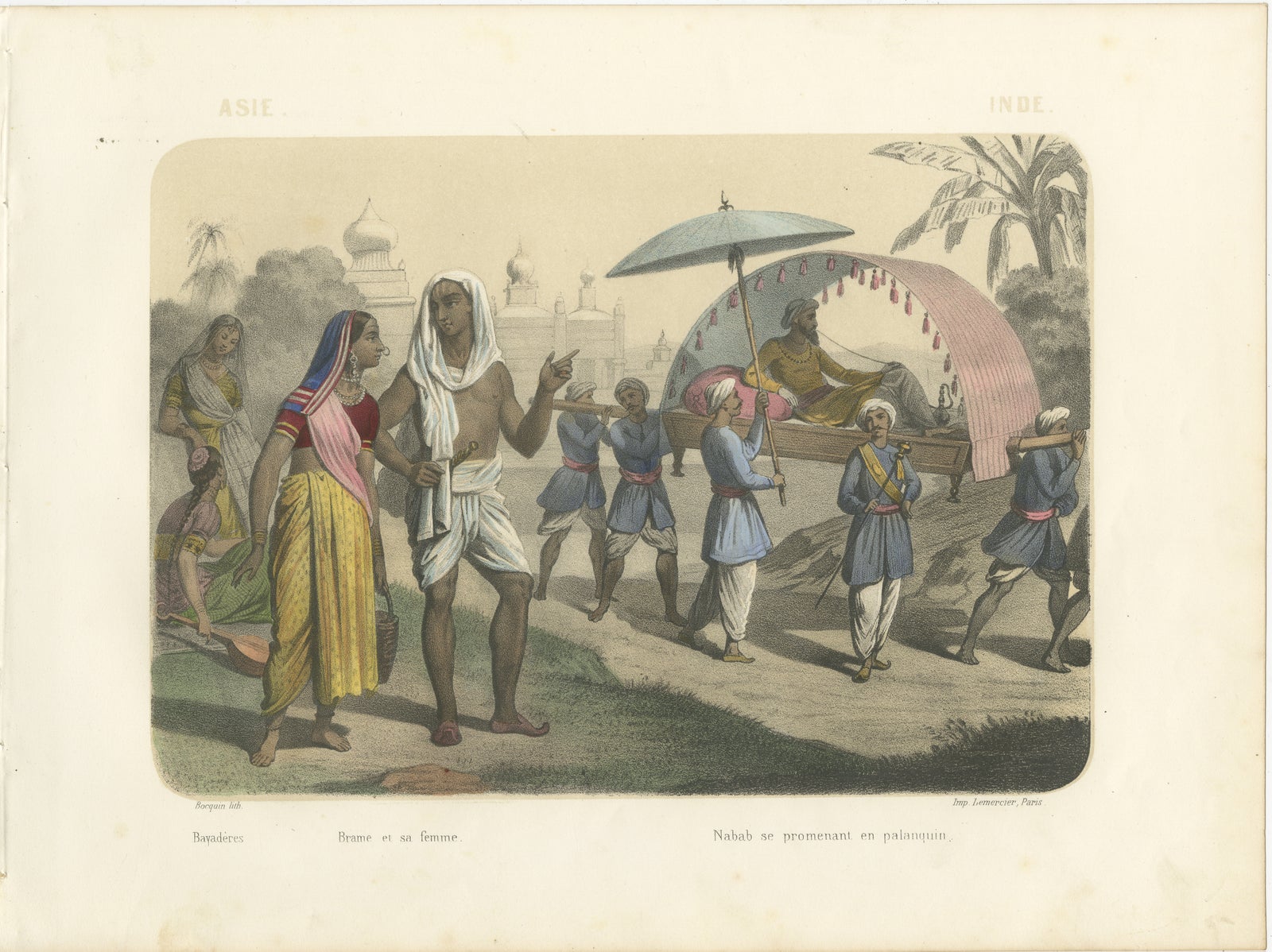
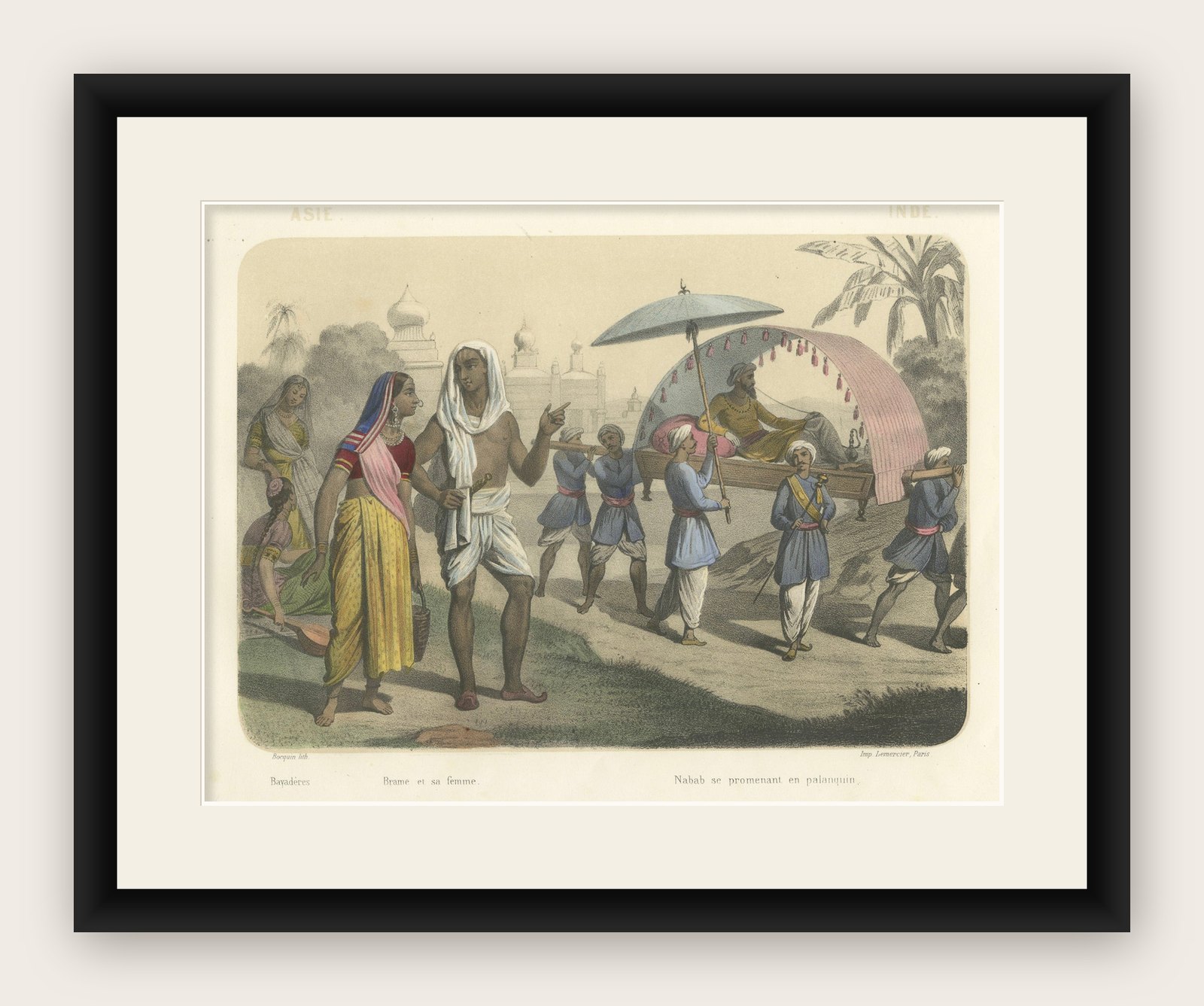
Indian Costumes, Bramin Couple, Bayadères and Nabob in Palanquin, c.1845
€240€16830% off
$185 · £140
Original print, not a reproduction.
Ships worldwide from the Netherlands, flat or rolled, insured and tracked. 14-day returns.
- Date
- 1845
- Sheet size
- 9.1 × 11.8 in (23 × 30 cm)
- Condition
- Good. Condition report: Good condition with light foxing and minor toning, mostly in the margins. Strong impression and vivid original coloring. Full margins preserved.
- Wardrobe
- Far & away
- Era
- 1840 to 1870, Crinoline
- Stock no.
- BG-13682-14
What the condition grades mean
- Excellent
- Bright and clean, with no faults worth mentioning.
- Very good
- Only light signs of age, such as faint toning.
- Good
- Normal signs of age for a sheet of this period: toning, some foxing, small marks or neat old repairs.
- Fair
- Clear faults such as staining, tears or repairs, priced to match.
Every fault we see is written in the condition note, and the whole sheet is shown uncropped in the photos.
Title: Indian Costumes, Bramin Couple, Bayadères and Nabob in Palanquin, c.1845
Description:
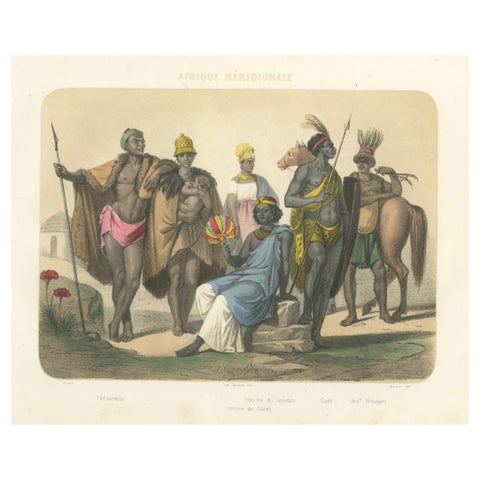
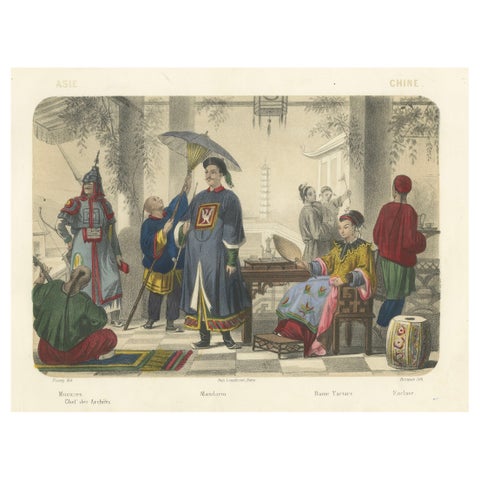
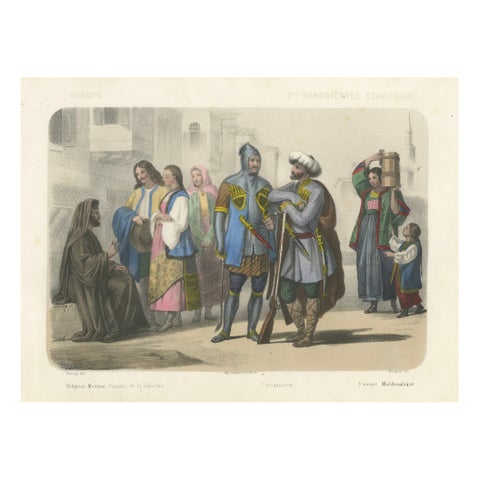
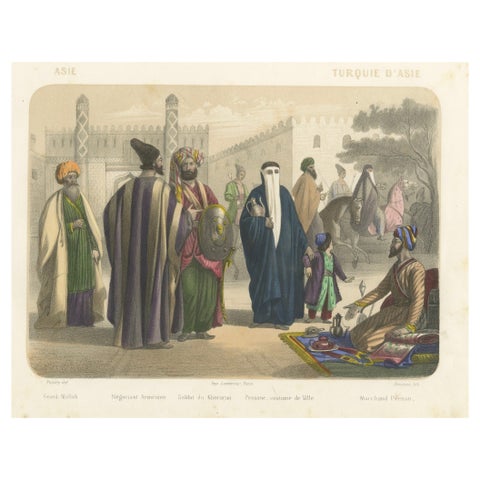
This refined hand-colored lithograph, titled “Asie, Inde,” originates from Le Monde en Estampes: Types et Costumes des Principaux Peuples de l’Univers, a distinguished French ethnographic series published in Paris around 1845–1850 by Amédée Bedelet. Drawn by Fossey, lithographed by J. Bocquin, and printed by Lemercier, the series presented a vivid visual journey through the world’s traditional costumes, rendered in exquisite color and detail.
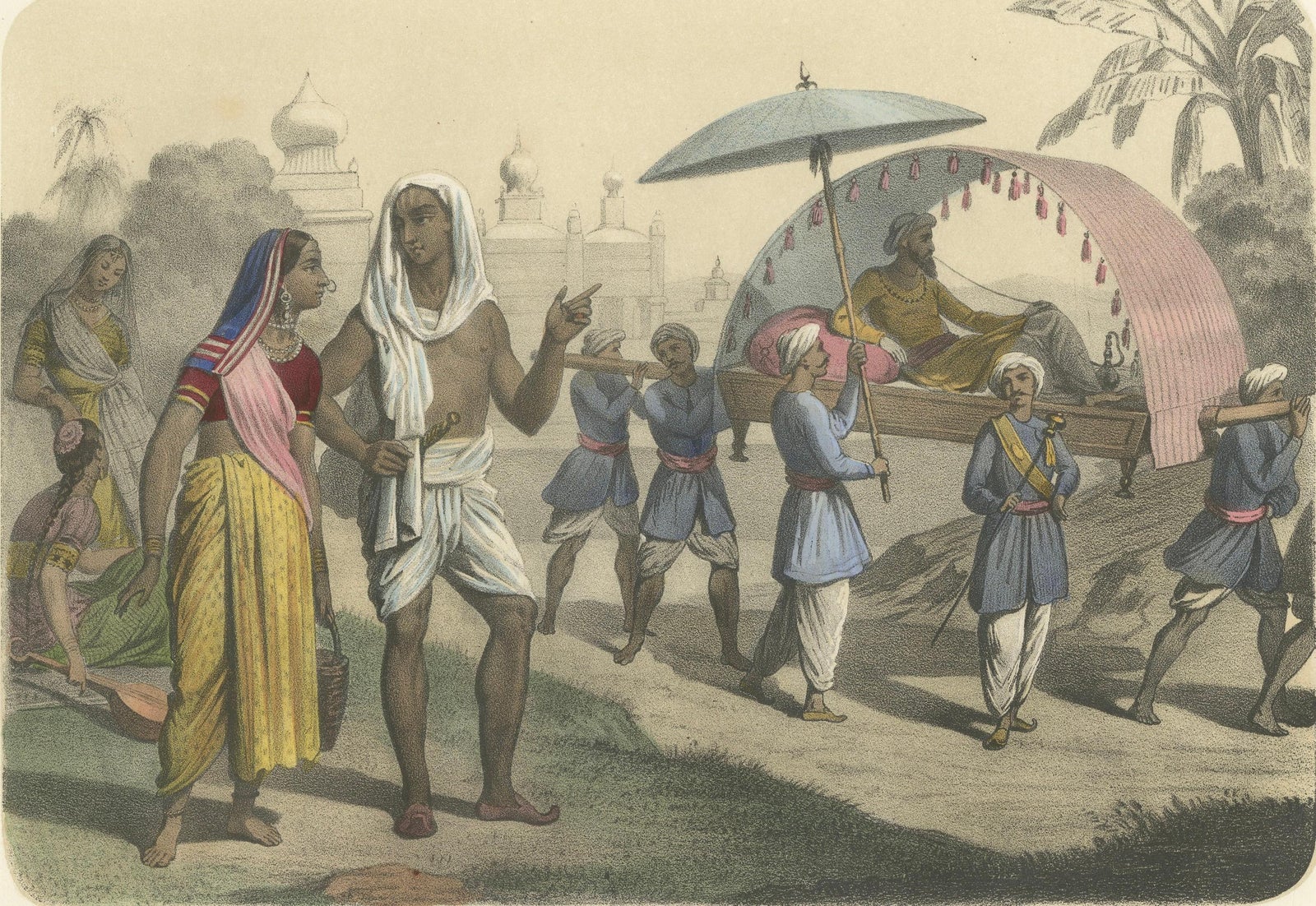
The composition immerses the viewer in a bustling scene of 19th-century India, rich with cultural and social variety. At the forefront stand a Brame et sa femme (Brahmin and his wife), portrayed with dignity and grace. The Brahmin, bare-chested and draped in a white dhoti and shawl, carries a ritual staff, while his wife, in a bright yellow skirt and red blouse, gestures in conversation beside him, her elegant jewelry and veil reflecting both modesty and refinement.
To their left, two Bayadères (temple dancers) prepare for a performance, their movements poised and sensual, dressed in brilliant hues of gold, pink, and green. Their inclusion reflects 19th-century European fascination with Indian temple culture and dance traditions, often idealized in Romantic art.
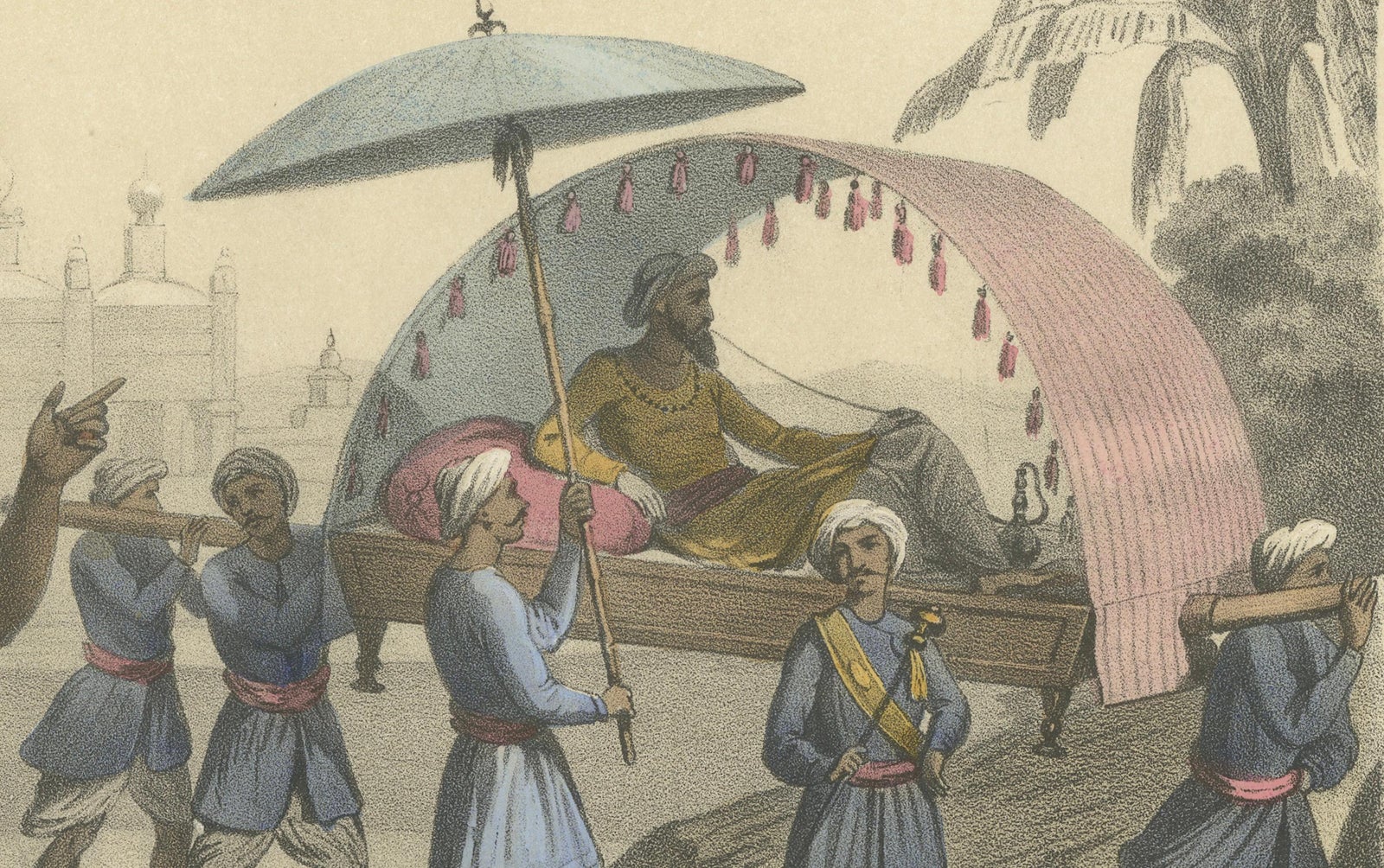
At right, a richly dressed Nabab (nobleman) reclines luxuriously within a palanquin, shaded by a large parasol and carried by six uniformed attendants in blue tunics and pink turbans. The graceful motion of the bearers and the serenity of the noble’s posture evoke the elegance and hierarchy of Mughal and princely India. The background, framed by palm trees and domed architecture, suggests the gardens and palaces of Delhi or Lucknow, completing the exotic Oriental tableau.
The lithograph captures both the splendor and diversity of Indian life as envisioned by 19th-century French artists. The combination of meticulous drawing, soft tonal gradation, and masterful hand-coloring, particularly in the fabrics and skin tones, demonstrates the skill of Lemercier’s workshop, which dominated Parisian color printing at the time.
Plates such as this from Le Monde en Estampes are valued for their historical and artistic significance, illustrating how Europe viewed Asia through the dual lenses of admiration and romantic imagination.
Condition report: Good condition with light foxing and minor toning, mostly in the margins. Strong impression and vivid original coloring. Full margins preserved.
Framing tips: Beautifully displayed with a cream or pale sand-colored mat and a gilt or dark rosewood frame. A subtle burgundy or gold inner mat accentuates the warm palette of the costumes.
Technique: Hand-colored lithograph
Maker: J. Bocquin after Fossey, printed by Lemercier, Paris, circa 1845