Close-ups
Framed and on the wall
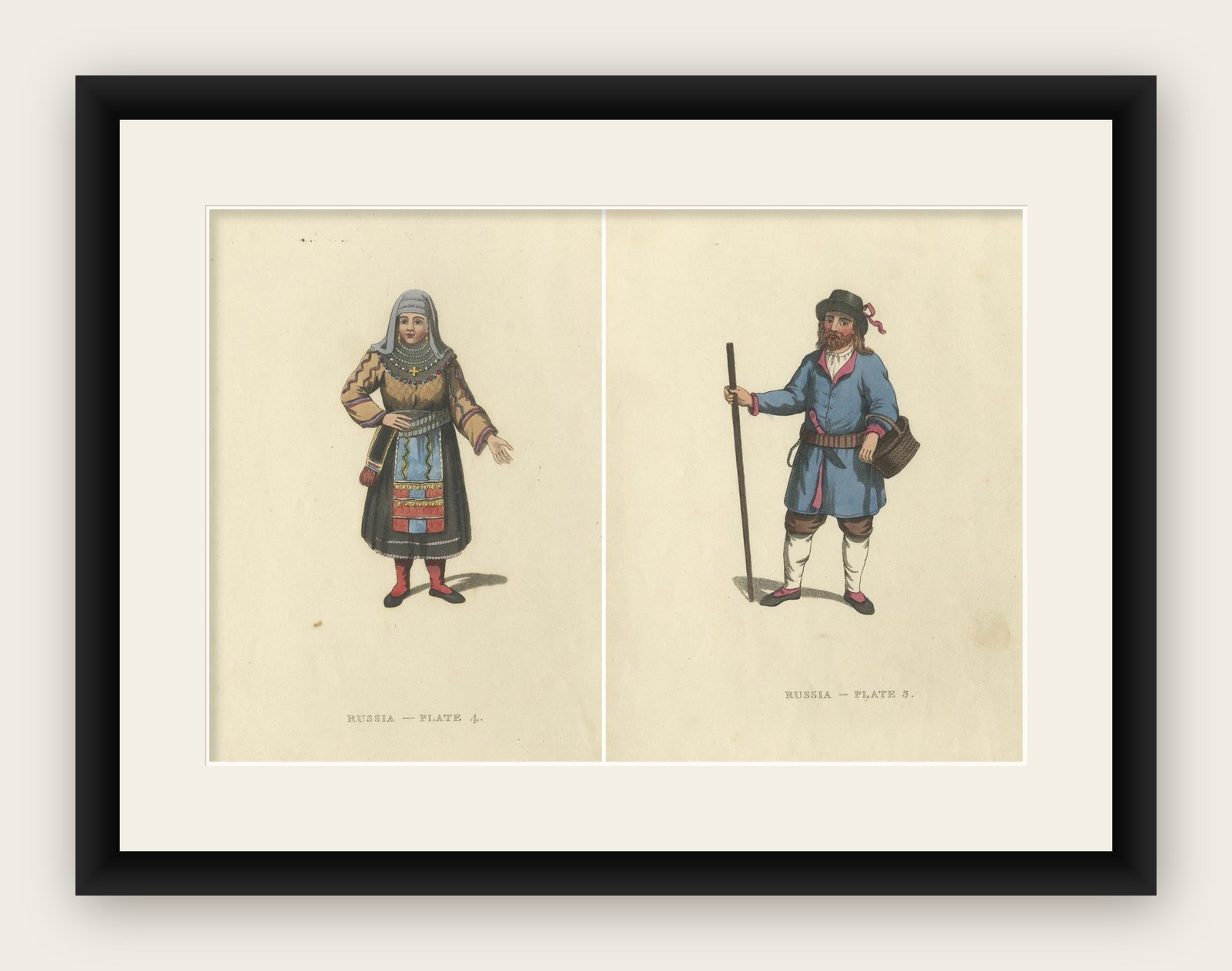


Frame and rooms are illustrations of how the print could look; the description says what is included.
Finnish Folklore: The Rural Dress and Customs of 19th Century Finland, 1814
$270
€240 · £205
Original print, not a reproduction.
Ships worldwide from the Netherlands, flat, insured and tracked. 14-day returns. To buy, use Ask a question and we will reserve the print for you.
- Date
- 1814
- Sheet size
- 9.4 × 6.7 in (24 × 17 cm)
- Condition
- Good. Very good, given age. General age-related toning and/or occasional minor defects from handling. Right edge rough with chips missing, but leaving enough space for proper framing. Please study scan carefully.
- Wardrobe
- Folk finery
- Era
- 1790 to 1840, Empire and Romantic
- Stock no.
- f_38695912
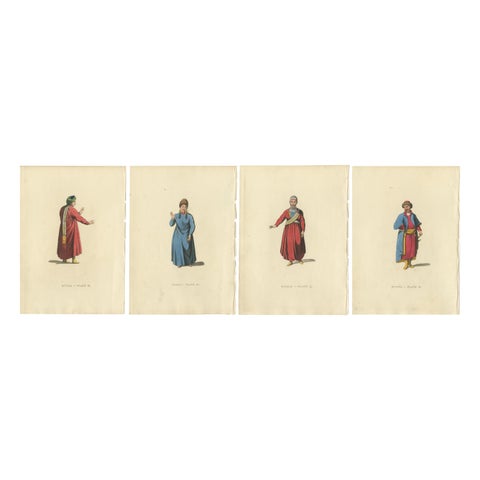
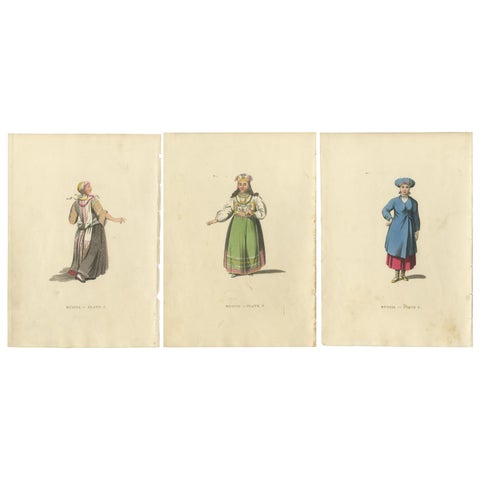
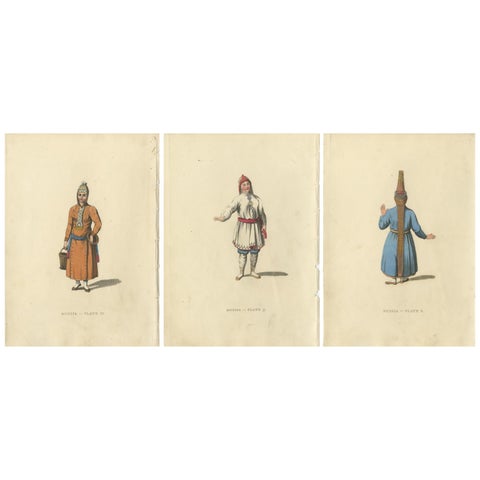
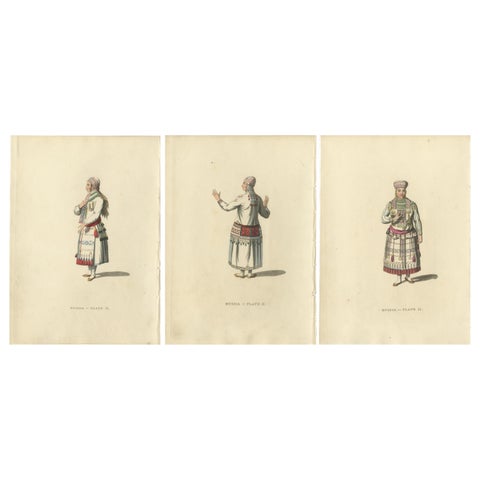
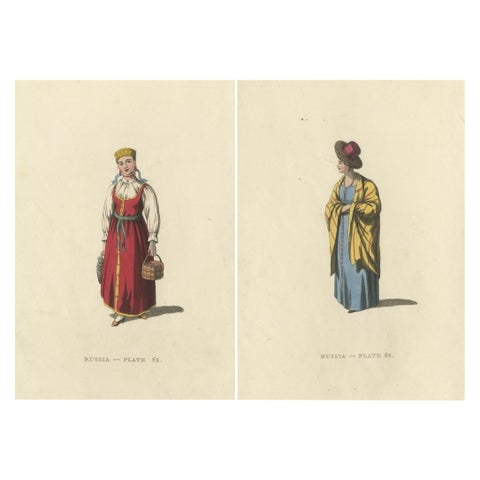
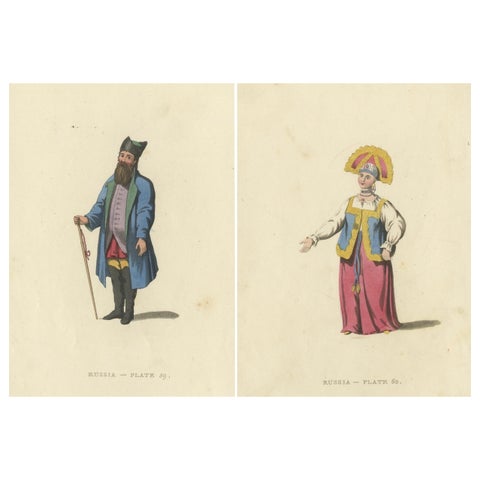
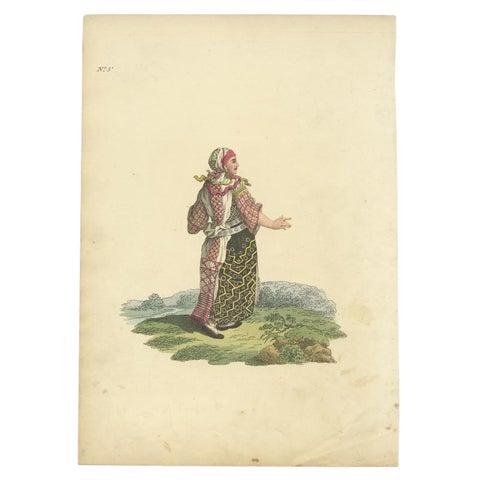
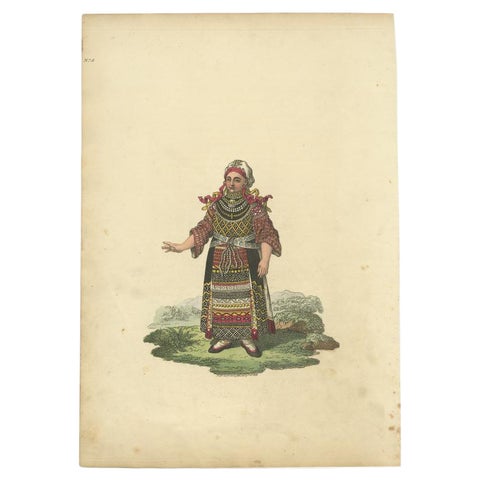
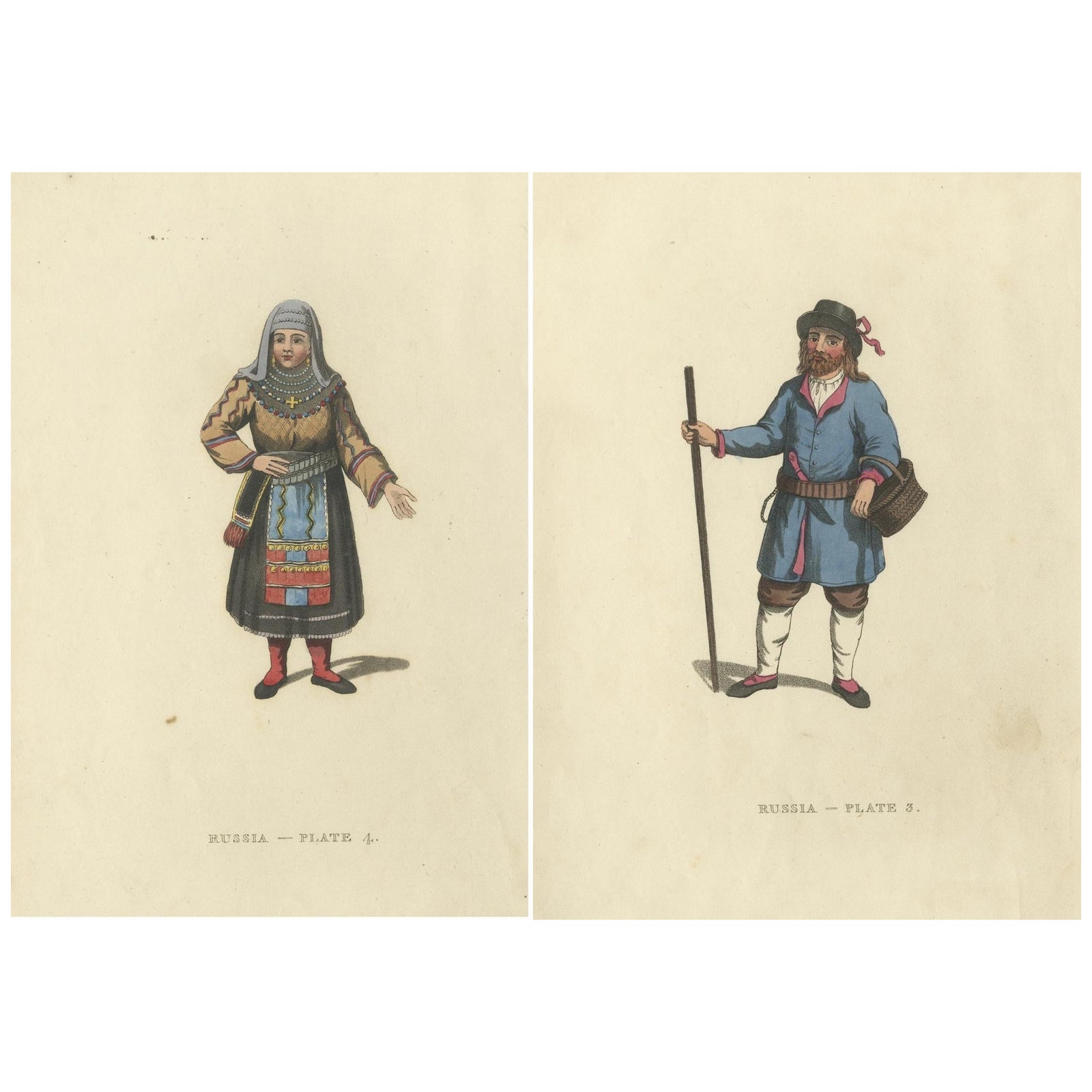
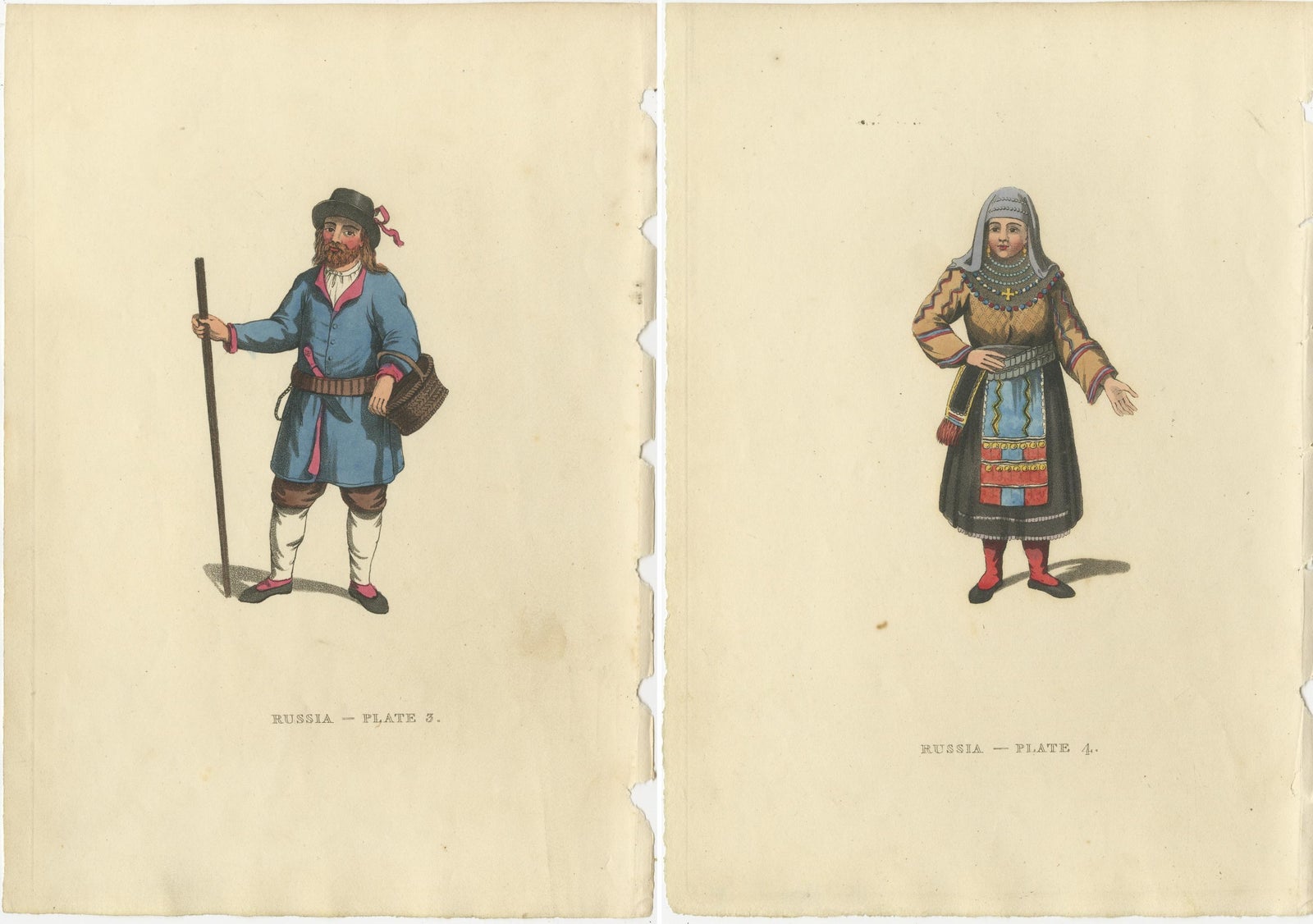
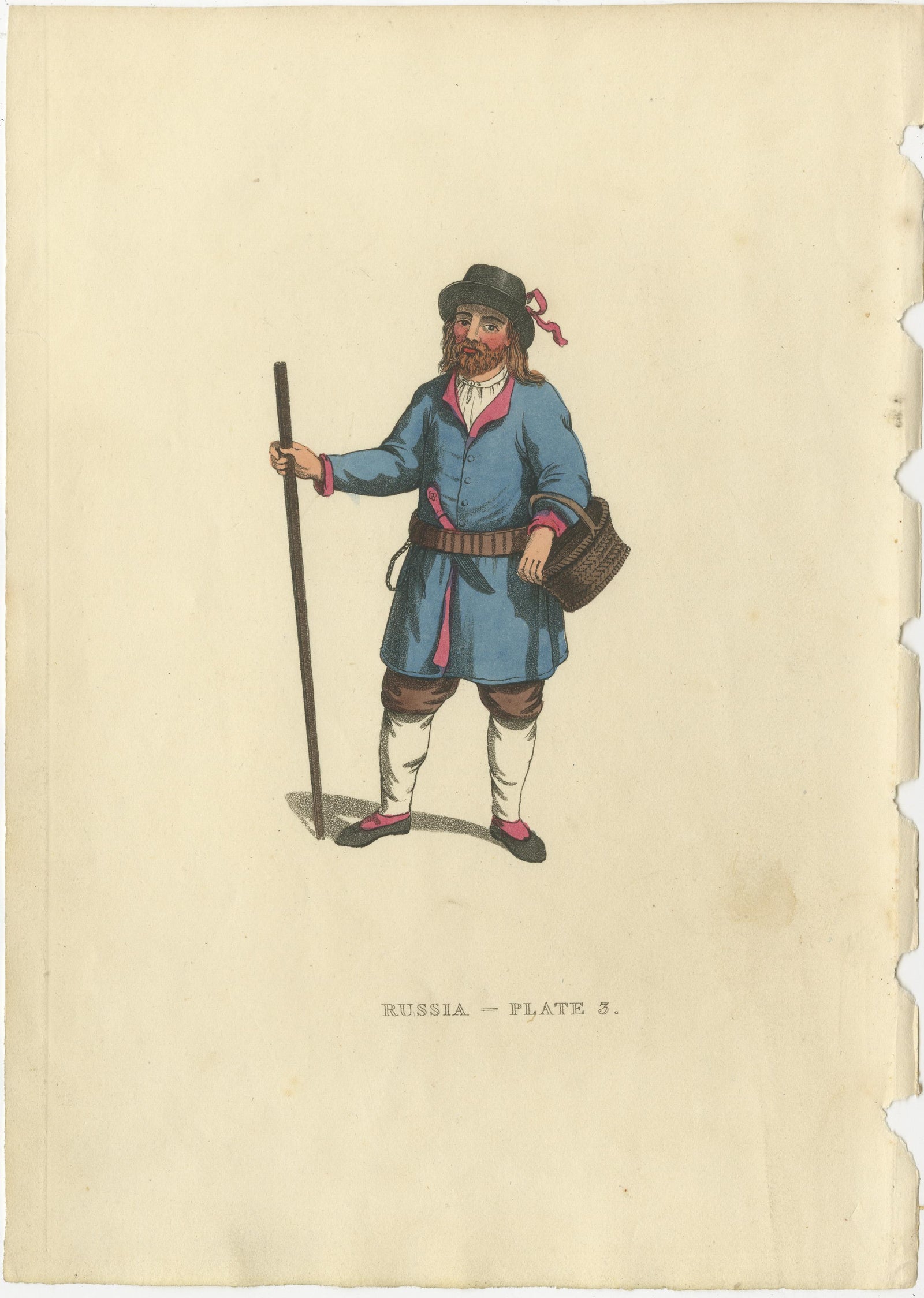
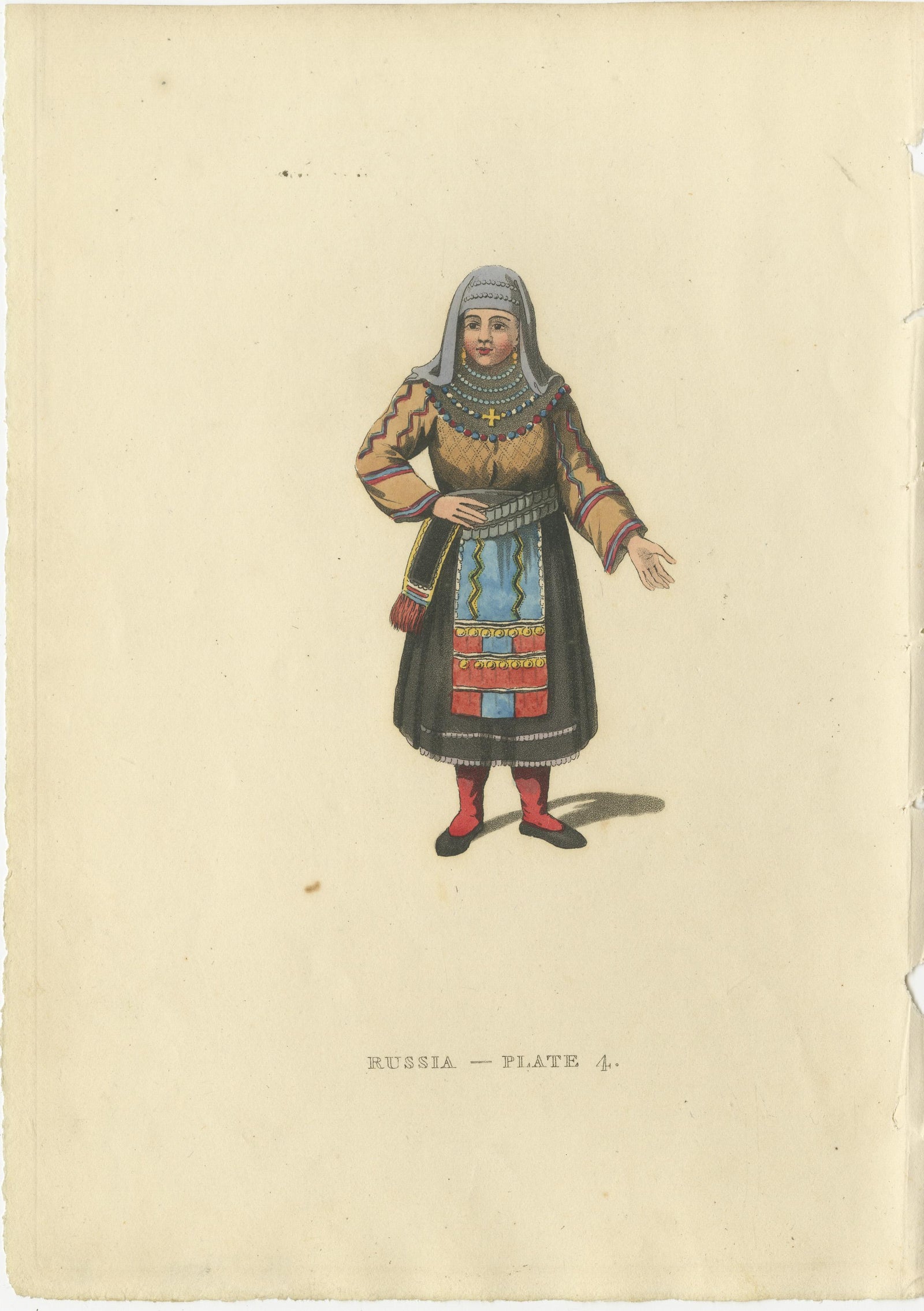
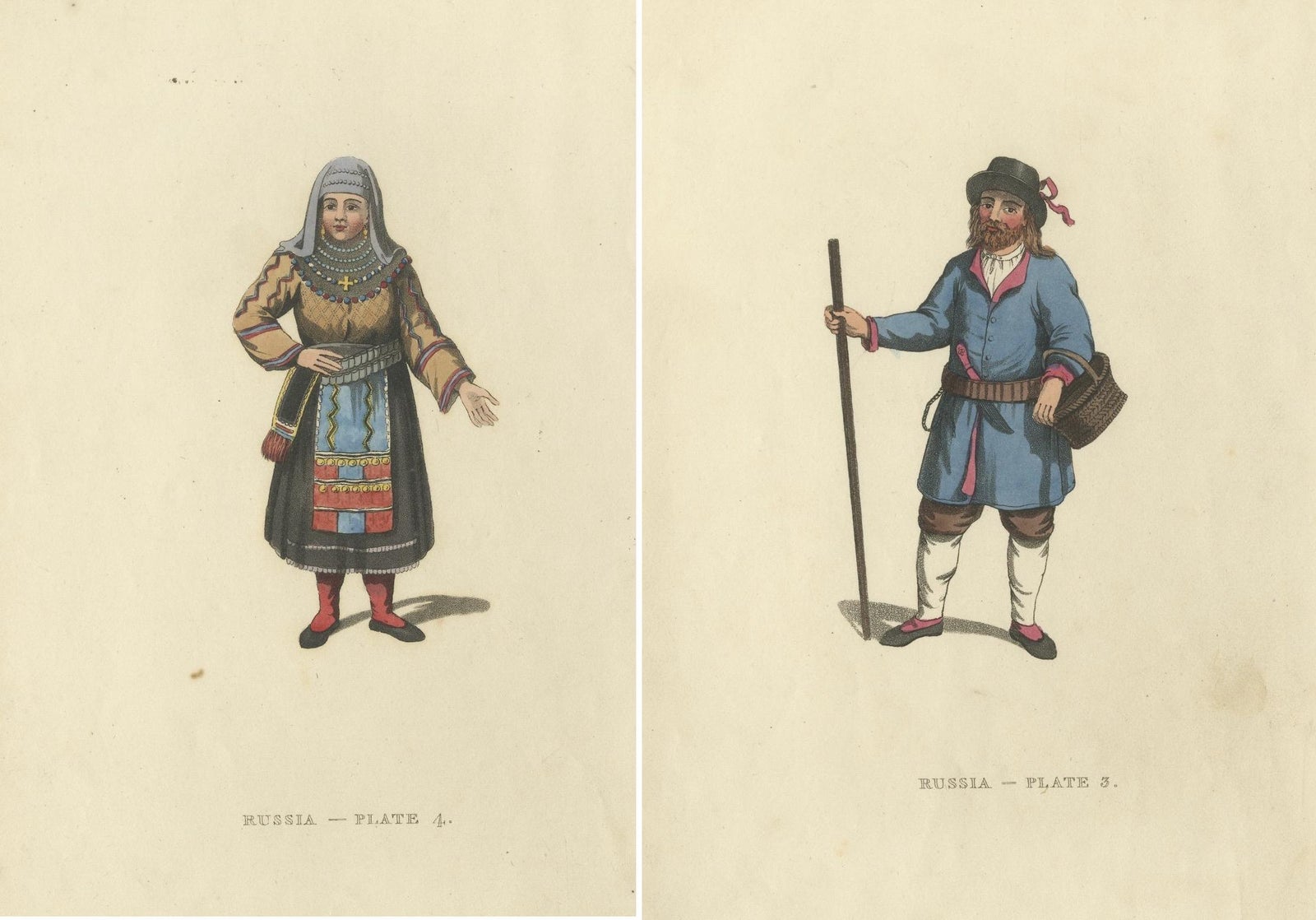
These images are fine examples of the detailed and colorful engravings that appear in William Alexander's "Picturesque Representations of the Dress and Manners of the Russians," published by John Murray in 1814. This work is a significant historical record of the cultural attire and customs of the Russian Empire's diverse populations during the early 19th century.
The first image portrays a Finnish peasant, characterized by his robust and practical clothing suitable for the demanding rural life and the cold climate of Finland, which was part of the Russian Empire at the time. He wears a long coat, likely made of a durable fabric, with a sash around the waist and a cap with a ribbon, suggesting a touch of personal style or local custom. The stick in his hand could be a walking aid or a tool for herding or farming, and the basket suggests his engagement in agricultural activities or foraging.
The second image depicts a female Finnish peasant. Her attire is rich in detail and color, indicative of traditional Finnish folk costumes. The dress is layered and includes a decorated apron, possibly signifying her marital status, regional identity, or simply a part of the everyday costume. Her headdress and the multiple necklaces are also indicative of traditional Finnish attire and could represent her social status or personal wealth.
Both engravings are not only artistic representations but also ethnographic accounts, providing insights into the Finnish culture as it existed under Russian rule. They offer valuable visual information about the peasants’ way of life, their regional dress codes, and the subtle intricacies of their social customs.