Close-ups
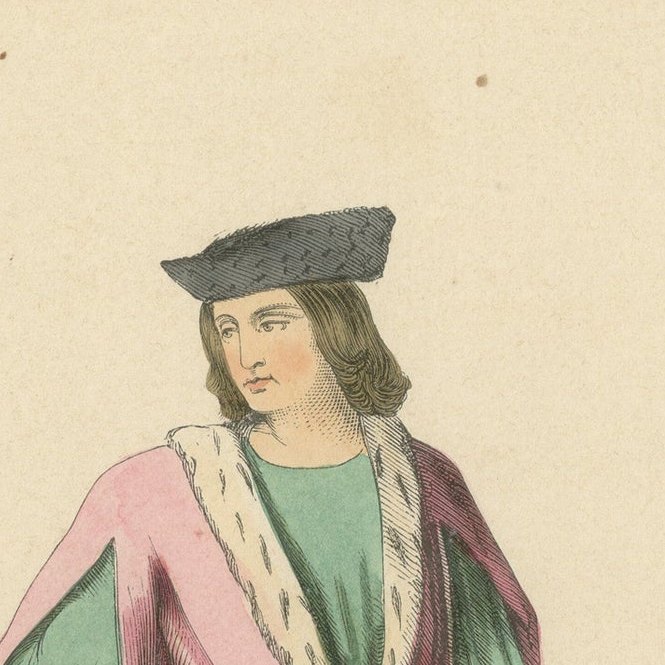
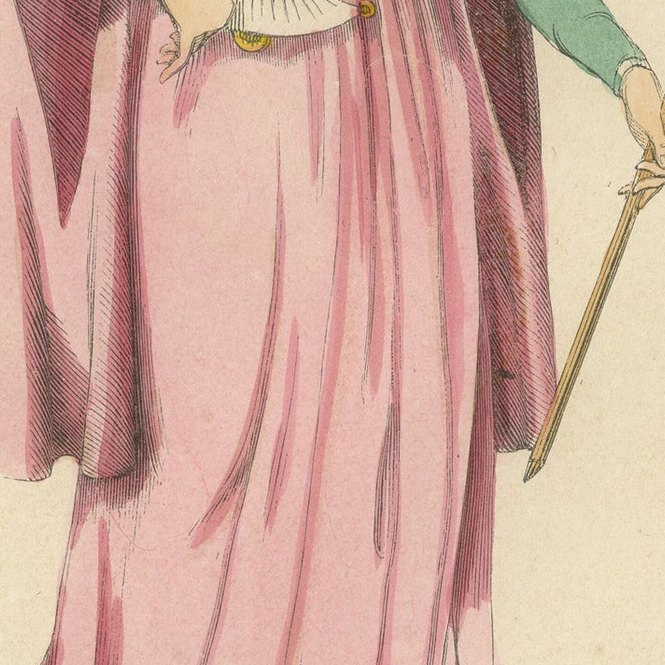
Framed and on the wall
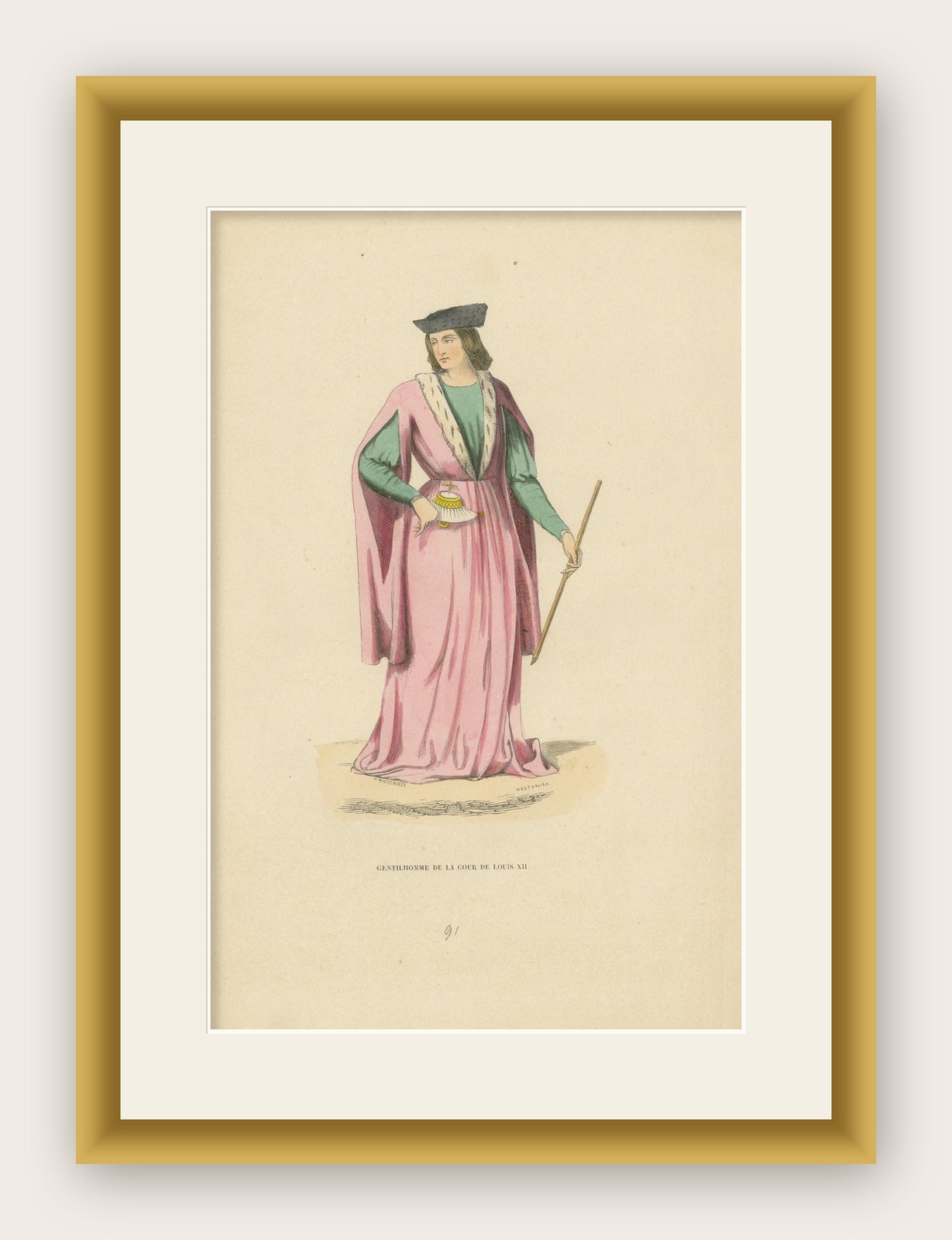
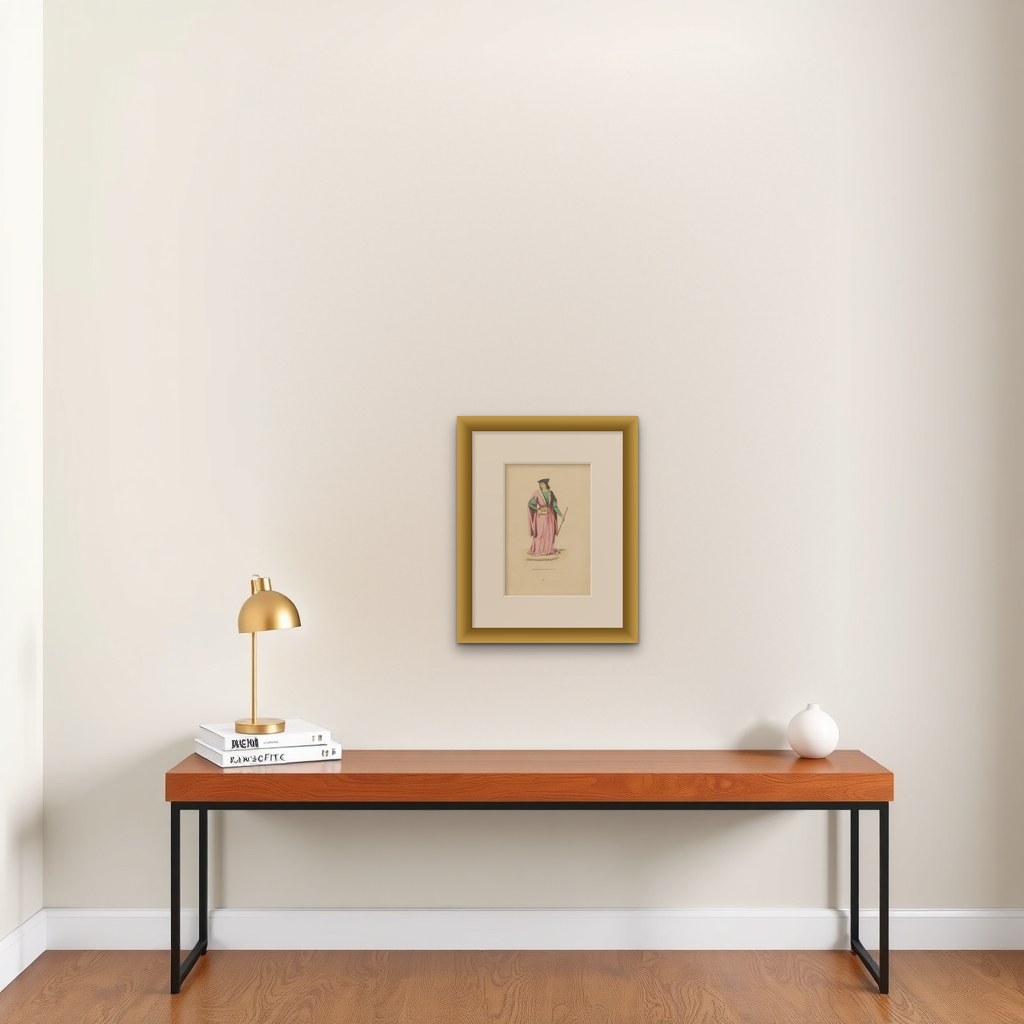

Frame and rooms are illustrations of how the print could look; the description says what is included.
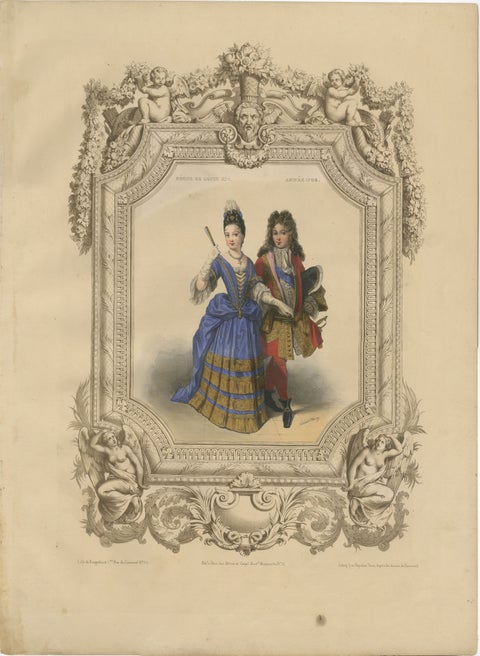
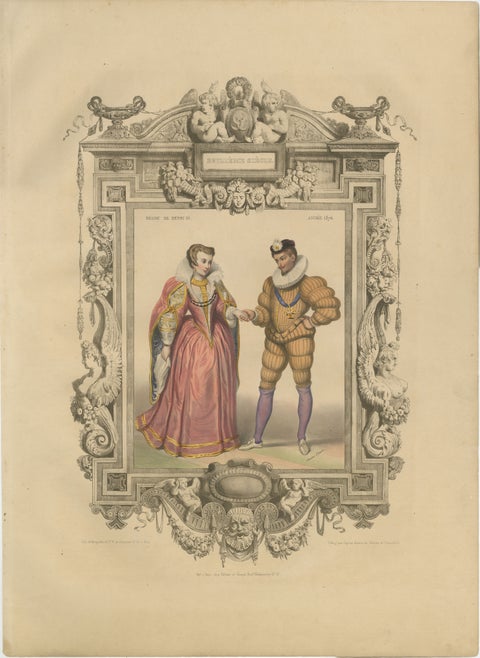
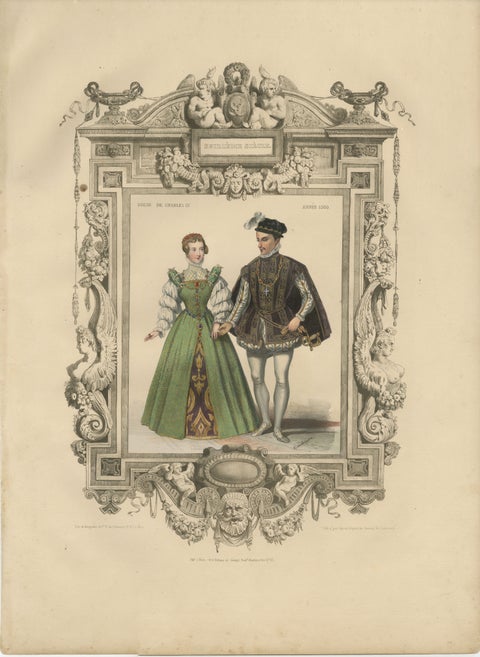
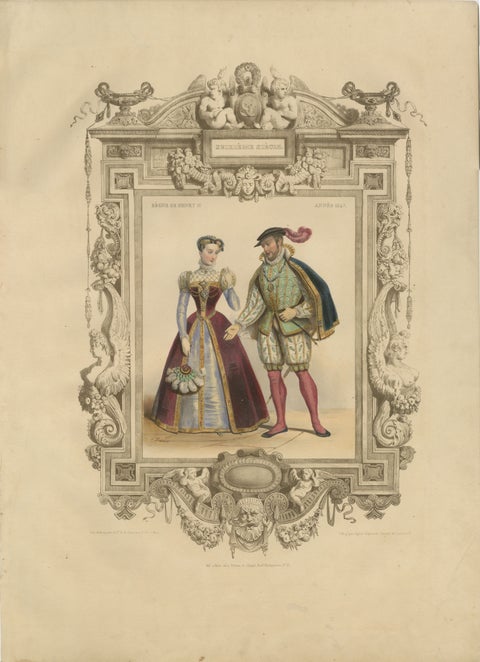
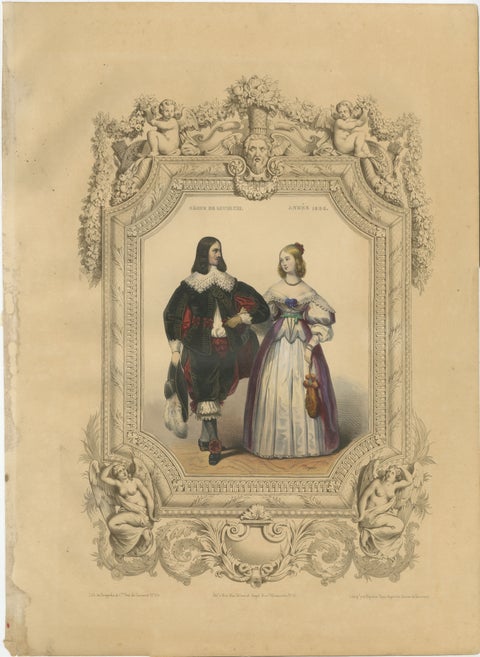
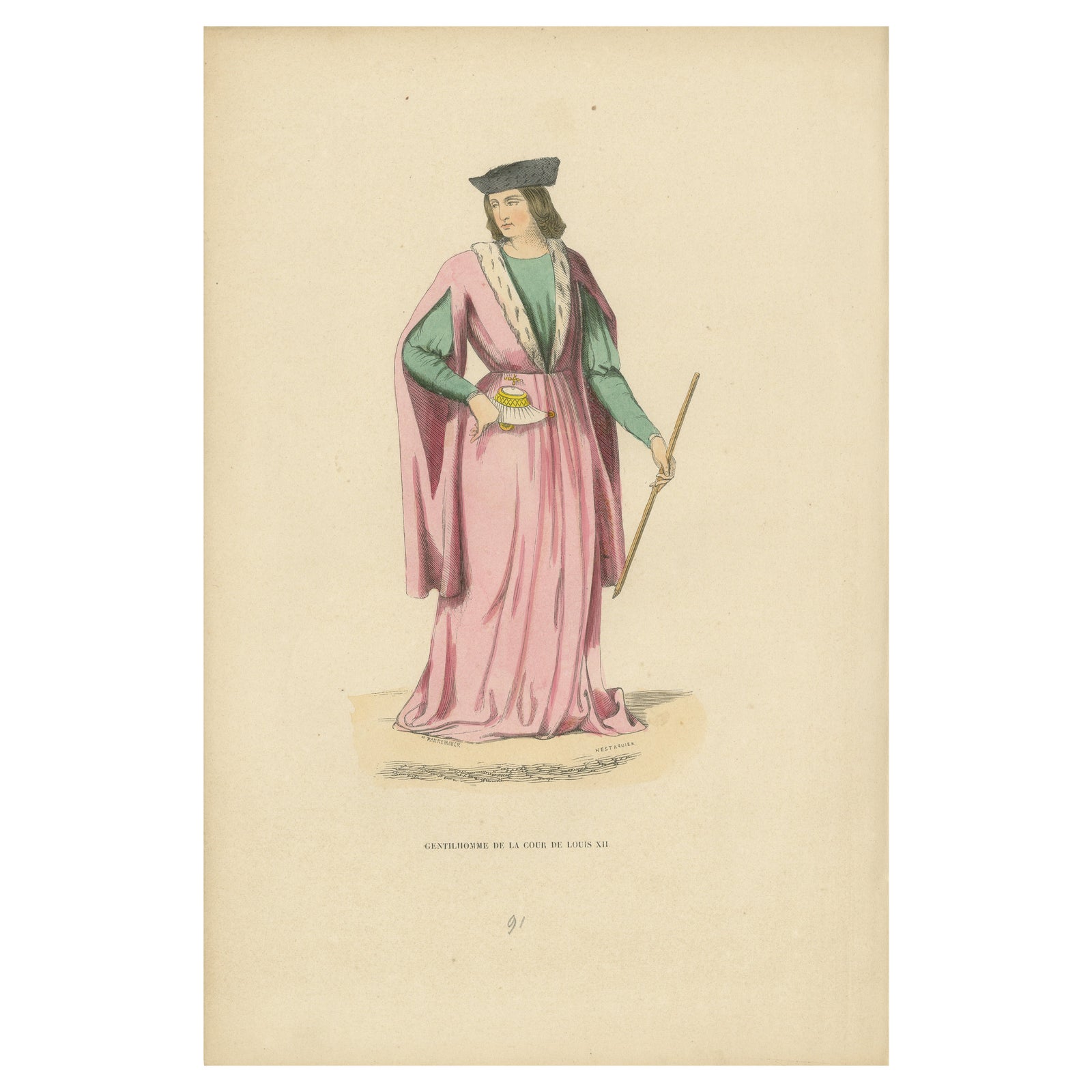
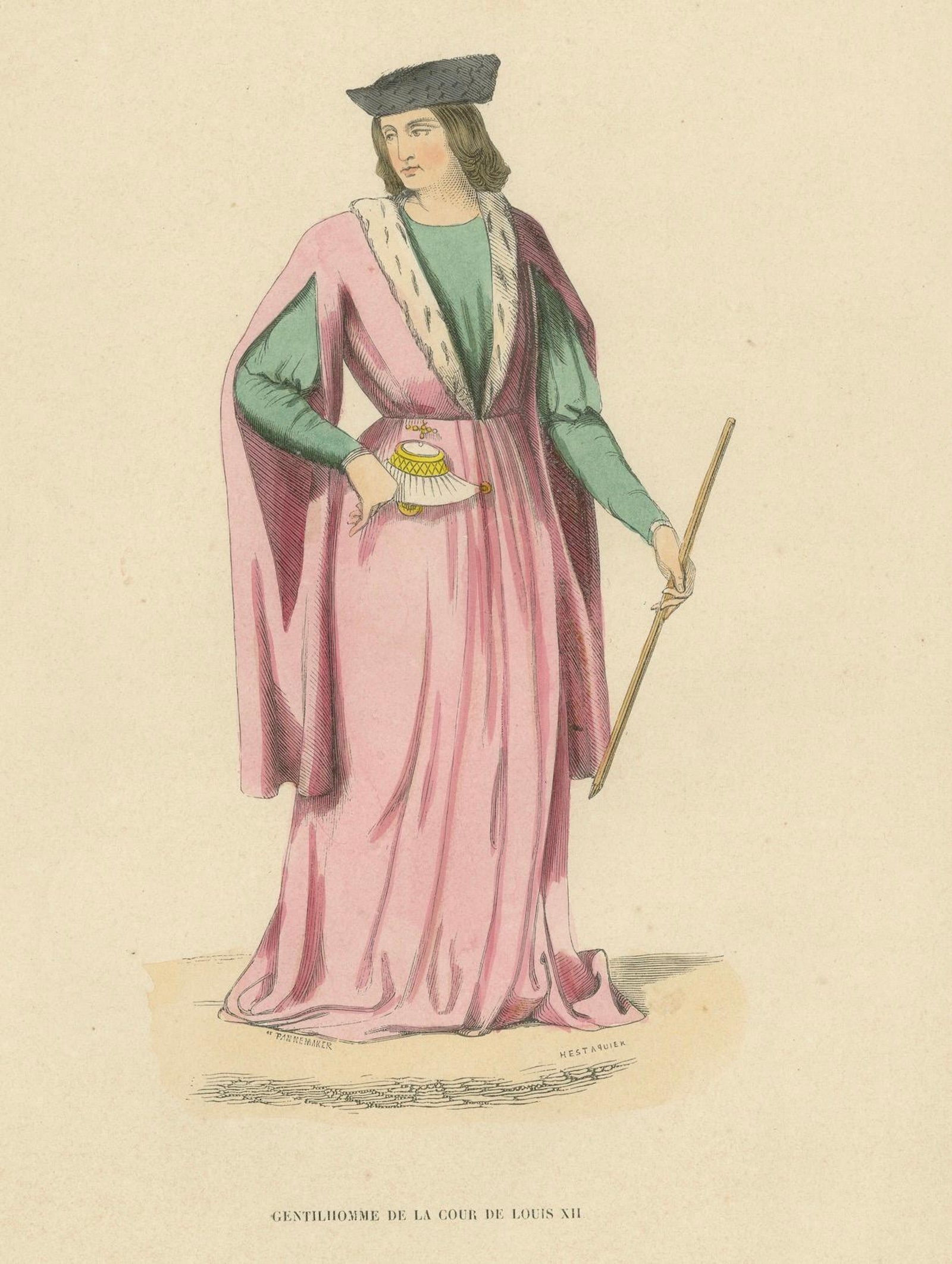
Elegance at the Court of Louis XII: A French Noble's Poise, 1847
£120
$155 · €140
Original print, not a reproduction.
Ships worldwide from the Netherlands, flat, insured and tracked. 14-day returns. To buy, use Ask a question and we will reserve the print for you.
- Date
- 1847
- Sheet size
- 10.6 × 7.1 in (27 × 18 cm)
- Condition
- Good. Good. Overal light toning and light soiling but the image itself clean and hand-colored almost 200 years ago and still in expliciet colors. Aged paper with typically warm, yellowish-brown hue, mostly around the edges. Study the images carefully.
- Wardrobe
- Court & couture
- Era
- 1840 to 1870, Crinoline
- Stock no.
- f_37905952
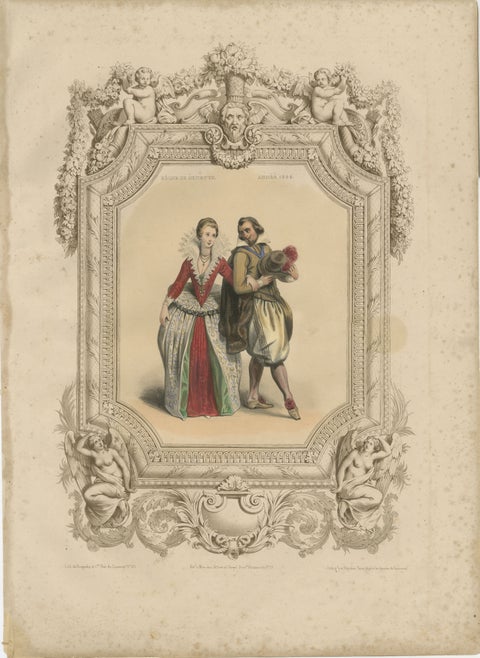
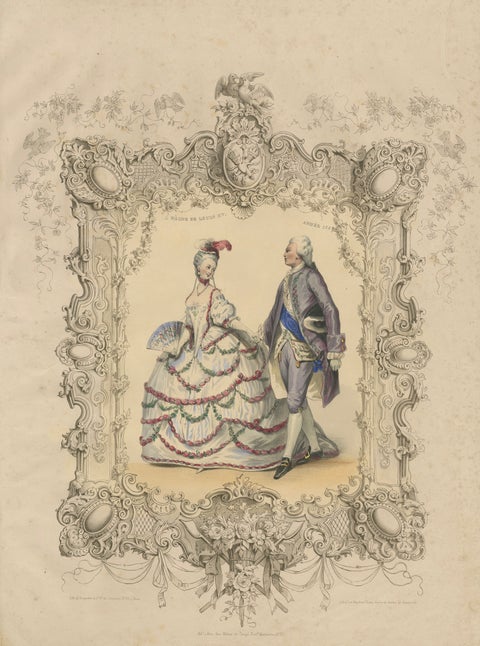
Title: "Elegance at the Court of Louis XII: A French Noble's Poise"
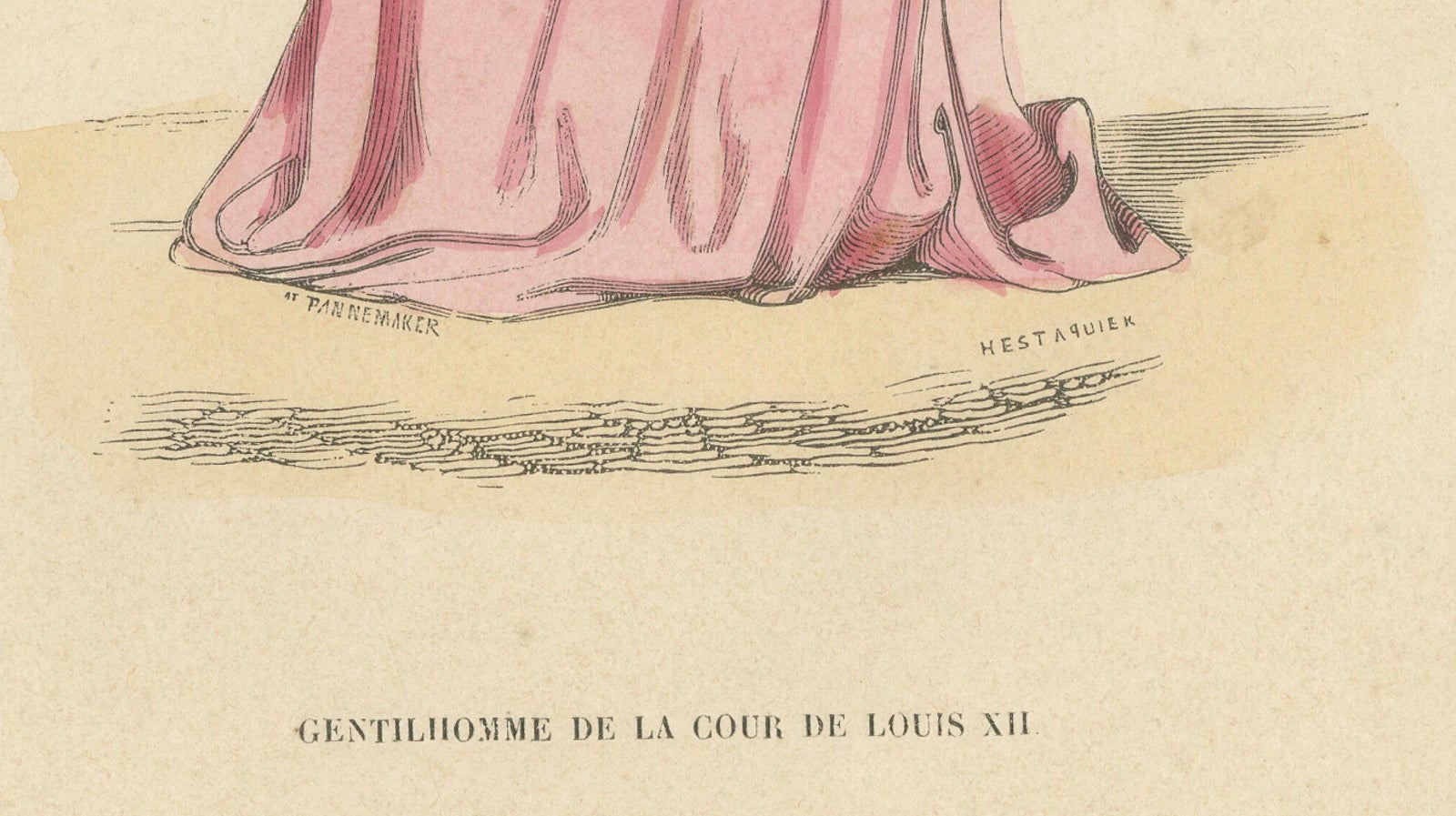
Description: This delicate historical illustration depicts a French nobleman from the court of King Louis XII, elegantly attired in the fashion of the early 16th century. He stands with a composed and dignified stance, a walking stick in one hand, exuding the grace and refinement expected of someone from his esteemed position.
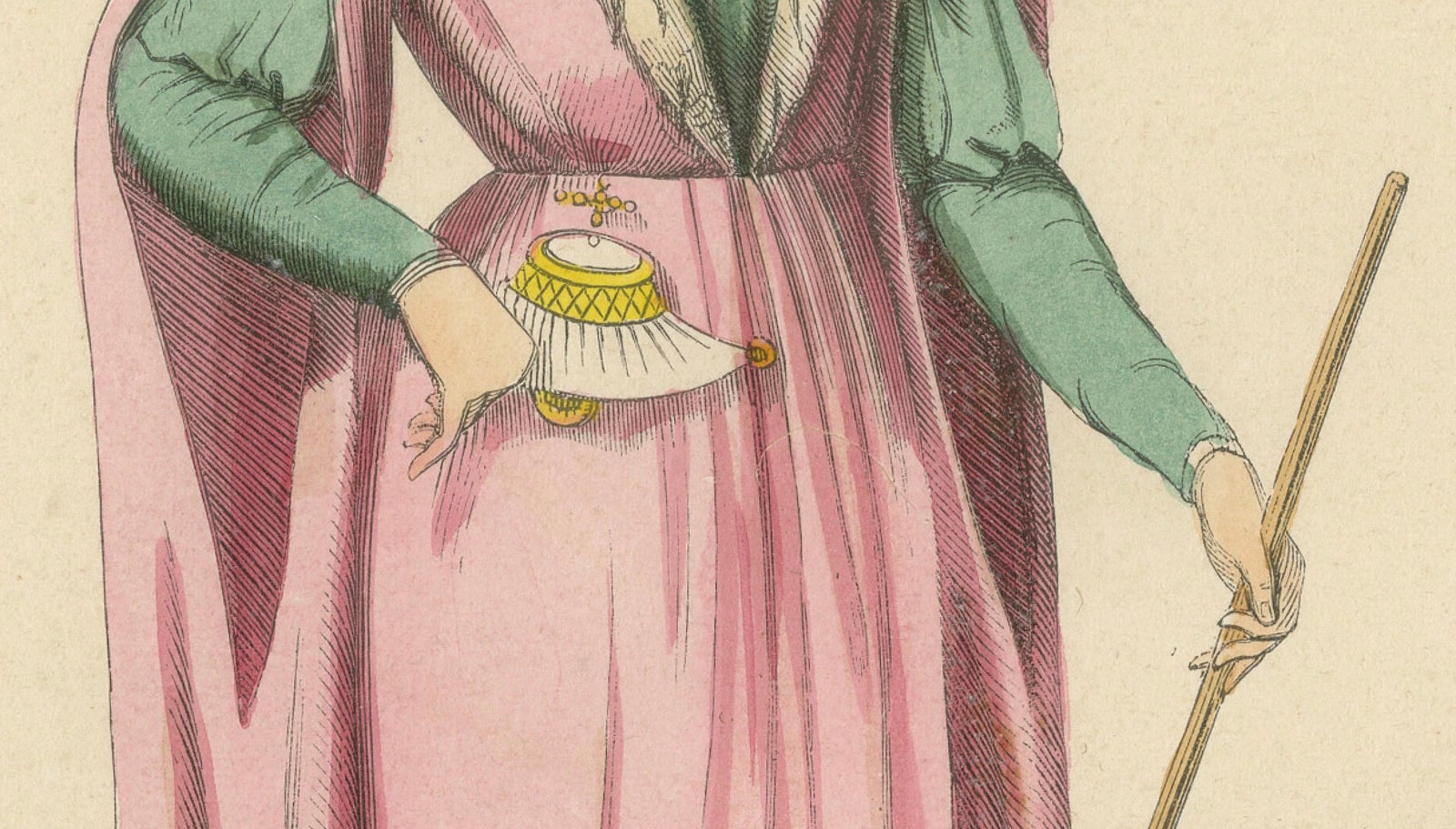
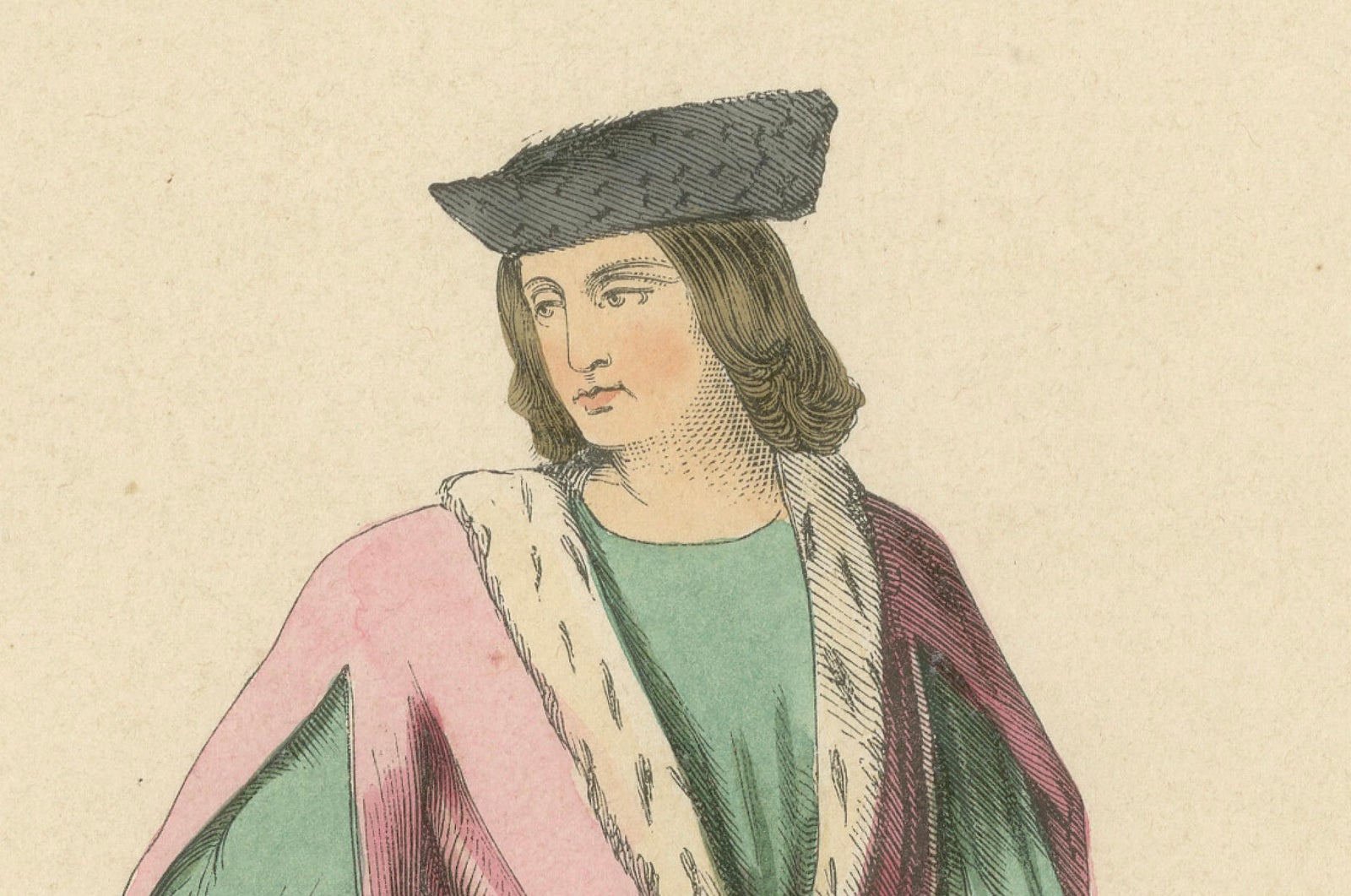
His attire is a rich blend of colors and textures, indicative of his status. The nobleman wears a soft pink tunic, a color that during the time was often associated with nobility due to the expense of the dye required to produce it. The tunic is complemented by a deep green overcoat with a luxurious fur trim that adds both warmth and a touch of opulence to his ensemble.
The hat, an important status symbol of the time, is fashioned in a black fabric that contrasts with his lighter clothing, completing his attire with a note of seriousness. This hat, along with the belt adorned with a decorative purse, signals his wealth and rank.
The image captures the essence of court life during the reign of Louis XII, a period noted for its artistic and cultural achievements. It is a snapshot of history, reflecting the intricate sartorial customs that were an integral part of the noble identity in the French court. The nobleman's attire is not just clothing but a narrative of status, culture, and the aesthetics of an era where appearance was a key indicator of one's place in the social hierarchy.
The colors have a nice glow over them. Historically, egg whites, known as glair, and sometimes egg yolk were indeed used in illumination and painting, particularly in manuscripts, to give colors a brighter appearance and to add a sheen or gloss to the work. This technique was quite common during the Middle Ages and into the Renaissance.
Egg whites can be applied as a varnish over pigments to enhance their brightness and to protect the colors. This application could make the colors appear more vivid and also add a slight glossy sheen to the surface of the image.
Egg yolk, on the other hand, was commonly used as a binding agent in paint. It forms the basis of tempera paint, a medium that was widely used before the advent of oil painting. Egg yolk helps to create a durable and long-lasting color that adheres well to various surfaces.
In the context of the print from 1847, it's less likely that egg whites or yolks were used directly on the print, as by that time, commercial printing processes would have been more advanced and less reliant on such manual methods. However, if this print is a representation of an earlier style or is meant to mimic the appearance of hand-painted manuscripts, the original artists might have employed techniques or materials that gave a similar effect to those achieved with egg-based binders and varnishes.