Close-ups
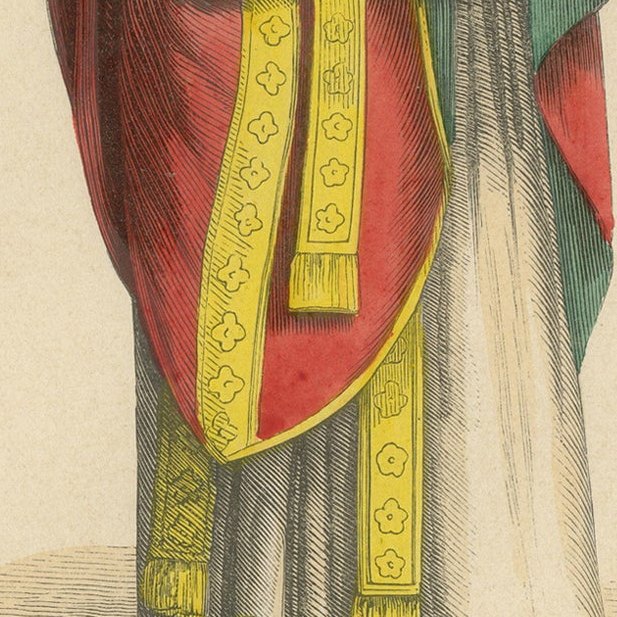
Framed and on the wall

Frame and rooms are illustrations of how the print could look; the description says what is included.
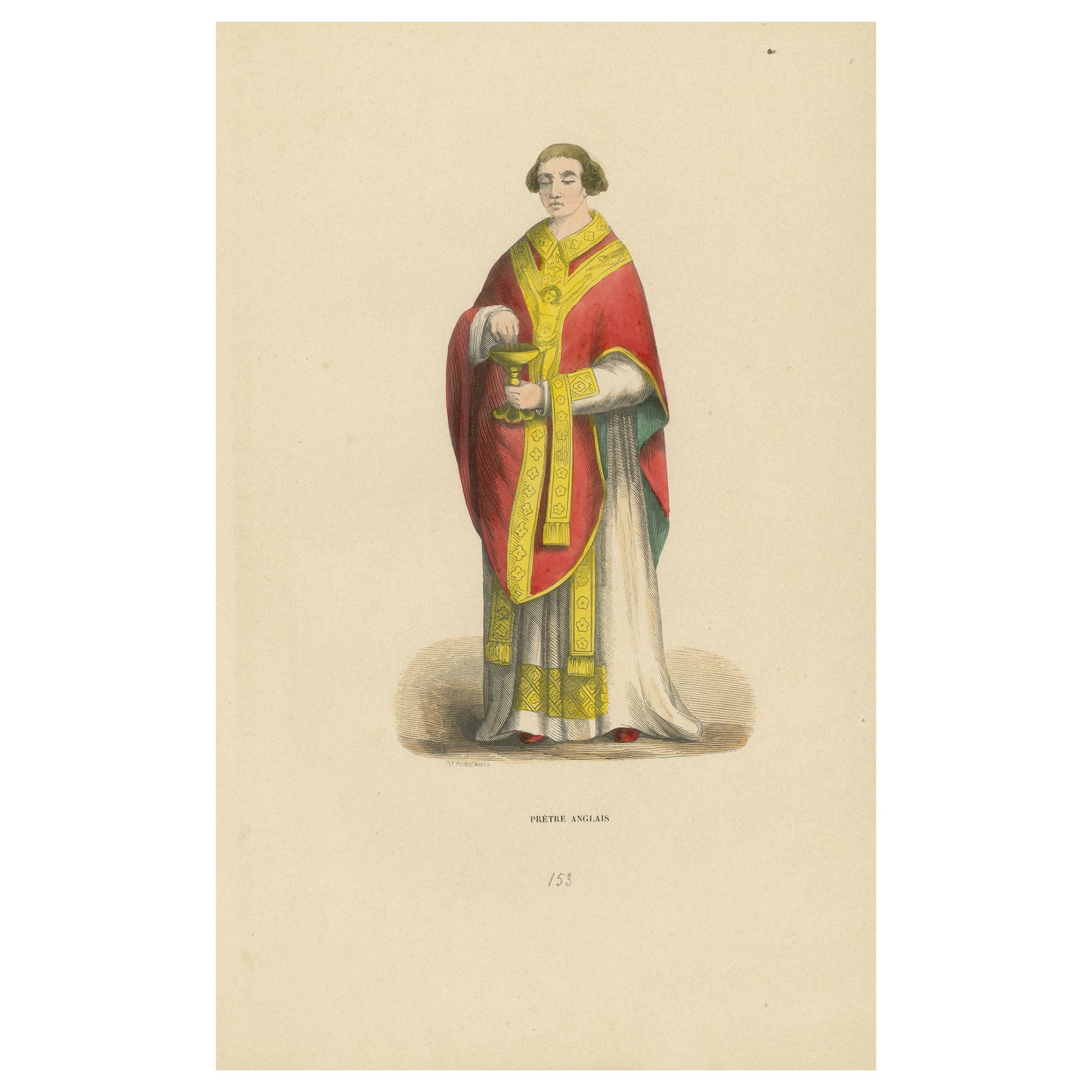
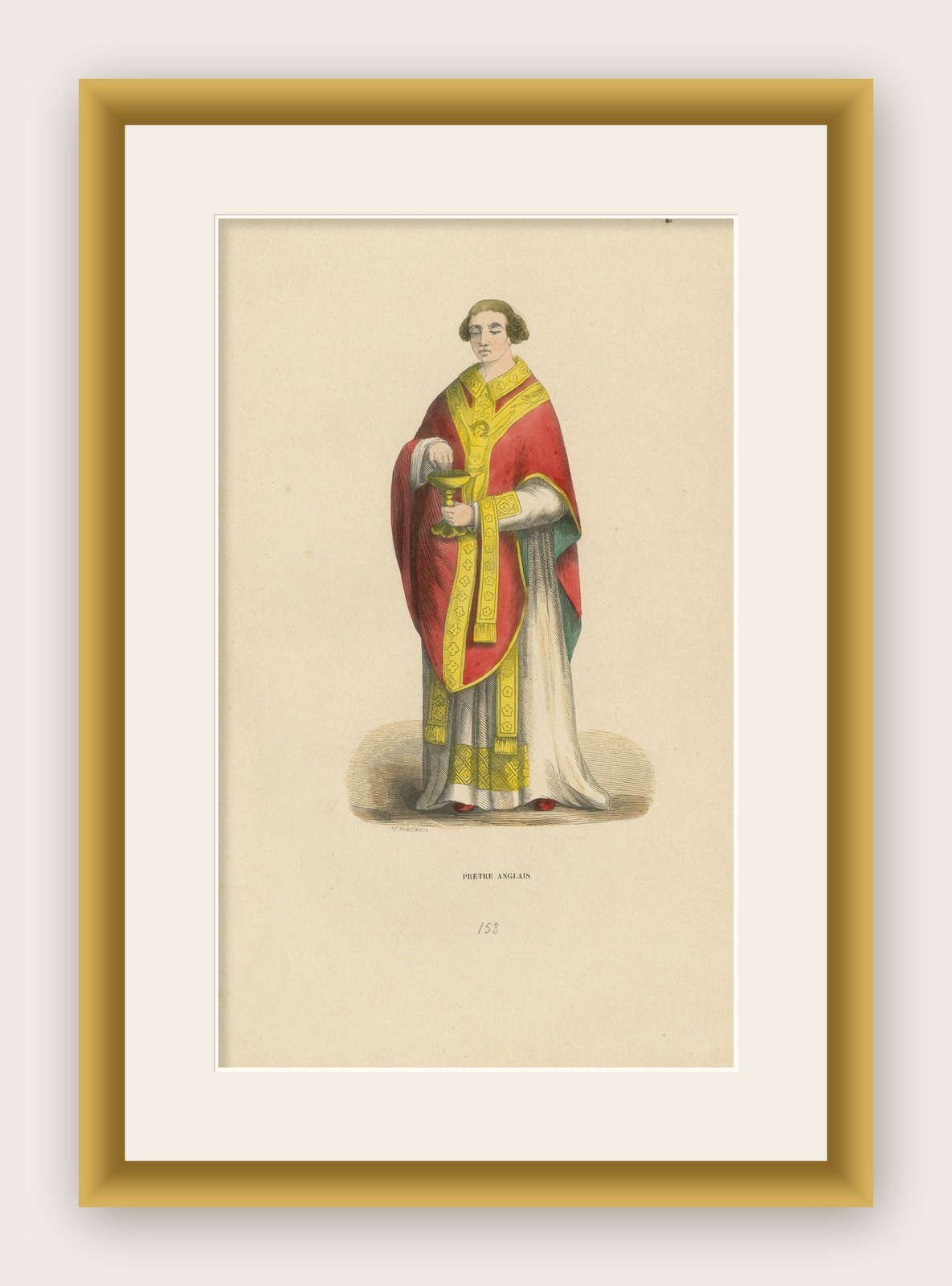
Clerical Dignity: An English Priest in 'Costume du Moyen Âge', 1847
£155
$205 · €180
Original print, not a reproduction.
Ships worldwide from the Netherlands, flat, insured and tracked. 14-day returns. To buy, use Ask a question and we will reserve the print for you.
- Date
- 1847
- Sheet size
- 10.6 × 7.1 in (27 × 18 cm)
- Condition
- Good. Good. Overal light toning and light soiling but the image itself clean and hand-colored almost 200 years ago and still in expliciet colors. Aged paper with typically warm, yellowish-brown hue, mostly around the edges. Study the images carefully.
- Wardrobe
- Court & couture
- Era
- 1840 to 1870, Crinoline
- Stock no.
- f_37928742
Title: "Clerical Dignity: An English Priest in 'Costume du Moyen Âge'"
Description: This lithograph, part of the "Costume du Moyen Âge" series from 1847, depicts an English priest adorned in his ecclesiastical robes. The illustration captures the respect and authority of his clerical office through the meticulous portrayal of his vestments. The priest is wearing a chasuble, the outermost liturgical vestment, which is a rich crimson, signifying the blood of Christ and the sacrifice of the martyrs. It is adorned with intricate yellow patterns, possibly indicative of the specific liturgical season or feast day.
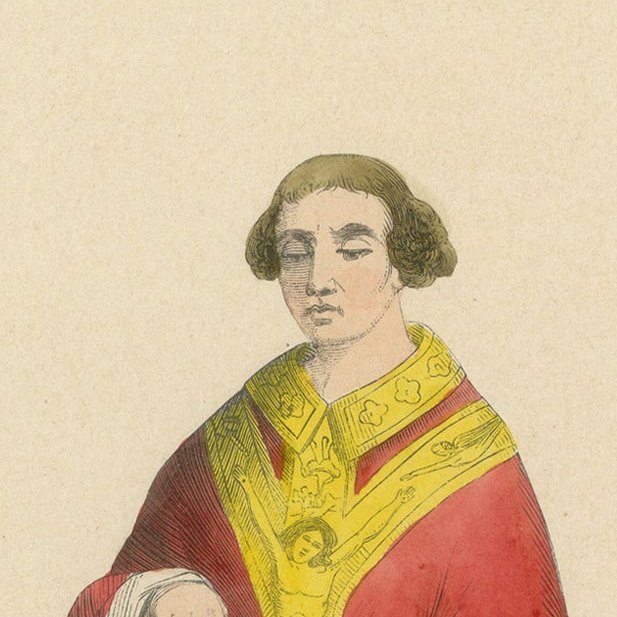
Beneath the chasuble, the priest wears an alb, a long white garment that reaches his feet, representing purity. Around his neck, there is a clerical collar, and his wrists are adorned with cuffs that are likely part of an amice, a liturgical vestment worn under the chasuble.
The stole, a band of cloth that signifies the priest's ordination and authority to perform sacraments, drapes across his shoulders and down the front of the chasuble, embellished with decorative motifs.
In his hands, he holds a chalice, ready for the celebration of the Eucharist, the central rite of Christian worship. His posture is upright and solemn, reflecting the gravity and devotion associated with his religious duties.
His feet are clad in red shoes, peeking out from beneath the hem of the alb, which may be symbolic of the readiness to spread the gospel. The priest's facial features are rendered with a sense of serenity and thoughtfulness, appropriate for a man of his spiritual calling.
This lithograph not only provides a visual record of the vestments of an English priest during the Middle Ages but also conveys the reverence and solemnity associated with the clerical profession at the time. The image is a celebration of the historical tradition of clerical dress, highlighting its significance in the cultural and spiritual life of the era.
The colors have a nice glow over them. Historically, egg whites, known as glair, and sometimes egg yolk were indeed used in illumination and painting, particularly in manuscripts, to give colors a brighter appearance and to add a sheen or gloss to the work. This technique was quite common during the Middle Ages and into the Renaissance.
Egg whites can be applied as a varnish over pigments to enhance their brightness and to protect the colors. This application could make the colors appear more vivid and also add a slight glossy sheen to the surface of the image.
Egg yolk, on the other hand, was commonly used as a binding agent in paint. It forms the basis of tempera paint, a medium that was widely used before the advent of oil painting. Egg yolk helps to create a durable and long-lasting color that adheres well to various surfaces.
In the context of the print from 1847, it's less likely that egg whites or yolks were used directly on the print, as by that time, commercial printing processes would have been more advanced and less reliant on such manual methods. However, if this print is a representation of an earlier style or is meant to mimic the appearance of hand-painted manuscripts, the original artists might have employed techniques or materials that gave a similar effect to those achieved with egg-based binders and varnishes.