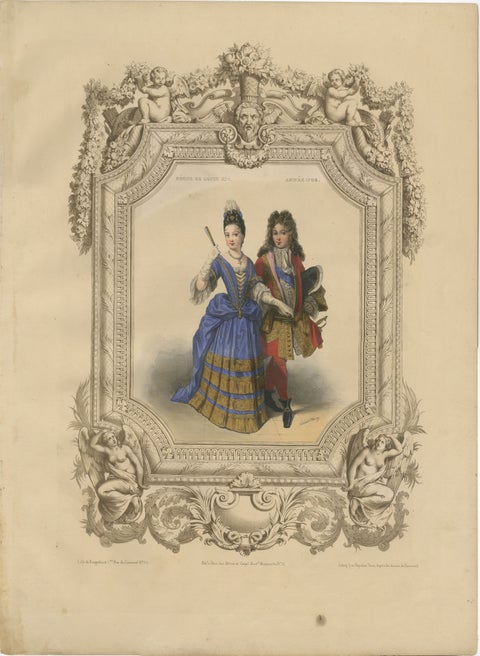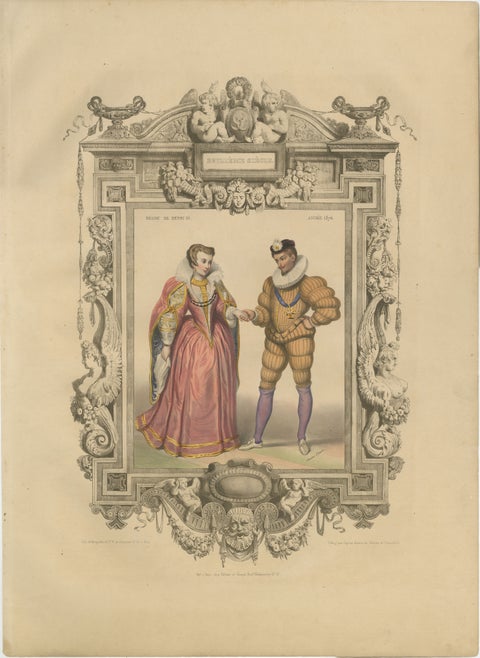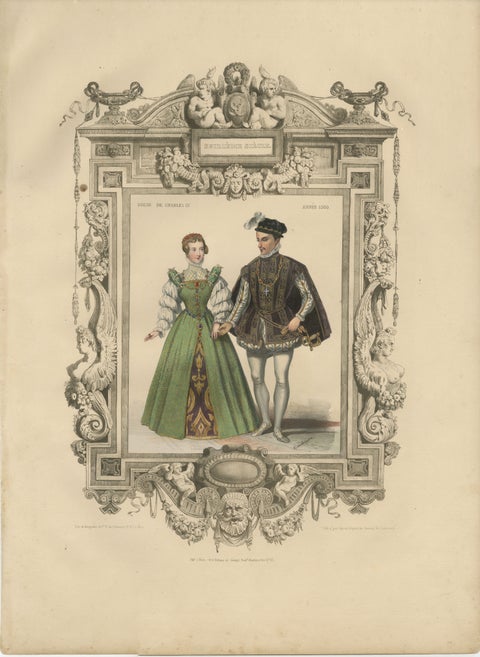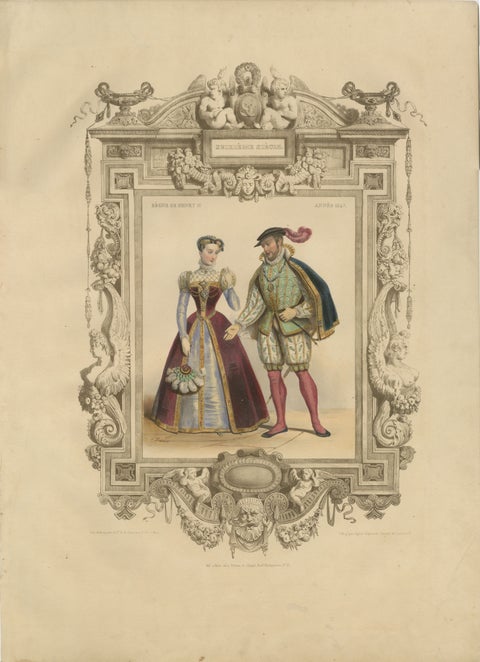
Close-ups
Framed and on the wall
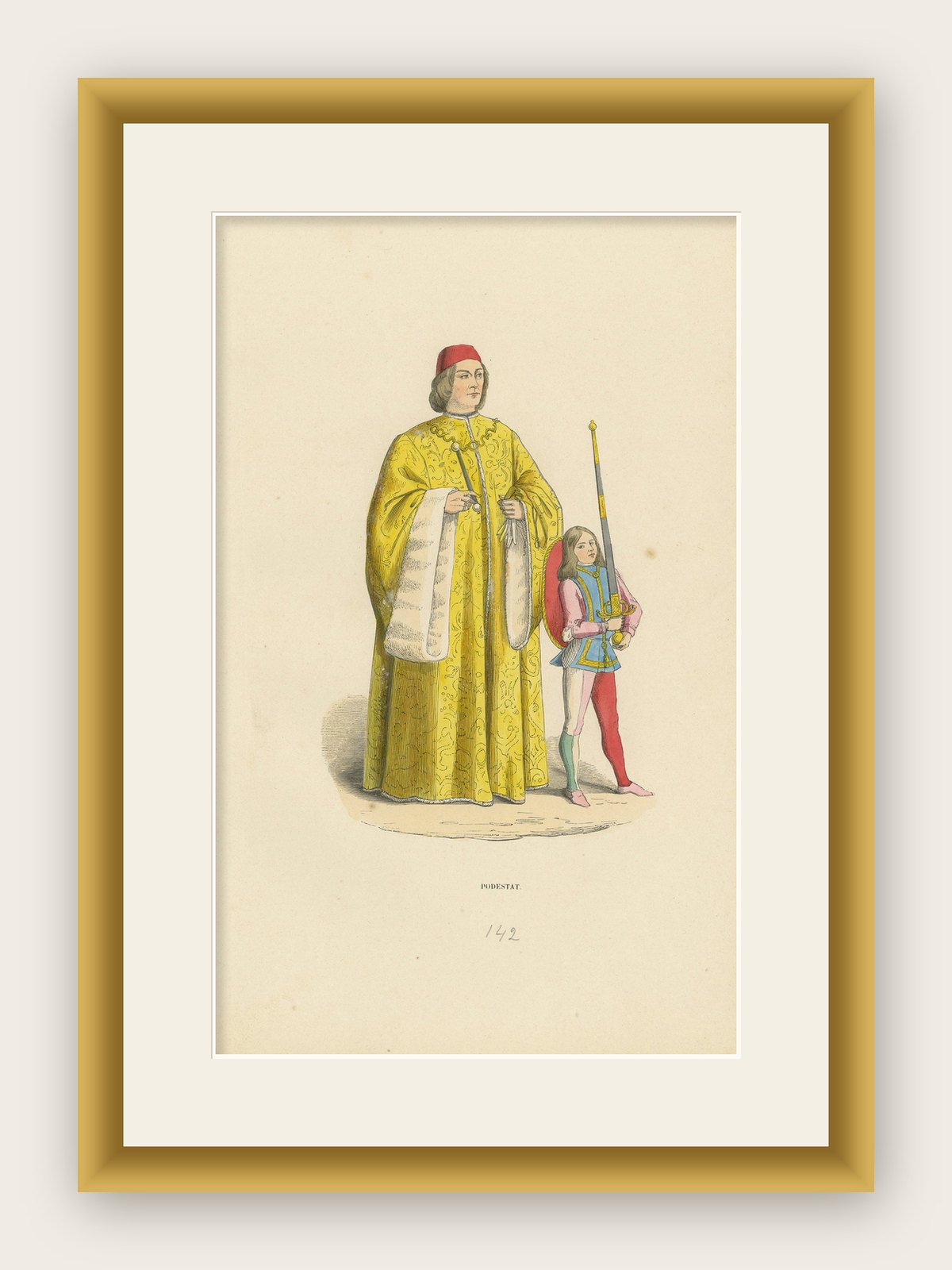


Frame and rooms are illustrations of how the print could look; the description says what is included.
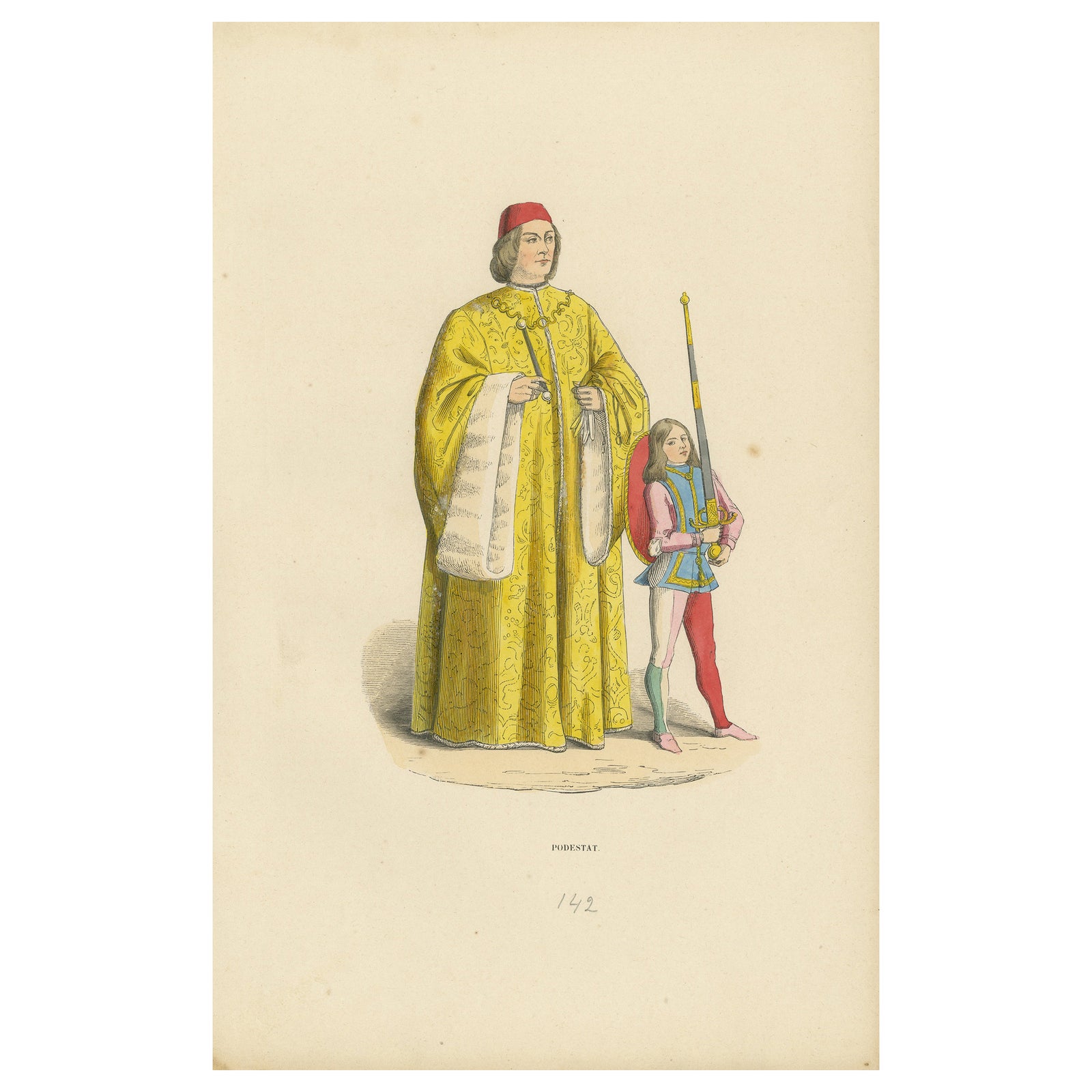
Civic Pride: A Podestà's Robe in 'Costume du Moyen Âge', Genuine Lithograph 1847
€140
$155 · £120
Original print, not a reproduction.
Ships worldwide from the Netherlands, flat, insured and tracked. 14-day returns. To buy, use Ask a question and we will reserve the print for you.
- Date
- 1847
- Sheet size
- 10.6 × 7.1 in (27 × 18 cm)
- Condition
- Good. Good. Overal light toning and light soiling but the image itself clean and hand-colored almost 200 years ago and still in expliciet colors. Aged paper with typically warm, yellowish-brown hue, mostly around the edges. Study the images carefully.
- Wardrobe
- Court & couture
- Era
- 1840 to 1870, Crinoline
- Stock no.
- f_37927672
Title: "Civic Pride: A Podestà's Robe in 'Costume du Moyen Âge'"
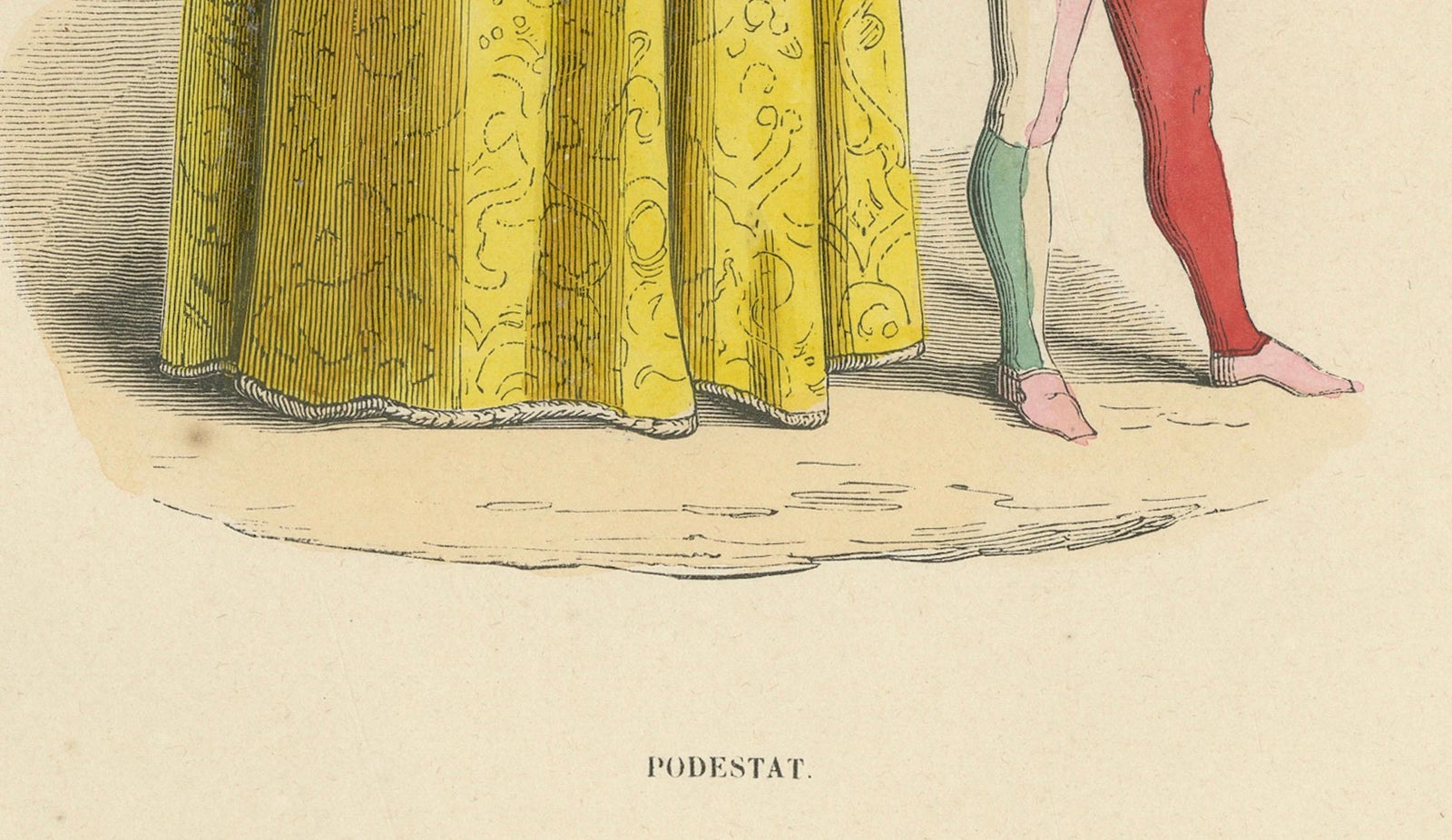
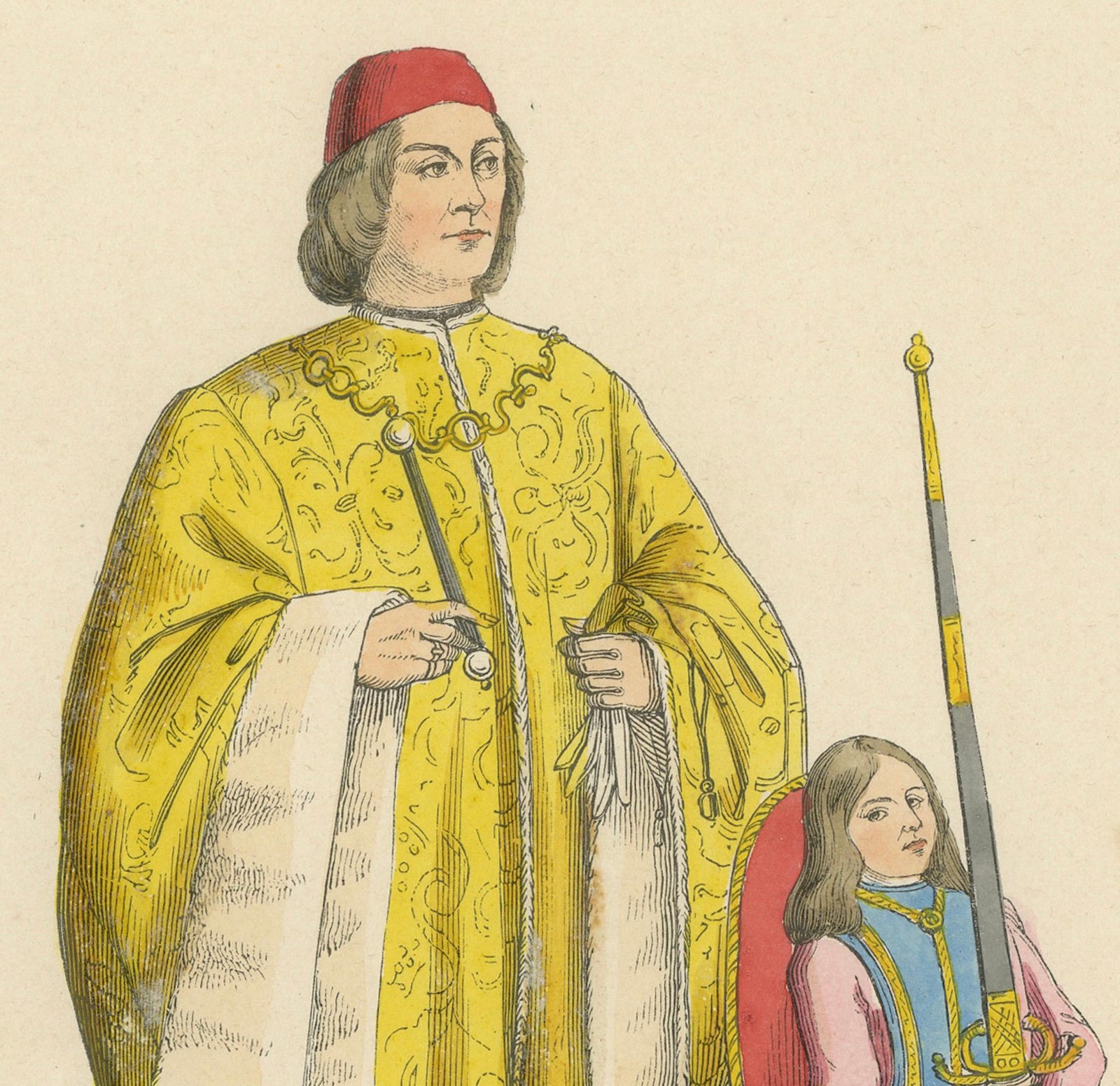
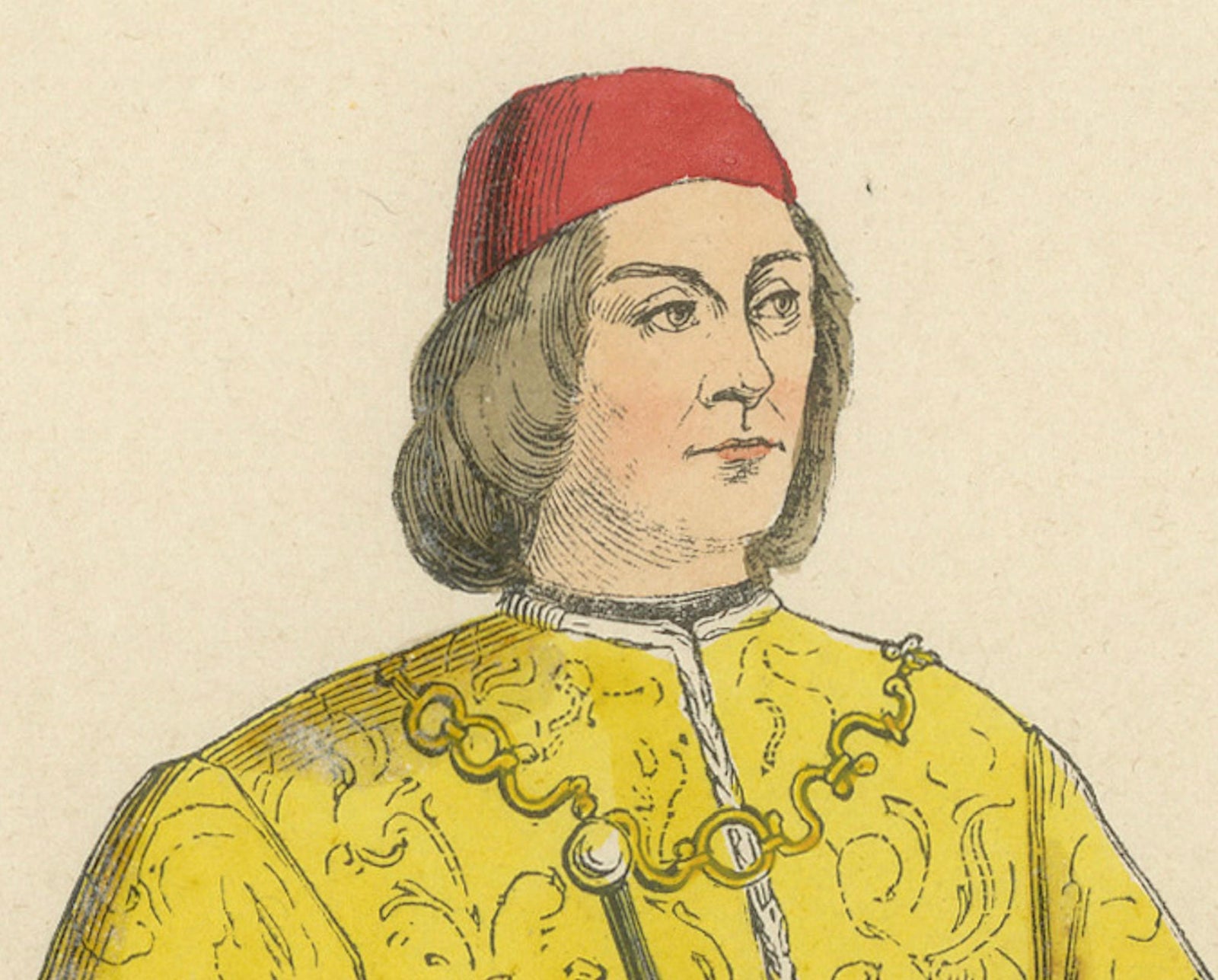
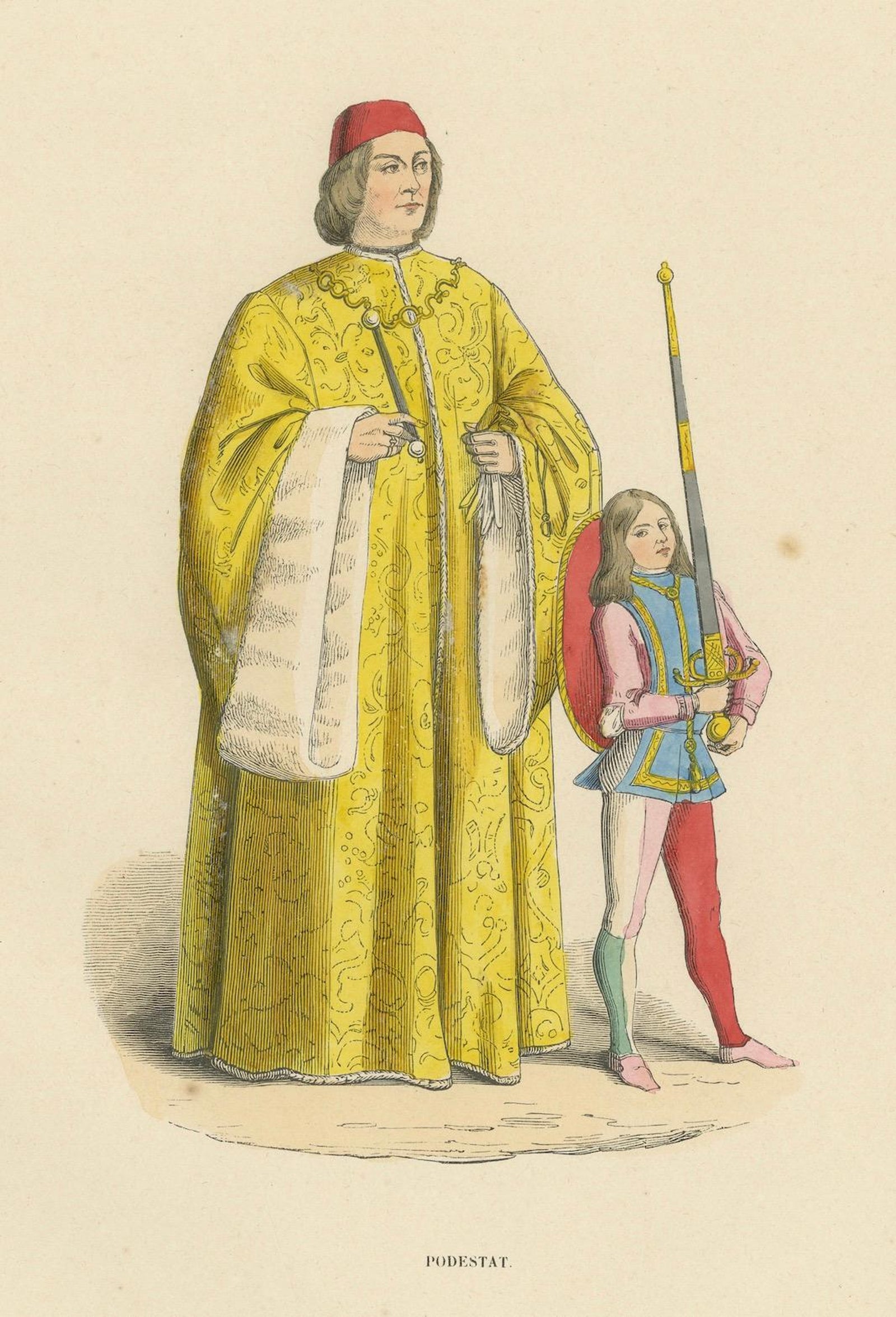
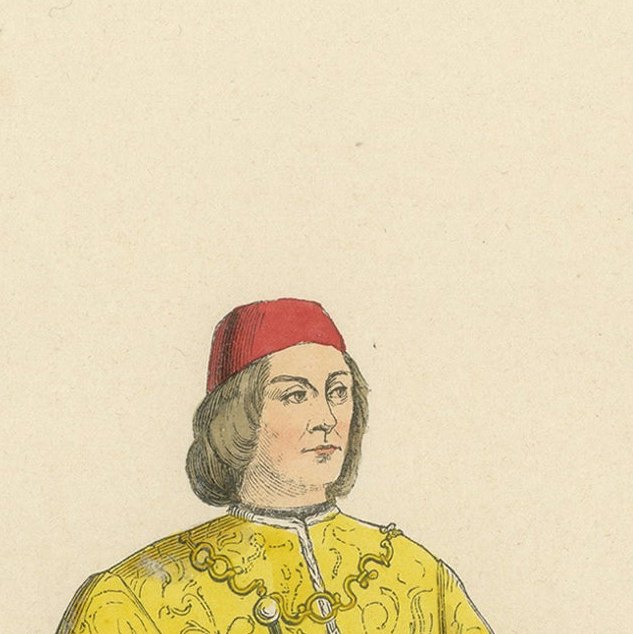
Description: This detailed lithograph from the 1847 "Costume du Moyen Âge" collection features a Podestà, a chief magistrate or administrative official in Italian cities during the medieval and Renaissance periods. The Podestà is attired in a ceremonial robe that reflects his important civic role and the respect accorded to his office. The robe is a golden yellow, richly ornamented with a repeating pattern that likely signifies his jurisdiction or the city he represents.
The official's red hat, known as a "cappello romano" due to its widespread use among clerics in Rome, is a status symbol and is indicative of his authority and influence. In his hands, he holds a pair of white gloves, a sign of his willingness to serve the public and administer justice with purity and fairness.
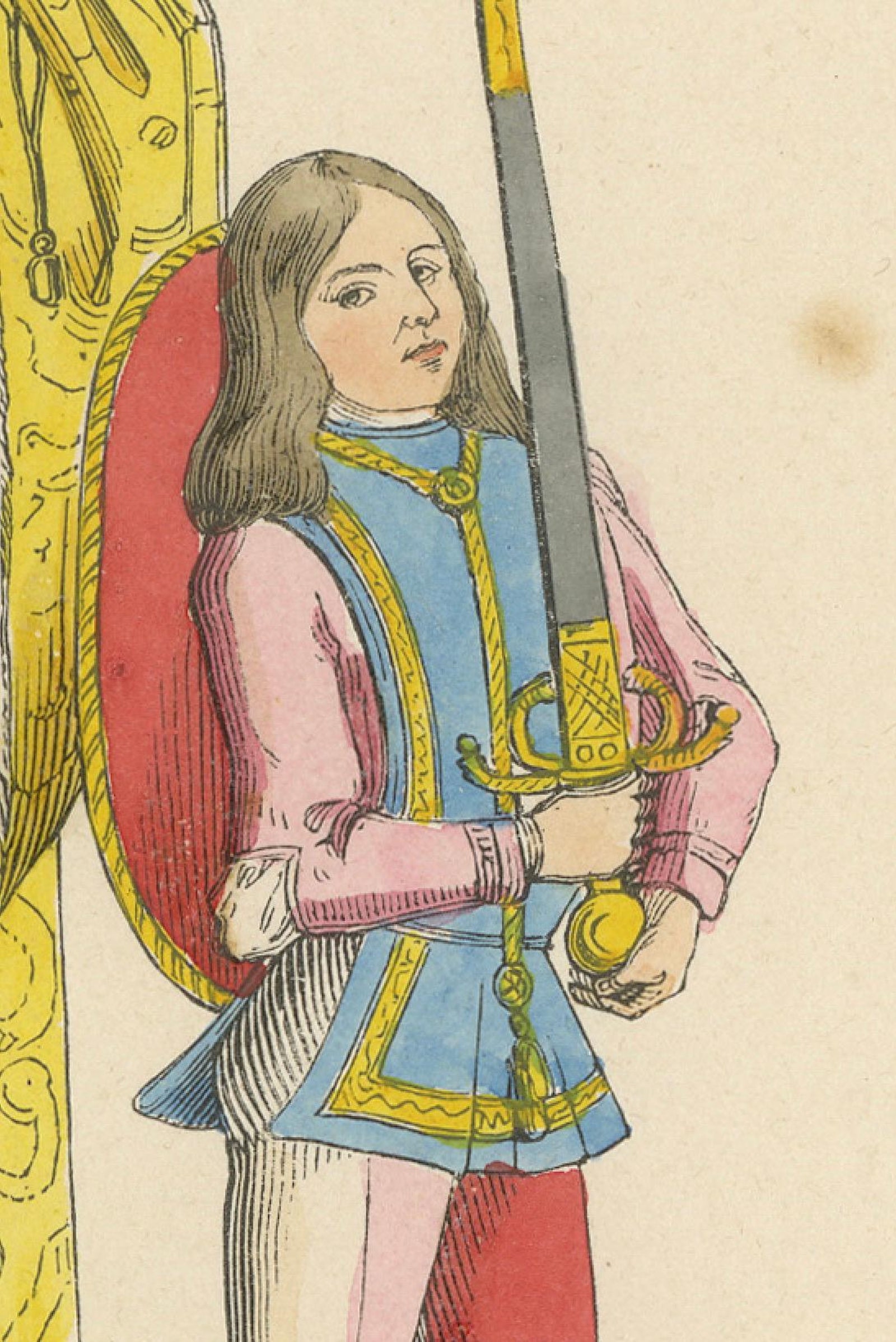
Behind the Podestà stands a halberdier, a guard or ceremonial attendant, wearing a colorful outfit of blue and red, carrying a halberd, a combination of spear and battle-axe that was common among ceremonial guards of the time. The presence of the halberdier not only serves as a sign of the Podestà's importance but also provides a visual contrast between the ornate nature of the official's robe and the more practical attire of the guard.
The background is minimal, with just a hint of architectural lines, focusing the viewer's attention on the figures and their attire. This lithograph is a rich visual documentation of the regalia associated with medieval Italian civic authority, capturing the essence of a period when clothing was a powerful indicator of social and political status.
The colors have a nice glow over them. Historically, egg whites, known as glair, and sometimes egg yolk were indeed used in illumination and painting, particularly in manuscripts, to give colors a brighter appearance and to add a sheen or gloss to the work. This technique was quite common during the Middle Ages and into the Renaissance.
Egg whites can be applied as a varnish over pigments to enhance their brightness and to protect the colors. This application could make the colors appear more vivid and also add a slight glossy sheen to the surface of the image.
Egg yolk, on the other hand, was commonly used as a binding agent in paint. It forms the basis of tempera paint, a medium that was widely used before the advent of oil painting. Egg yolk helps to create a durable and long-lasting color that adheres well to various surfaces.
In the context of the print from 1847, it's less likely that egg whites or yolks were used directly on the print, as by that time, commercial printing processes would have been more advanced and less reliant on such manual methods. However, if this print is a representation of an earlier style or is meant to mimic the appearance of hand-painted manuscripts, the original artists might have employed techniques or materials that gave a similar effect to those achieved with egg-based binders and varnishes.