Close-ups
Framed and on the wall
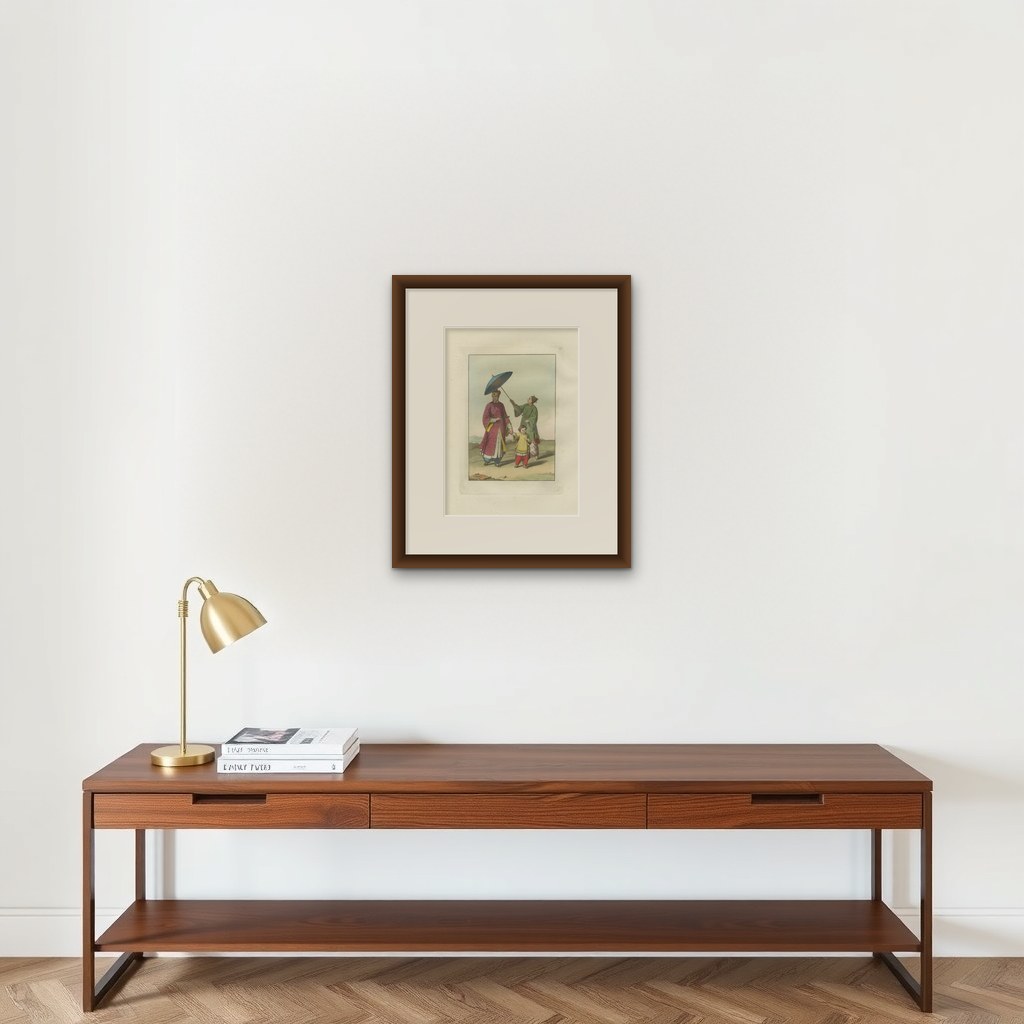

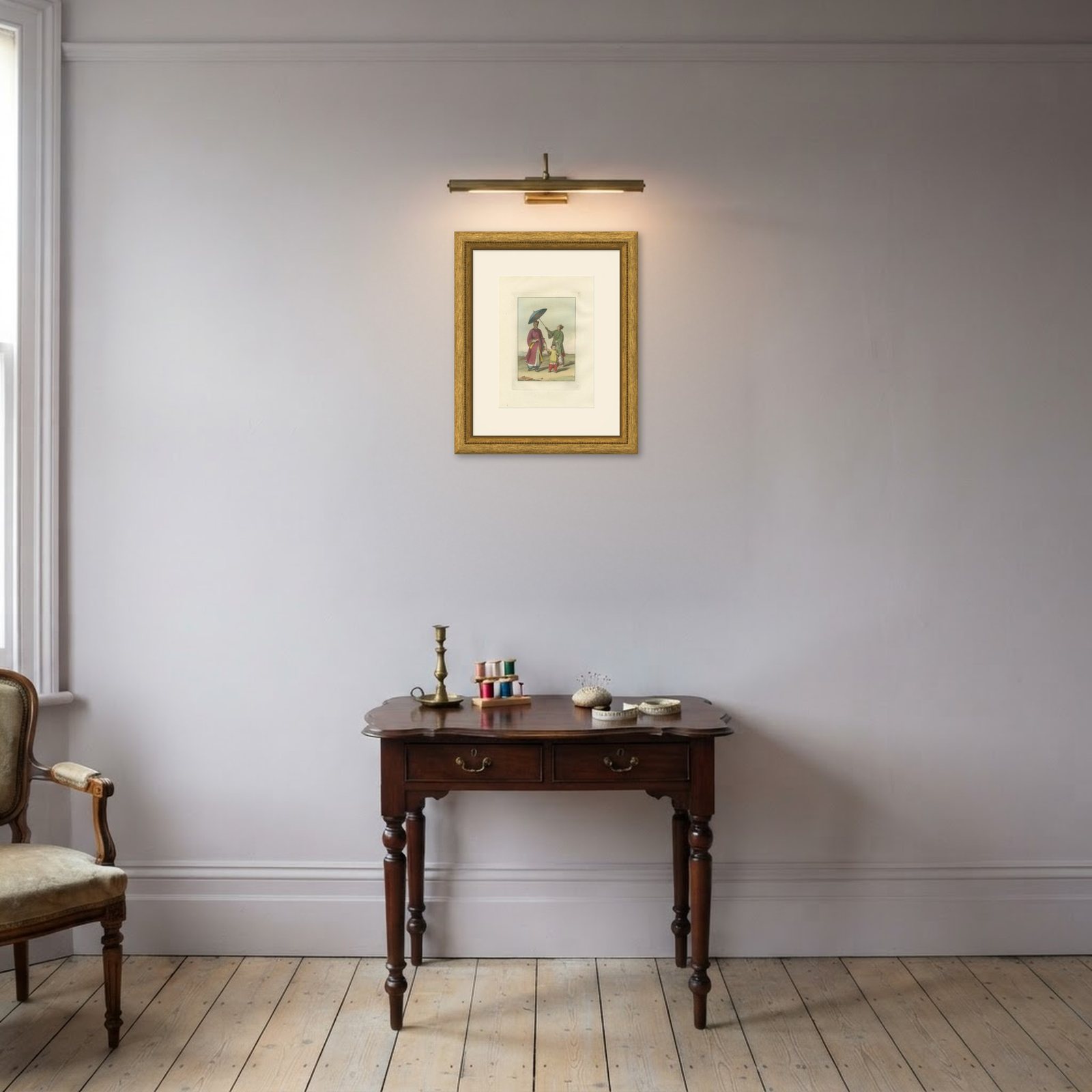
Frame and rooms are illustrations of how the print could look; the description says what is included.
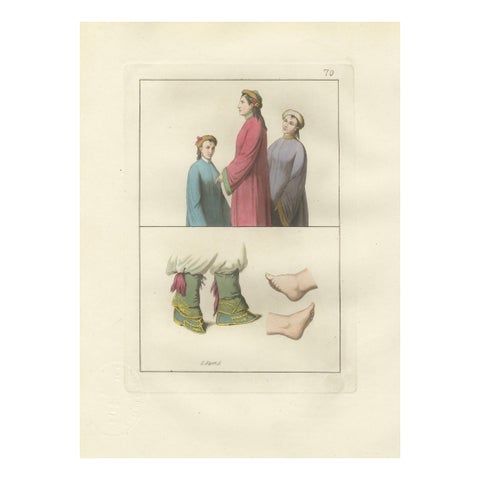
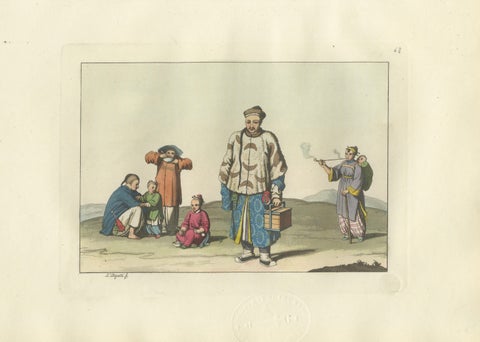
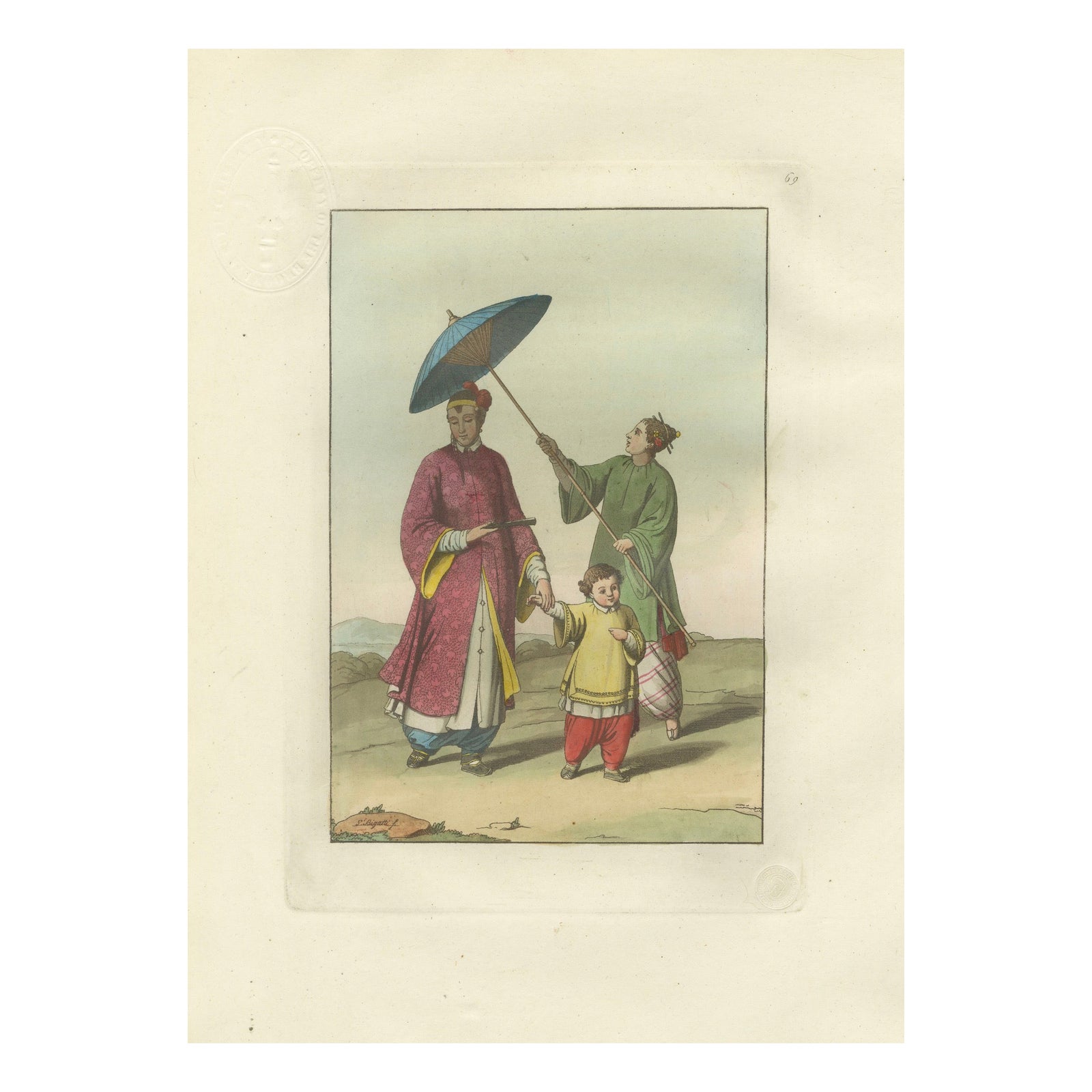
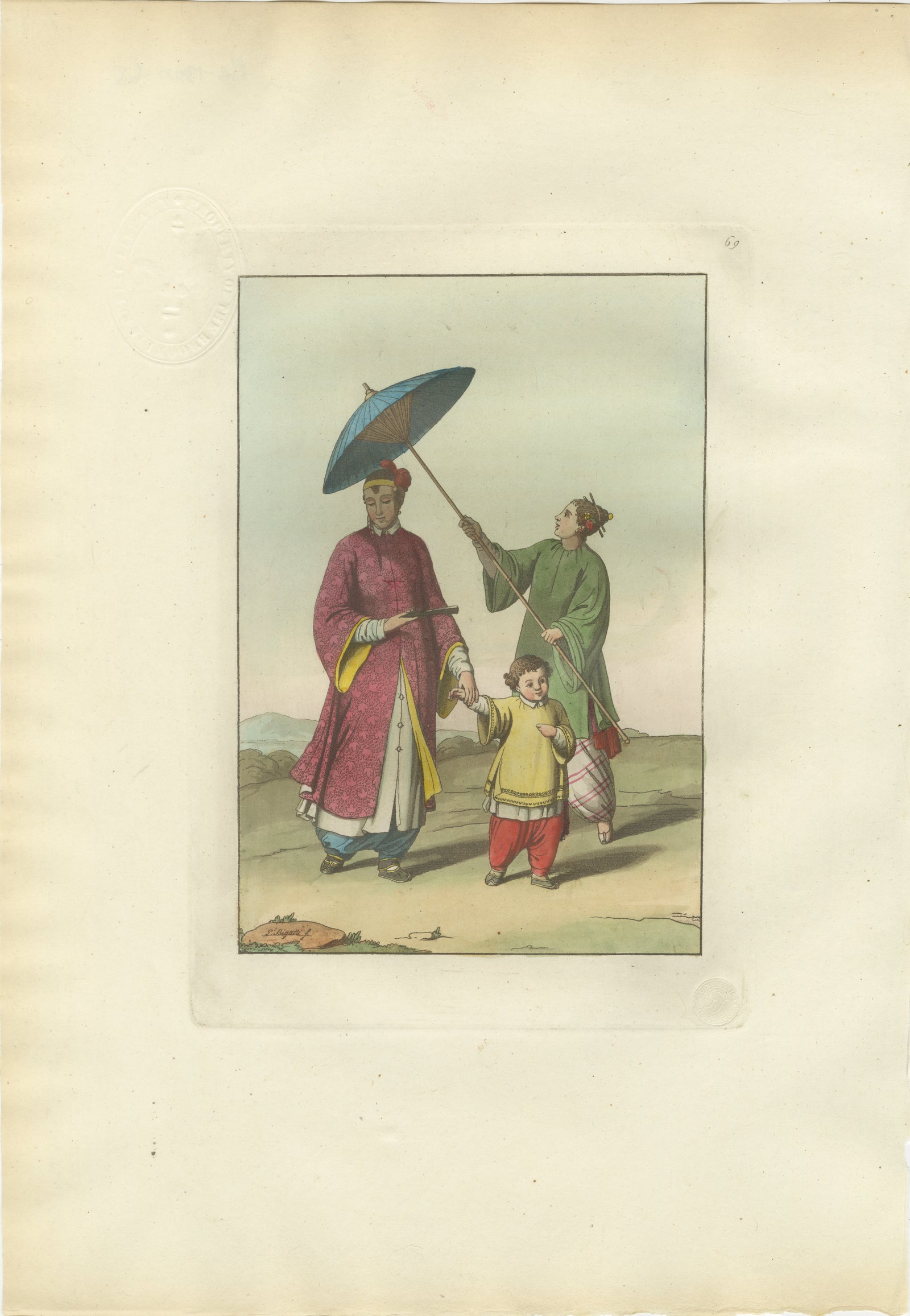
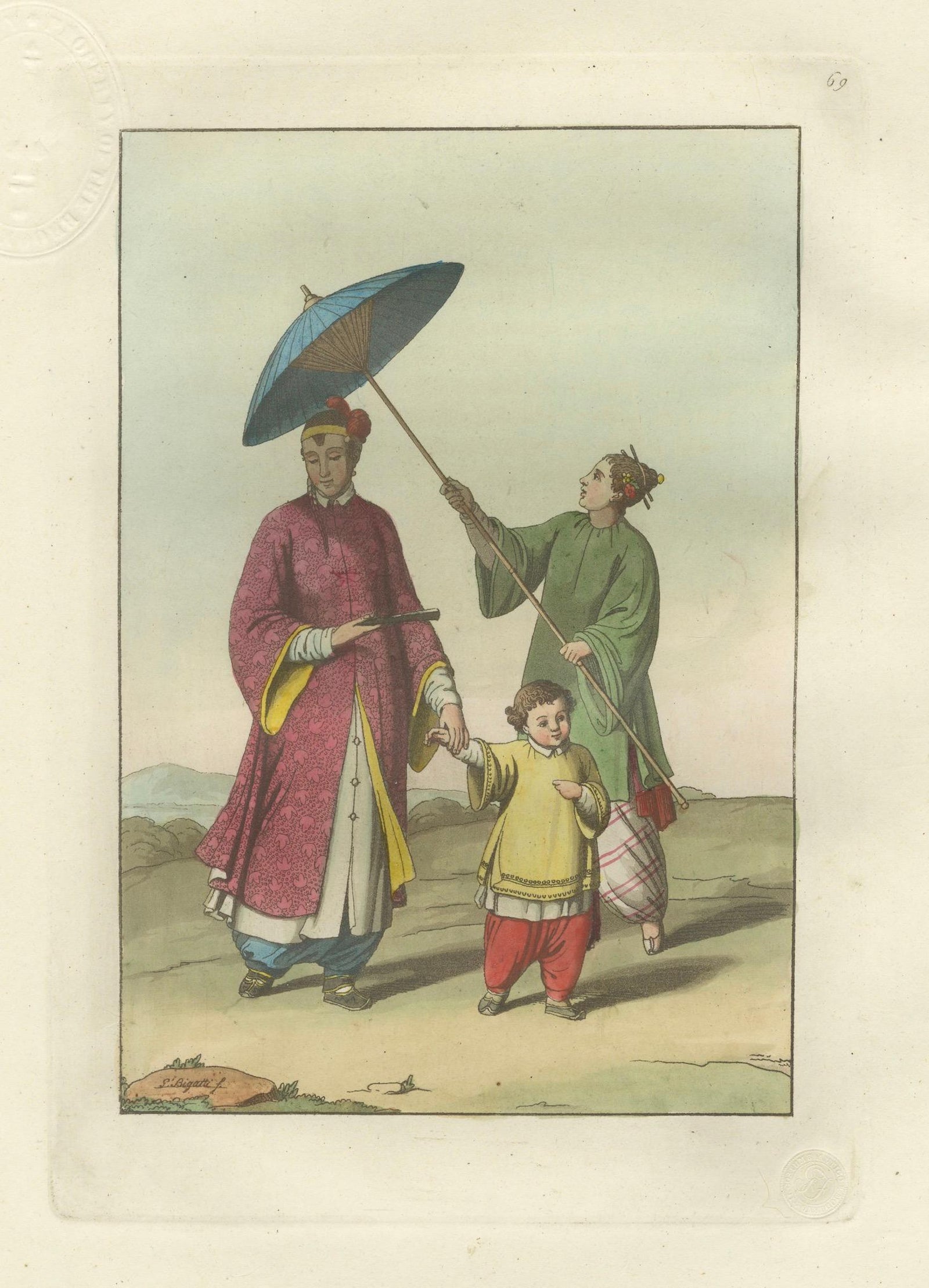
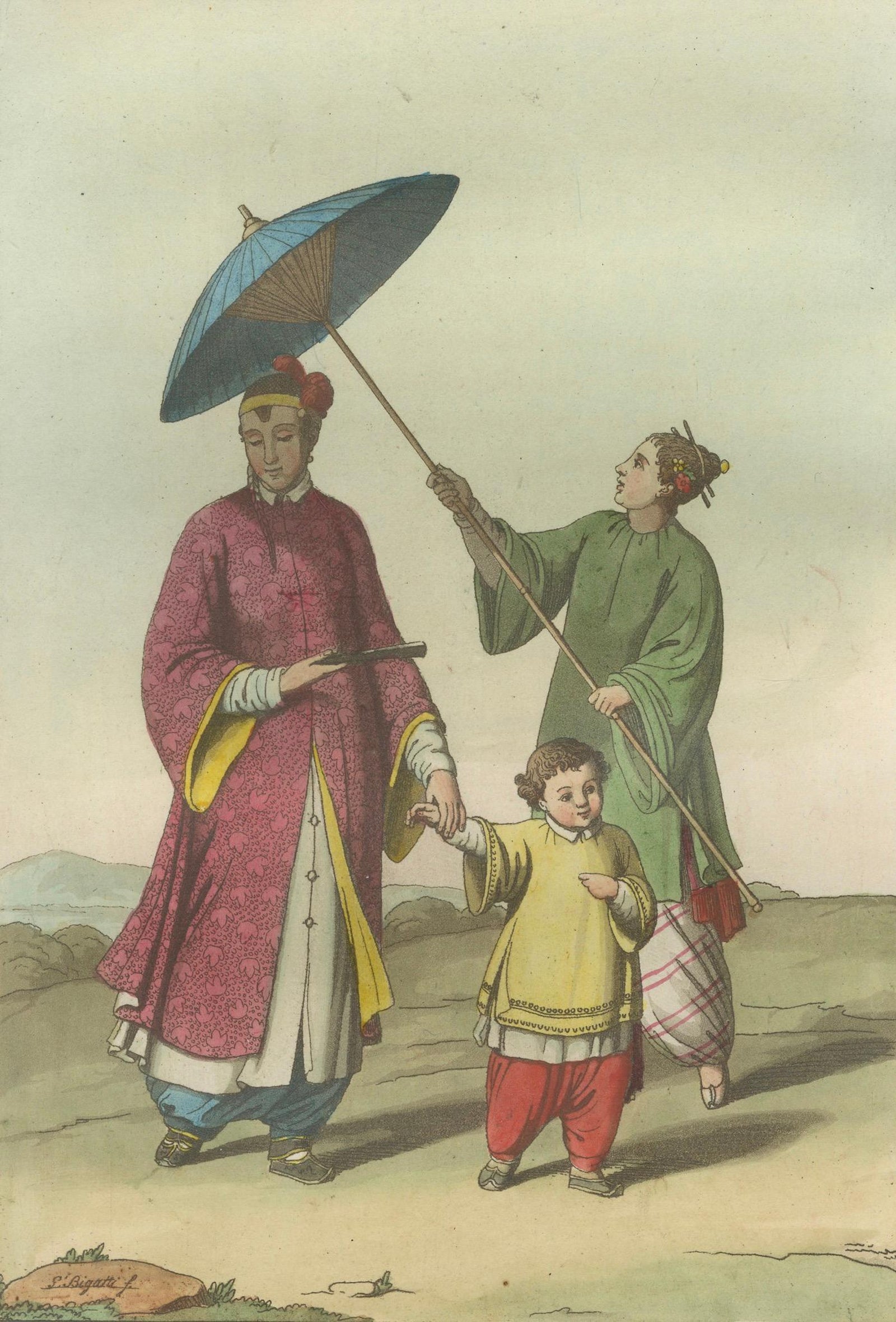
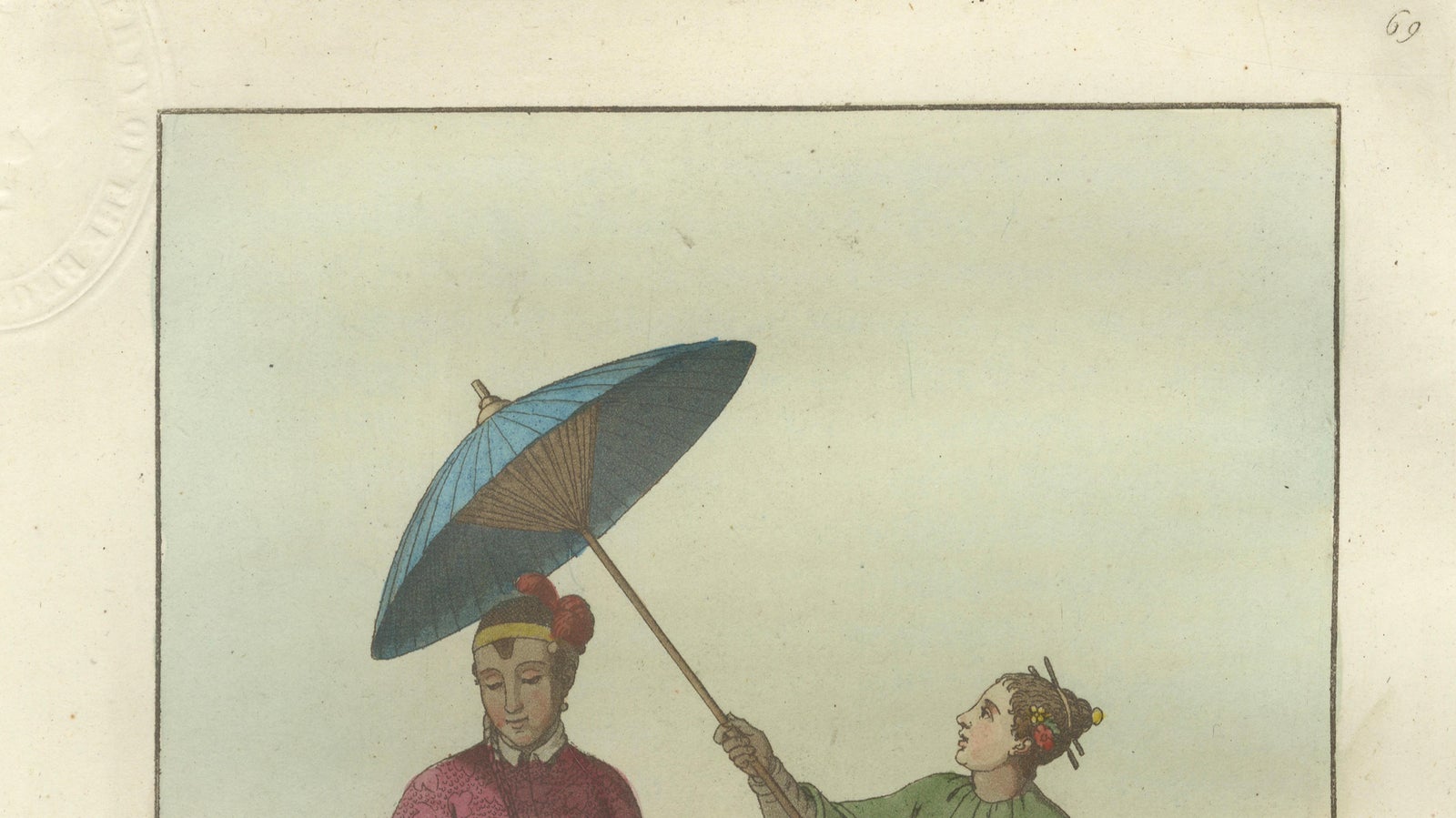
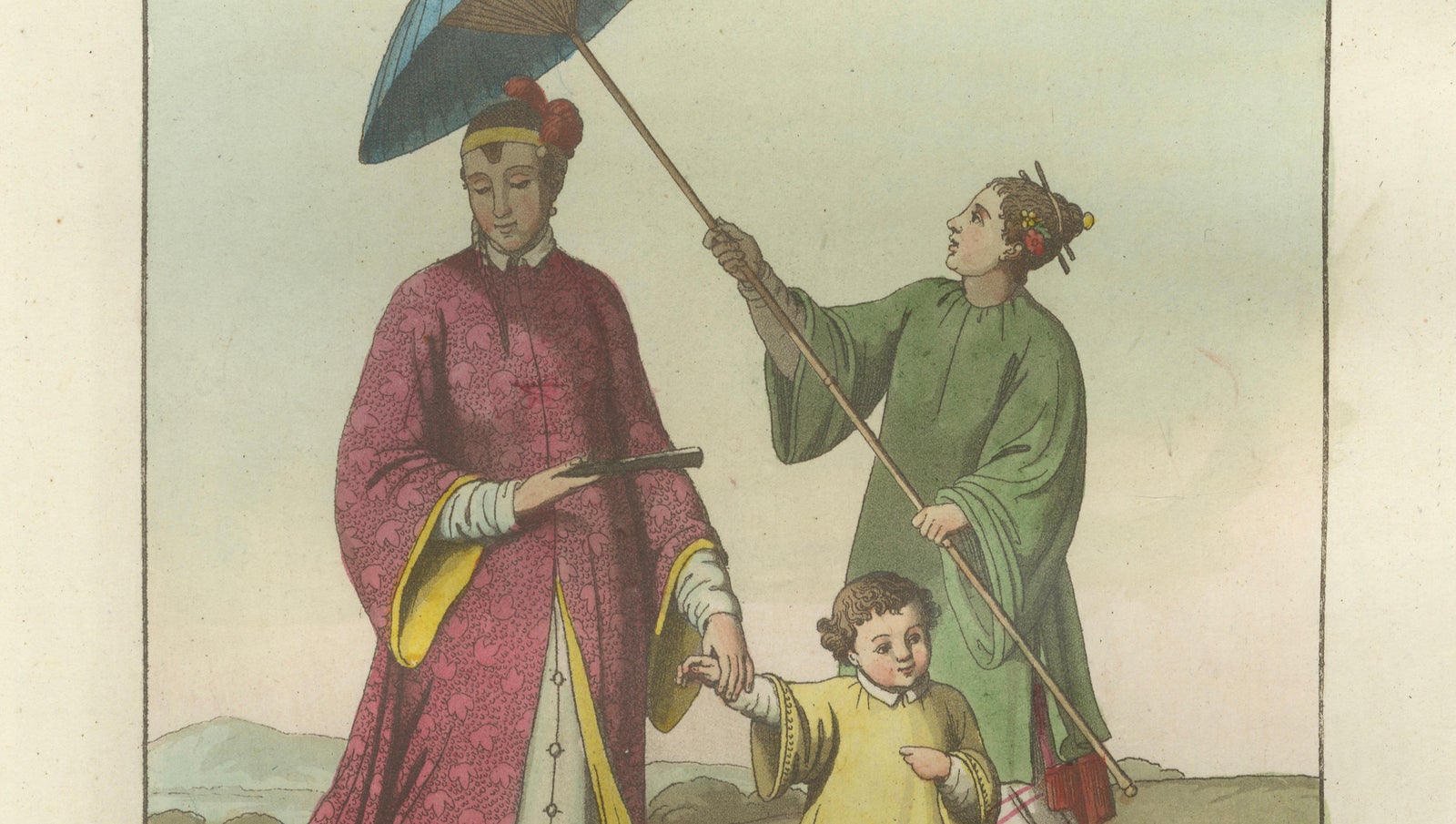
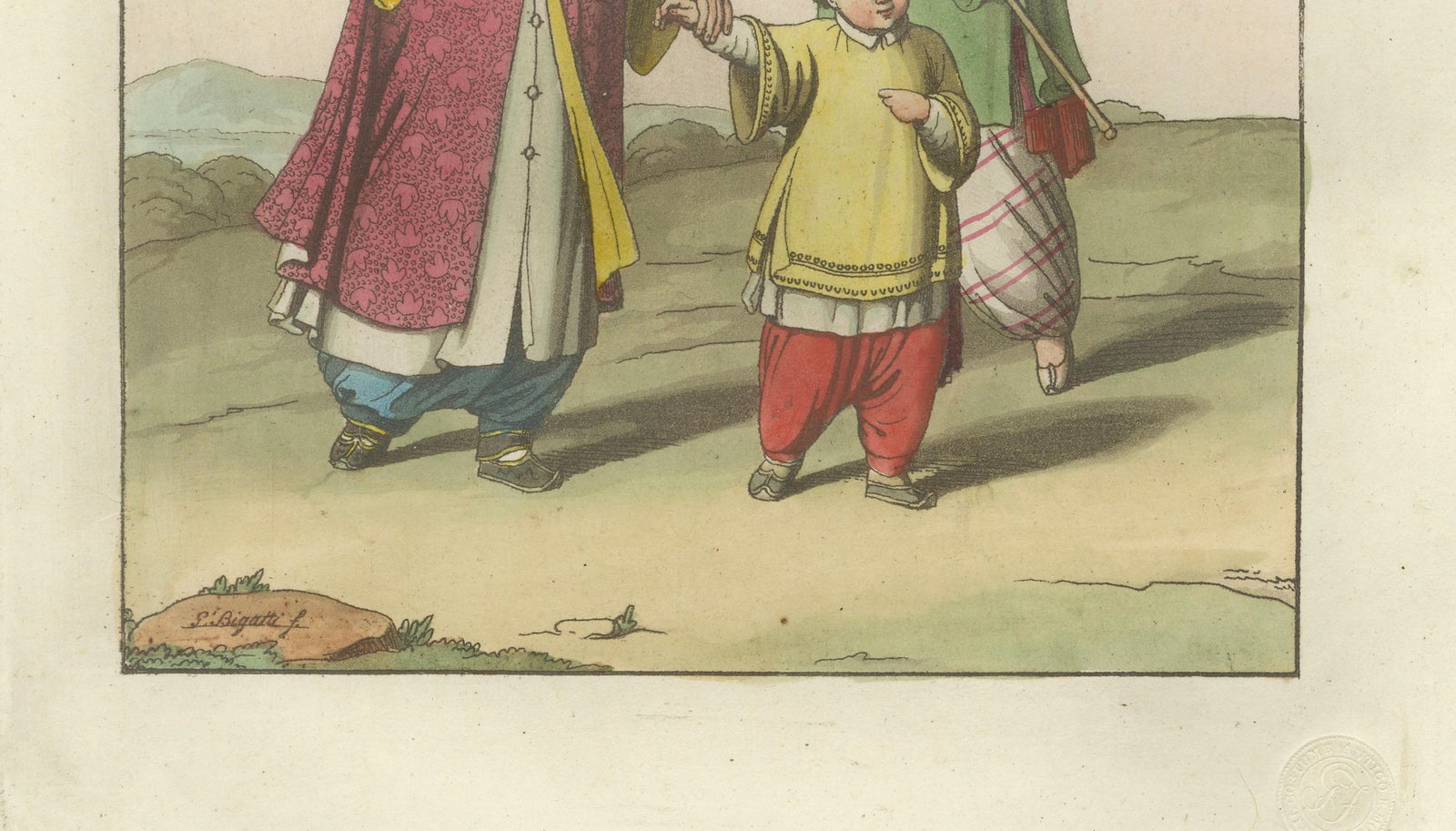
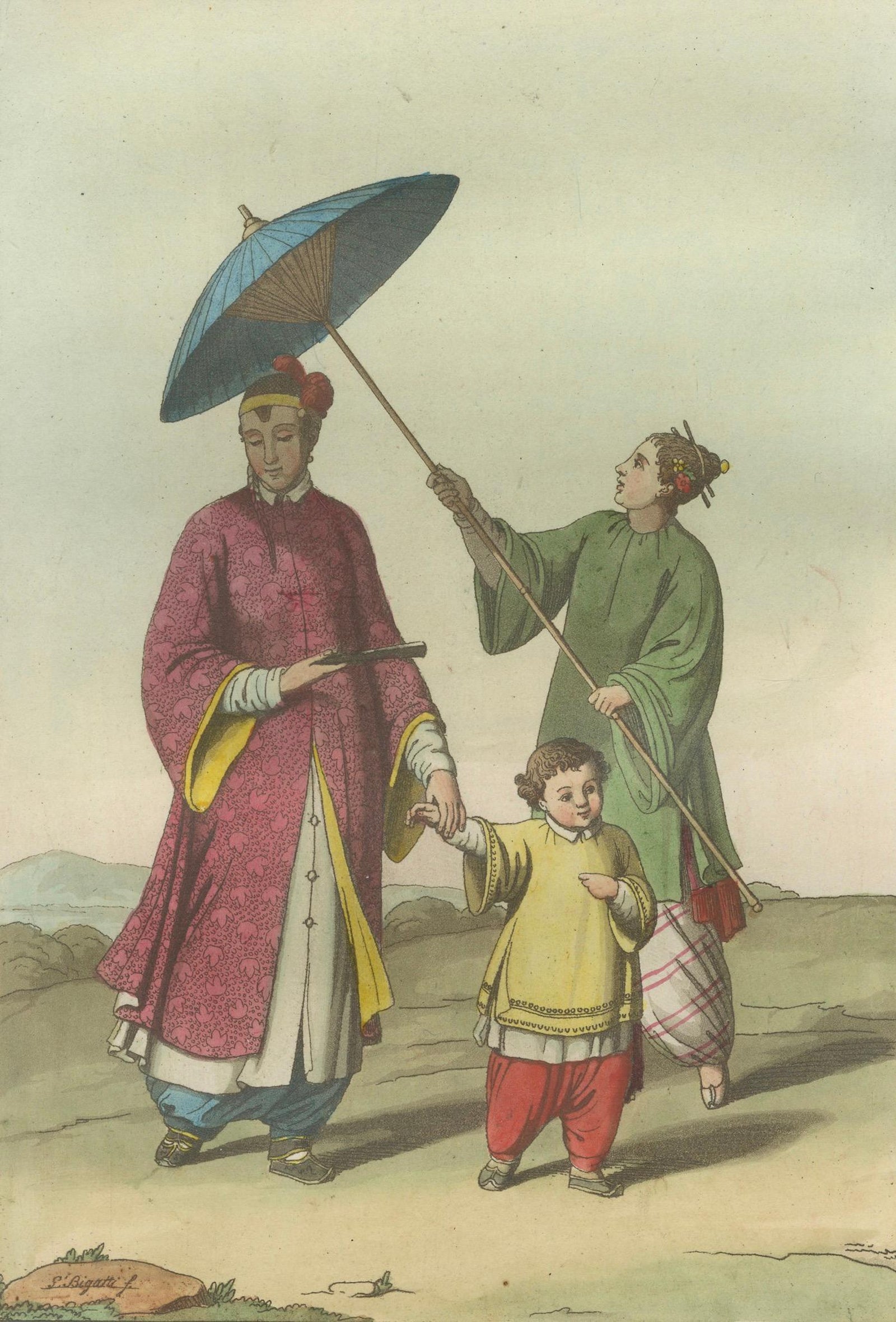
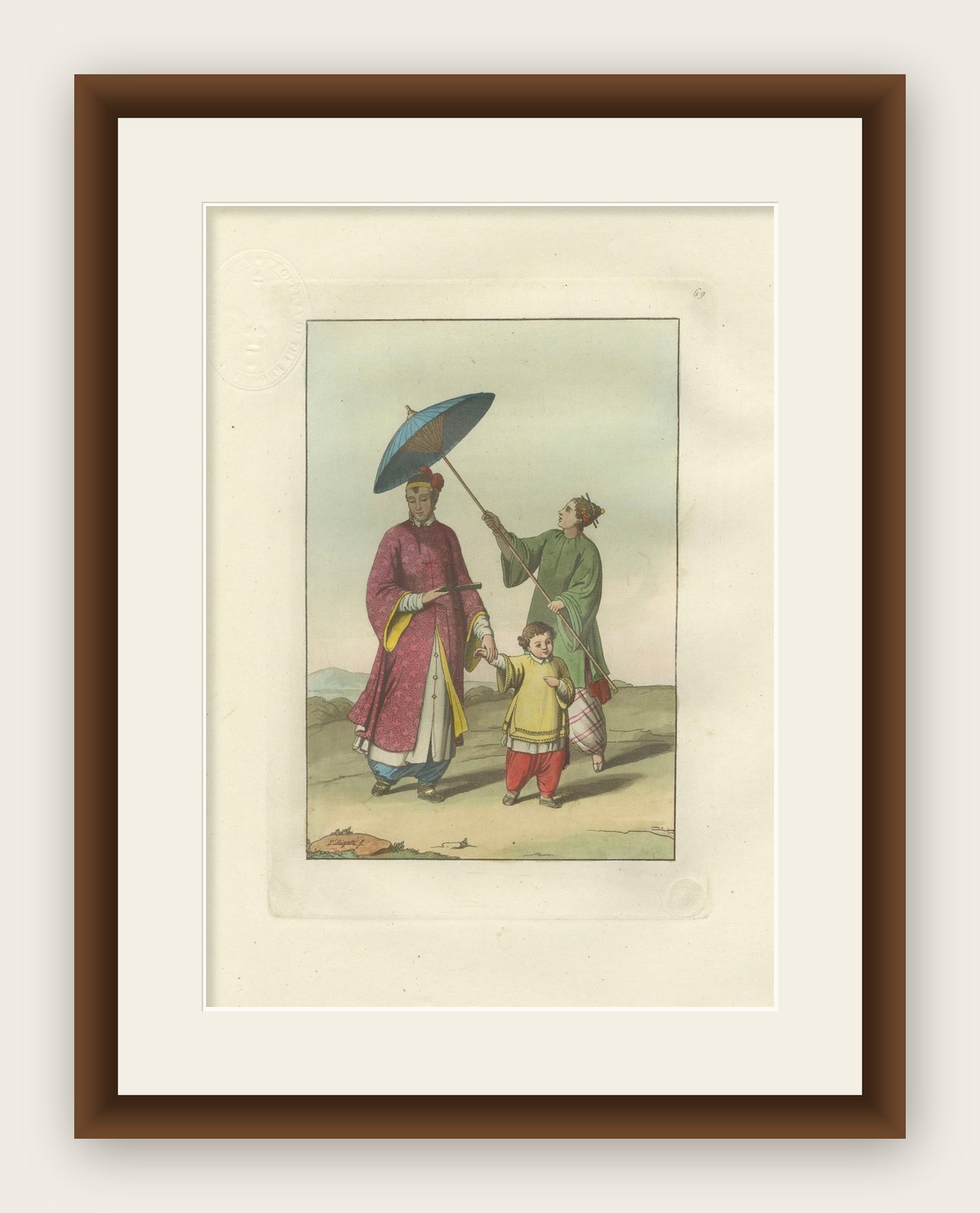
Chinese Noble with Attendant and Child, Hand-Colored Costume Plate - 1815
£225£16030% off
$210 · €189
Original print, not a reproduction.
Ships worldwide from the Netherlands, flat or rolled, insured and tracked. 14-day returns.
- Date
- 1815
- Sheet size
- 13.9 × 10 in (35.4 × 25.4 cm)
- Condition
- Good. Good antique condition consistent with age. Light age toning and minor handling marks to margins; plate impression visible. Colors remain fresh. Original embossed blind stamp visible, as issued, with possible light overlap into the image area.
- Wardrobe
- Far & away
- Era
- 1790 to 1840, Empire and Romantic
- Stock no.
- BG-13000-69
What the condition grades mean
- Excellent
- Bright and clean, with no faults worth mentioning.
- Very good
- Only light signs of age, such as faint toning.
- Good
- Normal signs of age for a sheet of this period: toning, some foxing, small marks or neat old repairs.
- Fair
- Clear faults such as staining, tears or repairs, priced to match.
Every fault we see is written in the condition note, and the whole sheet is shown uncropped in the photos.
Chinese Noble with Attendant and Child, Hand-Colored Ferrario Costume Plate 1815
A refined early nineteenth-century hand-colored copperplate engraving depicting a Chinese noble figure accompanied by an attendant and child, originating from Giulio Ferrario’s monumental ethnographic publication Il Costume Antico e Moderno di Tutti i Popoli (Costumes Ancient and Modern of All Peoples), published in Milan around 1815. This influential work represents one of the most ambitious illustrated surveys of global cultures produced during the Enlightenment period, combining artistic refinement with documentary curiosity about the wider world.
The composition presents a dignified standing figure dressed in an elaborately patterned robe, holding a fan while accompanied by a servant carrying a parasol overhead, a visual symbol of rank and status within traditional Chinese society. The presence of a child adds narrative warmth and suggests familial or social context, transforming the plate from a purely ethnographic study into a lively human scene. The costumes are rendered with careful attention to textile patterns, color contrasts, and silhouette, reflecting the European fascination with Chinese dress and ceremonial customs during the era of expanding trade and cultural exchange.
Executed in precise engraved line and enhanced with delicate contemporary hand-coloring, the plate demonstrates the clarity and balance characteristic of early nineteenth-century Italian printmaking. Ferrario’s publication sought to educate European audiences through visual representations of different cultures, blending scholarly intent with decorative appeal. Today, such prints are valued both for their historical insight and for their aesthetic qualities, particularly within collections focused on Asian art, costume history, or early ethnographic illustration.
The vertical format and harmonious palette make this engraving especially attractive for interior design settings. Framed individually, it serves as an elegant focal point; alternatively, it pairs well with other Ferrario Chinese costume plates to create a cohesive gallery wall in luxury interiors.
Framing tips: Dark walnut or ebonized frame with a wide ivory mat enhances the subtle coloring and provides a museum-quality presentation suited to refined interiors.
Technique: Hand-colored copperplate engraving
Maker: Giulio Ferrario publication, Milan (Italy), circa 1815