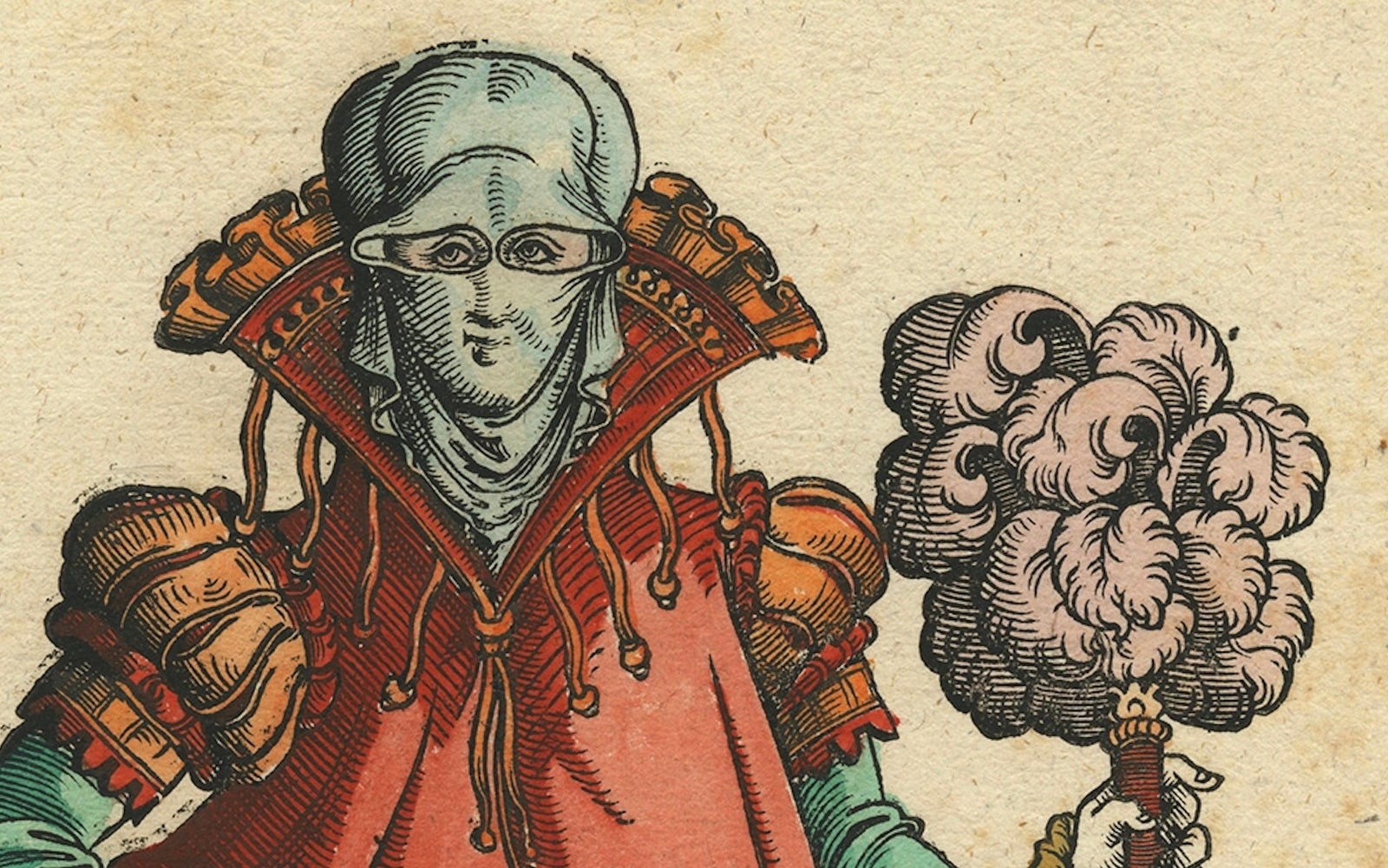
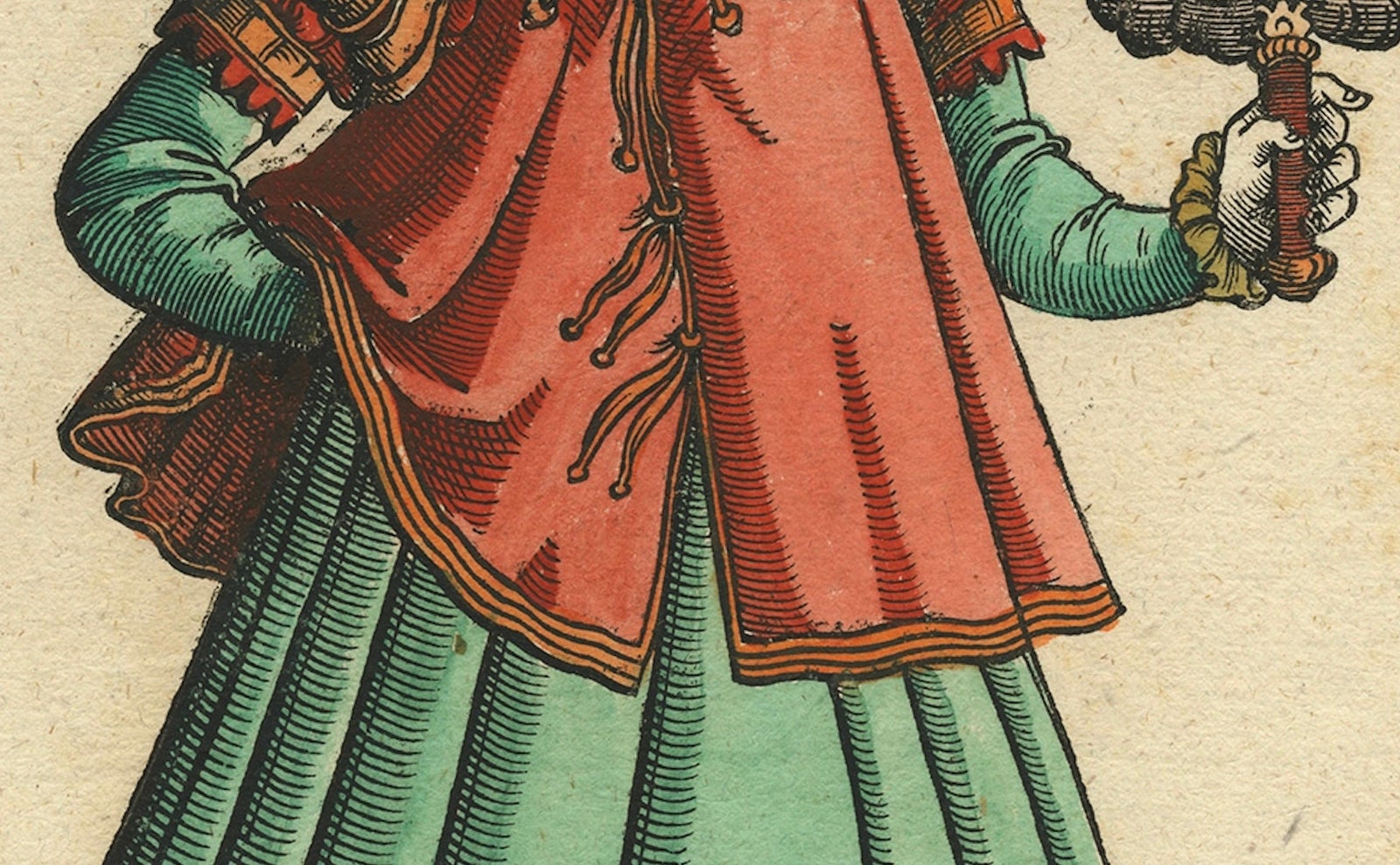
Close-ups
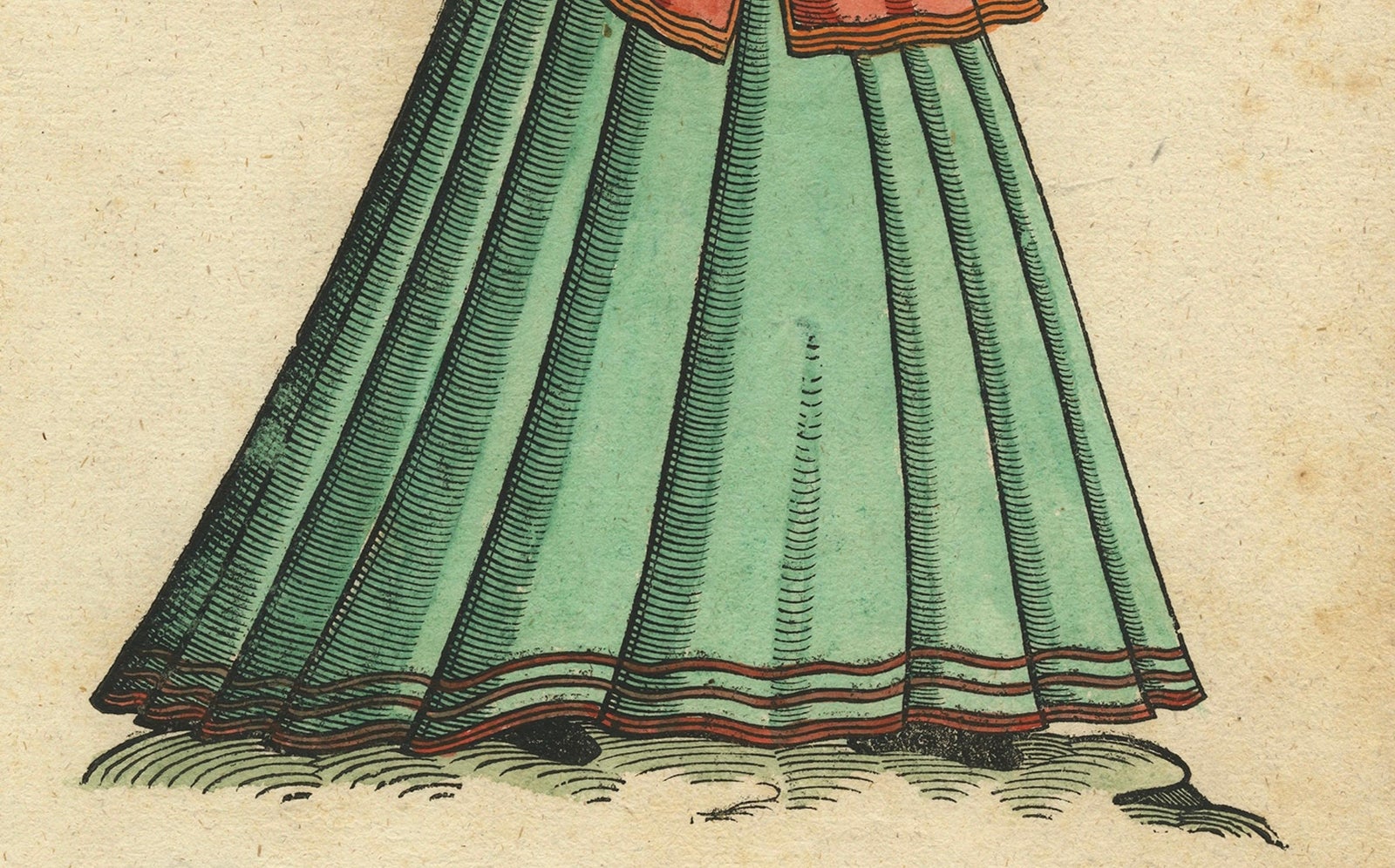
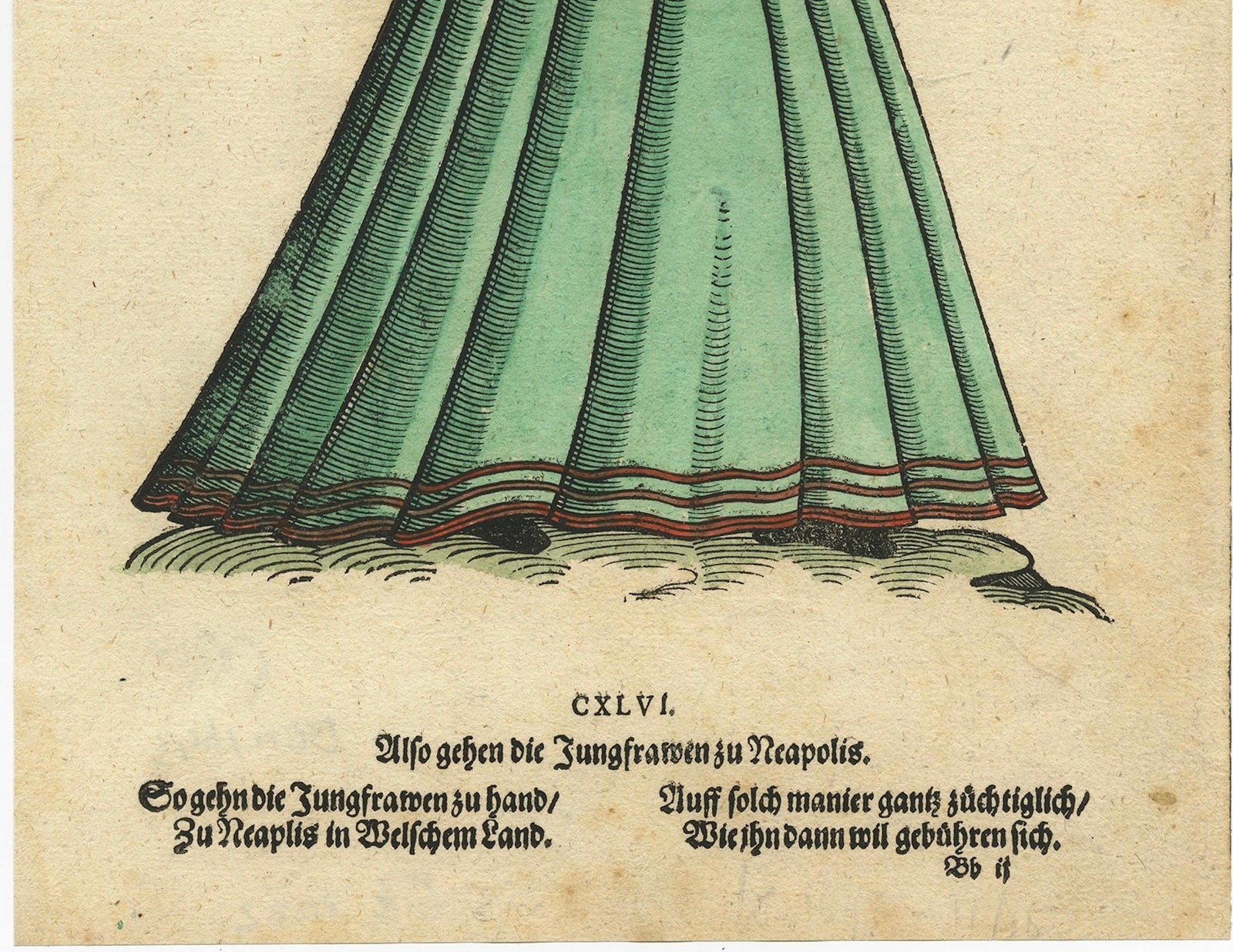
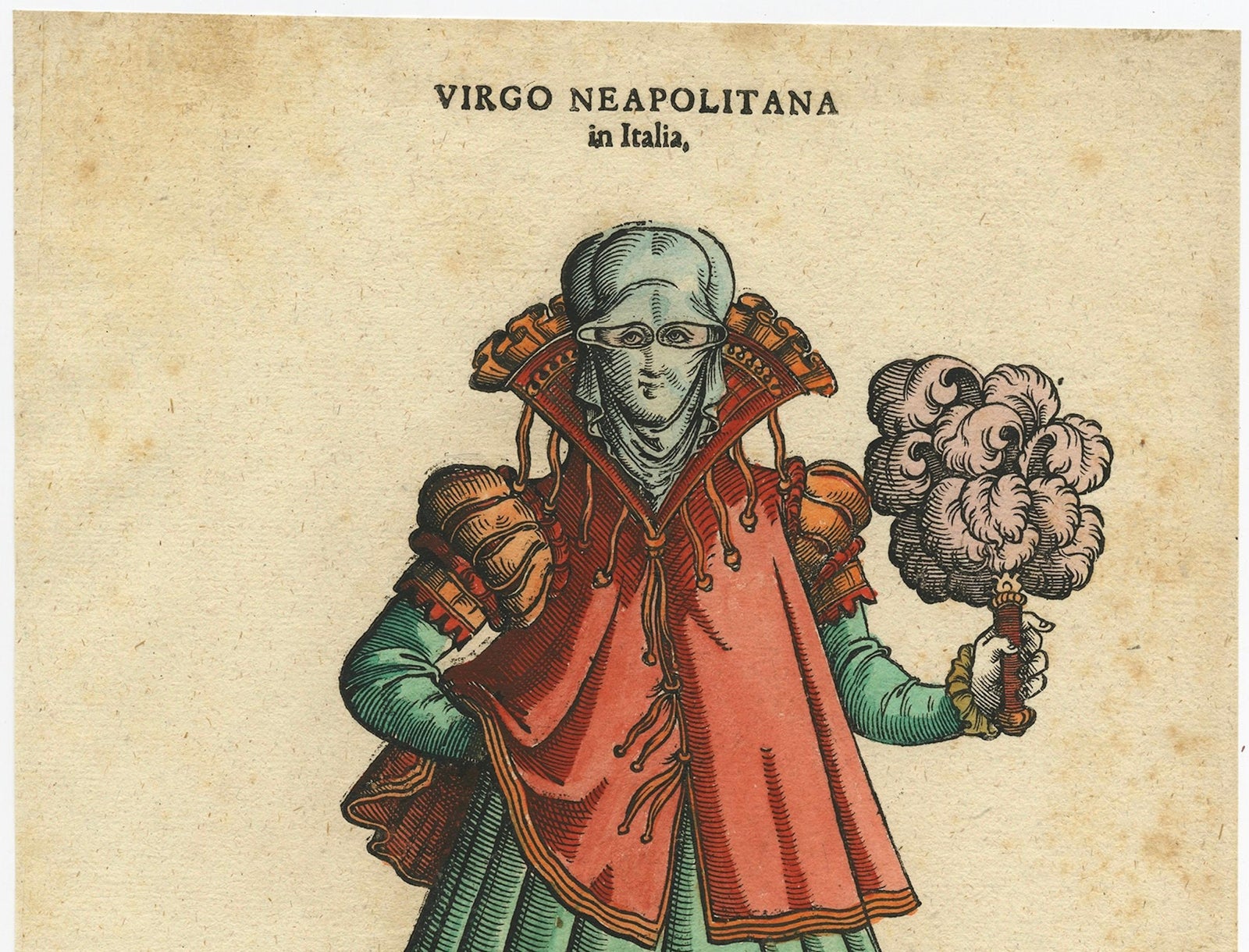
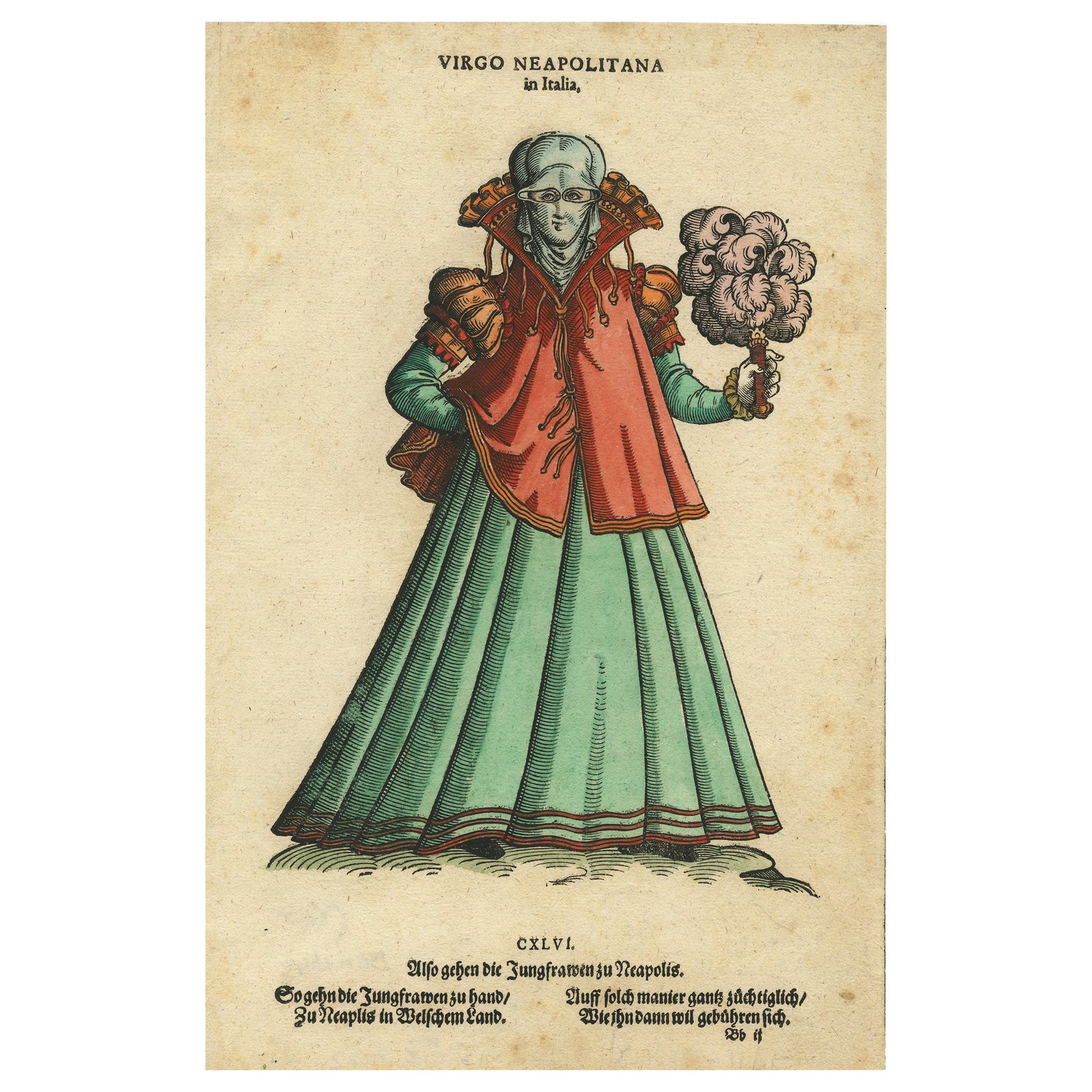
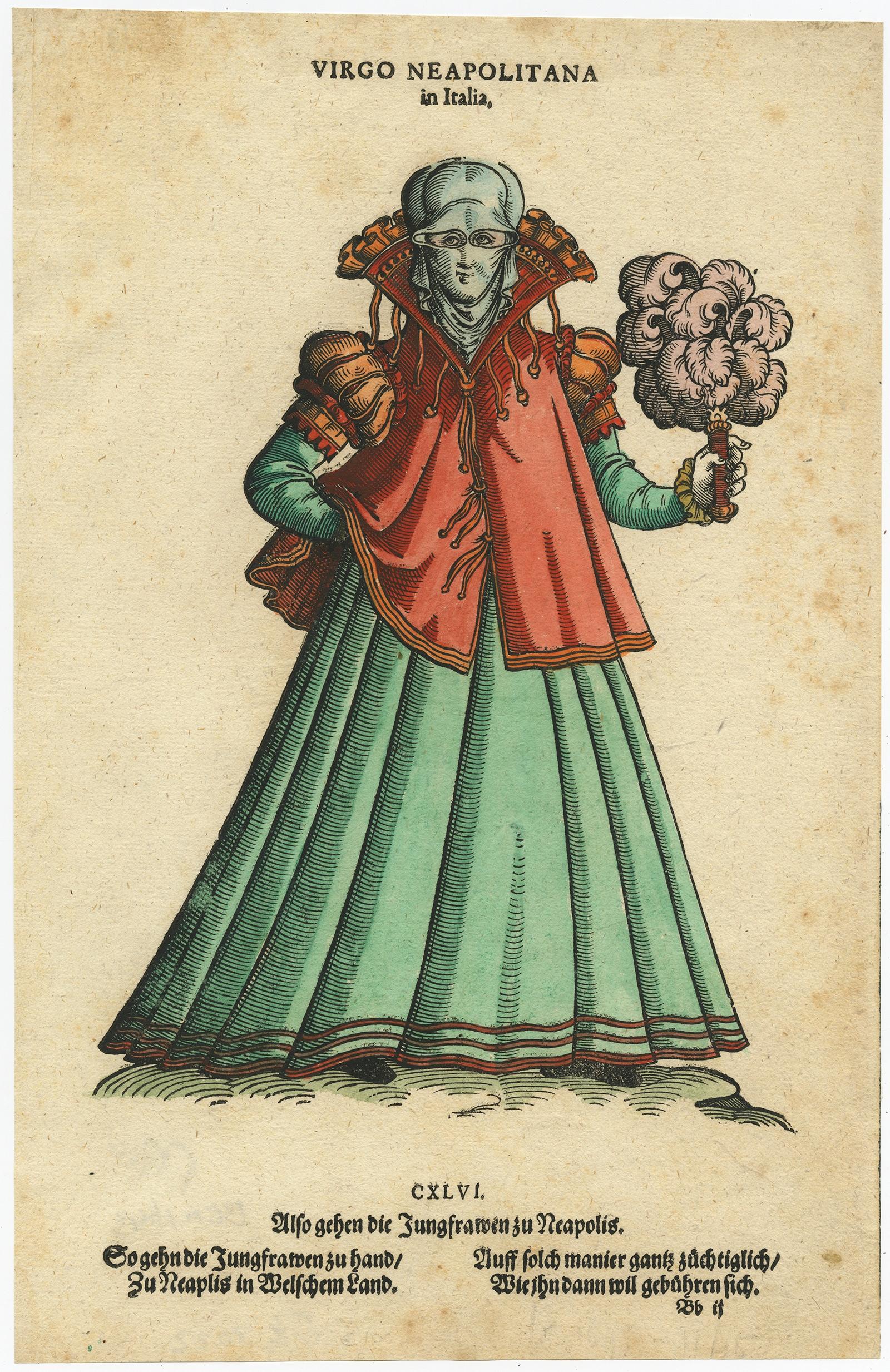
Virgin Woman from Naples, Antique Hand-Colored Woodcut by Jost Amman, 1577
$490
€440 · £375
Original print, not a reproduction.
Ships worldwide from the Netherlands, flat, insured and tracked. 14-day returns.
- Date
- 1577
- Sheet size
- 12.1 × 7.9 in (30.7 × 20 cm)
- Condition
- Good. Impression with strong original hand-coloring. Some light foxing and toning consistent with age, with minor handling traces at the edges. Woodcut lines and colors remain vivid and well-preserved.
- Wardrobe
- Folk finery
- Era
- Before 1700, Baroque
- Stock no.
- f_46303412
- Color
- Hand colored
What the condition grades mean
- Excellent
- Bright and clean, with no faults worth mentioning.
- Very good
- Only light signs of age, such as faint toning.
- Good
- Normal signs of age for a sheet of this period: toning, some foxing, small marks or neat old repairs.
- Fair
- Clear faults such as staining, tears or repairs, priced to match.
Every fault we see is written in the condition note, and the whole sheet is shown uncropped in the photos.
Virgin Woman from Naples, Antique Hand-Colored Woodcut by Jost Amman, 1577
This rare 16th-century hand-colored woodcut depicts a virgin woman from Naples, titled Virgo Neapolitana in Italia. The figure is shown in a striking ensemble: a full green gown with red-lined hem, over which she wears a red mantle with structured shoulders. Her face is partly veiled and she holds a richly plumed fan, emphasizing both modesty and elegance. The peculiar mask-like veil and stylized fan are characteristic of how Renaissance costume books blended real observations with imaginative interpretation.
The German verses below explain: “Also gehen die Jungfrawen zu Neapolis / So gehn die Jungfrawen zu hand / Zu Neaplis in Welschem Land”, “Thus go the virgins in Naples, in such manner do they present themselves, as is fitting for maidens in that land.” These verses highlight how costume books functioned as both ethnographic records and moral lessons for readers.
The plate comes from Jost Amman’s landmark 'Habitus praecipuorum populorum tam virorum quam foeminarum singulari arte depicti' (Nuremberg, 1577), published by Hans Weigel. Known as the 'Trachtenbuch', this work is one of the earliest and most influential costume books of the Renaissance. It illustrated the attire of men and women from across Europe and beyond, shaping European perceptions of global fashions.
Jost Amman (1539–1591), born in Zurich and later active in Nuremberg, was a prolific and celebrated illustrator of books and prints. His Trachtenbuch represents a unique fusion of art, ethnography, and Renaissance curiosity, and remains one of the most important visual records of 16th-century costume.
Condition: Good impression with strong original hand-coloring. Some light foxing and toning consistent with age, with minor handling traces at the edges. Woodcut lines and colors remain vivid and well-preserved.
Framing tips: A dark wood or ebony frame with a cream or light mat provides a scholarly presentation. For a decorative Renaissance touch, a gilt frame will highlight the rich coloring and emphasize the print’s historical prestige.
Technique: Hand-colored woodcut
Maker: Jost Amman, published by Hans Weigel, Nuremberg, 1577