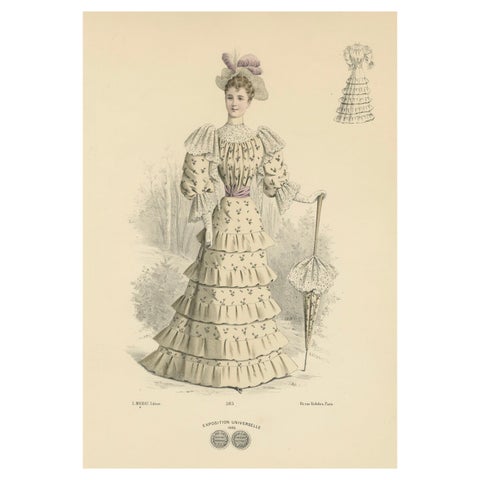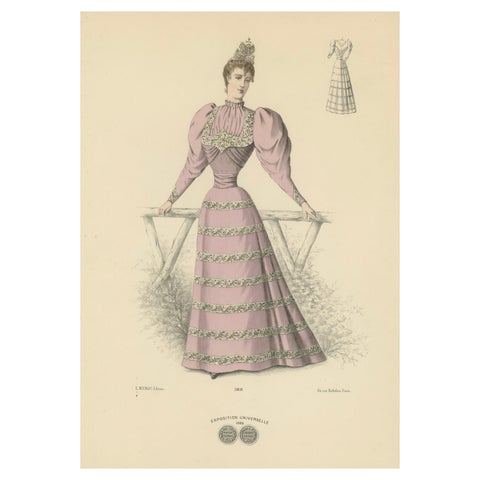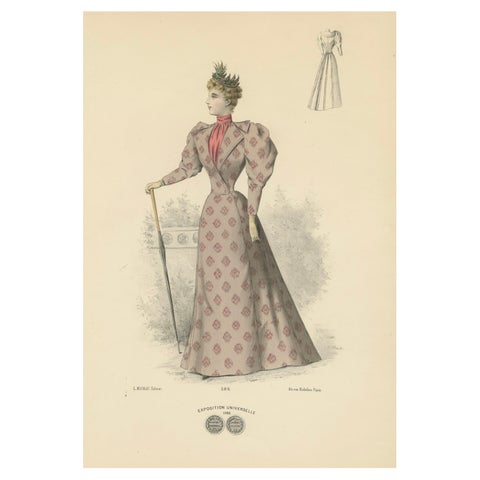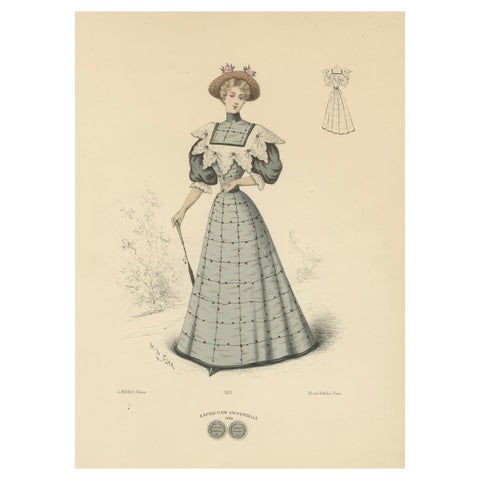
Close-ups
Framed and on the wall

Frame and rooms are illustrations of how the print could look; the description says what is included.
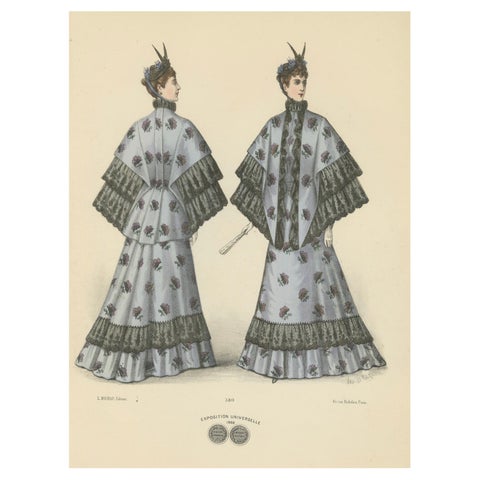
Victorian Splendor: Elegant Shawls and Mantles in Lithograph, Published in 1889
€240
$270 · £205
Original print, not a reproduction.
Ships worldwide from the Netherlands, flat, insured and tracked. 14-day returns. To buy, use Ask a question and we will reserve the print for you.
- Date
- 1889
- Sheet size
- 17.1 × 11.4 in (43.5 × 29 cm)
- Condition
- Good. Given age. General age-related toning and/or occasional minor defects from handling. Please study scan carefully.
- Wardrobe
- The fashion plate
- Era
- 1870 to 1900, Bustle
- Stock no.
- f_41066632
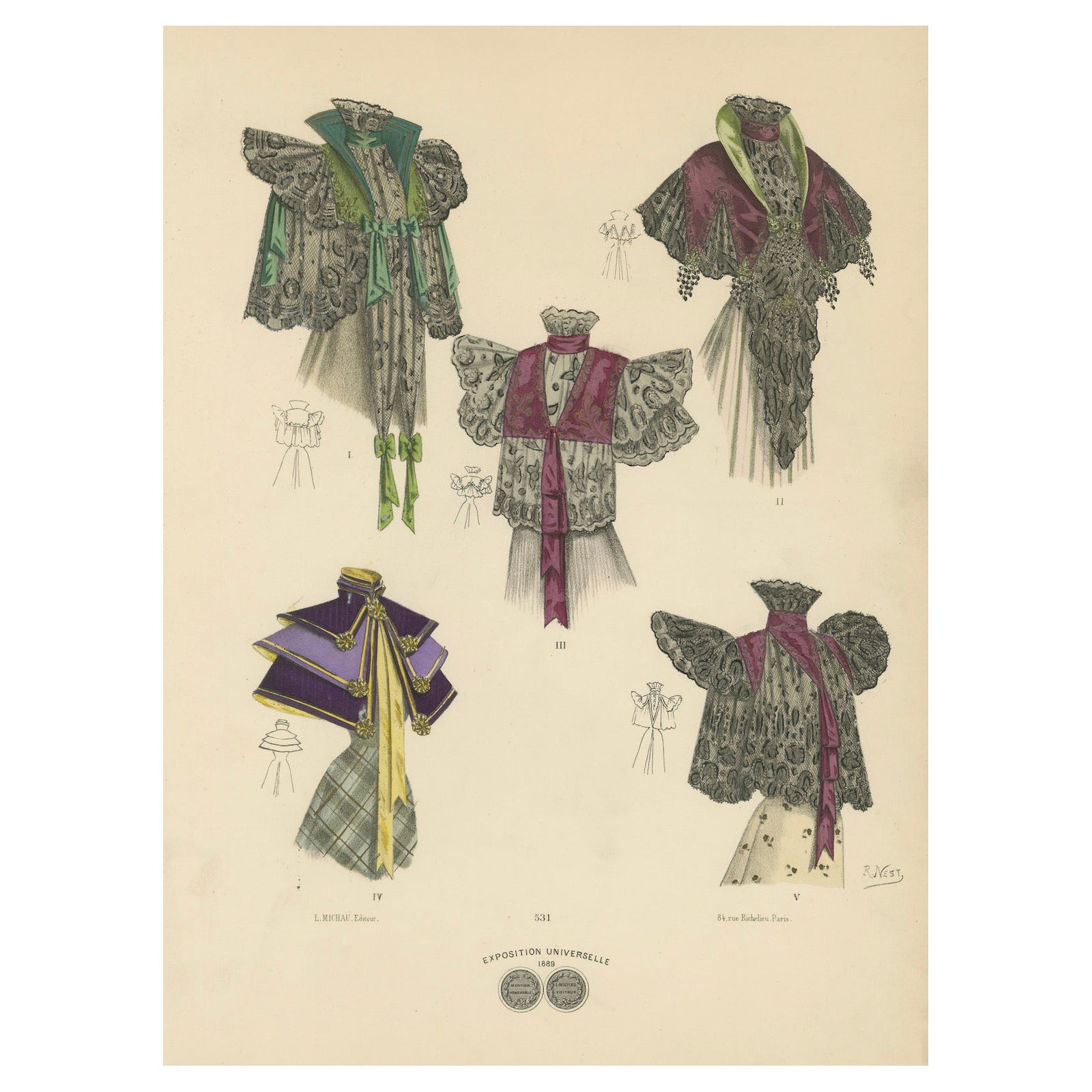
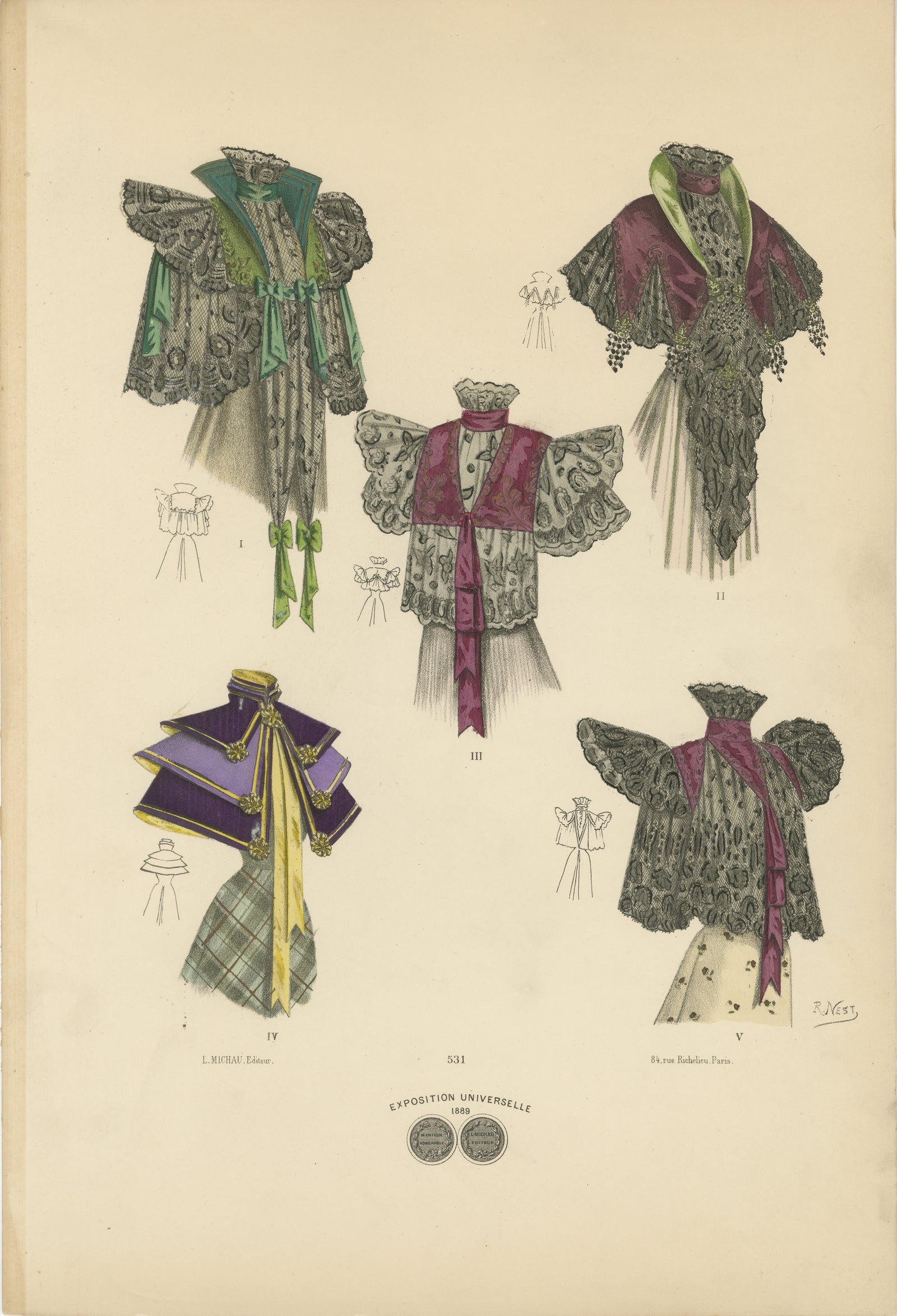
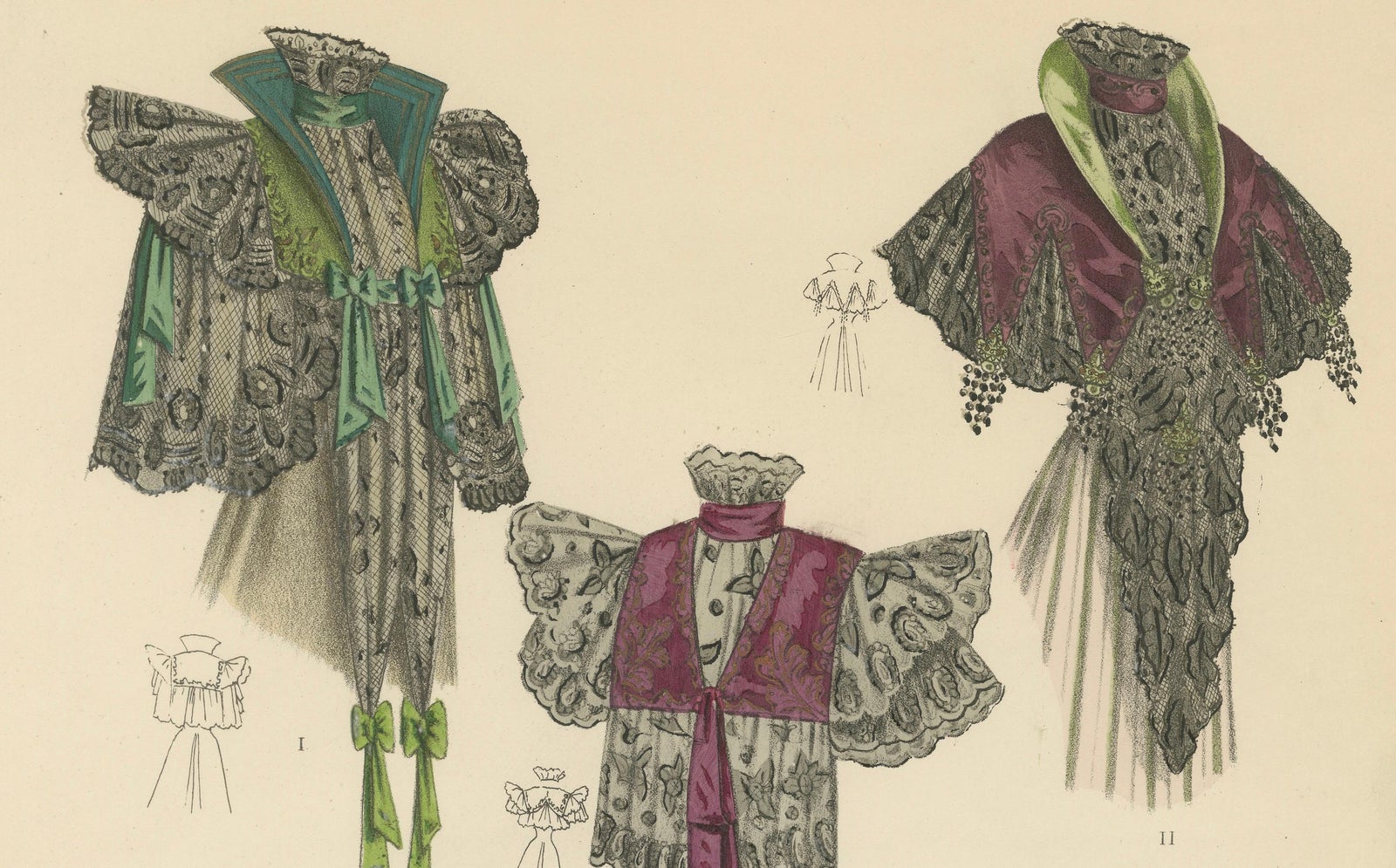
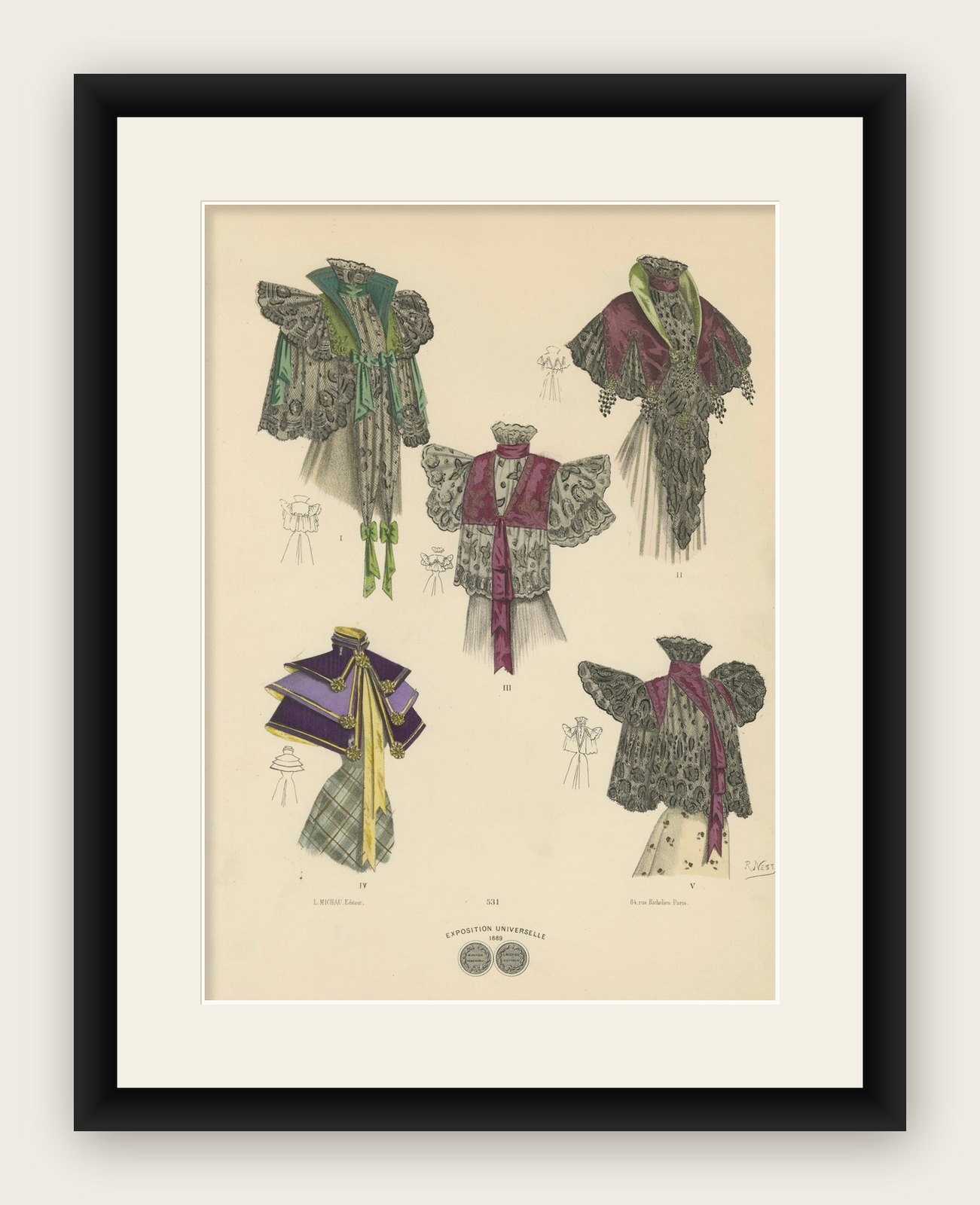
This lithograph showcases a collection of elegant Victorian shawls and mantles from 1889, each intricately designed to complement the fashionable attire of the late 19th century. The garments are depicted in vibrant colors and detailed patterns, highlighting the craftsmanship and decorative elements that were highly valued in women's fashion of the time.
1. Mantle I (top left): A richly decorated mantle featuring a combination of green and turquoise hues with black lace overlays. The design includes wide, flared sleeves with lace trim and a matching ribbon detail at the waist, creating a luxurious and refined look.
2. Mantle II (top right): This shawl features deep maroon and olive green tones, with a dramatic drape and fringe detailing that adds texture and movement. The wide collar and structured shoulders give it a regal appearance, making it suitable for formal occasions.
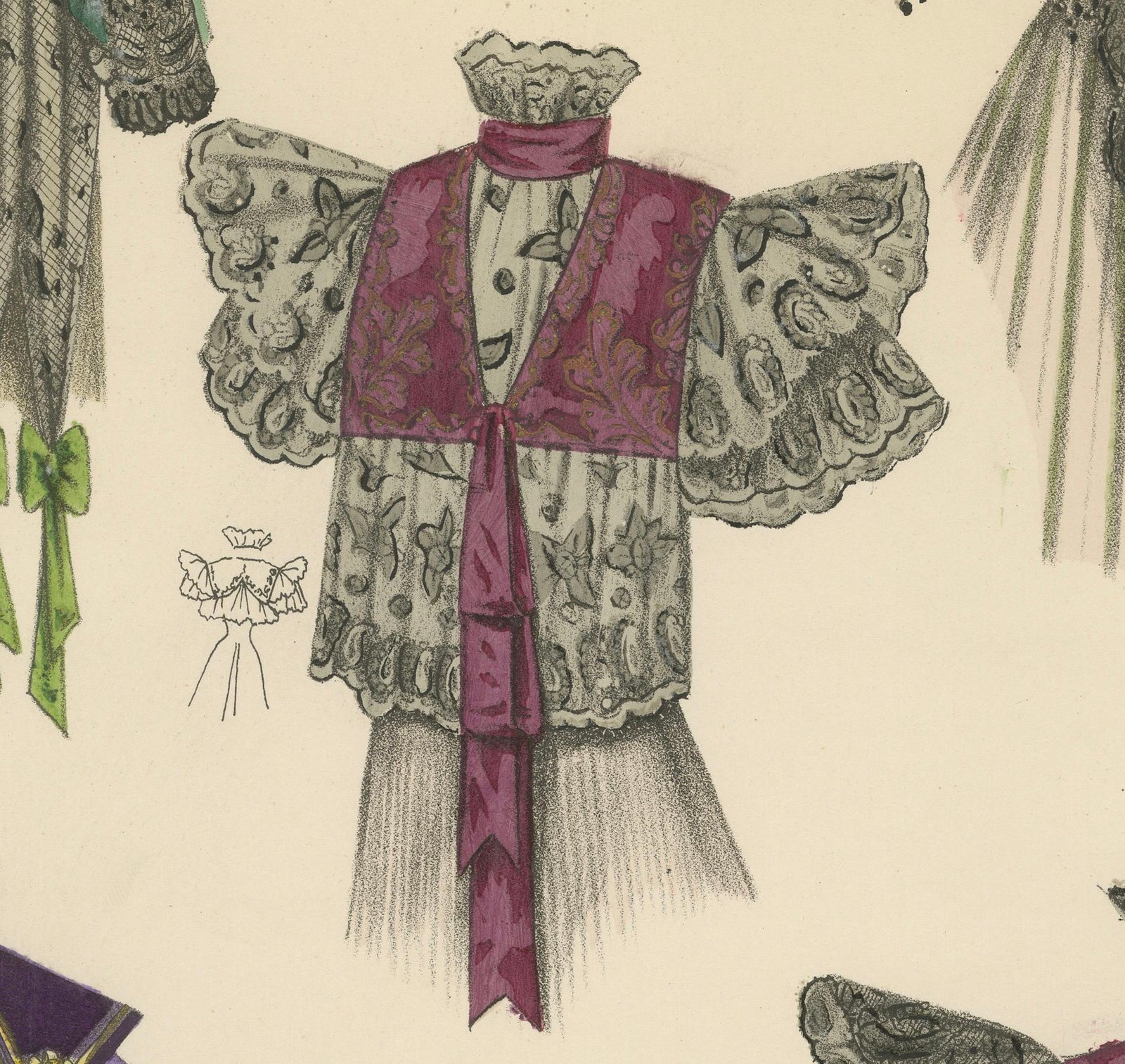
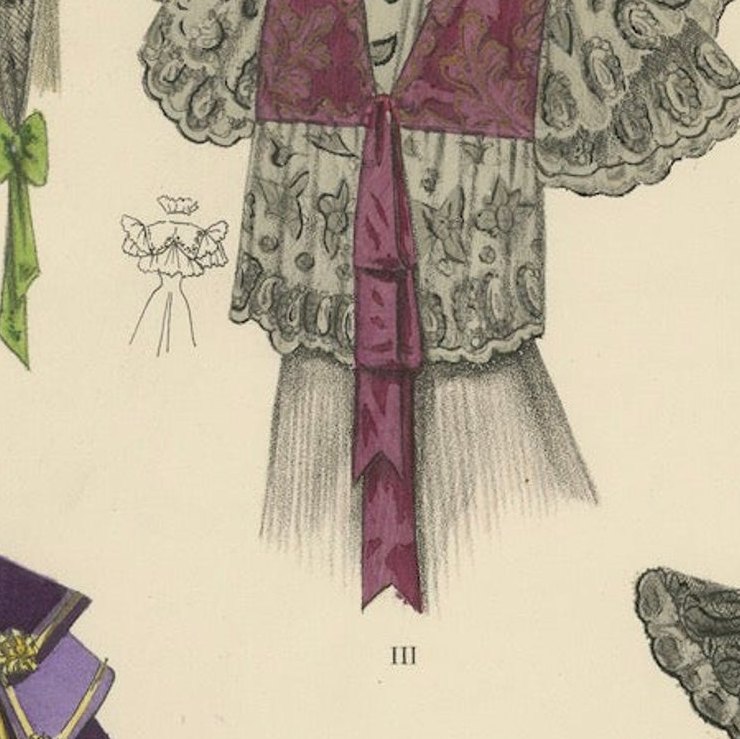
3. Mantle III (center): A delicate mantle in a light grey lace with vibrant purple accents. The mantle is embellished with a wide ribbon that ties at the waist, and its shorter length and lace sleeves make it a versatile piece for both day and evening wear.
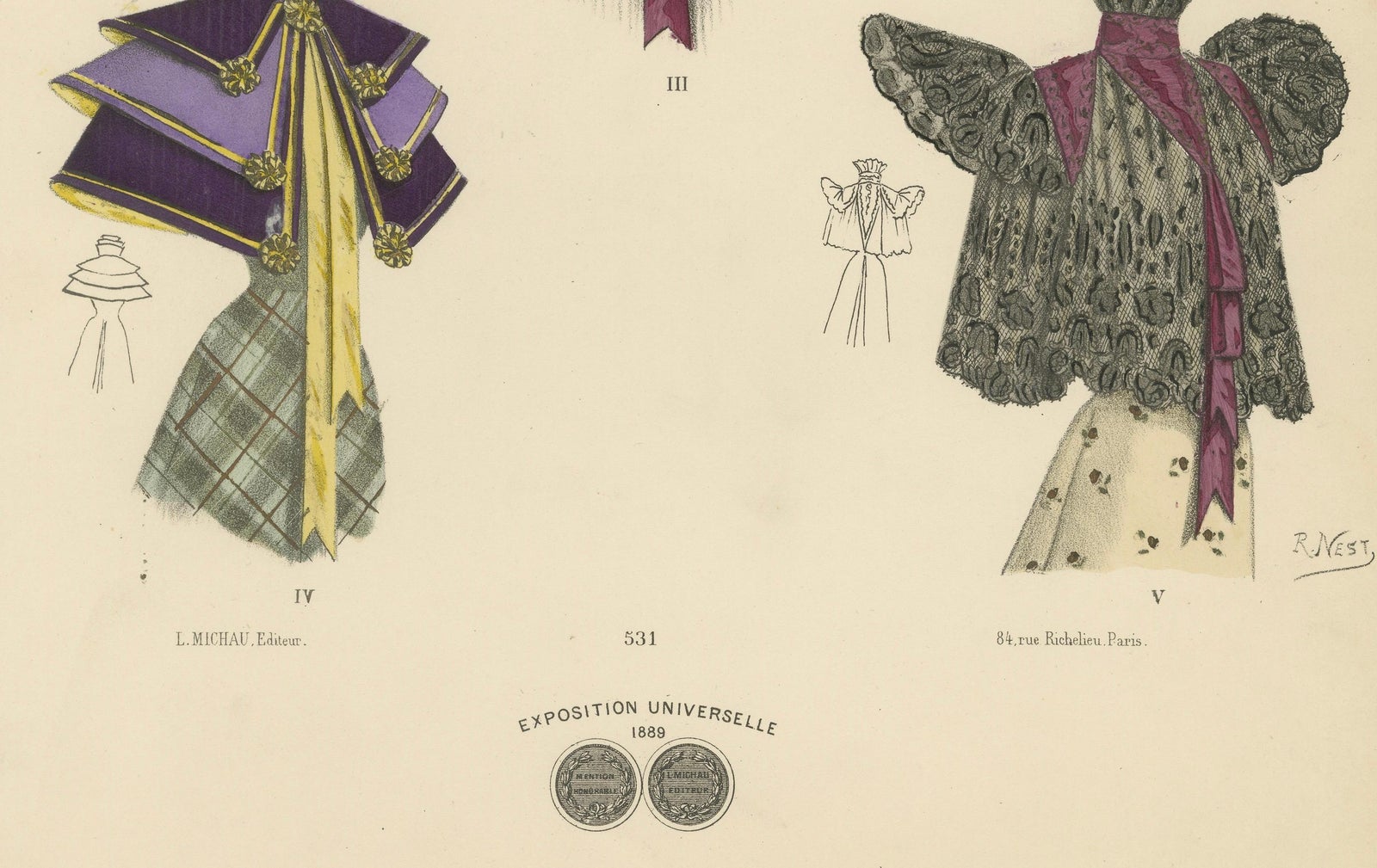
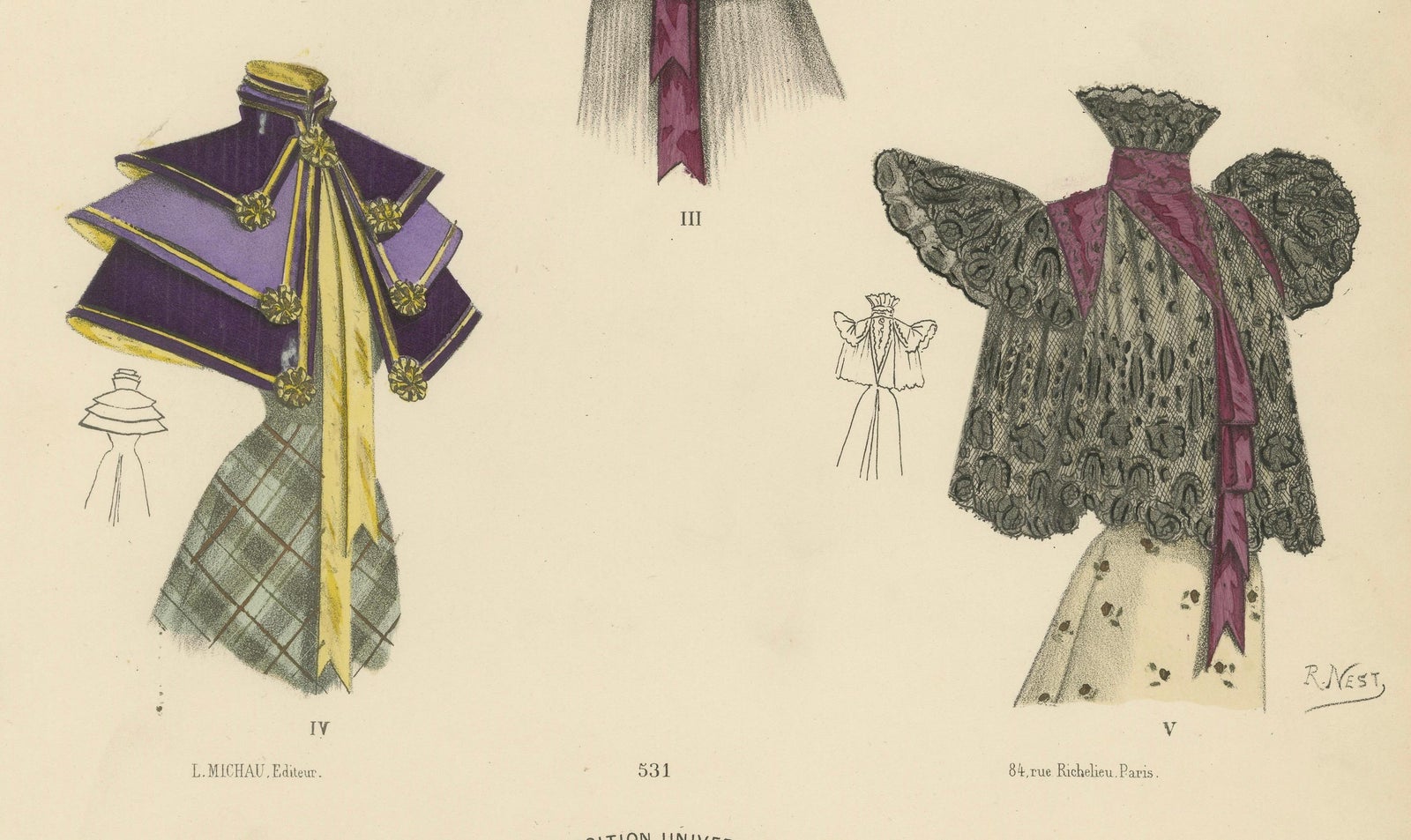
4. Mantle IV (bottom left): This striking mantle showcases a bold color combination of purple and gold with a plaid underlayer. The structured design and tiered layers create a distinctive silhouette, with a long, flowing ribbon adding a touch of elegance.
5. Mantle V (bottom right): Another intricate lace mantle, similar in style to Mantle III, but with a more subdued color palette. The use of dark lace paired with a rich red ribbon creates a sophisticated and timeless look.
Each mantle is accompanied by a small sketch that provides an additional view or detail, offering insight into the construction and design of these exquisite garments.
This lithograph was produced by L. Michau, a prominent publisher of fashion illustrations during the 19th century. The design is credited to R. Nest, as indicated by the signature on the image.
This illustration is part of a series likely created for the Exposition Universelle of 1889, held in Paris. The fashion plates from this collection were intended to showcase the latest trends in women's outerwear, emphasizing the elegance and sophistication of these carefully crafted shawls and mantles.
The piece is a lithograph, a popular printmaking technique in the 19th century that allowed for the production of detailed and high-quality images. Lithography involves drawing on a flat surface with a greasy substance, which is then treated to allow ink to adhere only to the drawn areas. This method was particularly favored for fashion plates due to its ability to capture intricate details and subtle color variations, making it ideal for depicting elaborate clothing designs.