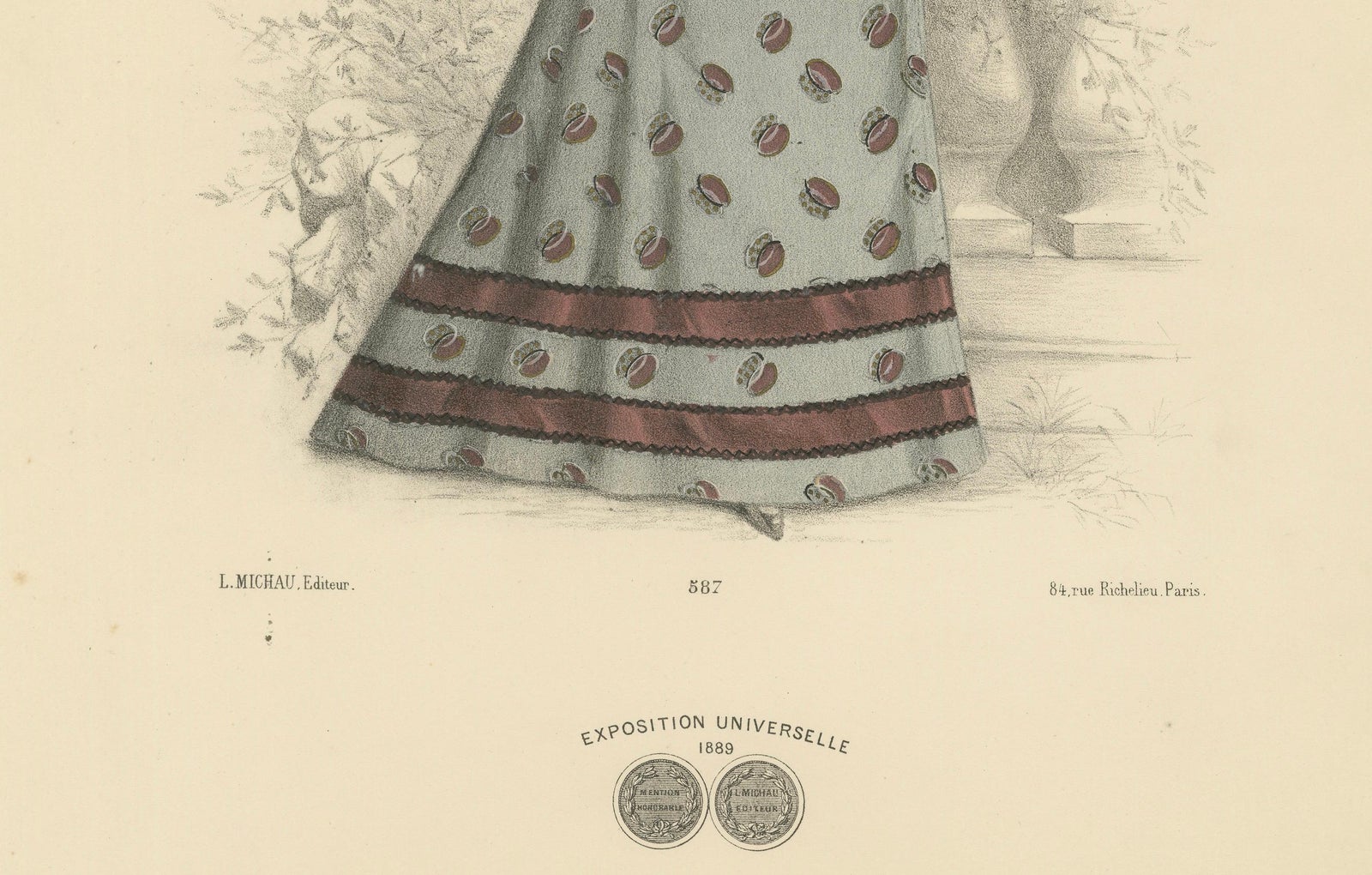
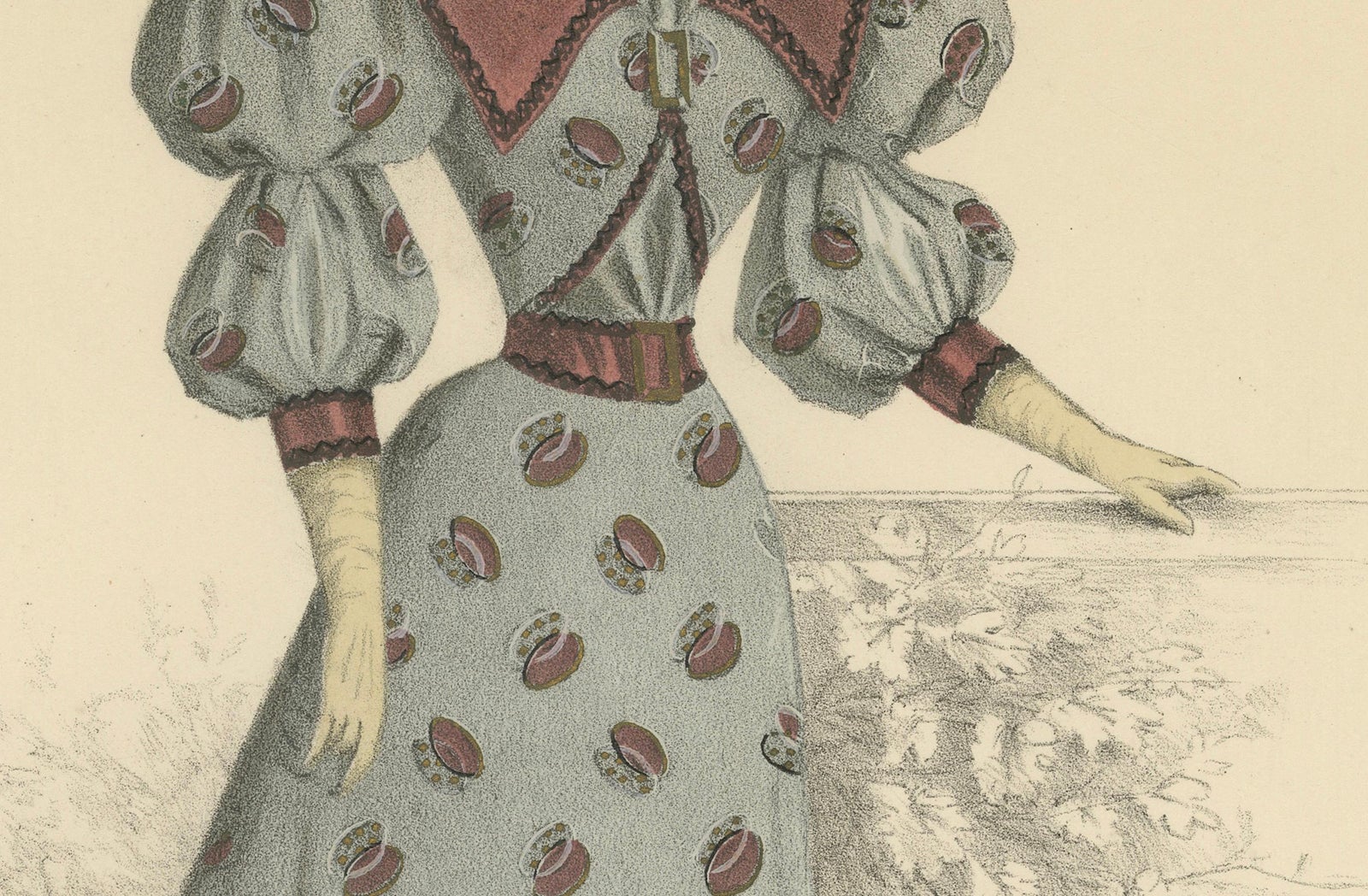
Close-ups
Framed and on the wall
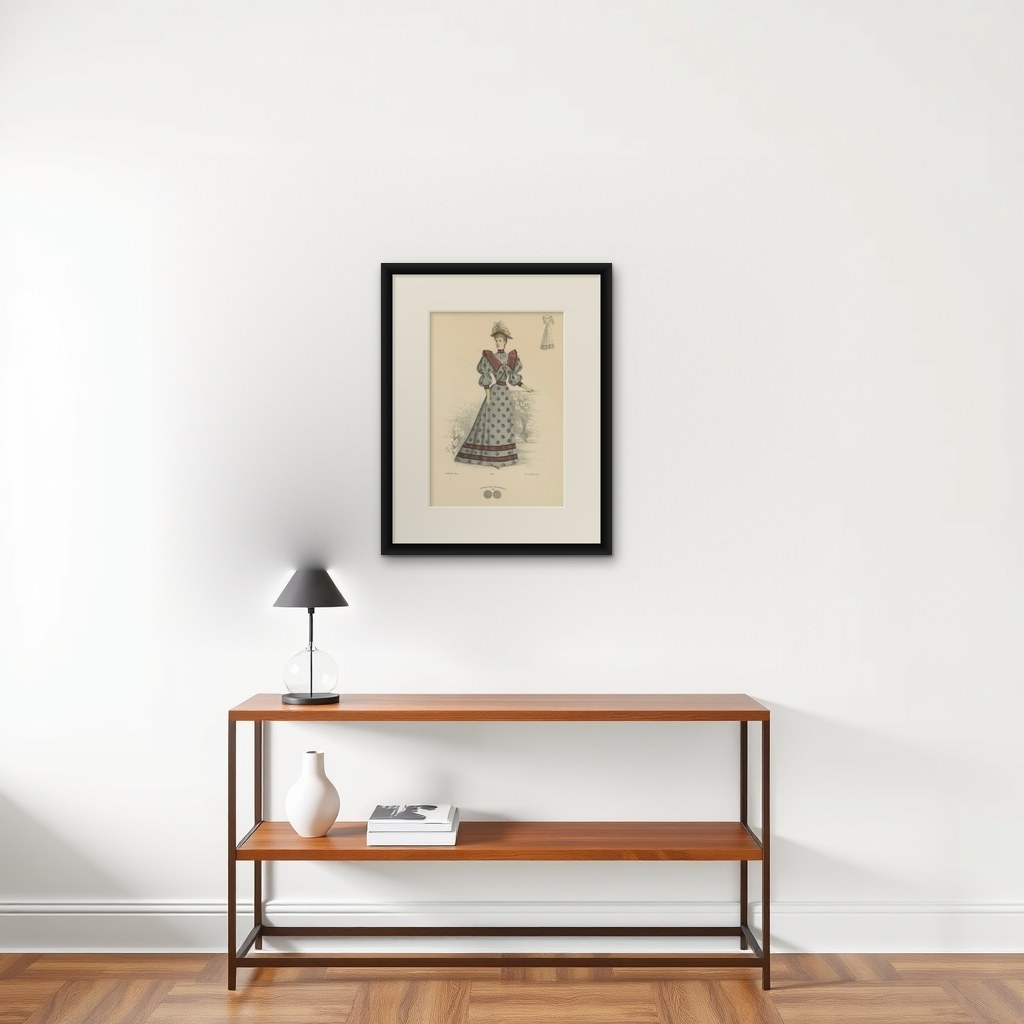
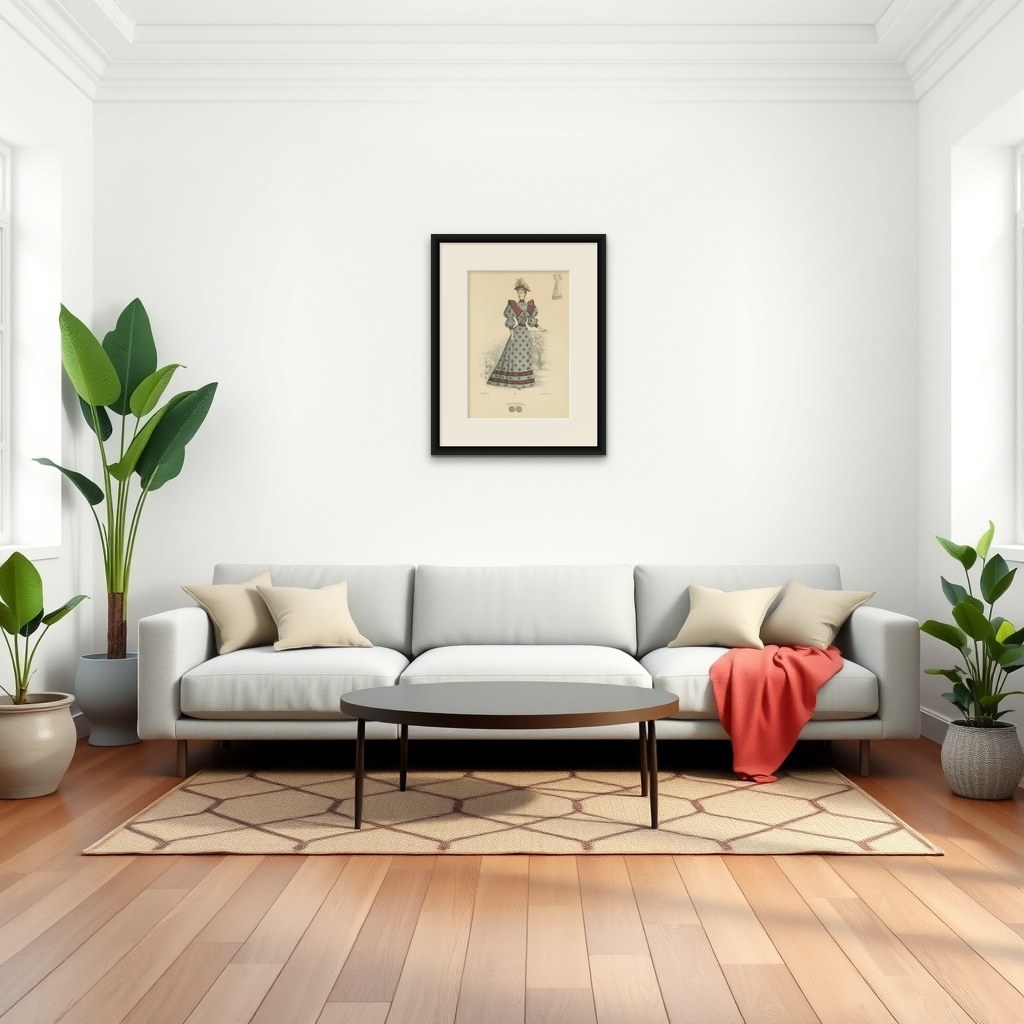
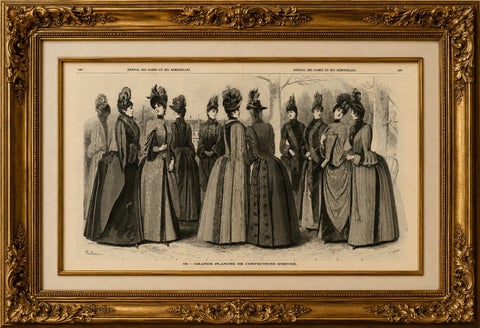
Frame and rooms are illustrations of how the print could look; the description says what is included.
Victorian Fashion Statements: Litho by Michau for the Exposition Universelle
$235
€210 · £180
Original print, not a reproduction.
Ships worldwide from the Netherlands, flat, insured and tracked. 14-day returns. To buy, use Ask a question and we will reserve the print for you.
- Date
- Not stated
- Sheet size
- 11.4 × 17.1 in (29 × 43.5 cm)
- Condition
- Good. Given age. General age-related toning and/or occasional minor defects from handling. Please study scan carefully.
- Wardrobe
- The fashion plate
- Stock no.
- f_41065992
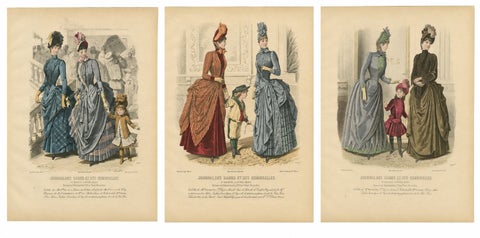
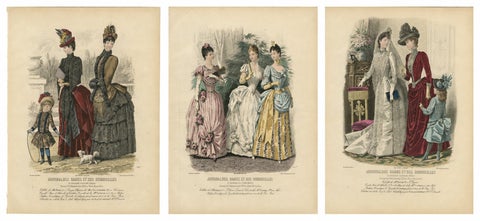
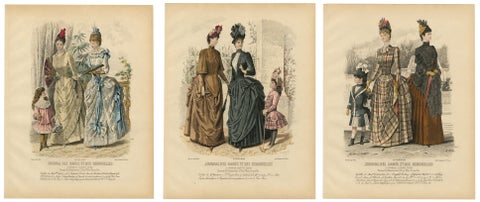
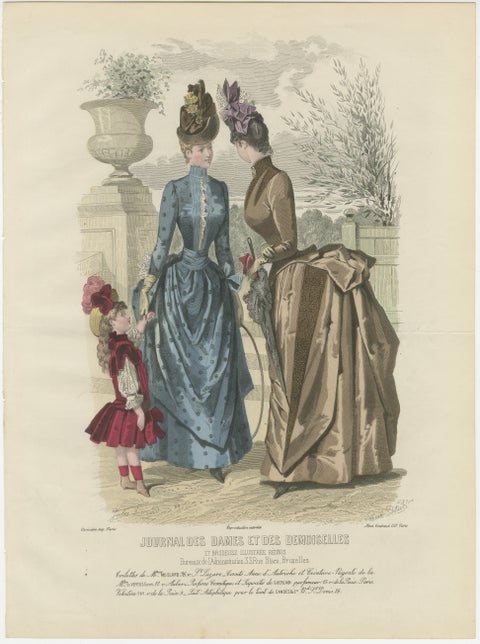
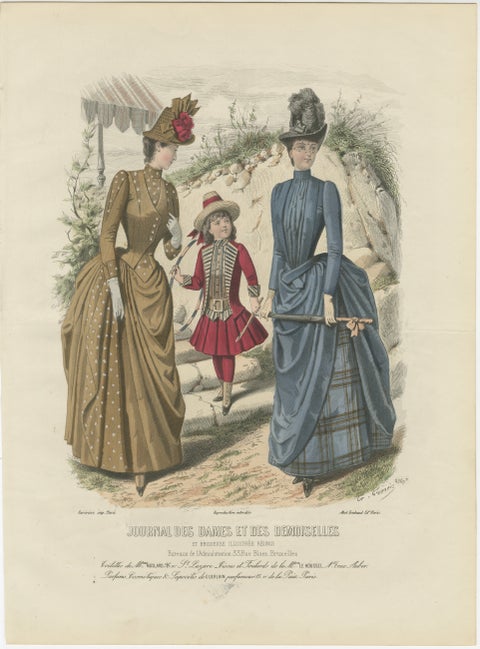
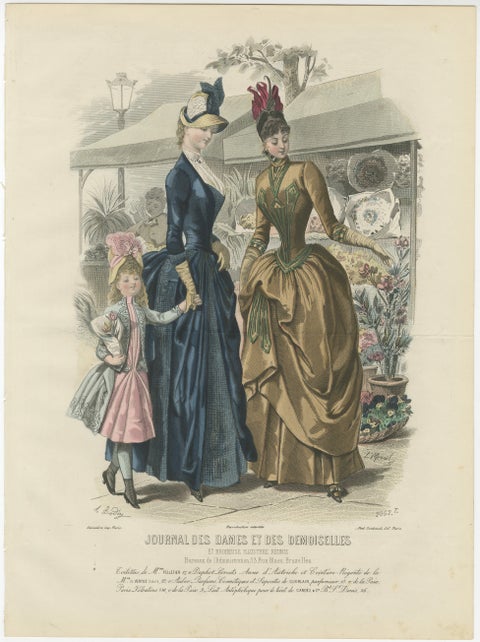
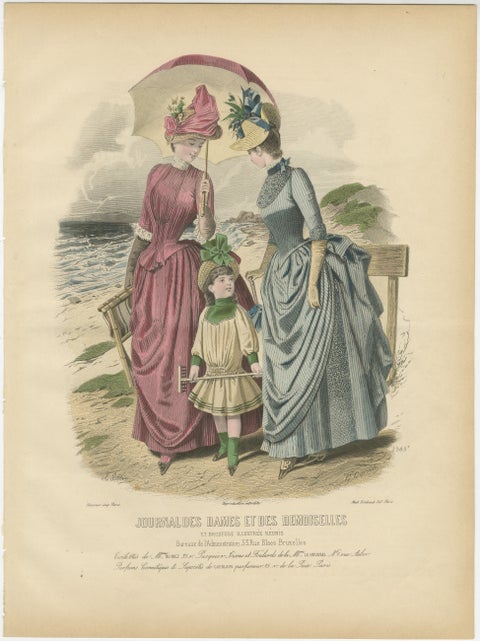
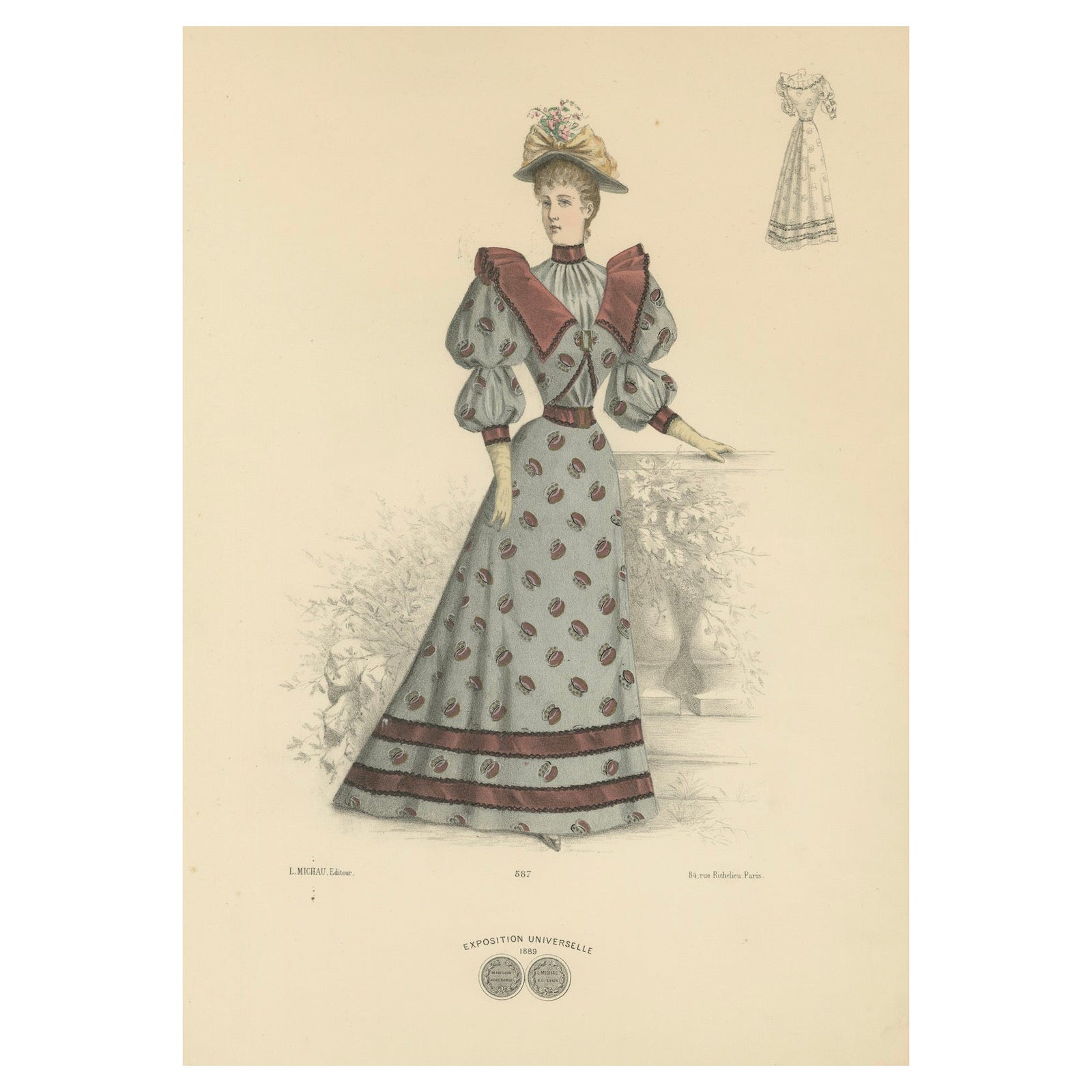
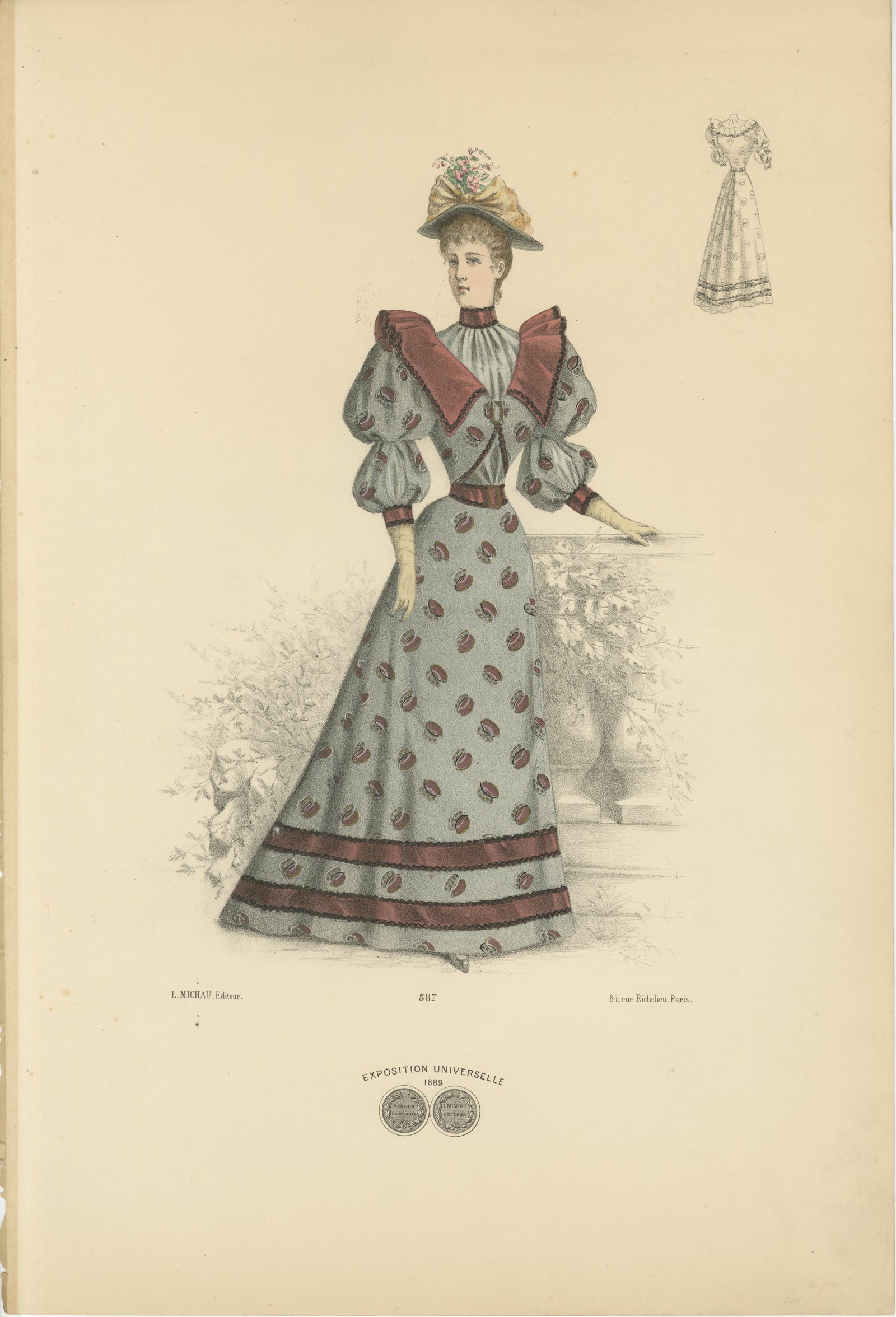
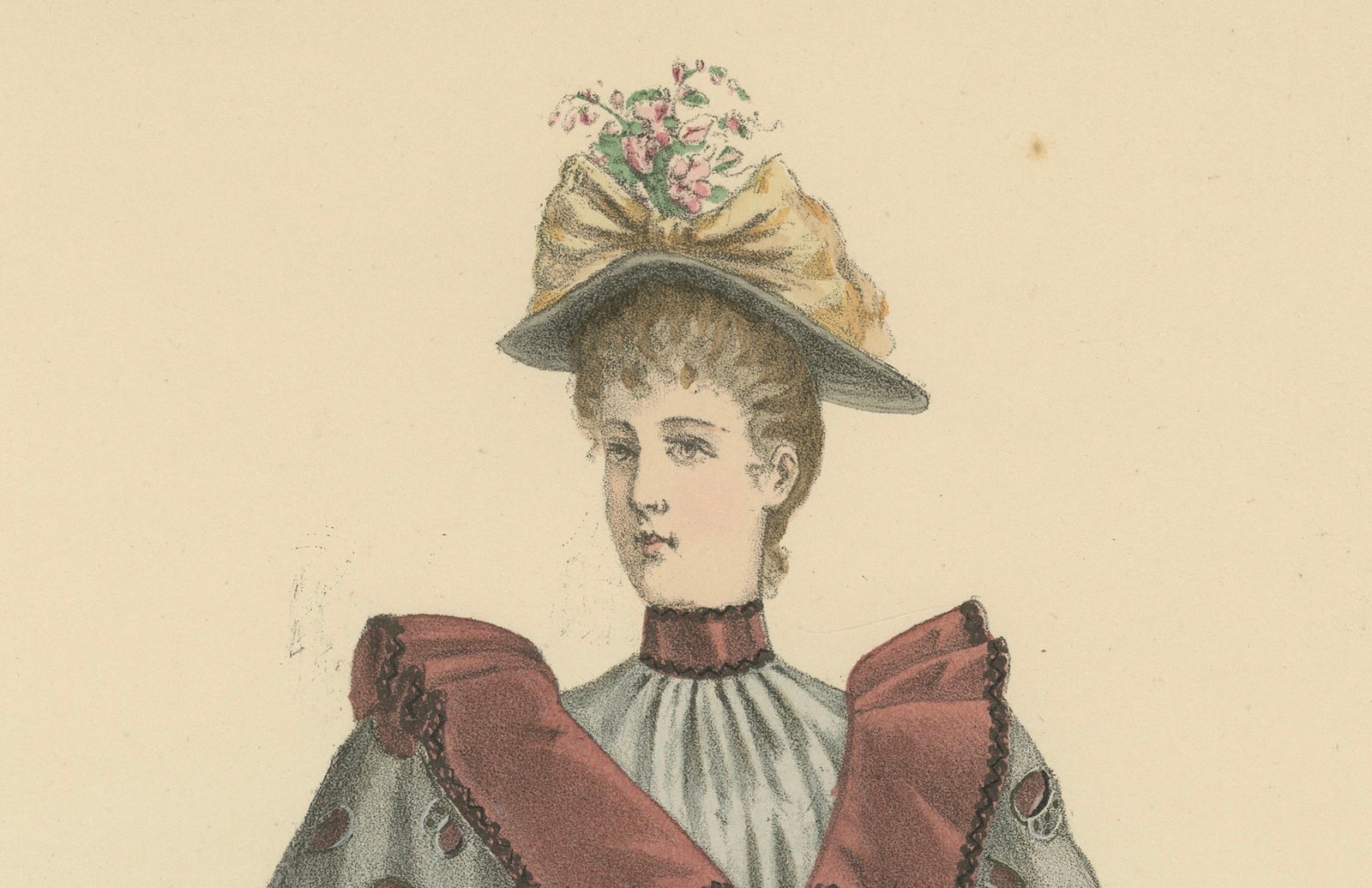
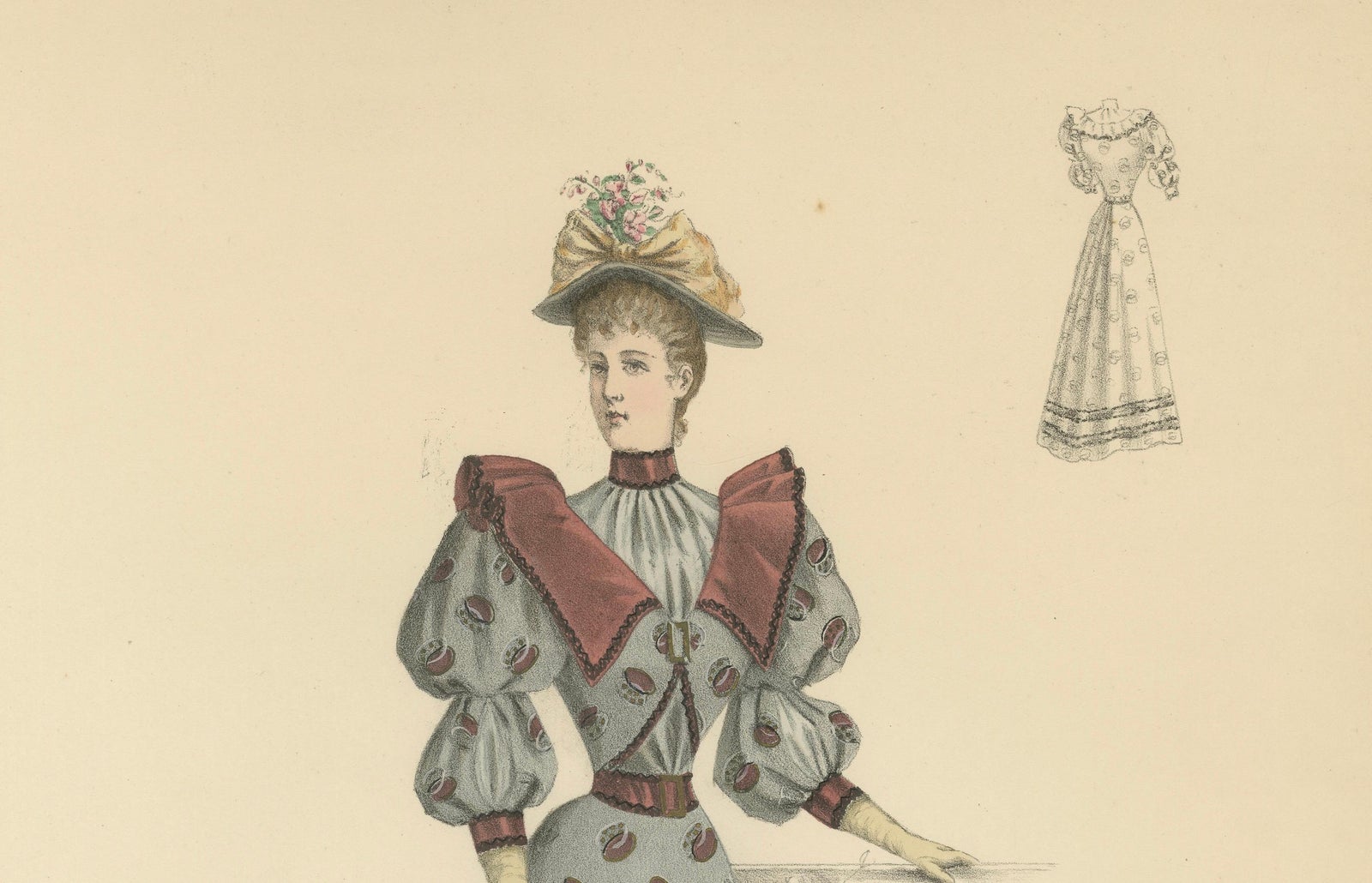
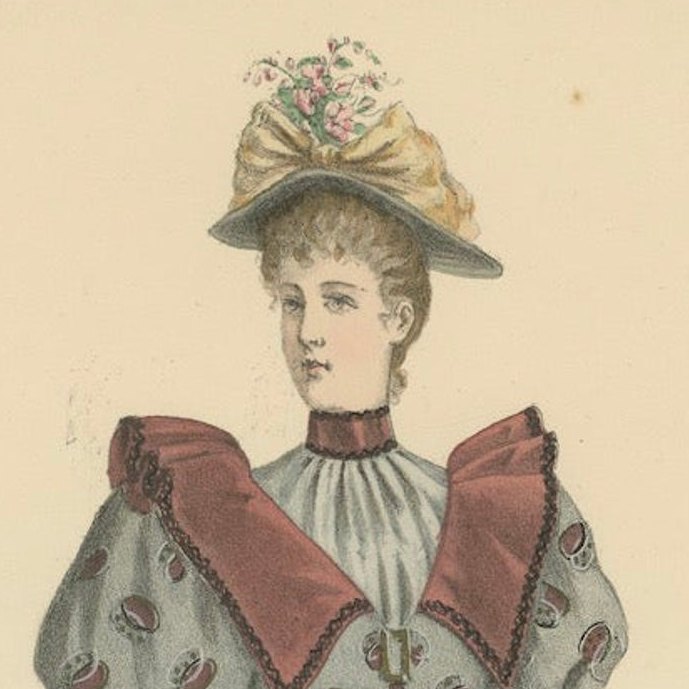
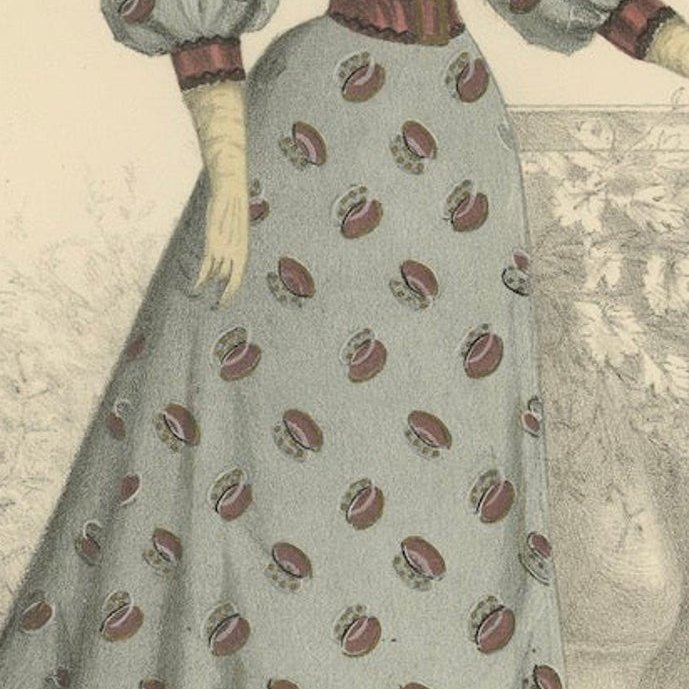
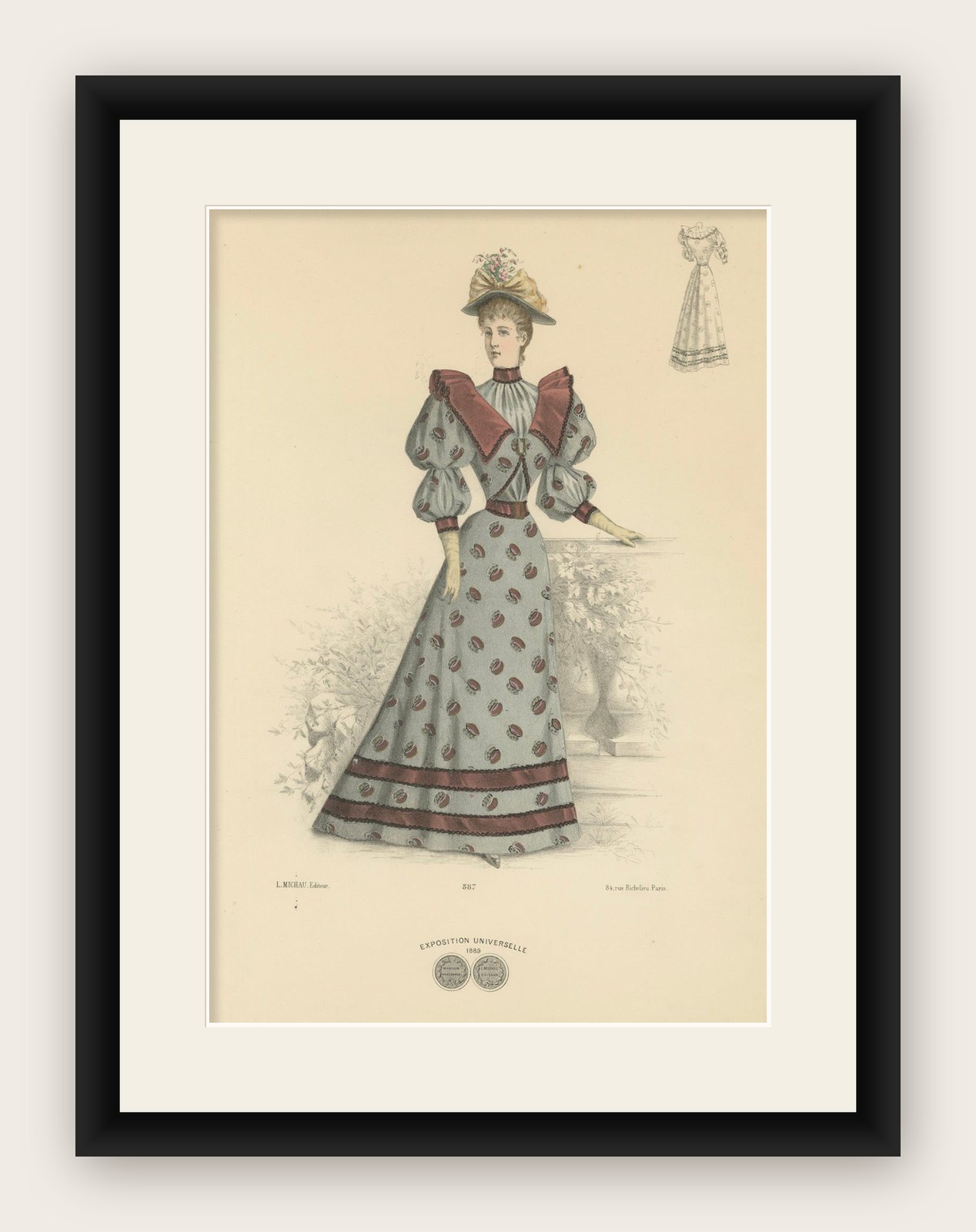
This lithograph illustrates a fashionable woman from 1889, dressed in a stylish and well-coordinated ensemble that exemplifies the fashion of the late Victorian era. The gown is made of a light blue fabric adorned with a repeating pattern of circular motifs in deep red, which are echoed in the wide, contrasting red trims on the hem and cuffs. The dress features a high neckline, and the bodice is accentuated by a large, pointed collar in matching red, creating a sharp contrast against the lighter fabric. The puffed sleeves are voluminous and fitted at the wrists, adding to the dramatic silhouette. The woman’s accessories include a hat adorned with flowers and a ribbon, and she is shown leaning against a balustrade, with a background suggesting an outdoor or garden setting.
This lithograph was created by L. Michau, a notable publisher of fashion illustrations during the 19th century.
This illustration is part of a collection produced for the Exposition Universelle of 1889 in Paris. The fashion plates from this series were intended to display the latest trends in women’s fashion, capturing the elegance and sophistication of the time.
The piece is a lithograph, a common printmaking method in the 19th century that allowed for the production of detailed and high-quality images. Lithography involves drawing on a flat surface with a greasy substance, which is then treated to allow ink to adhere only to the drawn areas. This technique was particularly favored for fashion plates due to its ability to faithfully reproduce intricate details and subtle color variations, making it ideal for depicting elaborate clothing designs.