Close-ups
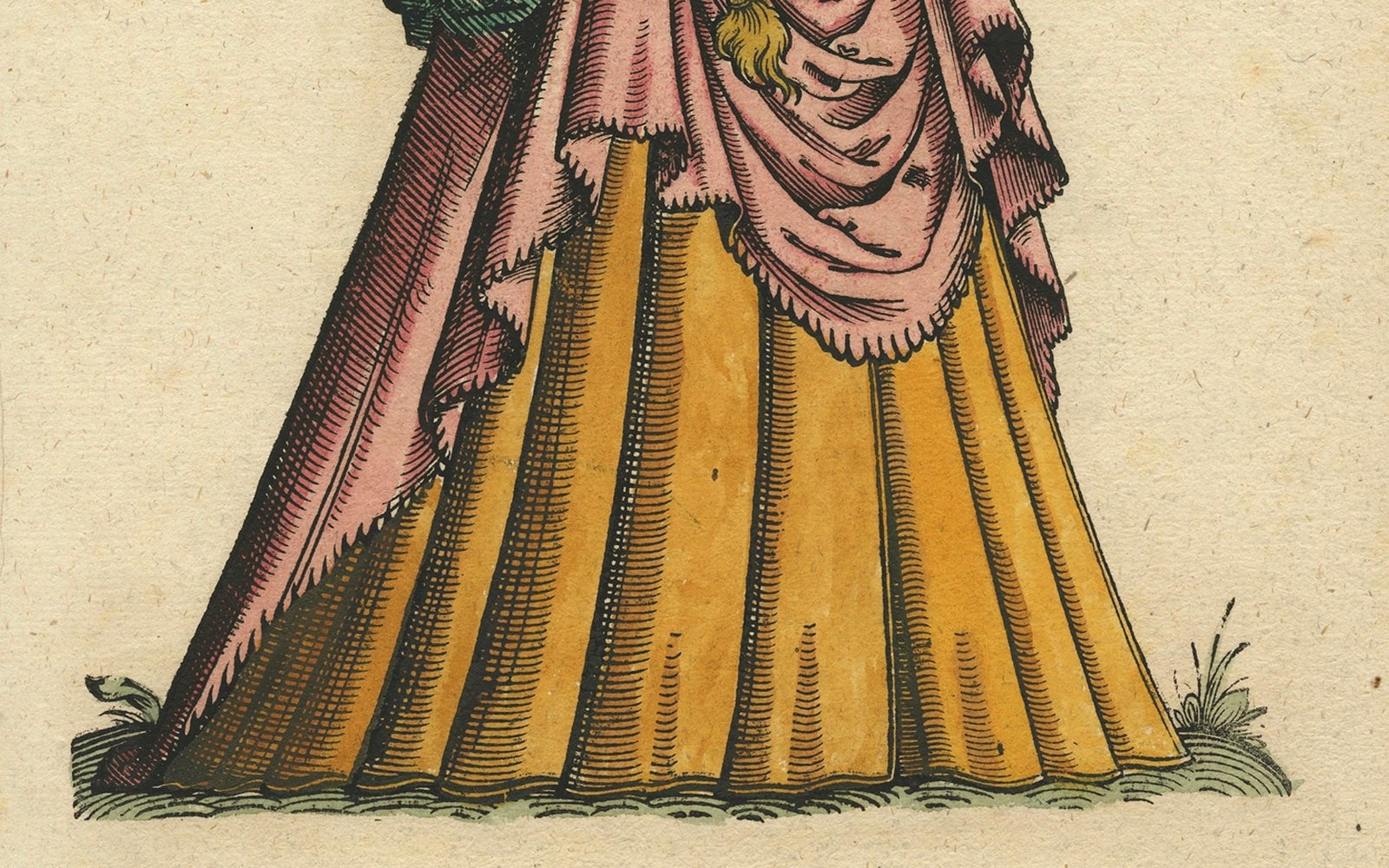
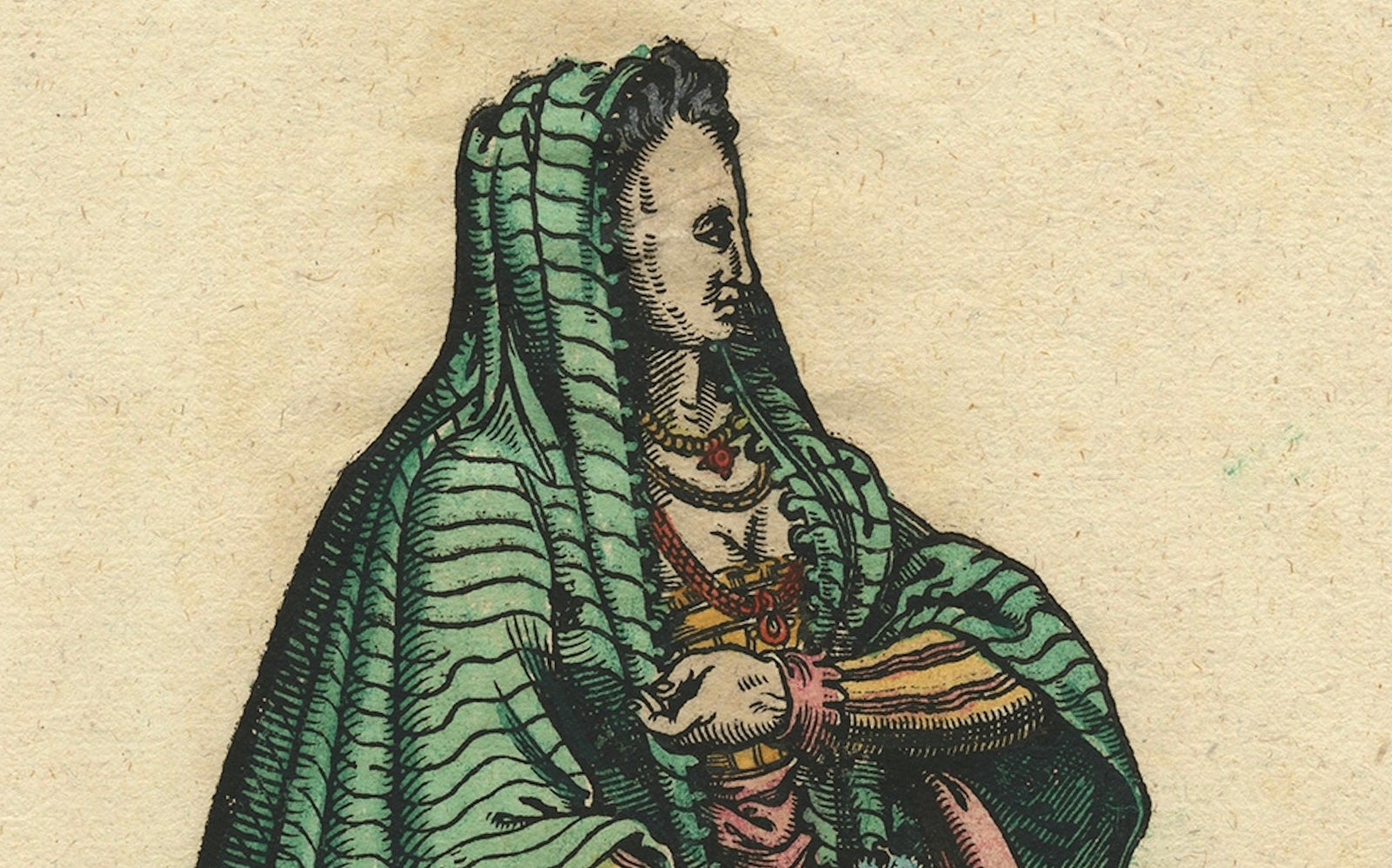
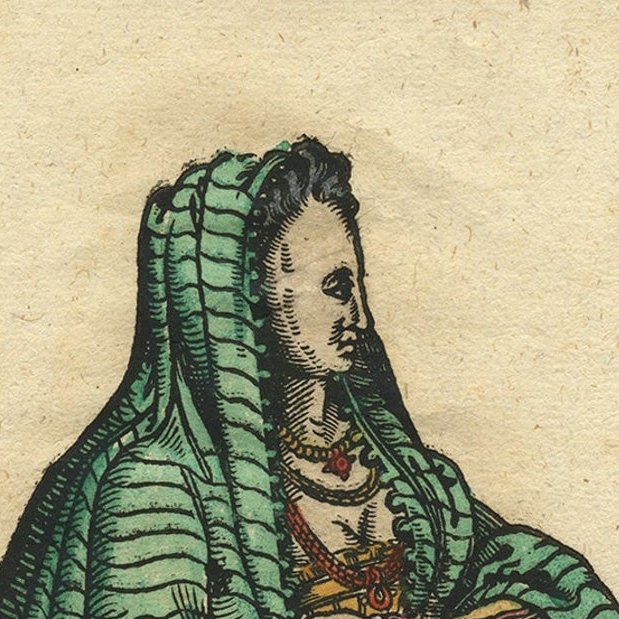
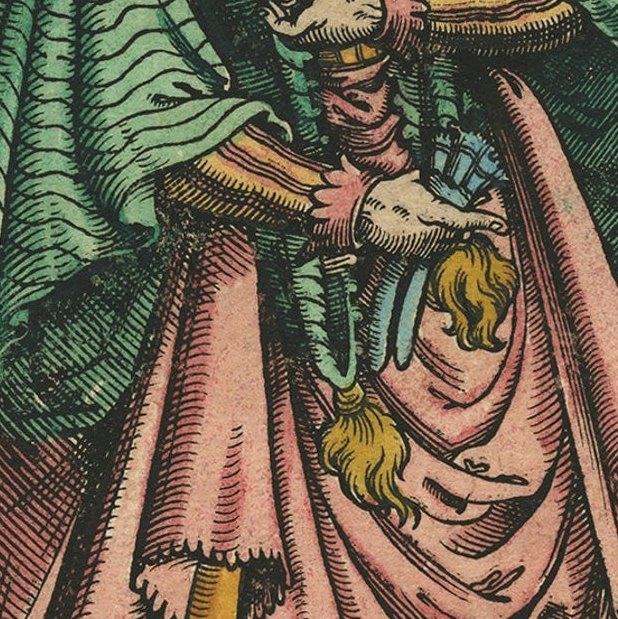
Framed and on the wall
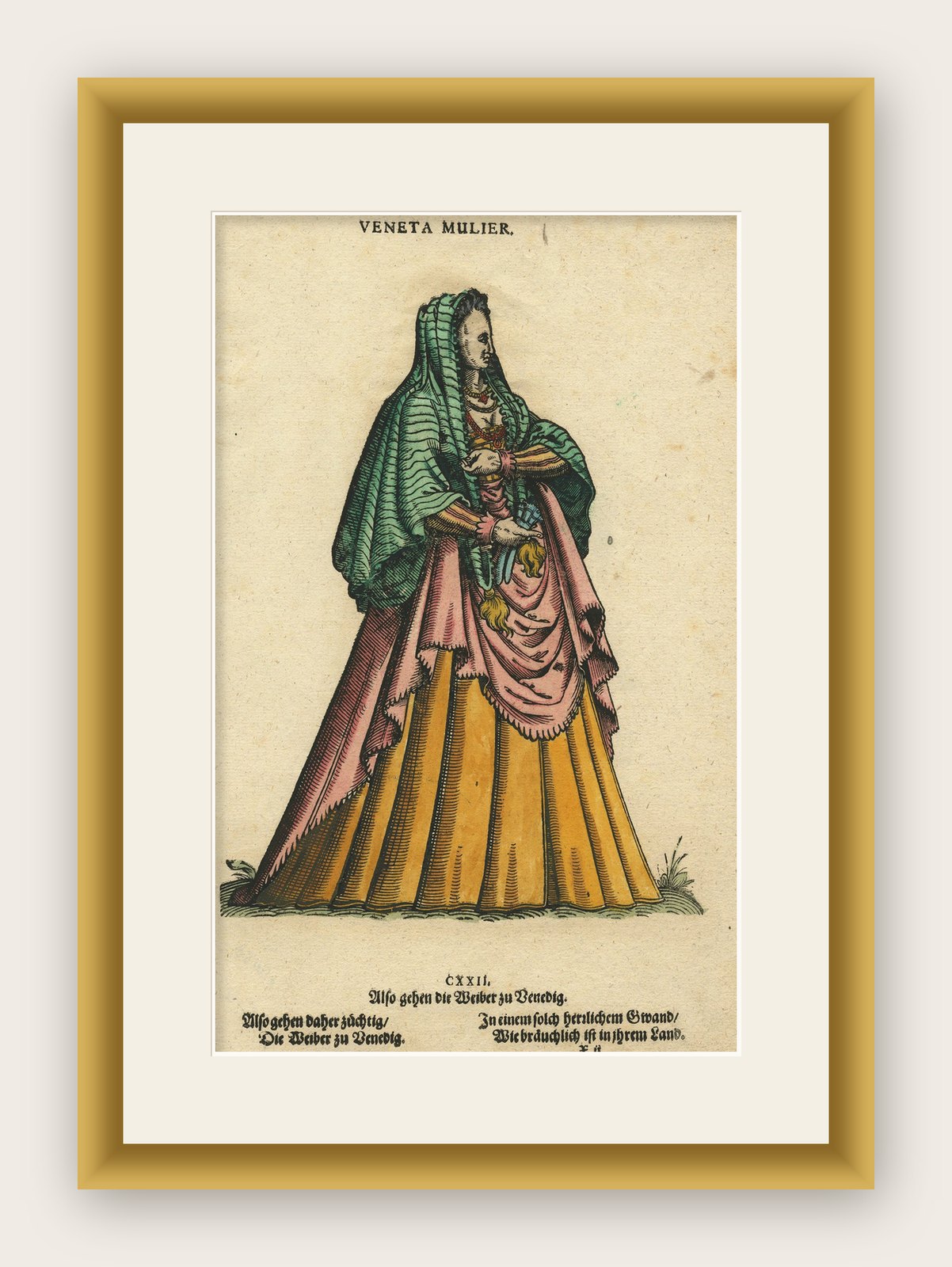
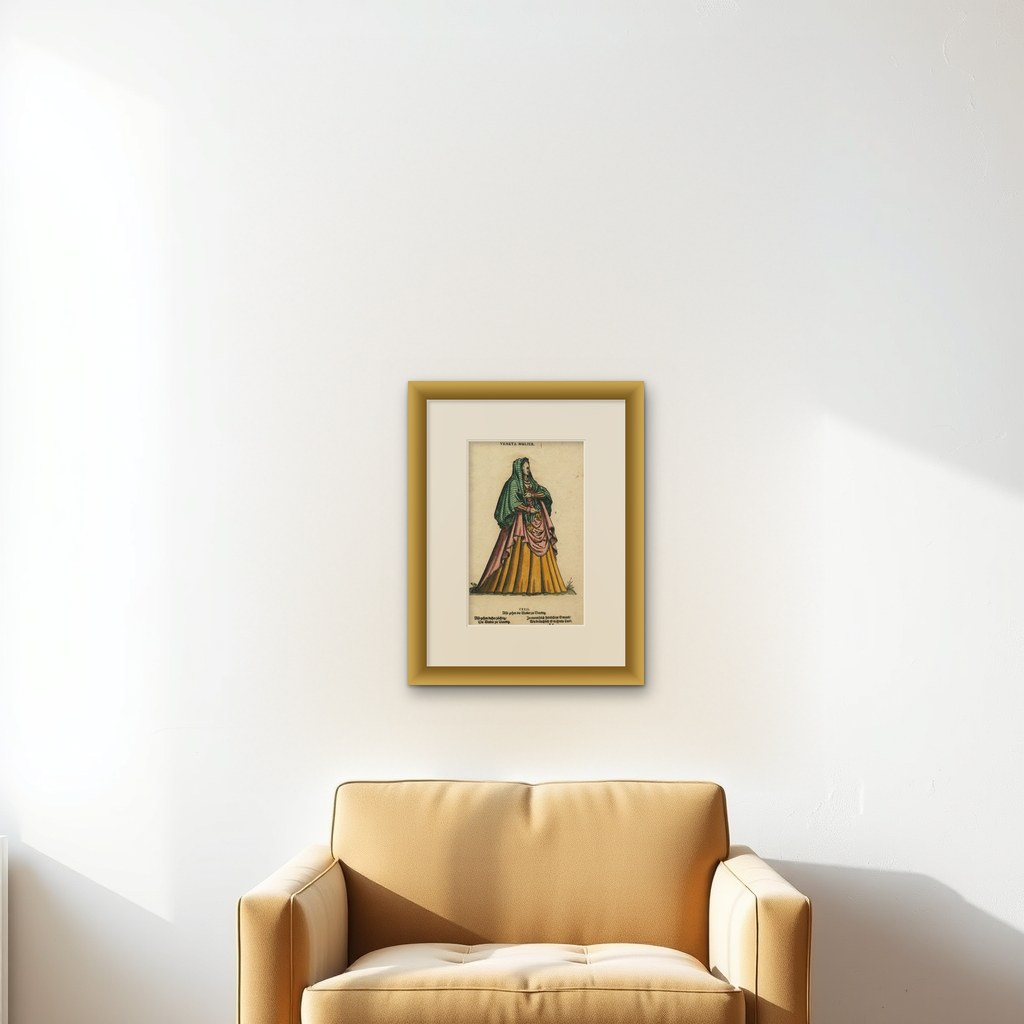

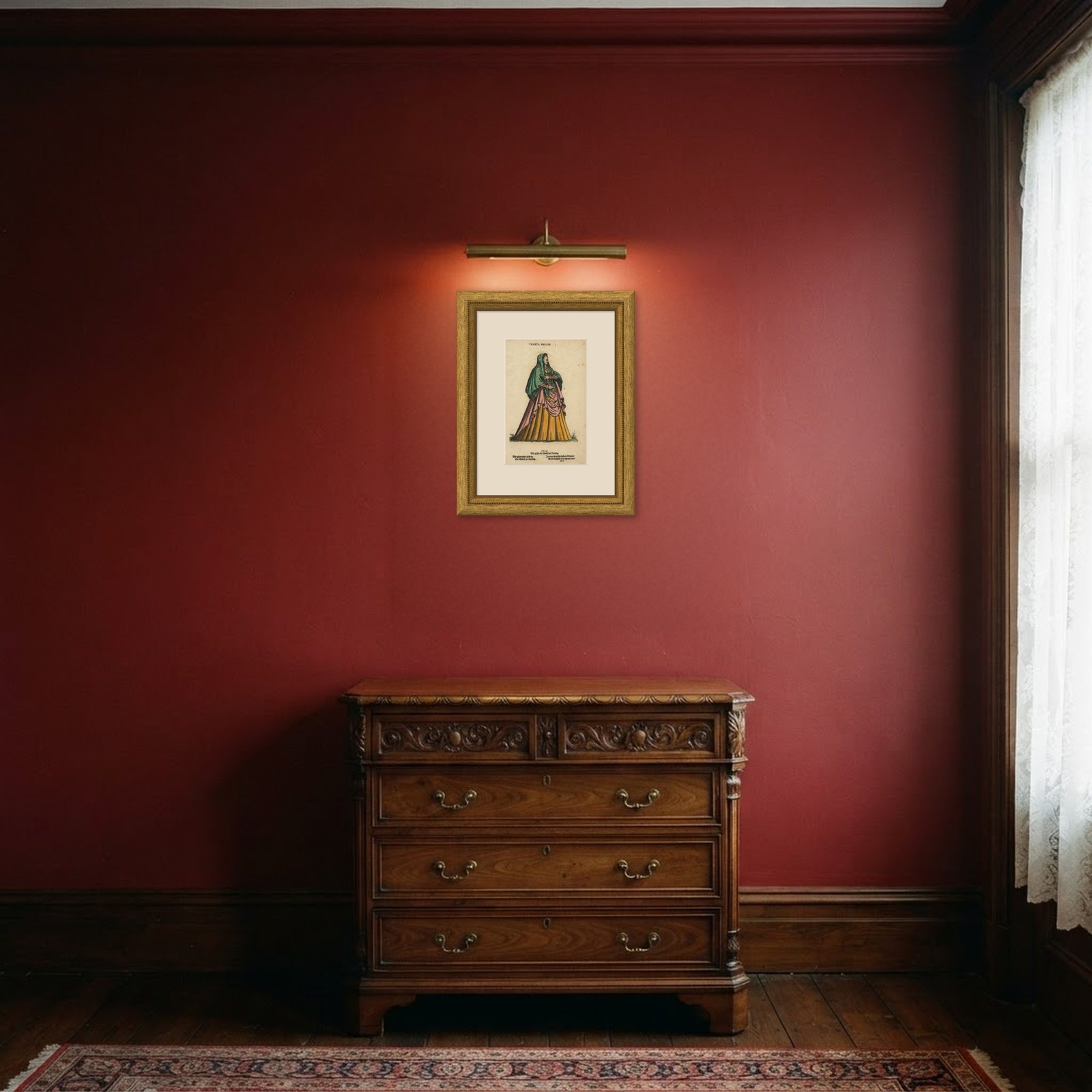
Frame and rooms are illustrations of how the print could look; the description says what is included.
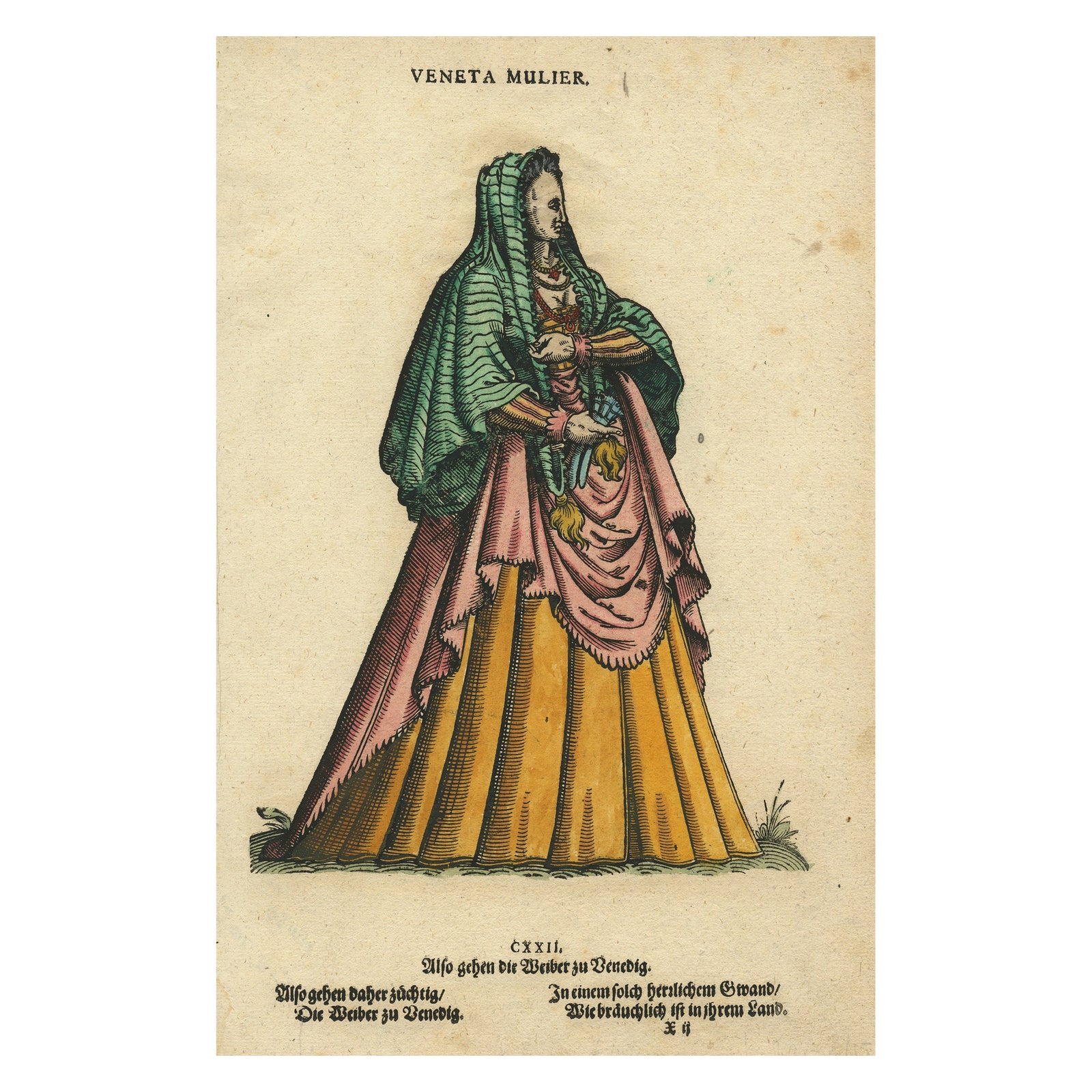
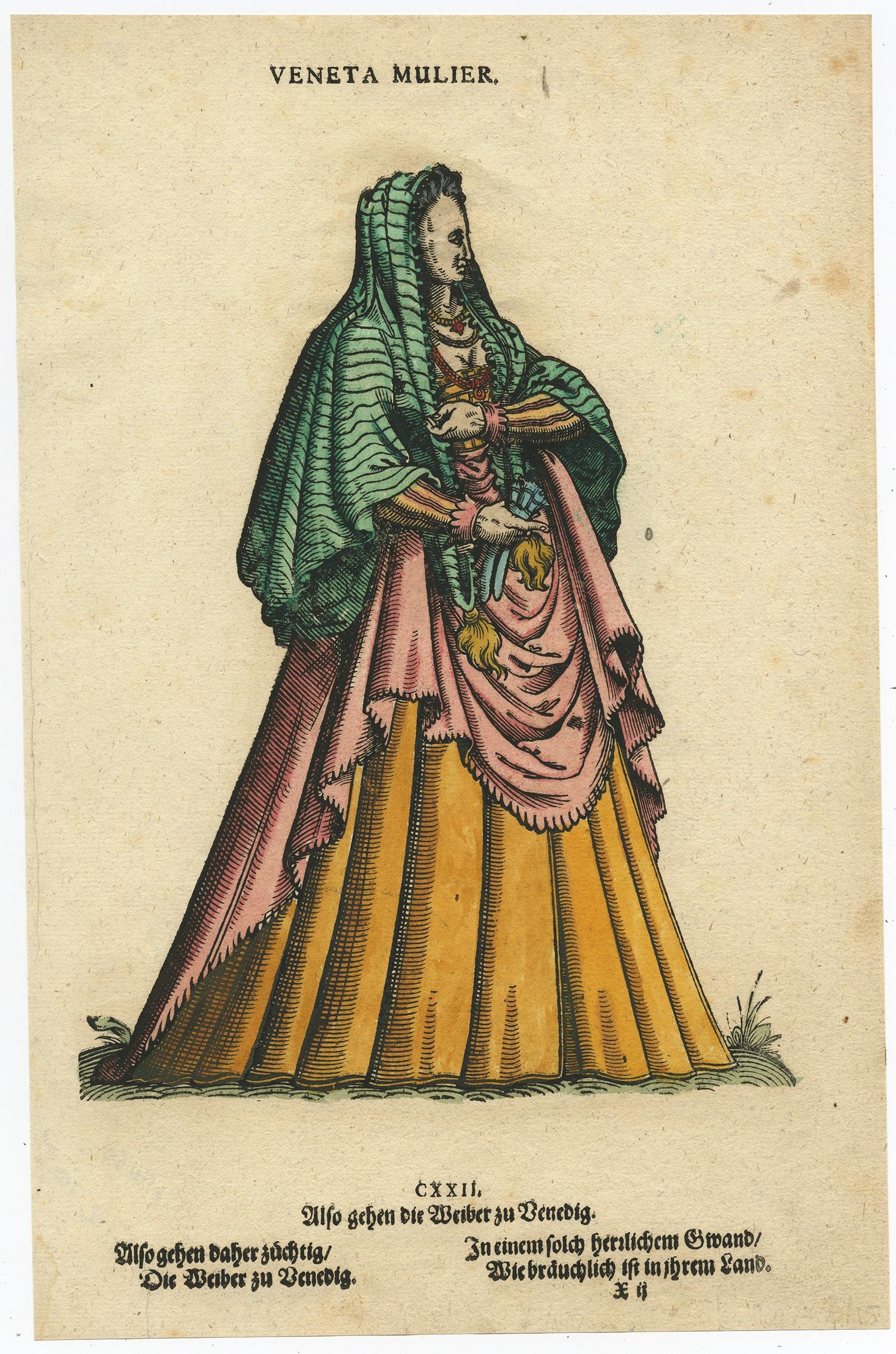
Venetian Woman, Rare Antique Costume Woodcut by Jost Amman, 16th Century
£165£11530% off
$155 · €139
Original print, not a reproduction.
Ships worldwide from the Netherlands, flat or rolled, insured and tracked. 14-day returns.
- Date
- Not stated
- Sheet size
- 12.1 × 7.9 in (30.7 × 20 cm)
- Condition
- Good. Impression with vivid original hand-coloring. Some light toning and minor foxing across the sheet, faint handling marks, and small imperfections at edges consistent with age. Strong woodcut lines preserved.
- Wardrobe
- Court & couture
- Stock no.
- PCT-61857
What the condition grades mean
- Excellent
- Bright and clean, with no faults worth mentioning.
- Very good
- Only light signs of age, such as faint toning.
- Good
- Normal signs of age for a sheet of this period: toning, some foxing, small marks or neat old repairs.
- Fair
- Clear faults such as staining, tears or repairs, priced to match.
Every fault we see is written in the condition note, and the whole sheet is shown uncropped in the photos.
Venetian Woman, Antique Hand-Colored Woodcut by Jost Amman, Plate CXXII, 1577
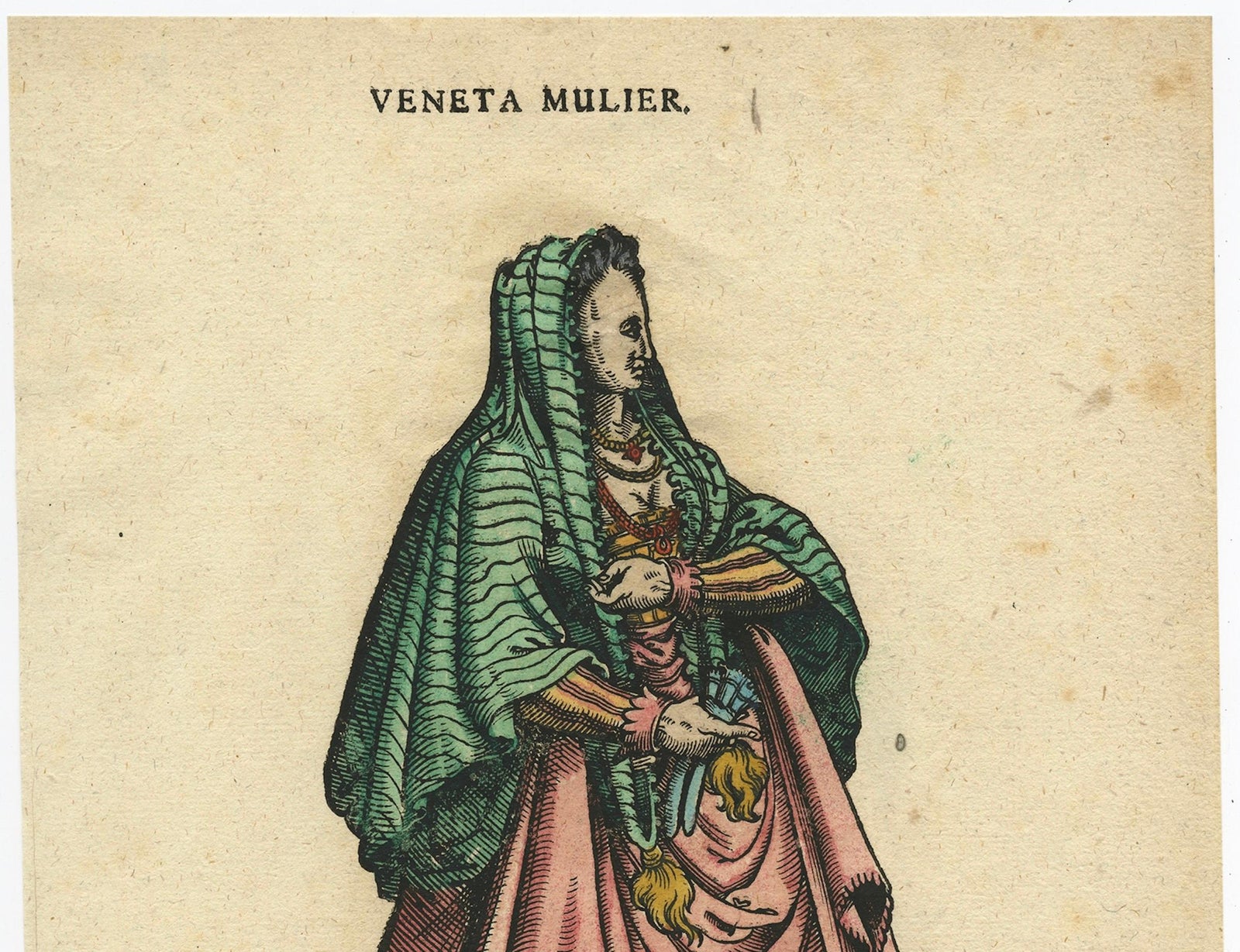
This beautifully hand-colored woodcut depicts a Venetian woman in rich 16th-century attire, titled Veneta Mulier. She is shown in a full golden-yellow gown with pink drapery, adorned with jewelry, and wrapped in a green striped mantle that covers her head and shoulders. The figure emphasizes the elegance and modesty of Venetian women, aligning with Renaissance ideals of dignity and decorum.
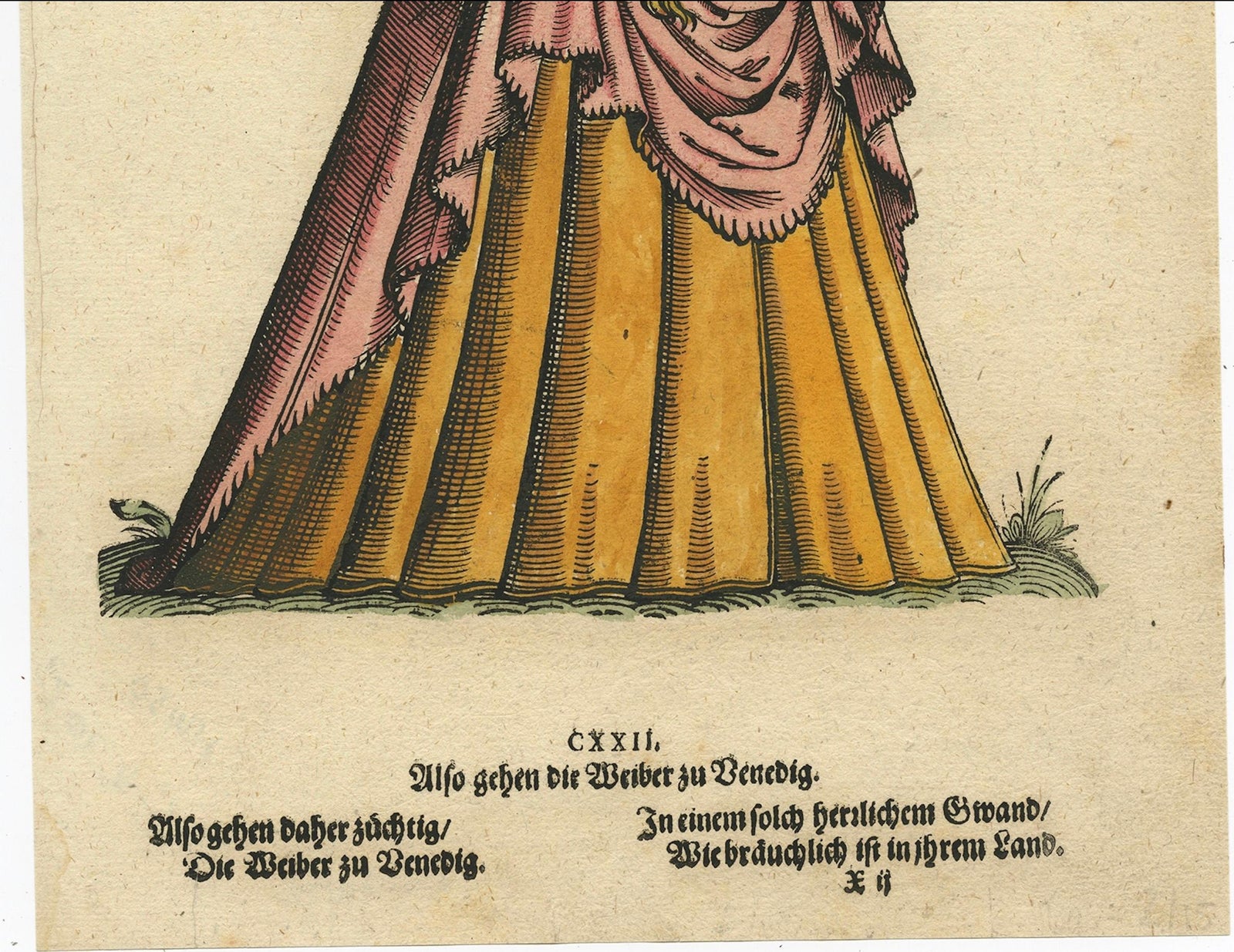
The German verses beneath read: “Also gehen die Weiber zu Venedig / Also gehen daher züchtig / Die Weiber zu Venedig / In einem solch herrlichem Gwand / Wie bräuchlich ist in ihrem Land.” This translates to: “Thus go the women of Venice; thus they walk modestly, the women of Venice, in such splendid garments as is customary in their land.” These inscriptions reinforced the association between costume, morality, and social identity for Renaissance readers.
The plate originates from Jost Amman’s renowned Habitus praecipuorum populorum tam virorum quam foeminarum singulari arte depicti, known as the Trachtenbuch (published by Hans Weigel, Nuremberg, 1577). This landmark costume book provided one of the earliest systematic surveys of global dress, capturing the appearance of men and women from Europe and beyond. Amman’s work not only recorded contemporary fashions but also reflected Renaissance curiosity about other cultures.
Jost Amman (1539–1591), a Swiss-born artist who settled in Nuremberg, was one of the most prolific illustrators of the 16th century. His finely detailed woodcuts ranged from book illustrations to single-sheet prints, as well as designs for stained glass and decorative arts. The Trachtenbuch remains his most influential and widely admired contribution, offering an invaluable record of historical costume.
Framing tips: A gilt frame paired with a cream mount will accentuate the richness of the costume and jewel tones, while a walnut frame provides a refined, scholarly presentation.
Technique: Hand-colored woodcut
Maker: Jost Amman, published by Hans Weigel, Nuremberg, 1577