Close-ups
Framed and on the wall


Frame and rooms are illustrations of how the print could look; the description says what is included.
Traditional Attire of the Ostiak: A Glimpse into 19th Century Siberian Culture
€330€23130% off
$255 · £195
Original print, not a reproduction.
Ships worldwide from the Netherlands, flat or rolled, insured and tracked. 14-day returns.
- Date
- Not stated
- Sheet size
- 9.4 × 6.7 in (24 × 17 cm)
- Condition
- Good. Very good, given age. General age-related soiling, toning and/or occasional minor defects from handling, adding to its patina. Please study scans carefully.
- Wardrobe
- Far & away
- Stock no.
- BG-13605-4-55 & BG-13605-4-56 & BG-13605-4-57
What the condition grades mean
- Excellent
- Bright and clean, with no faults worth mentioning.
- Very good
- Only light signs of age, such as faint toning.
- Good
- Normal signs of age for a sheet of this period: toning, some foxing, small marks or neat old repairs.
- Fair
- Clear faults such as staining, tears or repairs, priced to match.
Every fault we see is written in the condition note, and the whole sheet is shown uncropped in the photos.
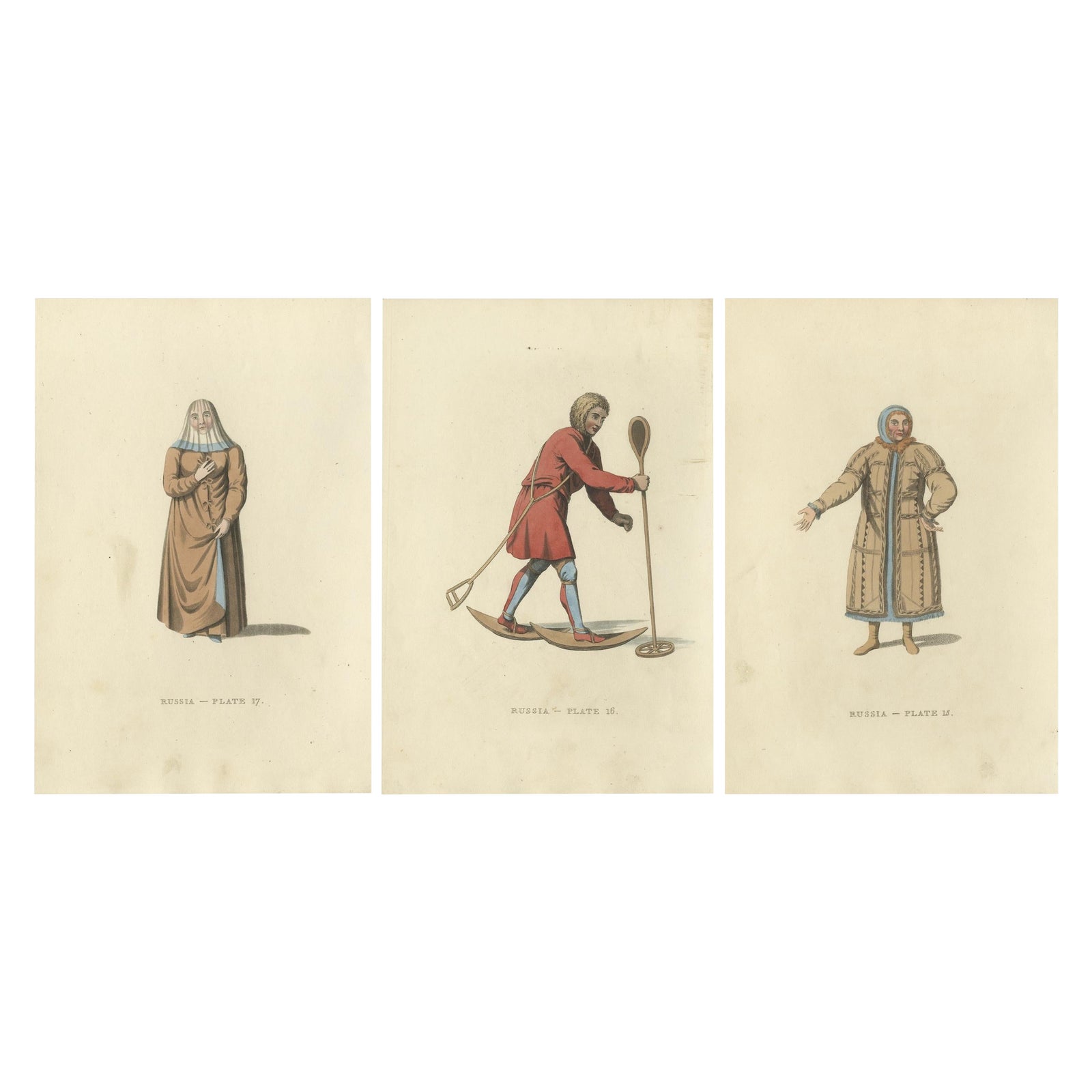
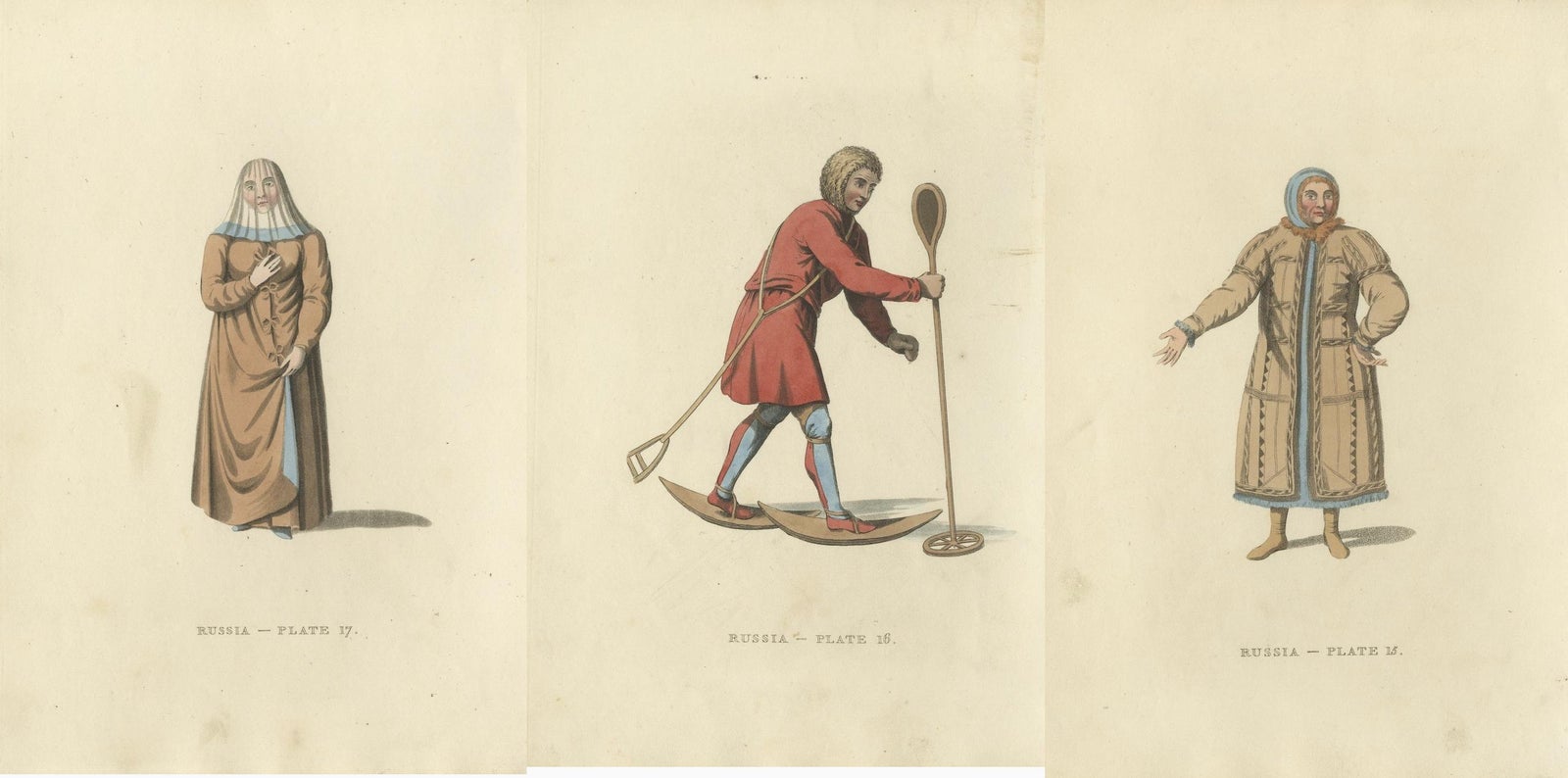
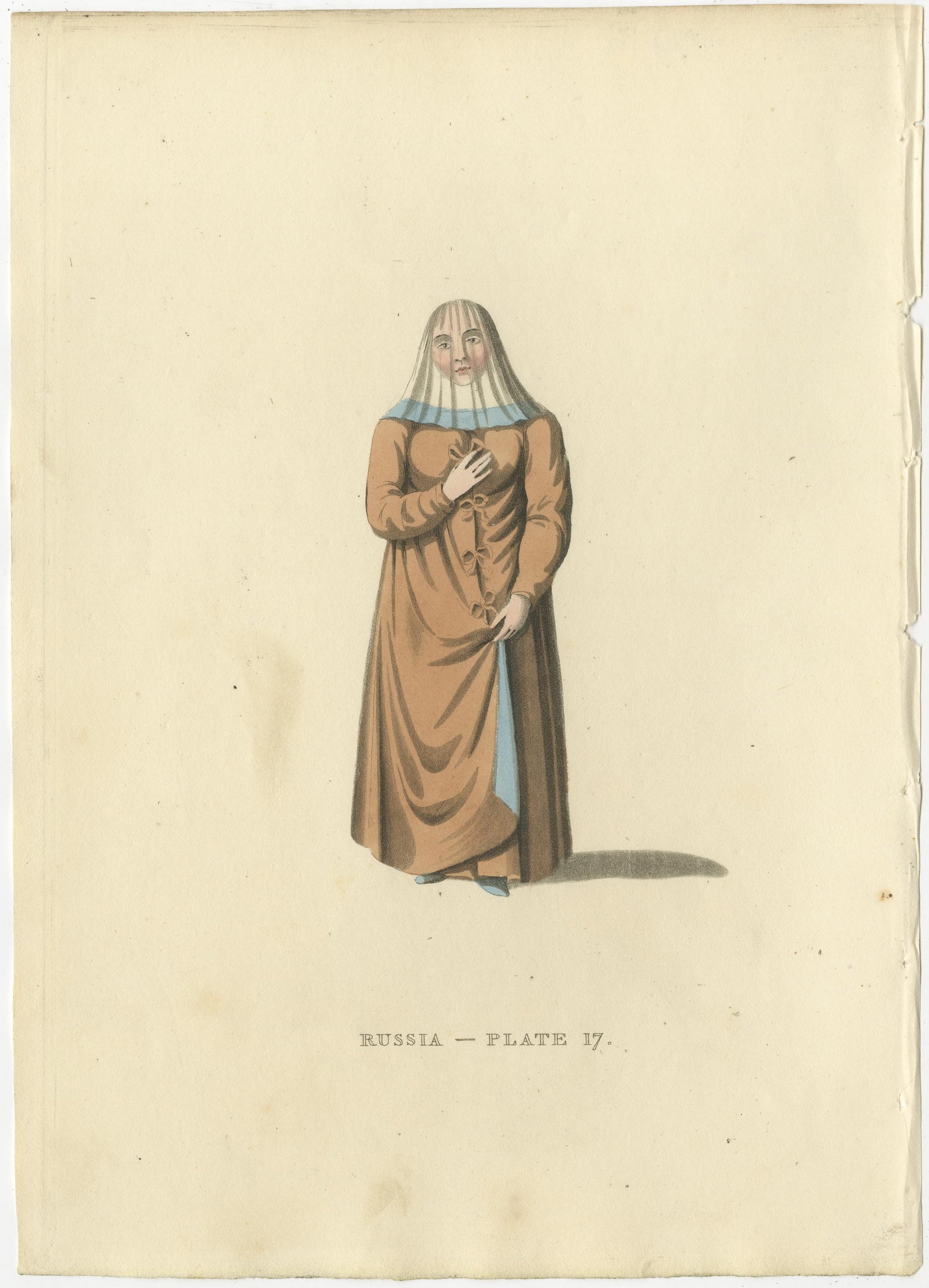
These original antique images are hand-colored and from the publication "Picturesque Representations of the Dress and Manners of the Russians," which includes sixty-four colored engravings with descriptions. The writer of this work is William Alexander, and it was published by John Murray in 1814. This work aimed to illustrate and describe the traditional dress and customs of various Russian peoples, including indigenous groups, at the beginning of the 19th century. It serves as an important historical record of cultural attire and practices of that era. The detailed colored engravings were a common method of such documentation in a time before photography, intended to provide the Western audience with a visual account of distant cultures.
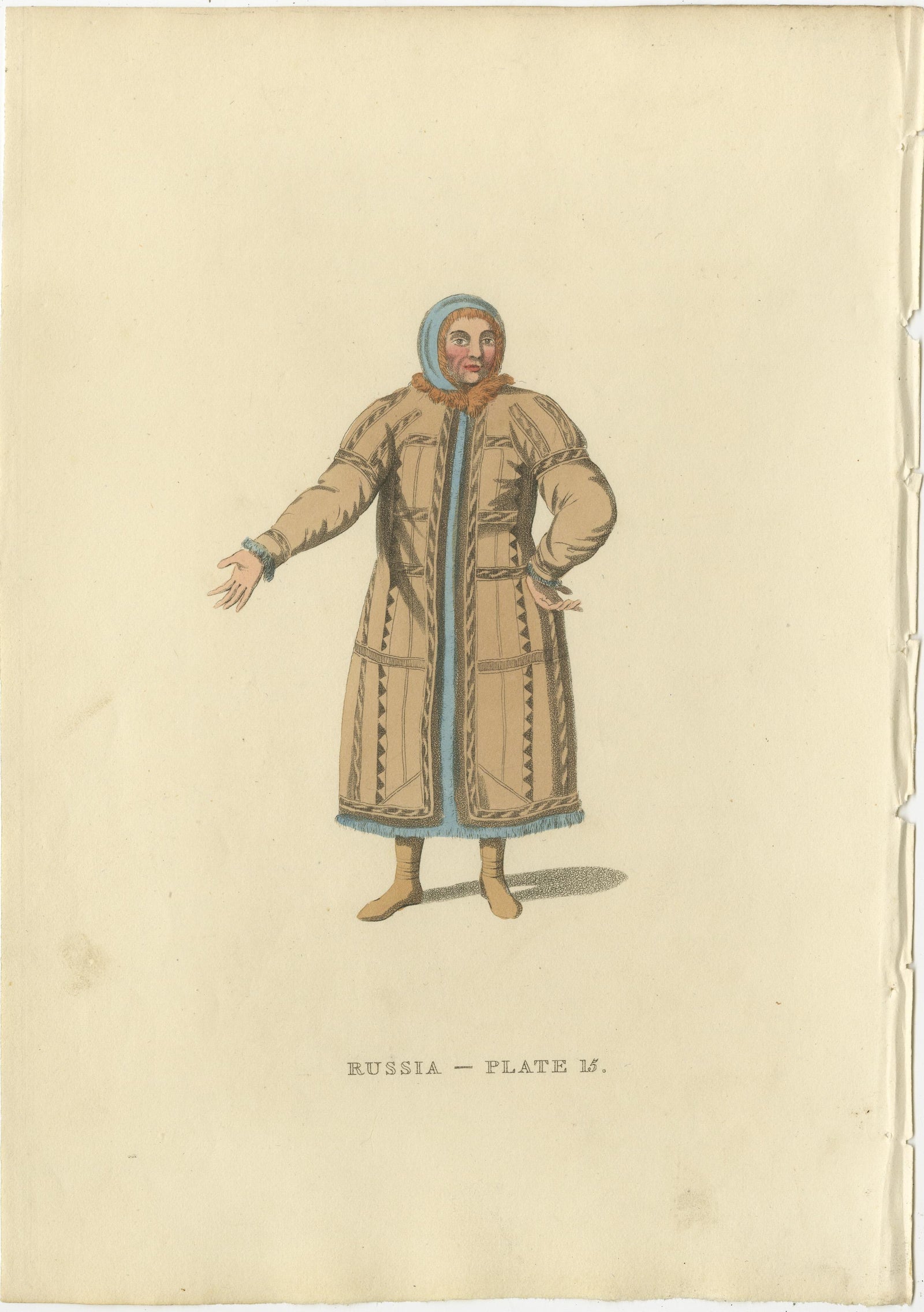
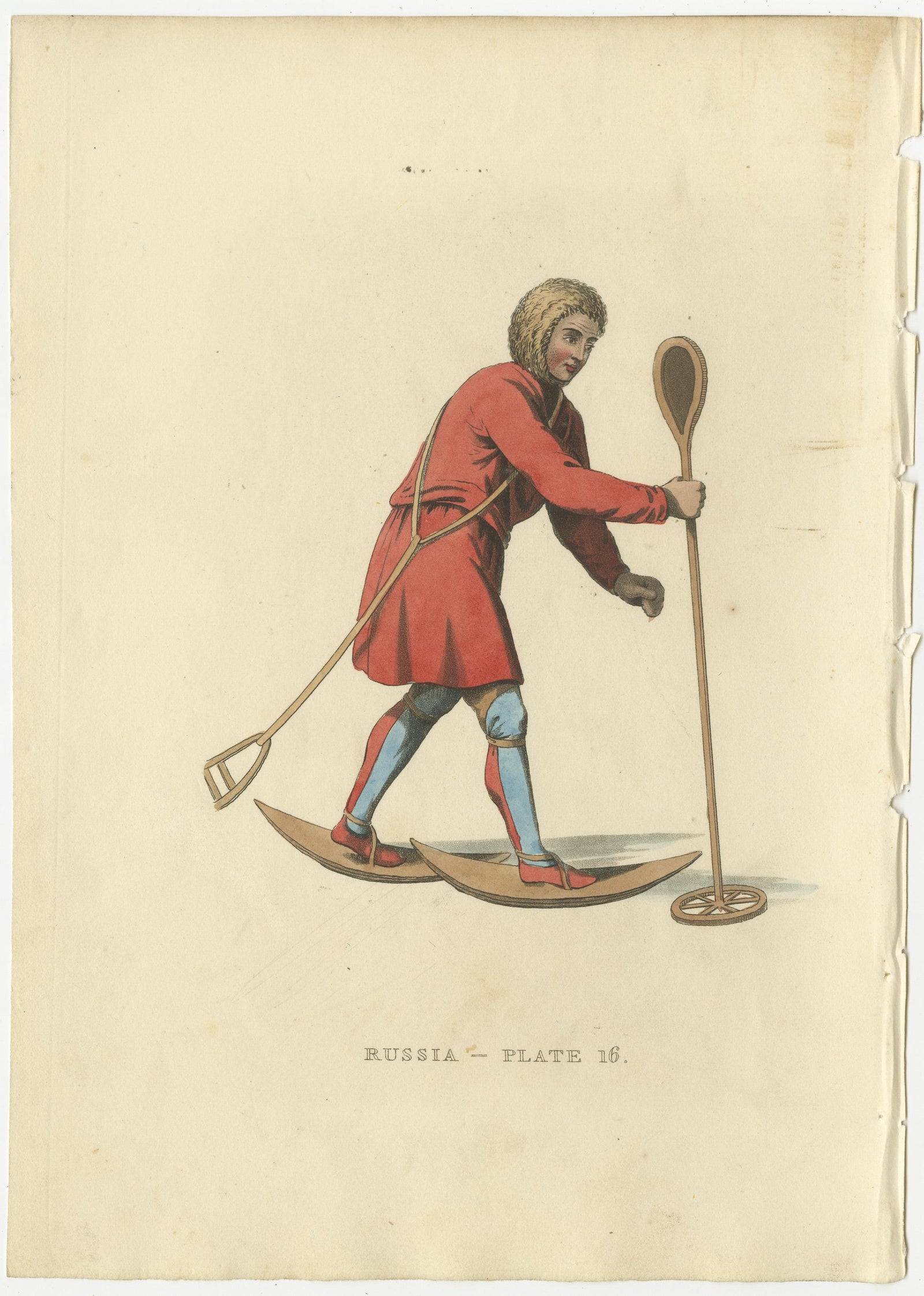
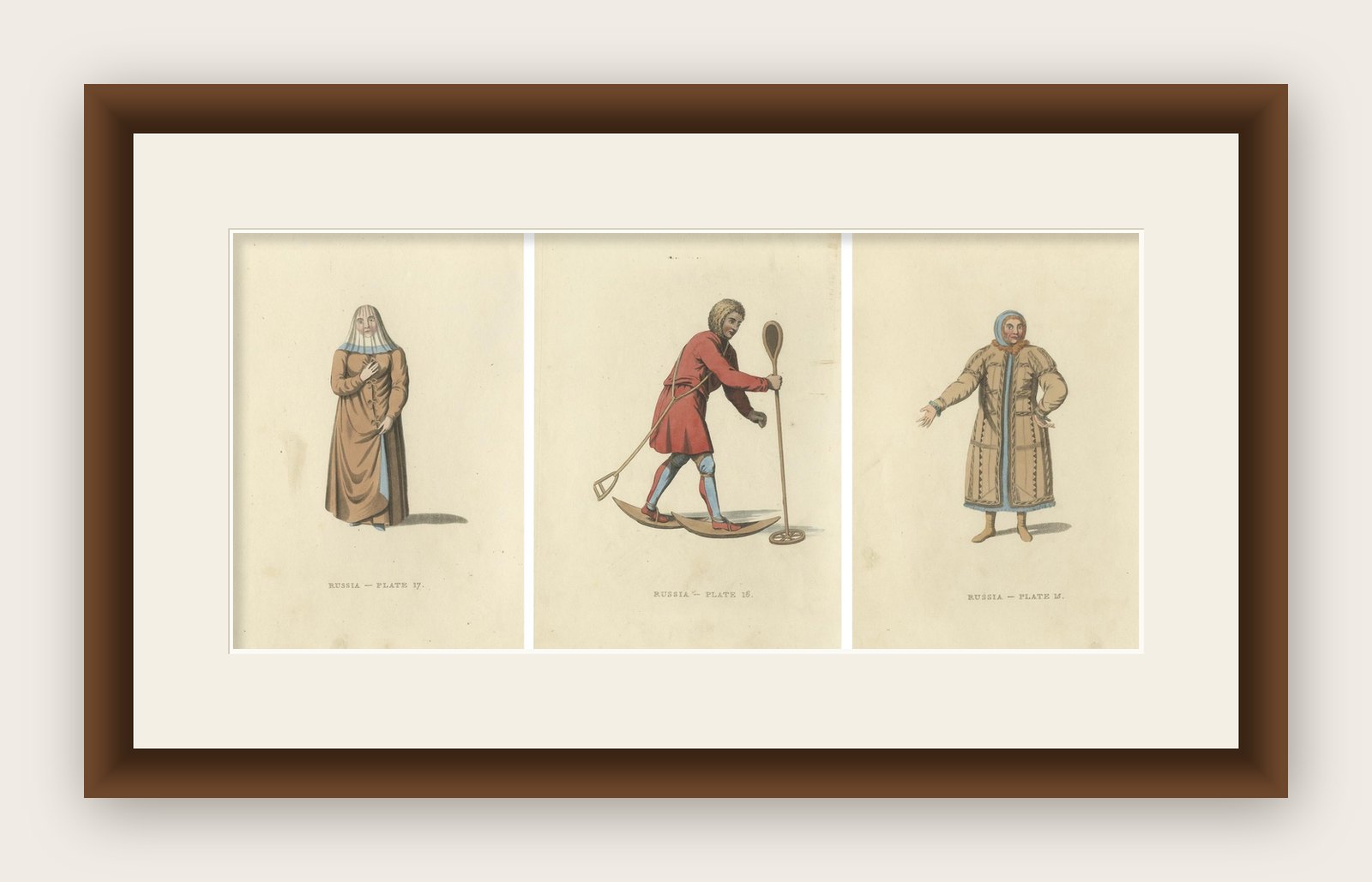
The three engravings depict members of the Ostiak community, an indigenous group in Russia, dressed in traditional attire as per the early 19th century.
1. The first engraving shows an Ostiak man from the Obe region. He is wearing a fur-trimmed parka-like garment with geometric patterns and a hood, possibly indicating winter wear. His face is framed by the hood, and he stands with his arms outstretched, suggesting a welcoming posture or possibly displaying his attire.
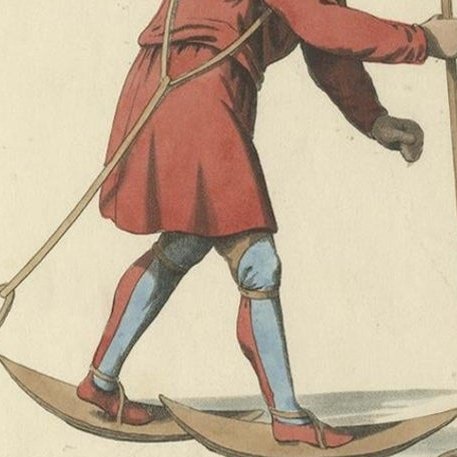
2. The second image captures an Ostiak man in his winter hunting dress. This outfit is practical and vivid, featuring a bright red coat with fur trim around the cuffs and hood, which is worn over blue trousers. He is equipped with snowshoes and holds what appears to be a paddle or tool, indicating readiness for hunting or traveling across snowy terrains.
3. The third engraving represents a Female Ostiak, clothed in a long, brown dress with a light blue shawl or scarf draped around her shoulders and head. Her garment is simple yet elegant, with a buttoned bodice, suggesting everyday wear. Her hands are clasped in front of her, and she gazes directly at the viewer with a composed expression.
Each illustration is meticulously colored, which was typical of the time as a means to convey the richness and diversity of cultural attire. The illustrations provide a detailed look at the clothing, suggesting materials like fur and wool which would be necessary for the harsh climates where the Ostiaks lived. Such engravings were crucial for anthropological and cultural studies, offering insights into the lives of people far removed from the Western societies of the time. William Alexander's work, through these illustrations, contributes valuable information to the historical record, capturing the essence of the Ostiak people's traditional way of life.
The Ostiaks, historically referred to in this manner, are indigenous people living in Western Siberia. They are more commonly known today as the Khanty and the Mansi. The Khanty people traditionally inhabit areas along the Ob River and its tributaries in the Khanty-Mansi Autonomous Okrug, while the Mansi are found around the western Siberian region, in the area known as the Ural Mountains. Their territories are part of what is now known as the Khanty-Mansi Autonomous Okrug, Yugra, which is an autonomous okrug of Russia.