Close-ups
Framed and on the wall
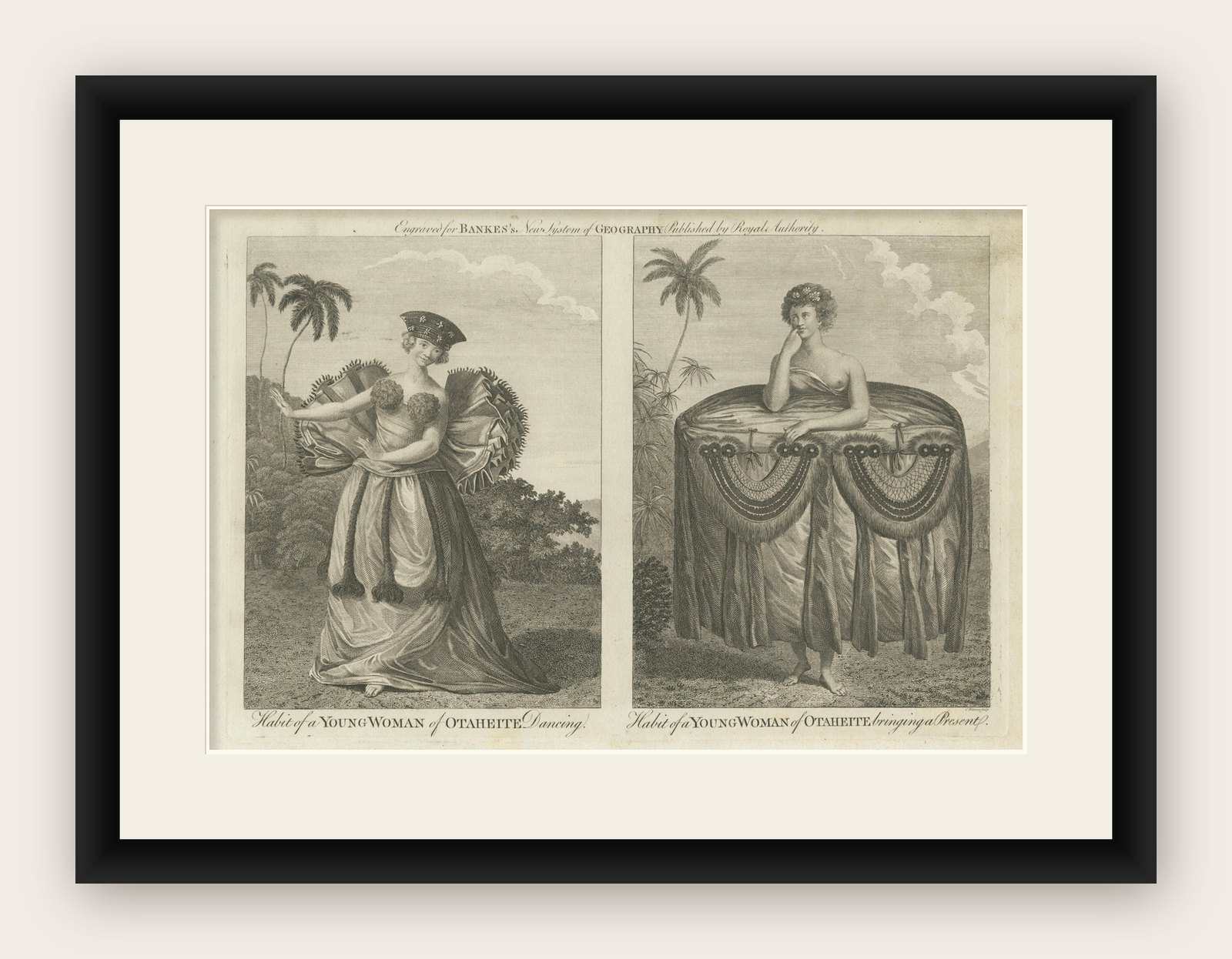
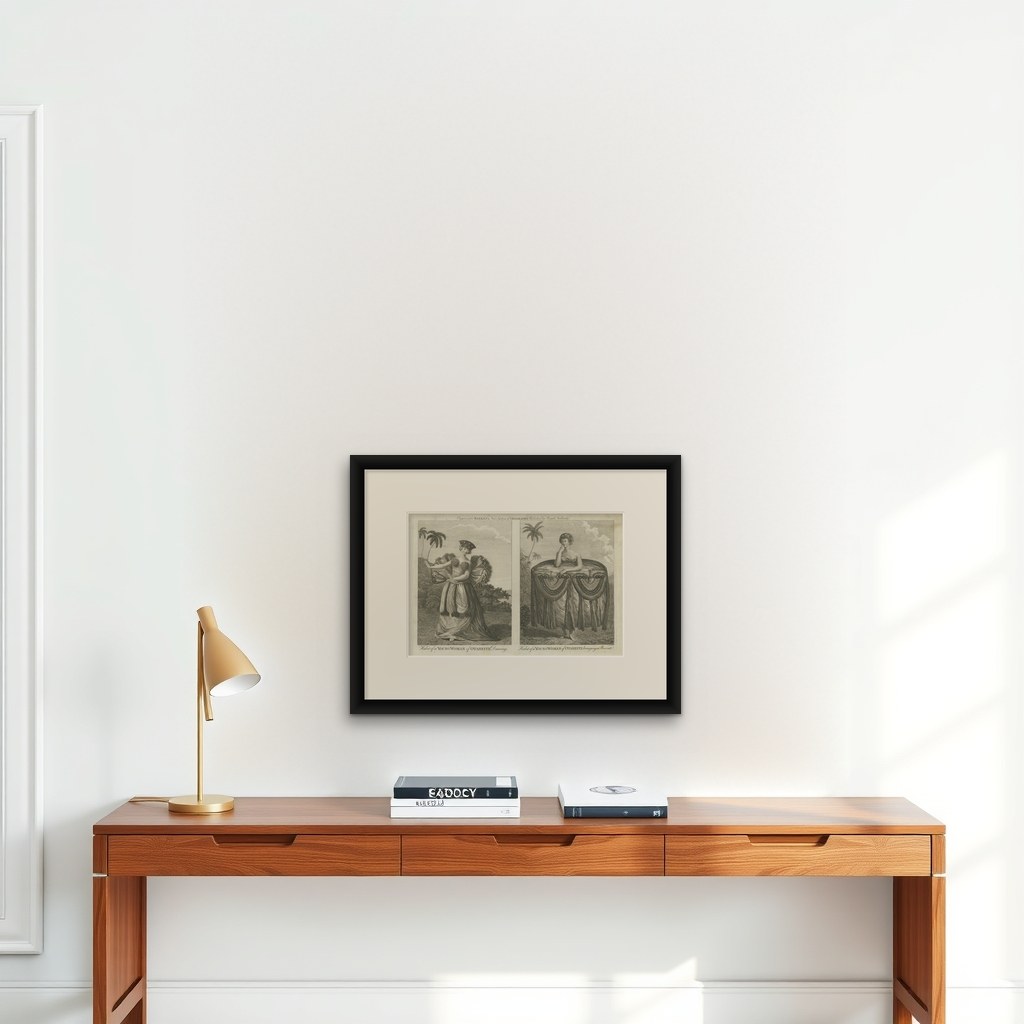

Frame and rooms are illustrations of how the print could look; the description says what is included.
Tahitian Costume Engraving Pair, Otaheite Women, Pacific Voyages, c.1790
£295
$390 · €349
Original print, not a reproduction.
Ships worldwide from the Netherlands, flat, insured and tracked. 14-day returns. To buy, use Ask a question and we will reserve the print for you.
- Date
- 1790
- Sheet size
- 9.6 × 15 in (24.5 × 38 cm)
- Condition
- Good. Condition for its age, with light age-related toning and minor spotting, primarily in the margins. The plate remains clean and well-printed, with strong, crisp impressions. Plate mark visible.
- Wardrobe
- Far & away
- Era
- 1790 to 1840, Empire and Romantic
- Stock no.
- f_49258112
Tahitian Costume Engraving Pair, Otaheite Women, Pacific Voyages, c.1790
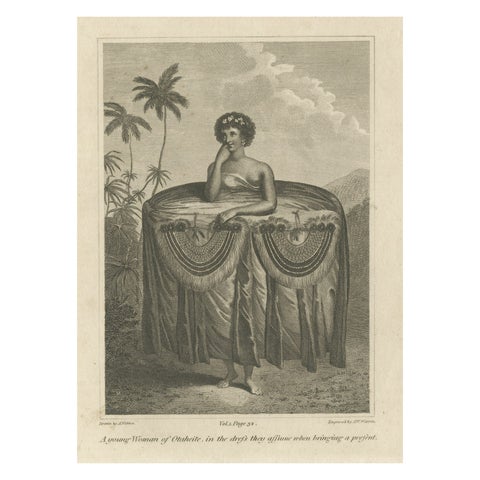
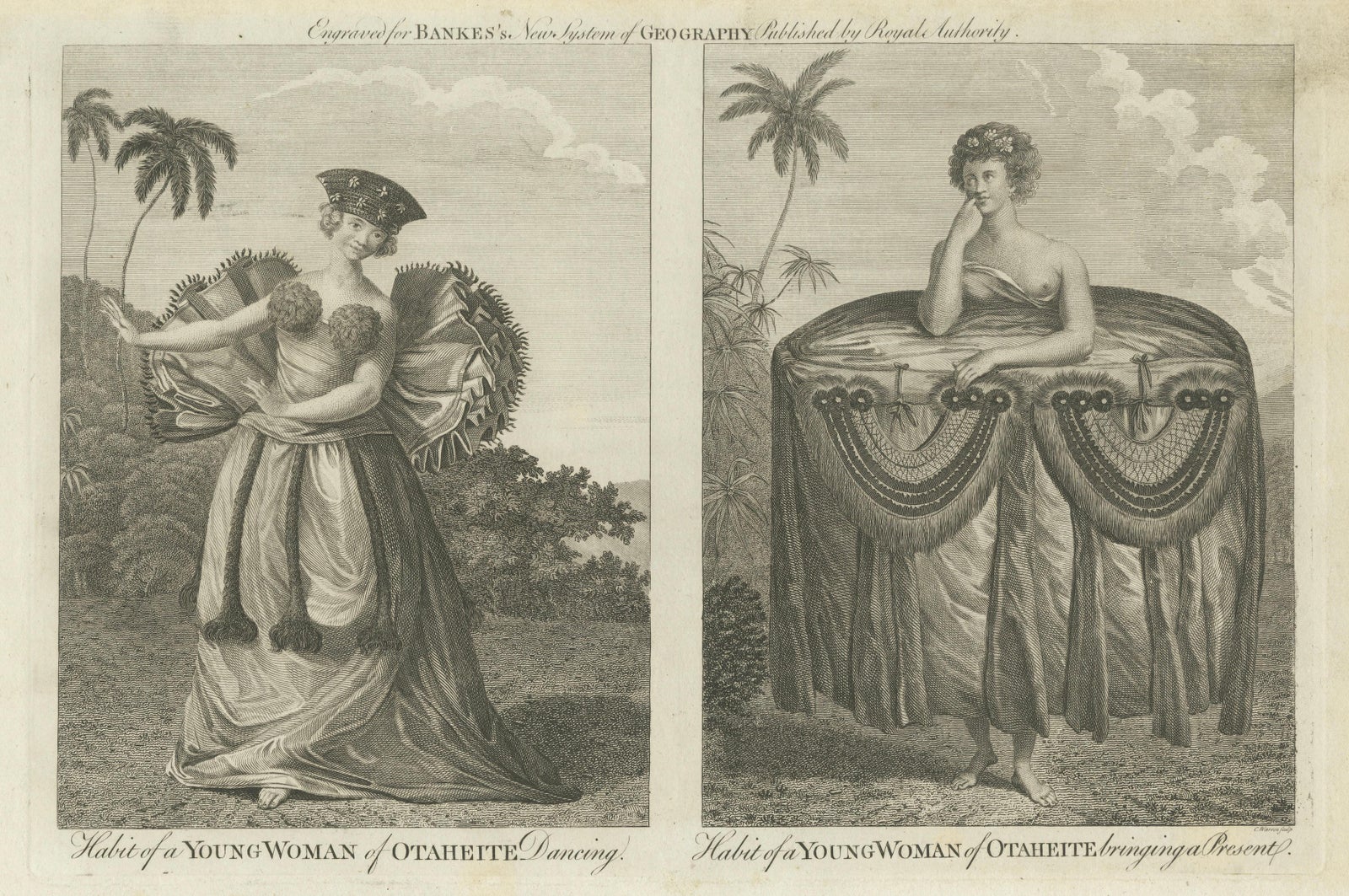
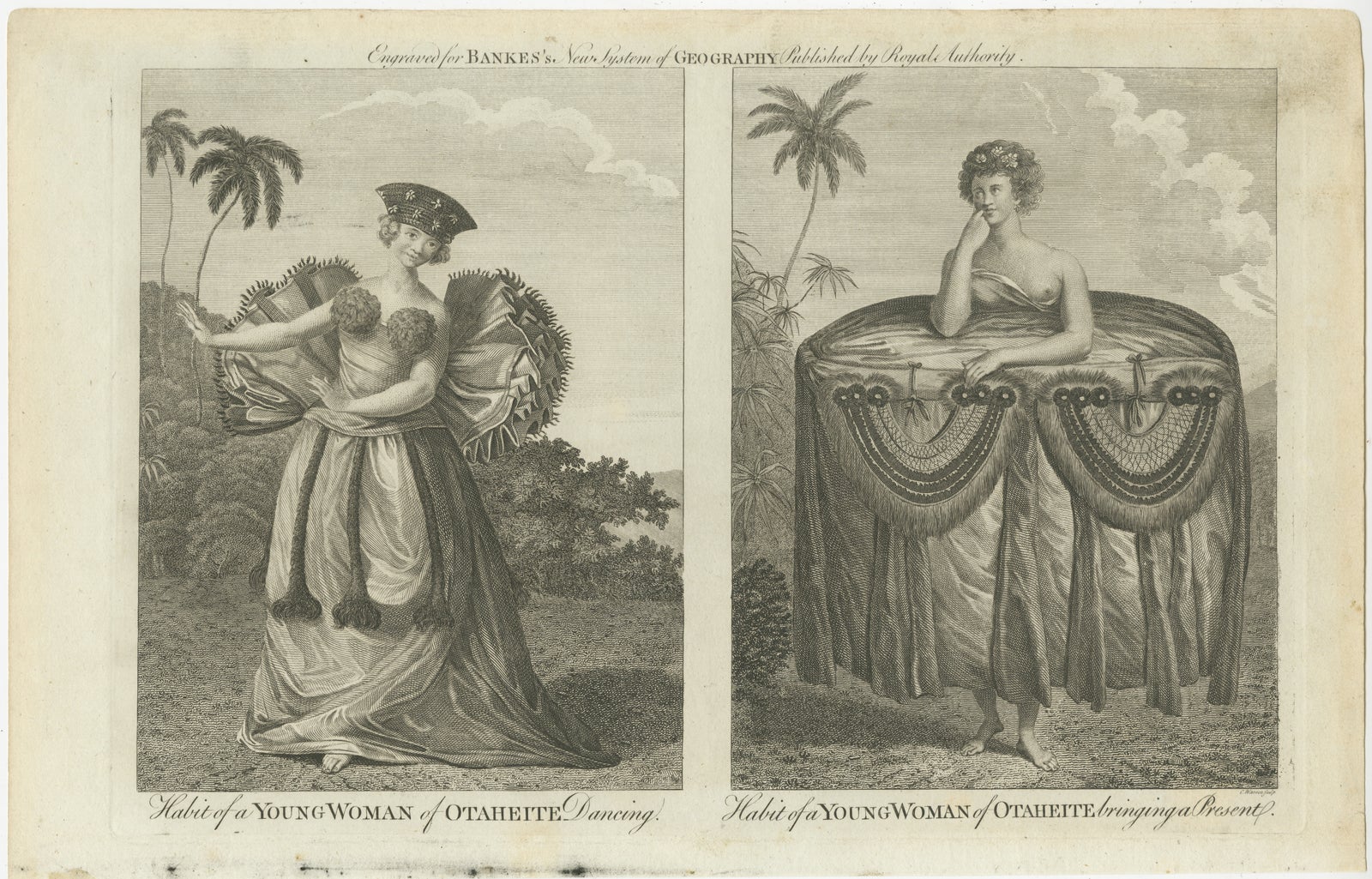
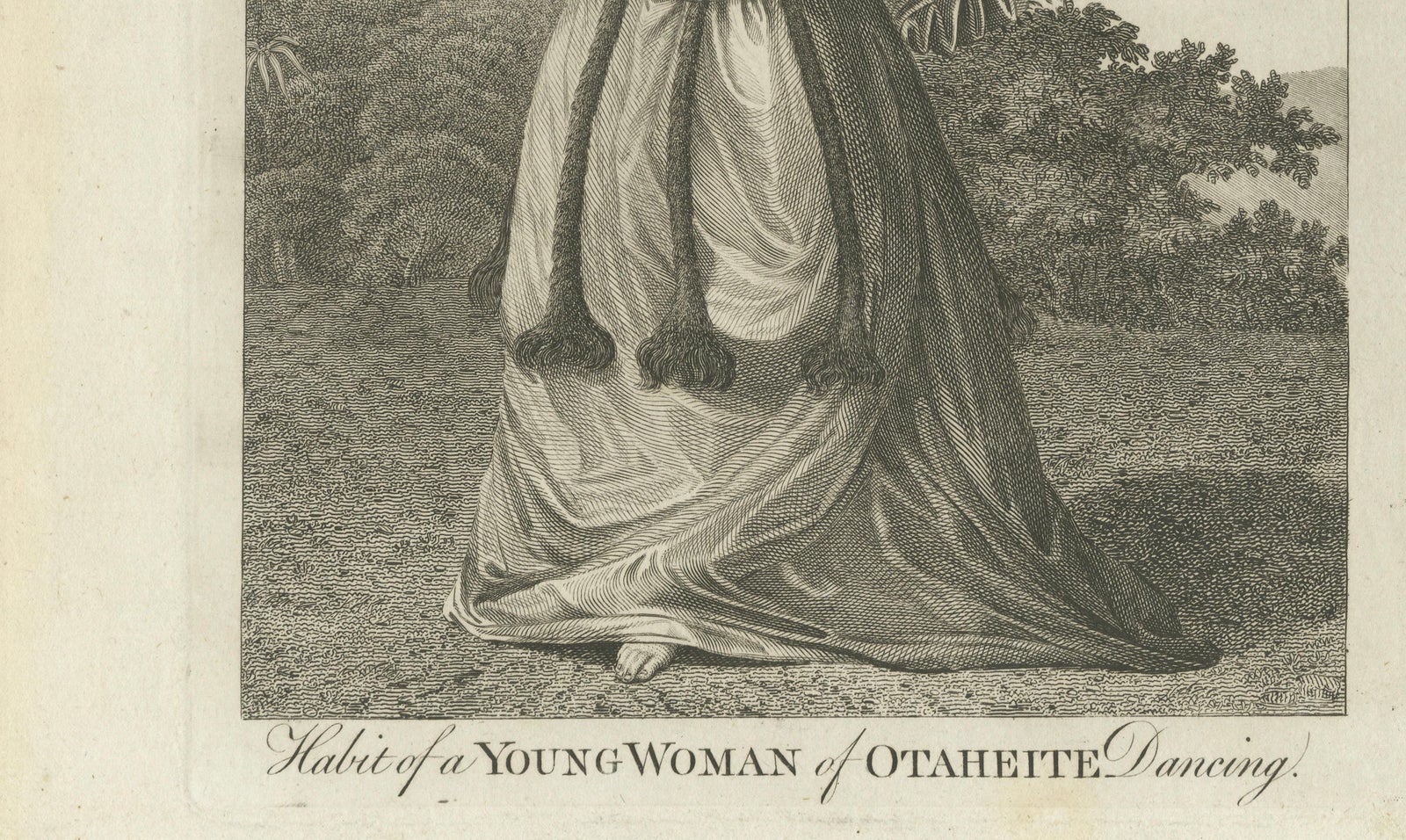
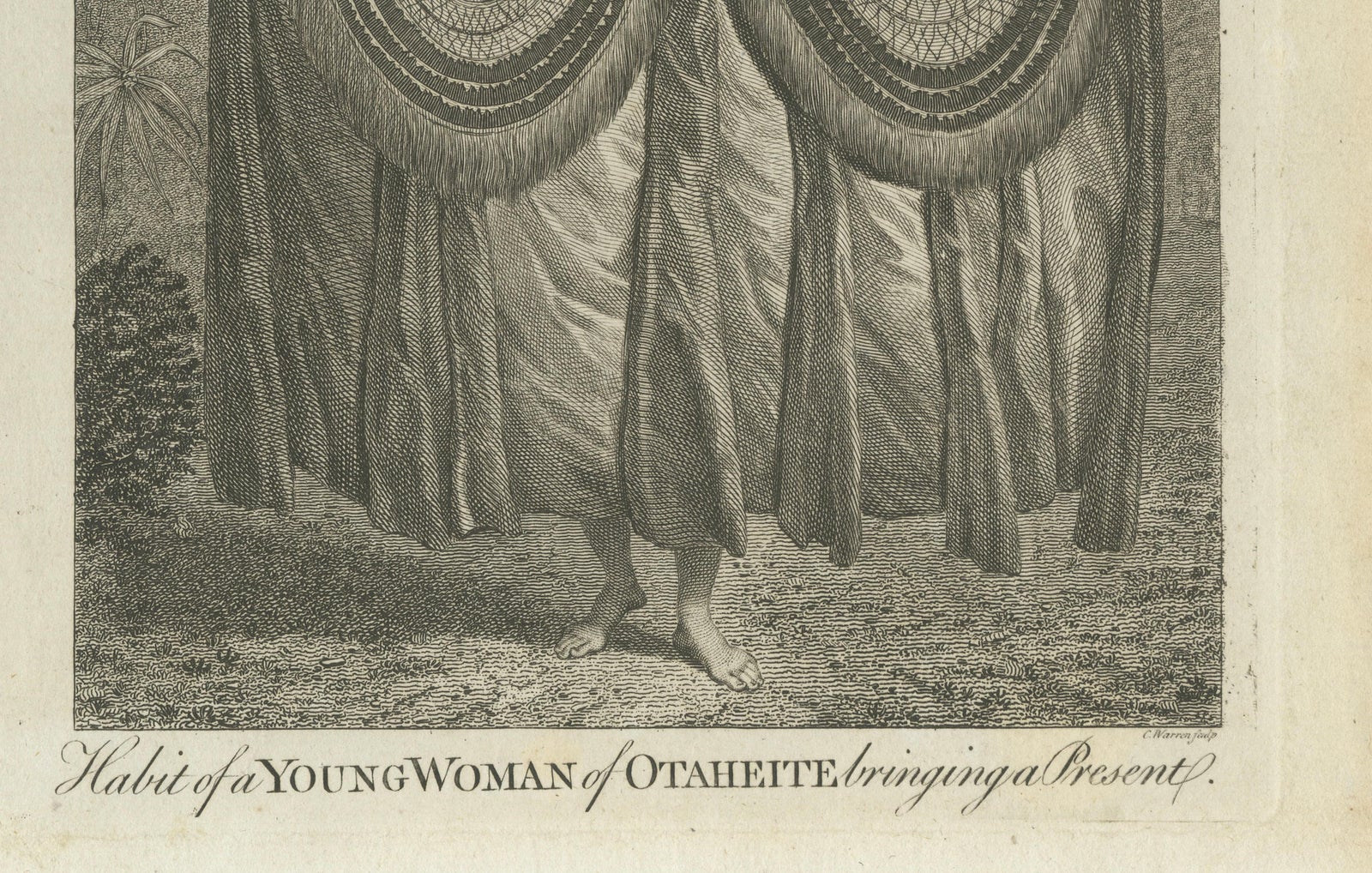
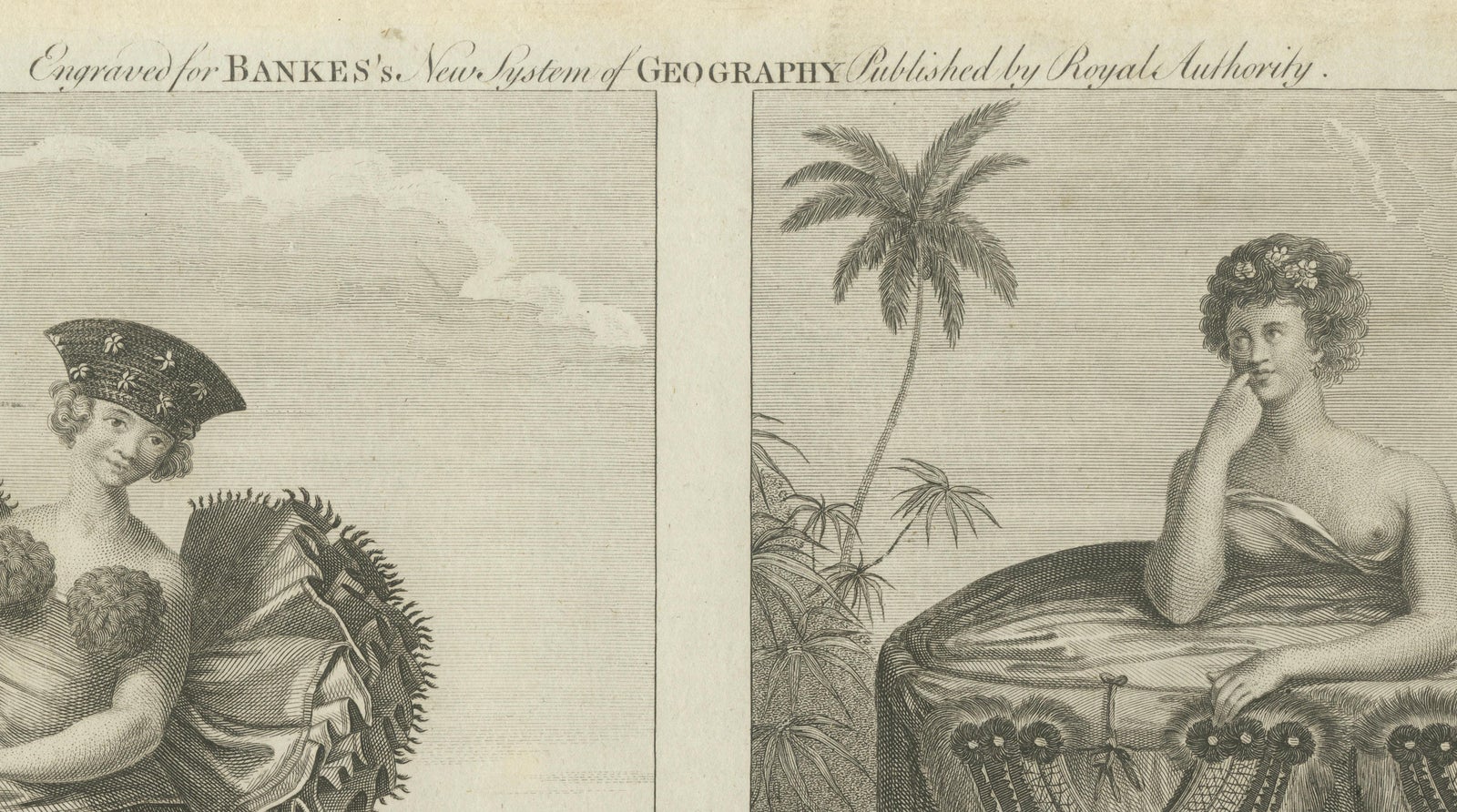
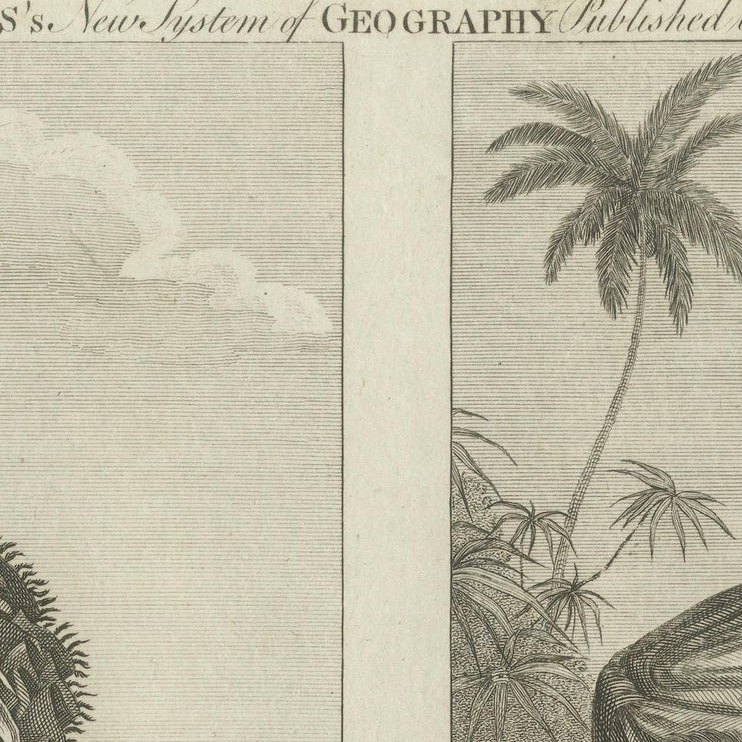
This striking late 18th-century engraving presents two elegant and highly decorative depictions of Tahitian women, titled “Habit of a Young Woman of Otaheite Dancing” and “Habit of a Young Woman of Otaheite bringing a Present.” Published in London circa 1787–1790 as part of Thomas Bankes’s New System of Geography, the sheet reflects Europe’s growing fascination with the cultures of the South Pacific following the great exploratory voyages of the period.
The compositions are derived from the work of John Webber, the official artist on Captain James Cook’s third voyage (1776–1780). Webber’s drawings formed one of the earliest visual records of Tahitian society available to a European audience and were widely disseminated through engravings such as this example.
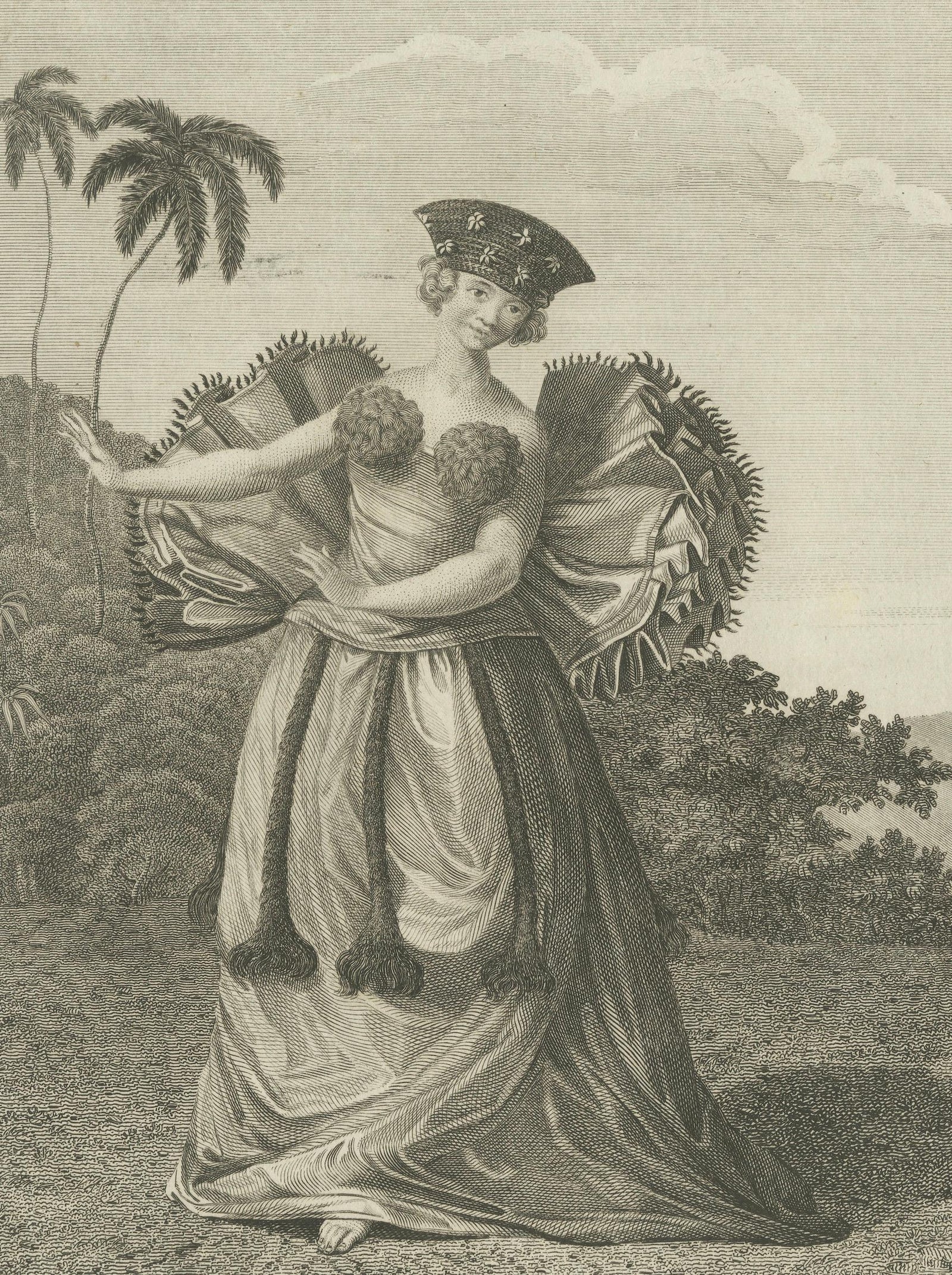
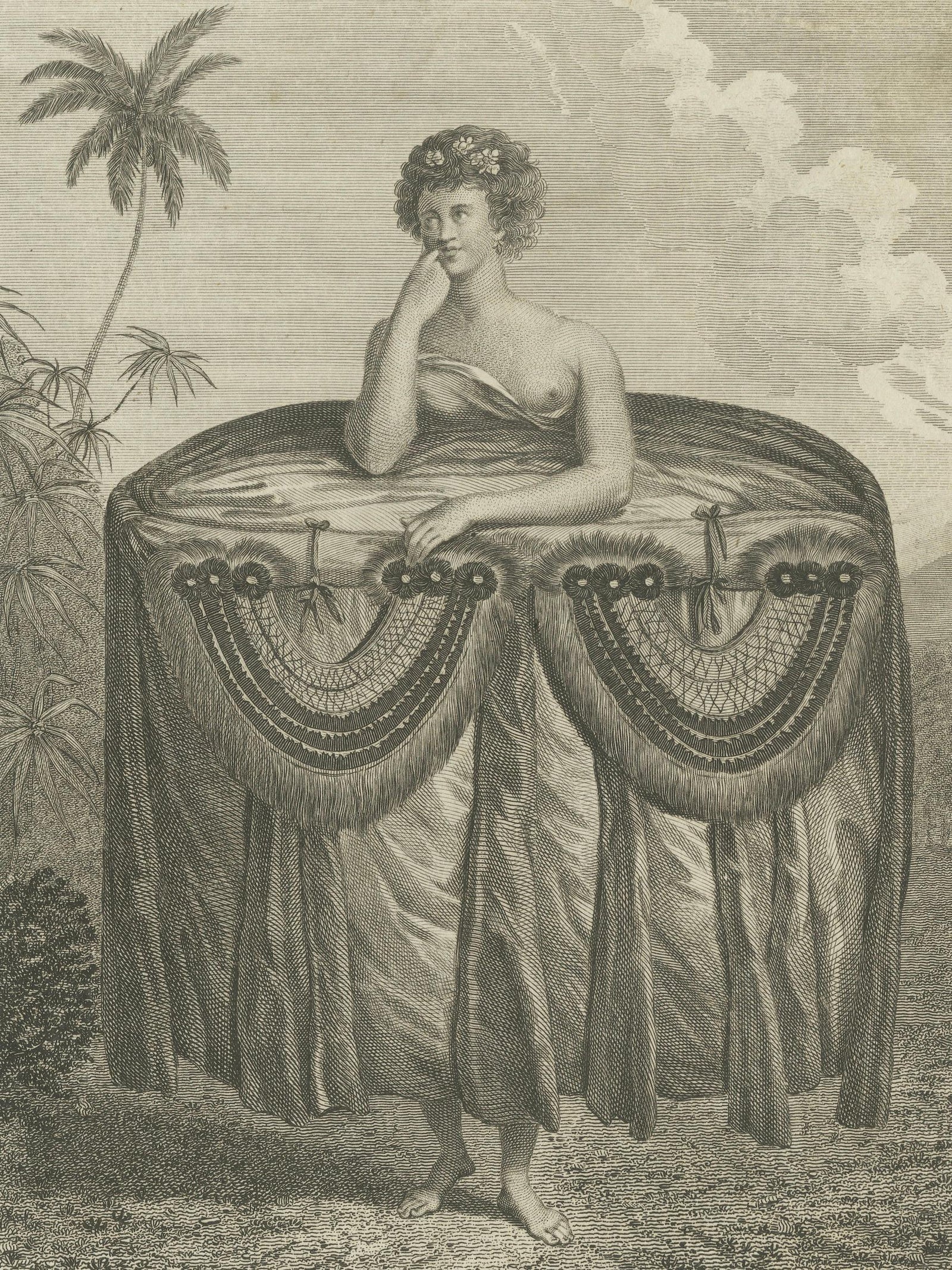
The left scene depicts a young woman in ceremonial dance attire, adorned with layered tapa cloth and distinctive ornamental elements that create a sculptural, almost theatrical silhouette. The right scene is equally compelling, showing a woman enveloped in an extraordinary volume of cloth arranged around her body, representing a ceremonial offering. This remarkable visual device illustrates the Tahitian custom of presenting valuable bark cloth as a symbol of wealth, generosity, and diplomacy.
Both figures are set within gently rendered tropical landscapes, complete with palm trees and soft atmospheric backgrounds, enhancing the exotic appeal that captivated European audiences of the late 18th century. At the same time, the engravings reveal a subtle European interpretation of Polynesian life, combining ethnographic observation with the stylistic conventions of neoclassical figure drawing.
As a decorative object, this engraving is particularly strong: the balanced dual composition, refined line work, and flowing forms make it ideal for framing as a focal point in an interior. It works beautifully in coastal, travel-inspired, or globally influenced interiors, and pairs especially well with other Pacific or exploration-themed works.
Condition: Good condition for its age, with light age-related toning and minor spotting, primarily in the margins. The plate remains clean and well-printed, with strong, crisp impressions. Plate mark visible.
Framing tips: This piece benefits from a generous ivory or off-white mat to emphasize the plate mark and provide breathing space around the composition. A warm walnut or dark wood frame enhances the engraving’s depth and complements the historical character, making it suitable for both classic and contemporary interiors.
Technique: Copperplate engraving
Maker: Thomas Bankes (after John Webber), London, circa 1787–1790