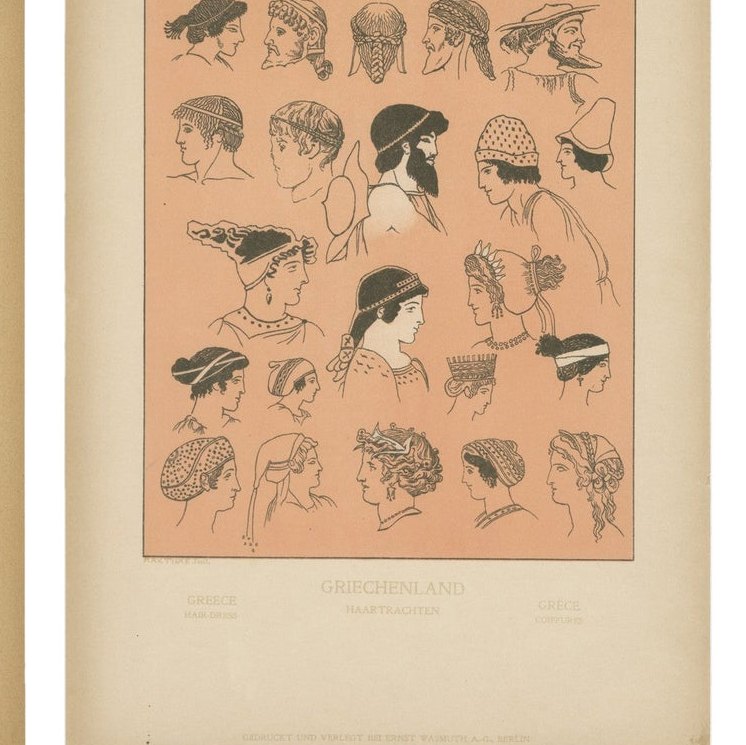
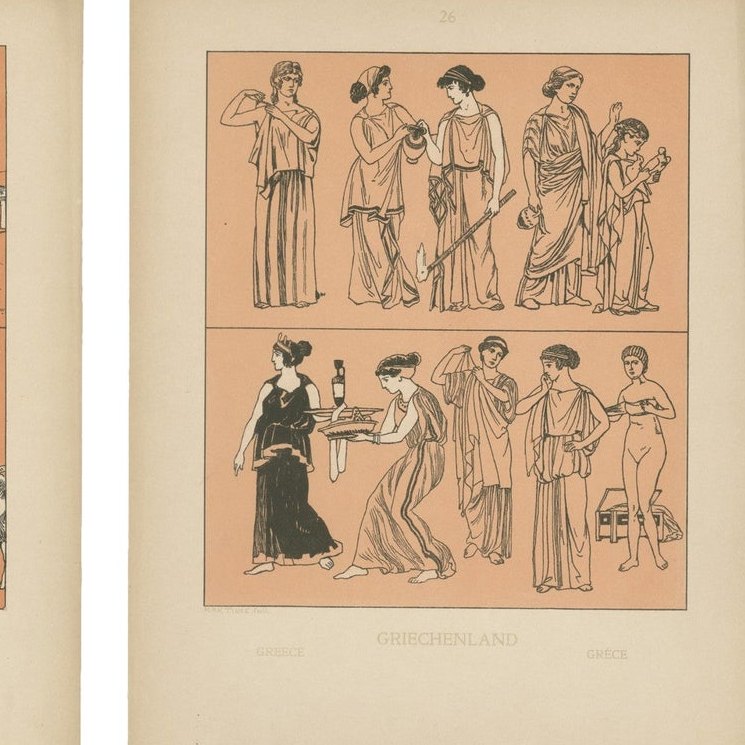
Close-ups
Framed and on the wall
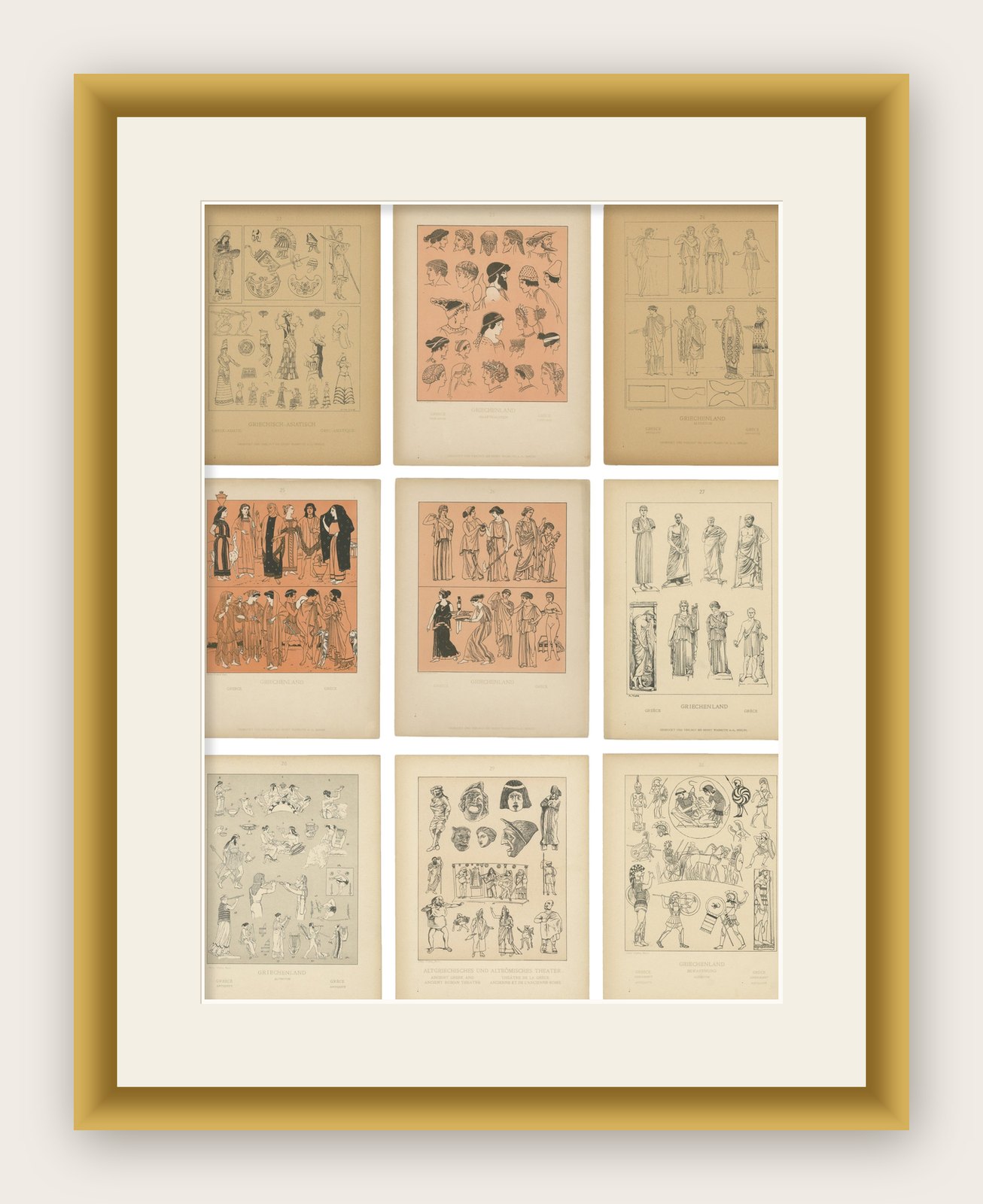

Frame and rooms are illustrations of how the print could look; the description says what is included.
Set of 9 Antique Greek Costume and Antiquity Prints by Wasmuth, Berlin c.1900
$615$43030% off
€392 · £330
Original print, not a reproduction.
Ships worldwide from the Netherlands, flat or rolled, insured and tracked. 14-day returns.
- Date
- 1900
- Sheet size
- 12.4 × 9.3 in (31.5 × 23.5 cm)
- Condition
- Light age toning, minor edge wear consistent with age, generally good. No folds, tears, or major blemishes. Suitable for immediate framing.
- Wardrobe
- Court & couture
- Era
- 1900 and after, Belle Époque on
- Stock no.
- BG-13129-21, -22, etc
What the condition grades mean
- Excellent
- Bright and clean, with no faults worth mentioning.
- Very good
- Only light signs of age, such as faint toning.
- Good
- Normal signs of age for a sheet of this period: toning, some foxing, small marks or neat old repairs.
- Fair
- Clear faults such as staining, tears or repairs, priced to match.
Every fault we see is written in the condition note, and the whole sheet is shown uncropped in the photos.
Set of 9 Antique Greek Costume and Antiquity Prints by Wasmuth, Berlin c.1900
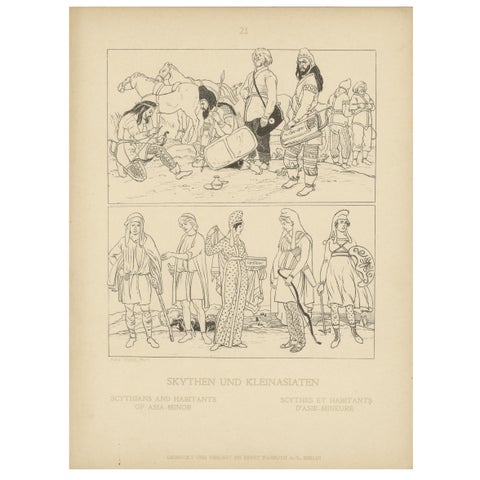
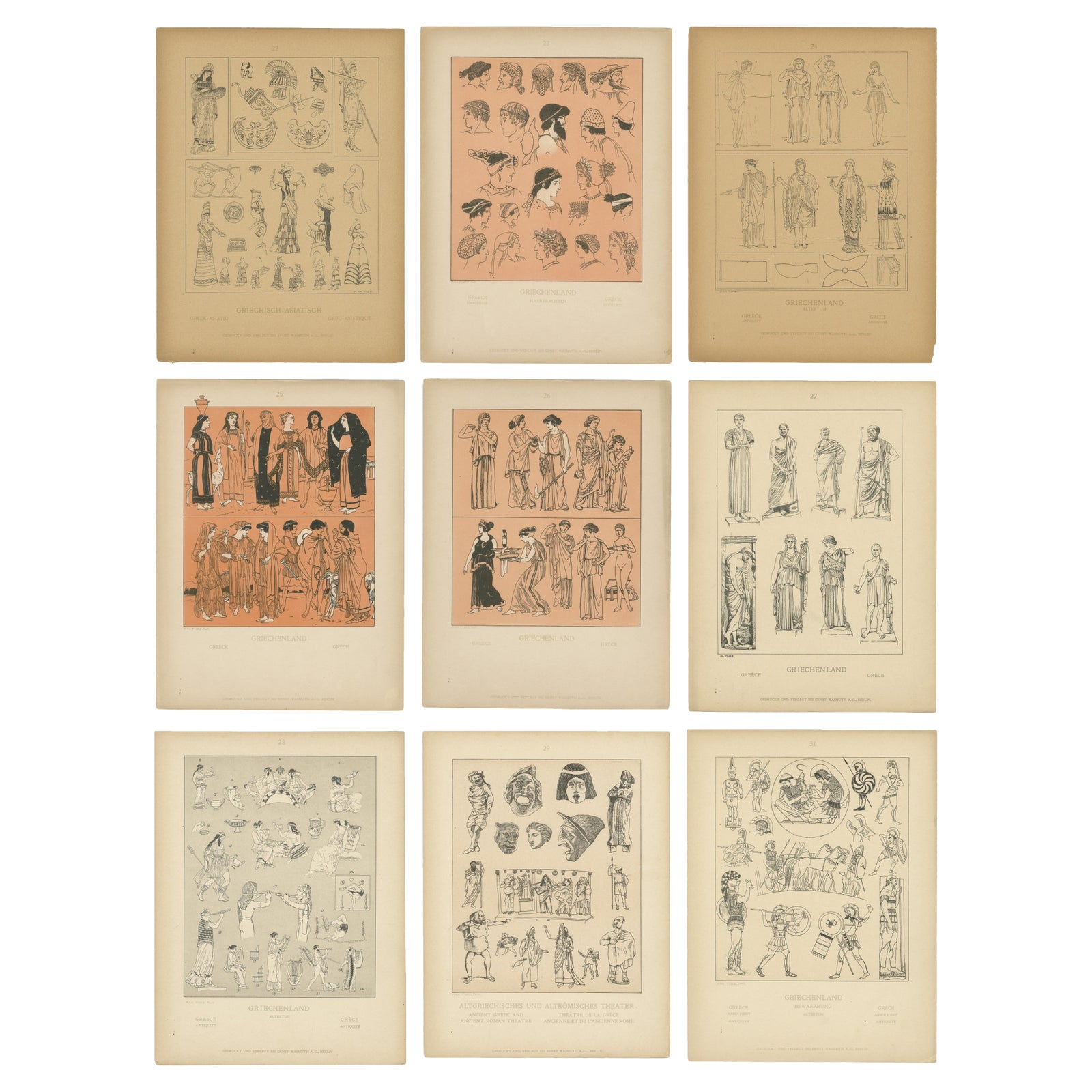
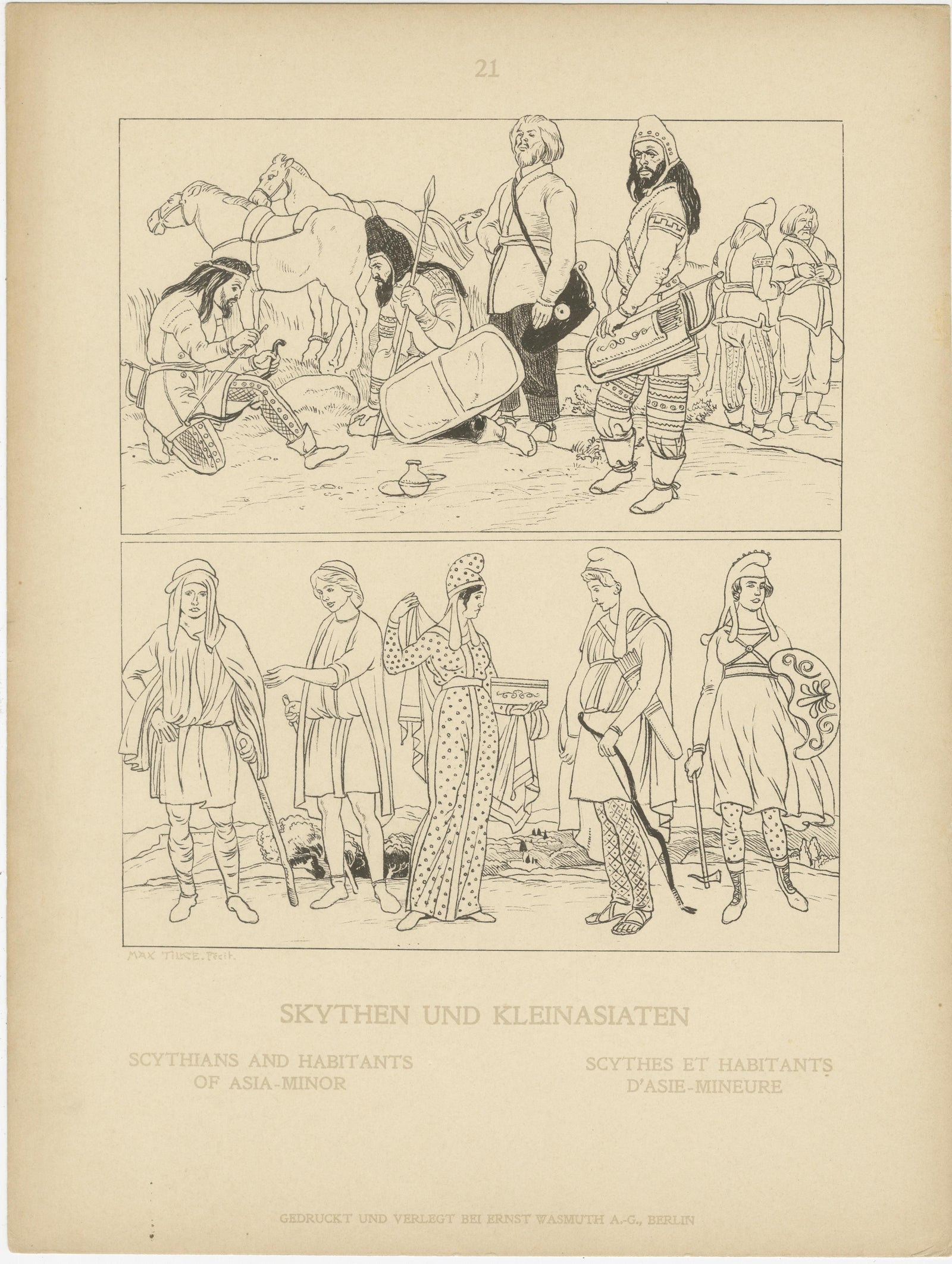
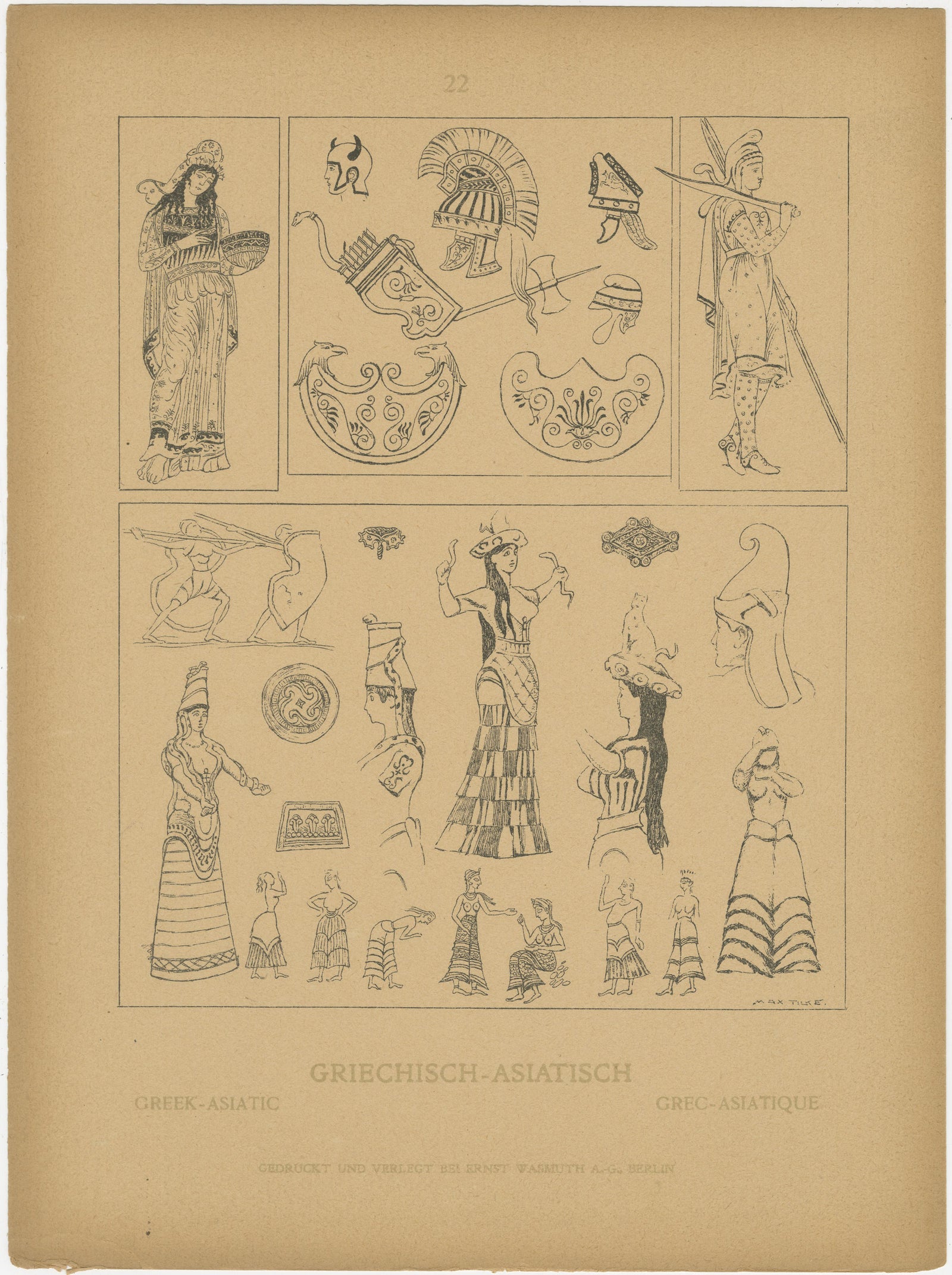
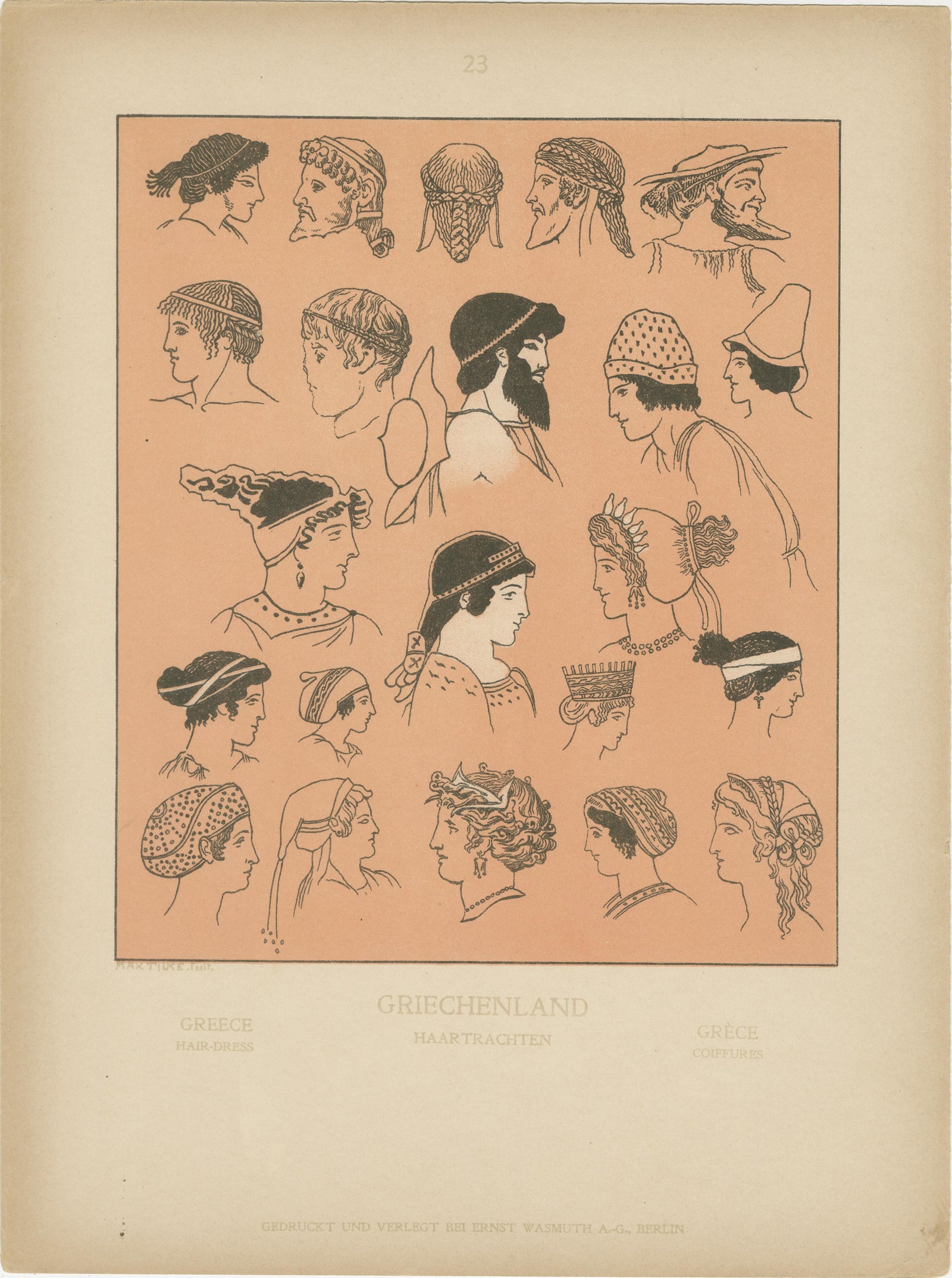
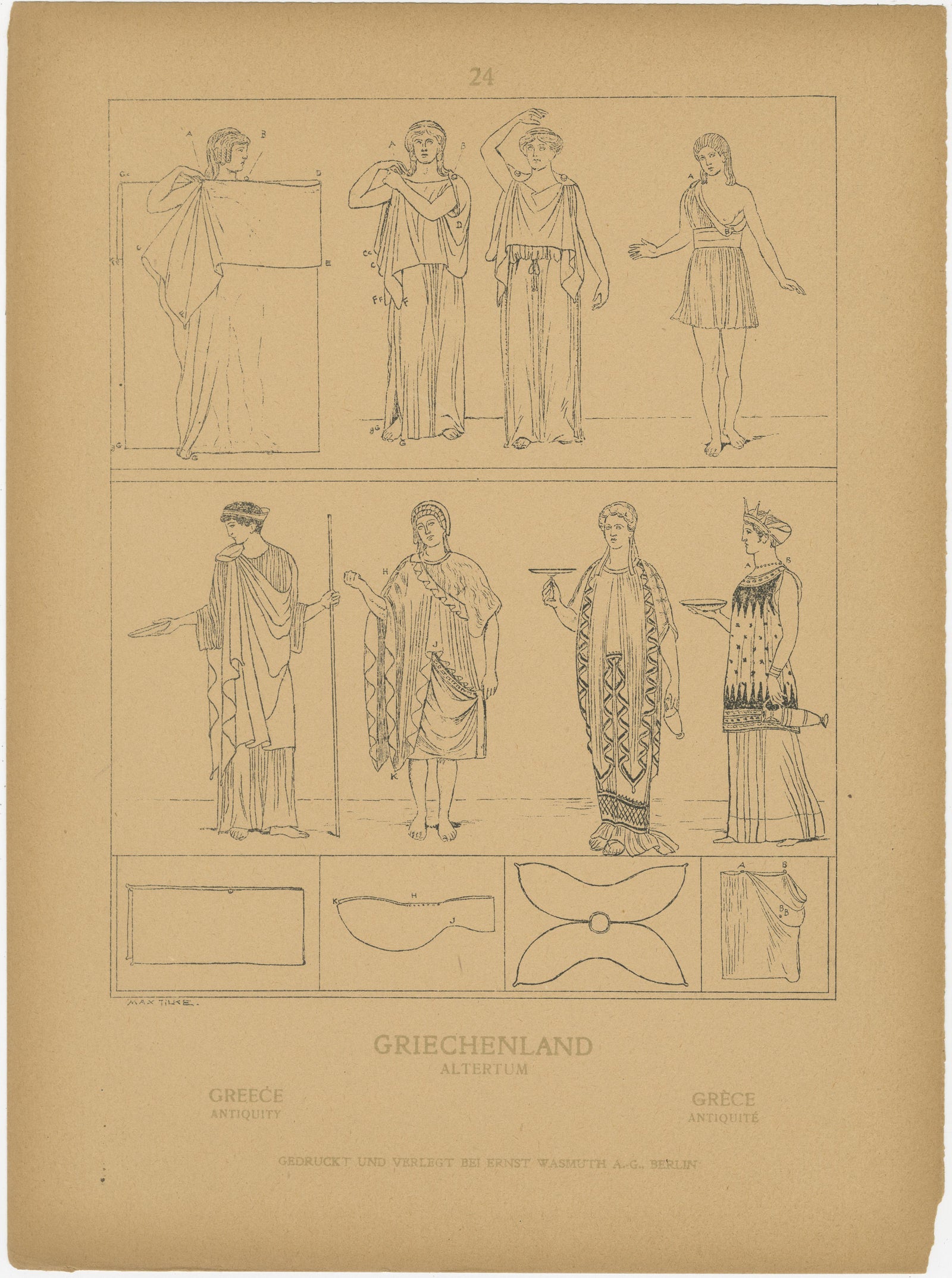
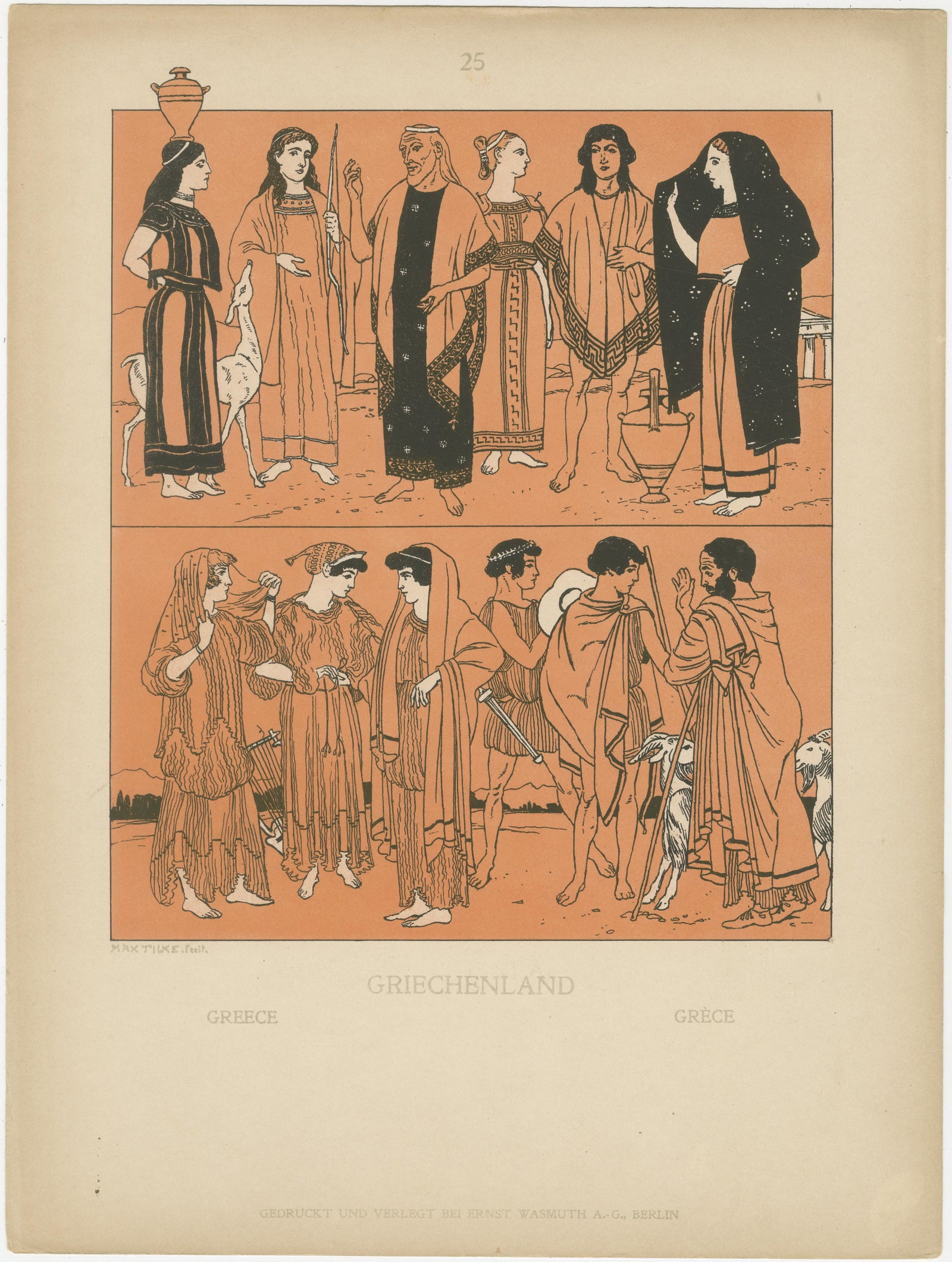
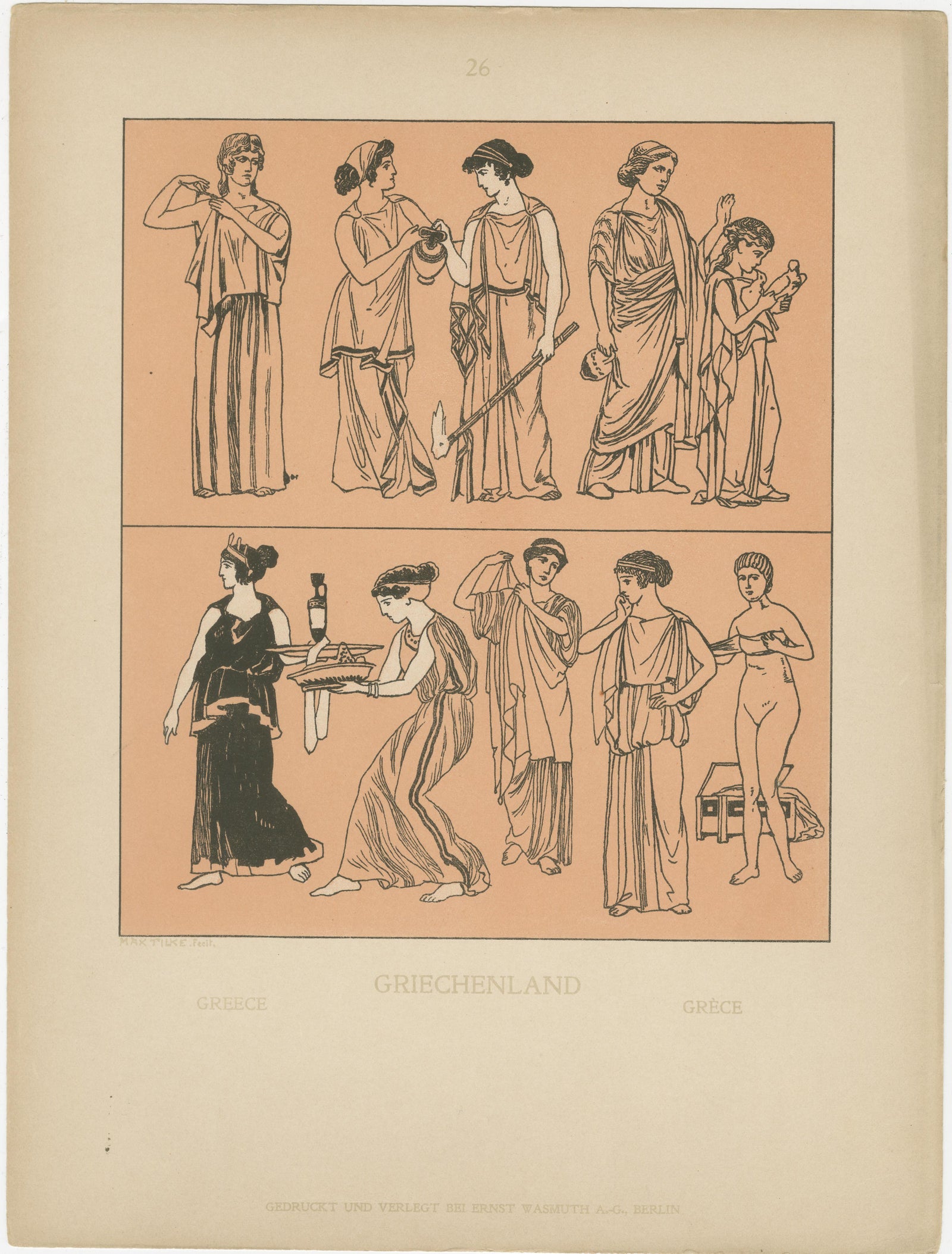
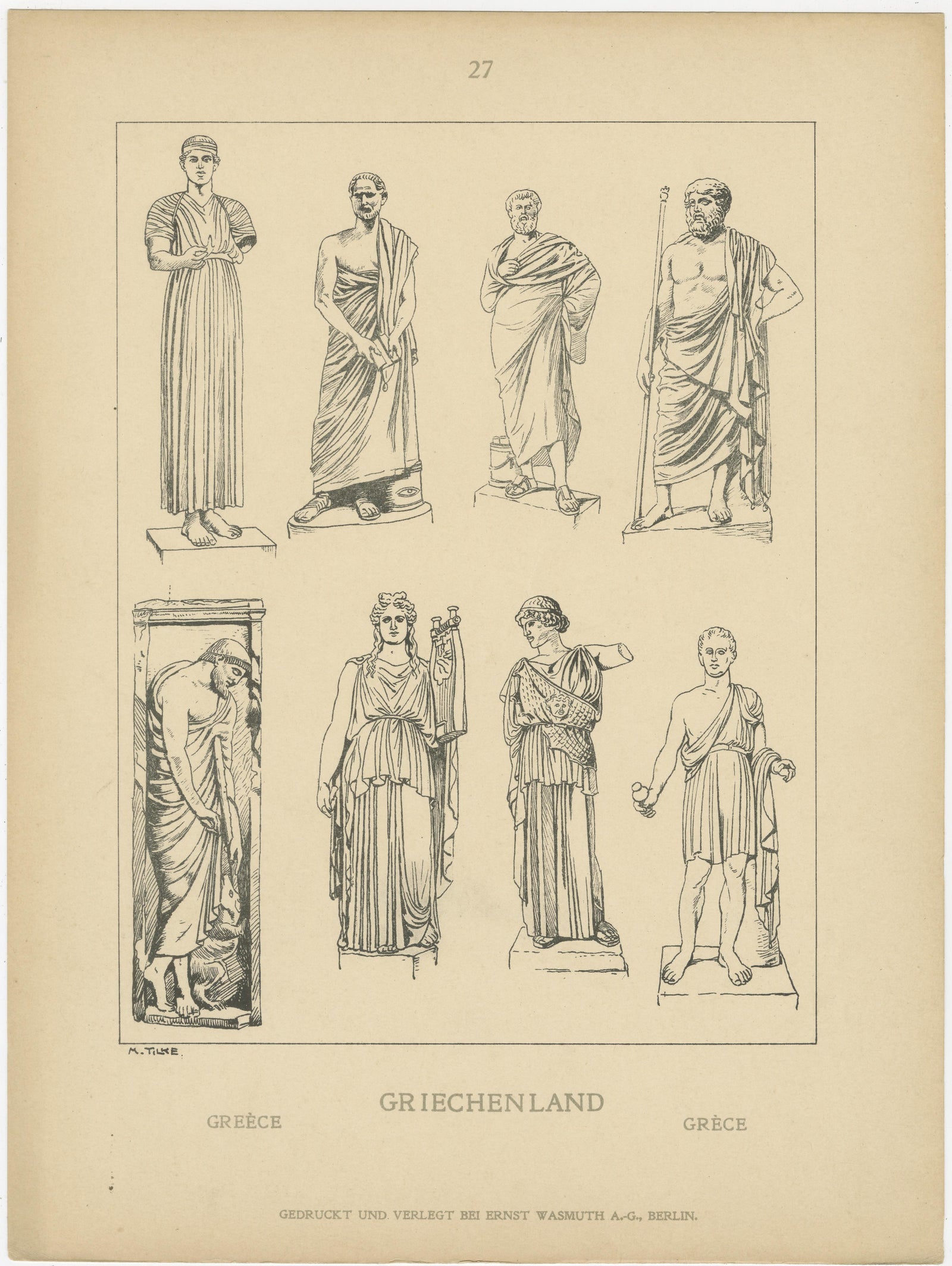
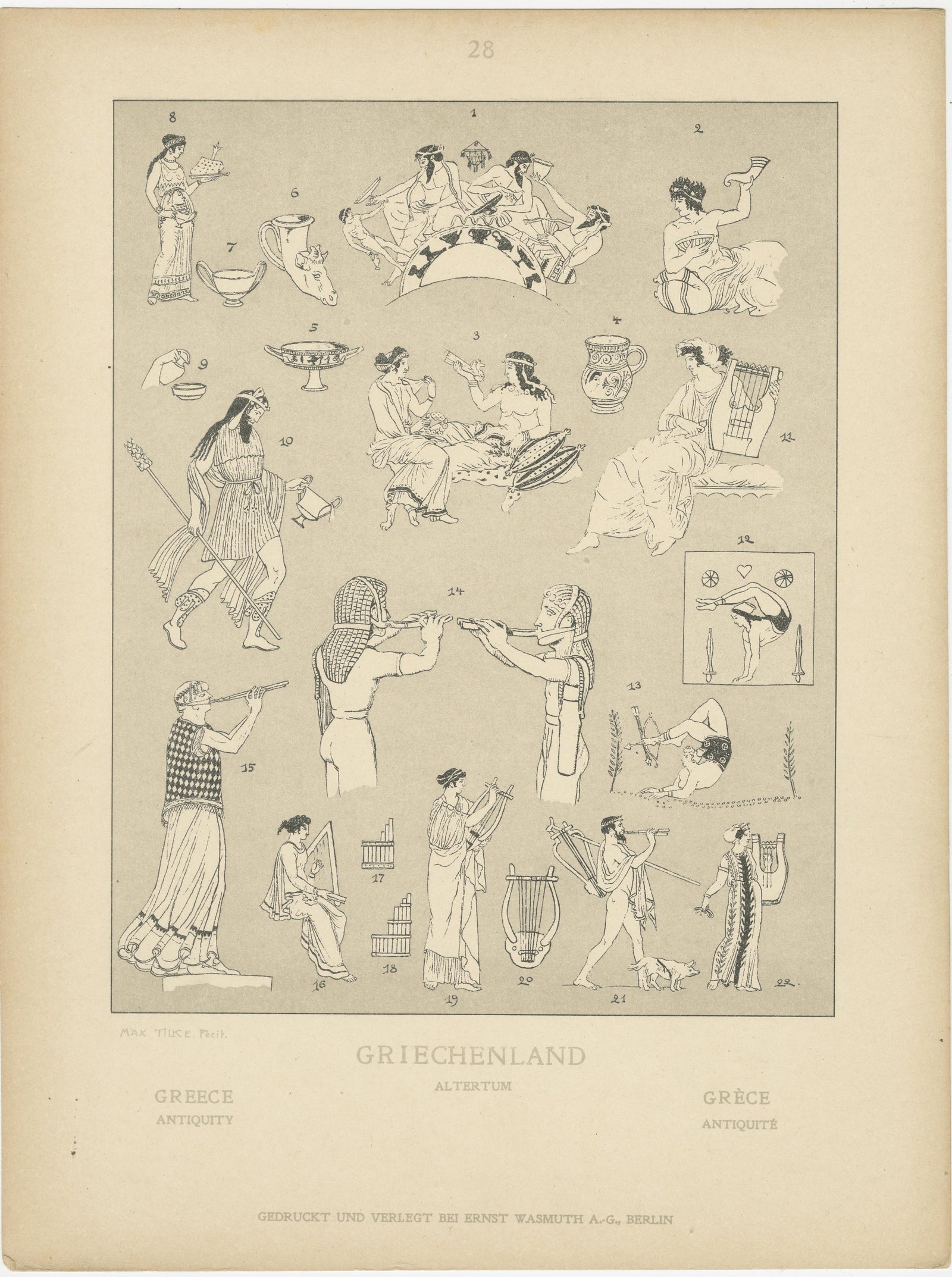
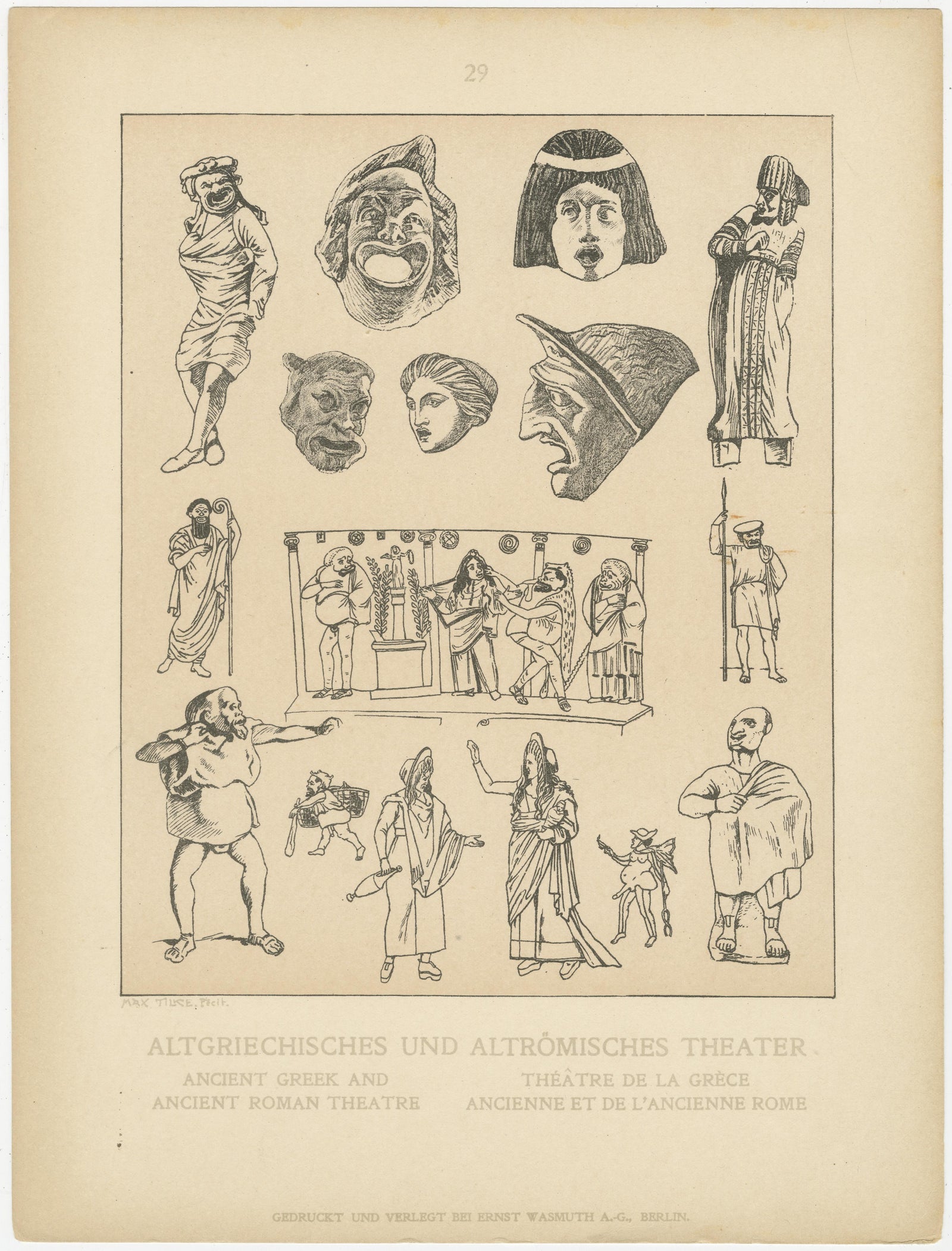
This impressive set of nine antique prints presents a richly detailed visual survey of ancient Greek life, dress, customs, theater, armament, and artistic traditions. Produced around 1900 by Ernst Wasmuth A.-G. in Berlin, these plates were created after drawings by Max Tilke, the well-known illustrator and costume historian whose works are prized for their clarity and ethnographic accuracy. Each sheet offers a different aspect of Greek antiquity, from hairstyles and garments to social ceremonies, musical scenes, theatrical masks, and the weapons and armor of the classical world.
The group includes a mix of monochrome plates and attractive two-tone sheets printed in soft terracotta, a color closely associated with ancient Greek vase painting. Seen together, the prints form a cohesive aesthetic sequence, offering both decorative appeal and scholarly depth. The compilation captures an entire cultural spectrum: civic and domestic life, women’s and men’s clothing, religious roles, military traditions, artisans, musicians and dancers, and the symbolic masks and actors of the Greek and Roman theater.
Max Tilke’s original intention was to produce an accessible visual reference for artists, designers, architects, historians, and collectors of antiquities. Today these plates are especially valued by interior designers seeking authentic classical imagery, as well as collectors of ethnographic and historical costume. Their large format allows the fine linework to stand out beautifully, and their lightly aged paper tone adds warmth and character suitable for framing in classical, minimalist, or contemporary interiors.
As a set, the nine prints are ideally suited for a symmetrical gallery wall. The newly produced 3×3 compilation image shows how elegantly they can be arranged together, but each sheet also works perfectly as a standalone framed piece. Because original Wasmuth plates remain relatively scarce in complete groups, this curated selection is an excellent opportunity for collectors of classical imagery or for anyone seeking an eye-catching historical feature wall with strong decorative impact.
Framing suggestion: Warm cream or off-white mat with a thin black or terracotta inner line. Frames in natural oak, black wood, or a light antiqued gold work especially well with the classical theme.
Technique: Lithograph
Maker: Ernst Wasmuth A.-G., Berlin, circa 1900