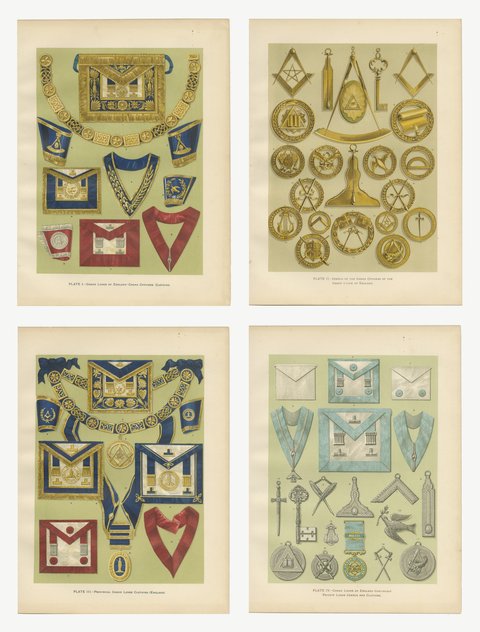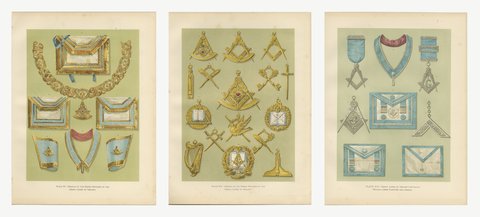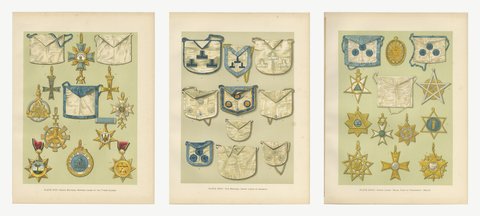
Close-ups
Framed and on the wall
Frame and rooms are illustrations of how the print could look; the description says what is included.
Scottish Lodge Aprons and Mary's Chapel Jewels, Antique Prints, circa 1901
€480
$530 · £400
Original print, not a reproduction.
Ships worldwide from the Netherlands, flat or rolled, insured and tracked. 14-day returns.
- Date
- circa 1901
- Sheet size
- 11 × 8.3 in (28 × 21 cm)
- Technique
- Chromolithograph
- Coloring
- Printed color
- Condition
- Good. Three sheets, all age toned. Foxing through the margins of all of them. The paper darker along the edges of all of them. Handling wear to the corners of plate 11.
- Wardrobe
- Menswear
- Era
- 1900 and after, Belle Époque on
- Stock no.
- BG-14492-1-9
What the condition grades mean
- Excellent
- Bright and clean, with no faults worth mentioning.
- Very good
- Only light signs of age, such as faint toning.
- Good
- Normal signs of age for a sheet of this period: toning, some foxing, small marks or neat old repairs.
- Fair
- Clear faults such as staining, tears or repairs, priced to match.
Every fault we see is written in the condition note, and the whole sheet is shown uncropped in the photos.
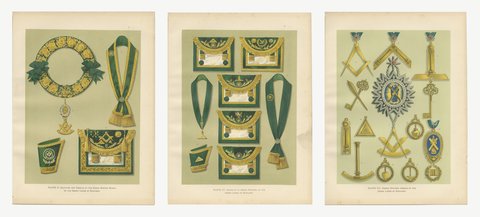
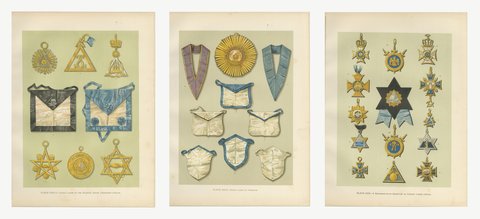
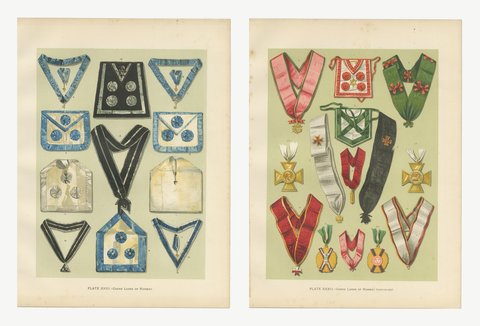
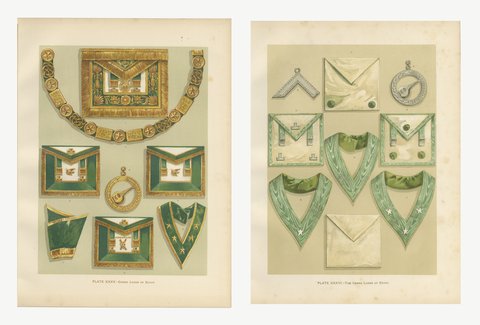
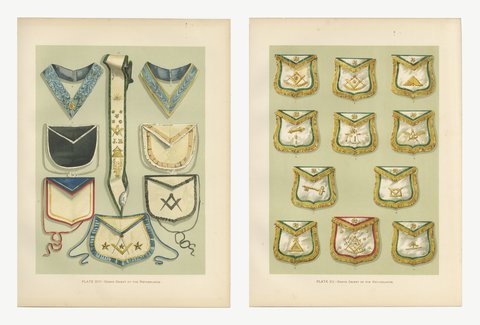
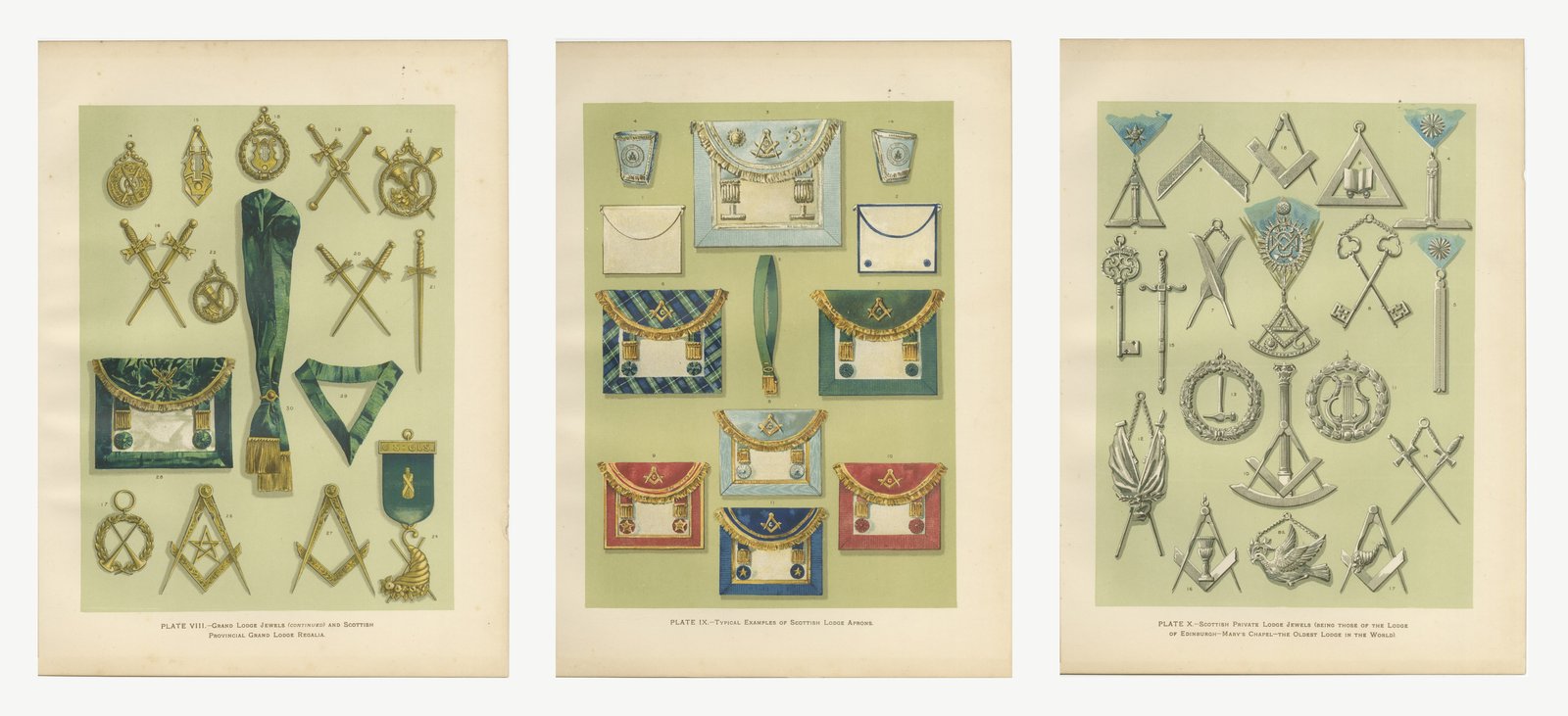
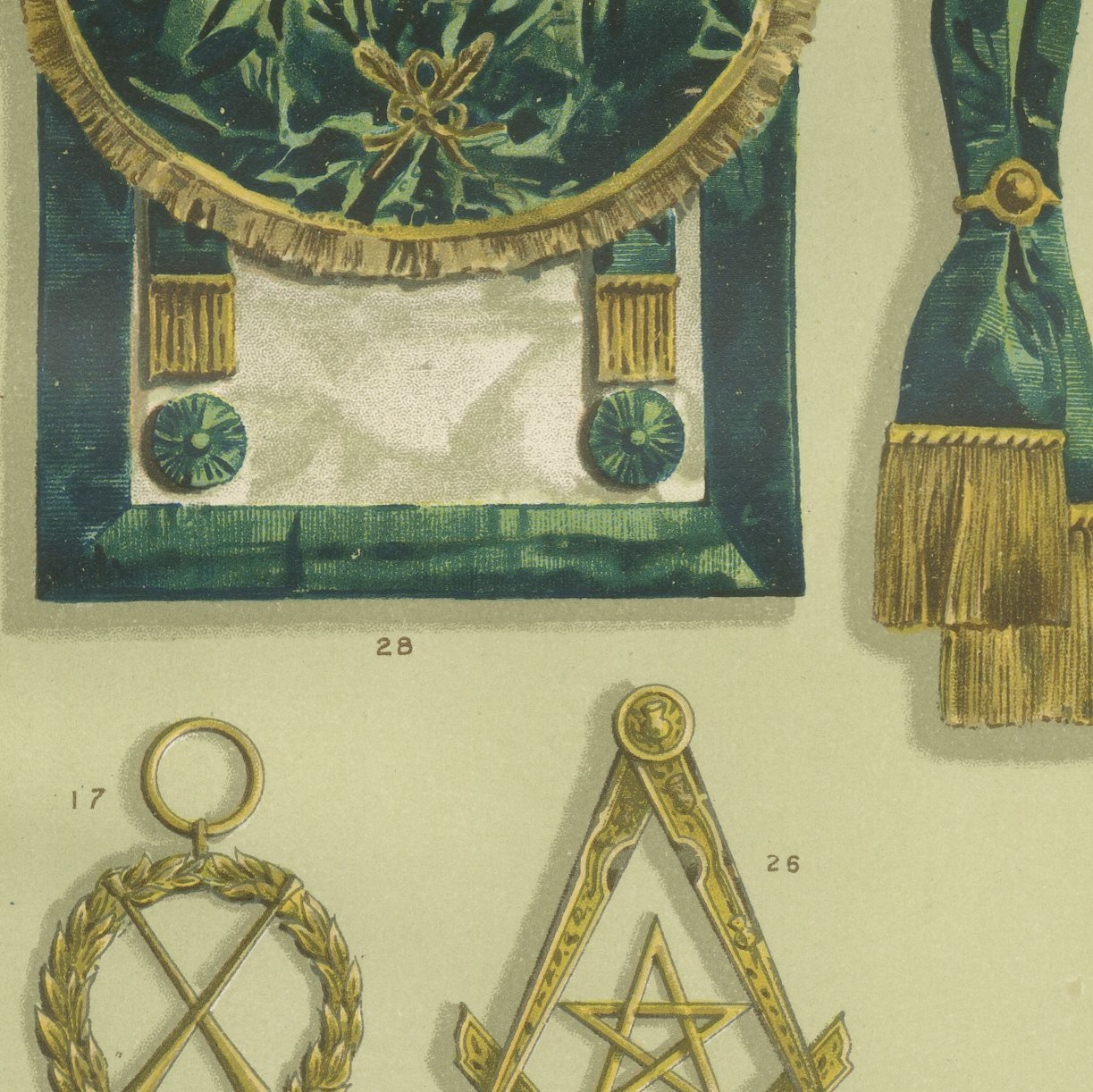
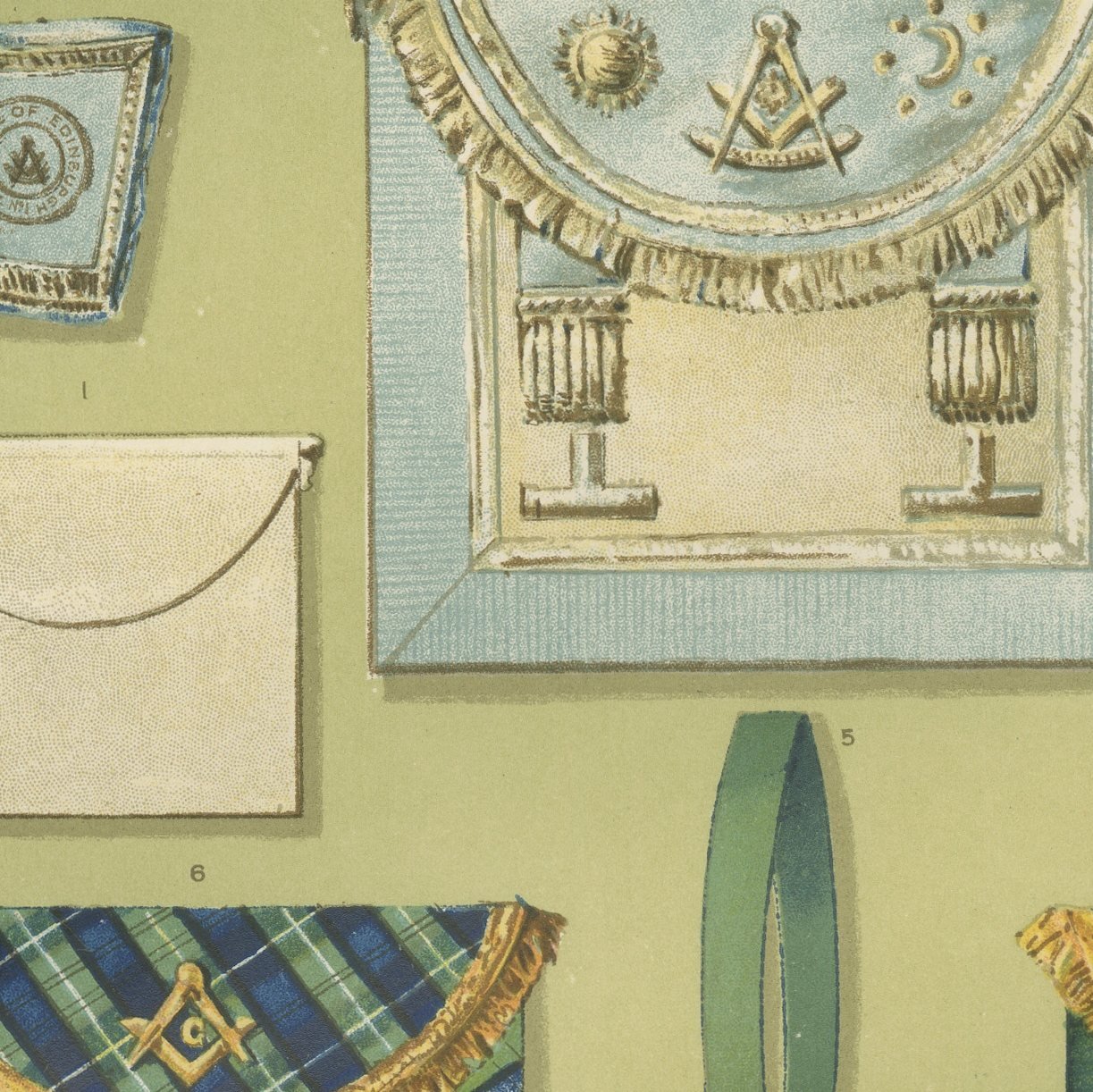
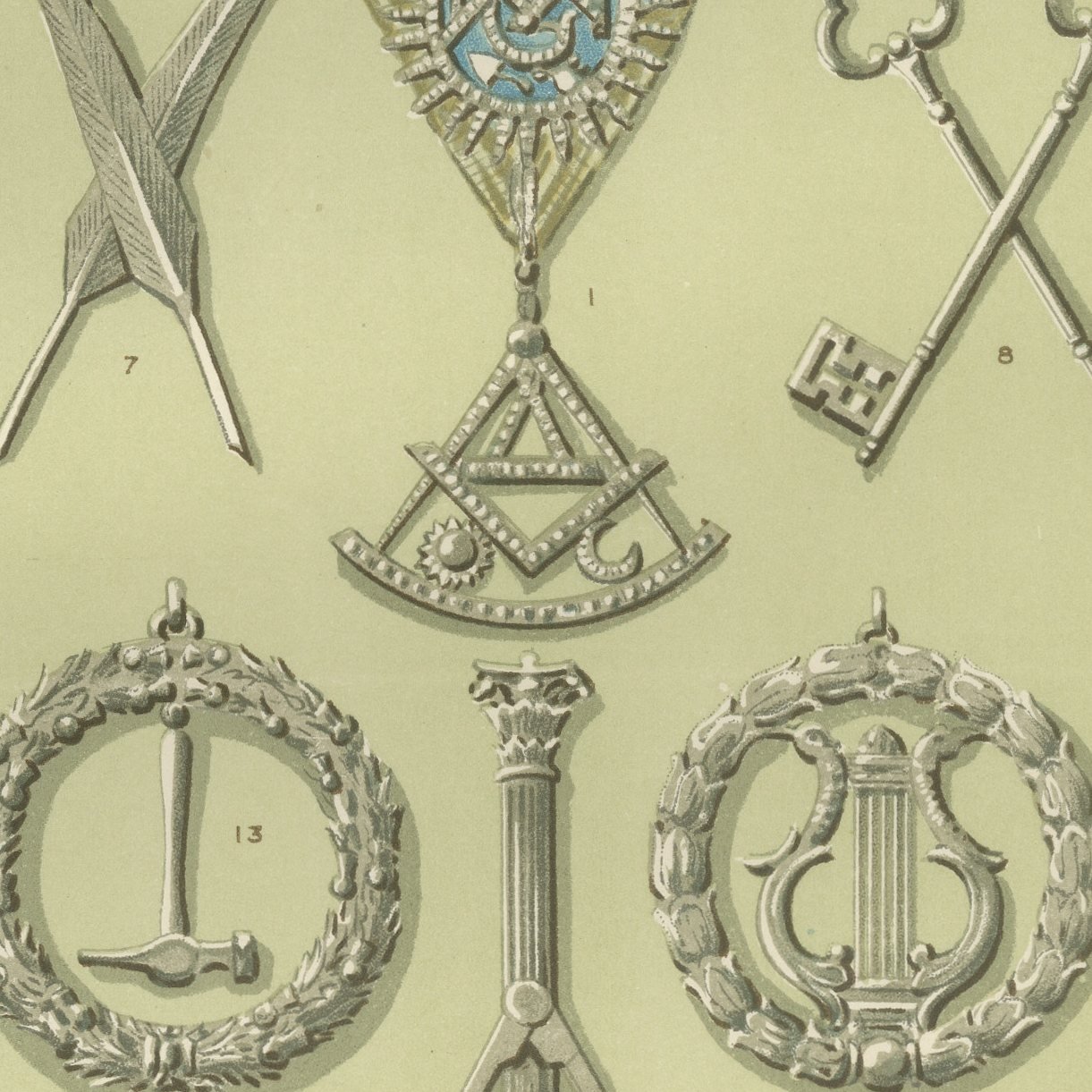
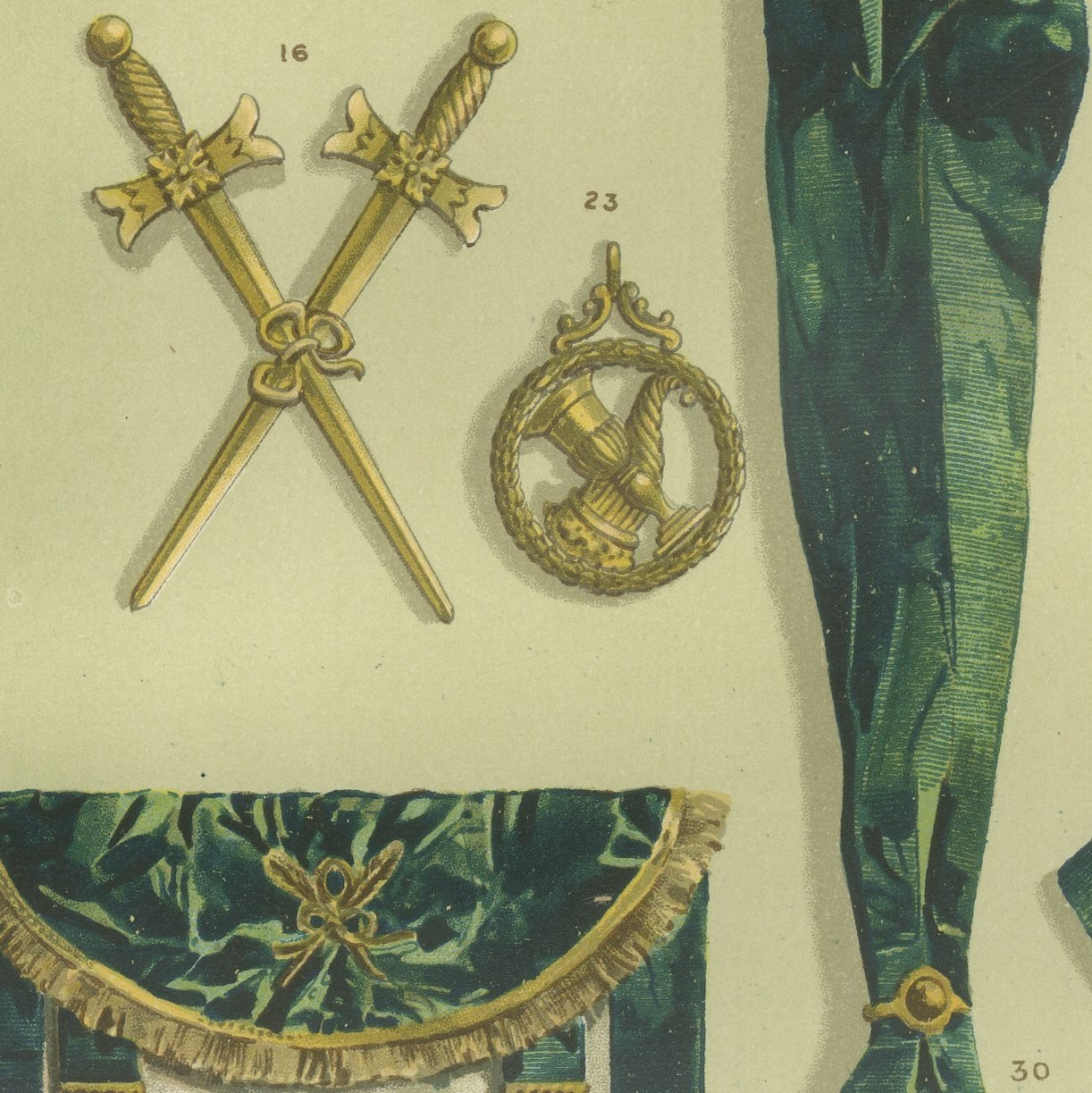
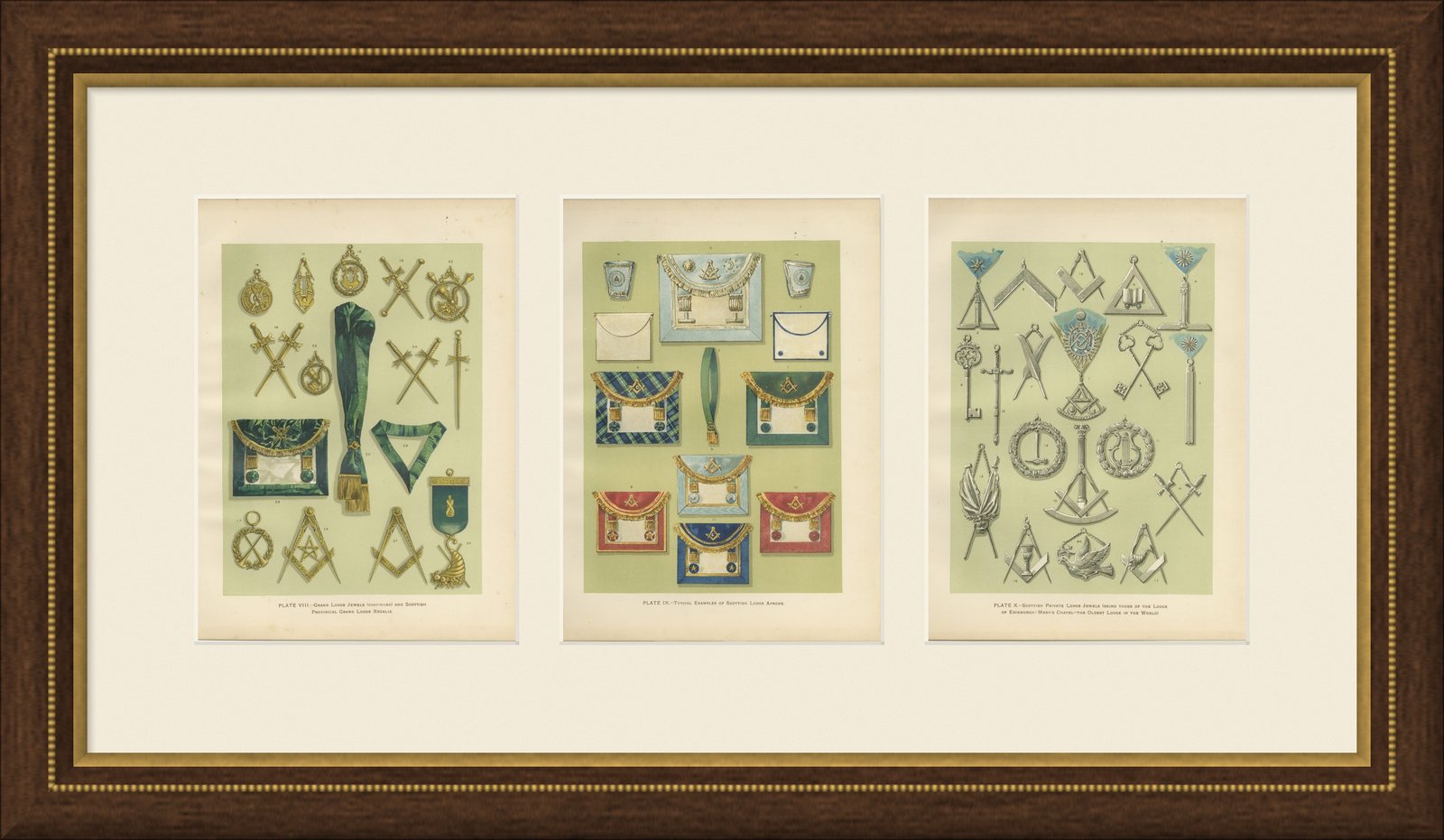
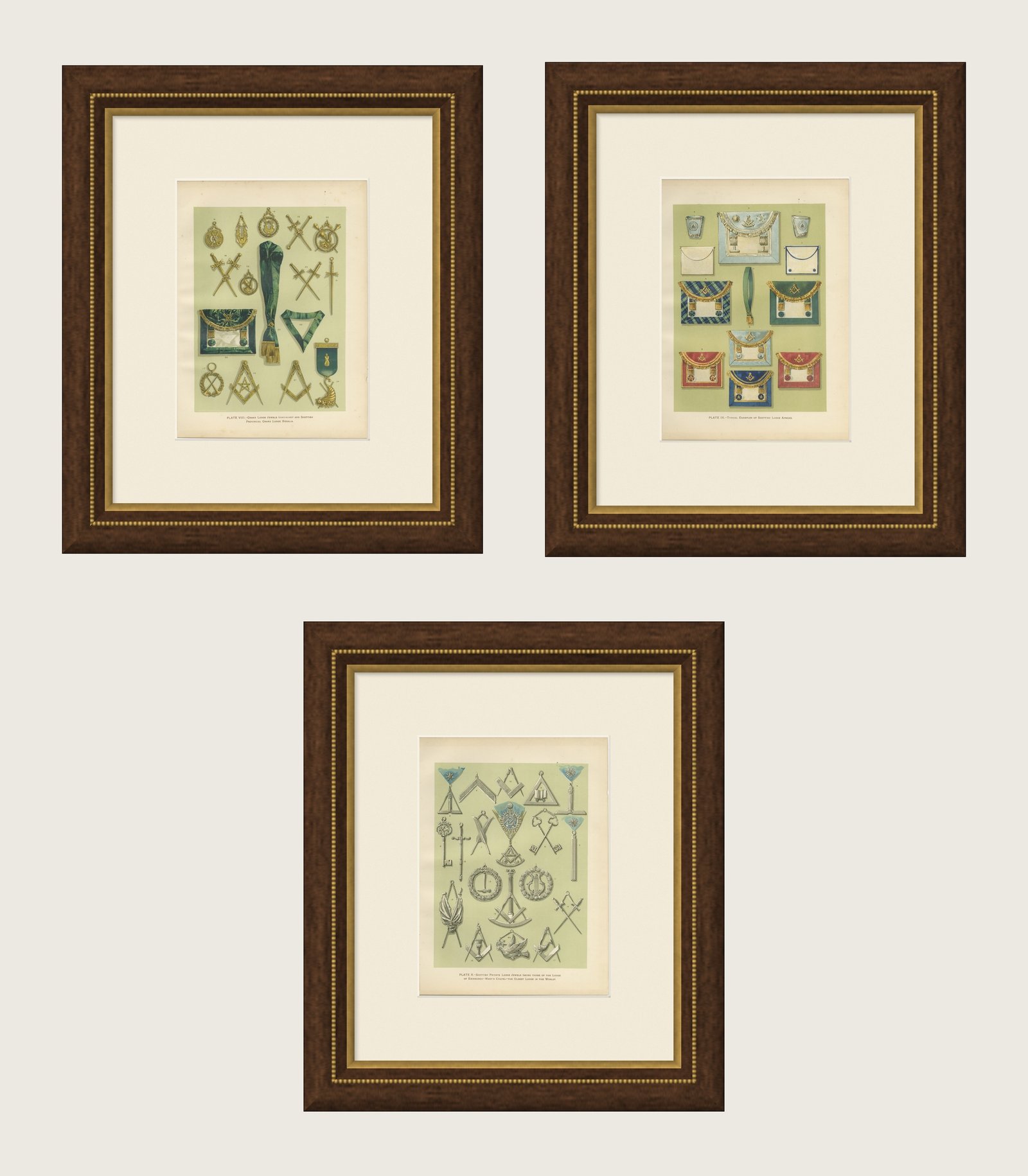
An antique set of three chromolithographs of Scottish lodge aprons and the jewels of Mary's Chapel, Edinburgh, printed for Gould's History of Freemasonry, London, circa 1901, kept together and sold as one lot. These are three original sheets sold together as one set and are not offered separately.
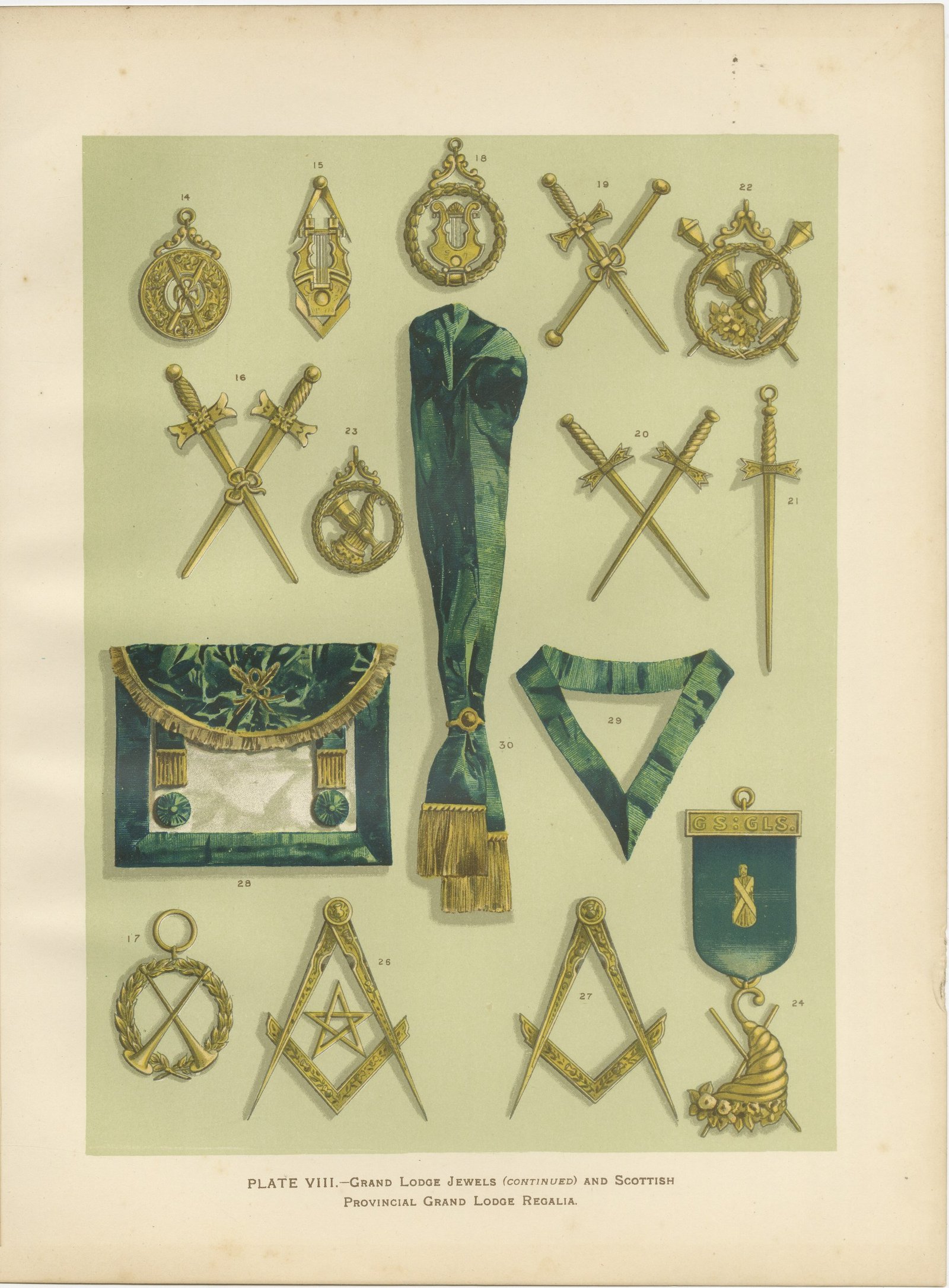
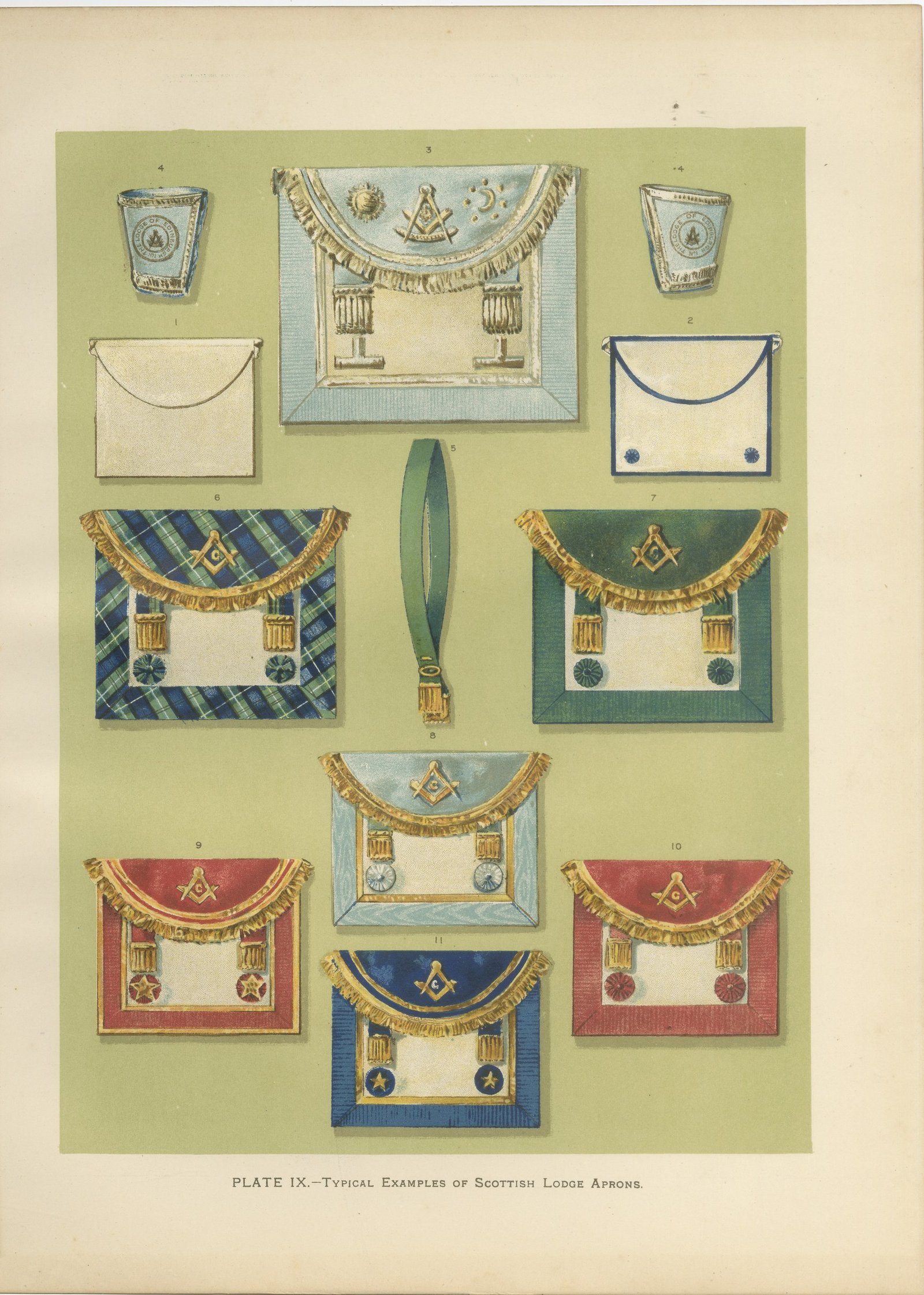
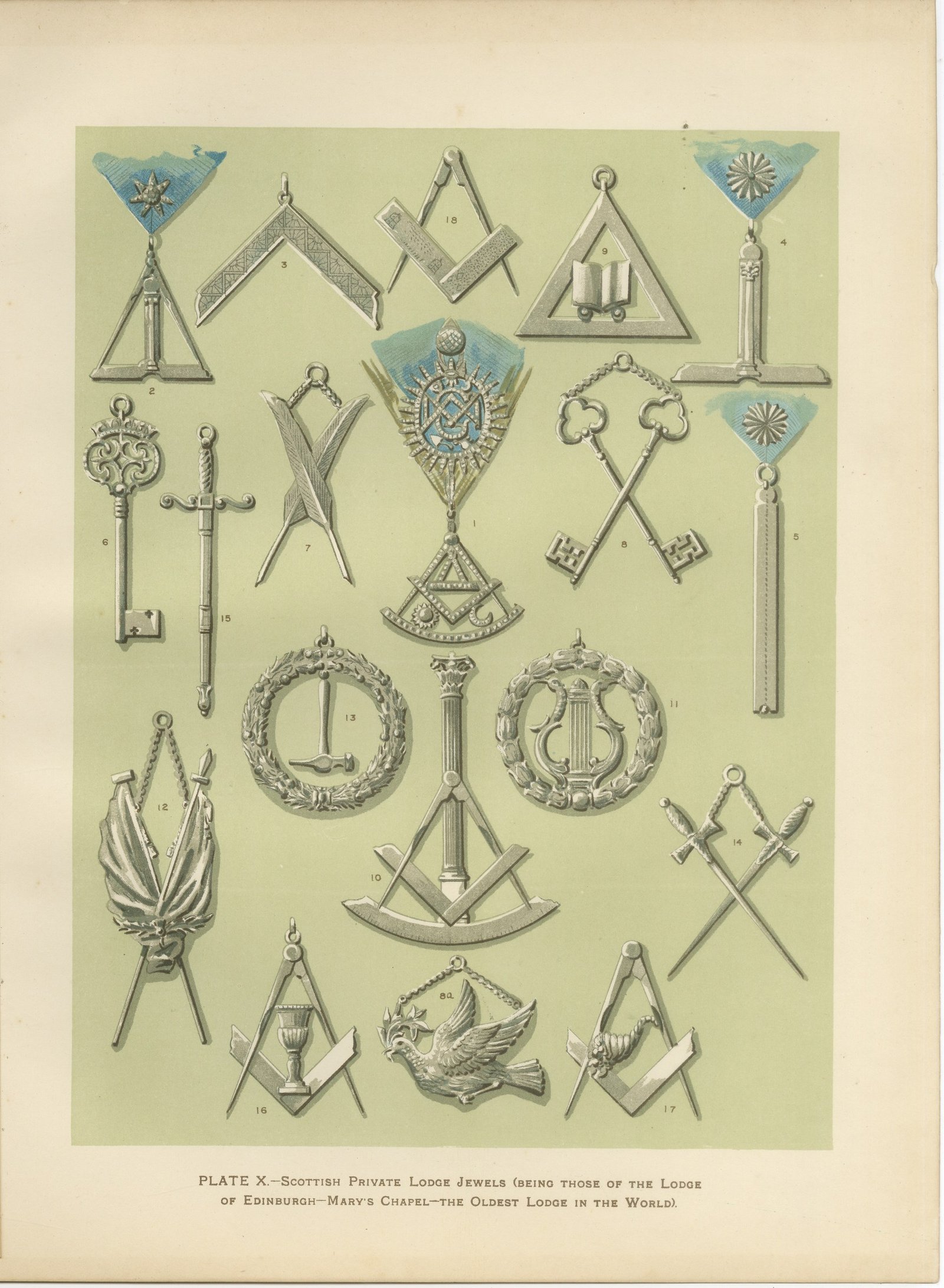
Plate VIII shows further gold jewels and crossed swords, a dark green sash with bullion fringe, a green and gold Provincial apron with a white panel, a green collar and a small green banner. Plate IX shows nine lodge aprons side by side, among them a tartan bordered apron and aprons in pale blue, crimson and dark blue, each with its own embroidered emblems, with gauntlets. Plate X shows the silver jewels of the Lodge of Edinburgh, Mary's Chapel, pale blue flaps above crossed pens, keys, swords, a plumb rule, a dove and a lyre.
The plates are chromolithographs, printed from a series of lithographic stones, one for each color, on a flat olive ground. The color is printed, not added by hand. The source is Volume I of The History of Freemasonry: Its Antiquities, Symbols, Constitutions, Customs, Etc., by Robert Freke Gould (1836 to 1915), a former army officer and barrister who was appointed Senior Grand Deacon of the United Grand Lodge of England in 1880. The title page styles him Barrister-at-Law, Past Senior Grand Deacon of England, and describes the work as derived from official sources. The History was first published in London by Thomas C. Jack between 1882 and 1887. This issue was published in six volumes by the Caxton Publishing Company of 84, 85 and 86 Chancery Lane, London, and no year is printed in it. It is dated circa 1901 from the portrait plates at the front of the volume: the Duke of Connaught became Grand Master of the United Grand Lodge of England in 1901, and the Hon. James Hozier, M.P., was elected Grand Master Mason of Scotland in November 1899 and kept that style until he became Lord Newlands in 1906.
Plates VIII to X are the last three of the six Scottish plates in the volume. Plate X is lettered Scottish Private Lodge Jewels (being those of the Lodge of Edinburgh, Mary's Chapel, the Oldest Lodge in the World). The Lodge of Edinburgh (Mary's Chapel), No. 1 on the roll of the Grand Lodge of Scotland, holds the oldest surviving minute of any lodge still working, dated 31 July 1599.
Three sheets, all age toned. Foxing through the margins of all of them. The paper darker along the edges of all of them. Handling wear to the corners of plate 11.
These are original antique plates, not modern reproductions. This item is sold unframed.