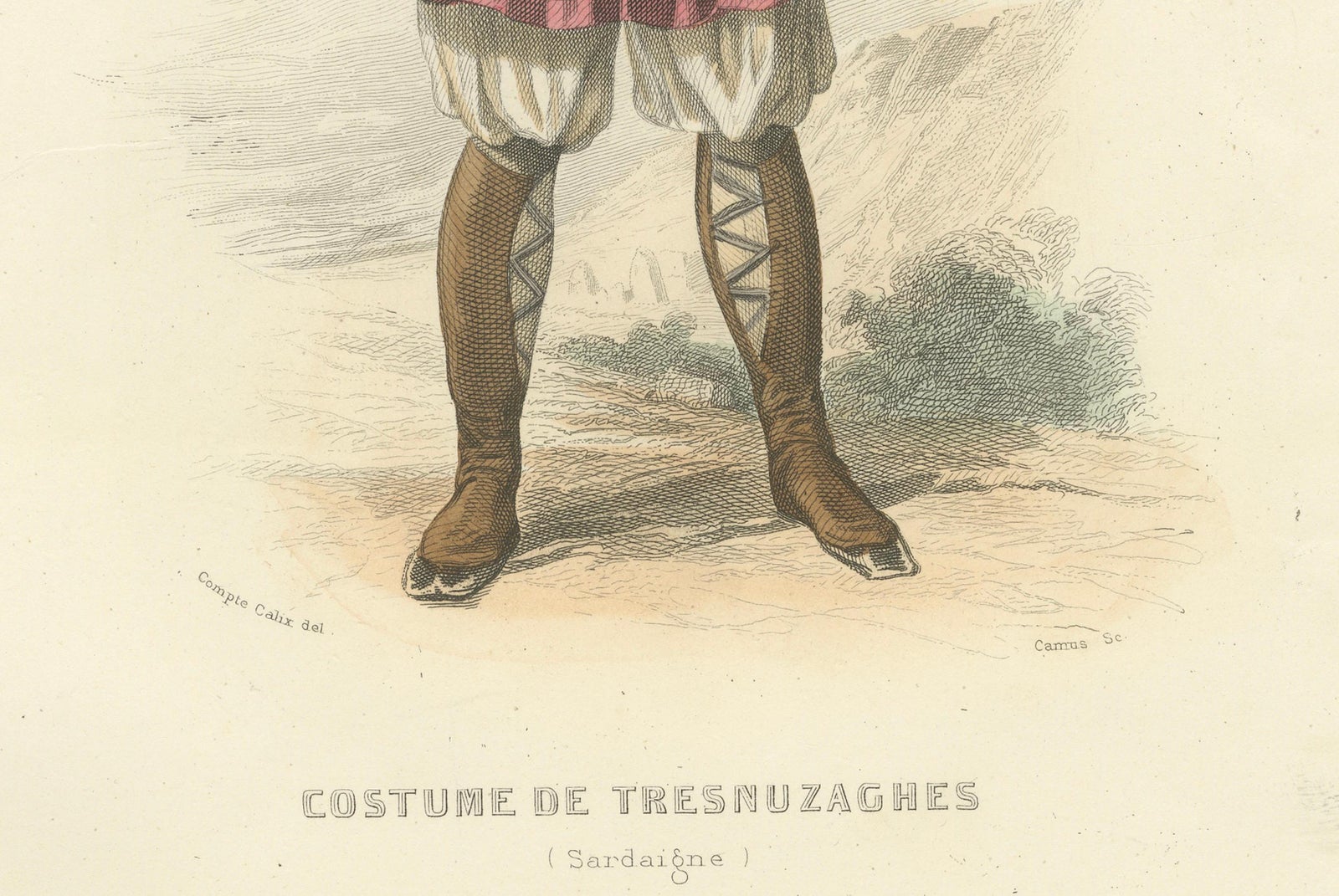
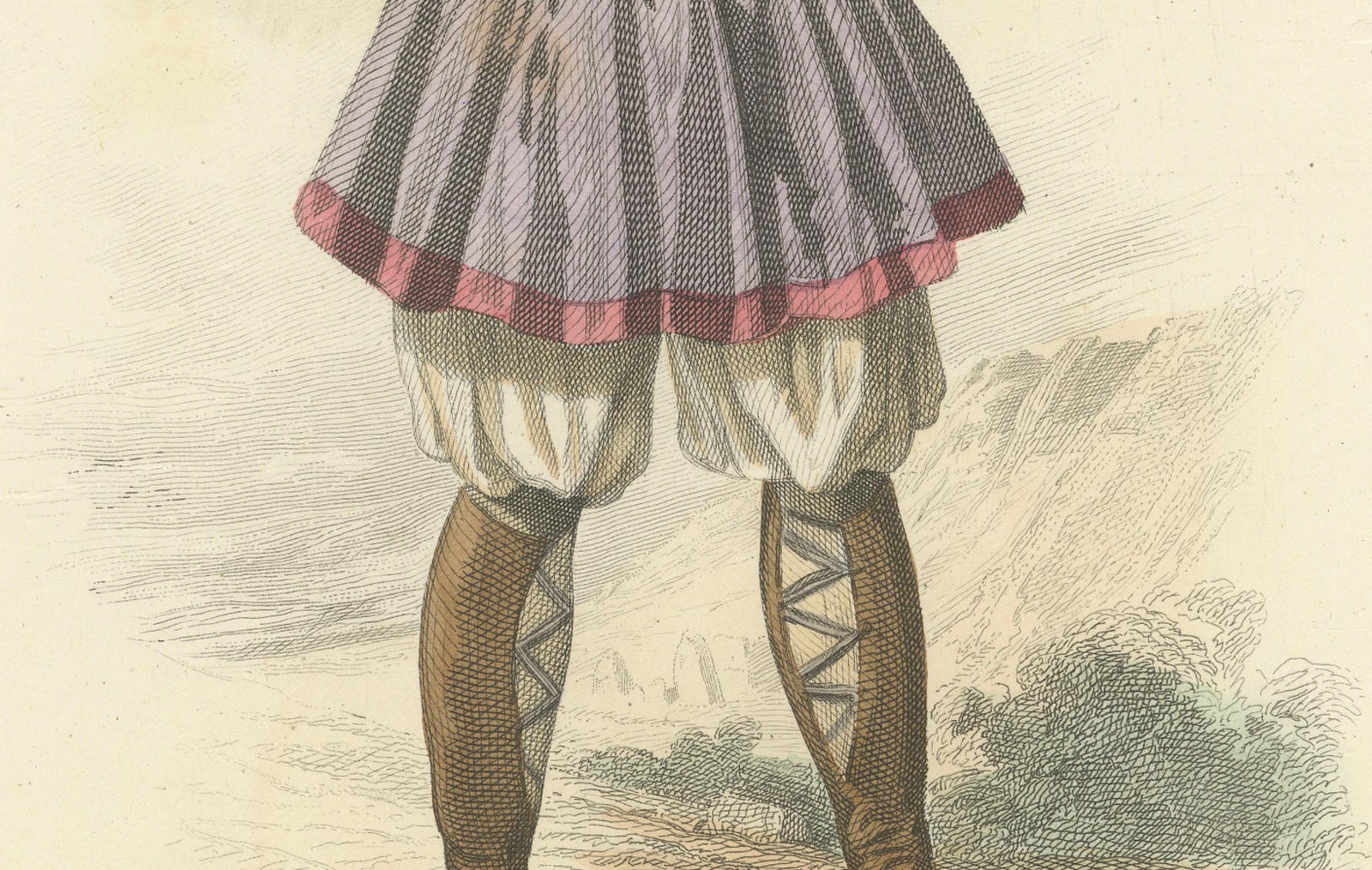
Close-ups
Framed and on the wall
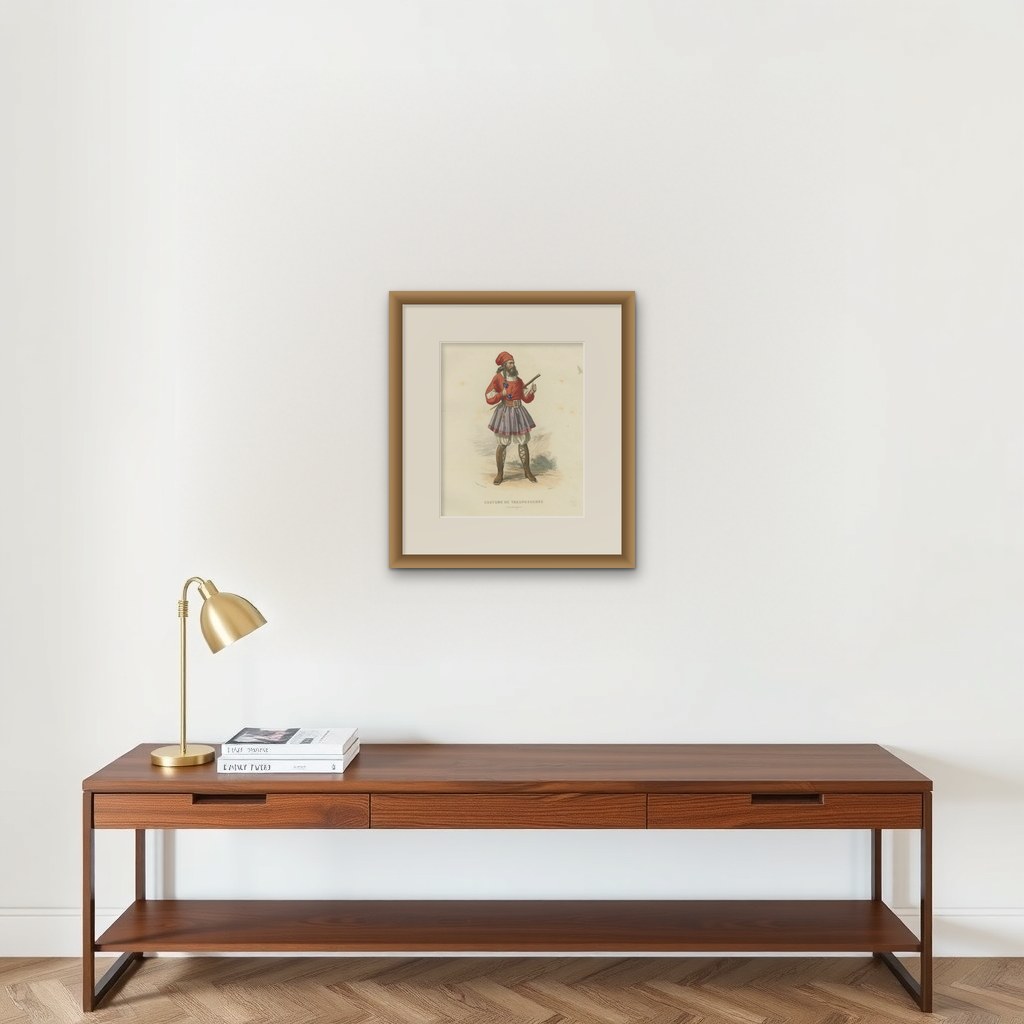

Frame and rooms are illustrations of how the print could look; the description says what is included.
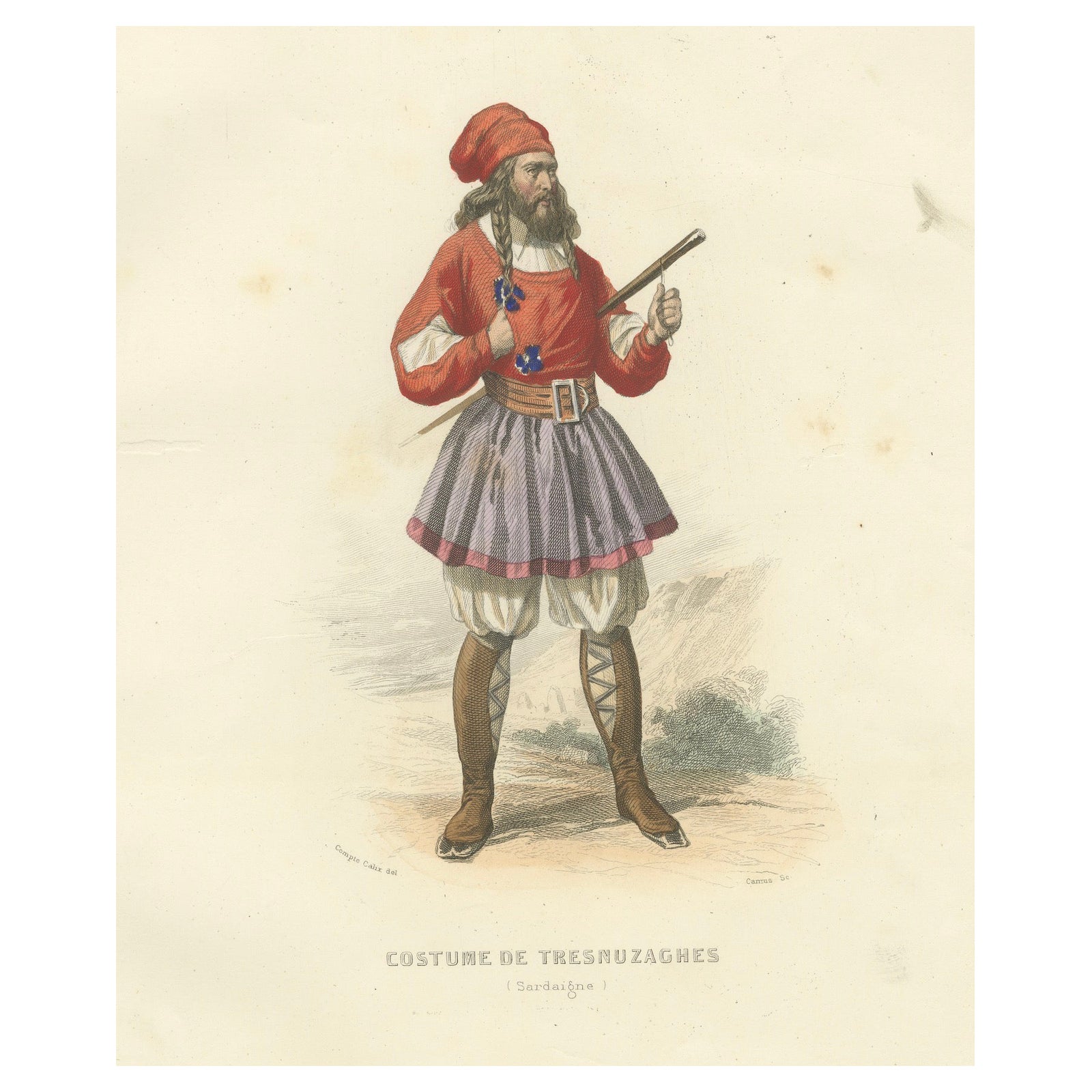
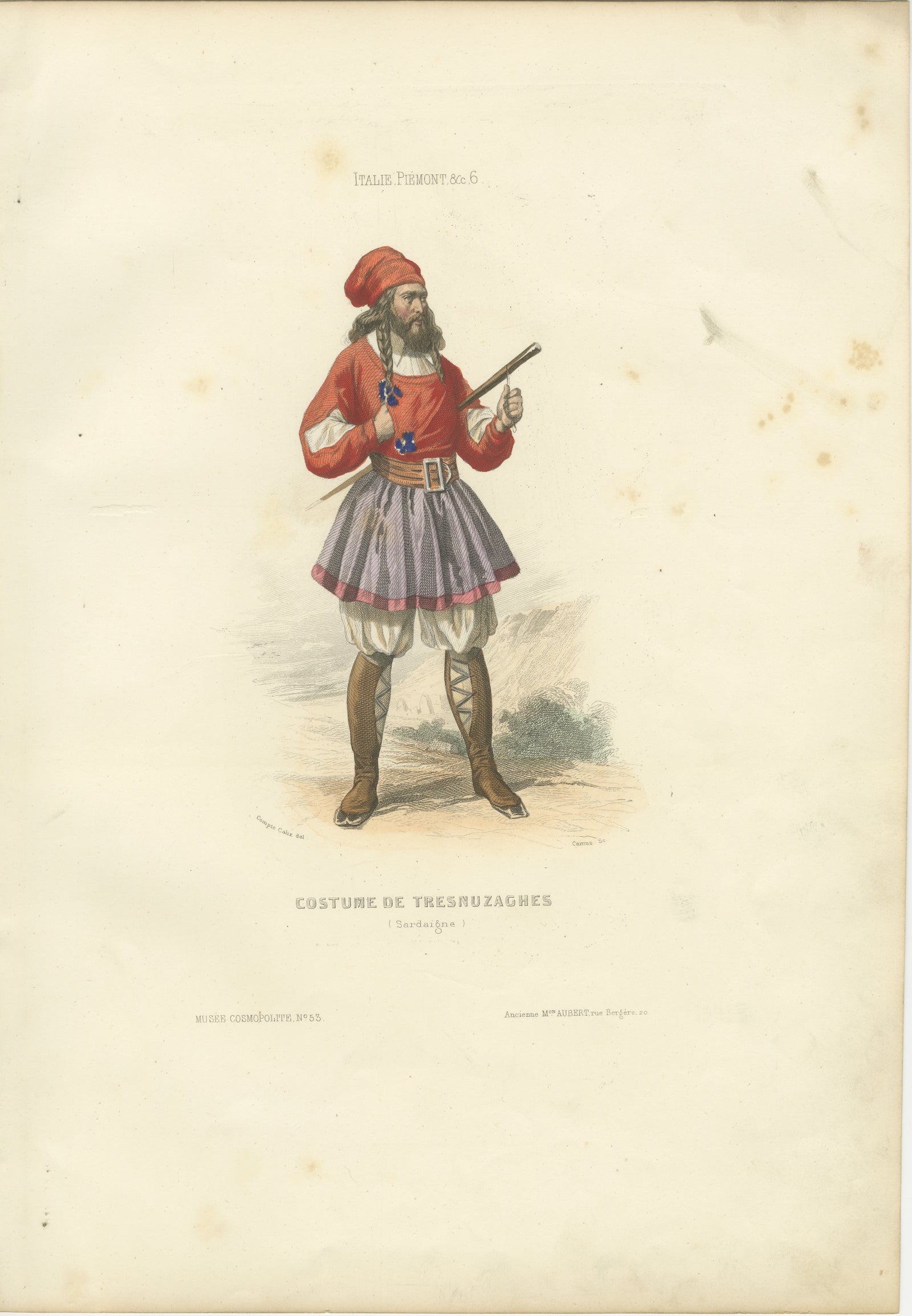
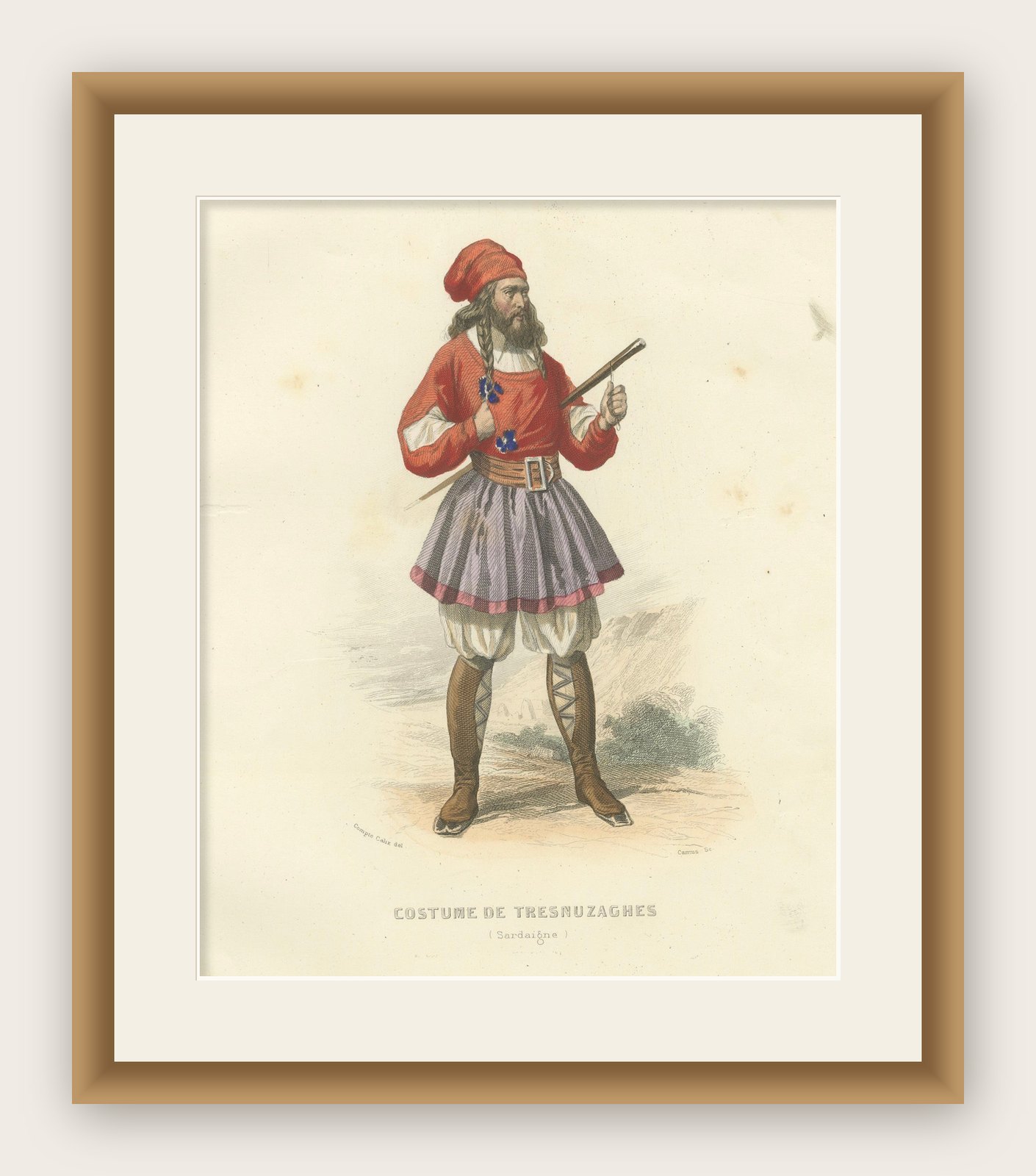
Sardinian Man Costume Print Tresnuraghes 1853 by Compte-Calix, Hand-Colored
€210
$235 · £180
Original print, not a reproduction.
Ships worldwide from the Netherlands, flat, insured and tracked. 14-day returns. To buy, use Ask a question and we will reserve the print for you.
- Date
- 1853
- Sheet size
- 9.3 × 13 in (23.5 × 33 cm)
- Condition
- Good. Condition summary: overall good condition with some scattered foxing visible throughout the sheet and mild age toning consistent with mid-19th century prints. The image remains vivid and well-preserved.
- Wardrobe
- Folk finery
- Era
- 1840 to 1870, Crinoline
- Stock no.
- f_45749272
Sardinian Man Costume Print Tresnuraghes 1853 by Compte-Calix, Hand-Colored Lithograph
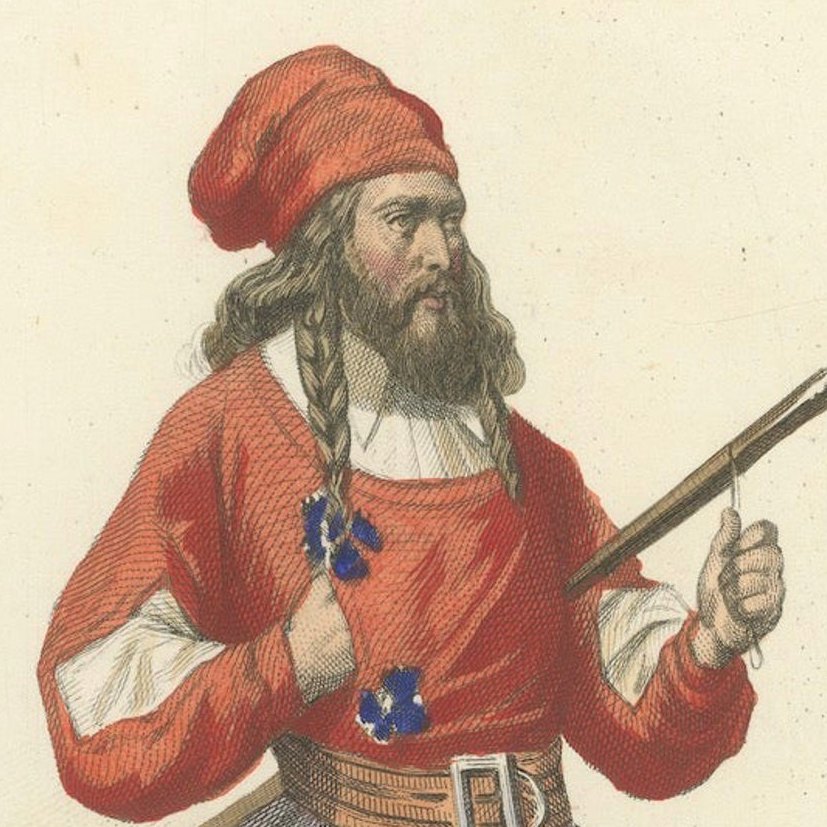
This striking antique print depicts a man from Tresnuraghes in Sardinia, Italy, wearing traditional regional costume. It was created by François Claudius Compte-Calix and published in 1853 by Chez Aubert et C-ie in Paris as part of the renowned Le Keepsake de Costumes series, which showcased traditional costumes from various cultures across Europe and beyond.
François Claudius Compte-Calix (1813-1880) was an accomplished French painter and lithographer known for his romantic and historical scenes and meticulous costume studies. His works combine artistic elegance with ethnographic authenticity, providing insights into regional dress of the mid-19th century.
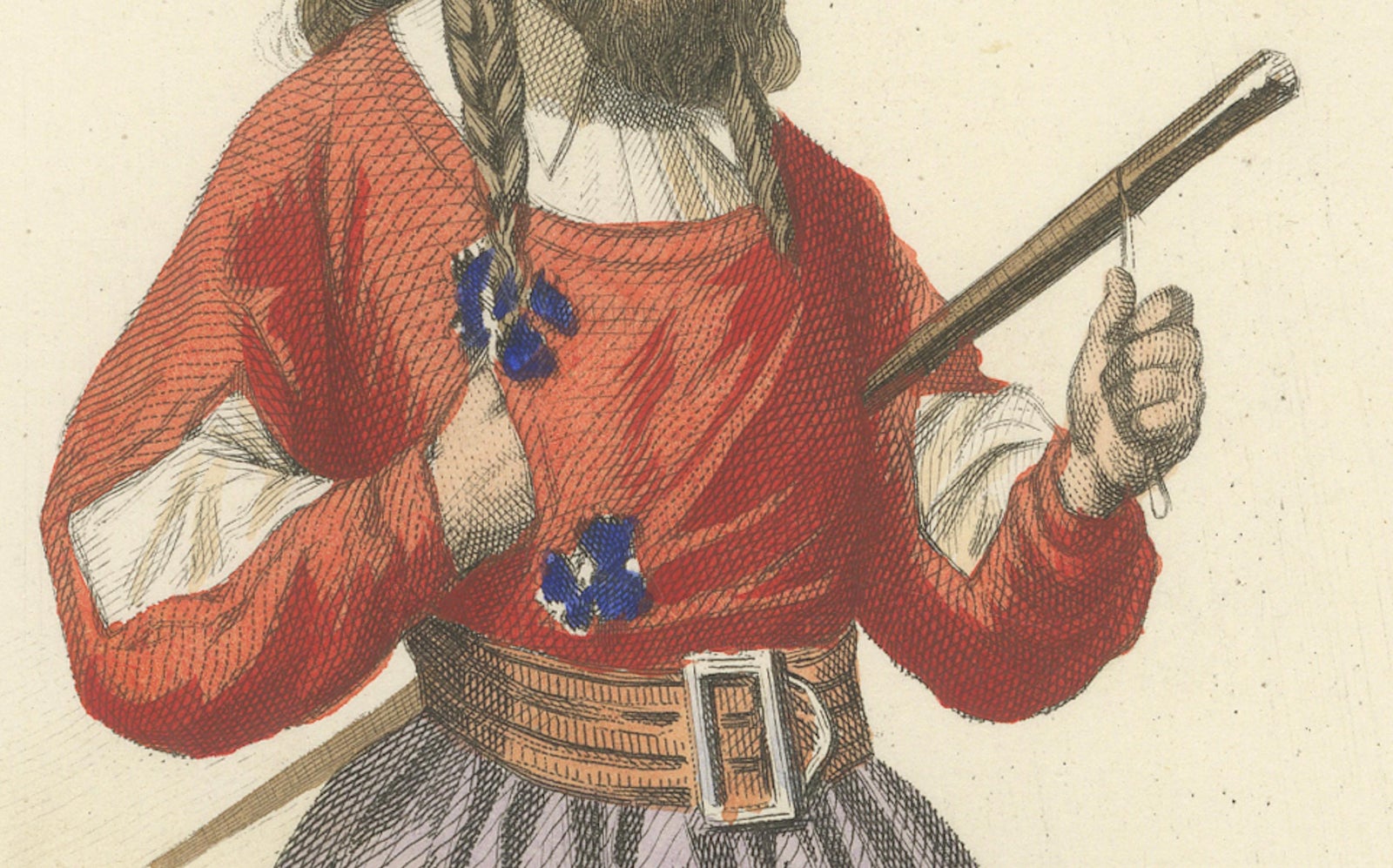
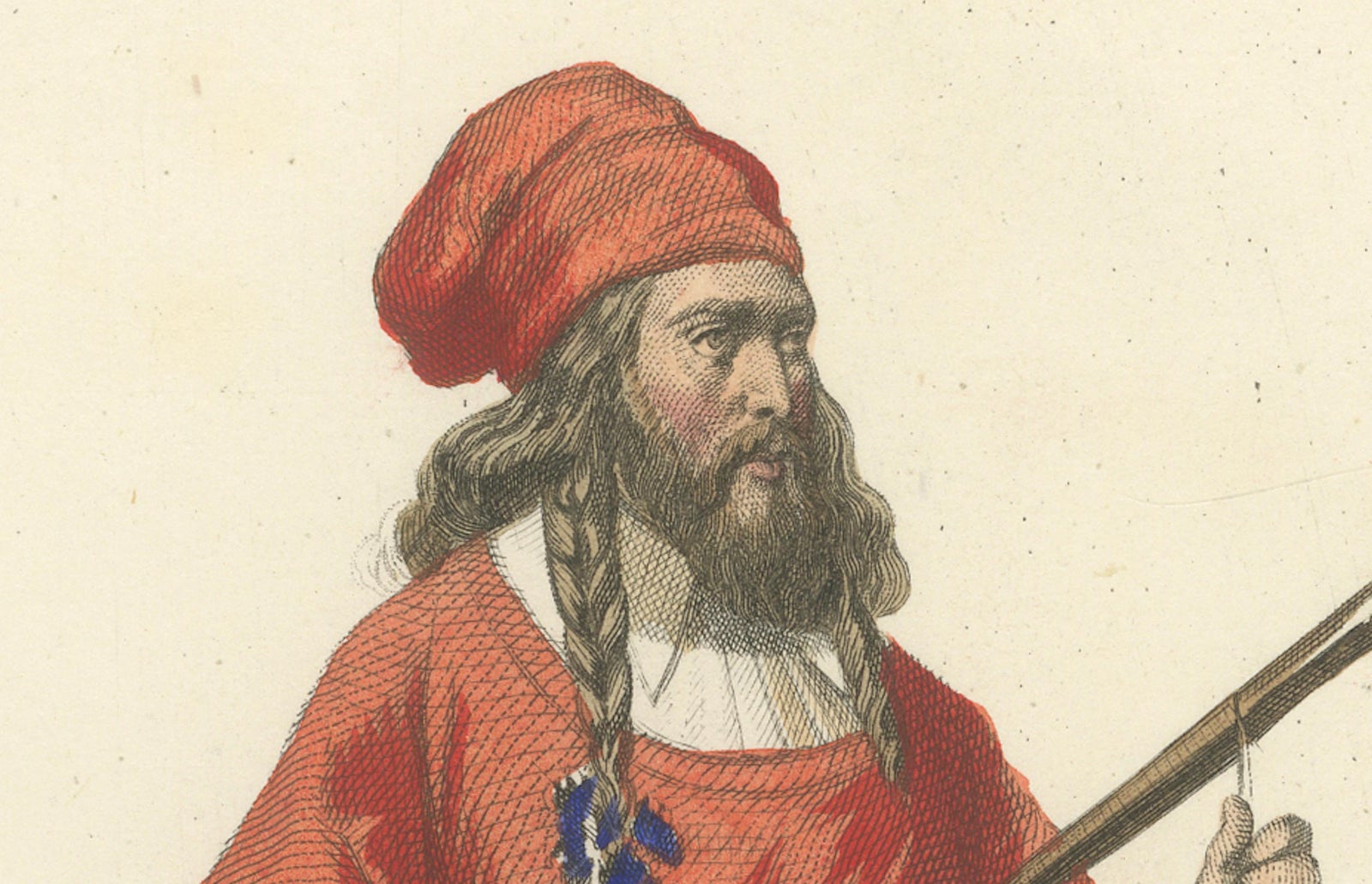
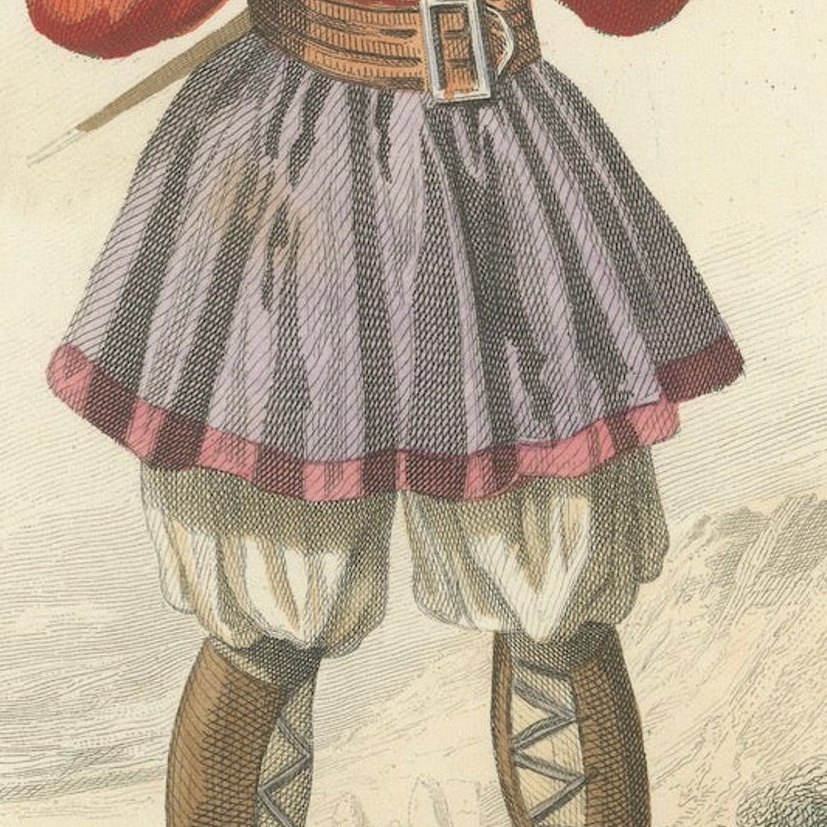
This hand-colored lithograph, part of the Musée Cosmopolite collection, portrays the Sardinian man standing proudly with a long firearm resting on his shoulder. He wears a vivid red tunic over a white shirt, with a purple pleated skirt, white breeches, and tall brown leather gaiters laced at the front. His red cap complements the tunic, while a wide brown leather belt with a buckle secures his outfit. The careful lithographic detailing and skillful hand-coloring highlight the textures of the fabrics, leather, and embroidery, bringing the scene vividly to life.
Lithography, the printing technique used here, involved drawing directly onto a limestone plate, which was then inked and pressed onto paper. The prints were subsequently hand-colored with water-based pigments, adding depth and vibrancy to the original artwork.
Condition summary: overall good condition with some scattered foxing visible throughout the sheet and mild age toning consistent with mid-19th century prints. The image remains vivid and well-preserved.
Framing tips: this colorful print will be beautifully presented in a dark wood, walnut, or rustic black frame to echo its strong lines and regional authenticity. A cream or light grey mat will enhance the print’s colors while offering a neutral contrast to the aged paper. Museum-quality UV-protective glass is recommended to preserve the colors and paper condition.
This lithograph is ideal for collectors of Italian regional costumes, Sardinian heritage, and 19th-century lithographs. It is also an excellent decorative choice for traditional homes, rustic kitchens, libraries, or cultural institutions, bringing a piece of authentic European history and timeless masculine dignity to any setting.