Close-ups
Framed and on the wall
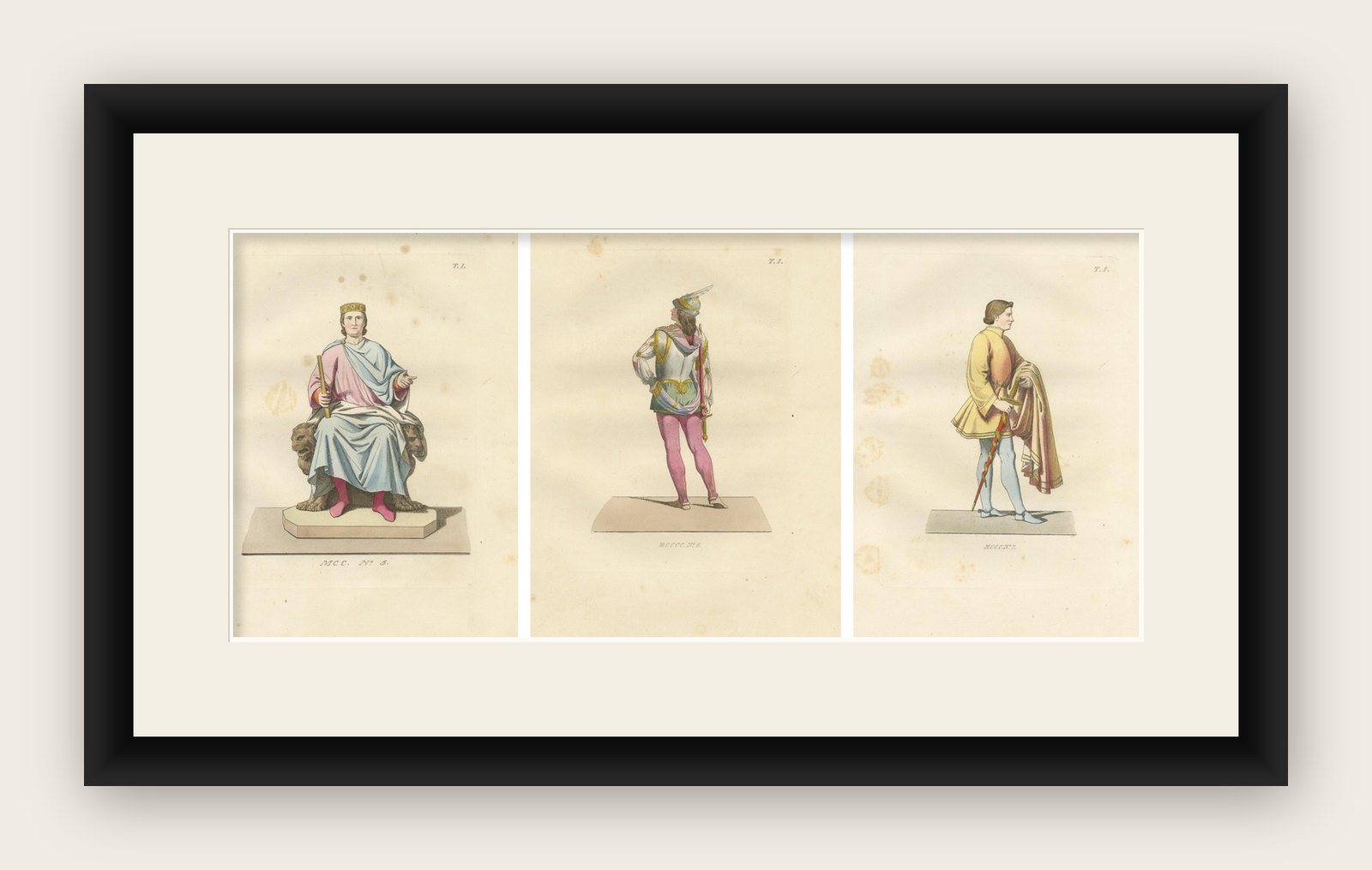


Frame and rooms are illustrations of how the print could look; the description says what is included.
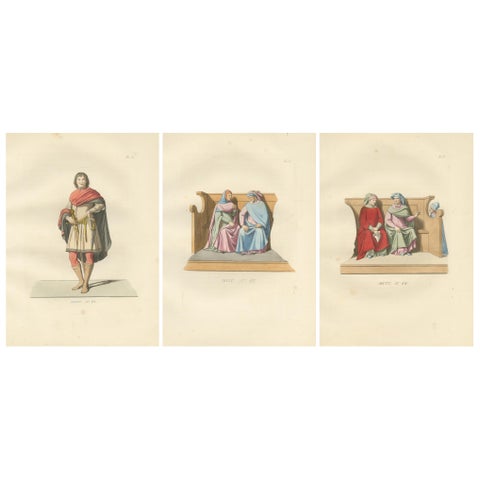
Royal and Noble Costume Prints: d'Anjou, Military Attire, Young Squire, 1845
€230
$260 · £195
Original print, not a reproduction.
Ships worldwide from the Netherlands, flat, insured and tracked. 14-day returns. To buy, use Ask a question and we will reserve the print for you.
- Date
- 1845
- Sheet size
- 11.9 × 8.8 in (30.3 × 22.3 cm)
- Condition
- Good. The prints are in good condition, considering age, but some scattered foxing is visible, especially in the margins, but colors remain vivid and the figures are sharp and clean. The paper is stable and well preserved.
- Wardrobe
- Menswear
- Era
- 1840 to 1870, Crinoline
- Stock no.
- f_45399392
Royal and Noble Costume Prints: Charles d'Anjou, Military Attire, Young Squire
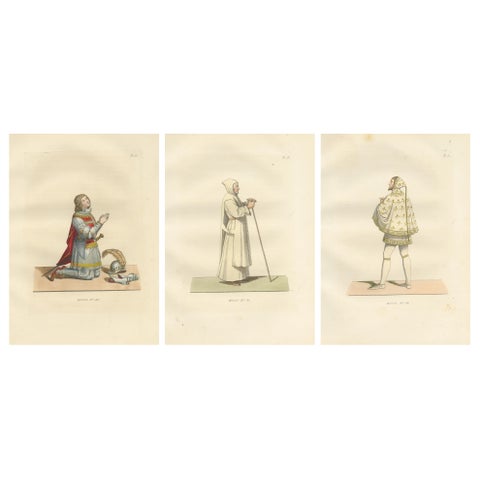
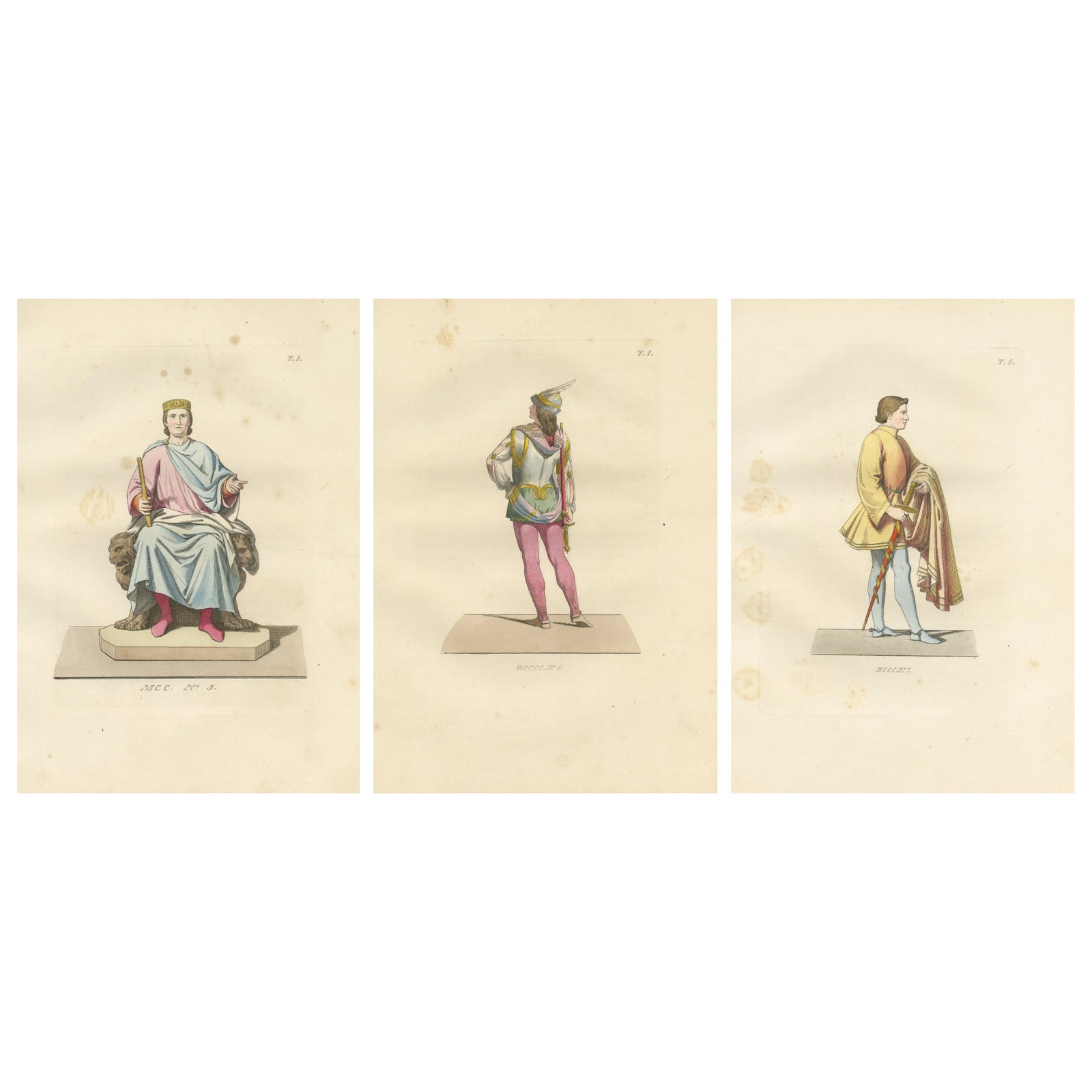
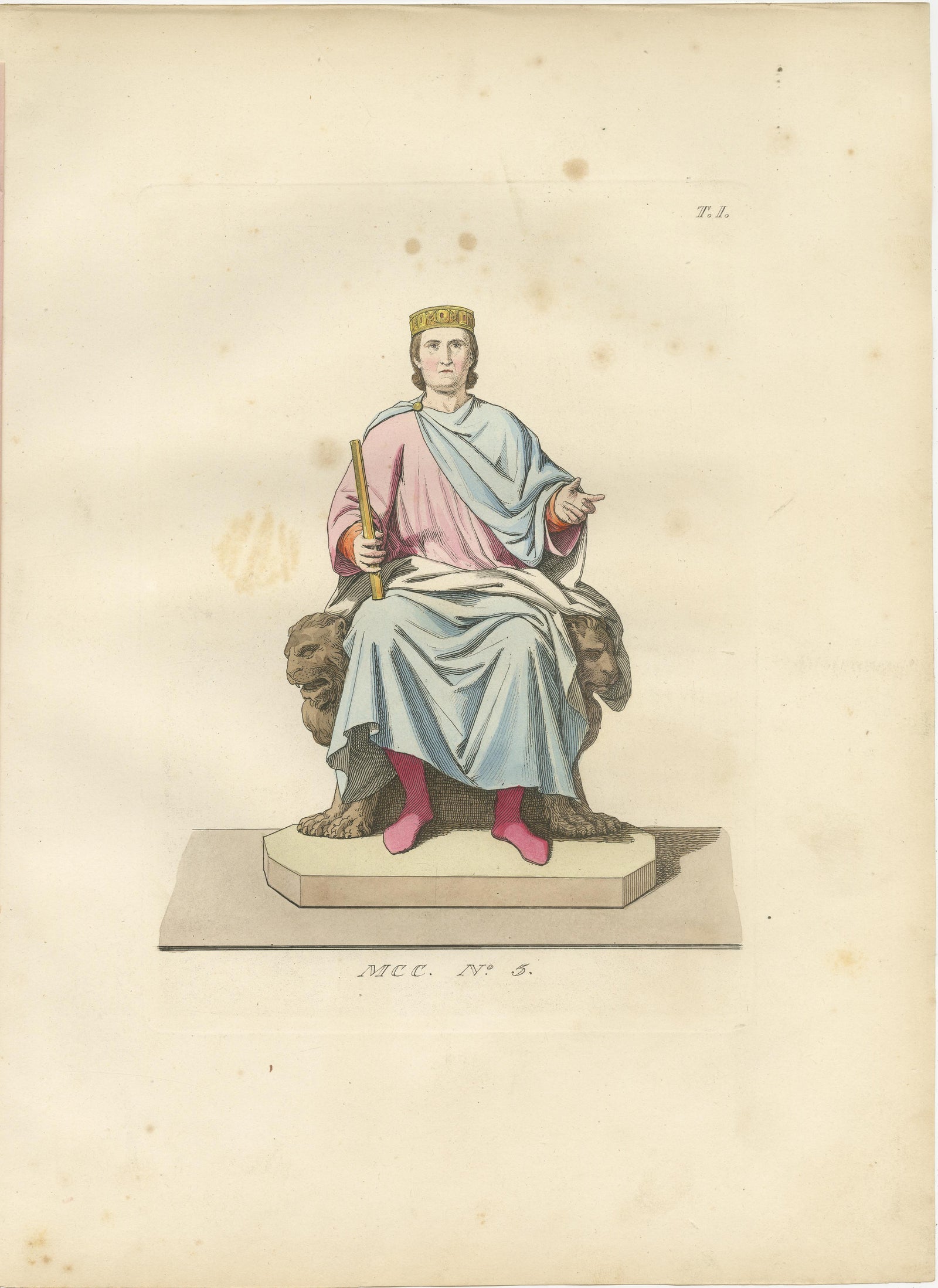
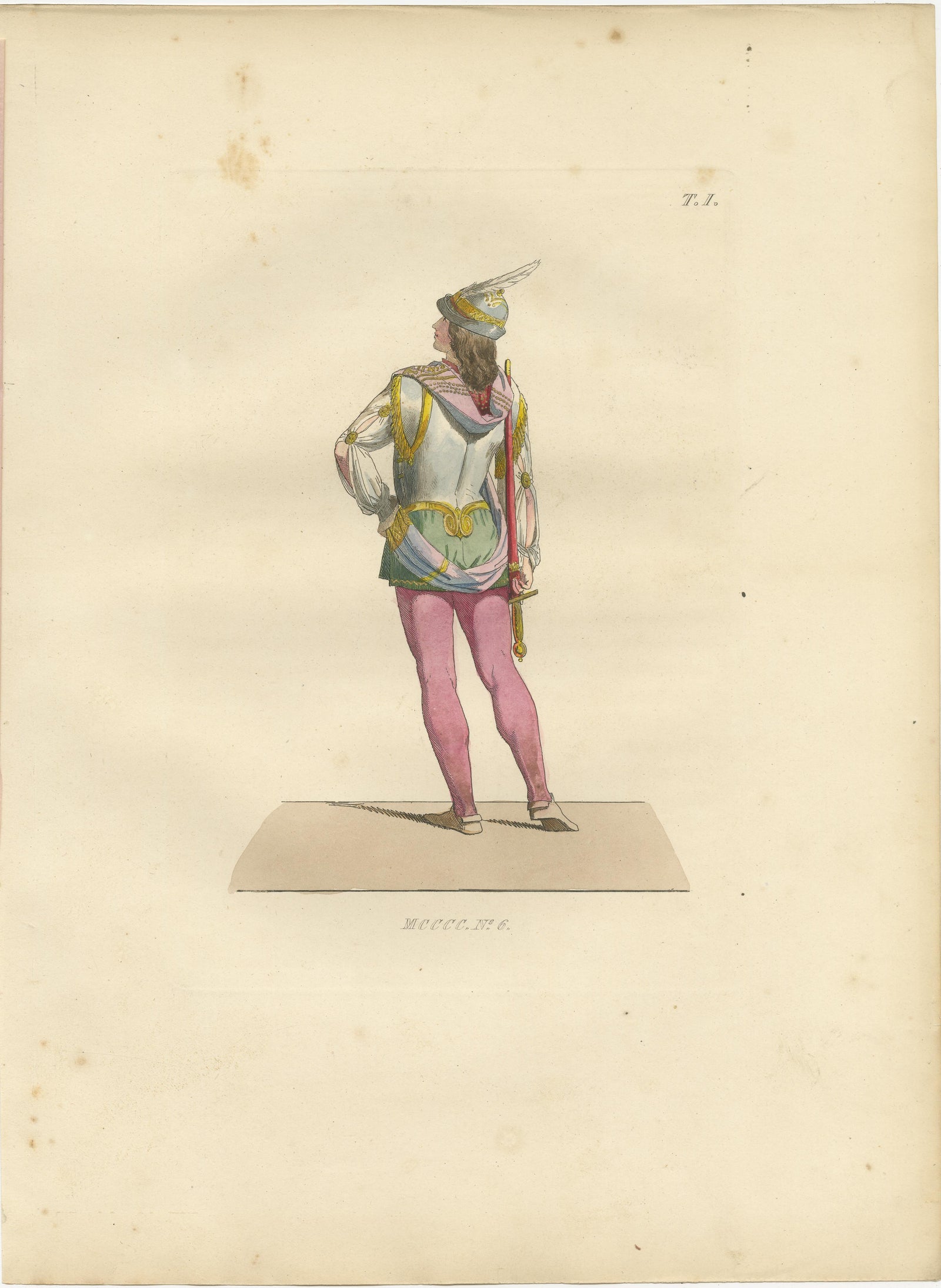
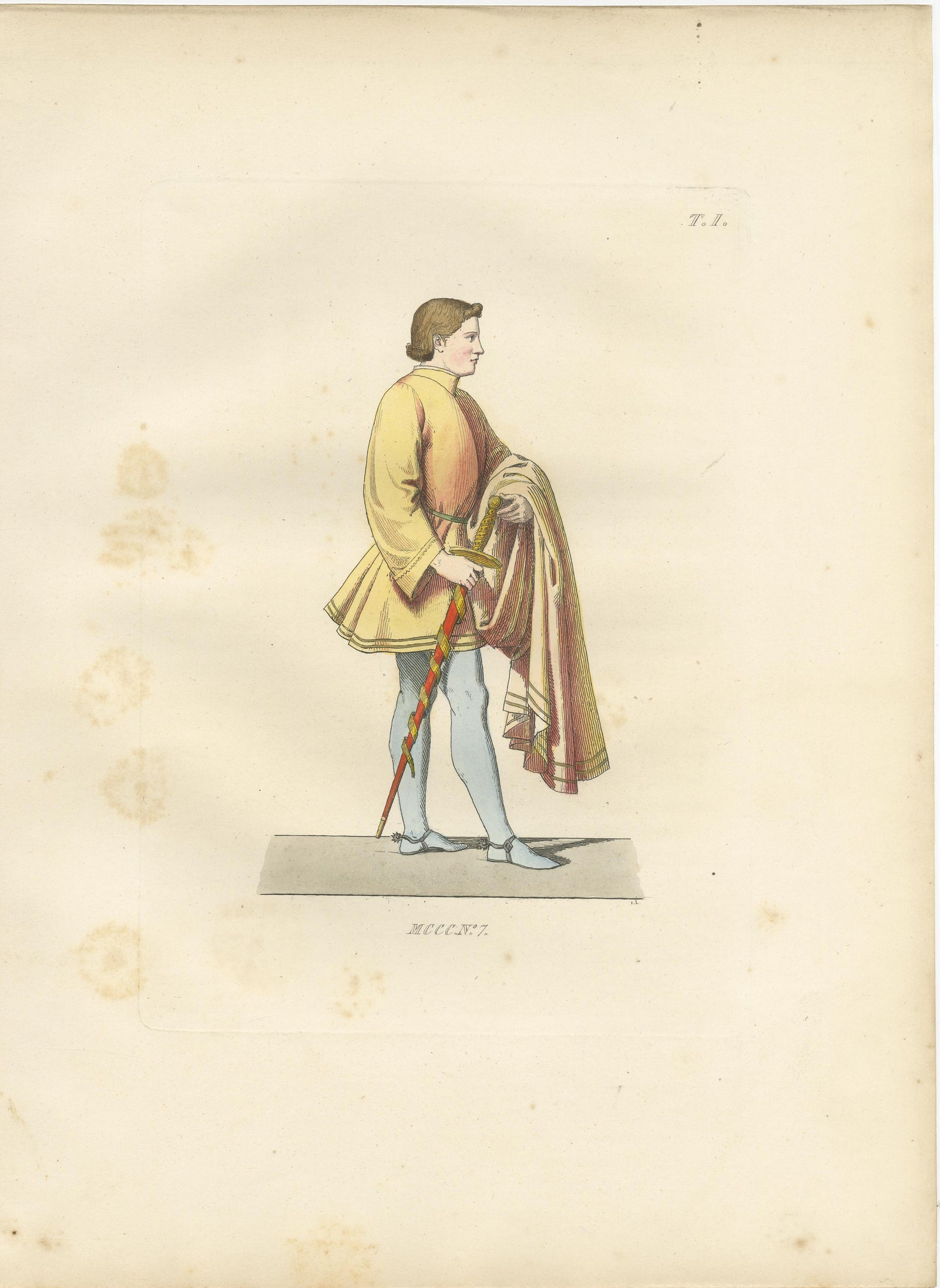
This refined set of three hand-colored lithographs presents historically rich and visually detailed portrayals of medieval European figures, offering insight into royal, martial, and noble fashion from the 13th to 15th centuries. These works originate from the highly regarded 1845 folio publication “Costumes Historiques des XIIIe, XIVe et XVe Siècles,” published in Paris by Goupil & Vibert, designed by Paul Mercuri with historical commentary by Camille Bonnard. The project was one of the most ambitious 19th-century efforts to document historical dress using visual references from paintings, sculptures, and illuminated manuscripts.
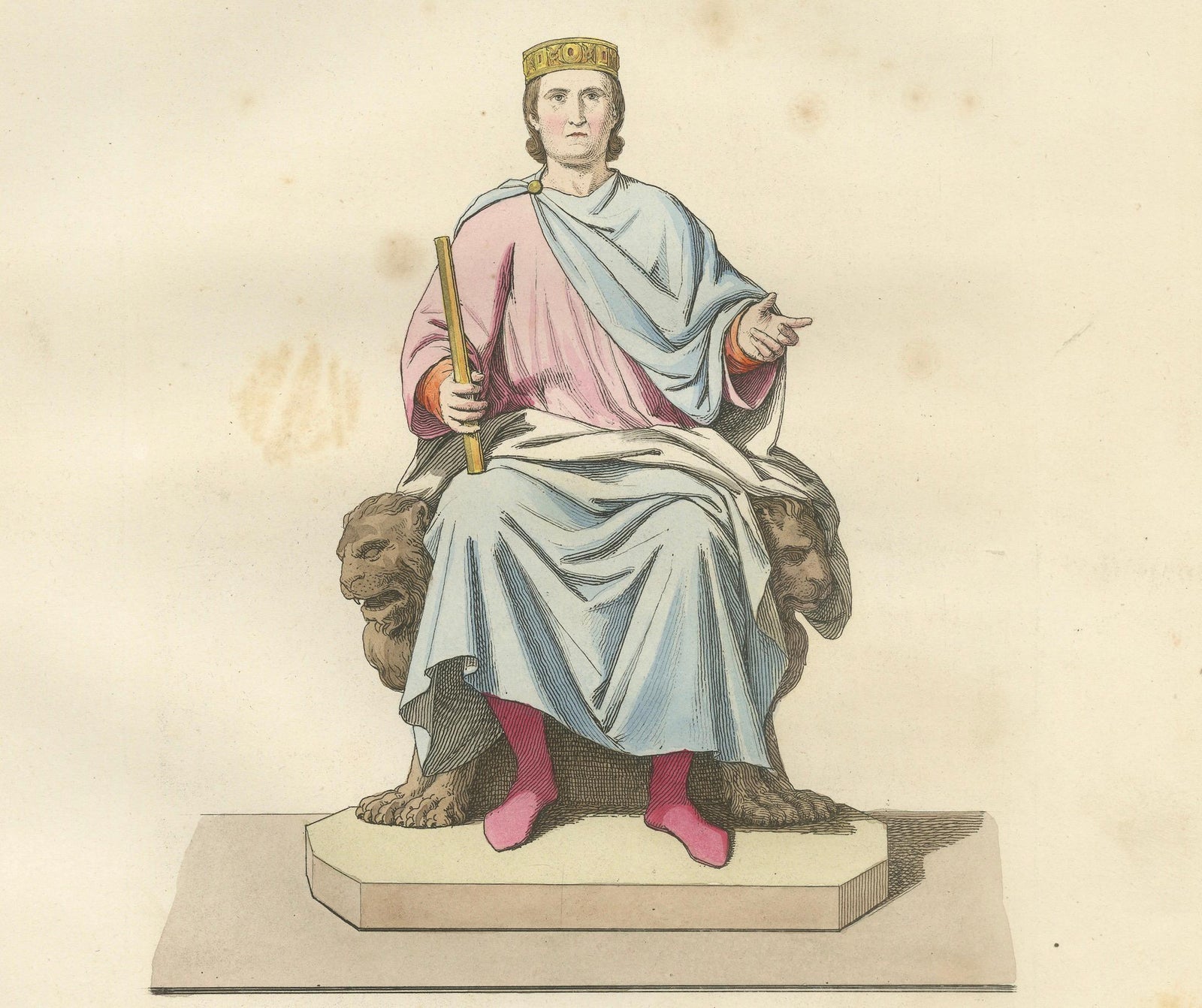
The first plate (MCCC No. 5) depicts Charles d’Anjou (1226–1285), a powerful monarch who became King of Sicily, Naples, and Jerusalem. He is shown seated in a lion-throned chair, crowned and robed in stately pink and blue, holding a golden scepter. His upright posture and the firm symmetry of the composition express royal legitimacy and command.
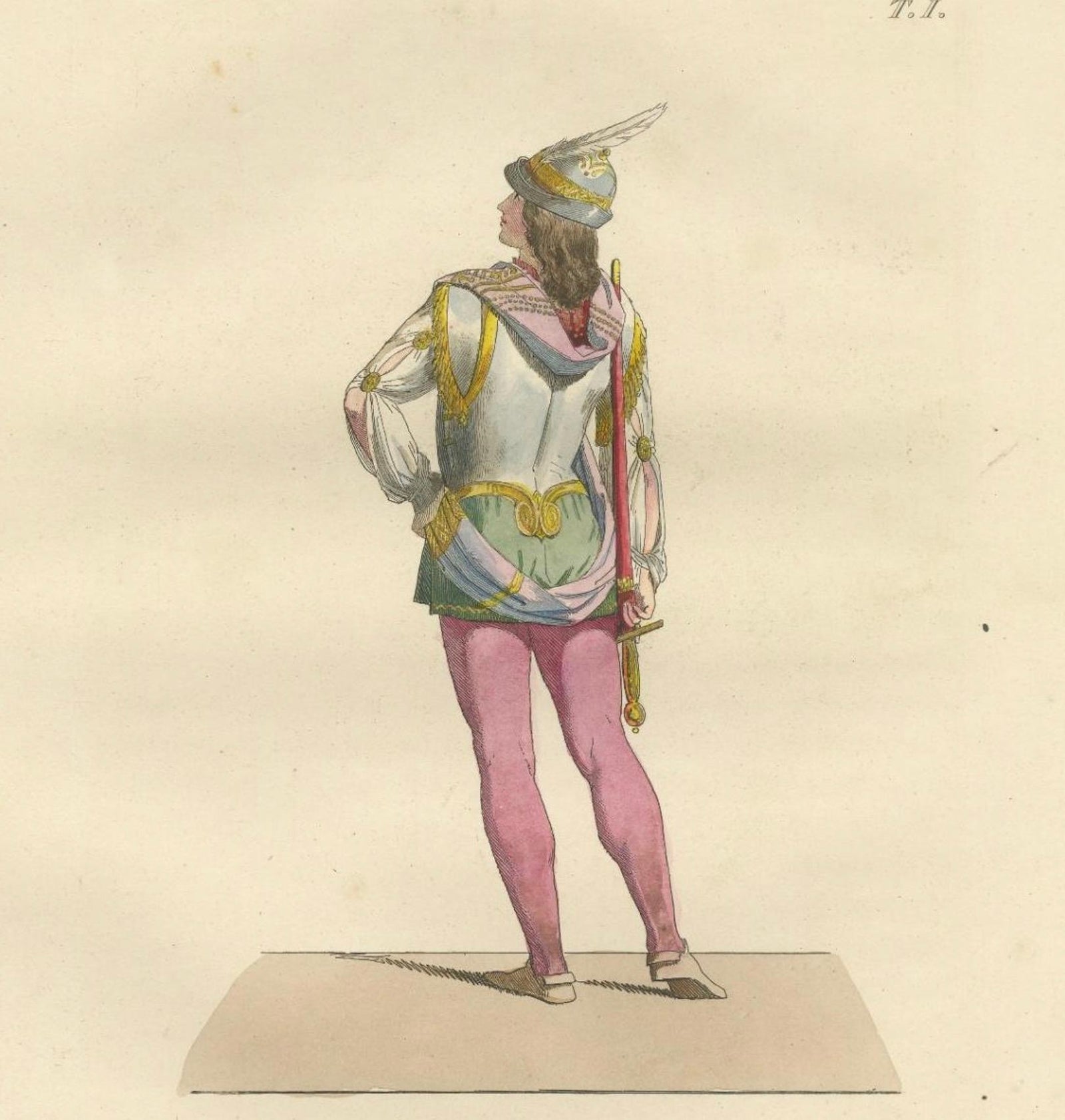
The second figure (MCCCC No. 6), labeled "Costume Militaire", represents a soldier or guard from the 15th century, facing away from the viewer. His outfit is elaborate, featuring a puffed-sleeve doublet with gold accents, pink hose, and a feathered cap. The stance is informal yet bold, evoking the elegance of Renaissance military pageantry. The rear-facing pose is a striking artistic choice, offering an unusual perspective in costume illustration.
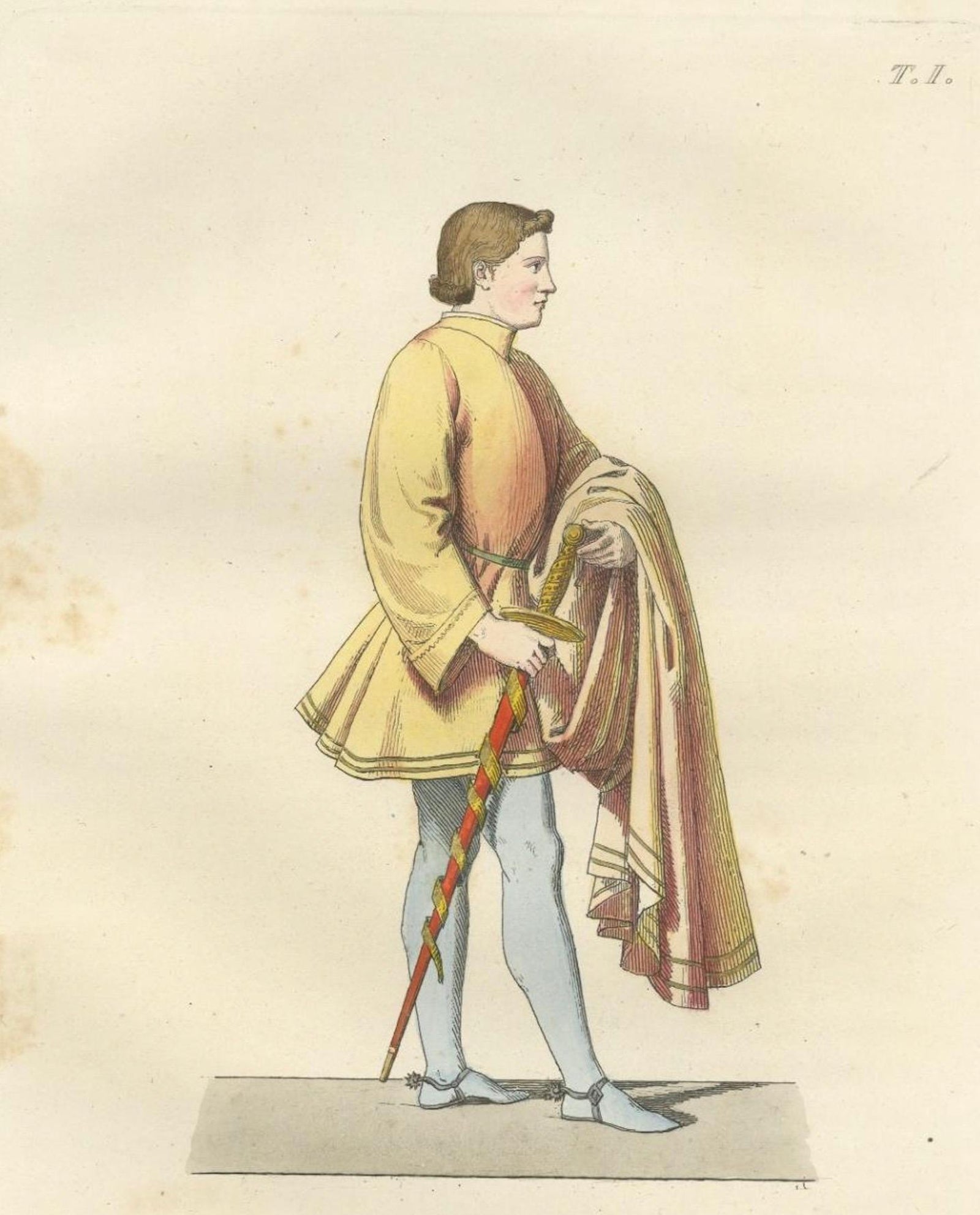
The third print (MCCCXLVII No. 7) shows a Jeune Écuyer, or young squire. Dressed in a short doublet and holding his richly patterned cloak and sword, he embodies the transitional phase between boyhood and knighthood. His blond hair, calm demeanor, and tidy posture communicate youth, readiness, and aspiration, traits closely associated with noble training and chivalric ideals.
Together, these plates highlight three distinct roles within medieval hierarchy: sovereign power, military presence, and noble service. The hand-coloring, delicate engraving, and historical specificity make this an ideal decorative set for collectors of costume, heraldry, and medieval studies.
Condition:
The prints are in good condition, considering age, but some scattered foxing is visible, especially in the margins, but colors remain vivid and the figures are sharp and clean. The paper is stable and well preserved.
Framing Tips:
To enhance the period character of this set, consider framing the three prints together in a wide horizontal triptych using an antique gold, walnut, or black frame. Soft off-white or parchment-colored mats will draw attention to the fine detailing. Individual framing is also possible, especially in traditional wood frames that match the historical tone.