Close-ups
Framed and on the wall
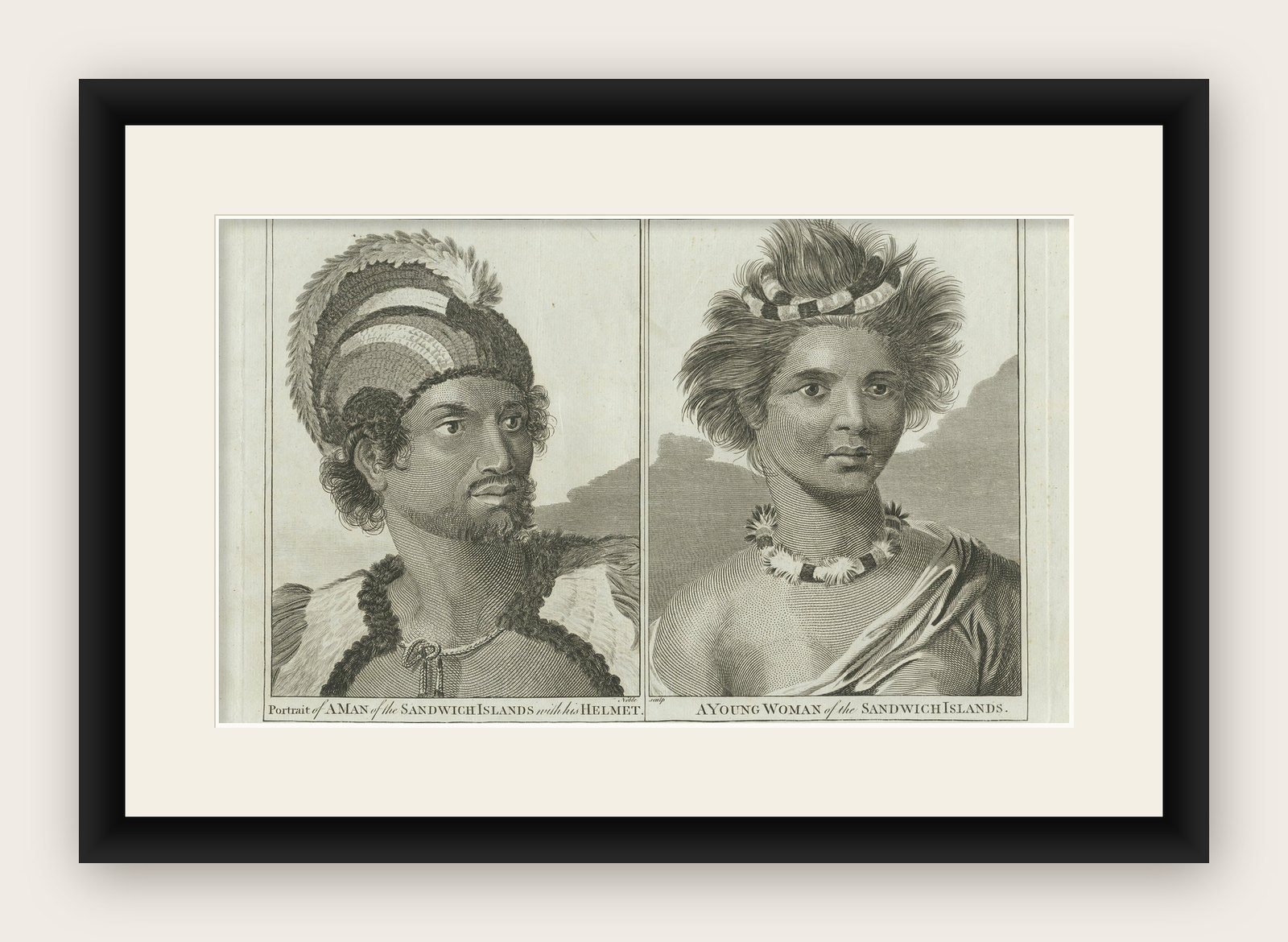
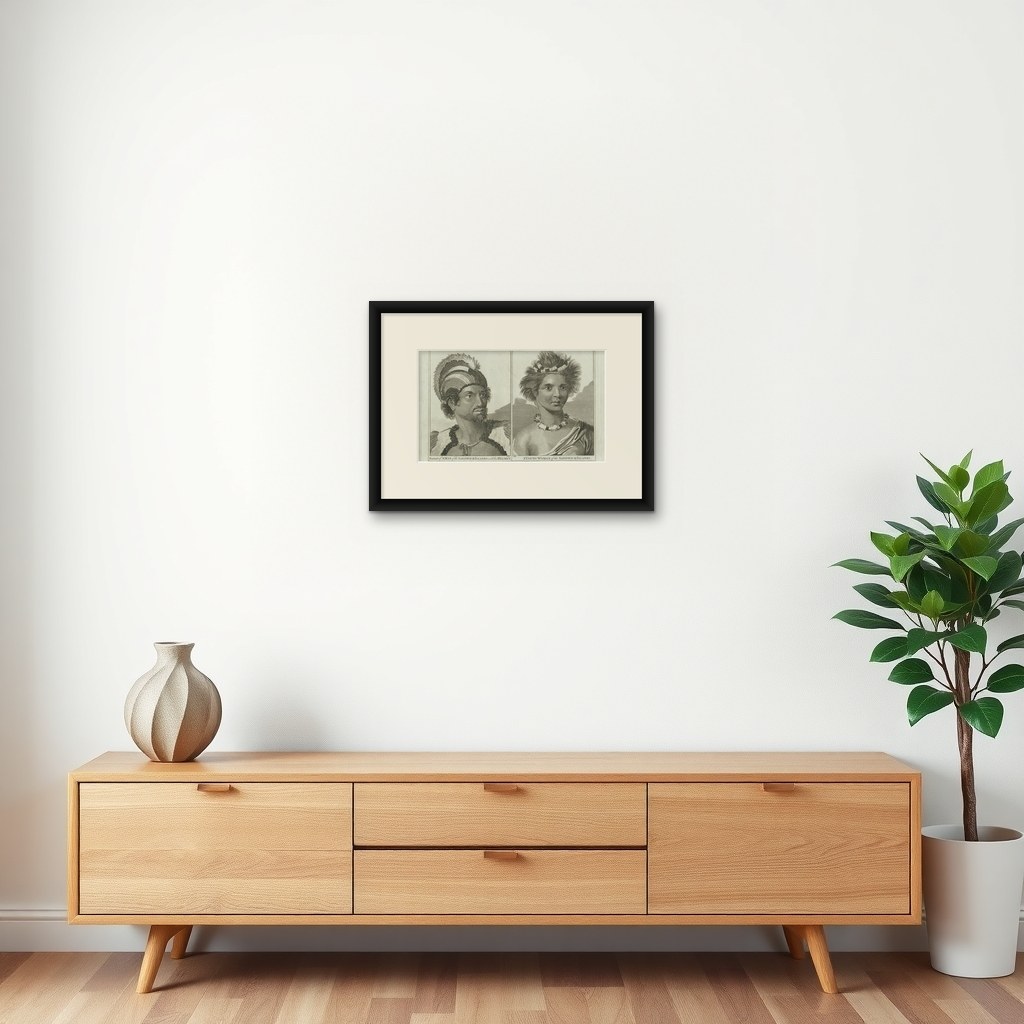

Frame and rooms are illustrations of how the print could look; the description says what is included.
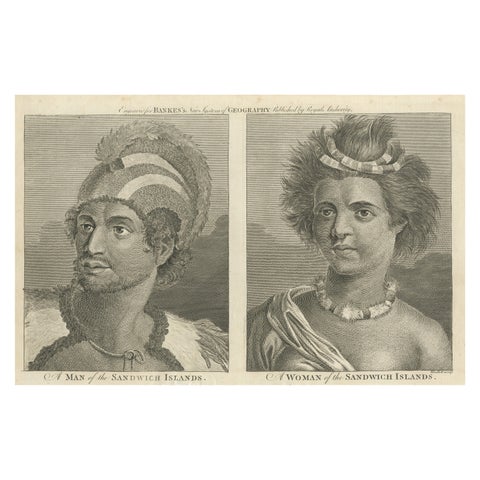
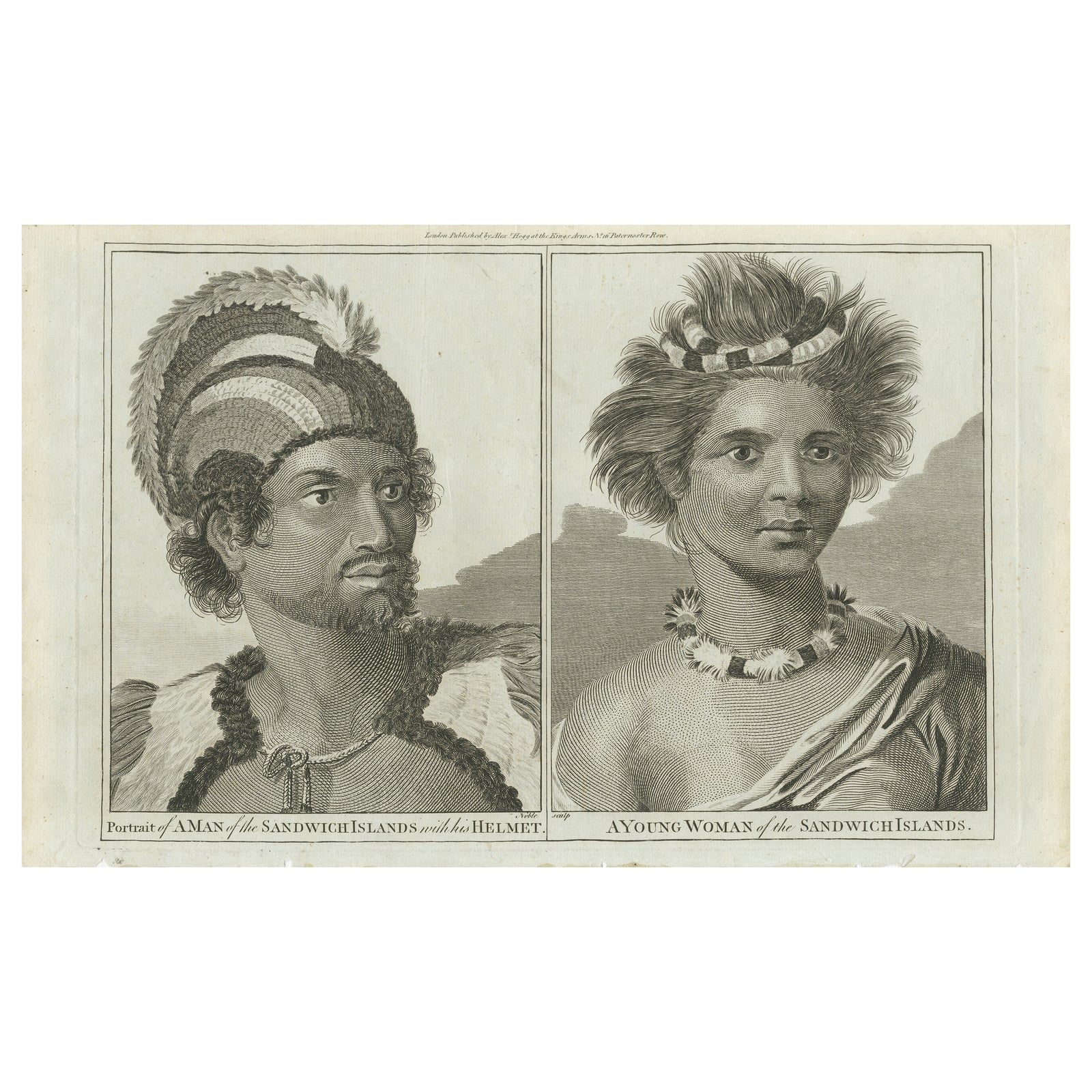
Regalia of the Sandwich Islands: Portraits in Traditional Attire, 1790
€340
$380 · £290
Original print, not a reproduction.
Ships worldwide from the Netherlands, flat, insured and tracked. 14-day returns. To buy, use Ask a question and we will reserve the print for you.
- Date
- 1790
- Sheet size
- 9.6 × 15.6 in (24.5 × 39.5 cm)
- Condition
- Good. Good. Aged paper with yellowish-brown around the edges. The bottom edge cut short and a bit rough. A few light creases but overall still good considering its age. Study the images carefully.
- Wardrobe
- Far & away
- Era
- 1790 to 1840, Empire and Romantic
- Stock no.
- f_37946372
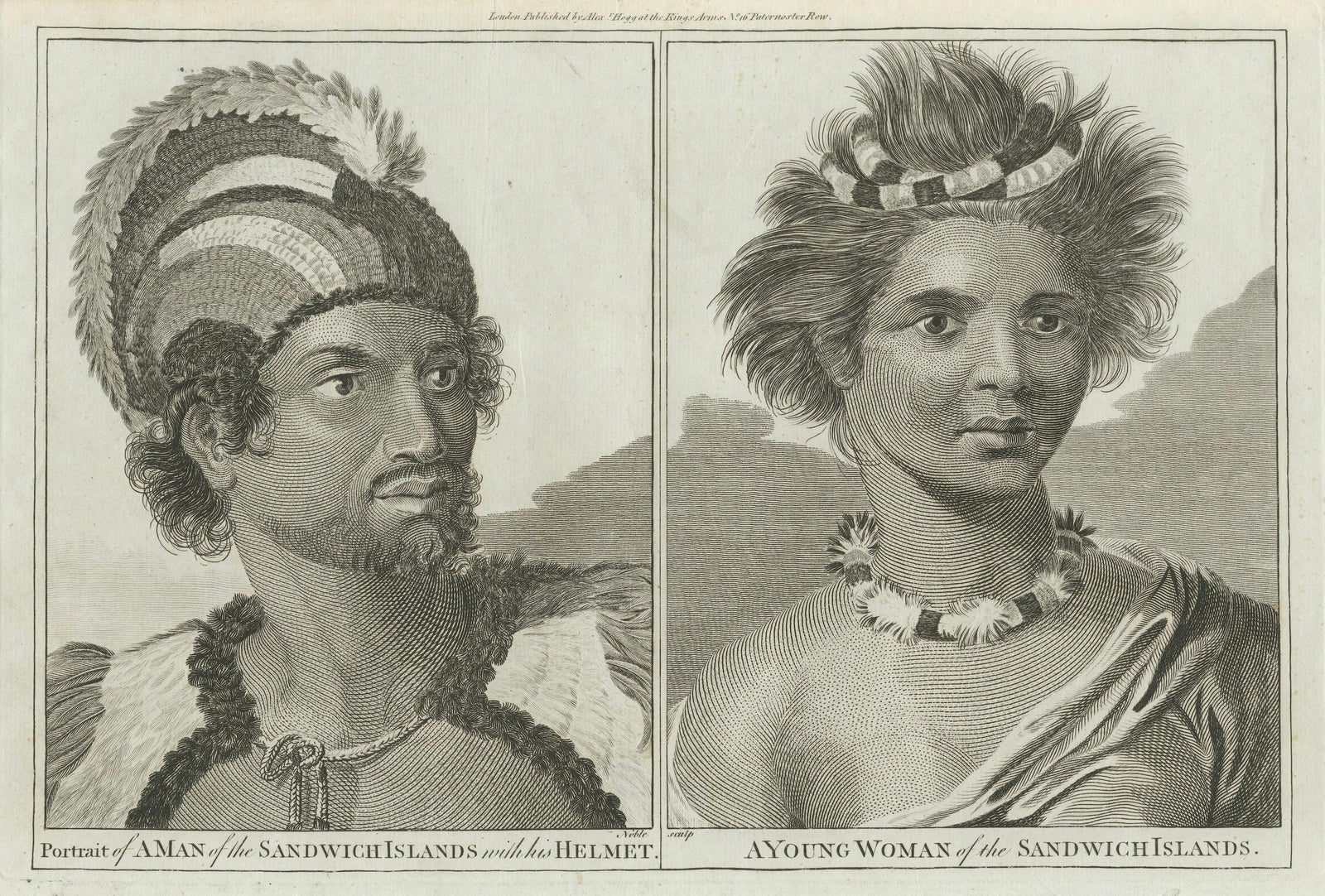
This engraving, published in London by Alex Hogg at the Kings Arms, No.16 Paternoster Row, features two side-by-side portraits with the labels "Portrait of A MAN of the SANDWICH ISLANDS with his HELMET" and "A YOUNG WOMAN of the SANDWICH ISLANDS."
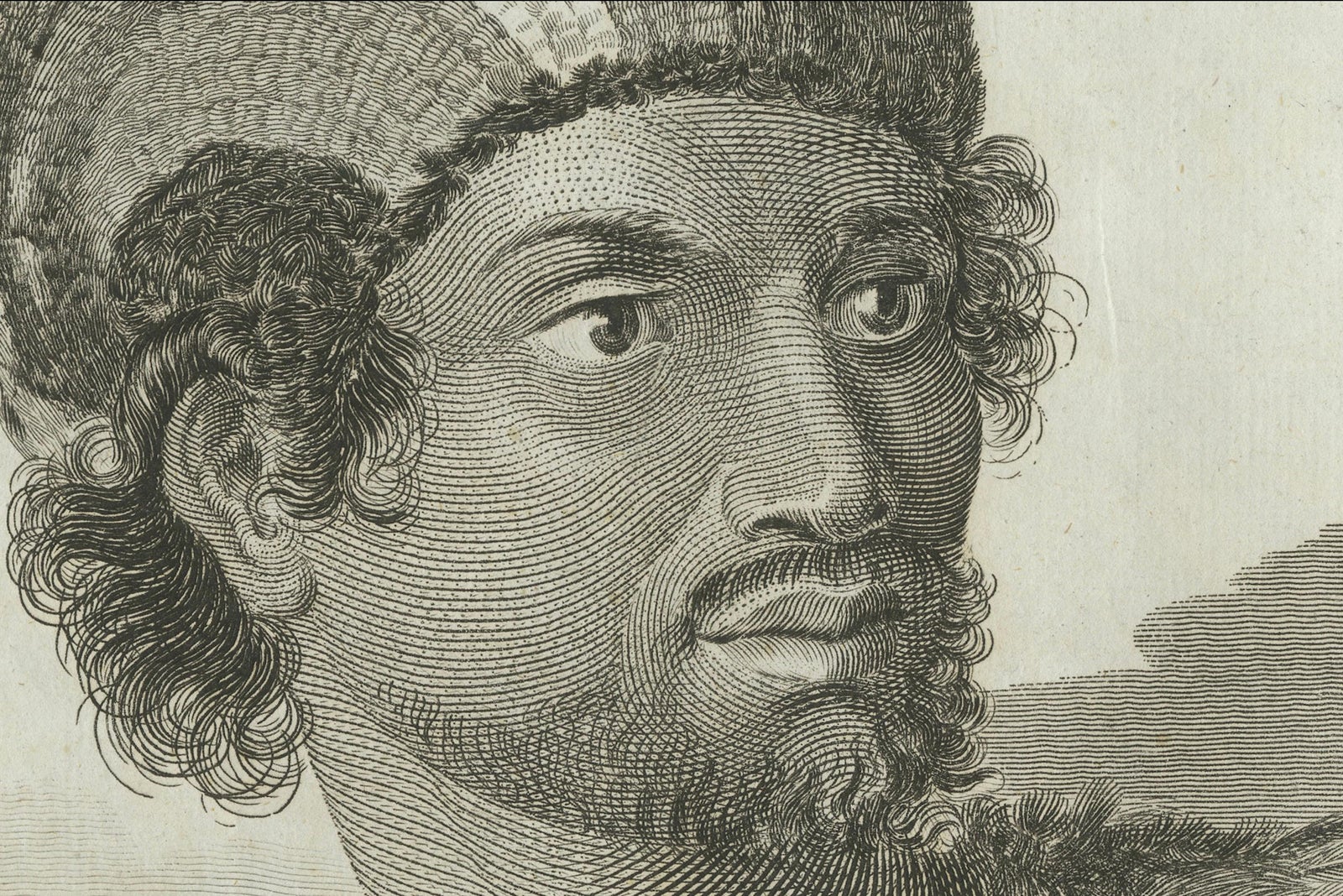
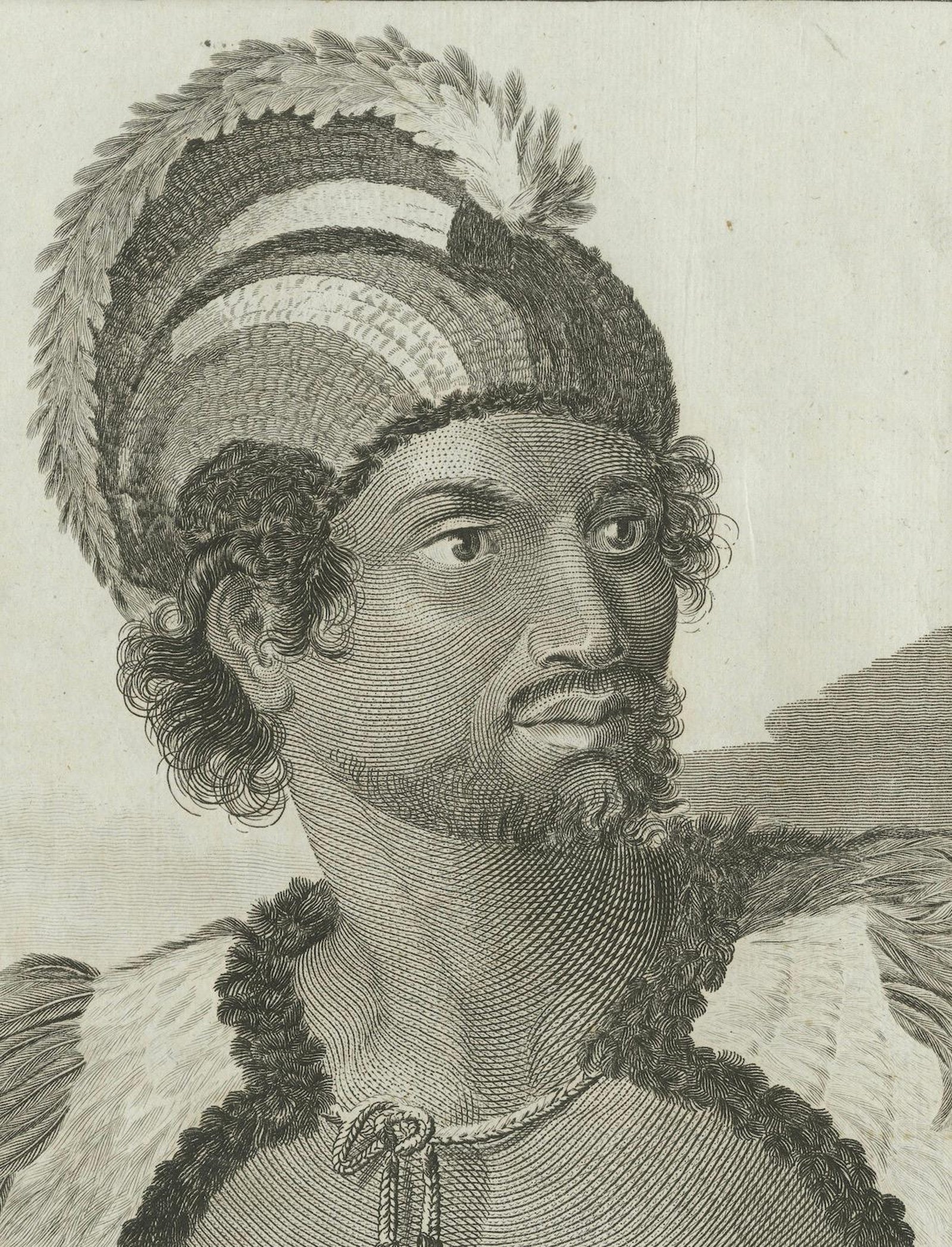
The man is depicted in profile, gazing to the left, adorned with a detailed feathered helmet that signifies his status or role within his culture. The helmet has white and dark stripes and a plume at the top. His attire includes a cloak with fur trim and a necklace, indicative of a traditional costume. The intricate linework of the engraving captures the texture of the feathers and fur, as well as the solemn expression on his face.
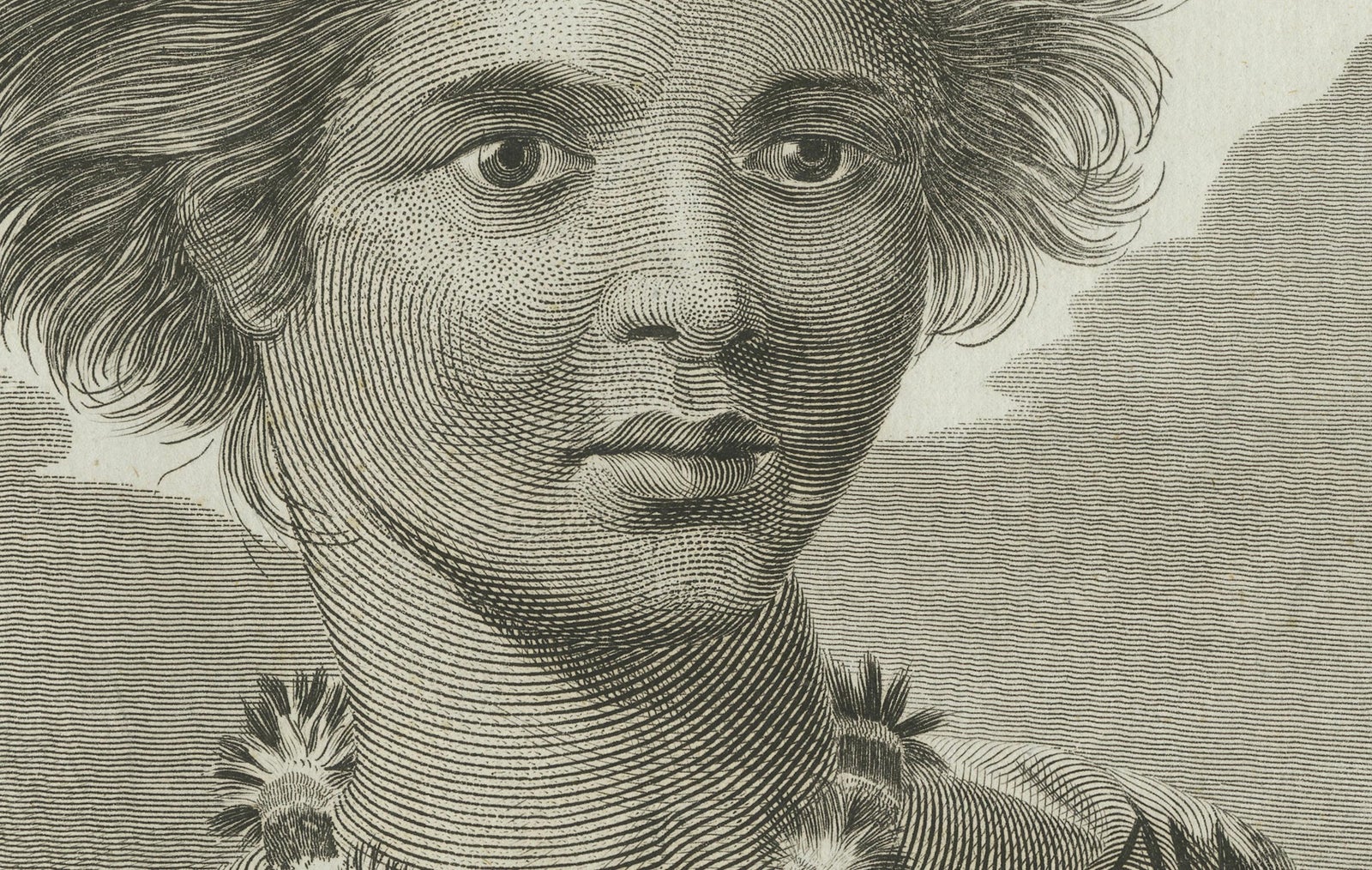
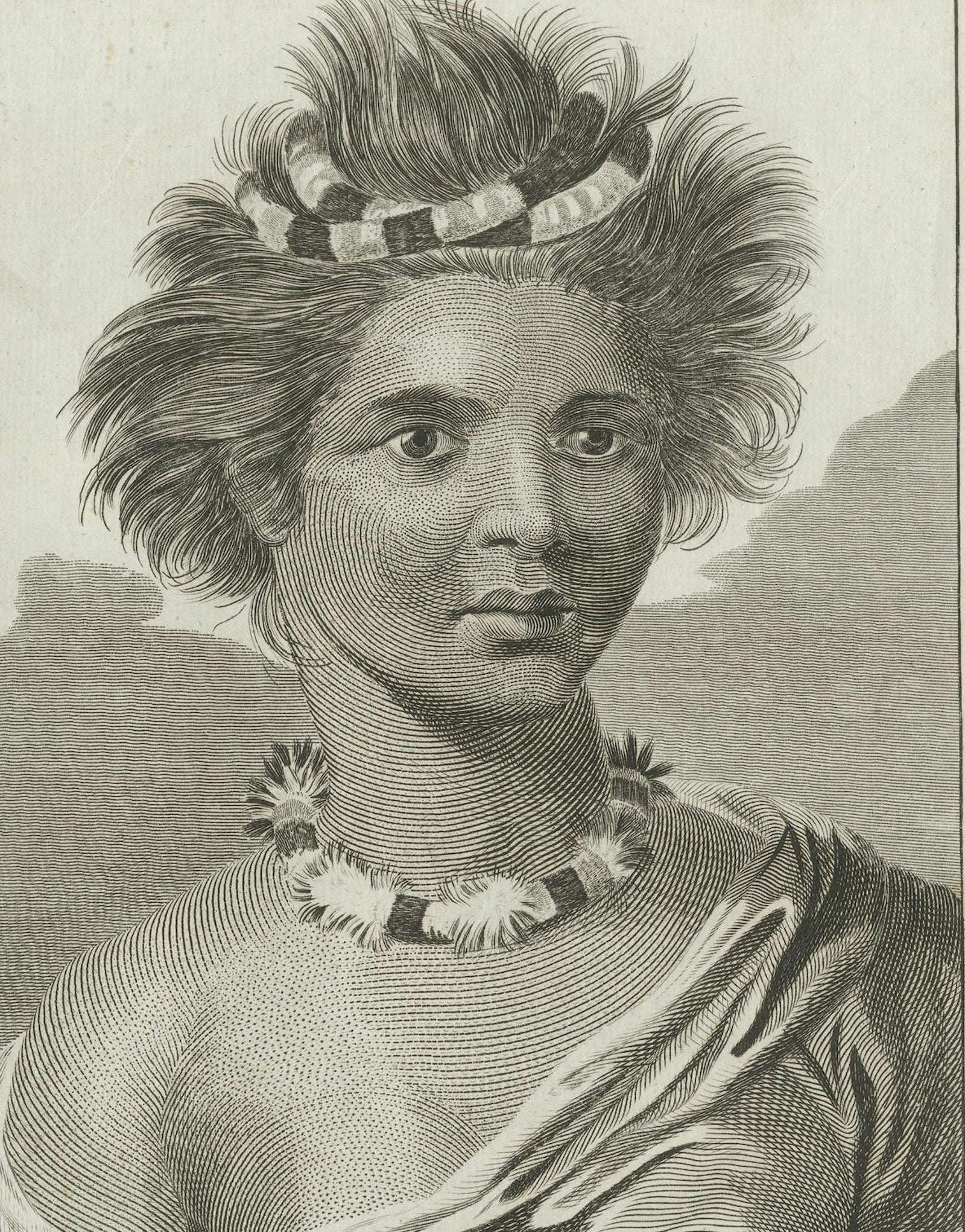
The young woman faces forward, with a feathered headband across her forehead and a similar expression of dignified composure. Her hair is styled voluminously around her head, and she wears a necklace that could be made of flowers or shells, characteristic of Pacific Island adornment. Her garment is draped over one shoulder, leaving the other bare, which is a typical representation of traditional island attire.
The mention of "Noble Sculp" at the bottom of the engraving signifies that the creator of the engraving is Noble. The engraver, whose first name is not given, utilized meticulous line work to render the portraits with attention to detail, capturing the subjects' features and cultural attire with respect and artistry.
These engravings are likely to have been produced for a work detailing the lives and customs of various peoples encountered by Europeans during the age of exploration, offering a snapshot of the inhabitants of the Sandwich Islands, now known as Hawaii, as perceived through European eyes in the late 18th century.
The engravings are related to the published accounts of Captain James Cook's voyages. Cook's third and final voyage (1776-1780) is the one during which he encountered the Hawaiian Islands, then known as the Sandwich Islands. The official account of this voyage, "A Voyage to the Pacific Ocean," was published in 1784.
However, the engravings seem to be associated with a separate publication by Alex Hogg. Since the engravings mention "Noble Sculp," it's likely that they were published around the same time as or shortly after Cook's official accounts, likely in the late 1780s or the 1790s. Without a specific publication date on the engravings or additional context, it's not possible to give a precise year of publication for the engravings you've shown. They were part of the widespread interest in and publication of materials related to Cook's voyages during that time period.