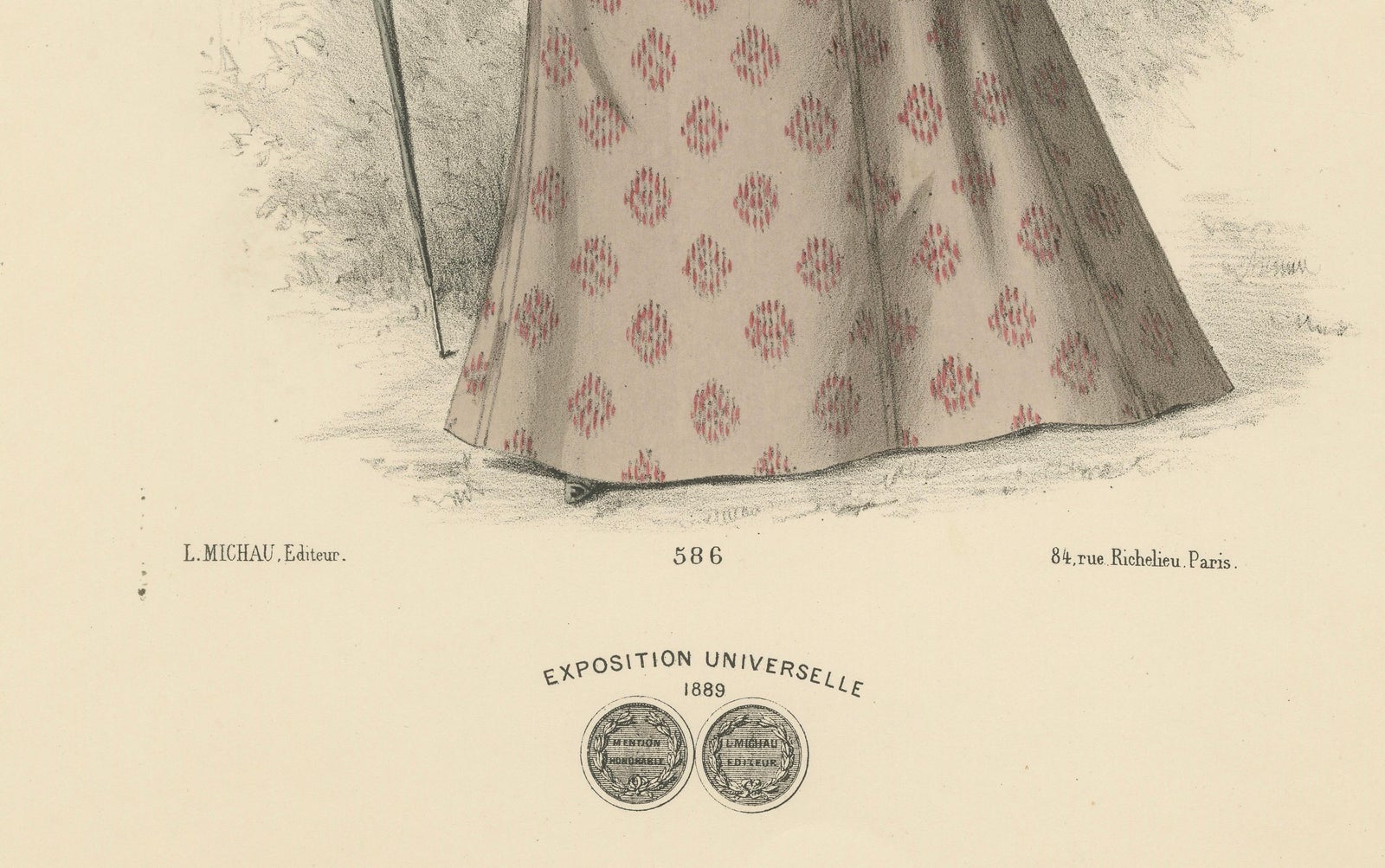
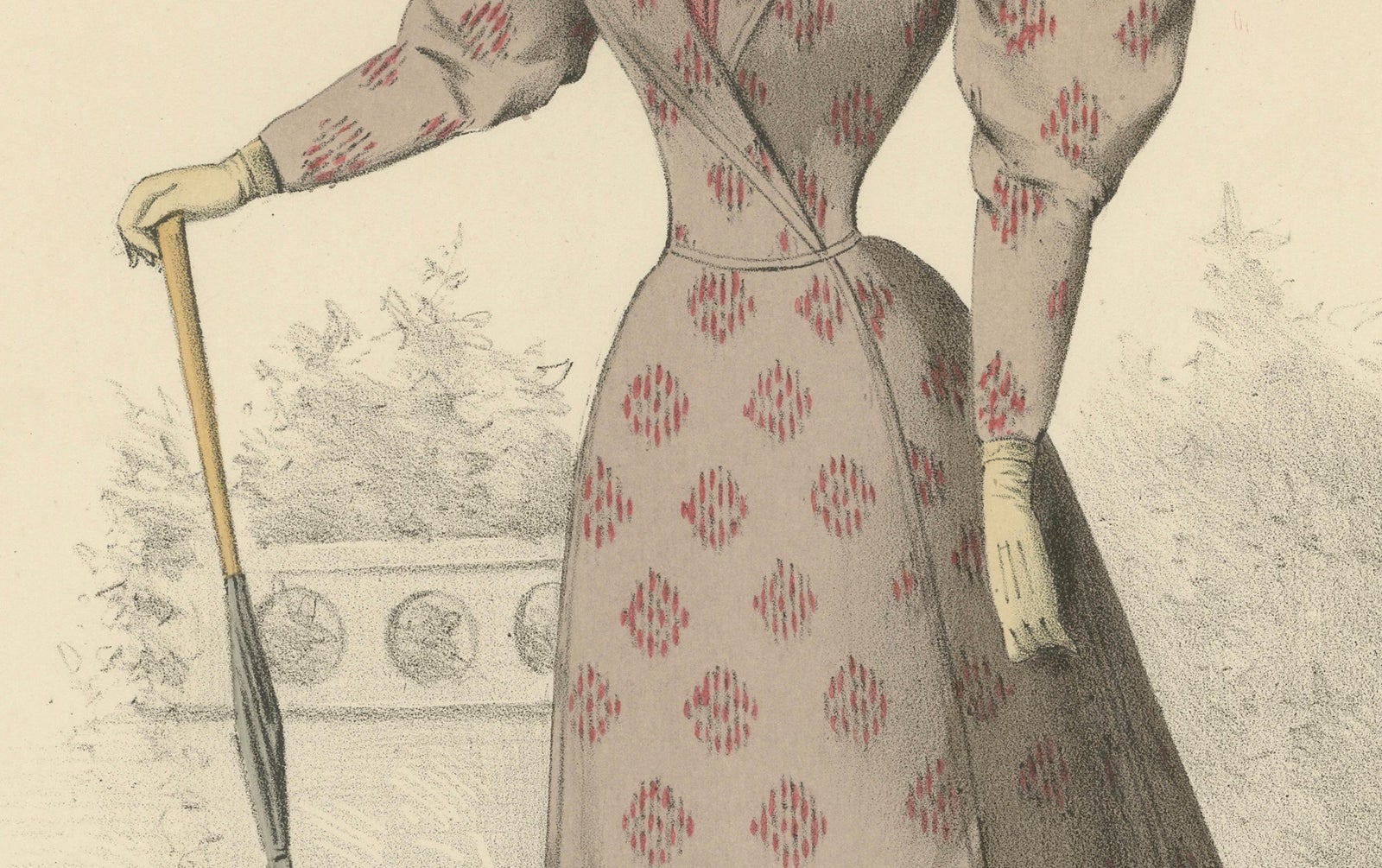
Close-ups
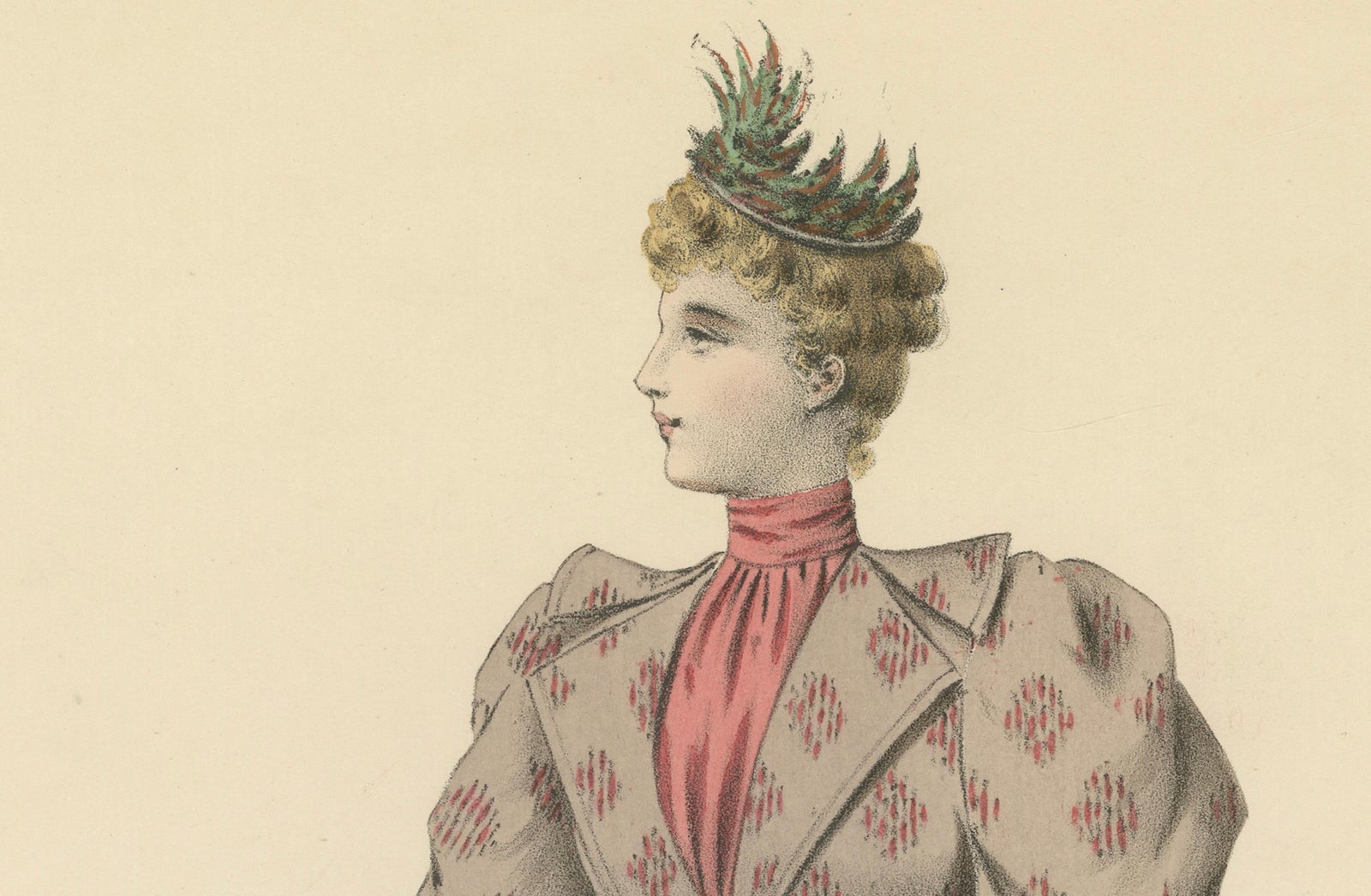
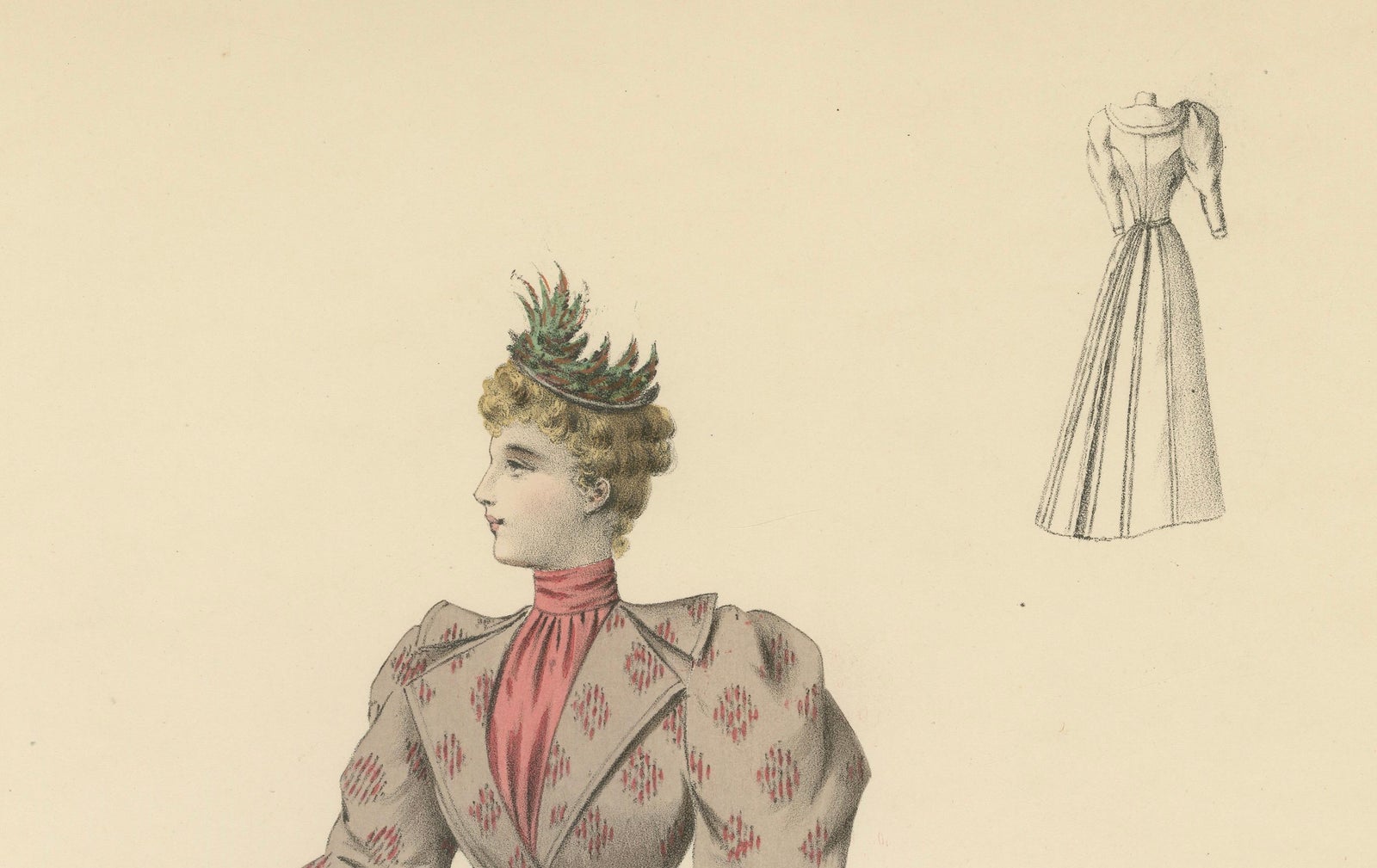
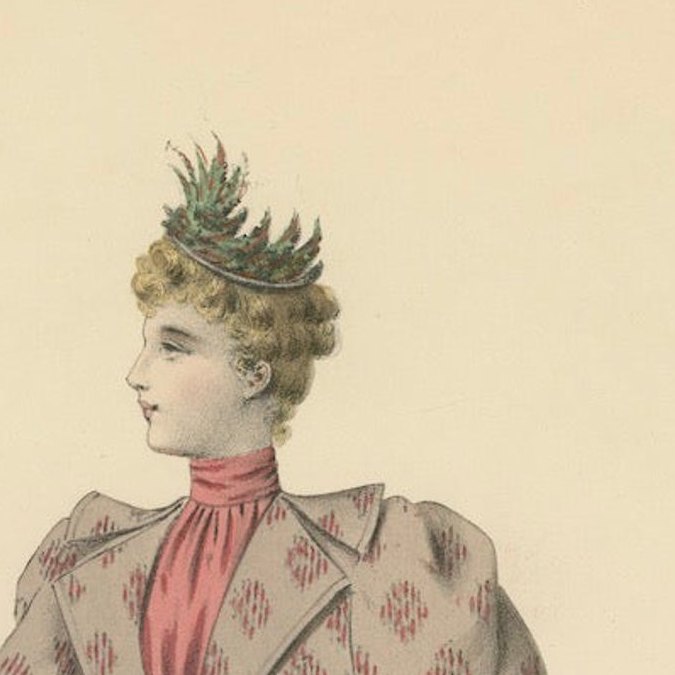
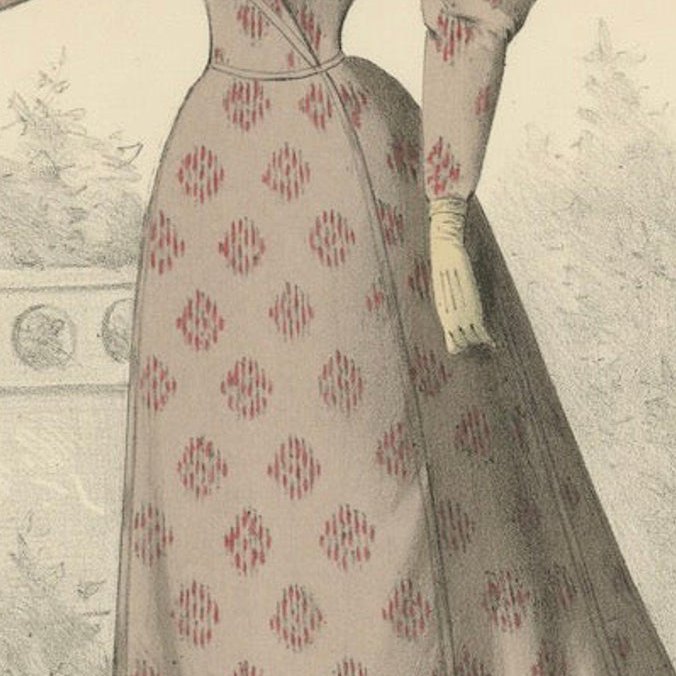
Framed and on the wall
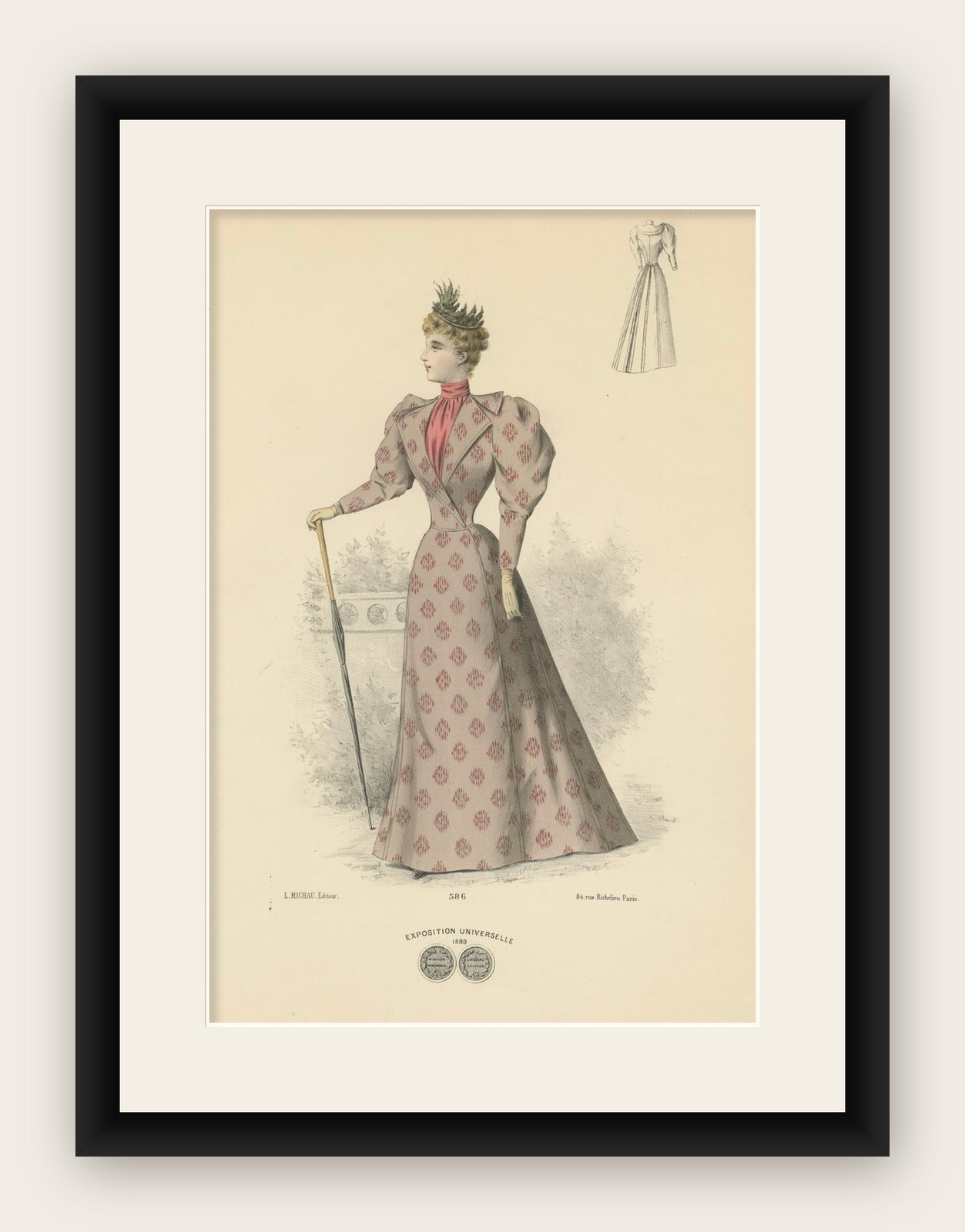
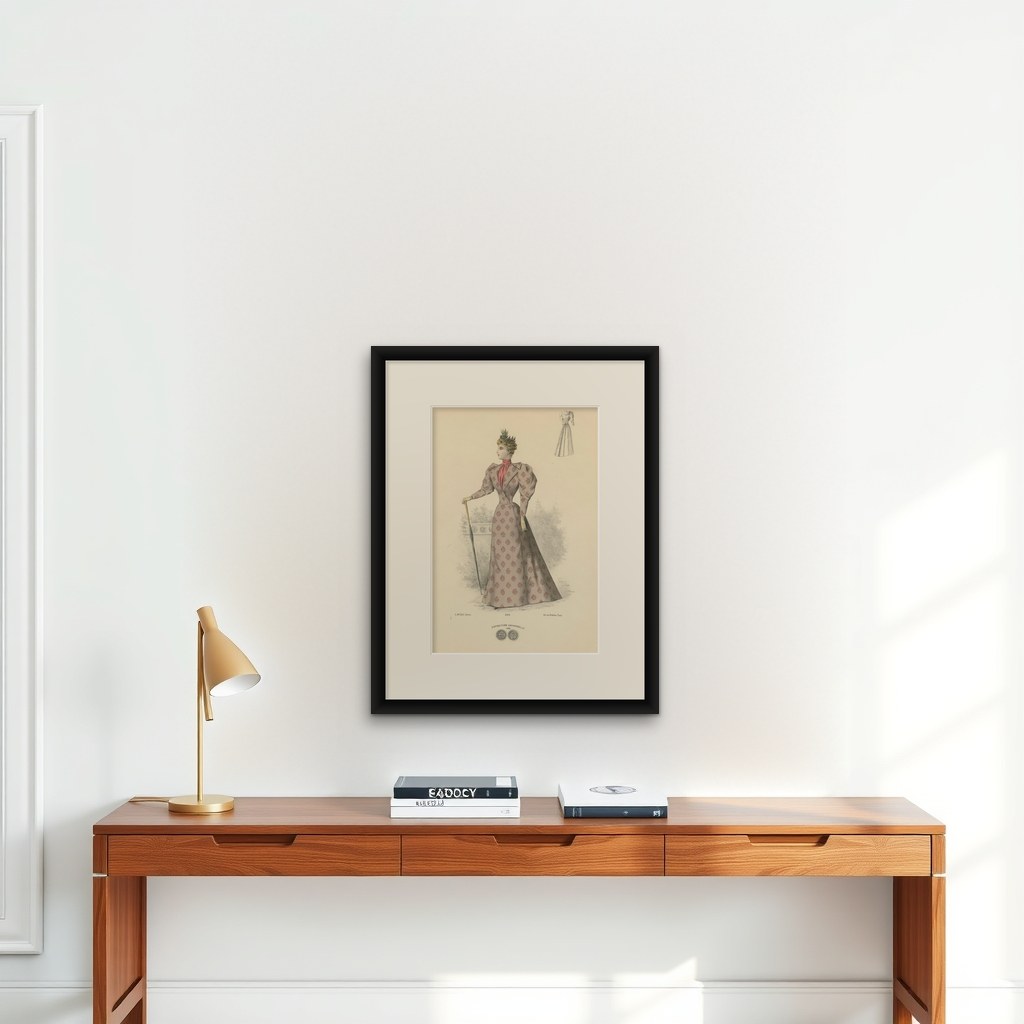

Frame and rooms are illustrations of how the print could look; the description says what is included.
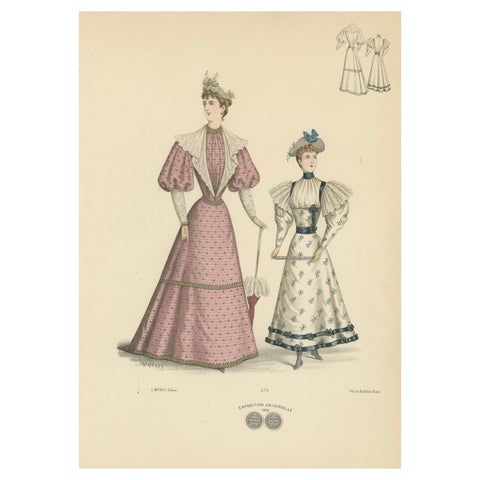
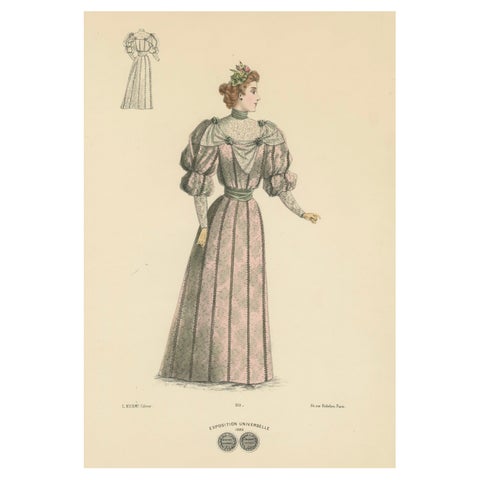
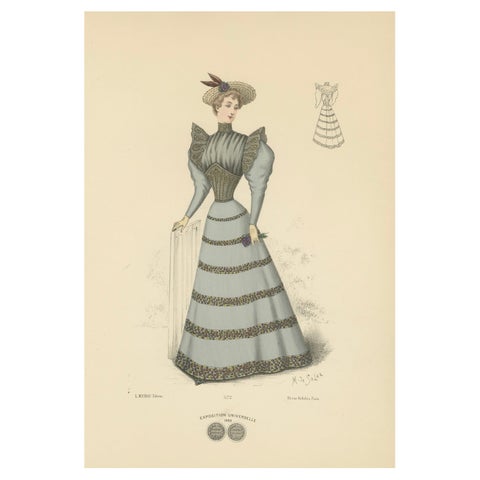
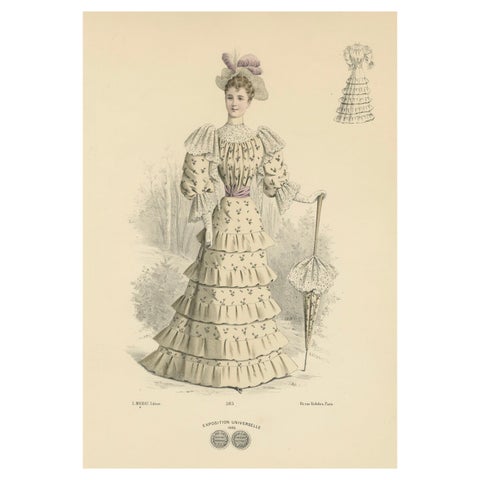
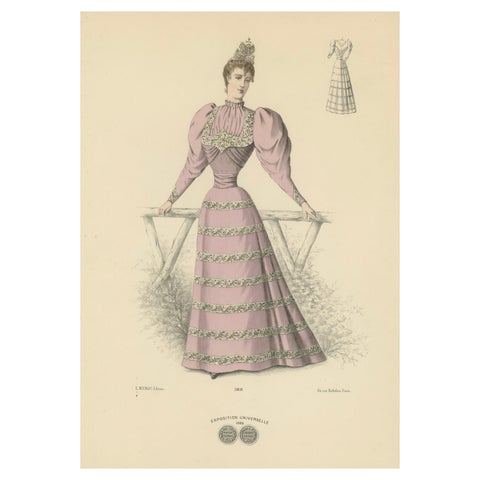
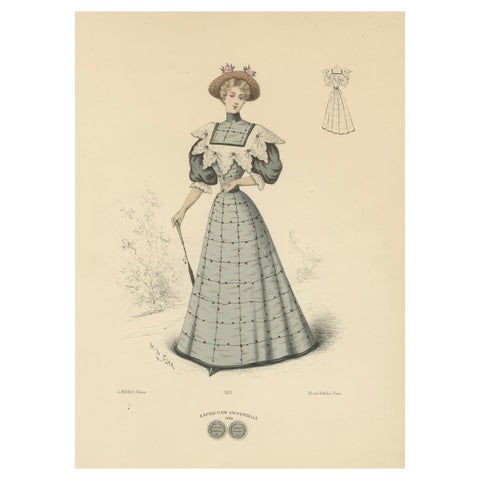
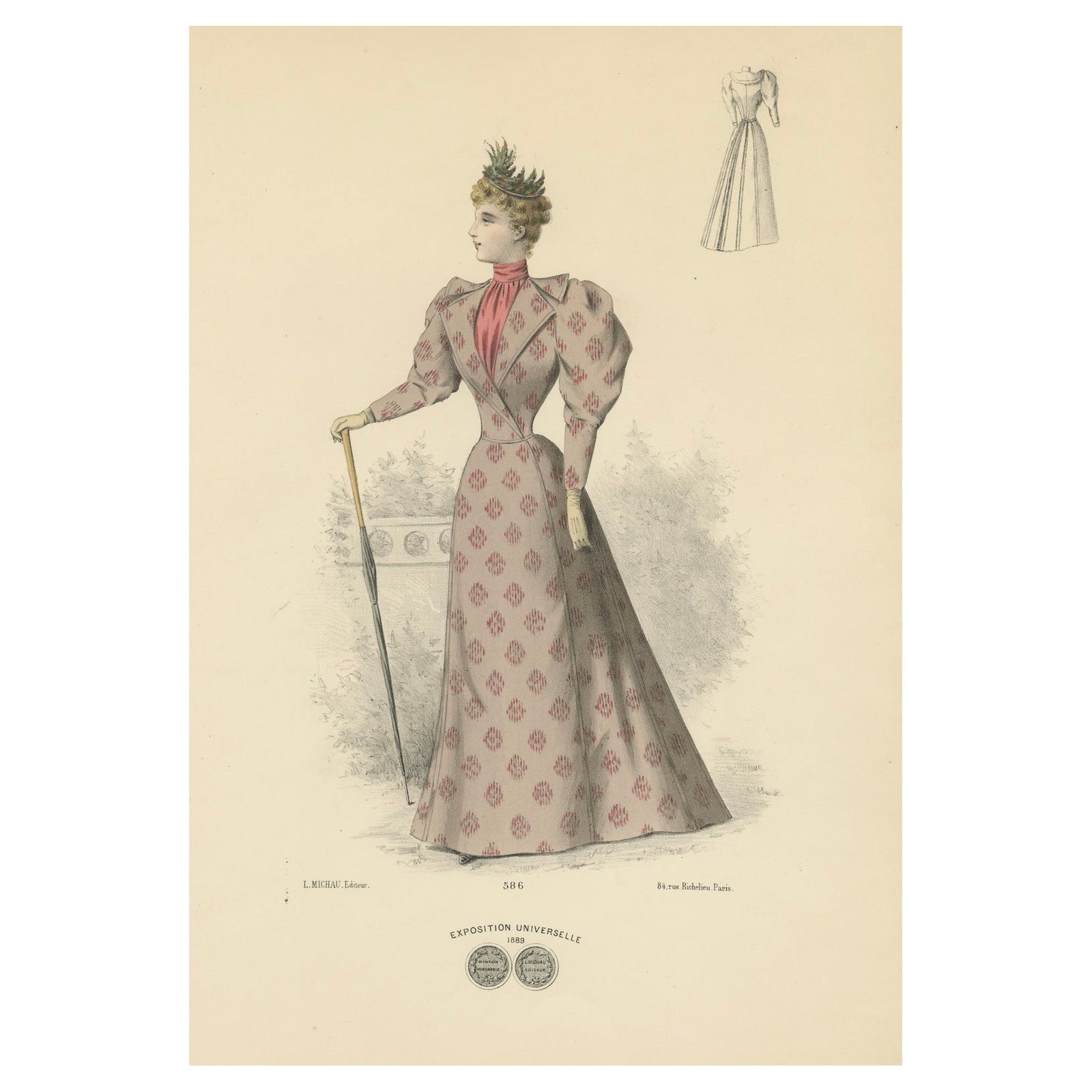
Refined Elegance: 1889 Fashion Lithograph by Michau, the Exposition Universelle
€210
$235 · £180
Original print, not a reproduction.
Ships worldwide from the Netherlands, flat, insured and tracked. 14-day returns. To buy, use Ask a question and we will reserve the print for you.
- Date
- 1889
- Sheet size
- 17.1 × 11.4 in (43.5 × 29 cm)
- Condition
- Good. Given age. General age-related toning and/or occasional minor defects from handling. Please study scan carefully.
- Wardrobe
- The fashion plate
- Era
- 1870 to 1900, Bustle
- Stock no.
- f_41065912
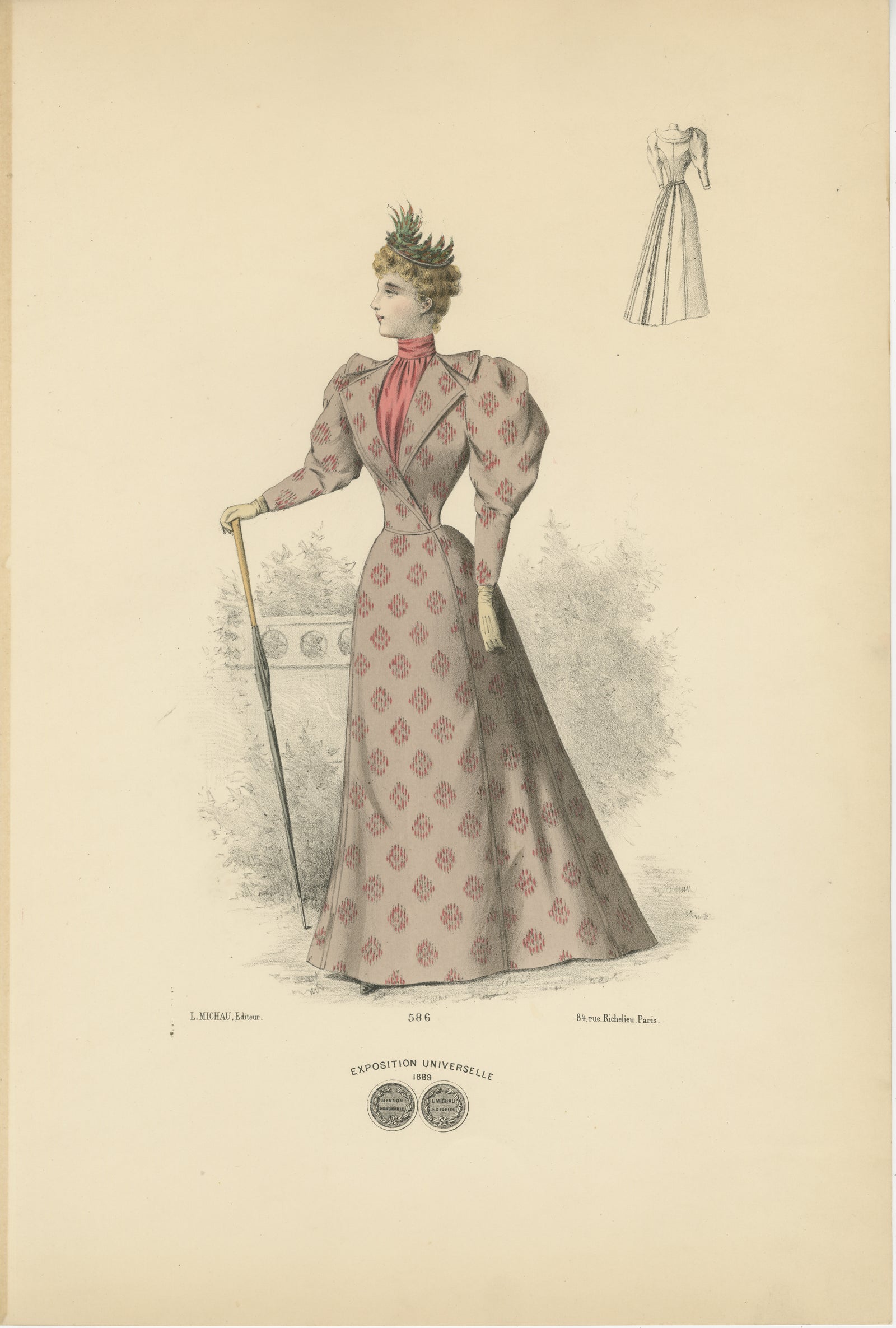
This lithograph features a fashionably dressed woman from 1889, epitomizing the style of the late Victorian era. The woman is depicted wearing a tailored gown with a high collar and puffed sleeves, indicative of the structured and elegant fashion of the time. The dress is adorned with a geometric pattern in muted red tones against a soft, earthy background, creating a sophisticated contrast. A bright red scarf or cravat adds a pop of color at the neckline, enhancing the overall look. The woman is holding a parasol and is accessorized with gloves and a small, feathered hat that complements her attire. Her posture and the background elements suggest an outdoor setting, possibly a garden or promenade.
This lithograph was produced by L. Michau, a known publisher of fashion illustrations in the late 19th century.
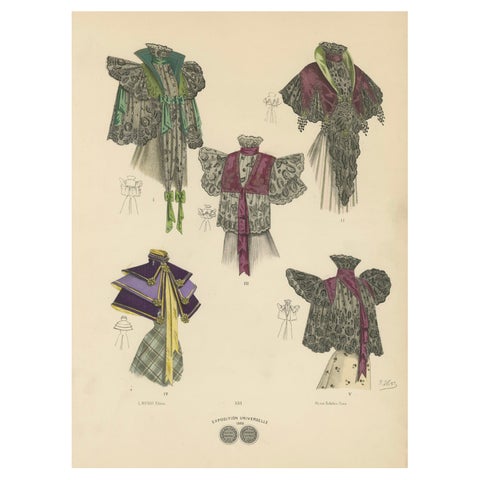
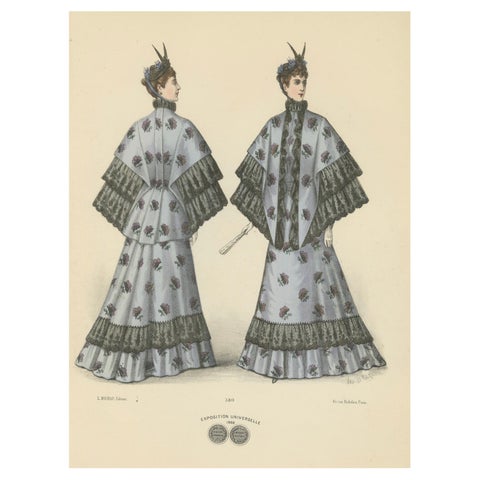
This illustration is part of a collection likely created for the Exposition Universelle of 1889 in Paris. The series of fashion plates would have been designed to showcase the latest trends and high fashion of the time, providing a glimpse into the styles that were celebrated at this significant cultural event.
The piece is a lithograph, a popular printmaking technique in the 19th century that allowed for the production of detailed and precise images. Lithography involves drawing on a flat surface with a greasy substance, which is then treated to hold ink in specific areas, enabling the mass production of high-quality prints. This technique was especially favored for fashion plates due to its ability to capture intricate details and subtle color variations.