Close-ups
Framed and on the wall
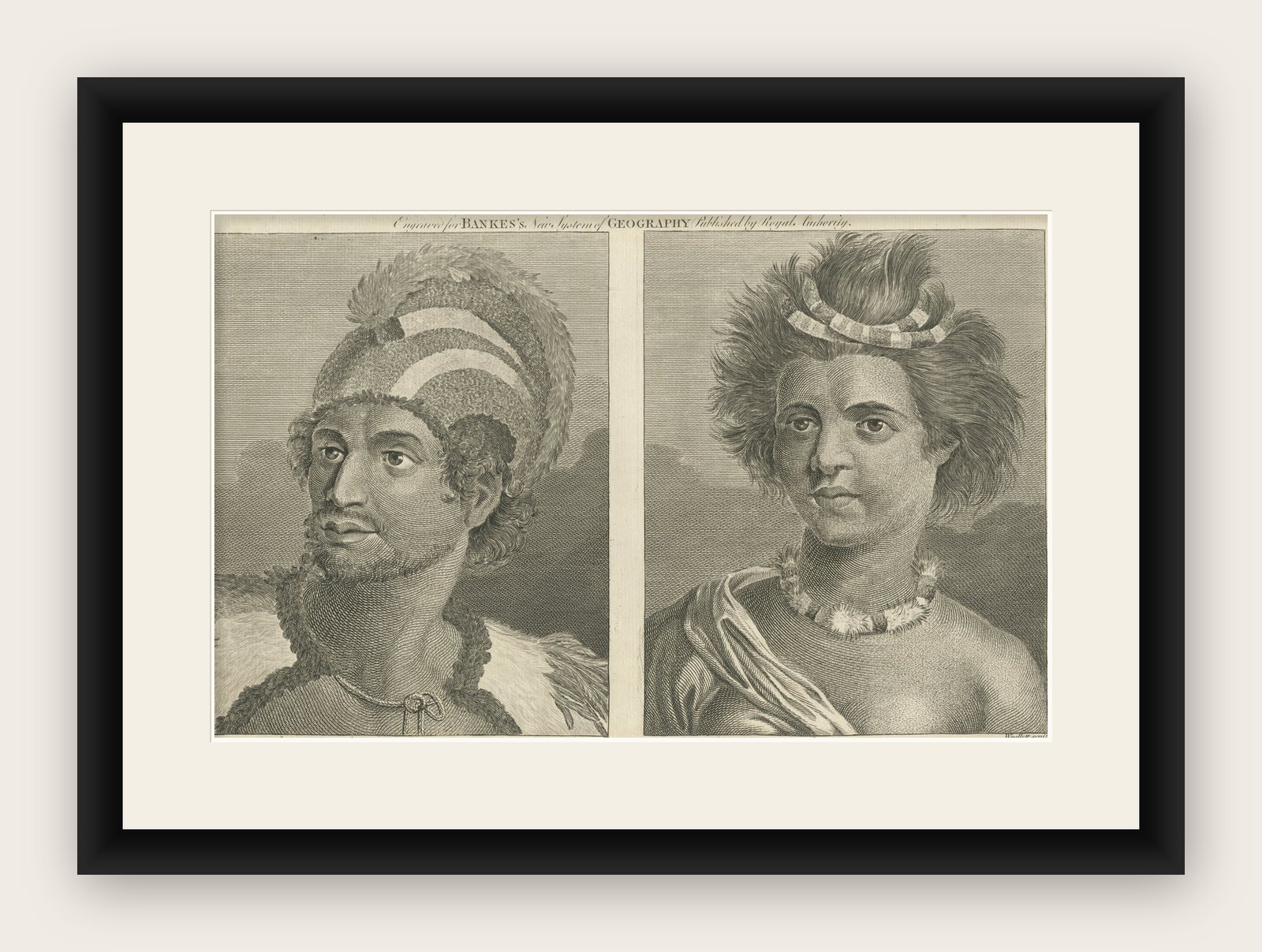
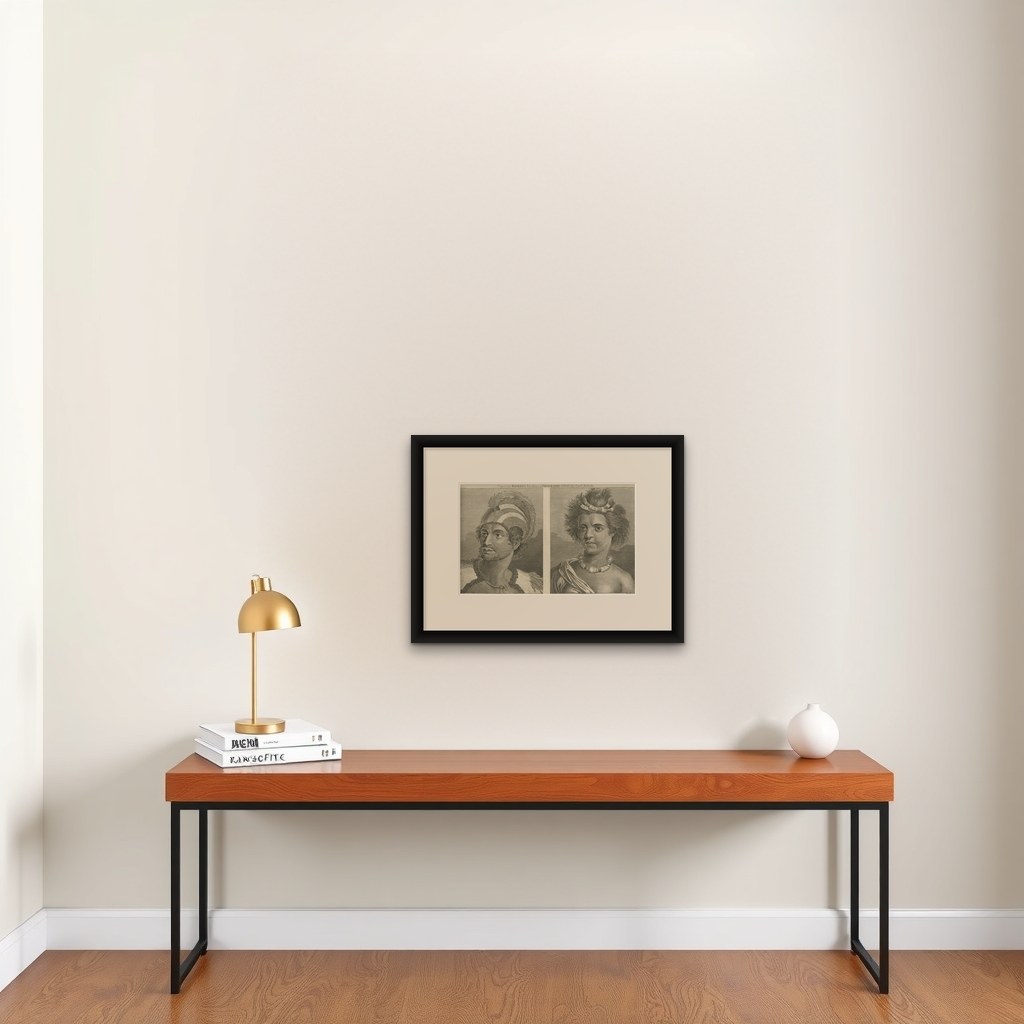

Frame and rooms are illustrations of how the print could look; the description says what is included.
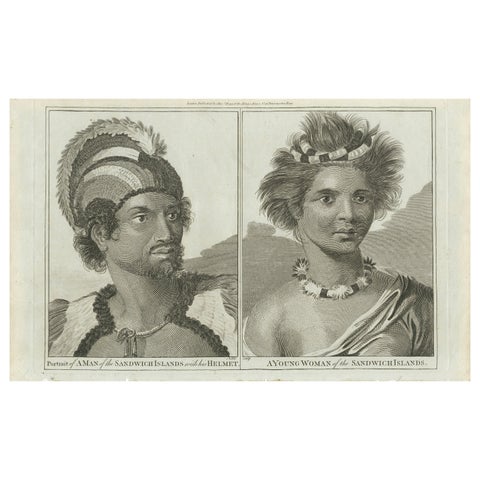
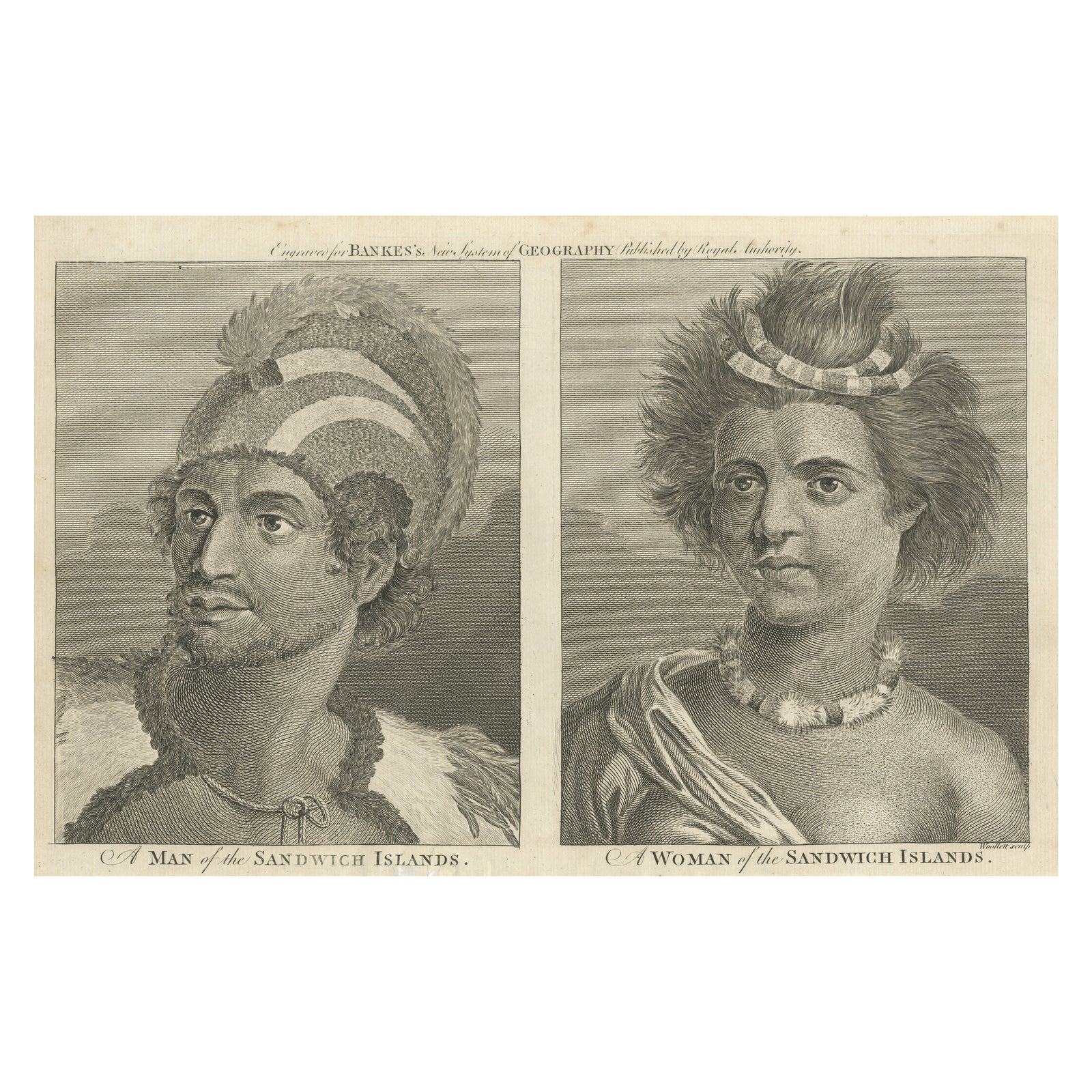
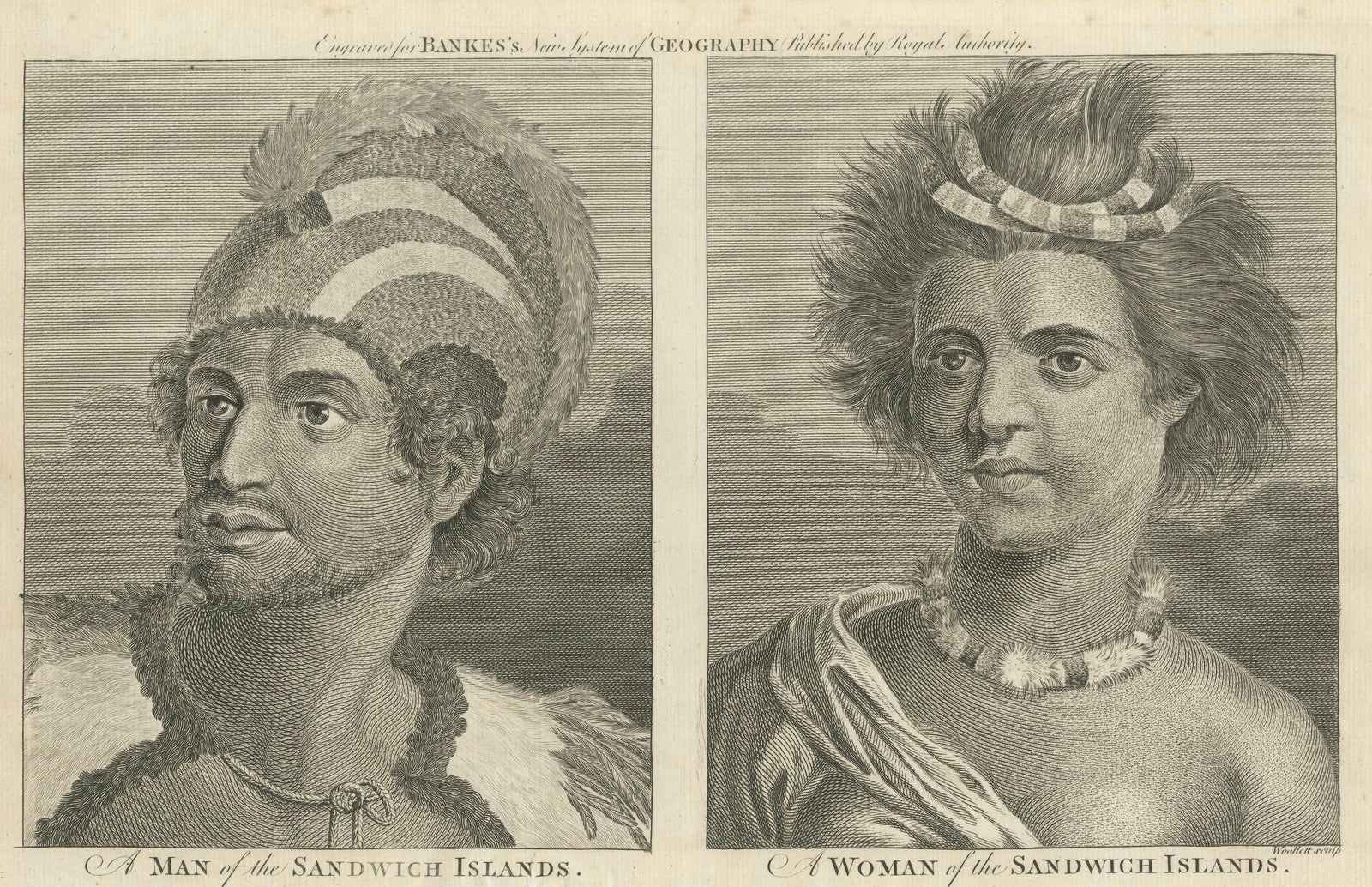
Portraits of Nobility from the Sandwich Islands (Hawaii), Published circa 1790
$360
€320 · £270
Original print, not a reproduction.
Ships worldwide from the Netherlands, flat, insured and tracked. 14-day returns. To buy, use Ask a question and we will reserve the print for you.
- Date
- 1790
- Sheet size
- 9.1 × 14.2 in (23 × 36 cm)
- Condition
- Good. Good. Aged paper with typically warm, yellowish-brown hue, mostly around the edges. The bottom edge cut short and a bit rough. Study the images carefully.
- Wardrobe
- Far & away
- Era
- 1790 to 1840, Empire and Romantic
- Stock no.
- f_37946272
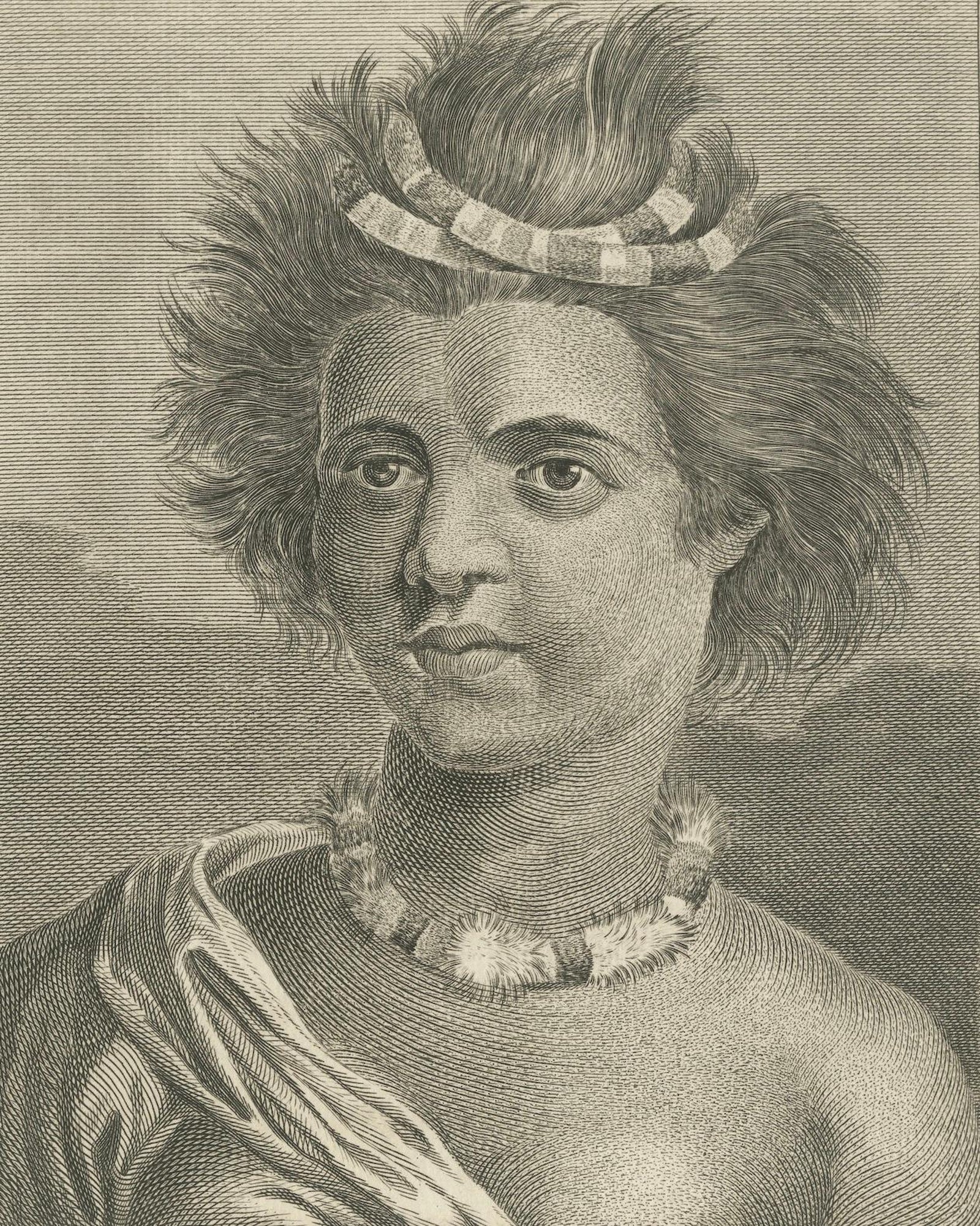
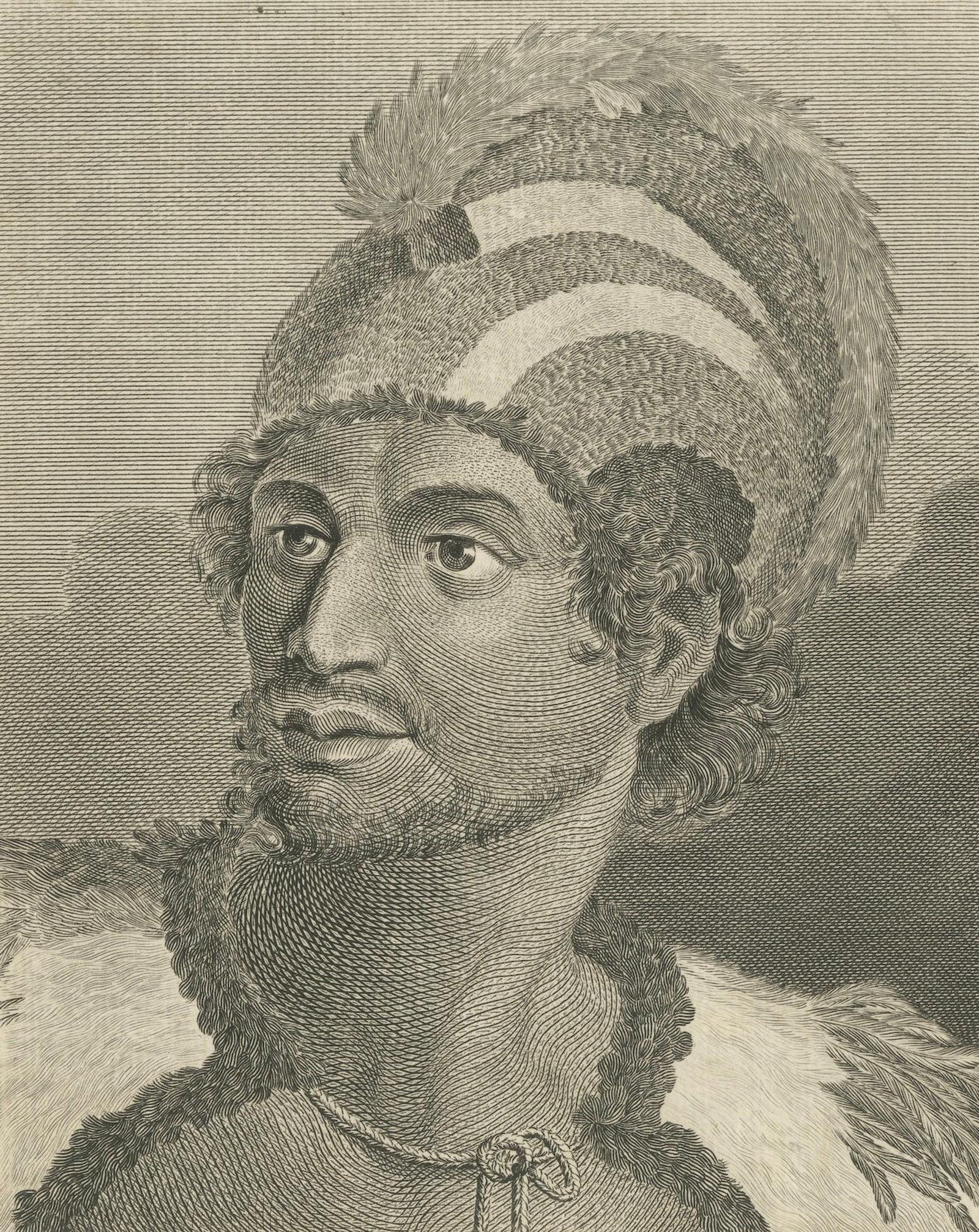
This original antique engraving is a set of two portraits side by side from "A New, Royal, Authentic and Complete System of Universal Geography, Antient and Modern" published by C. Cooke around 1790. The left portrait is labeled "A Man of the Sandwich Islands" and the right one "A Woman of the Sandwich Islands." These islands are now known as the Hawaiian Islands.
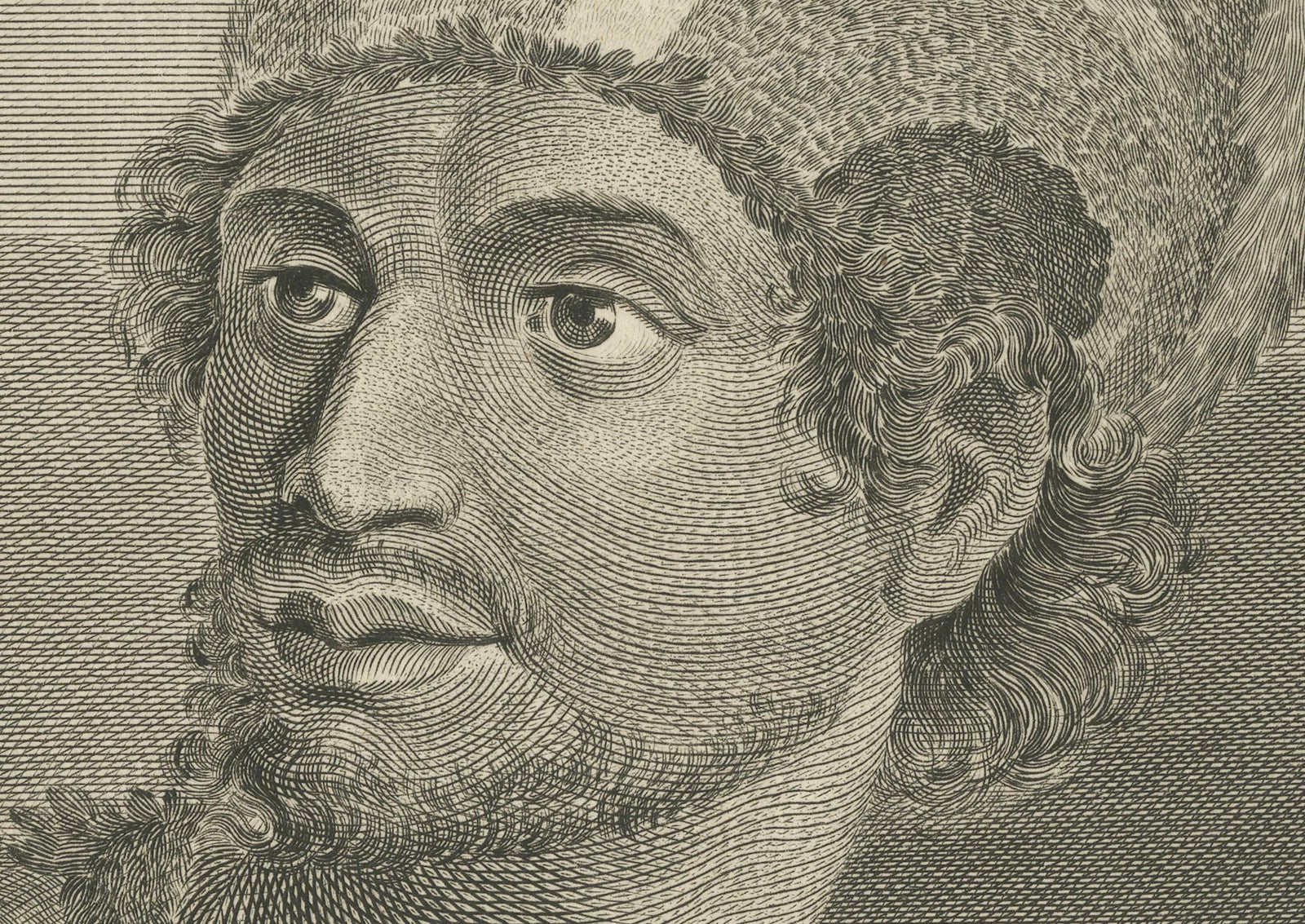
The man is depicted with a feathered headdress that includes white and dark horizontal stripes, possibly indicating status or role within his community. His facial expression is solemn, and he has a beard and mustache. He wears a cloak or mantle with a visible pattern, and his ears appear to be elongated, possibly adorned with earrings.
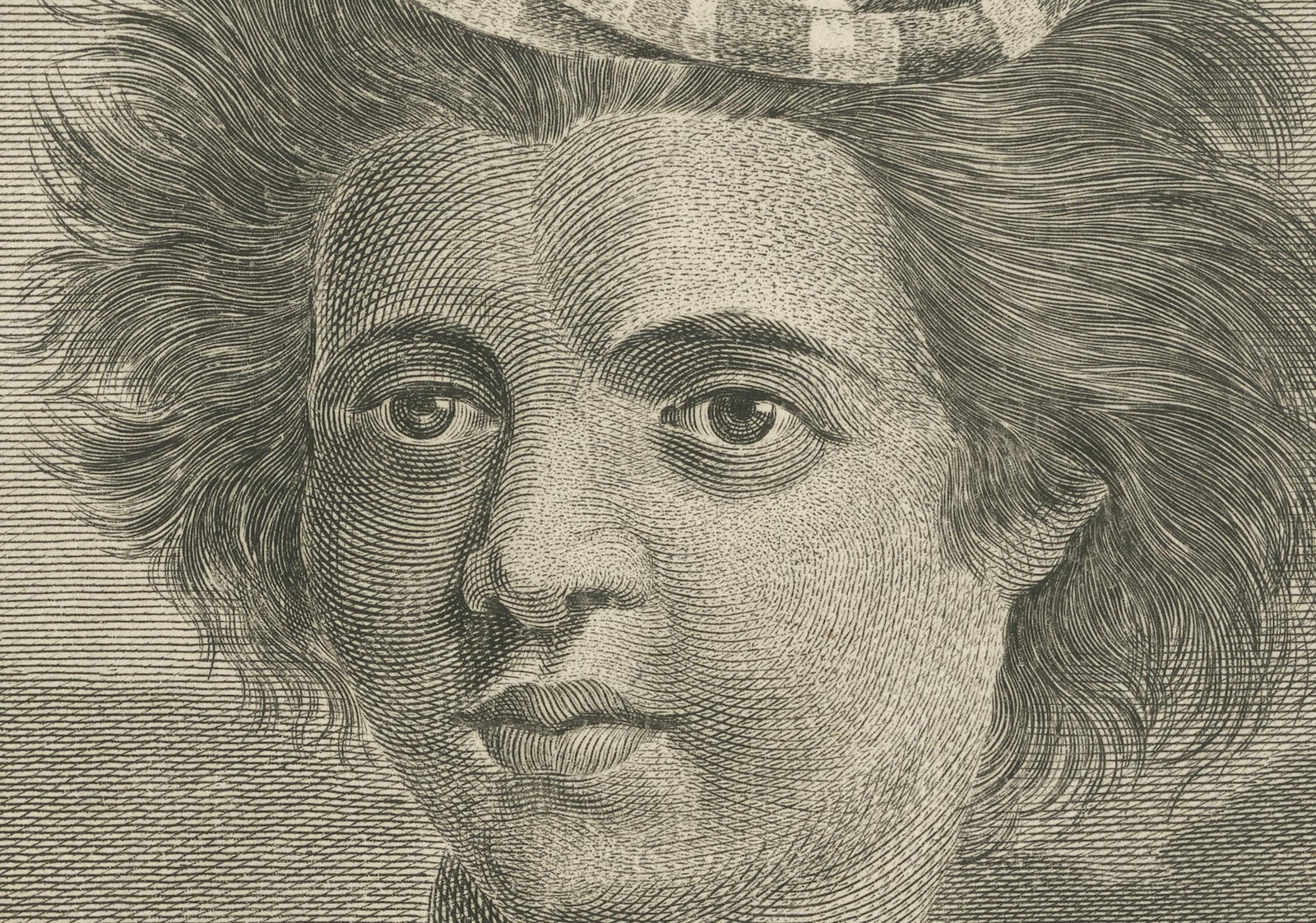
The woman has her hair styled upwards and outwards, and she wears a headband with a feathered ornament. She also has a necklace that appears to be made of flowers or shells. Her attire includes a draped garment that leaves her shoulders bare.
Both engravings exhibit detailed linework typical of the period's printmaking techniques. The attention to facial features and adornments suggests an effort to portray individuals of high status or particular cultural significance from the Sandwich Islands during the era of European exploration and early contact with Pacific islands.
The inscription "Woollett Sculp" in the context of an engraving usually indicates the person who sculpted or engraved the image. "Sculp" is an abbreviation of "sculpsit," a Latin term used in art to mean "he (or she) engraved" or "created by engraving."
William Woollett was a well-known English engraver who lived from 1735 to 1785. He was particularly famous for his engravings of landscapes and historical scenes. If his name is associated with these engravings, it suggests that he was the engraver responsible for creating these images.
Given that Woollett passed away in 1785 and the publication is from around 1790, it's possible that these engravings were some of his later works, or they could have been published posthumously. Woollett's engravings were highly regarded, and his style was characterized by its fine detail and the ability to convey textures and depth, which would be consistent with the quality observed in the provided image.