Close-ups
Framed and on the wall
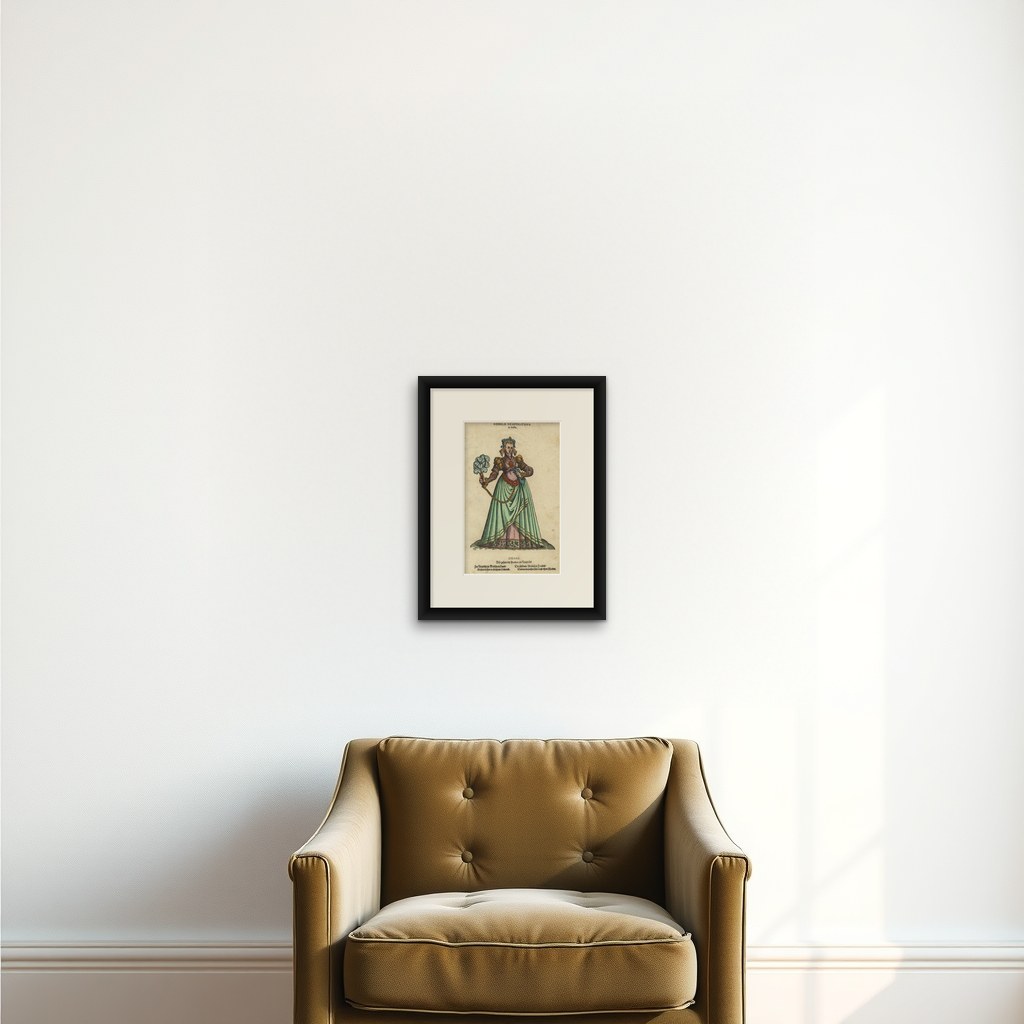

Frame and rooms are illustrations of how the print could look; the description says what is included.
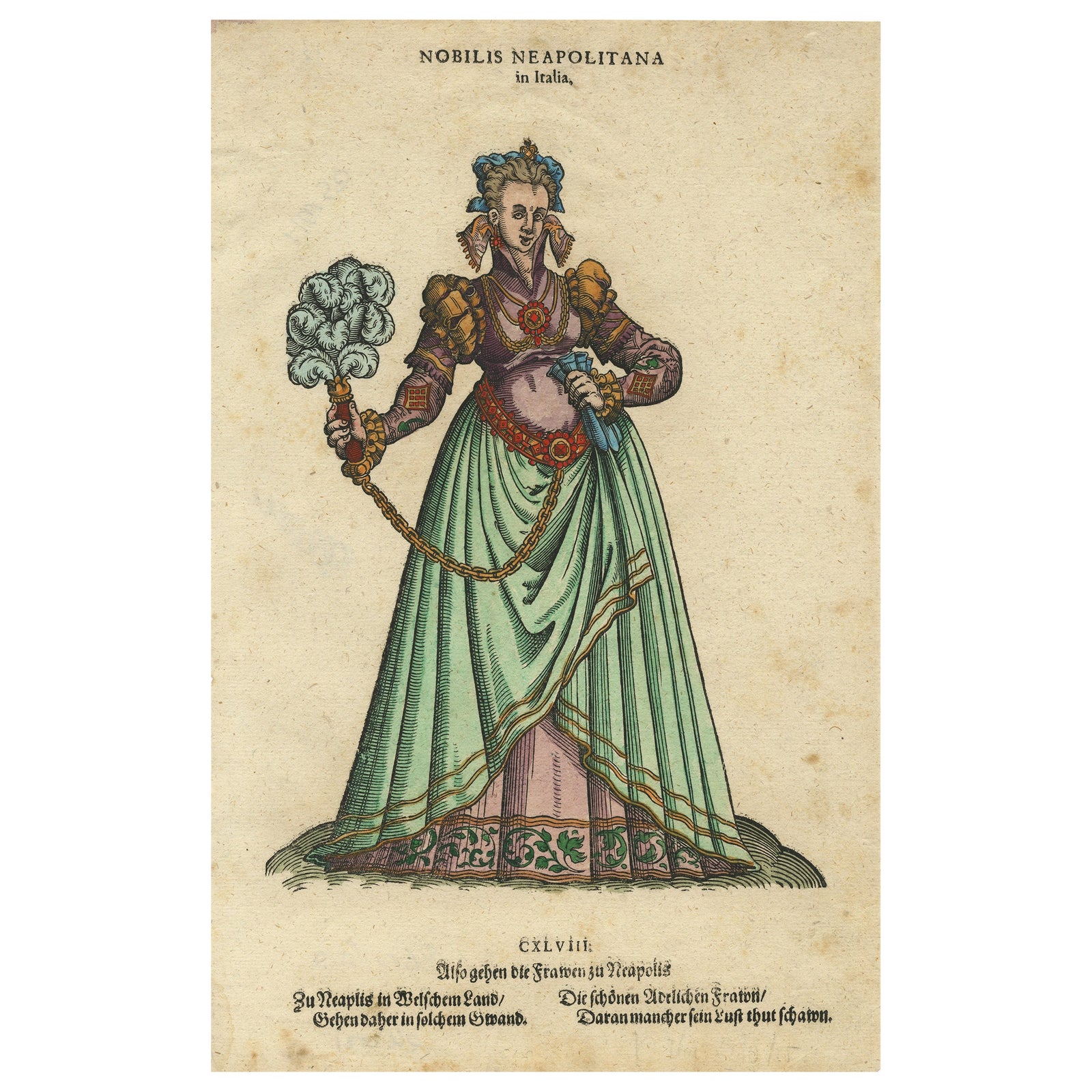
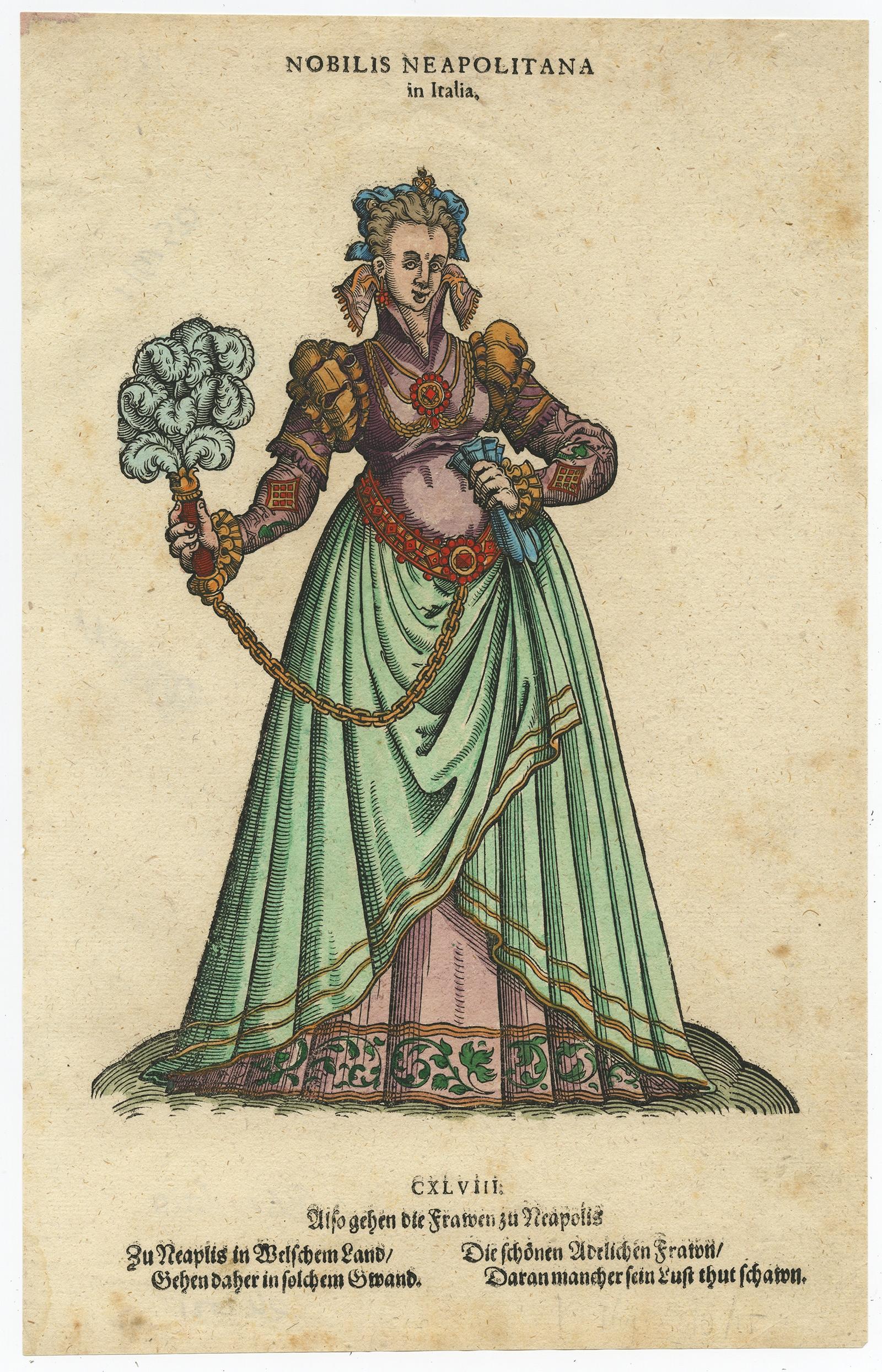
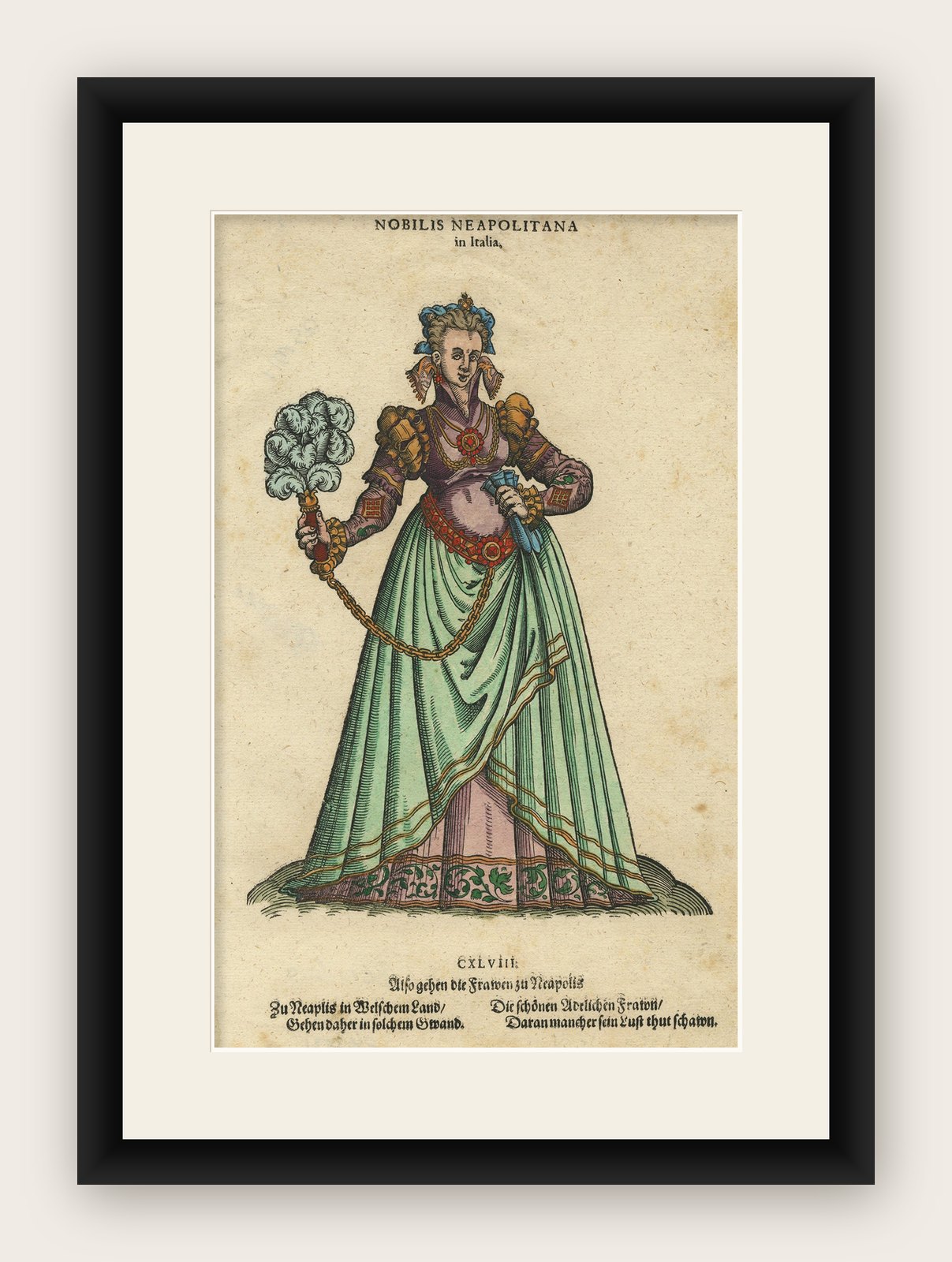
Noblewoman of Naples, Rare Antique Costume Woodcut, Jost Amman, 1577
£375
$495 · €440
Original print, not a reproduction.
Ships worldwide from the Netherlands, flat, insured and tracked. 14-day returns. To buy, use Ask a question and we will reserve the print for you.
- Date
- 1577
- Sheet size
- 12.4 × 7.9 in (31.4 × 20 cm)
- Condition
- Good. Impression with strong hand-colouring. Light overall toning and minor foxing consistent with age, with slight handling traces. Woodcut lines crisp and well-preserved.
- Wardrobe
- Court & couture
- Era
- Before 1700, Baroque
- Stock no.
- f_46303502
Noblewoman of Naples, Antique Hand-Coloured Woodcut by Jost Amman, Plate CXLVIII, 1577
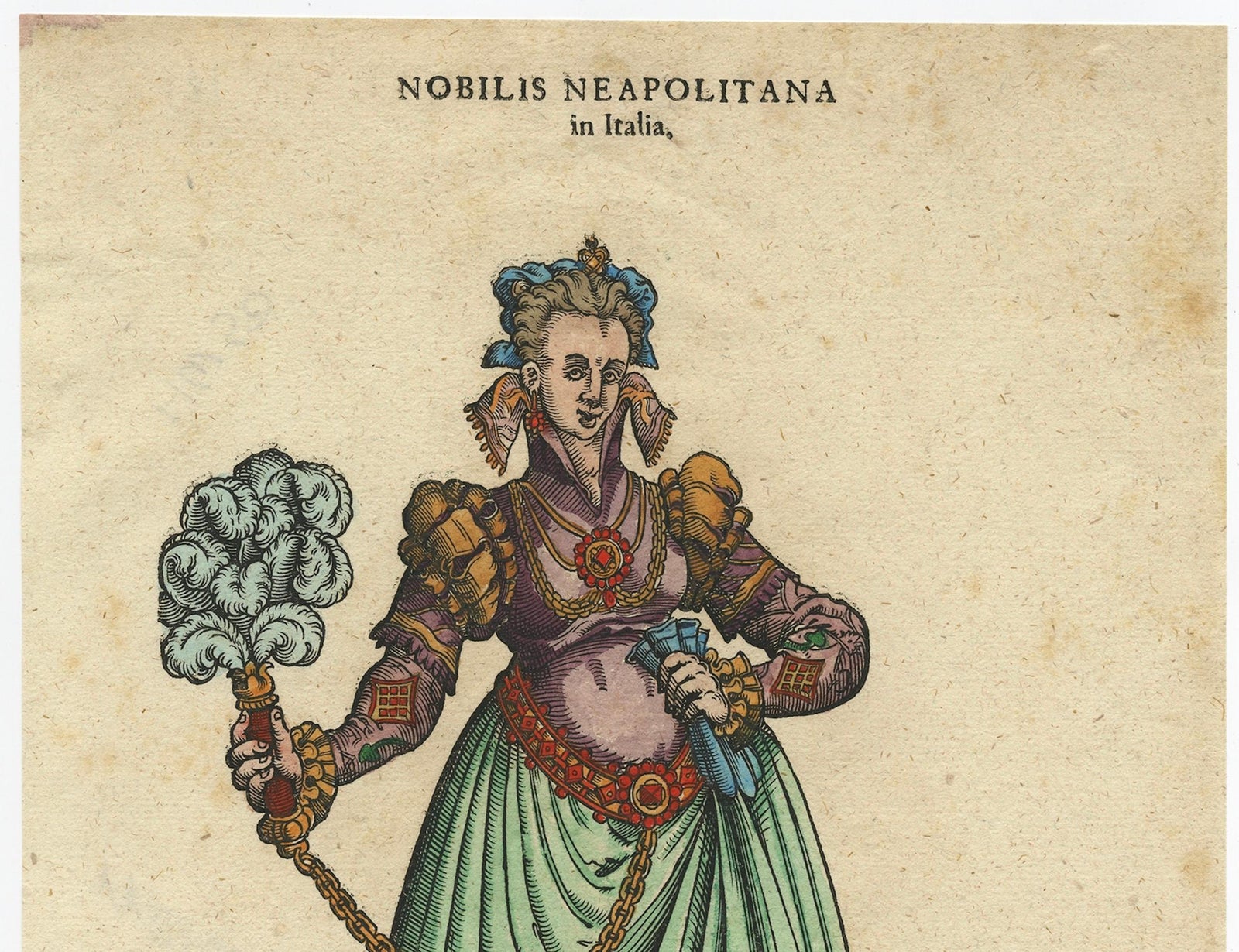
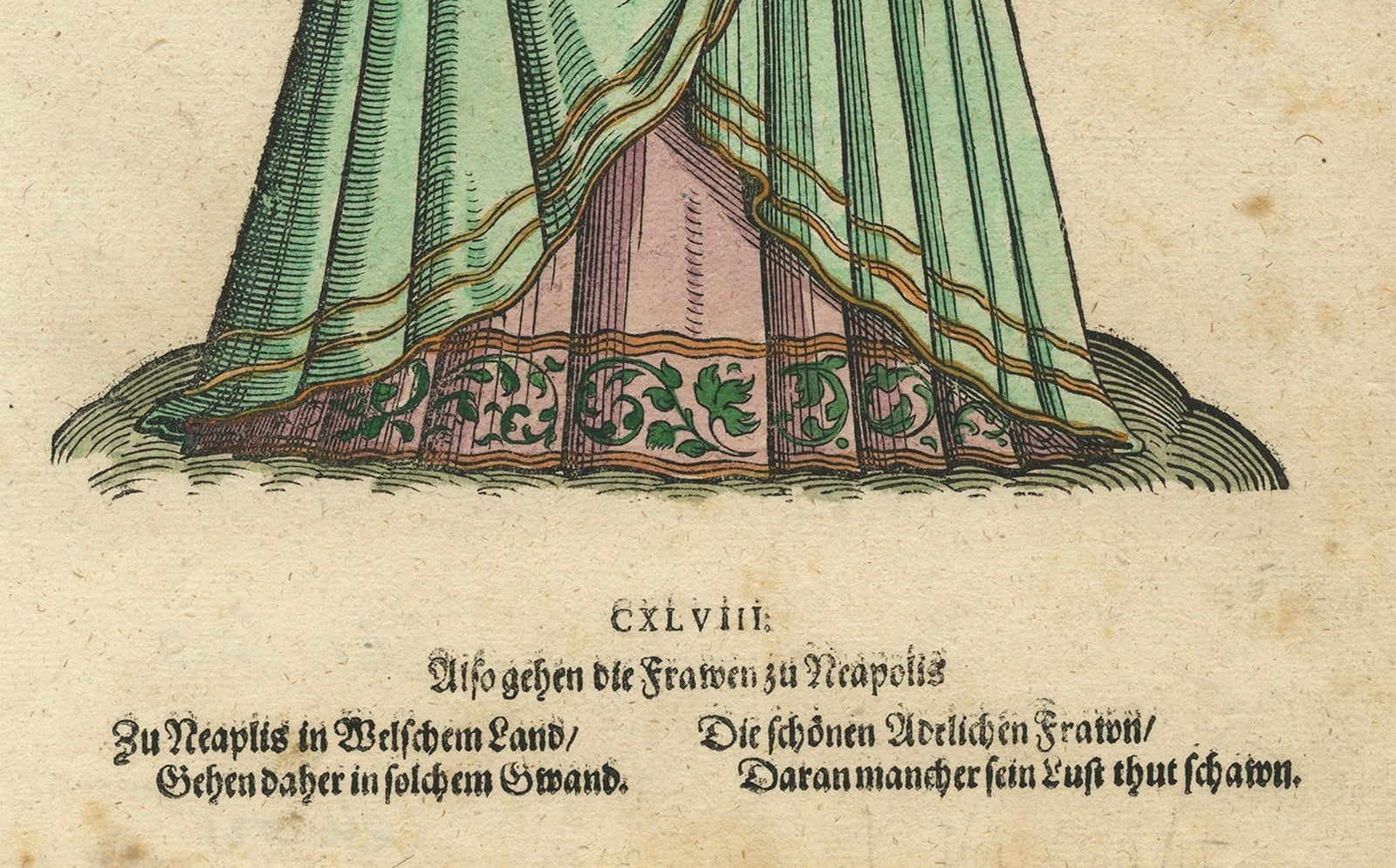
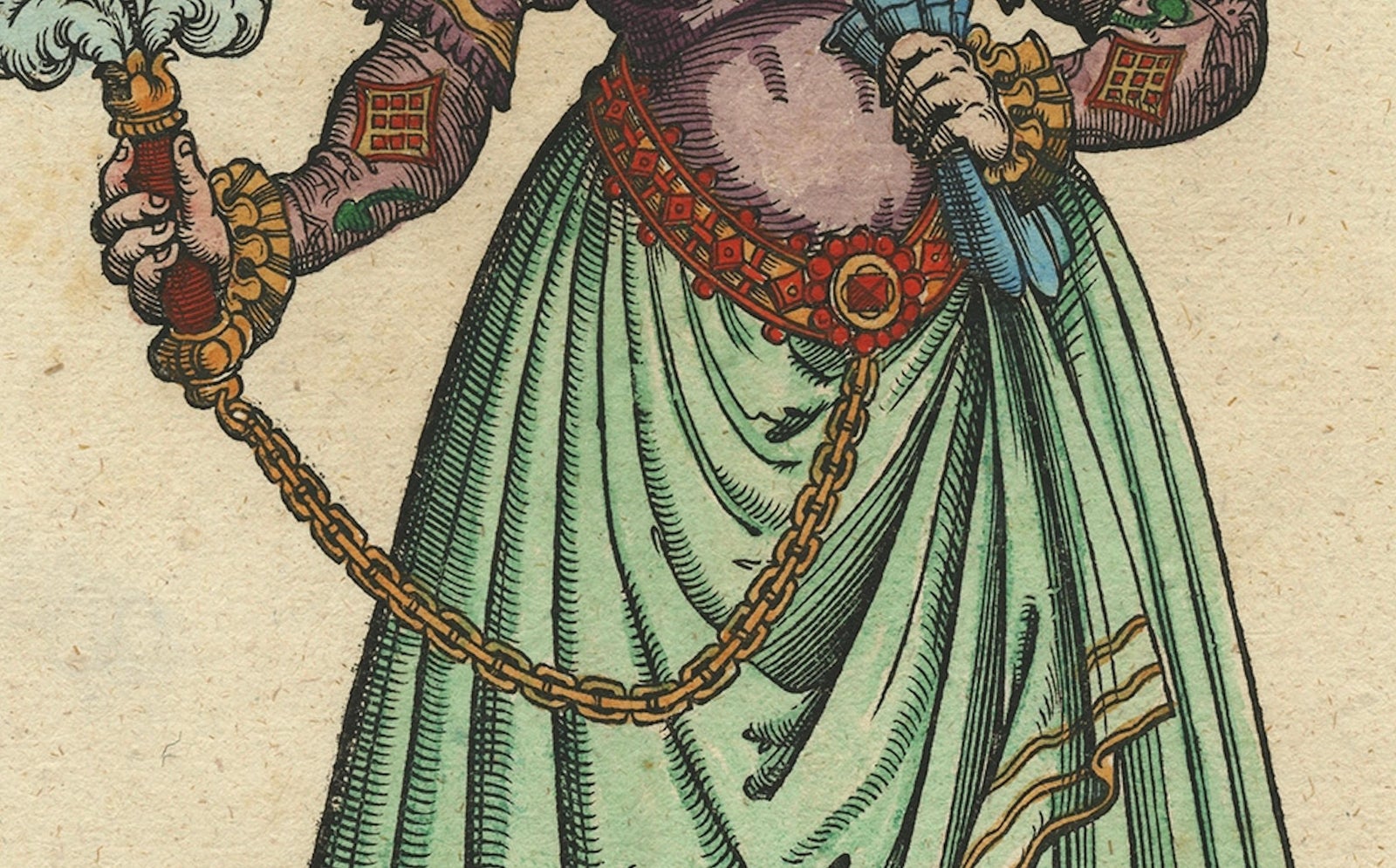
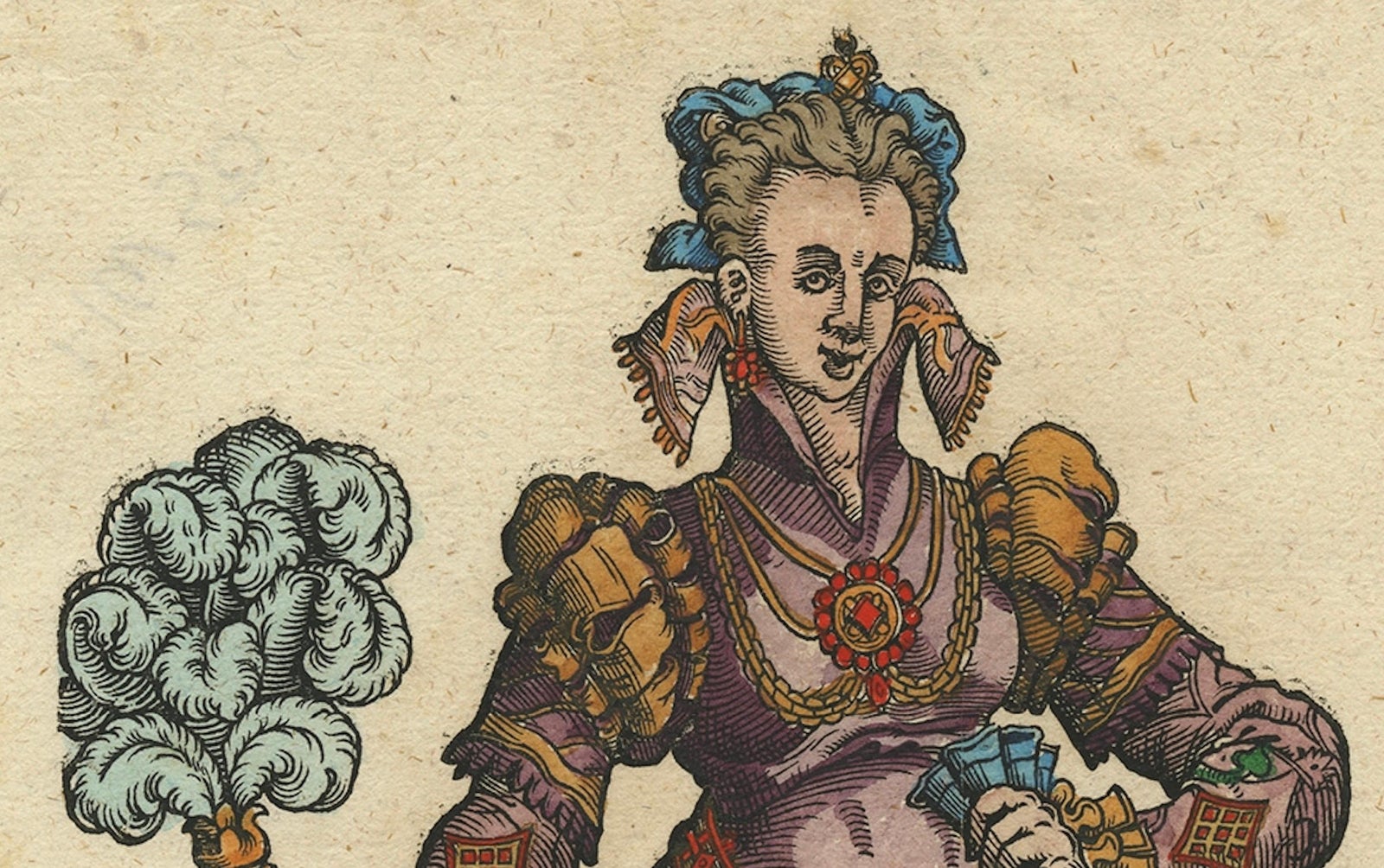
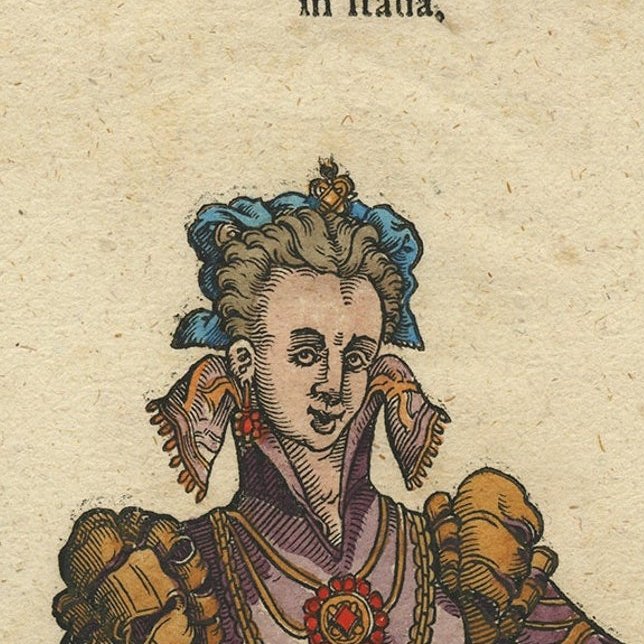
This fine 16th-century hand-coloured woodcut depicts a noblewoman from Naples, titled Nobilis Neopolitana in Italia. She is elegantly dressed in a richly layered gown with a long green outer skirt, rose-pink underskirt, and an elaborately fitted bodice with puffed sleeves. She holds an ornate fan and wears her hair adorned with ribbons and jewels, signifying her high social standing. The image reflects both elegance and authority, emphasizing the grandeur of Neapolitan noble attire.
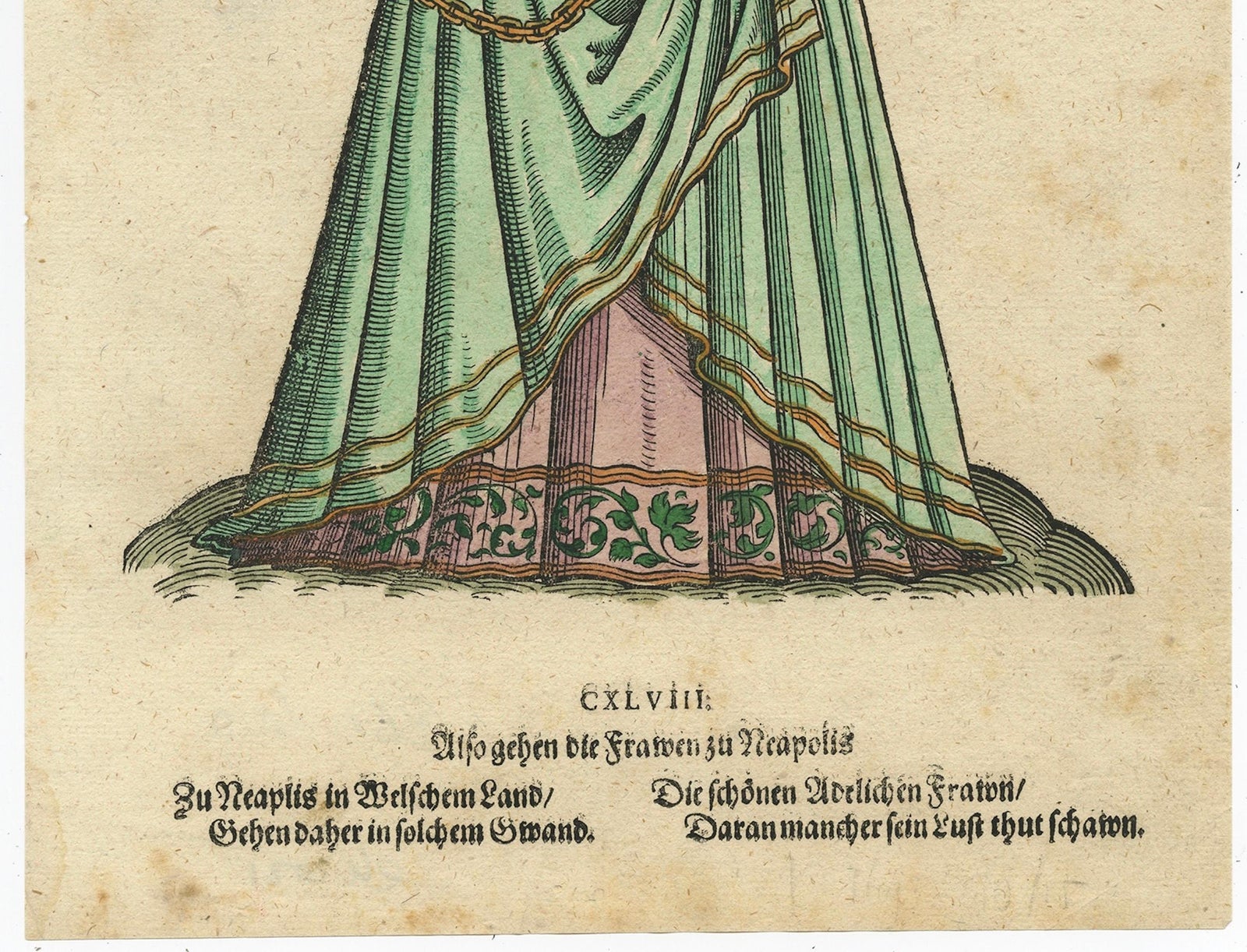
The German verses beneath the figure read: “Also gehen die Frawen zu Neapolis / Zu Neapolis die Edel frawen / Ehren sich in solchem Gwand / Die Frawen ublich zu hand.” Loosely translated: “Thus go the women of Naples; the noble ladies of Naples honor themselves in such garments, as is their custom.” These descriptive verses reinforced for early readers the link between clothing, status, and cultural identity.
The print originates from Jost Amman’s renowned Habitus praecipuorum populorum tam virorum quam foeminarum singulari arte depicti (Nuremberg, 1577), published by Hans Weigel. Known as the Trachtenbuch, this richly illustrated costume book offered one of the first systematic surveys of the dress of nations, recording the fashions of men and women across Europe and beyond. It quickly became a cornerstone in the history of costume illustration.
Jost Amman (1539–1591), a Swiss-born artist who settled in Nuremberg, was one of the most prolific woodcut illustrators of the Renaissance. His work combined detailed draughtsmanship with a lively sense of character, and his Trachtenbuch remains among his most important contributions to art and cultural history.
Condition: Good impression with strong hand-colouring. Light overall toning and minor foxing consistent with age, with slight handling traces. Woodcut lines crisp and well-preserved.
Framing tips: A dark wood or ebony frame with a cream or light mount highlights the vibrant costume, while a gilt frame enriches the regal character of the image, enhancing its display as a Renaissance costume study.
Technique: Hand-coloured woodcut
Maker: Jost Amman, published by Hans Weigel, Nuremberg, 1577