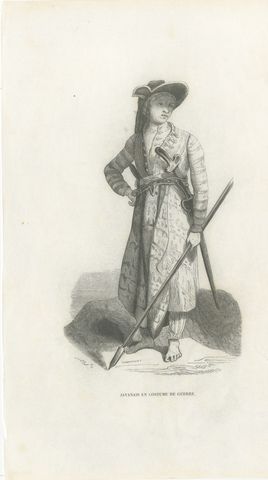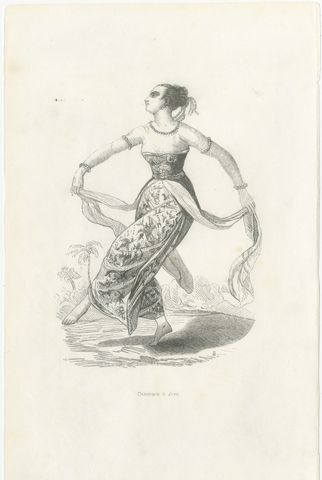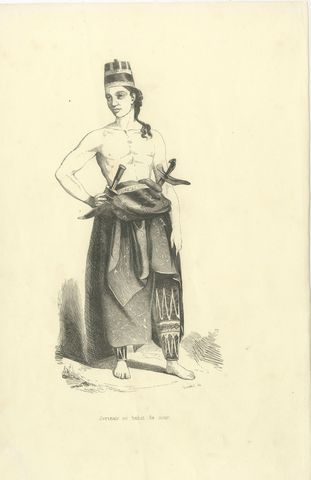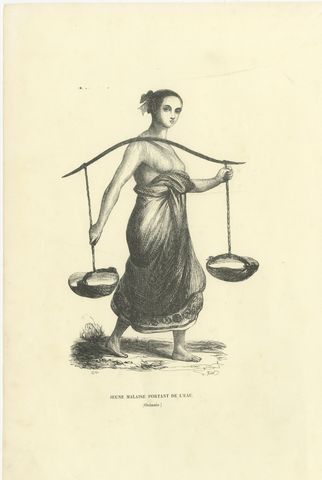
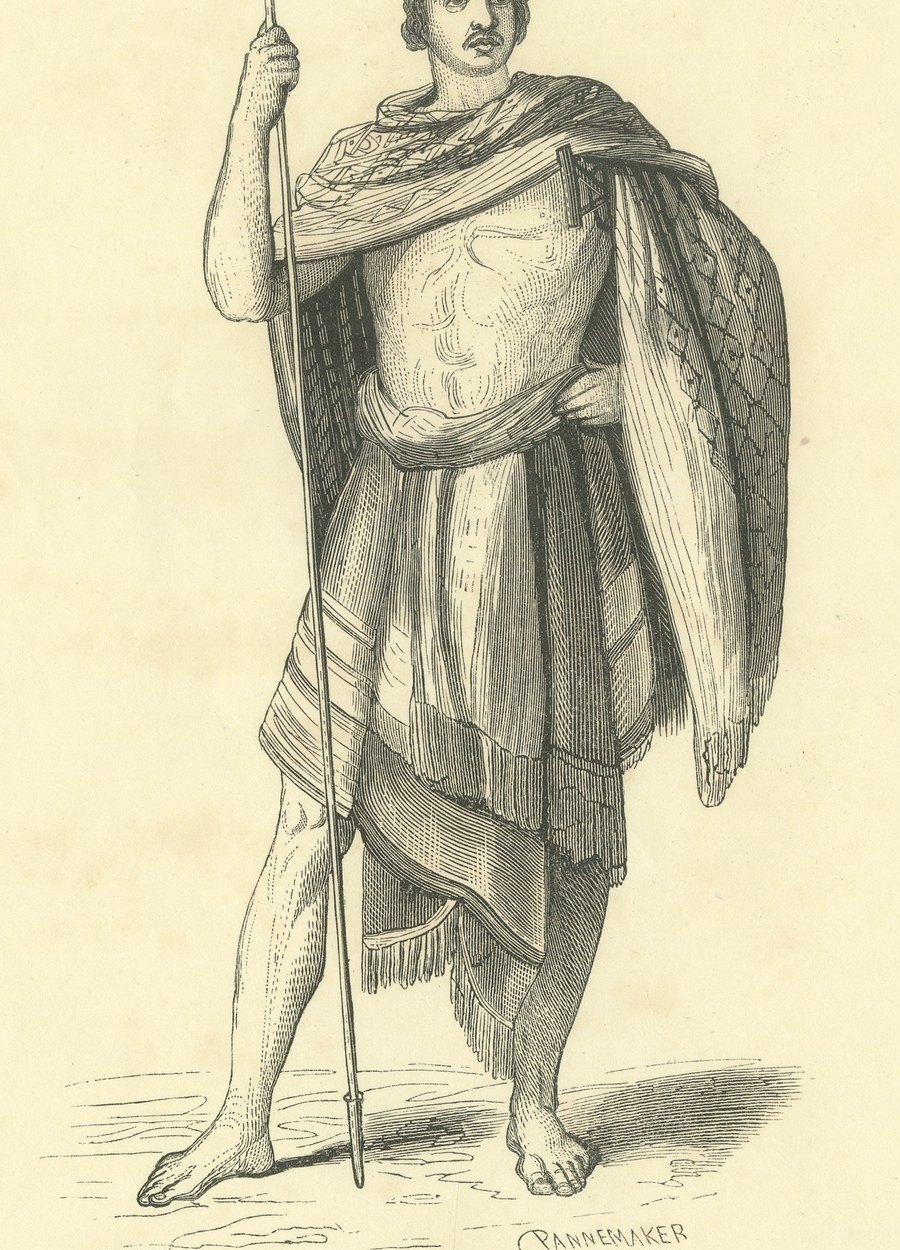
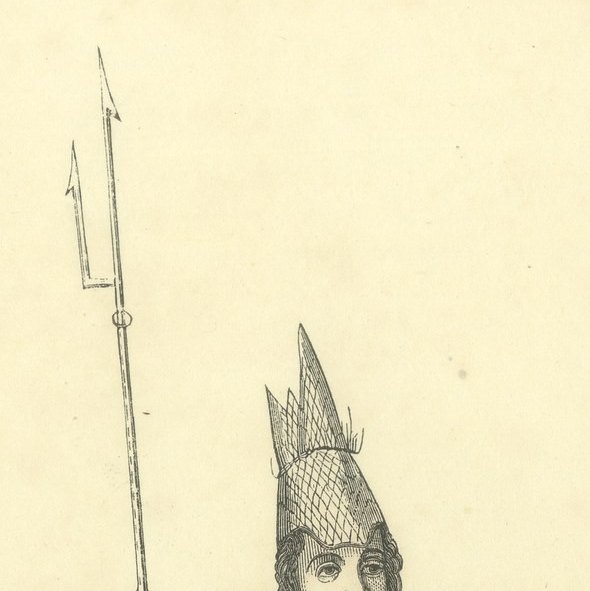
Close-ups
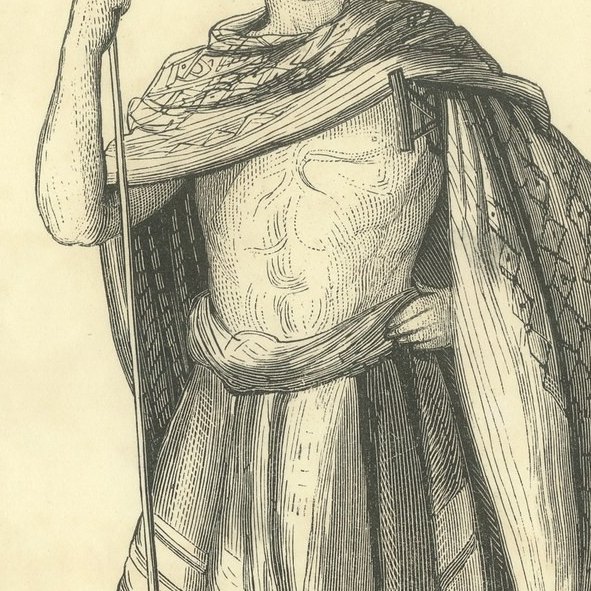
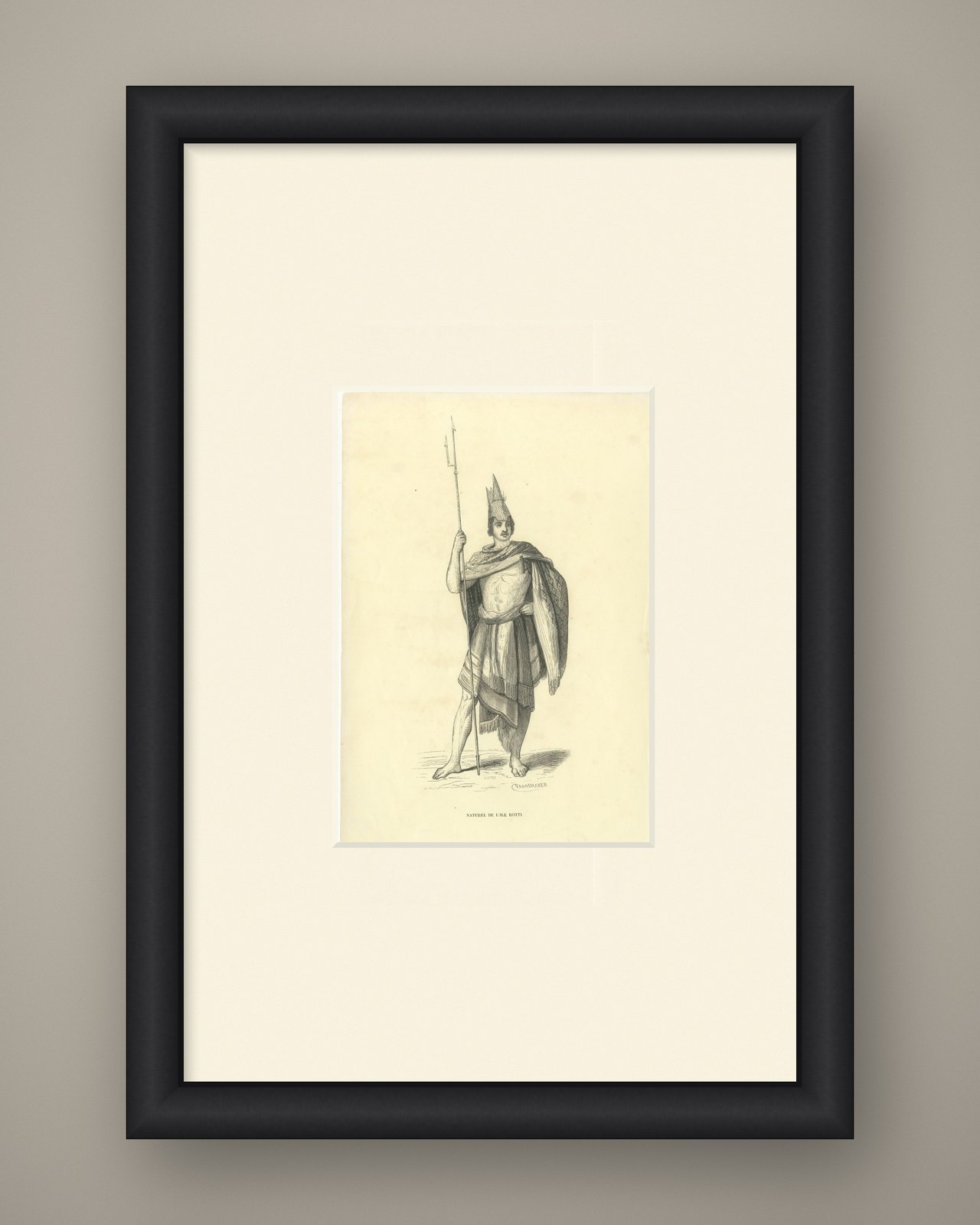
Framed and on the wall
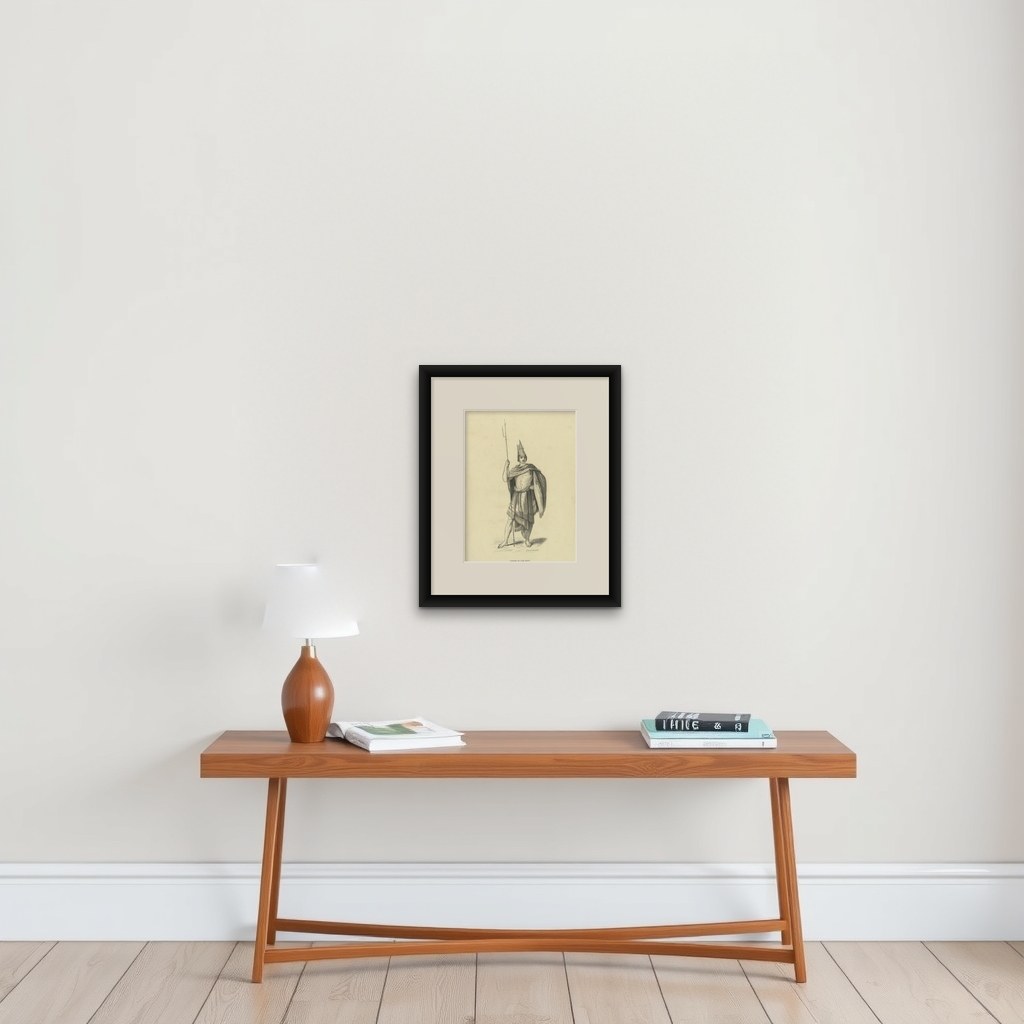

Frame and rooms are illustrations of how the print could look; the description says what is included.
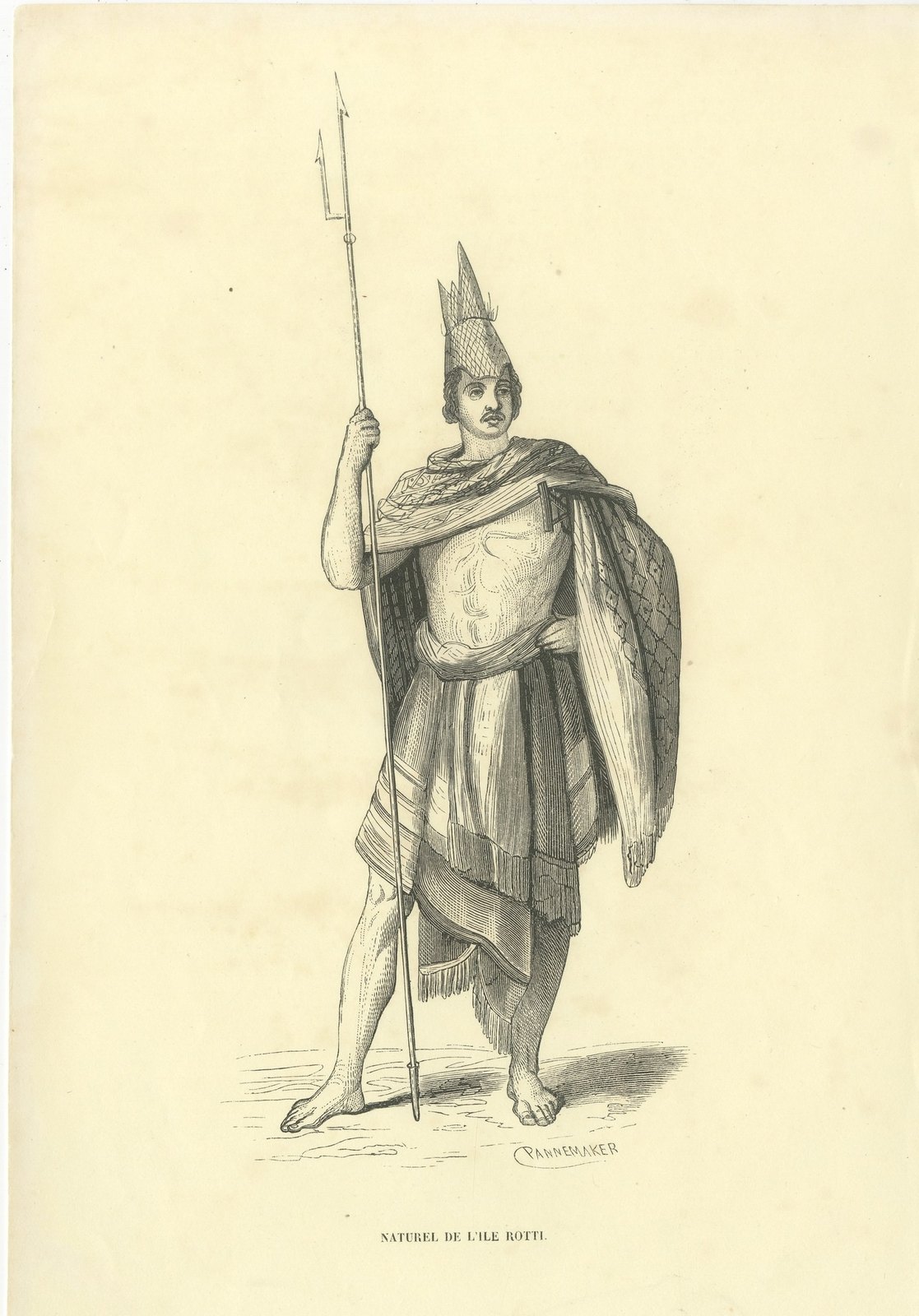
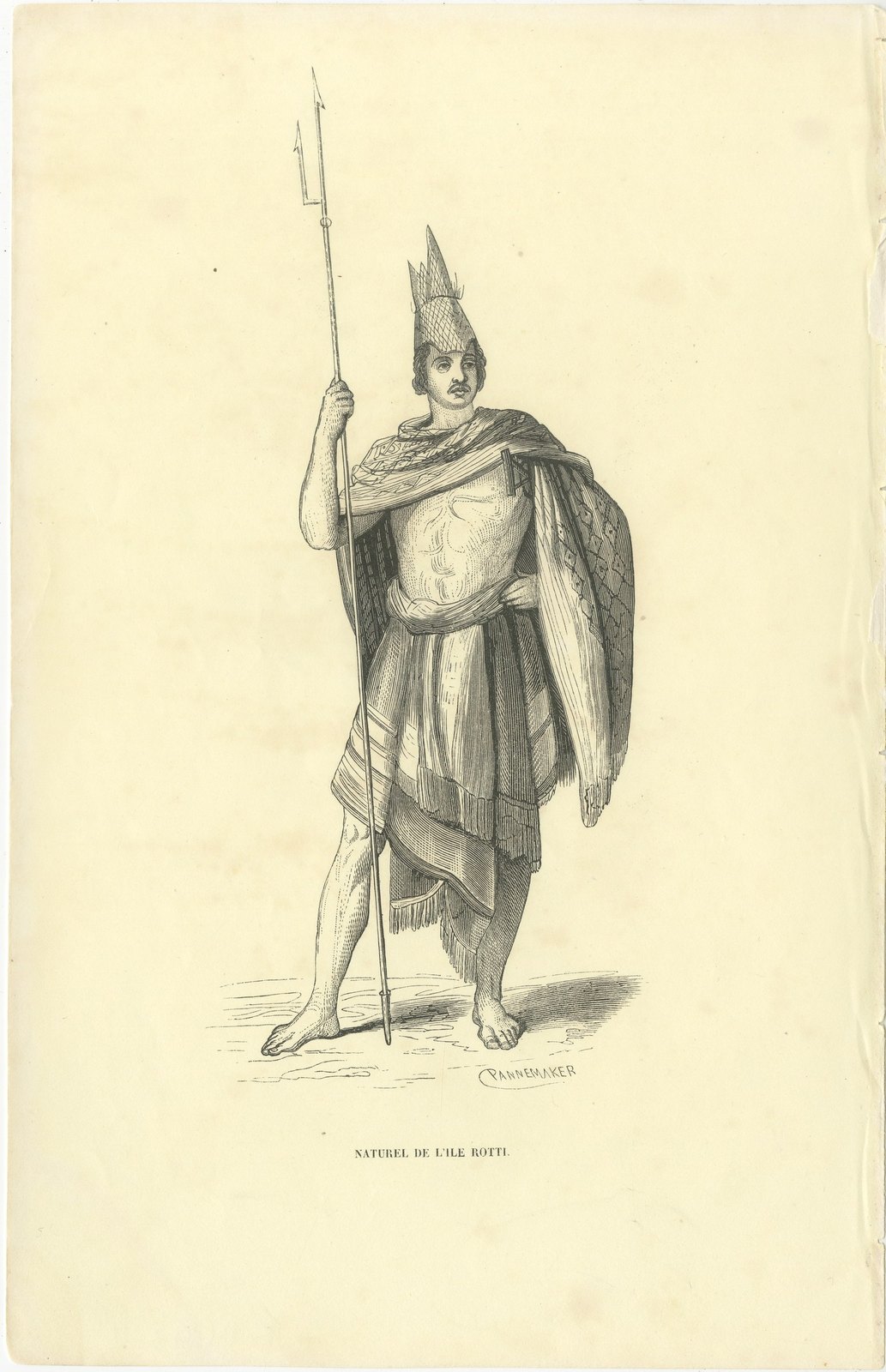
Native of the Island of Rotti, Antique Wahlen Costume Print, 1843-1844
$165
€145 · £125
Original print, not a reproduction.
Ships worldwide from the Netherlands, flat, insured and tracked. 14-day returns. To buy, use Ask a question and we will reserve the print for you.
- Date
- 1843-1844
- Technique
- Woodcut
- Colouring
- Uncoloured
- Condition
- Good. Good condition for its age. Frayed right edge with small nicks and chips; light marginal toning, all clear of the image. Please review the images for further condition details.
- Wardrobe
- Far & away
- Era
- 1840 to 1870, Crinoline
- Stock no.
- BG-14392-11
A native of the island of Rotti, an original antique wood engraving from Auguste Wahlen's Moeurs, usages et costumes de tous les peuples du monde, published in Brussels between 1843 and 1844. The plate is lettered "Naturel de L'isle Rotti", a native of the island of Rotti, the island now usually written Rote, lying off the south western tip of Timor and the southernmost of the islands of Indonesia. Rotti was divided in the period into a number of small domains under their own rulers, and its people were known for their dependence on the lontar palm and for the part they played in Dutch dealings at Kupang. Smaller islands such as this appear only occasionally in general costume books. The sheet is a wood engraving on paper and is uncoloured, as issued in this part of the series, and the crispness of the block work is what carries the image.
Moeurs, usages et costumes de tous les peuples du monde was published in Brussels by Auguste Wahlen at the Librairie Historique-Artistique between 1843 and 1844. The four volumes set out to describe the dress, customs, occupations and social divisions of the peoples of Europe, Asia, Africa, the Americas and Oceania, drawing on travel narratives, earlier costume books and other sources then treated as authoritative, and they carried approximately one hundred and ninety to two hundred plates, the count varying between copies and editions.
Wahlen was the publisher and compiler rather than the artist, and where a name such as Duverger, Pannemaker, Mercier, Lisbet, Markaert or Vermorcken appears on a sheet it belongs to the illustrator or the engraver, and no artist is attributed here without one.
The plates are wood engravings on paper. The images should be read as a nineteenth century European interpretation of the cultures they show rather than as a documentary record, which is a large part of what makes the series interesting to historians of the period. The Rotti plate belongs with the Timor, Sawoe and Solor subjects from the same series, and a set of four from these islands hangs far better than a single sheet.
The sheet is in good condition for its age, with a frayed right edge showing small nicks and chips; the image itself is clean and strong.
This is an original antique print, not a modern reproduction. This item is sold unframed. Any framed or interior images are shown for presentation and inspiration only, unless the listing explicitly states that the item is sold framed.