Close-ups
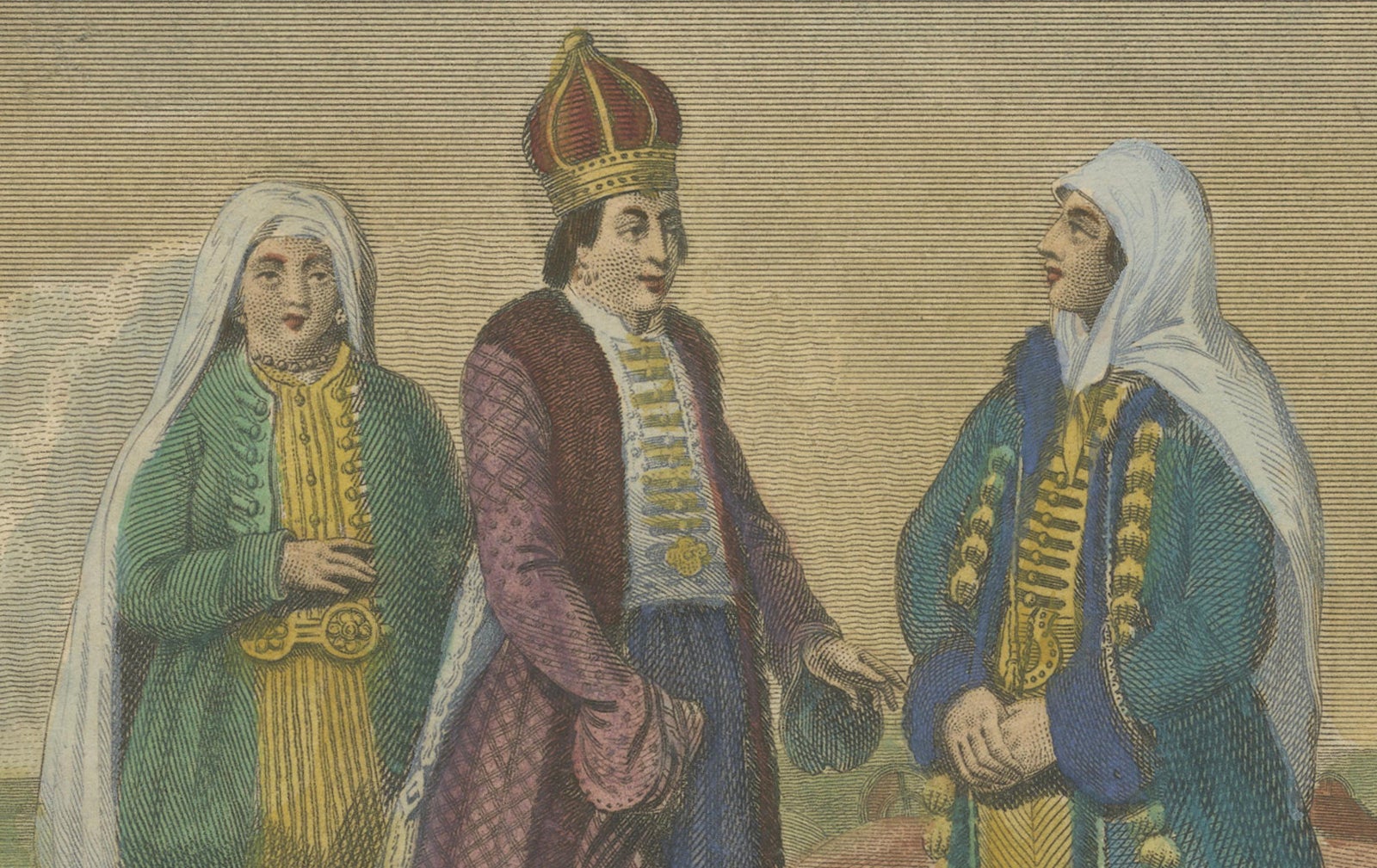
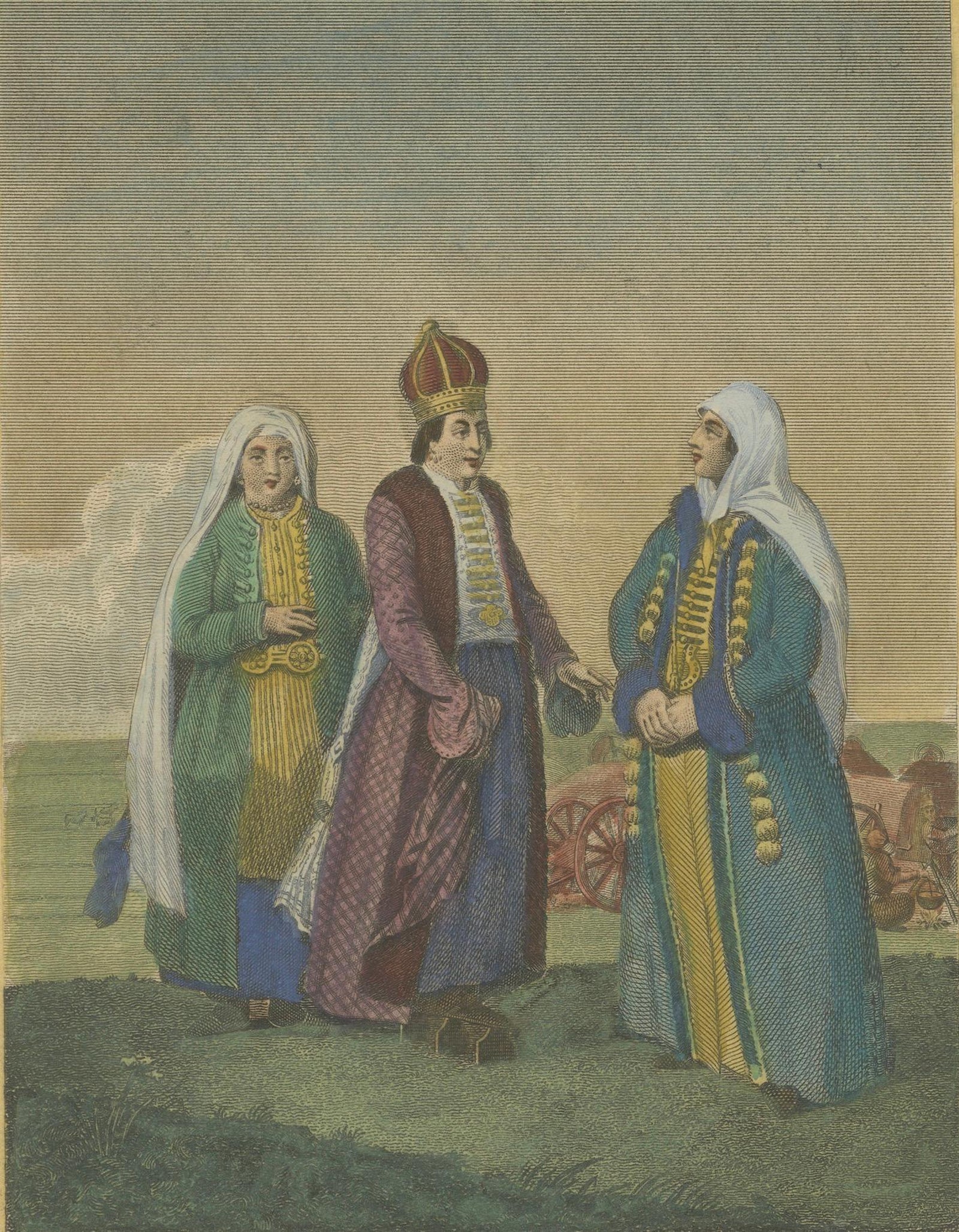
Framed and on the wall


Frame and rooms are illustrations of how the print could look; the description says what is included.
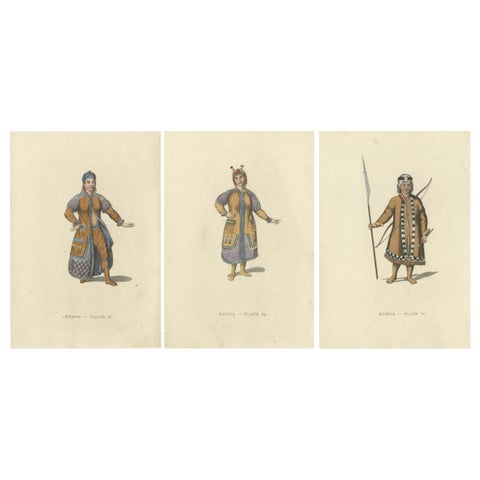
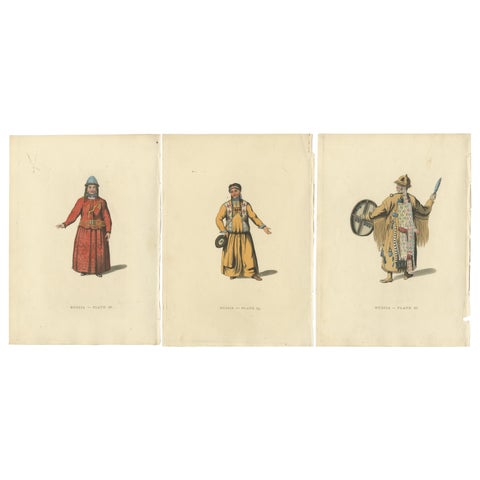
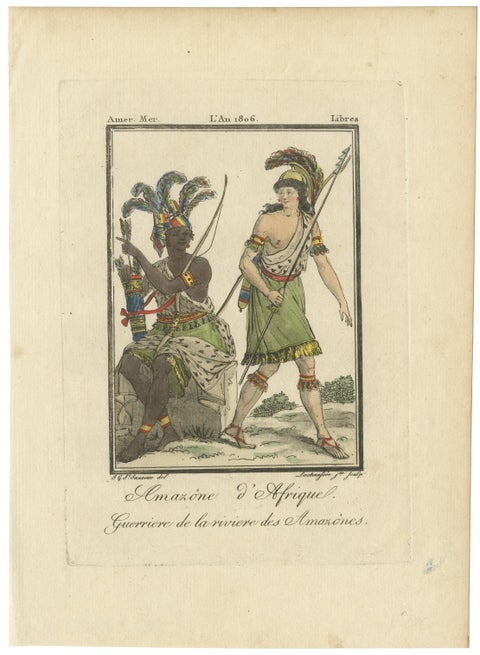
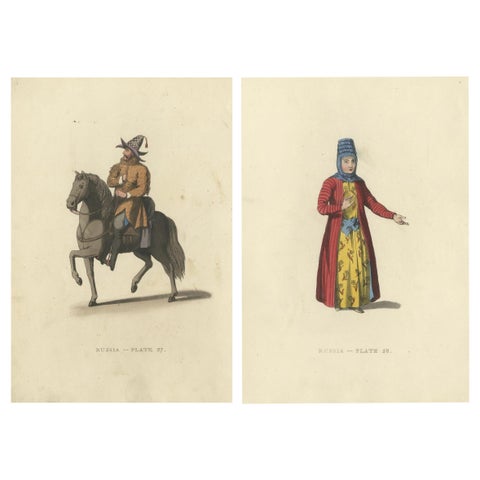
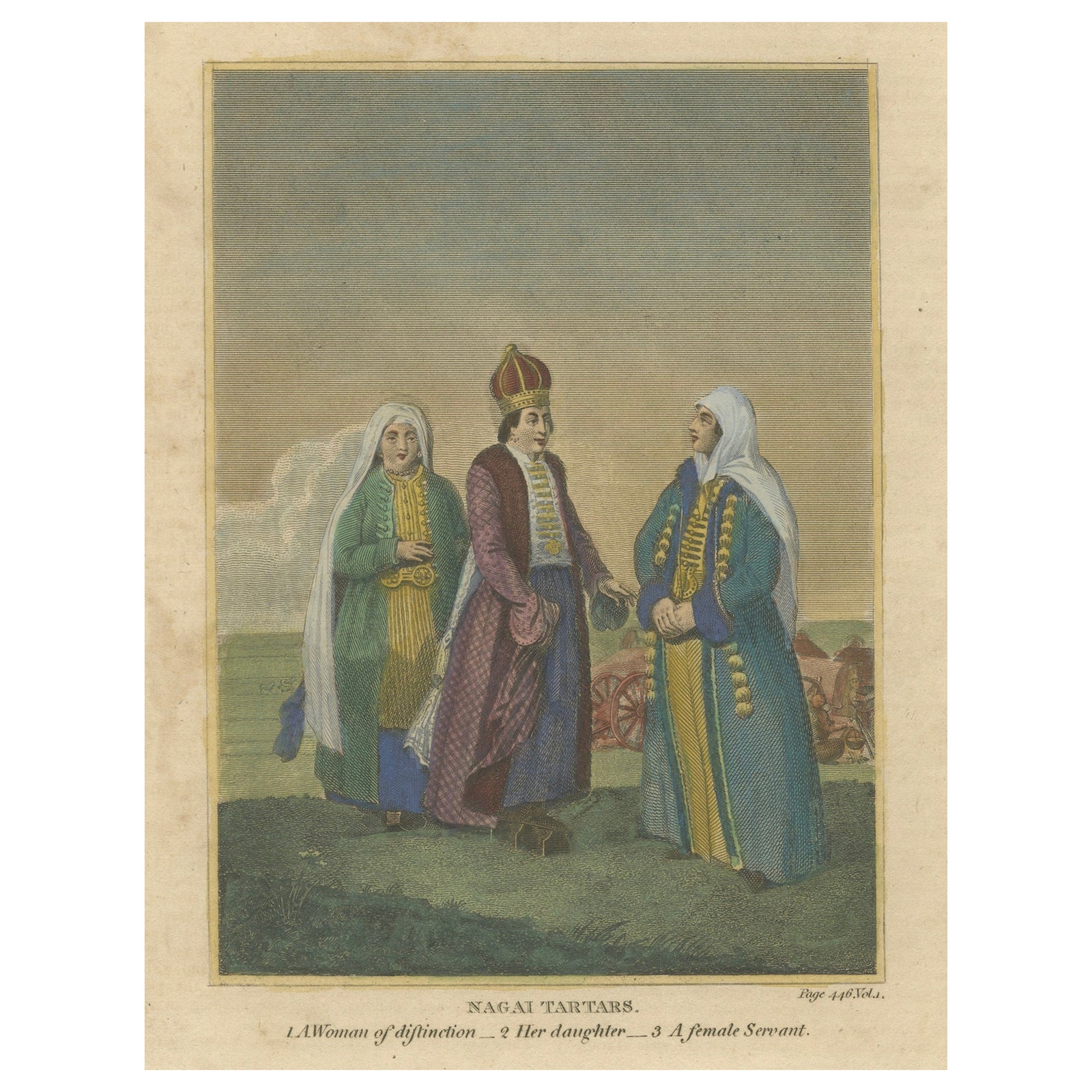
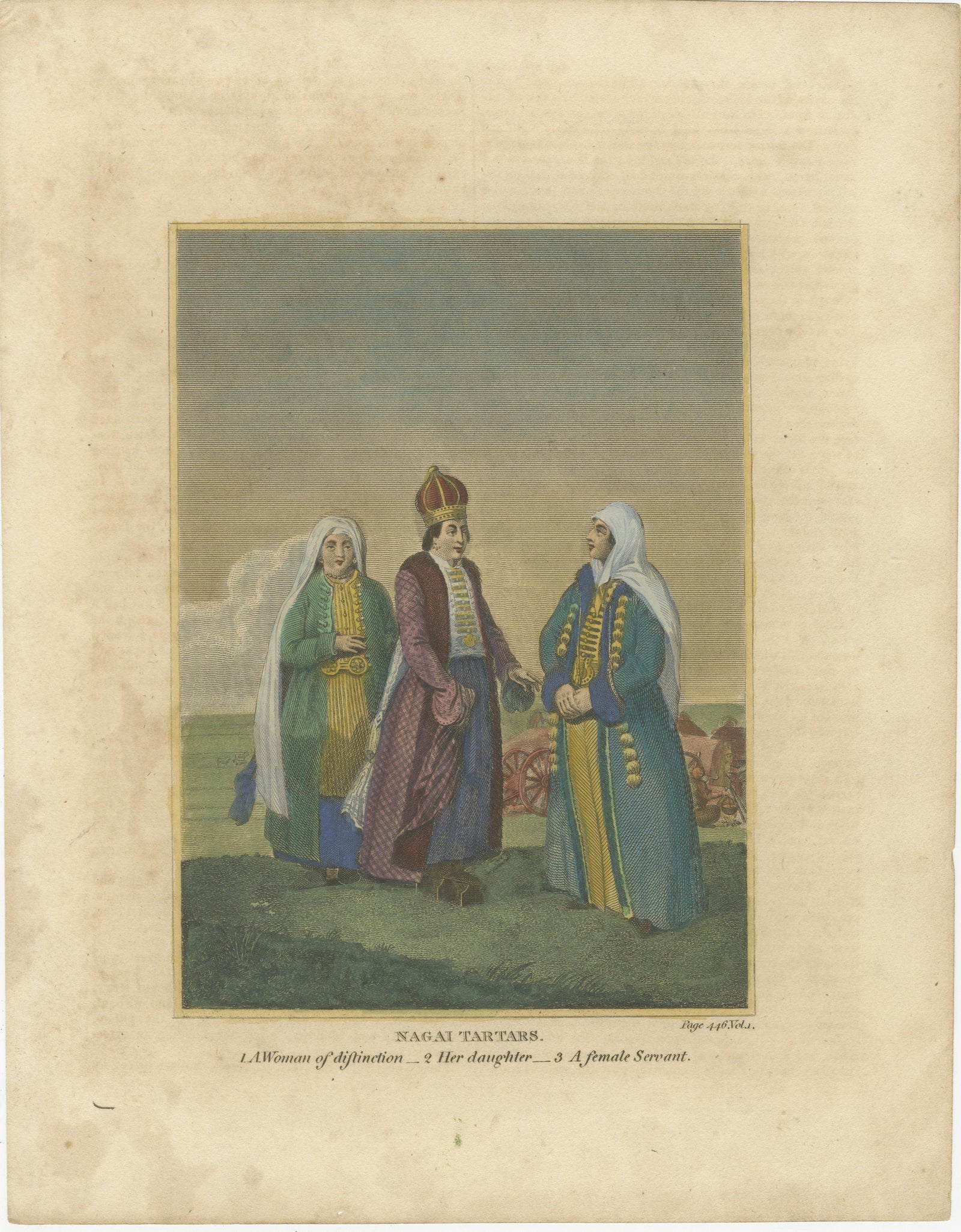
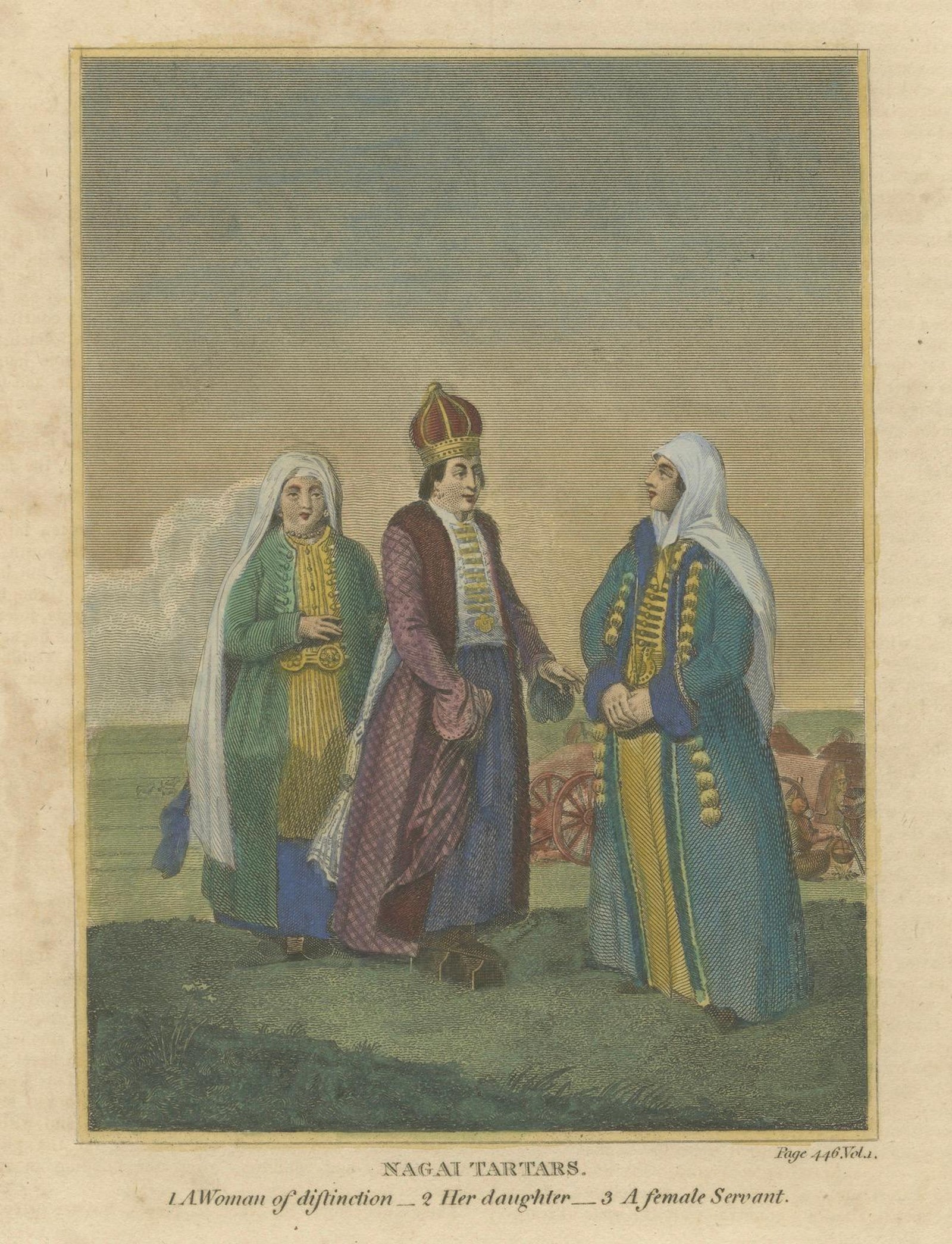
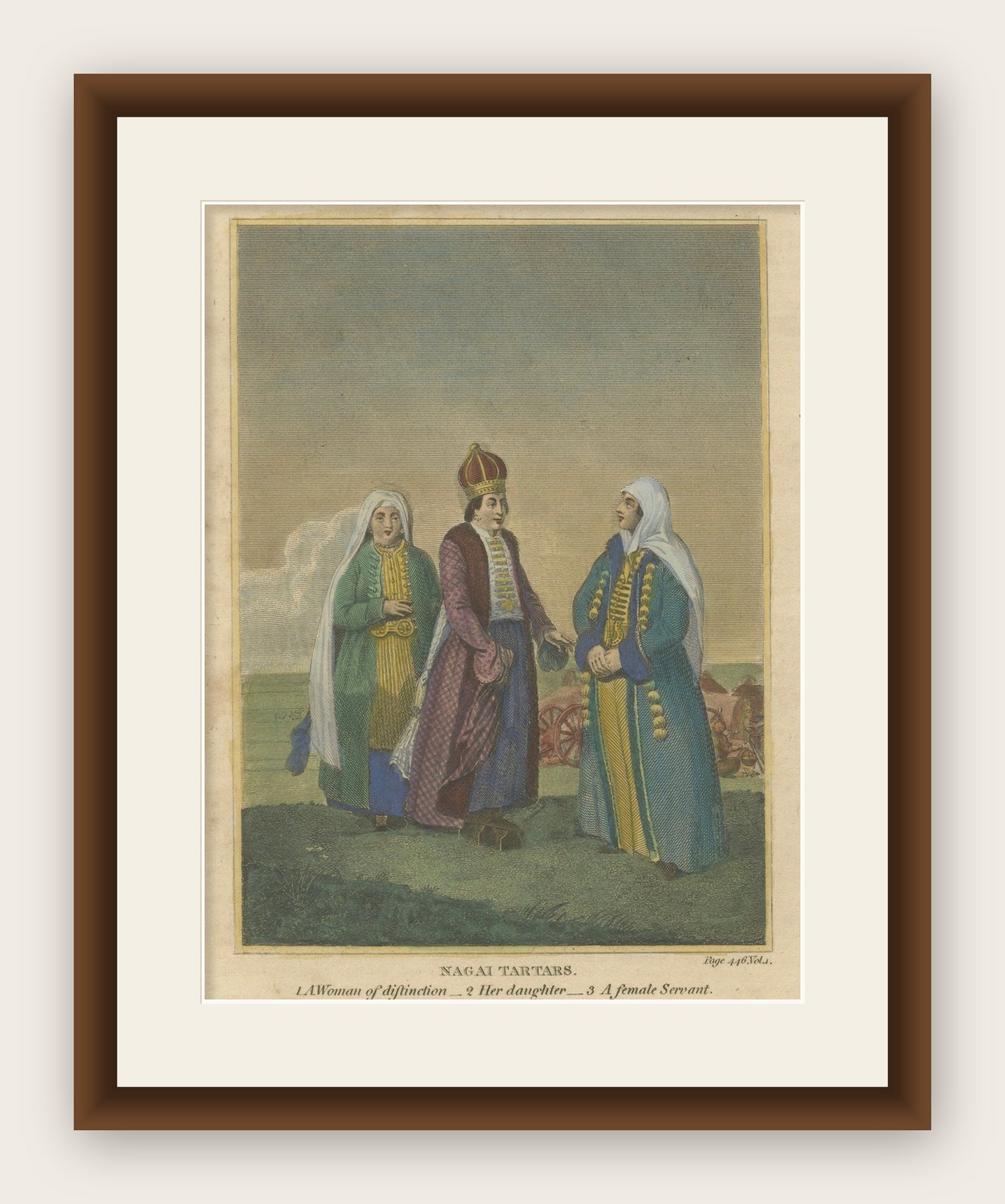
Nagai Tartars, Traditional Dress of Women of Distinction, c.1810 Engraving
£150
$200 · €180
Original print, not a reproduction.
Ships worldwide from the Netherlands, flat, insured and tracked. 14-day returns. To buy, use Ask a question and we will reserve the print for you.
- Date
- 1810
- Sheet size
- 10.7 × 8.3 in (27.1 × 21 cm)
- Condition
- Good. Condition overall. Plate impression strong, with original hand coloring still vivid. Light foxing and scattered spotting visible, particularly in the margins. Slight age-toning consistent with early 19th-century paper.
- Wardrobe
- Far & away
- Era
- 1790 to 1840, Empire and Romantic
- Stock no.
- f_46173102
Nagai Tartars, Traditional Dress of Women of Distinction, c.1810
This delicately hand-colored copper engraving titled Nagai Tartars portrays three women of the Nogai Tatar ethnic group in traditional costume, reflecting early 19th-century European interest in the diversity of peoples within the Russian Empire and Central Asia. The print is captioned below:
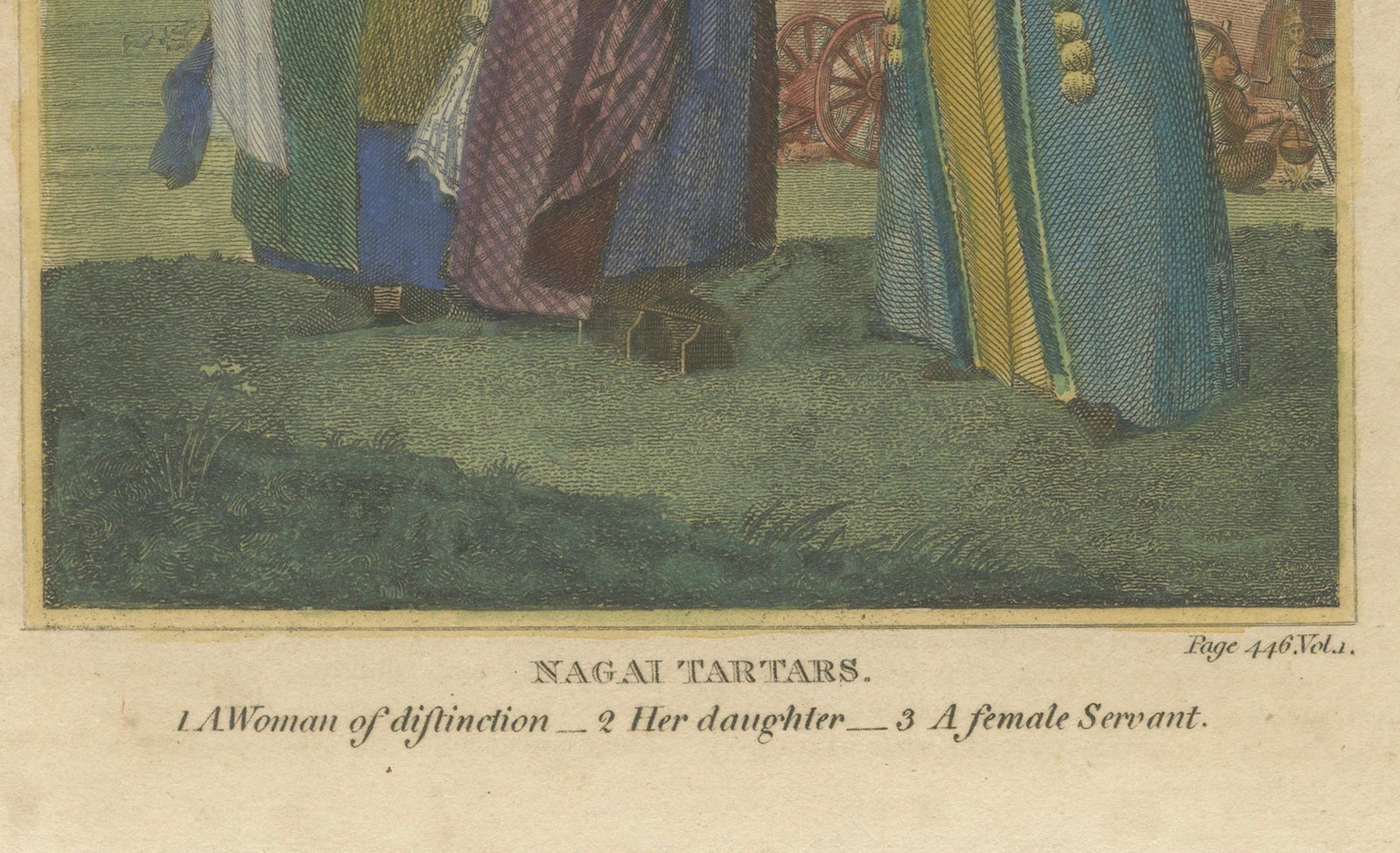
1. A Woman of distinction, 2. Her daughter, 3. A female Servant.
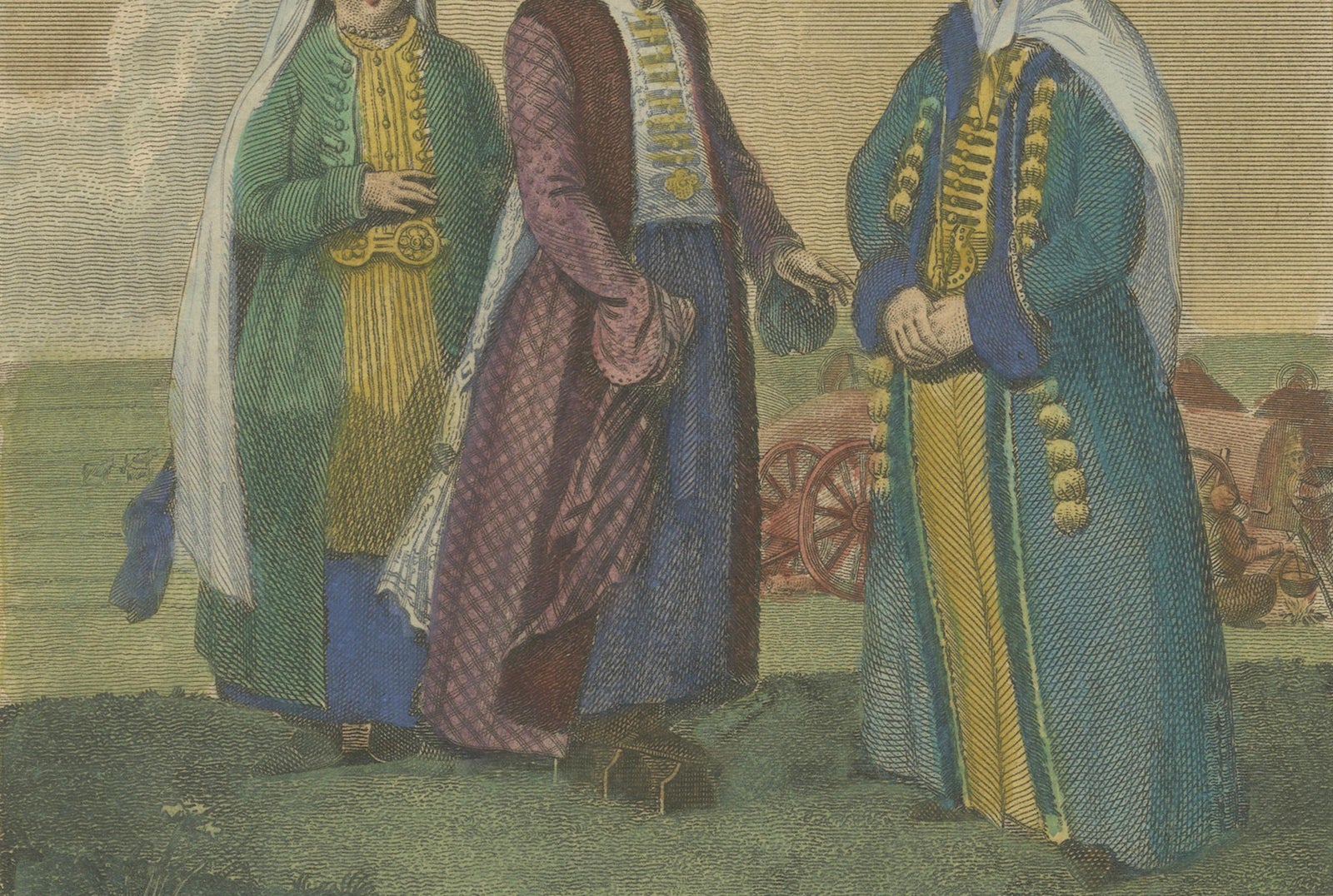
The composition features the three figures standing in a grassy open landscape. Each wears richly ornamented garments in bold colors: long robes with golden trim and decorative tassels, white veils covering their hair, and embroidered sashes. The central figure, marked by a taller, elaborate headdress, represents the woman of distinction, while her daughter and servant wear similar but less ornate clothing. In the background, one can discern elements of nomadic life, such as wooden carts, possibly alluding to the group's semi-nomadic traditions.
This print likely appeared in an ethnographic publication such as Costume of the Russian Empire or A Collection of the Dresses of Different Nations, produced in England in the early 1800s for an audience fascinated by exotic customs and imperial diversity. It reflects the era’s growing scholarly and artistic effort to document and categorize the world’s peoples through costume studies, especially those under Russian, Ottoman, and Qing dominion.
The Nogai Tartars (also spelled Nagai or Noghay) are a Turkic-speaking people historically inhabiting the steppe regions north of the Black Sea and the Caucasus. Descendants of the Mongol Golden Horde, they were known for their equestrian culture, Islamized traditions, and later integration into the Russian Empire.
Condition: Good condition overall. Plate impression strong, with original hand coloring still vivid. Light foxing and scattered spotting visible, particularly in the margins. Slight age-toning consistent with early 19th-century paper.
Framing tips: A classic walnut or mahogany frame with a soft cream mat will enhance the period character of the print. Ideal for historical costume or ethnographic collections.
Technique: Copper engraving with original hand coloring
Maker: Anonymous, published in England, c.1810