Close-ups
Framed and on the wall
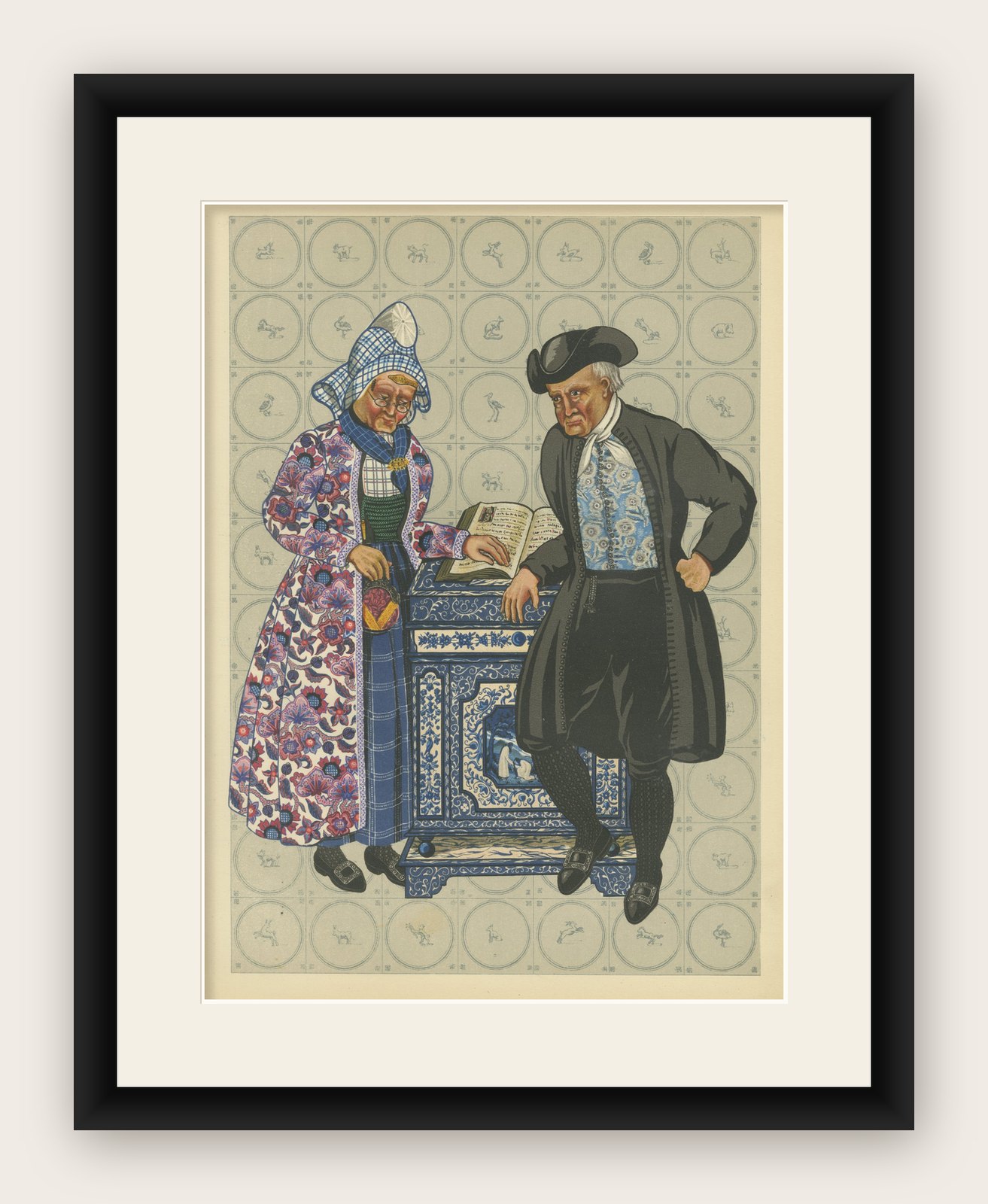
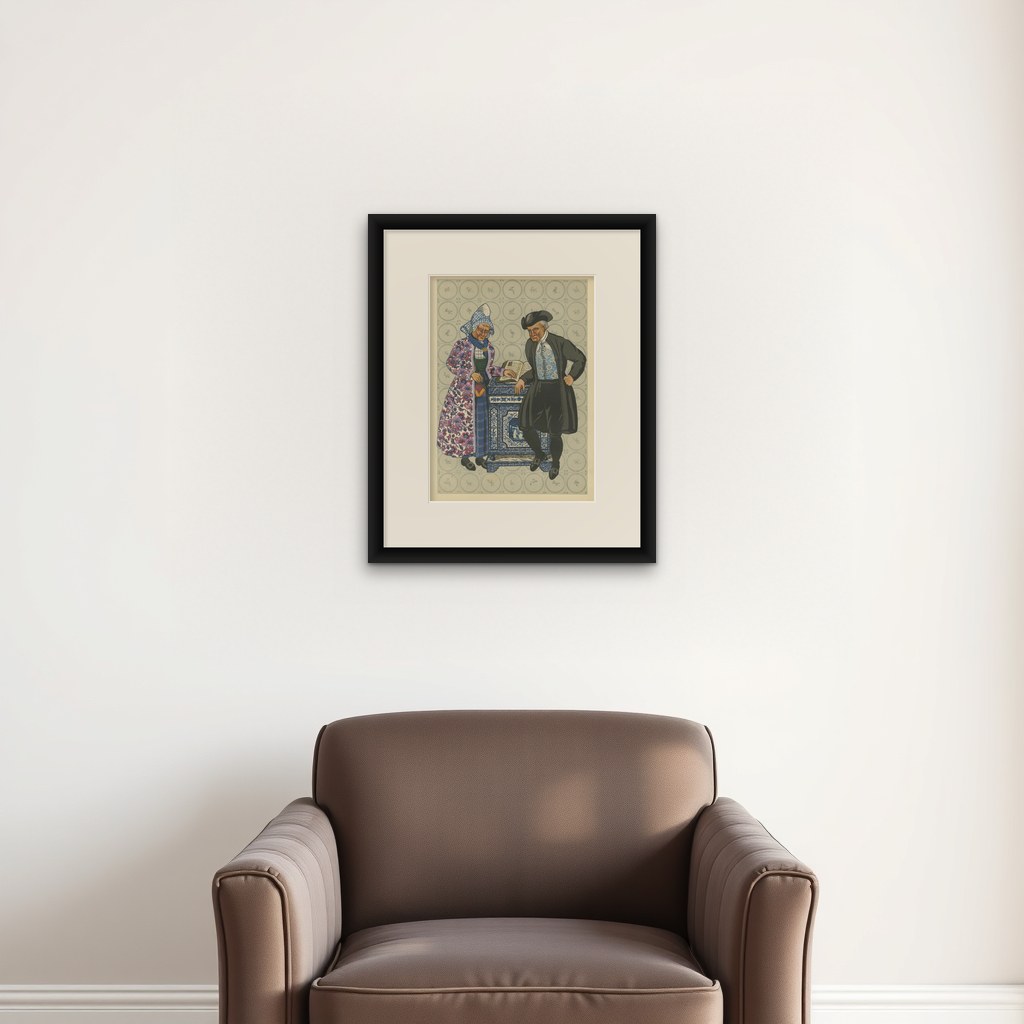
Frame and rooms are illustrations of how the print could look; the description says what is included.
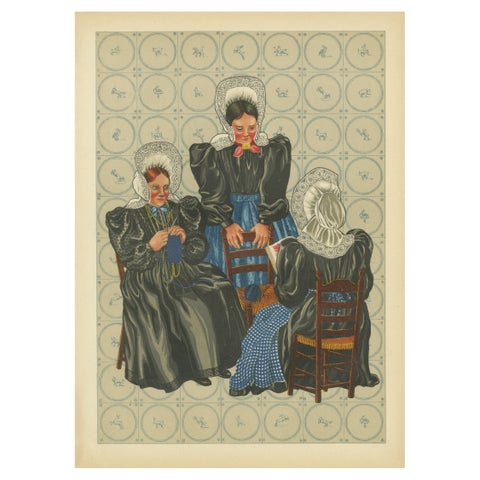
Mourning Dress in Hindeloopen with Delft Stove, 1932 Lithograph
€490
$550 · £415
Original print, not a reproduction.
Ships worldwide from the Netherlands, flat, insured and tracked. 14-day returns. To buy, use Ask a question and we will reserve the print for you.
- Date
- 1932
- Sheet size
- 14.6 × 10.8 in (37 × 27.5 cm)
- Condition
- Good. The print remains in excellent vintage condition with strong color retention and no visible tears or stains.
- Wardrobe
- Folk finery
- Era
- 1900 and after, Belle Époque on
- Stock no.
- f_44913622
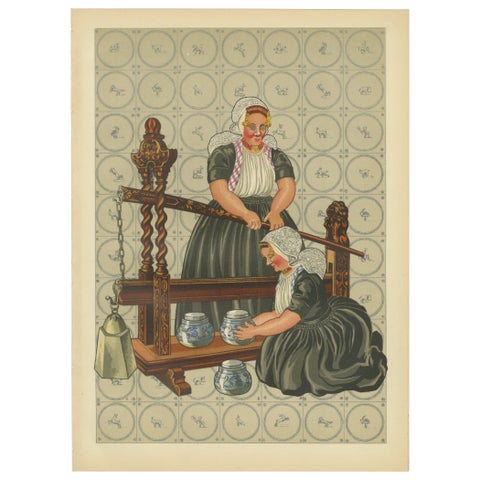
Mourning Costumes of Hindeloopen with Painted Reading Desk, 1932
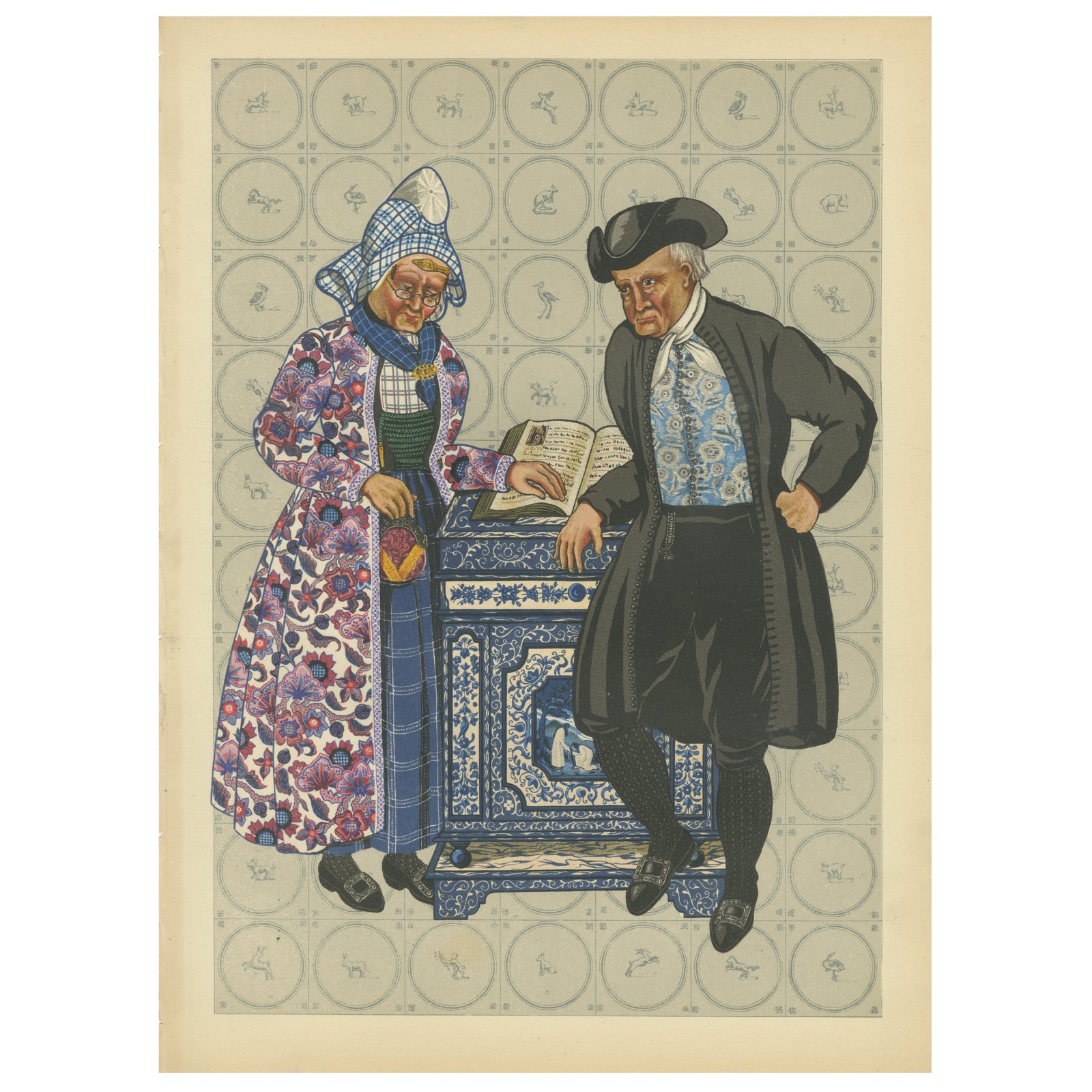
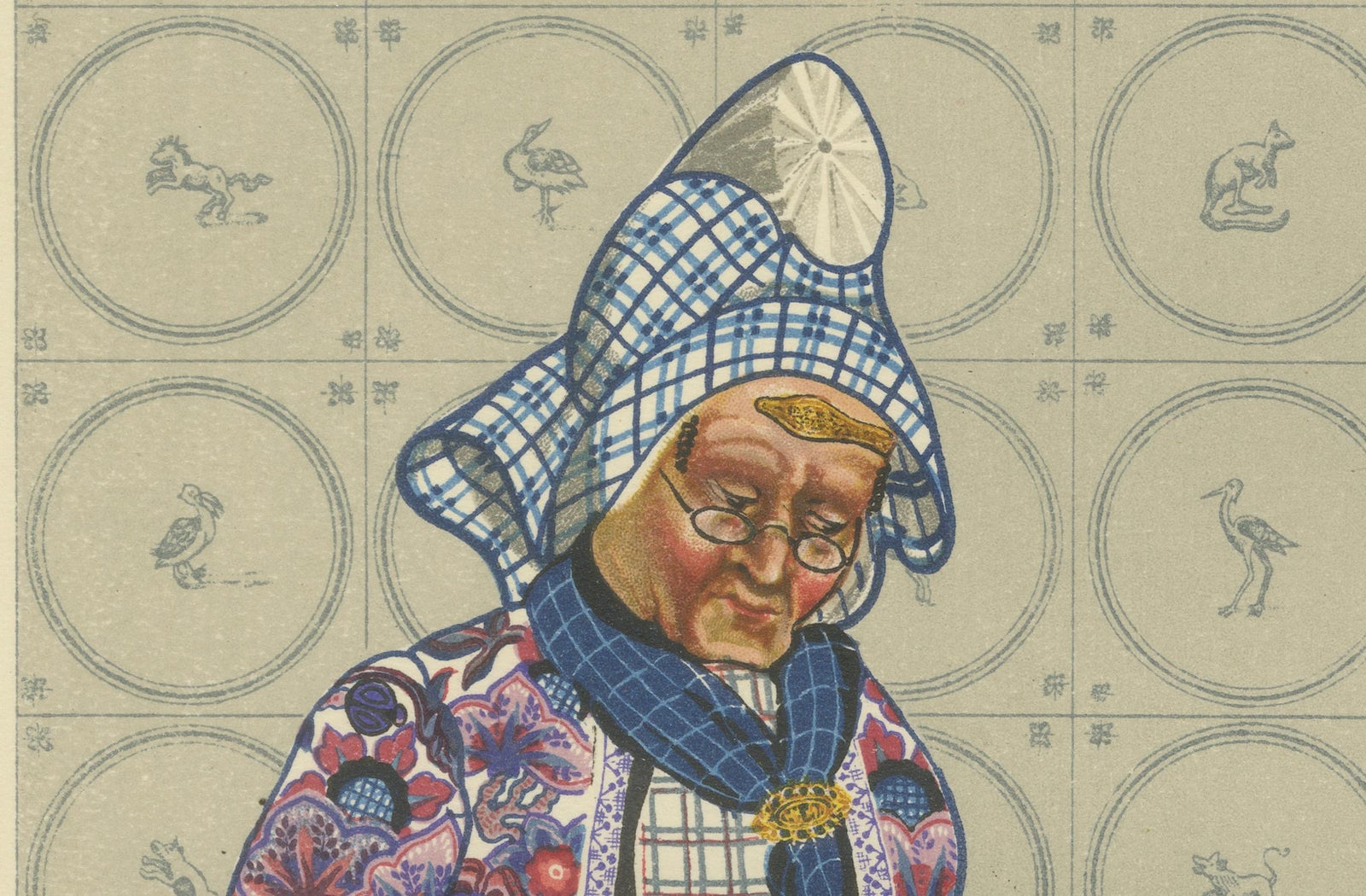
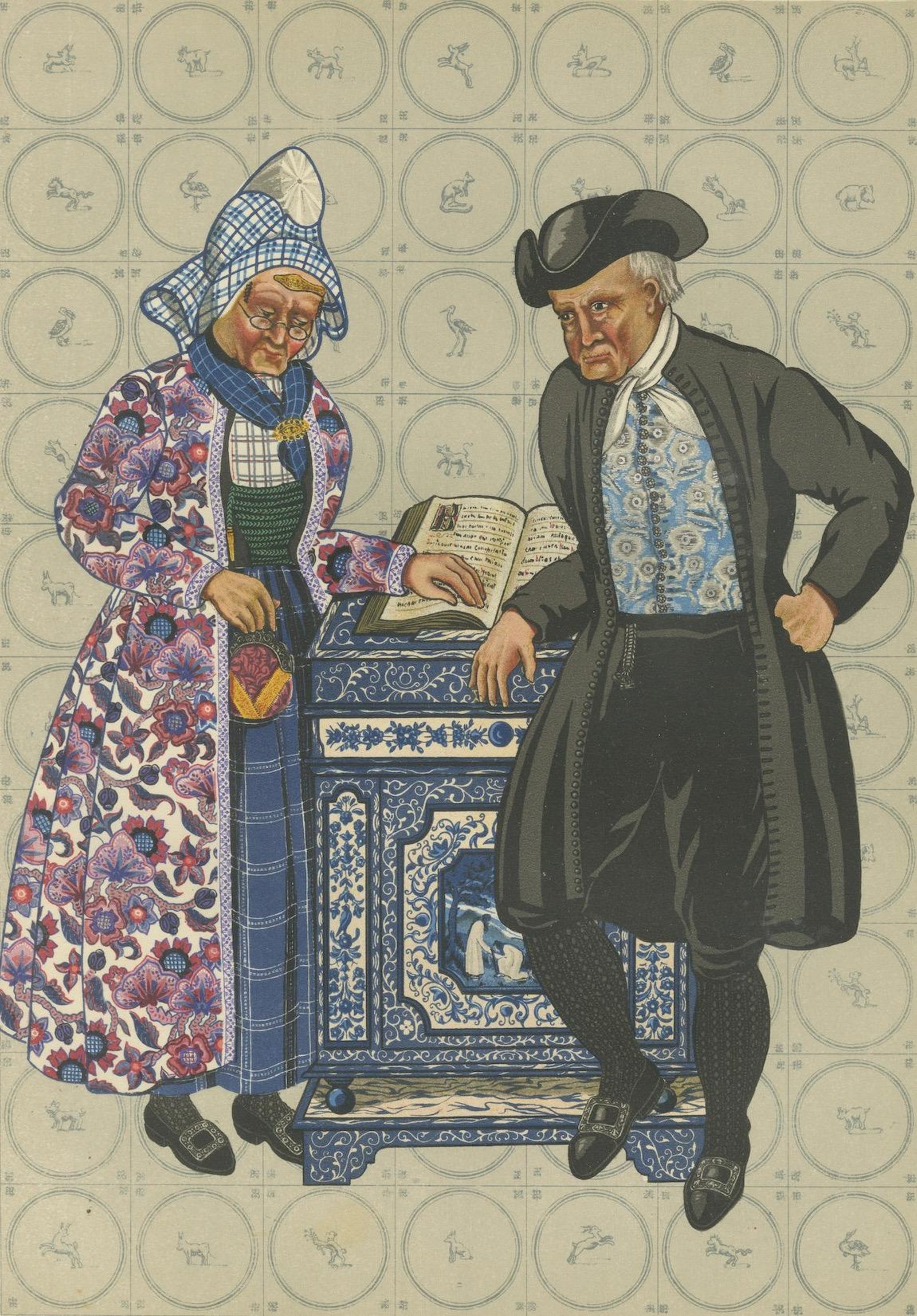
This striking hand-colored lithograph is Plate II from the 1932 folio The National Costumes of Holland, created by Gratiane de Gardilanne and Elizabeth Whitney Moffatt with text by Alma Oakes. Only 500 copies of the folio were printed for commercial distribution, making each individual plate a rare and highly collectible item. This particular illustration is titled Mourning in Hindeloopen and depicts a traditional mourning scene from the coastal Frisian town of Hindeloopen.
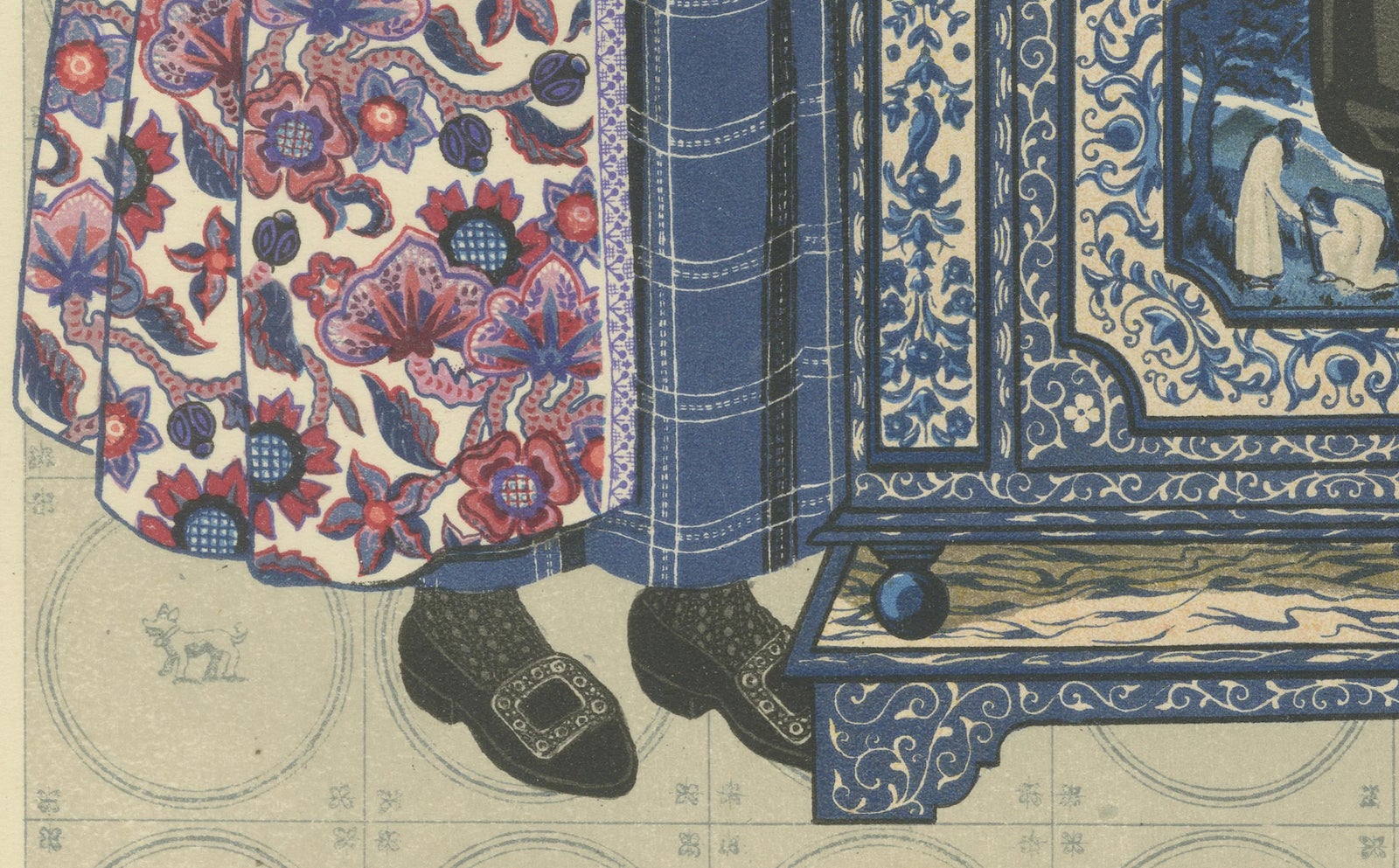
The image shows an elderly man and woman dressed in the third degree of mourning, one of seven distinct stages once observed in this region. The woman wears a foarflechten, a stiff linen hat covered in dull black cambric, in place of the usual white head covering. Her checked Indian cotton zondoek and her fichu, in tones of very dark and light blue, reflect mourning customs specific to Hindeloopen. Her long coat, known as a wentke, is purple and blue, and is trimmed with a langet of matching tones rather than the typical reds and whites. She also wears a voorspeldoek, a decorative apron, and black shoes adorned with silver buckles.
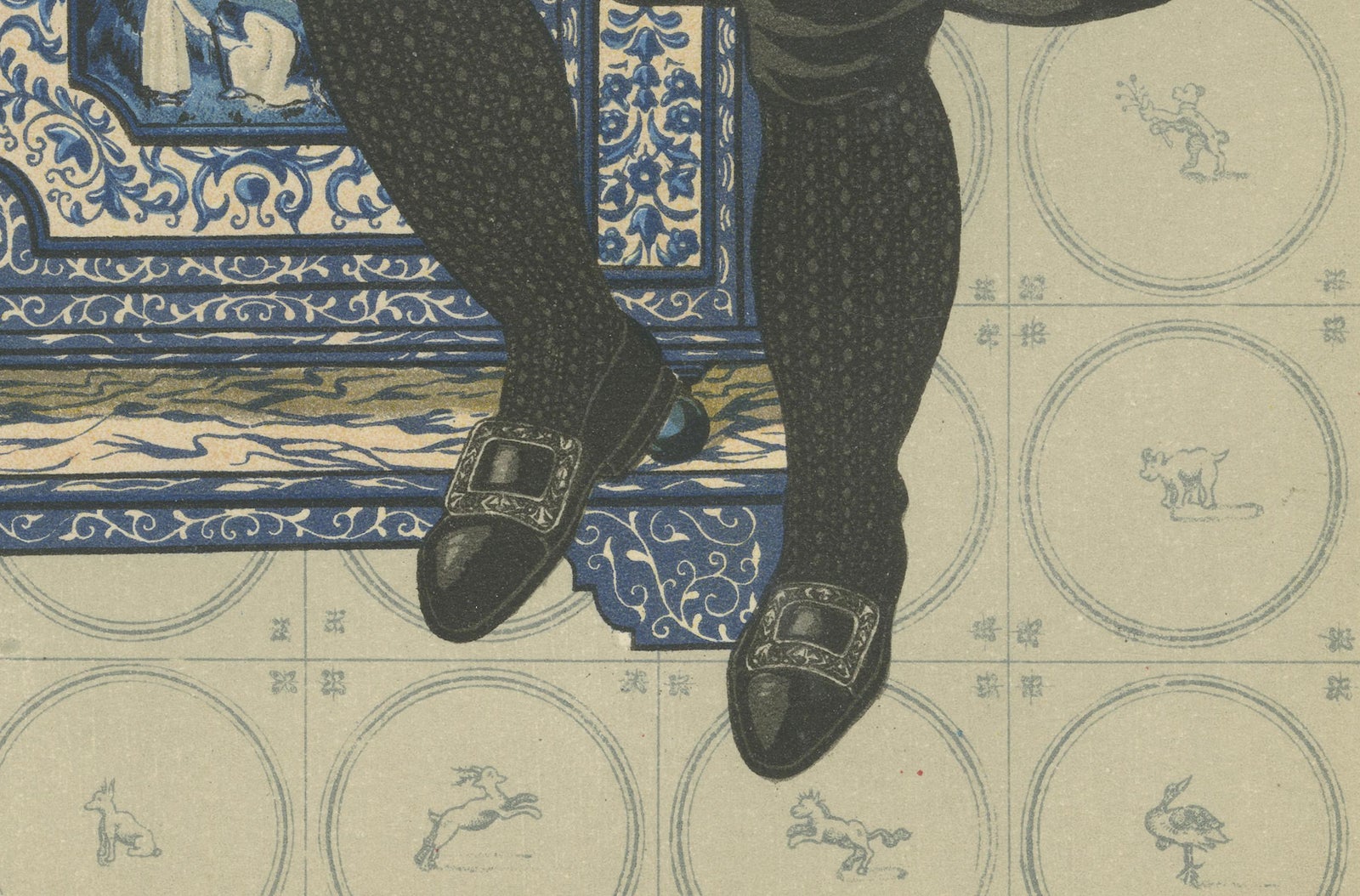
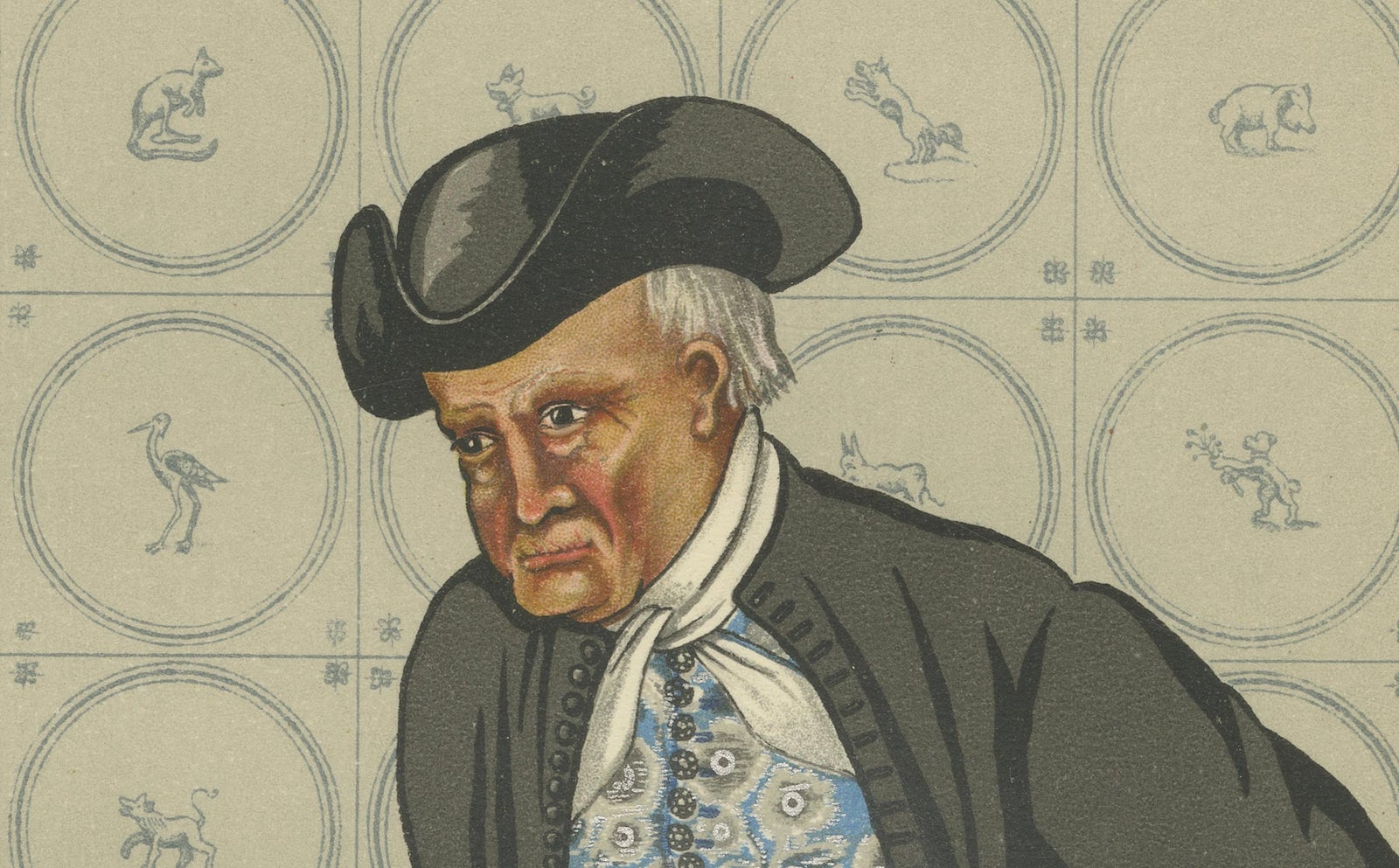
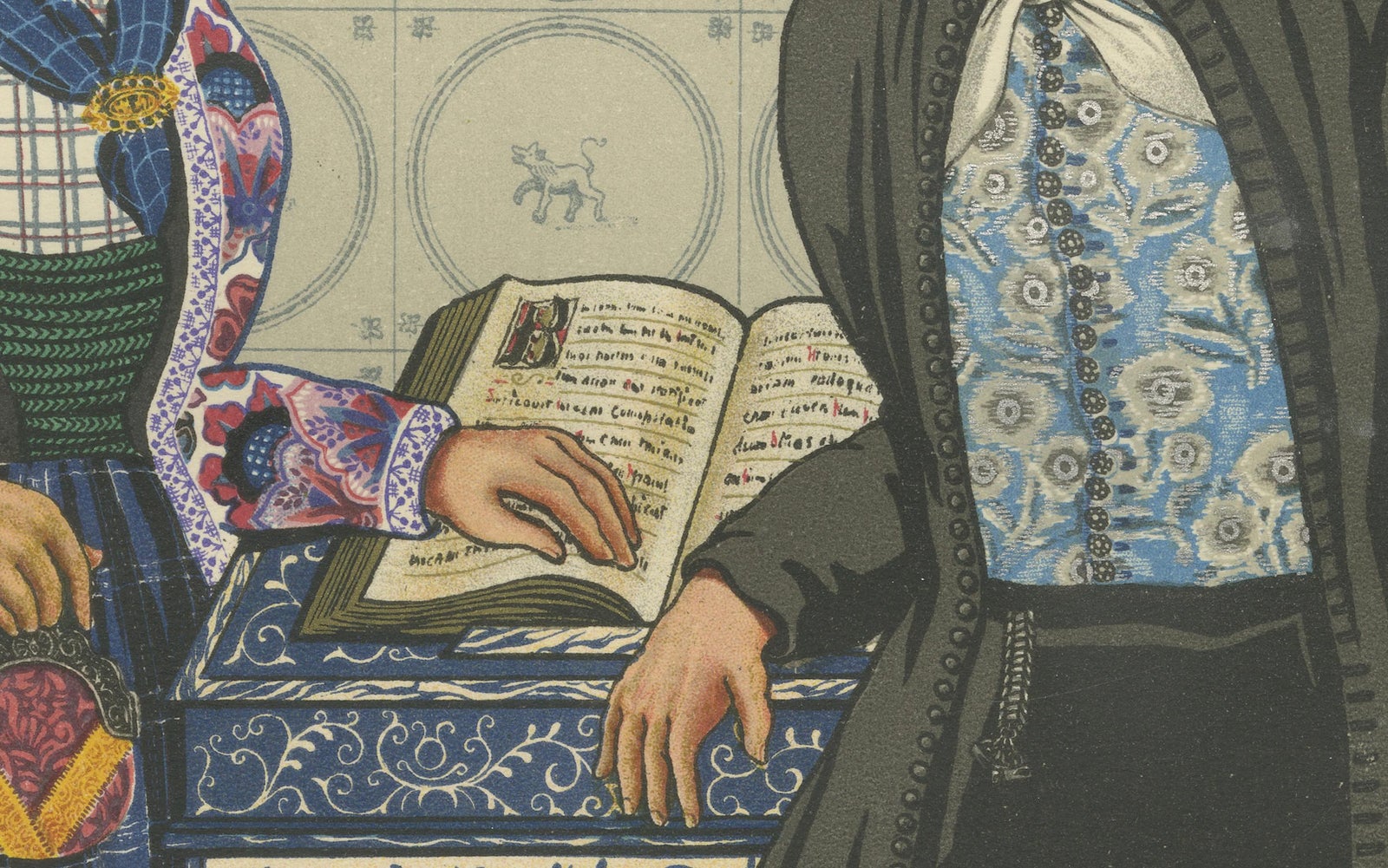
The man stands in formal Sunday dress, drawn from eighteenth-century fashion. He wears a blue and silver damask waistcoat beneath a long black broadcloth coat trimmed with small black buttons. His trousers are black knee-breeches, paired with worsted stockings and leather shoes with buckles. A white cambric neck scarf is tied traditionally, and a silver watch chain with seals and keys is visible hanging from his waist.
Between them stands a beautifully decorated Hindeloopen reading desk with a finely illuminated Bible laid open on top. Such painted furniture was commonly used during times of mourning, typically featuring a restrained palette of dark blue and white. Even the accompanying foot warmer would match these somber tones, making this scene a touching portrayal of domestic ritual and quiet dignity.
Technique and condition
This plate was printed using the chromolithographic process by Vincent, Brooks, Day and Son in London, a firm celebrated for its richly layered and precise color work. The print remains in excellent condition, with vibrant original color and clean margins, free from any visible tears or stains.
Framing tips
To enhance the subdued palette and period character of the print, a dark wood or black frame is recommended, paired with an archival off-white or dove grey mat. For an elegant presentation, consider floating the print above the mat within a shadow-box style frame. Always use UV-protective glass to guard the delicate surface and colors from light damage.