Close-ups
Framed and on the wall
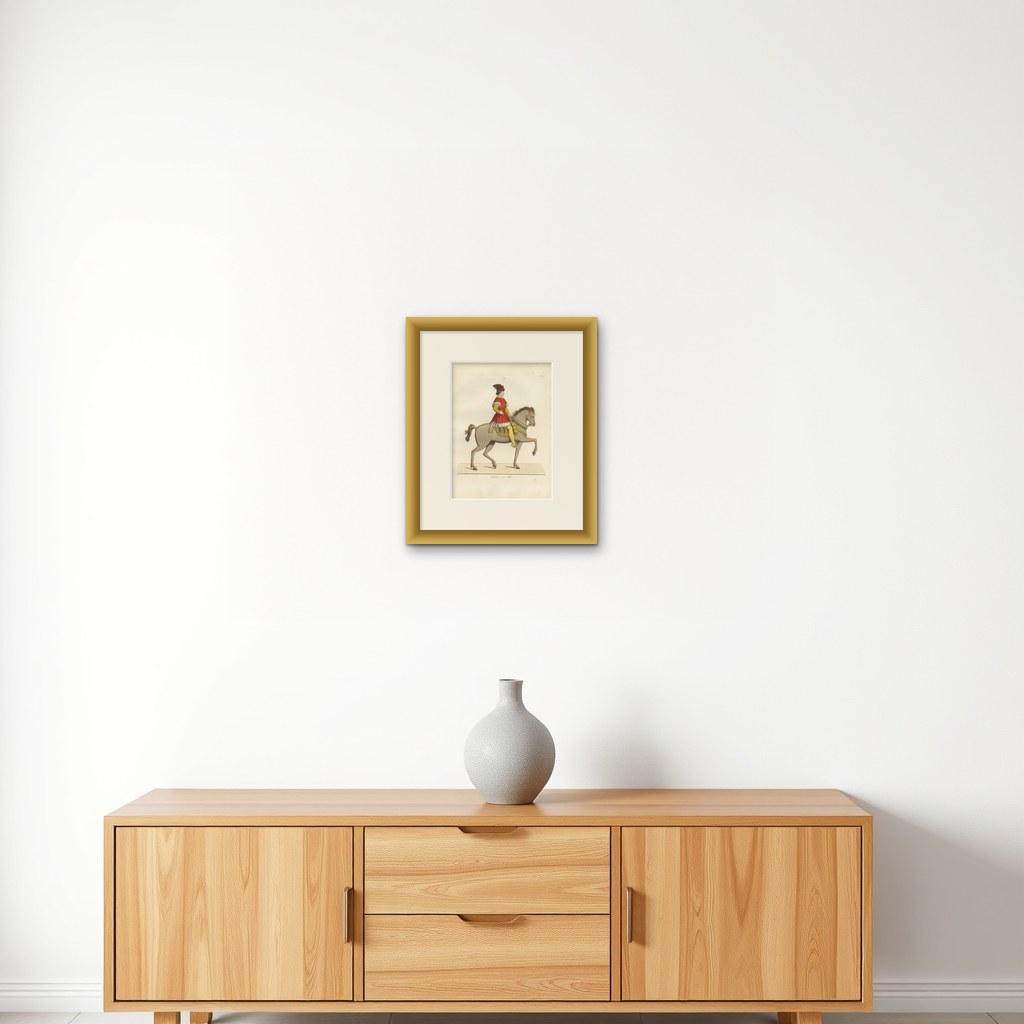

Frame and rooms are illustrations of how the print could look; the description says what is included.
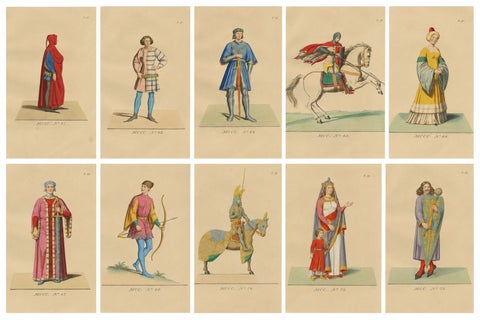
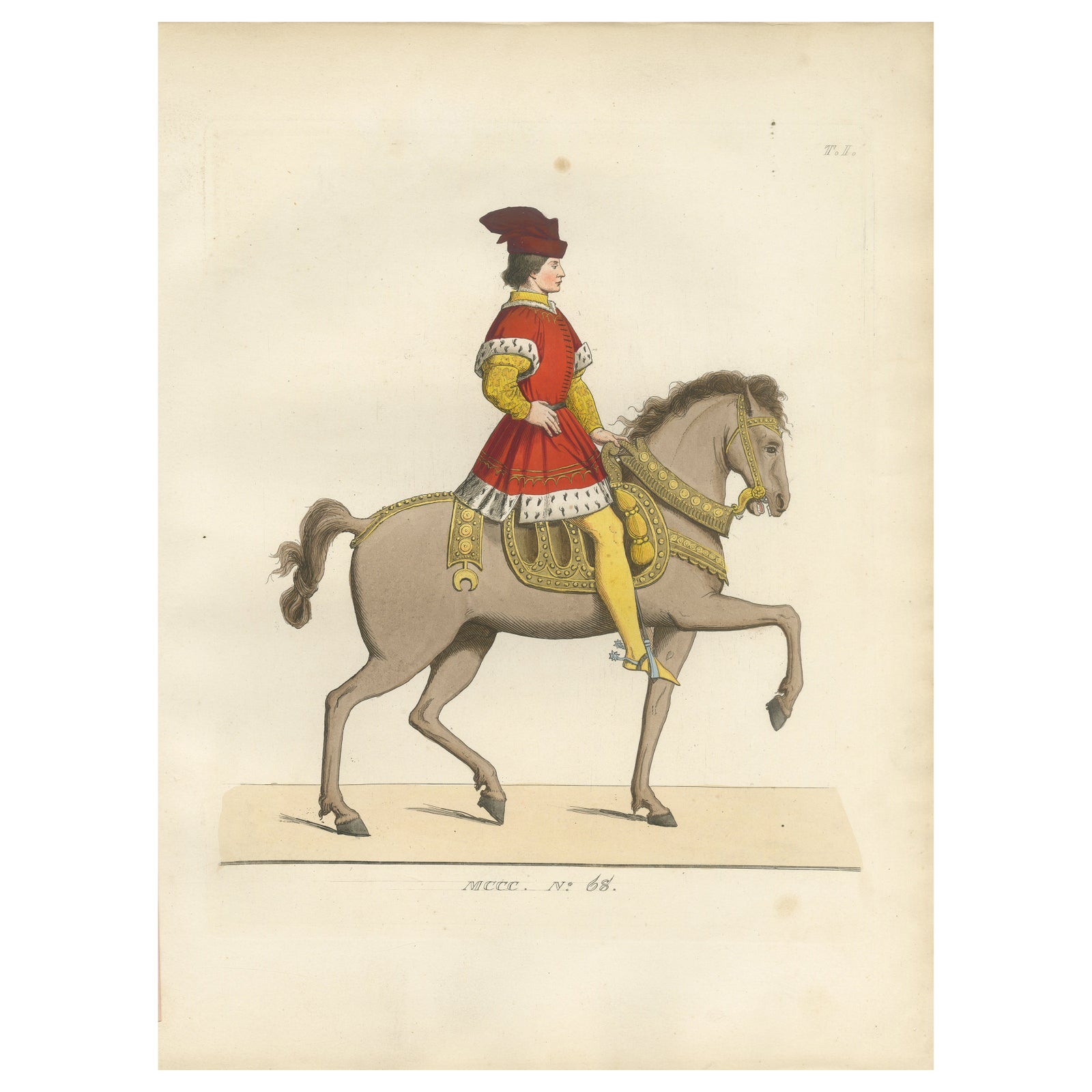
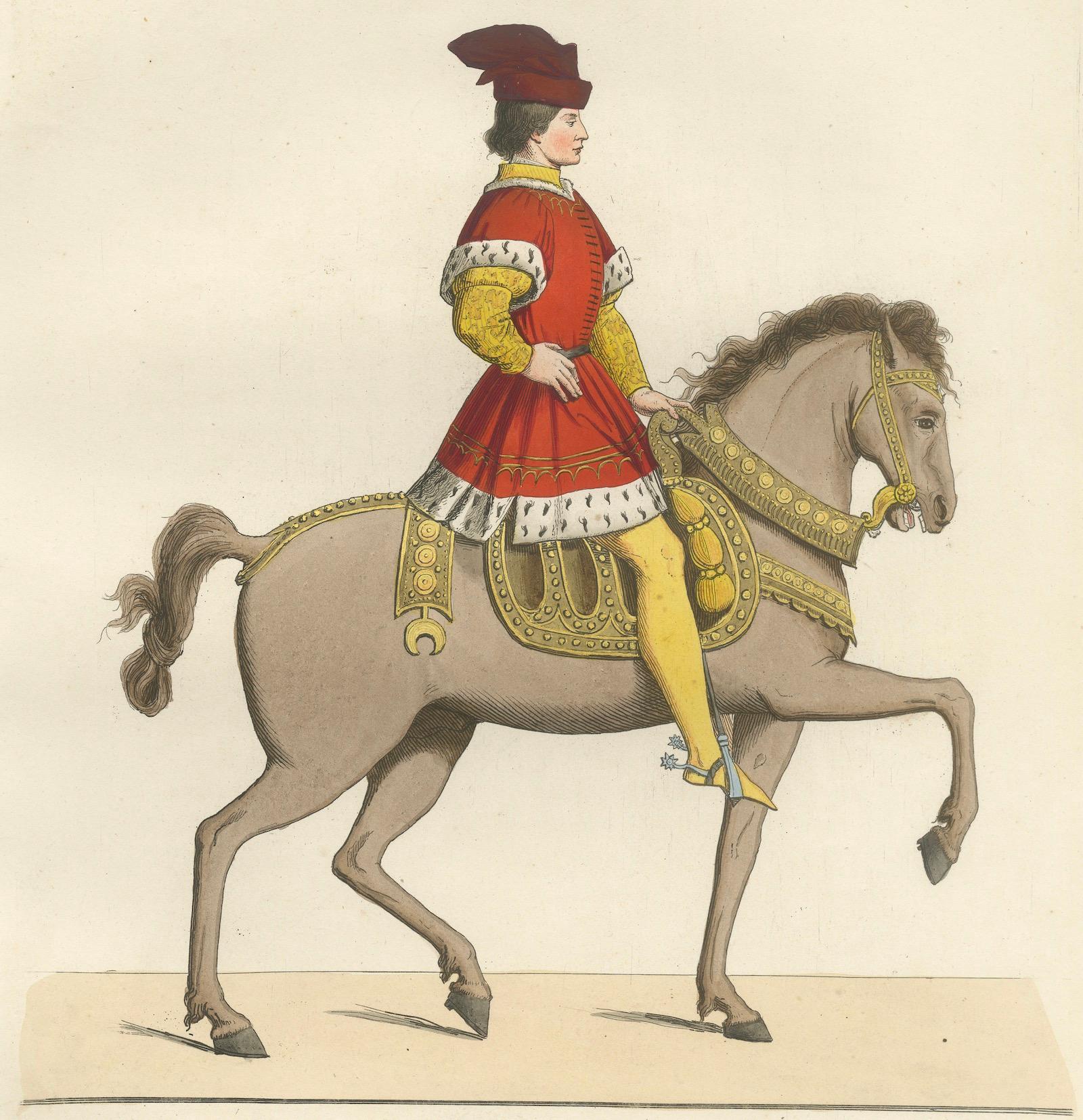
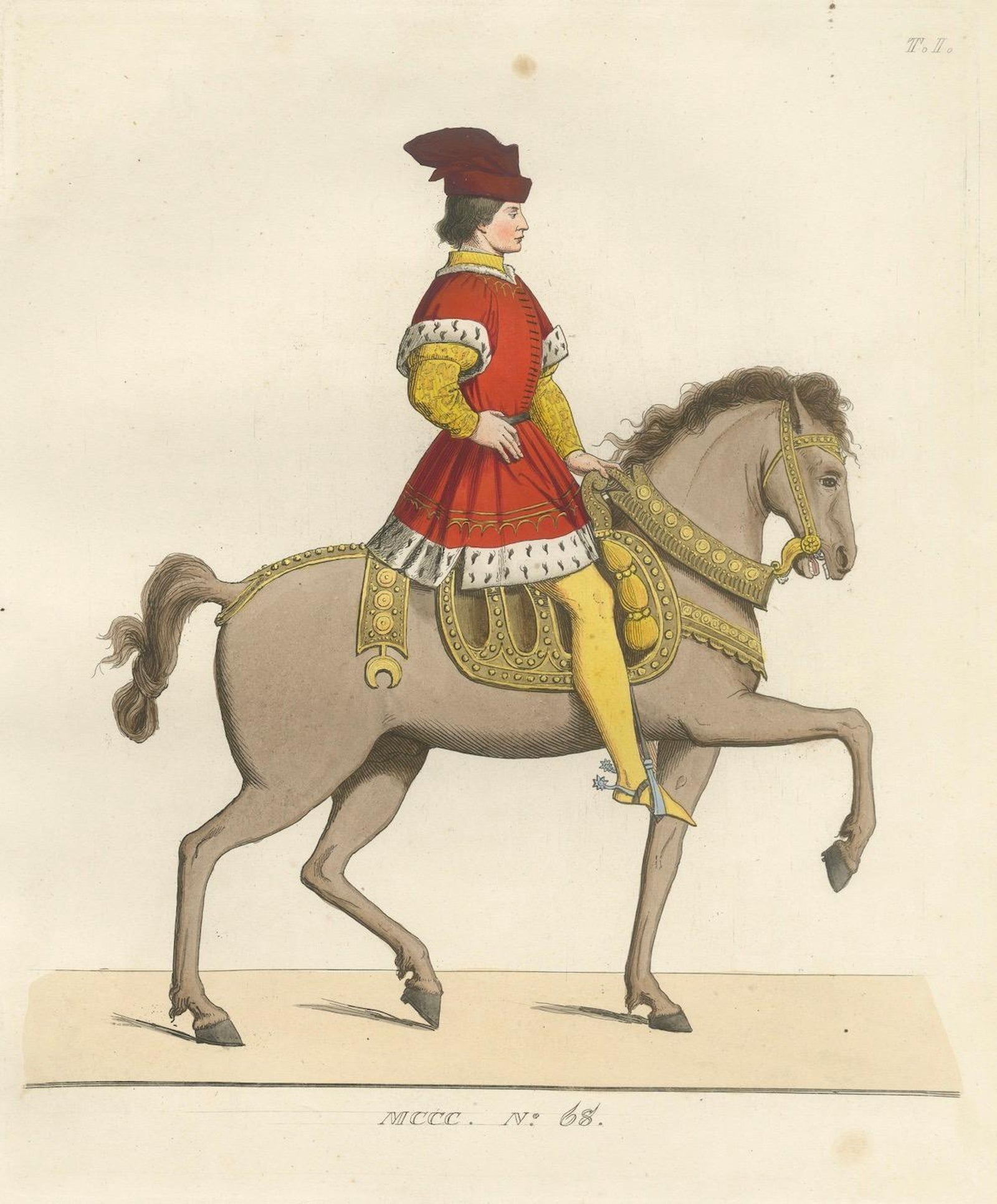
Mounted Nobleman in Parade Dress, Italian Renaissance Equestrian Portrait, 1845
£240
$315 · €280
Original print, not a reproduction.
Ships worldwide from the Netherlands, flat, insured and tracked. 14-day returns. To buy, use Ask a question and we will reserve the print for you.
- Date
- 1845
- Sheet size
- 11.9 × 8.8 in (30.3 × 22.3 cm)
- Condition
- Good. Very good condition. Colors remain strong and well-preserved, especially the reds and highlighted golds. Very light foxing near the edges, not affecting the image. No tears, folds, or stains observed.
- Wardrobe
- Court & couture
- Era
- 1840 to 1870, Crinoline
- Stock no.
- f_45420412
Mounted Nobleman in Parade Dress, Italian Renaissance Equestrian Portrait
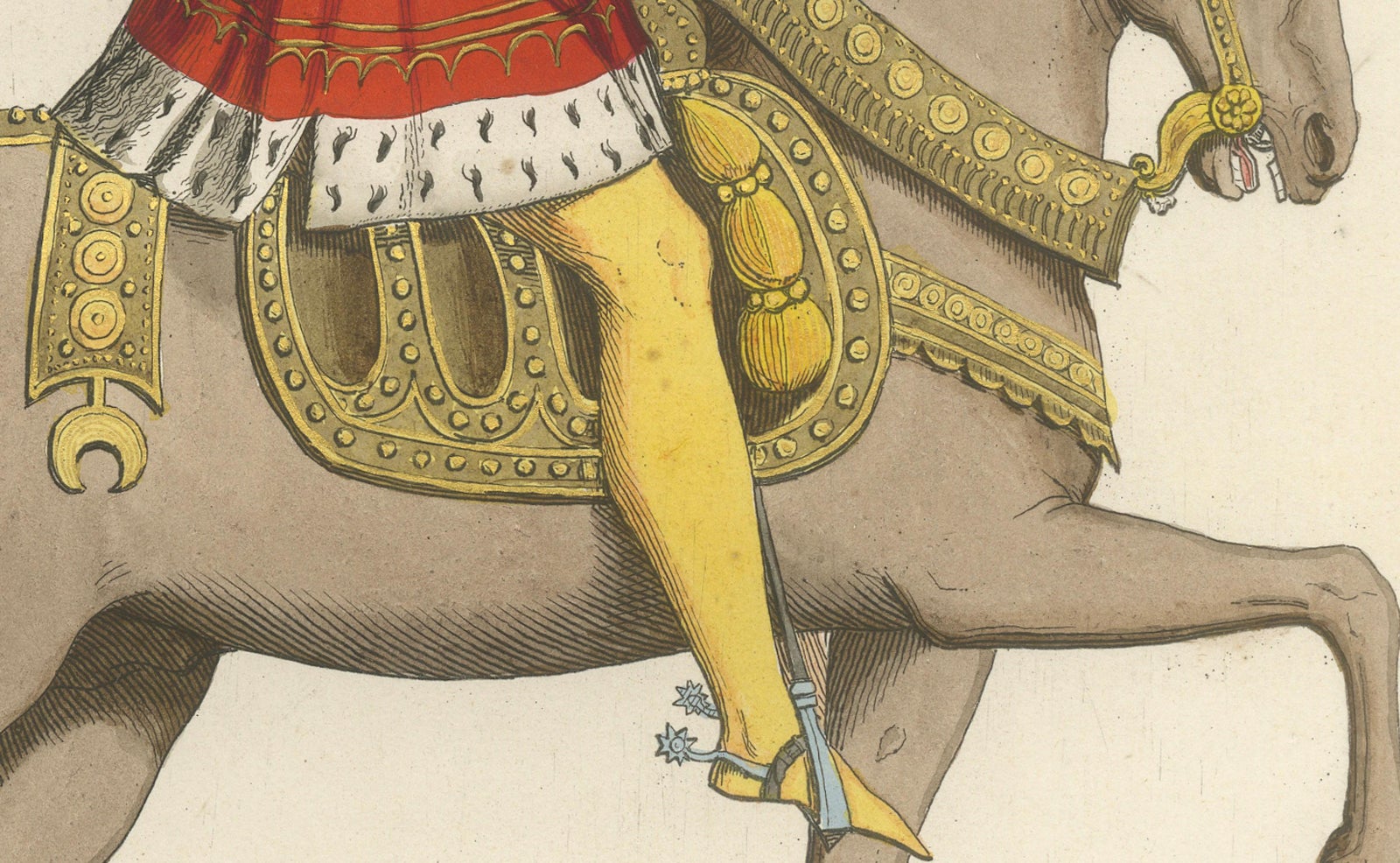
This vivid hand-colored print, marked No.68, presents a striking image of a Renaissance nobleman on horseback, dressed in ceremonial attire designed to impress. The figure sits confidently atop a prancing steed, richly adorned with gilded tack and an elaborately worked saddle blanket. The rider’s costume, scarlet red trimmed with white and lined in yellow, radiates prestige and theatricality, reflecting the noble pageantry typical of the 15th-century Italian court.
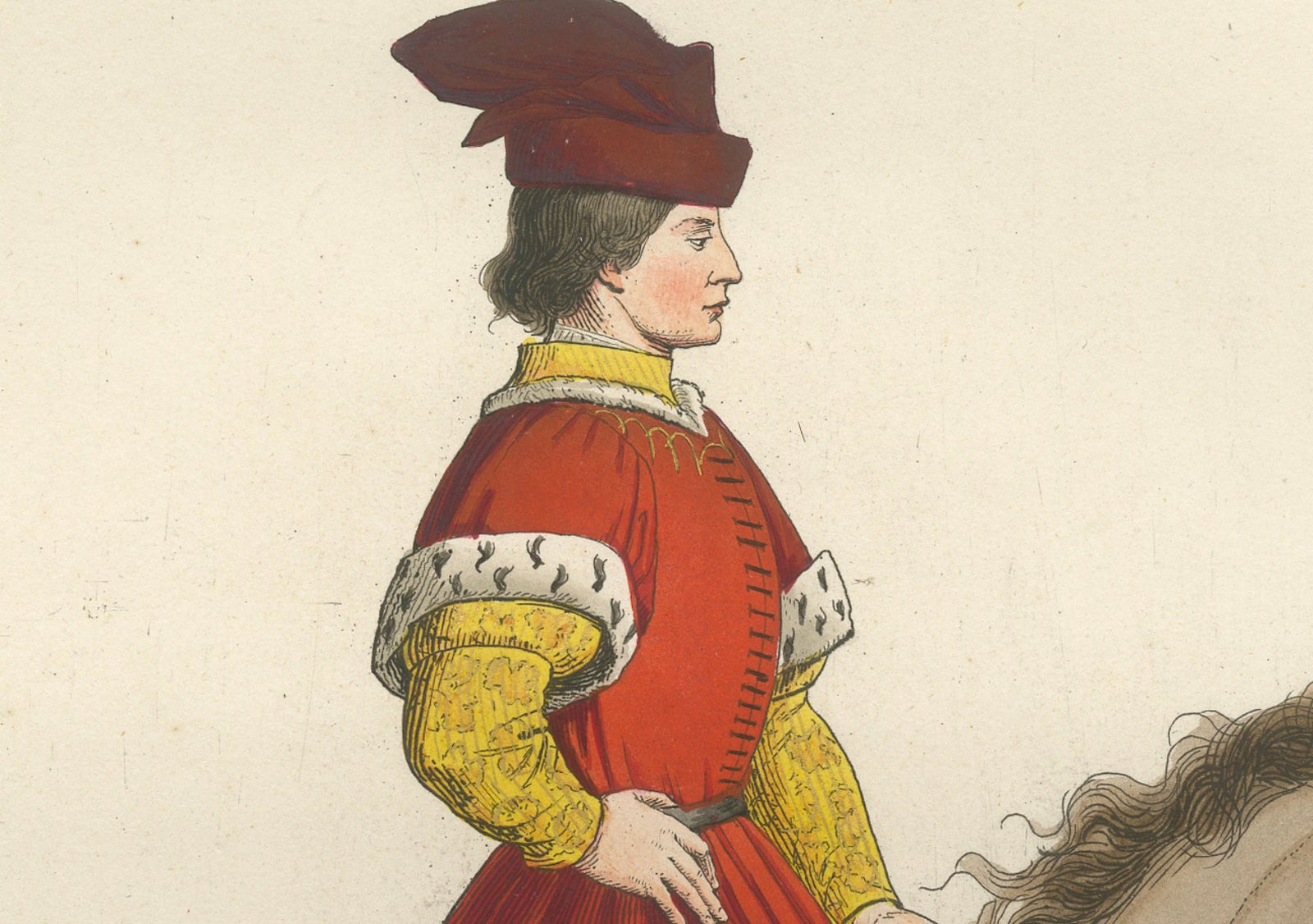
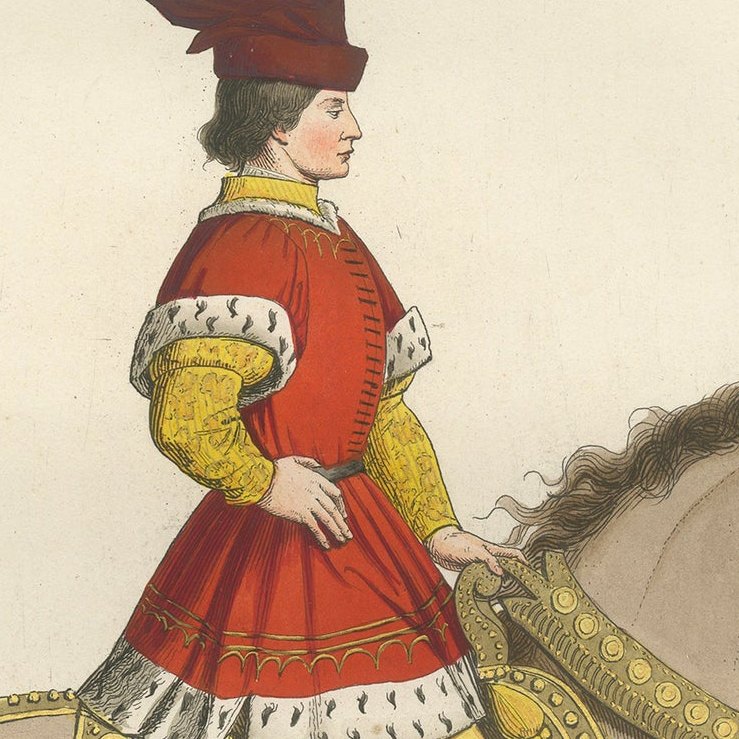
The nobleman wears a short red tunic over a finely patterned yellow doublet and hose, the former trimmed with white fur or embroidery at the hem and sleeves, suggesting high status and winter ceremonial use. His hand rests proudly on his hip, and his face, in profile, exudes youthful assurance and command. A red cap with a distinctive turned-up brim completes the ensemble, an accessory that was often associated with urban elites and merchant nobility in Florence and other northern Italian city-states.
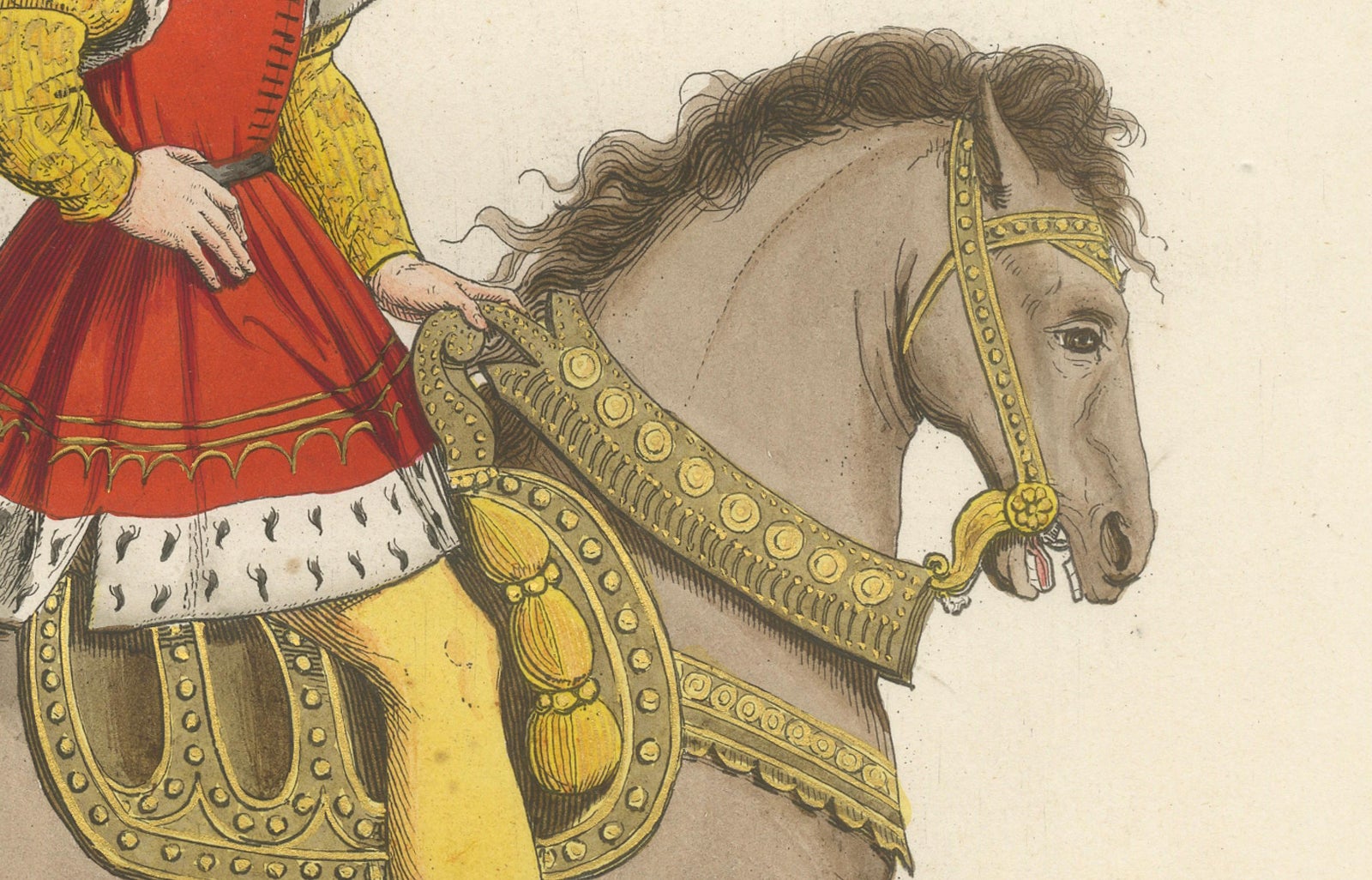
The horse is portrayed mid-stride, with one foreleg raised in elegant motion, suggesting not only action but discipline and training. Its smooth coat, neatly trimmed mane, and refined posture make it clear that this is a parade horse, perhaps prepared for a civic festival, marriage procession, or diplomatic entrance. The lavish harness, with gold medallions and finely tooled leatherwork, reflects both the status of the rider and the attention paid to equestrian culture in Renaissance Italy.
This plate is not merely a costume study but a statement of social rank, civic identity, and the enduring association between nobility and horsemanship. It would make an exceptional addition to collections focusing on equestrian art, Renaissance costume, or aristocratic iconography.
Condition:
Very good condition. Colors remain strong and well-preserved, especially the reds and highlighted golds. Very light foxing near the edges, not affecting the image. No tears, folds, or stains observed.
Framing Tips:
This dynamic equestrian subject deserves prominent display. Use a wide ivory or parchment-colored mat to enhance the rich coloring. A dark wood or gilt frame complements the noble character of the piece. Consider float-mounting to reveal the plate number and preserve the authenticity. UV-filtering museum glass will help maintain the vibrancy of the hand-coloring.