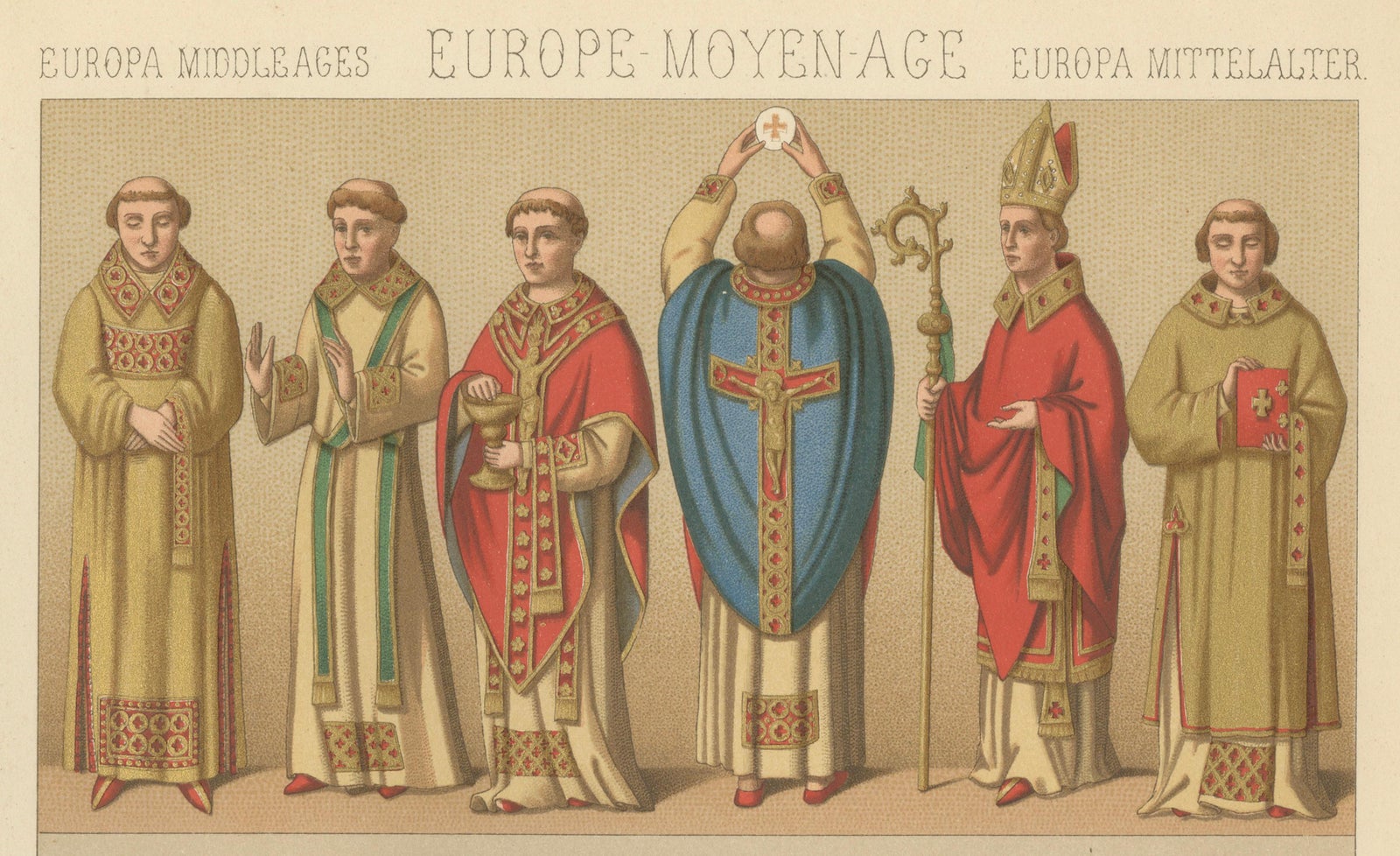
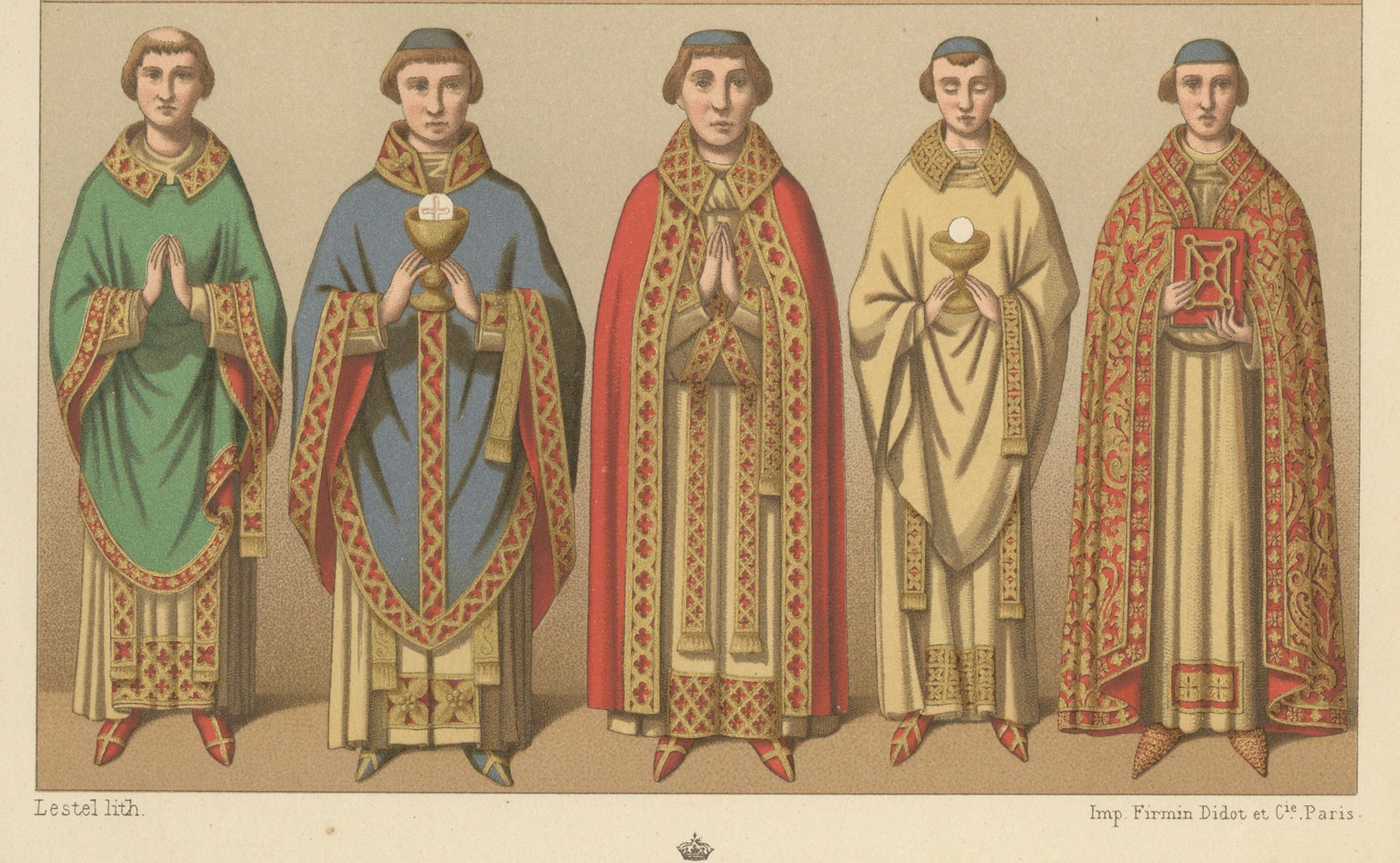
Close-ups
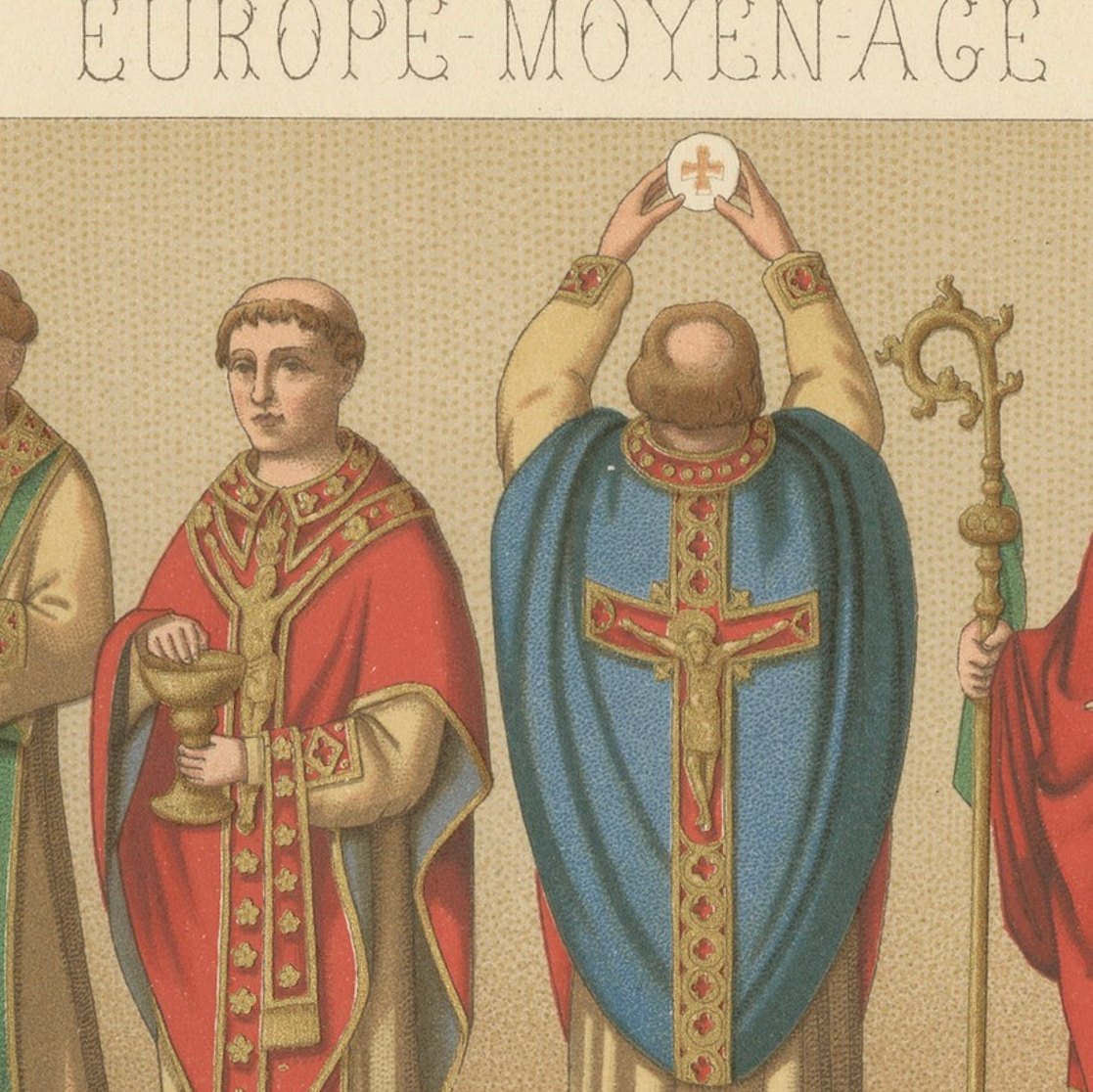
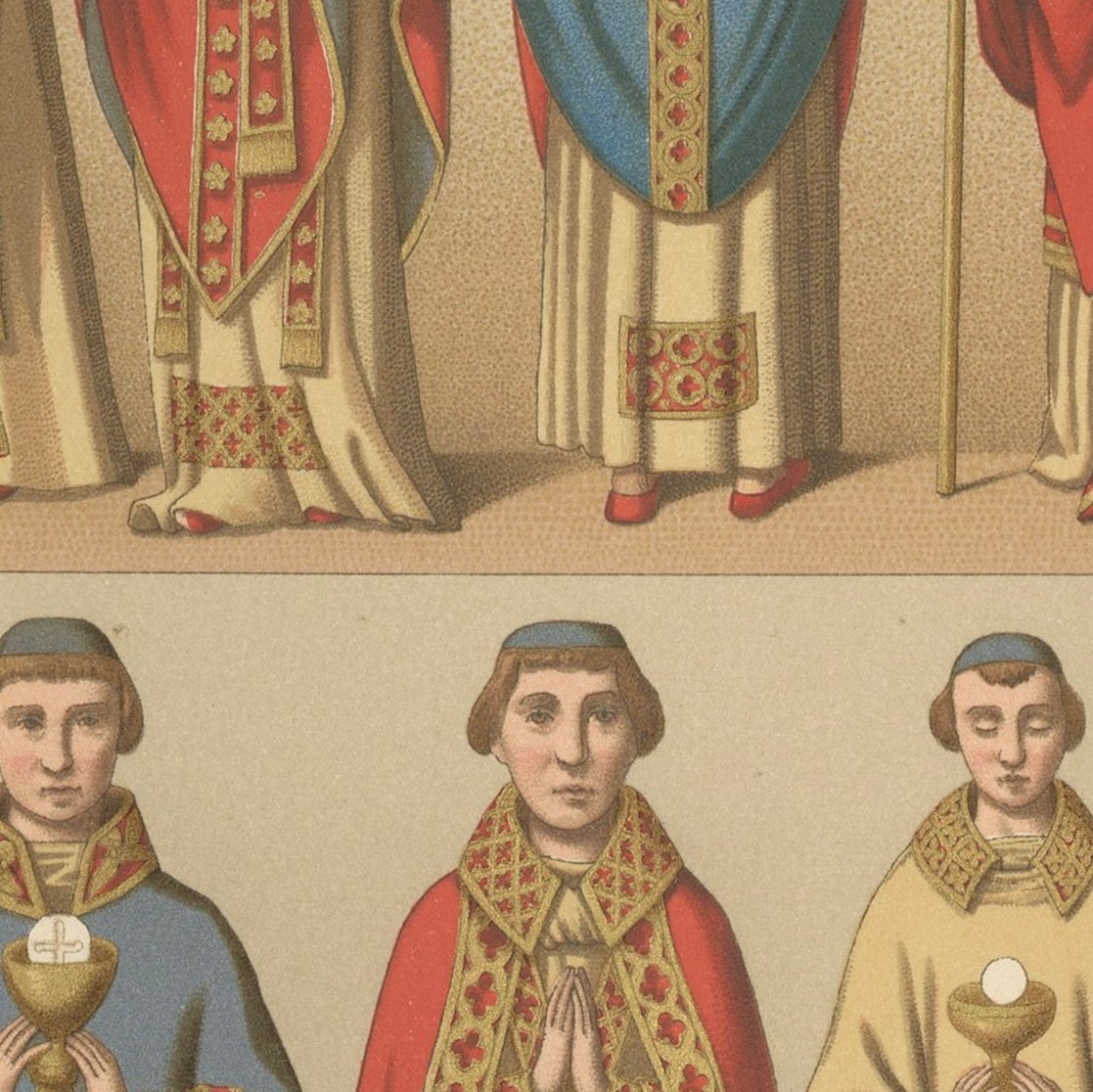
Framed and on the wall
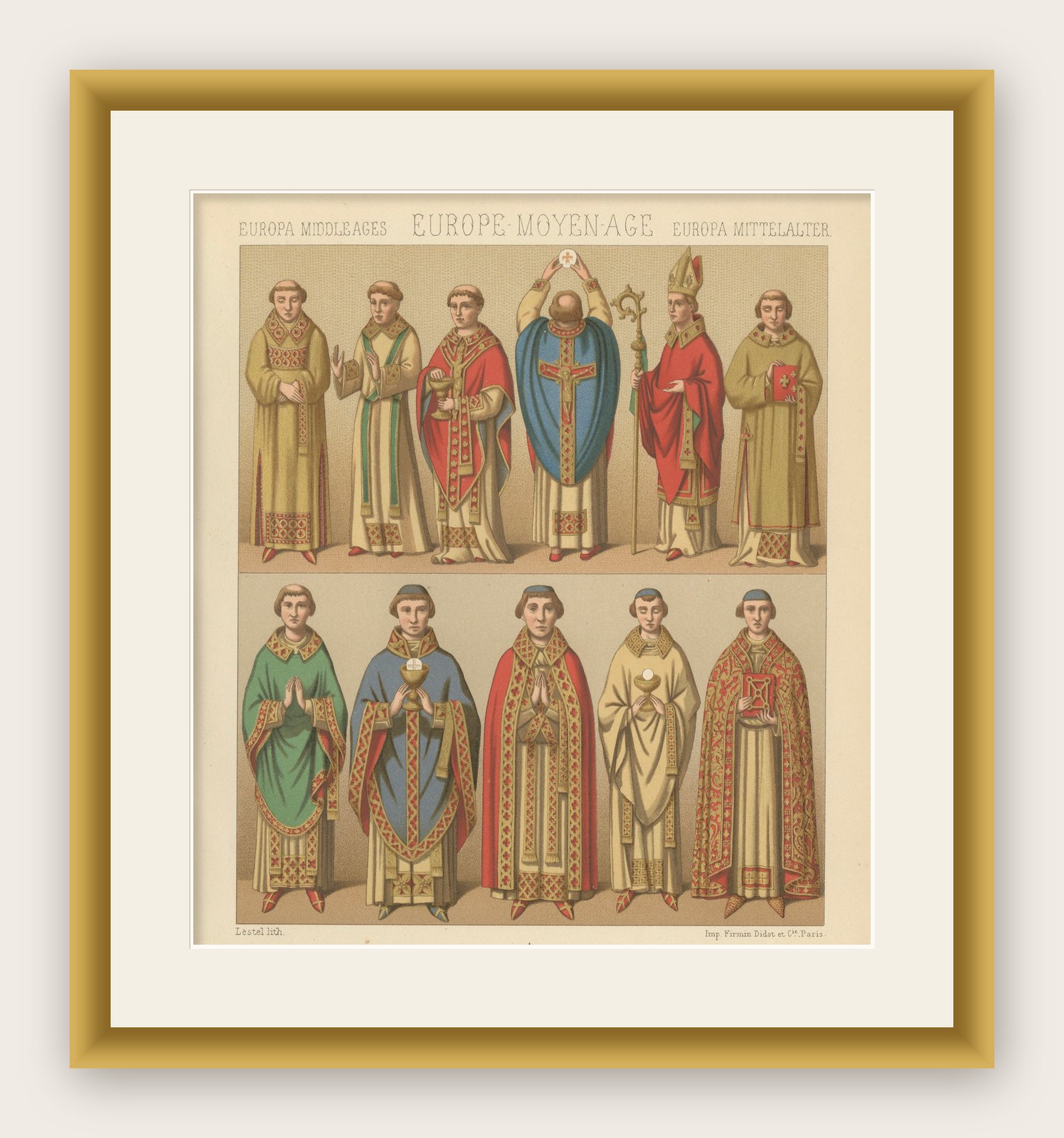
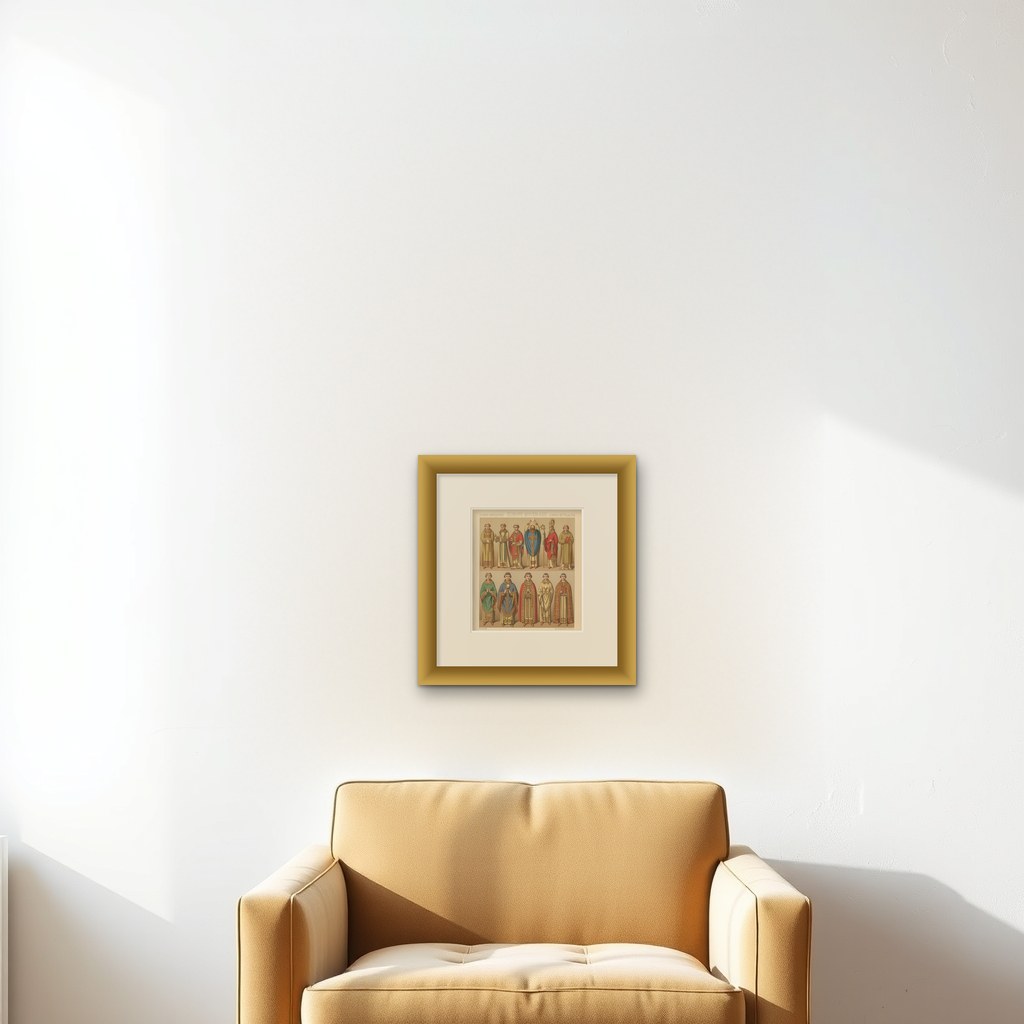

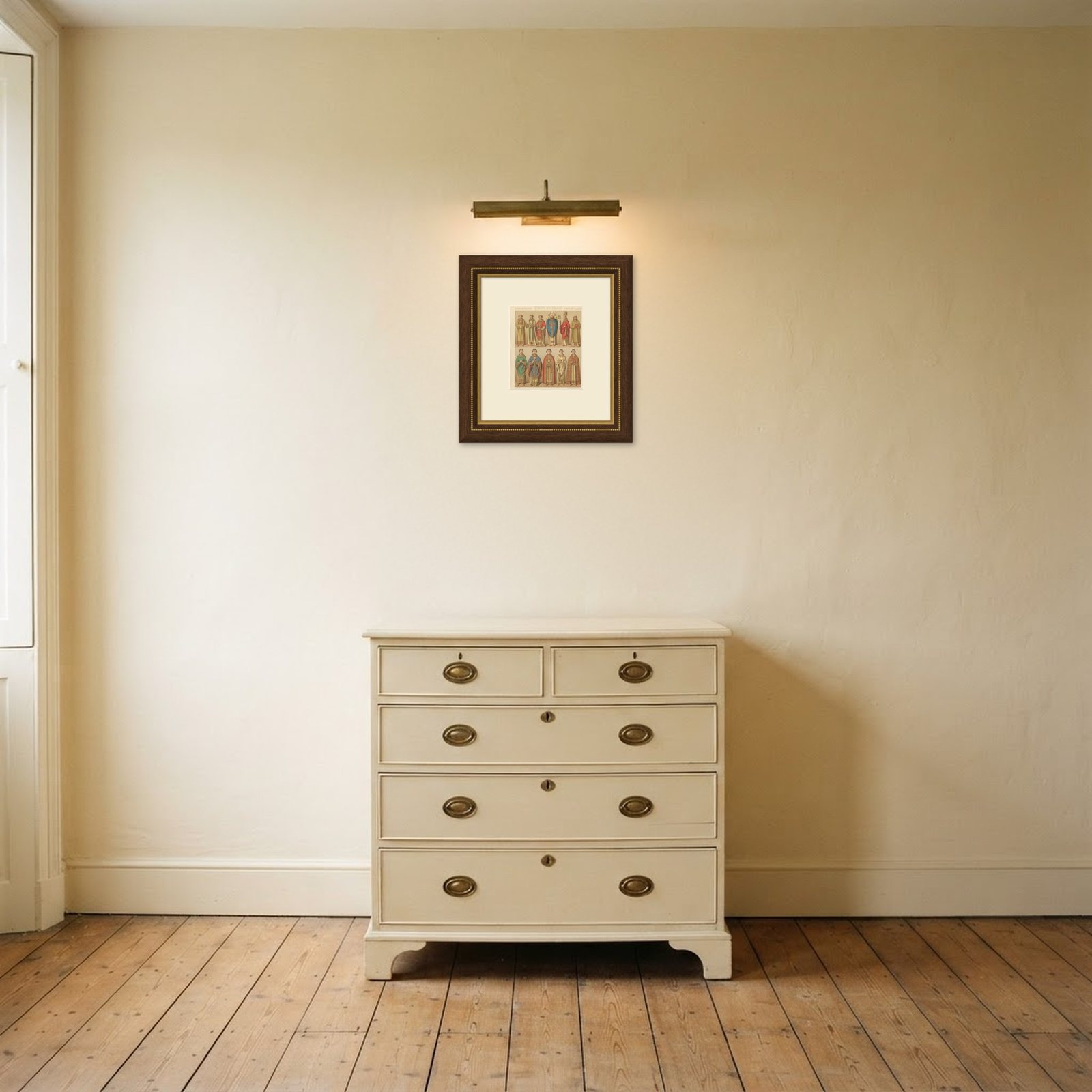
Frame and rooms are illustrations of how the print could look; the description says what is included.
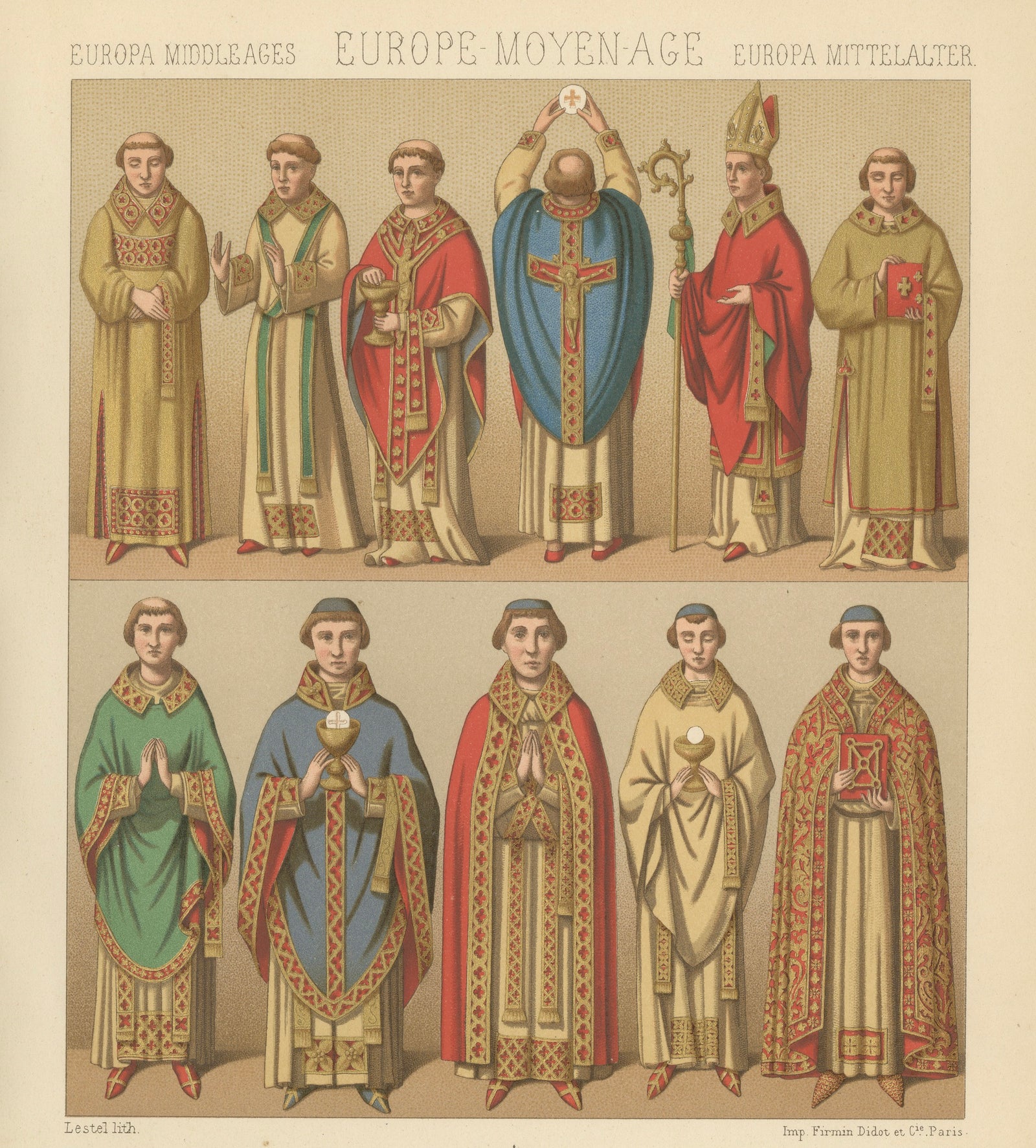
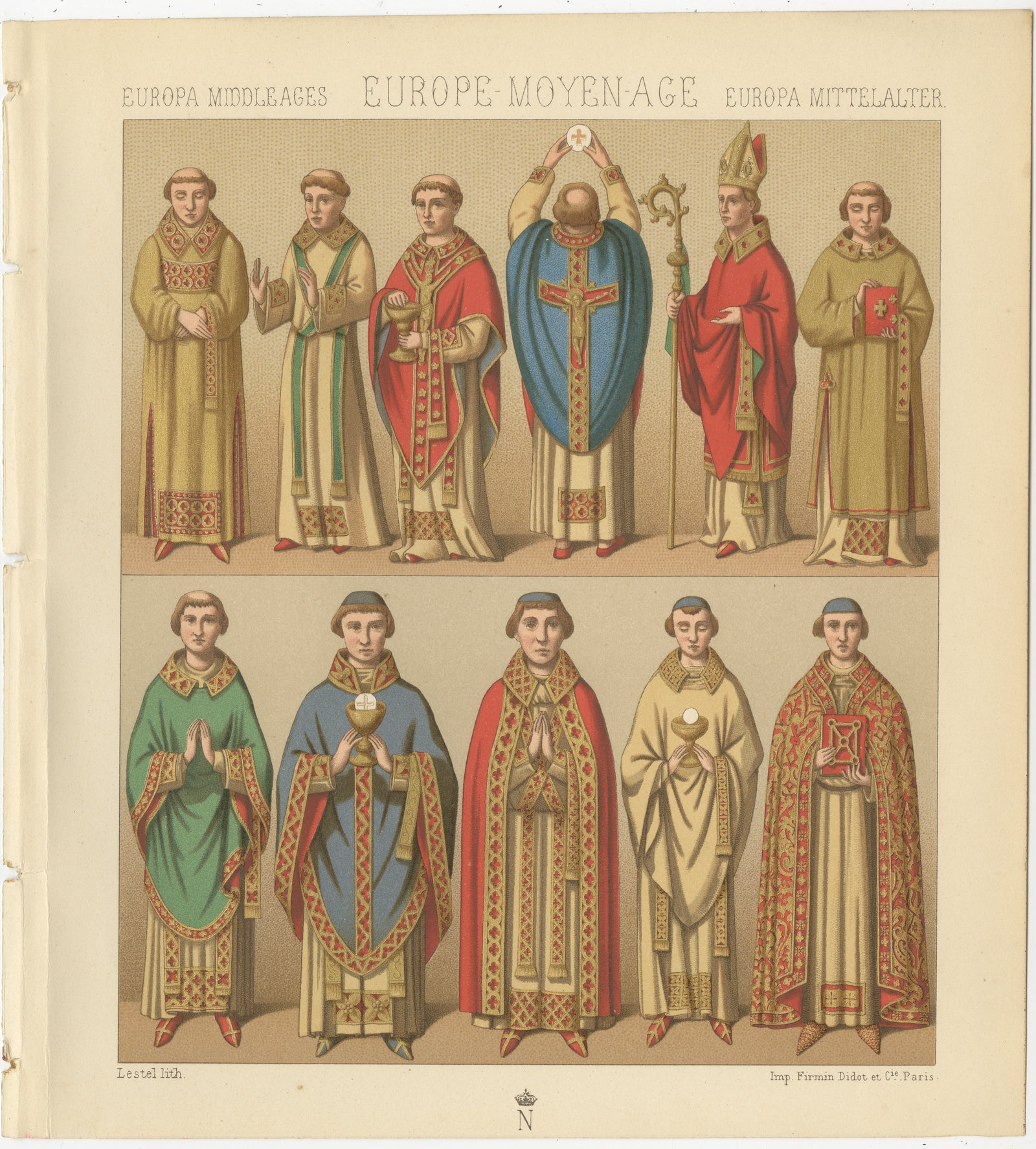
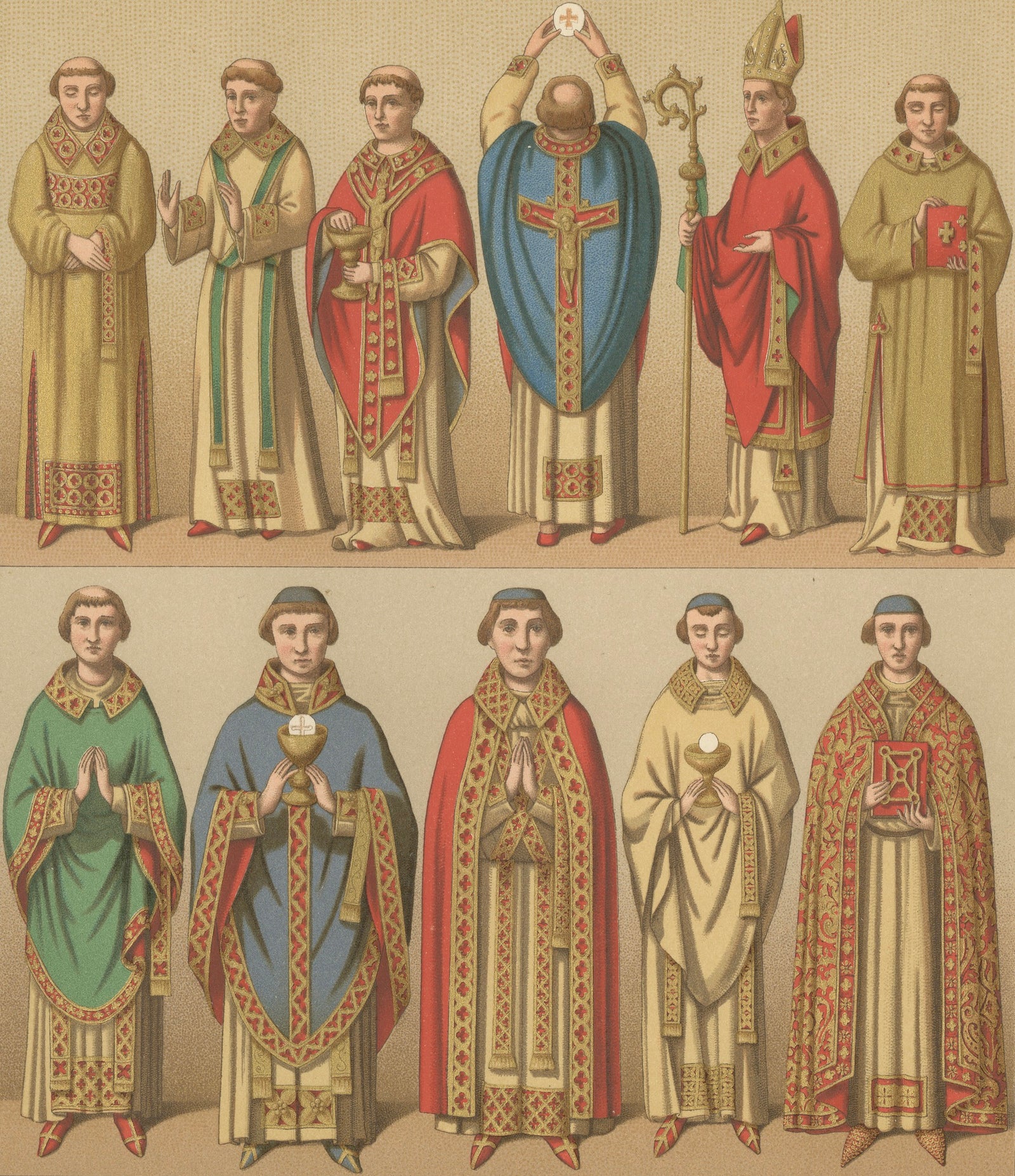
Medieval European Clergy Costumes by Racinet, Gothic Vestments, 1888
$240$17030% off
€154 · £130
Original print, not a reproduction.
Ships worldwide from the Netherlands, flat or rolled, insured and tracked. 14-day returns.
- Date
- 1888
- Sheet size
- 8 × 7.1 in (20.3 × 18.1 cm)
- Condition
- Good. Good antique condition with age-related toning and minor handling wear. Small edge irregularities and light creasing consistent with age. Colors remain fresh and vibrant. Wide margins preserved.
- Wardrobe
- Court & couture
- Era
- 1870 to 1900, Bustle
- Stock no.
- BG-11635-4-57
What the condition grades mean
- Excellent
- Bright and clean, with no faults worth mentioning.
- Very good
- Only light signs of age, such as faint toning.
- Good
- Normal signs of age for a sheet of this period: toning, some foxing, small marks or neat old repairs.
- Fair
- Clear faults such as staining, tears or repairs, priced to match.
Every fault we see is written in the condition note, and the whole sheet is shown uncropped in the photos.
Medieval European Clergy Costumes by Racinet, Gothic Church Vestments, 1888
This refined chromolithograph originates from the celebrated publication Le Costume Historique by the French artist and historian Albert Charles Auguste Racinet, published in Paris by Firmin-Didot & Cie between 1877 and 1888. Racinet’s monumental six-volume survey of historical costume remains one of the most important and visually striking costume studies of the 19th century, admired for both its scholarly depth and extraordinary chromolithographic quality.
The composition presents an elegant overview of medieval European ecclesiastical dress, depicting a series of idealized church figures from the Middle Ages rather than specific historical individuals. The figures represent various ranks and liturgical functions within the medieval Western Christian Church, including monks, deacons, priests, bishops, acolytes, and senior clergy.
Among the most recognizable figures are a bishop holding a crozier and wearing a mitre, priests carrying chalices associated with the Eucharist, a celebrant elevating the sacred Host during Mass, and richly dressed clergy wearing elaborately embroidered copes and ceremonial vestments. The garments shown include dalmatics, chasubles, albs, copes, and liturgical robes adorned with Gothic-inspired ornamentation and geometric embroidery typical of medieval church textiles.
Racinet created these plates as educational and decorative studies, drawing inspiration from illuminated manuscripts, cathedral sculpture, mosaics, tomb effigies, and medieval miniatures. The carefully balanced arrangement of standing figures gives the composition a calm architectural quality, while the restrained palette of reds, greens, creams, blues, and gold evokes the atmosphere of Gothic cathedrals and illuminated devotional art.
Produced using advanced chromolithographic techniques, the print demonstrates the remarkable color richness and precision for which Racinet’s work became famous. These chromolithographs remain highly sought after today by collectors of costume history, medieval art, ecclesiastical imagery, and decorative design.
The multilingual title at the top, “Europa Middle Ages,” “Europe-Moyen-Age,” and “Europa Mittelalter”, reflects Racinet’s international approach and the broad European audience for which the work was intended.
Framing tips: Particularly striking in a dark walnut, gilded, or ebonized frame with a warm ivory museum mat. Excellent for Gothic revival, ecclesiastical, library, or old-world European interiors.
The print is an original antique chromolithograph, not a reproduction.
Technique: Chromolithograph
Maker: Albert Charles Auguste Racinet, France, circa 1888