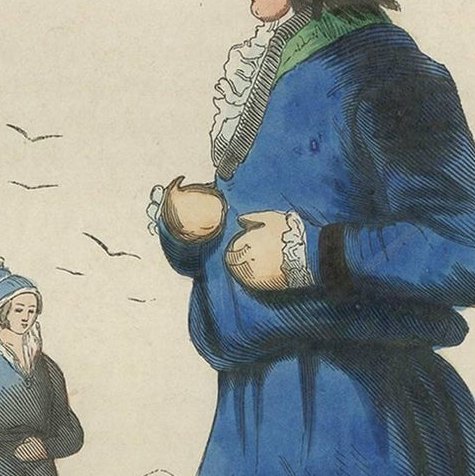
Close-ups
Framed and on the wall


Frame and rooms are illustrations of how the print could look; the description says what is included.
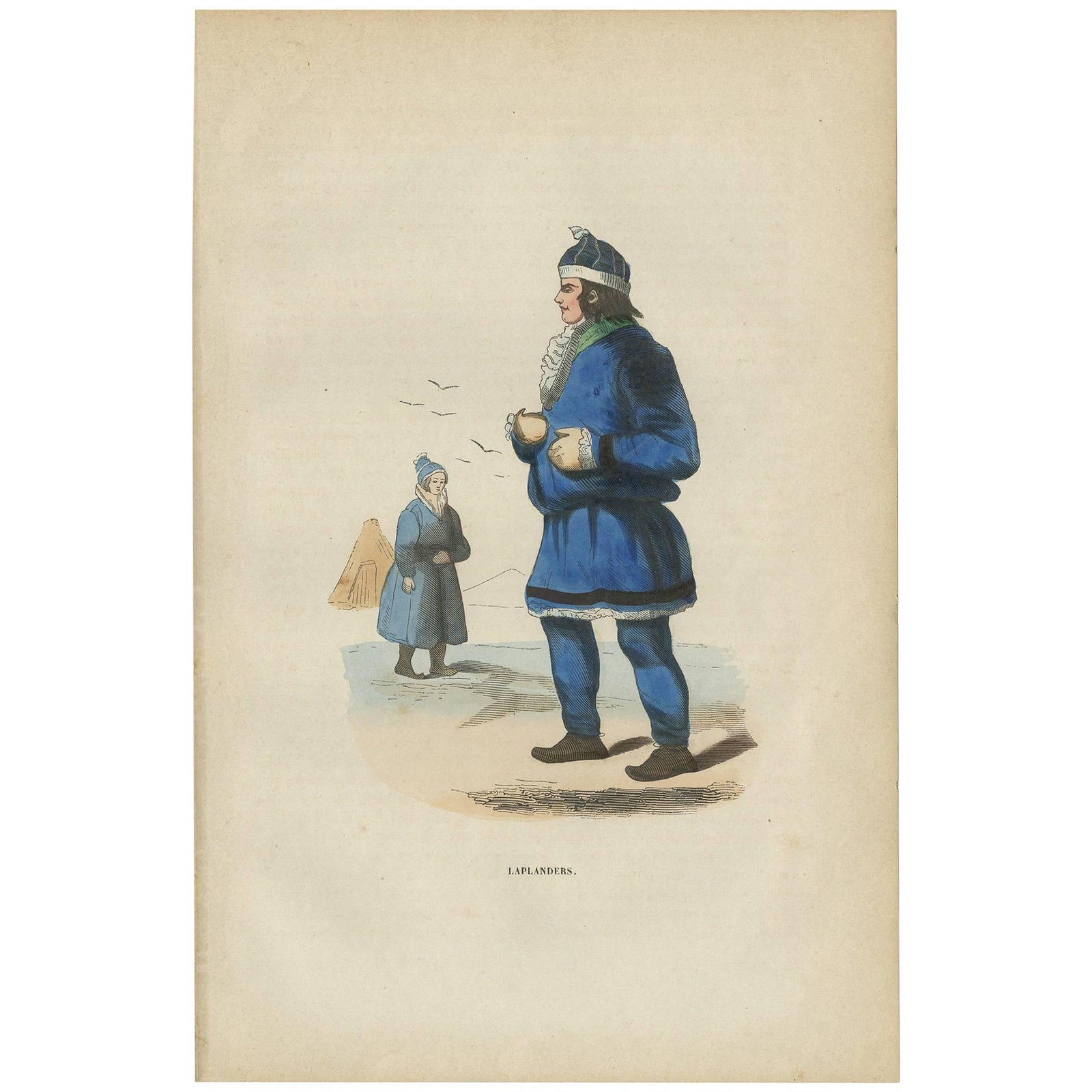
Laplanders in Traditional Winter Dress, Berghaus Ethnographic Print, 1855
€140
$155 · £120
Original print, not a reproduction.
Ships worldwide from the Netherlands, flat, insured and tracked. 14-day returns. To buy, use Ask a question and we will reserve the print for you.
- Date
- 1855
- Sheet size
- 10.1 × 6.5 in (25.7 × 16.6 cm)
- Condition
- Good. Minor fading. Very good condition. Bright original hand coloring. Minor age toning and faint spotting in the margins, not affecting the image. Paper is strong with wide margins.
- Wardrobe
- Folk finery
- Era
- 1840 to 1870, Crinoline
- Stock no.
- f_10130093
Laplanders in Traditional Winter Dress, Berghaus Ethnographic Print, 1855
Description:
This antique ethnographic print shows two Laplanders (Sámi people) dressed in traditional winter clothing, standing in a snow-covered landscape with a tent-like structure and birds in the background. The main figure in the foreground is depicted in a vibrant blue tunic with fur-lined cuffs and collar, leggings, and a cap, conveying the practical and distinctive attire of Arctic indigenous peoples. A second, smaller figure, perhaps a child or woman, appears in the distance wearing similarly warm clothing, evoking the harsh climatic conditions of the region.
The print originates from the Dutch edition of the work *“De Volken van den Aardbodem, Hunne Afkomst, Verwantschap en Verspreiding op den Aardbol”* (The Peoples of the Earth, Their Origins, Relationships, and Distribution on the Globe), authored by Dr. Hermann Berghaus and published by G.B. van Goor in Gouda in 1855. This illustrated ethnographic series sought to present an overview of world cultures in both image and text, with a strong focus on national costumes, physical characteristics, and living environments. Berghaus, a renowned German geographer and cartographer, contributed significantly to 19th-century ethnographic and geographic scholarship.
This hand-colored lithograph exemplifies the 19th-century fascination with cataloguing and classifying the world’s peoples, and it reflects a mixture of scientific interest and romanticized portrayal. The Sámi people, indigenous to northern Scandinavia and parts of Russia, were frequently represented in such works as symbols of resilience and isolation in the European imagination.
Condition report:
Very good condition. Bright original hand coloring. Minor age toning and faint spotting in the margins, not affecting the image. Paper is strong with wide margins.
Framing tips:
For best visual effect, consider a simple black or dark wood frame paired with a light cream or pale blue mat, which will complement the vivid blue garments while keeping the focus on the cultural depiction.
Technique: Hand-colored lithograph
Maker: After Dr. H. Berghaus, published by G.B. van Goor, Gouda, 1855