Close-ups
Framed and on the wall
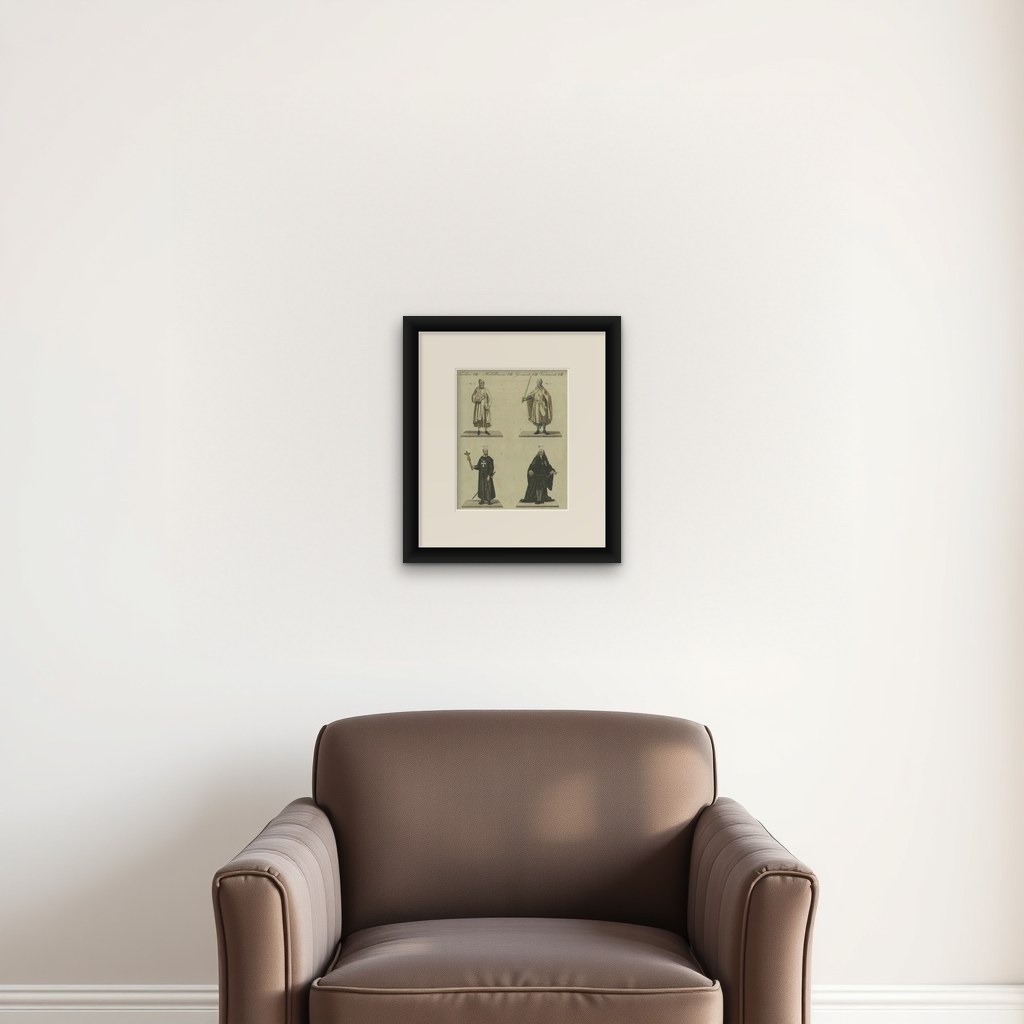

Frame and rooms are illustrations of how the print could look; the description says what is included.
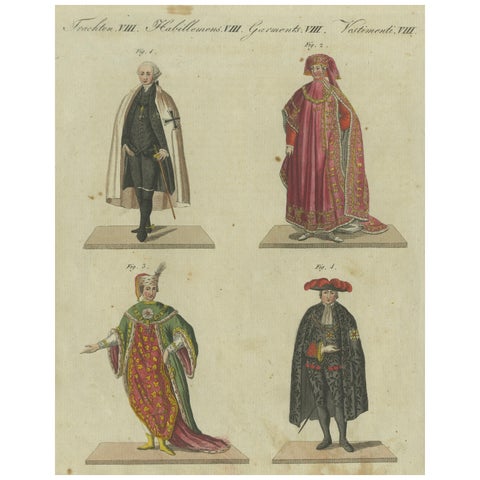
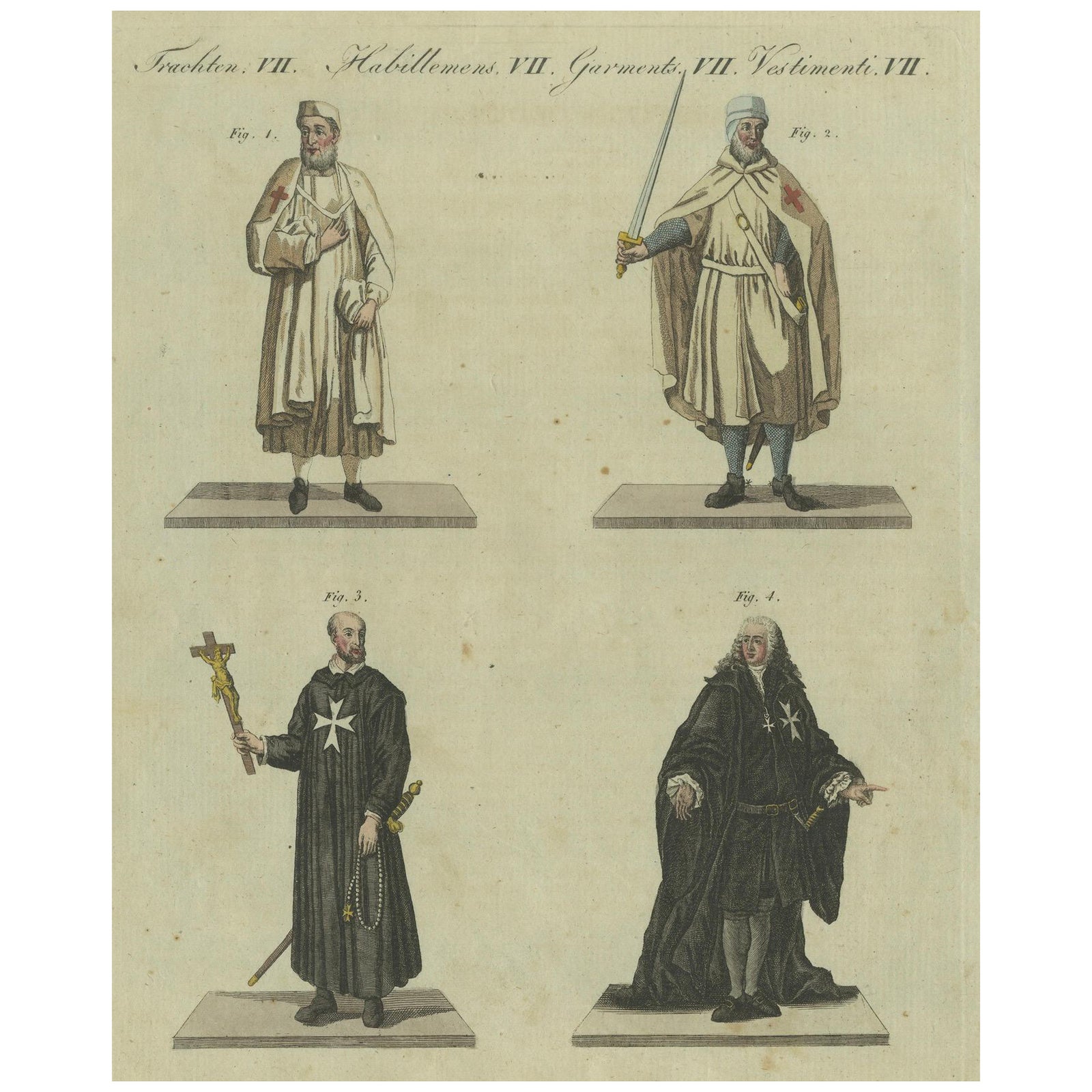
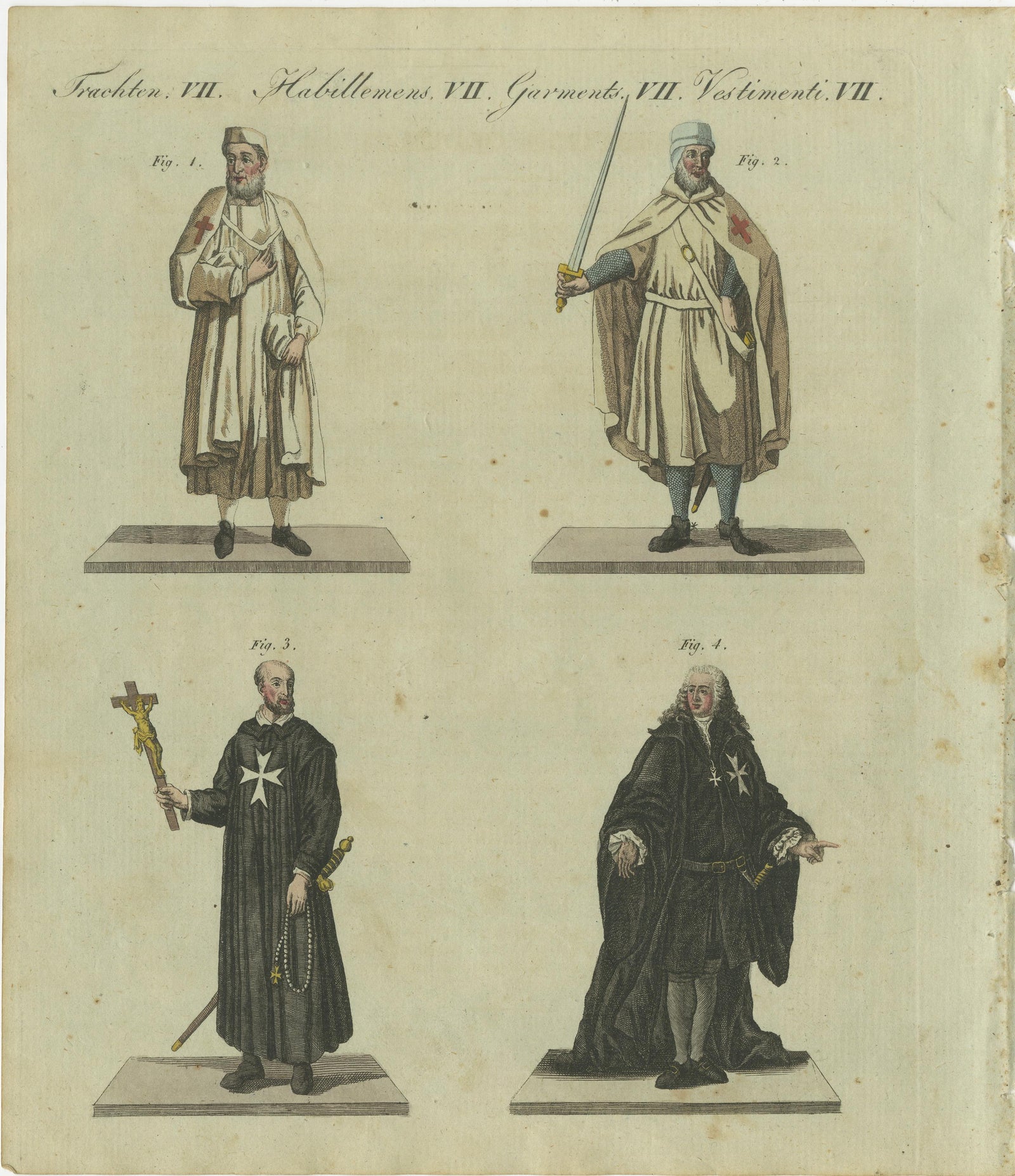
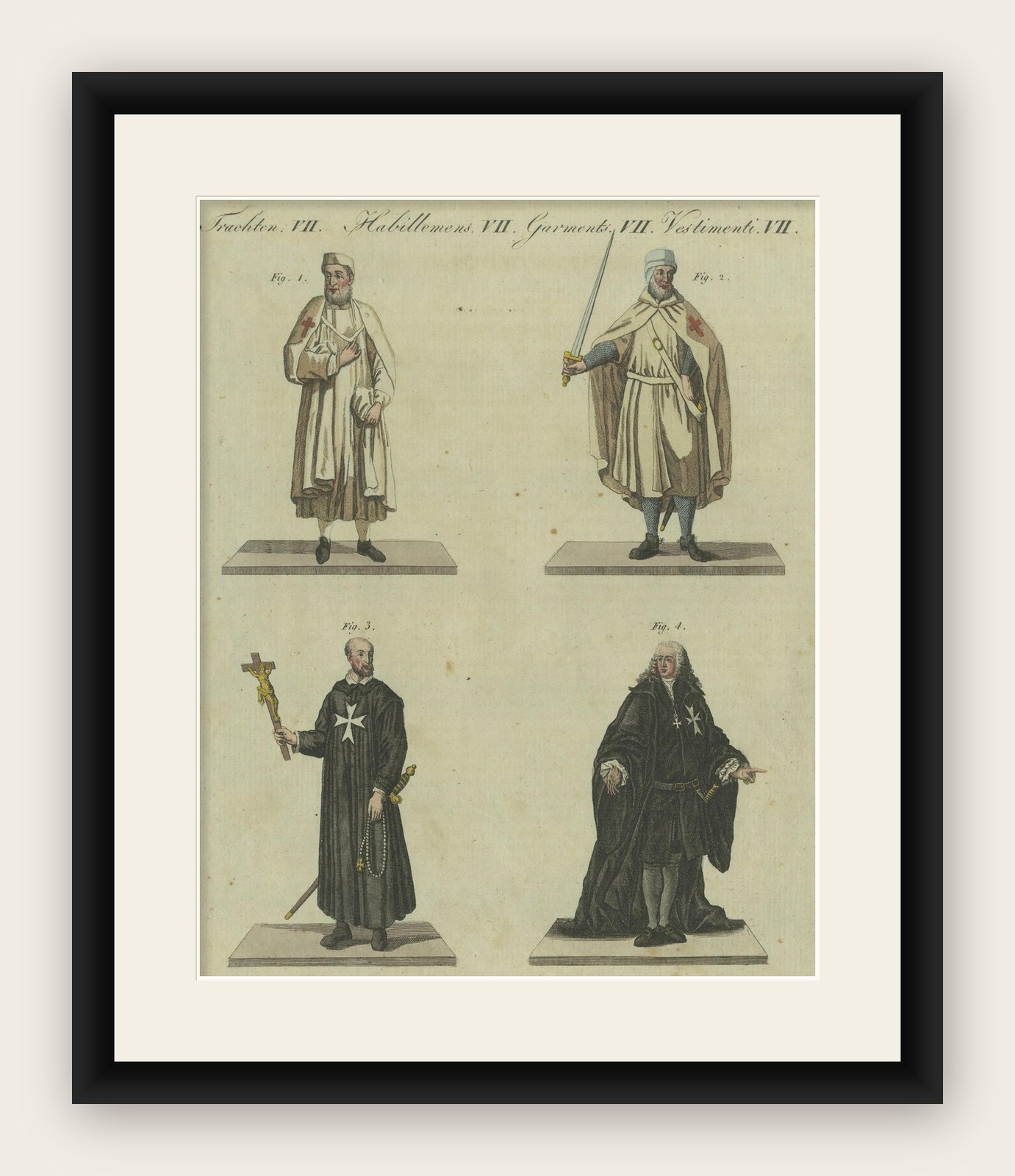
Knights Templar and Clergy: Hand-Colored Engraving of Historical Attire (1805)
£150
$200 · €180
Original print, not a reproduction.
Ships worldwide from the Netherlands, flat, insured and tracked. 14-day returns. To buy, use Ask a question and we will reserve the print for you.
- Date
- 1805
- Sheet size
- 9.1 × 8.7 in (23 × 22 cm)
- Condition
- Good. The engraving is in good condition, with vibrant hand-coloring and minor foxing typical of its age. Edges show slight wear but no major damage.
- Wardrobe
- Court & couture
- Era
- 1790 to 1840, Empire and Romantic
- Stock no.
- f_43119292
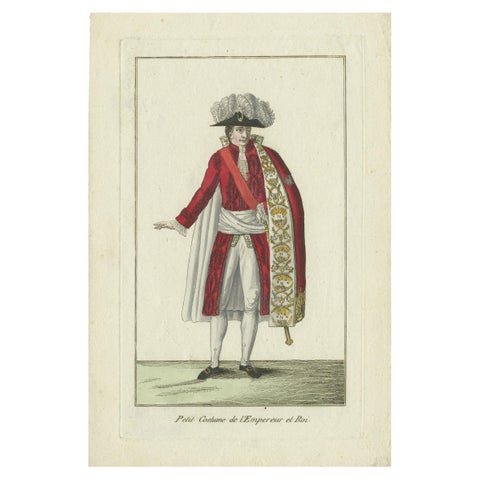
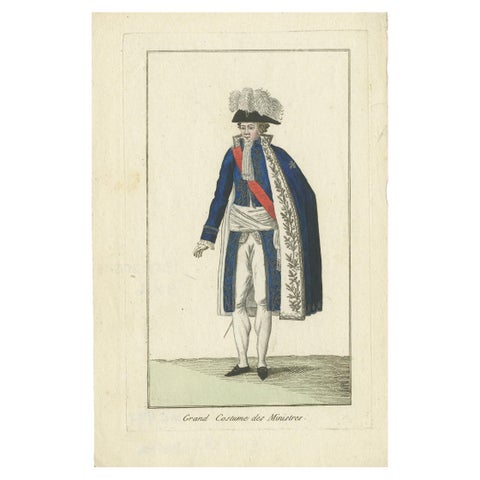
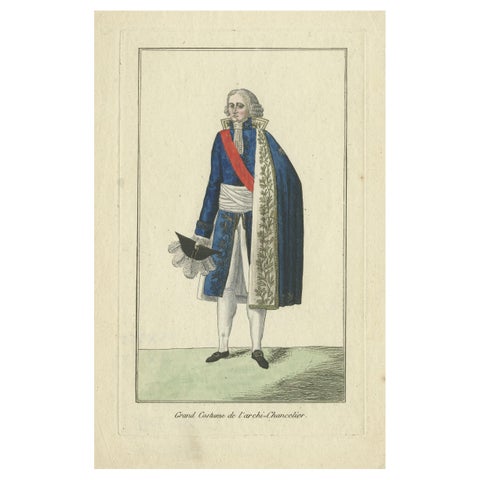
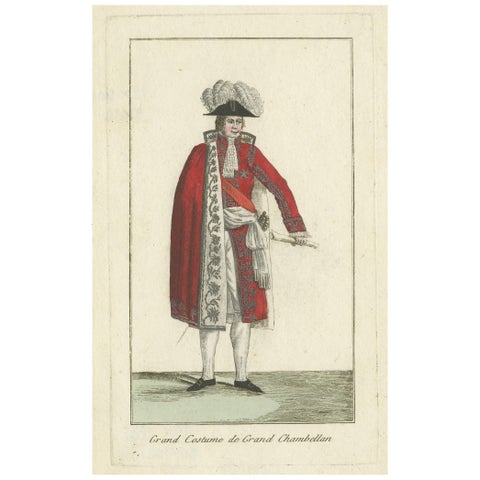
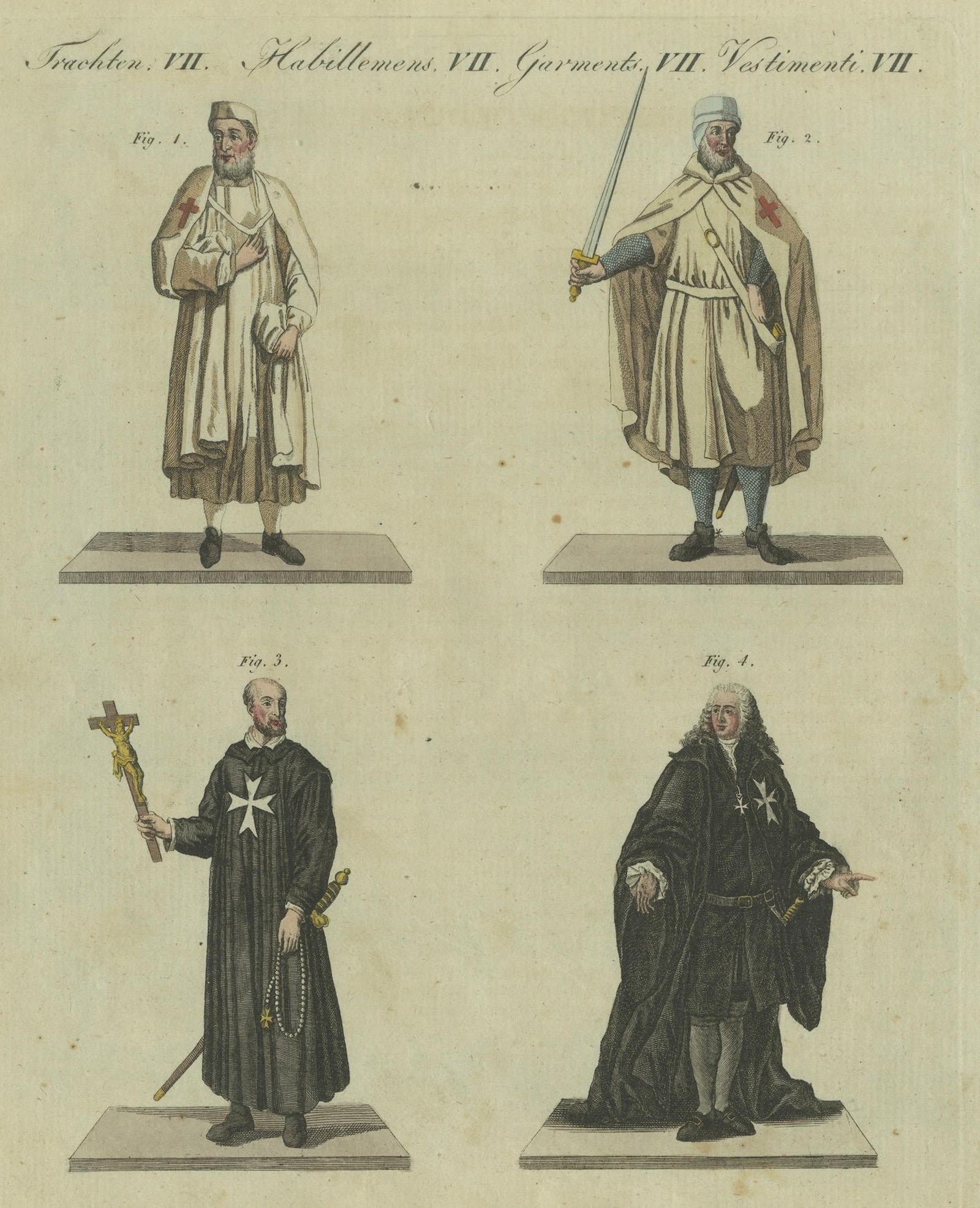
This exquisite hand-colored copperplate engraving from Friedrich Johann Bertuch’s 'Bilderbuch für Kinder' (Picture Book for Children), published in Weimar in 1805, showcases the distinctive attire of key figures associated with religious and chivalric orders.
Bertuch’s encyclopedia for children was groundbreaking in its time, combining visual splendor with educational value. This particular engraving exemplifies the precision and artistry that made the *Bilderbuch* an enduring classic, reflecting not only the historical significance of the costumes but also the rich storytelling that accompanied them.
The four figures depicted represent members of influential religious and chivalric communities:
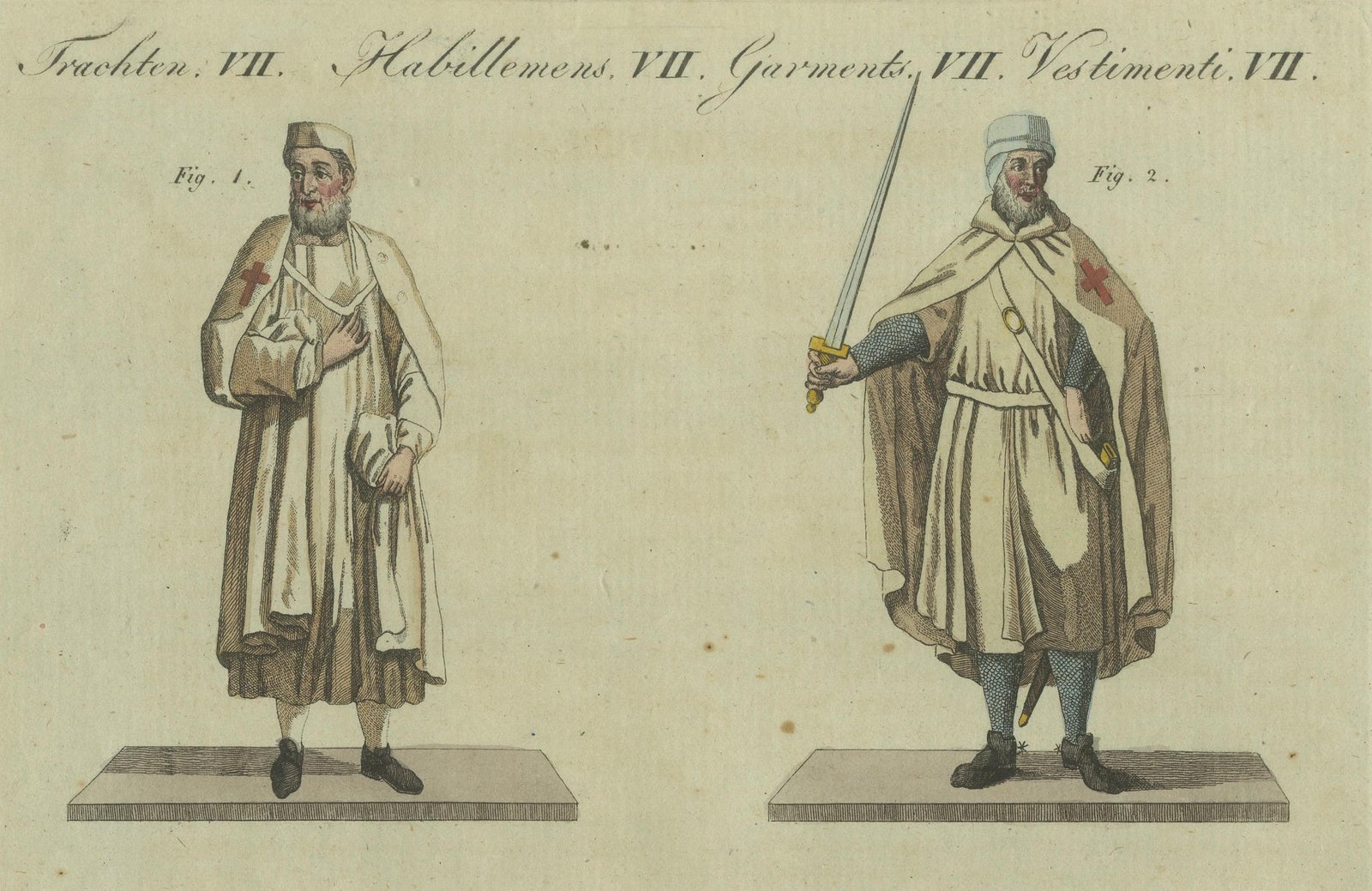
- Figure 1: A Hospitaller monk or a priestly figure, clad in modest robes with a cross on the chest, symbolizing humility and devotion to service. His attire underscores the charitable mission of the order, which focused on caring for the sick and poor.
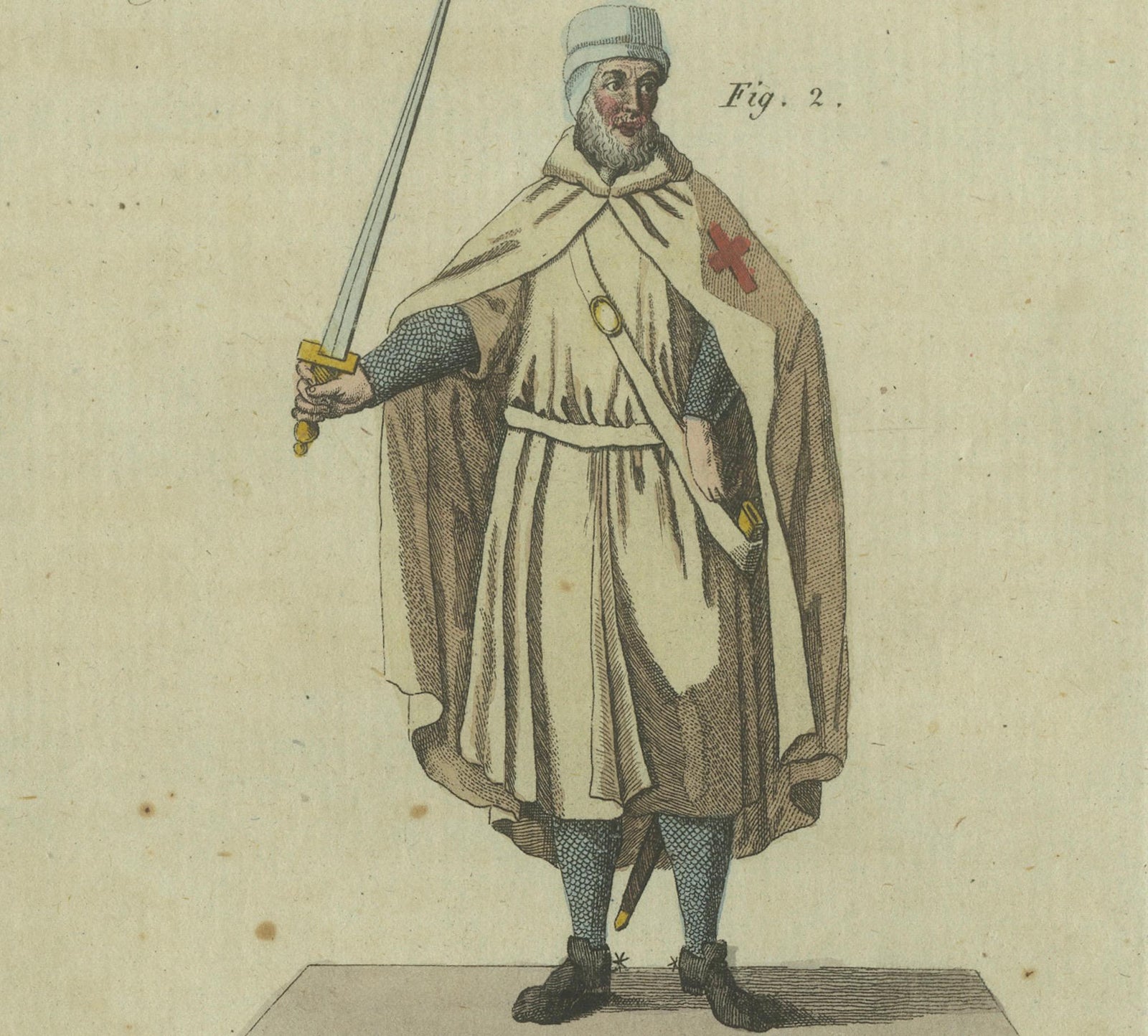
- Figure 2: A Knight Templar, identified by his iconic white mantle with a red cross. This figure evokes the legendary medieval order of warrior monks, established during the Crusades to protect pilgrims and defend the Holy Land. His commanding pose, complete with sword drawn, illustrates the dual spiritual and martial roles of the Templars.
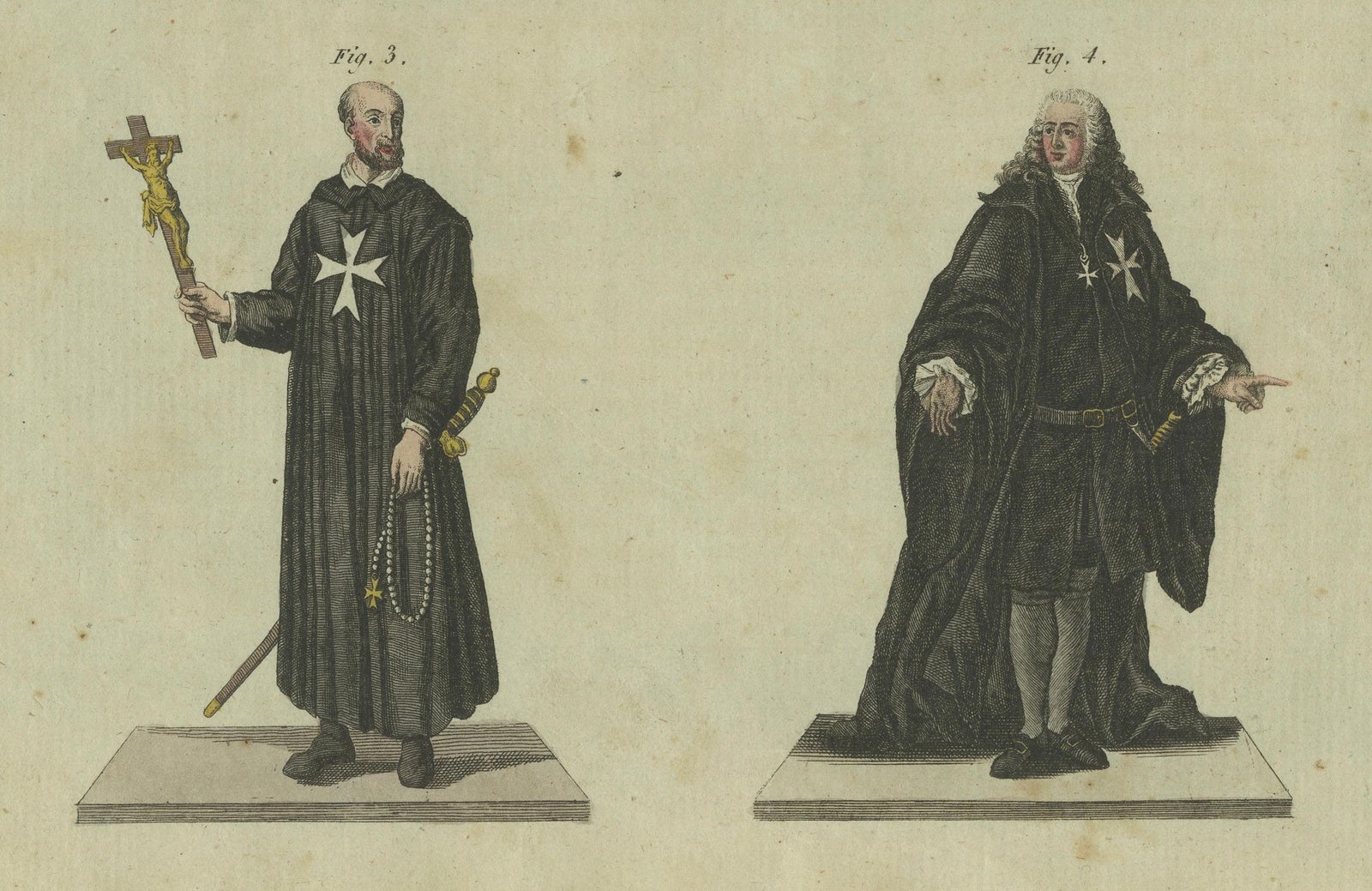
- Figure 3: A member of the Order of Saint John (Knights Hospitaller), adorned with a black robe featuring the Maltese cross. This order, like the Templars, played a pivotal role in the Crusades, though they later evolved into a prominent charitable and medical organization.
- Figure 4*: A more elaborately dressed figure, likely a high-ranking member of the Order of Malta. His attire, including a richly adorned cape and authoritative stance, suggests his prominence within the order.
This engraving is a testament to Bertuch’s ability to combine education with artistry. It provides a snapshot of historical attire, reflecting not just fashion but also the cultural and spiritual ideologies of the time. The hand-coloring brings the figures to life, offering a vivid and tangible connection to the past. Bertuch’s work is remarkable for its breadth, covering natural history, mythology, and history, making it an invaluable resource for understanding 18th-century perceptions of the world. This particular engraving captures the enduring fascination with the medieval orders, their mystique, and their pivotal role in European history.