Close-ups
Framed and on the wall
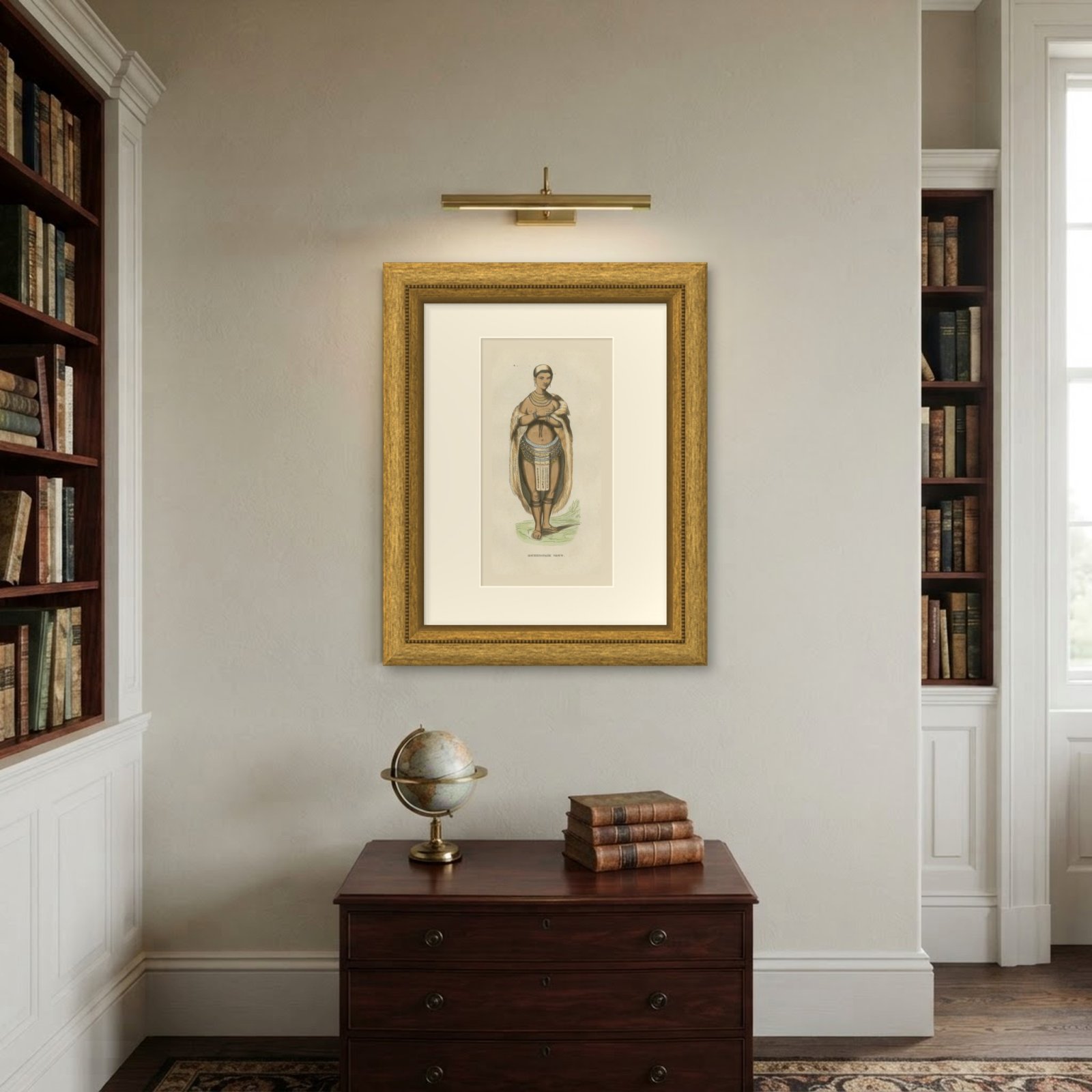
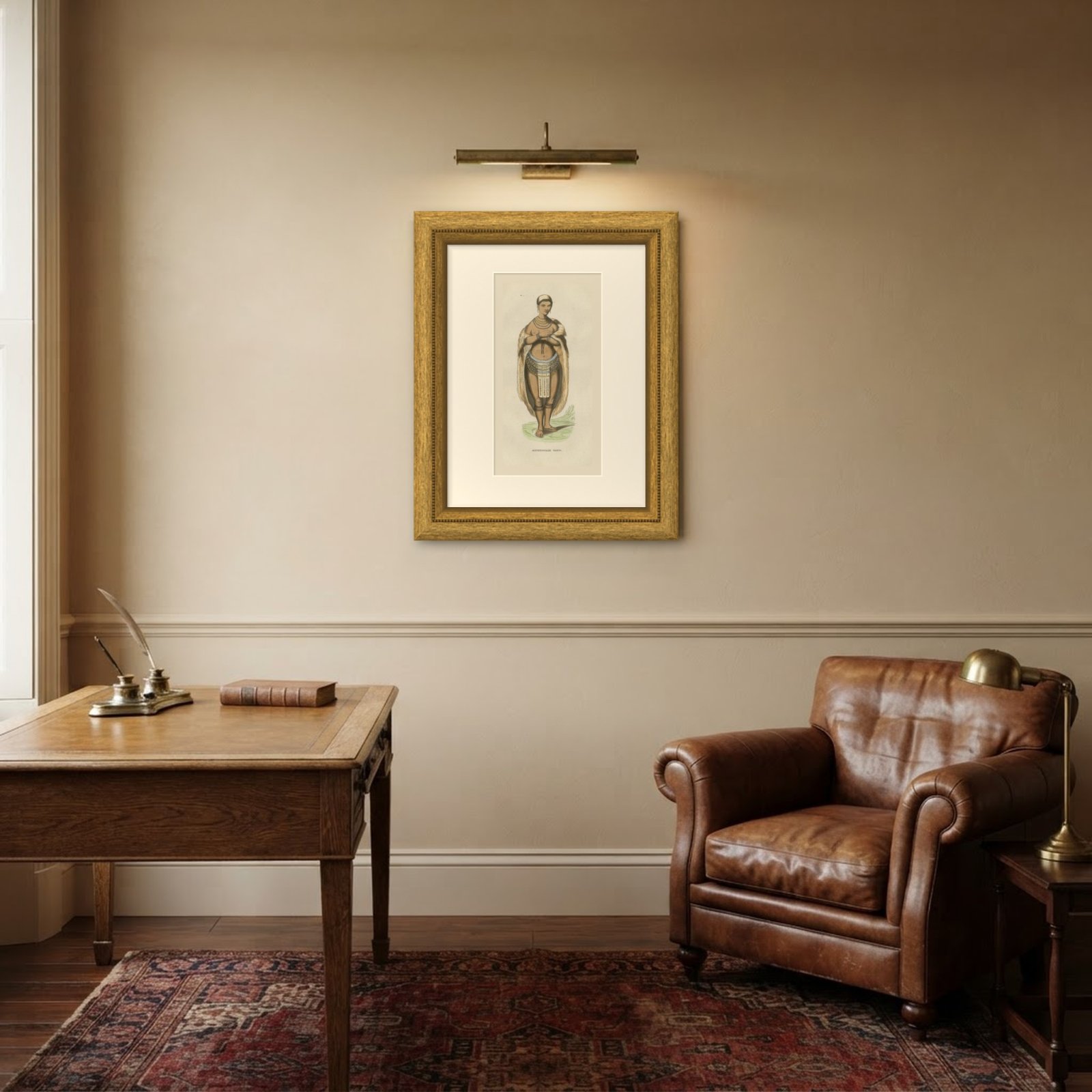
Frame and rooms are illustrations of how the print could look; the description says what is included.
Khoikhoi Woman of Southern Africa, Antique Hand-Colored Costume Print, 1854
£155
$205 · €185
Original print, not a reproduction.
Ships worldwide from the Netherlands, flat or rolled, insured and tracked. 14-day returns.
- Date
- 1854
- Sheet size
- 10.2 × 6.7 in (26 × 17 cm)
- Technique
- Lithograph
- Coloring
- Original hand color
- Condition
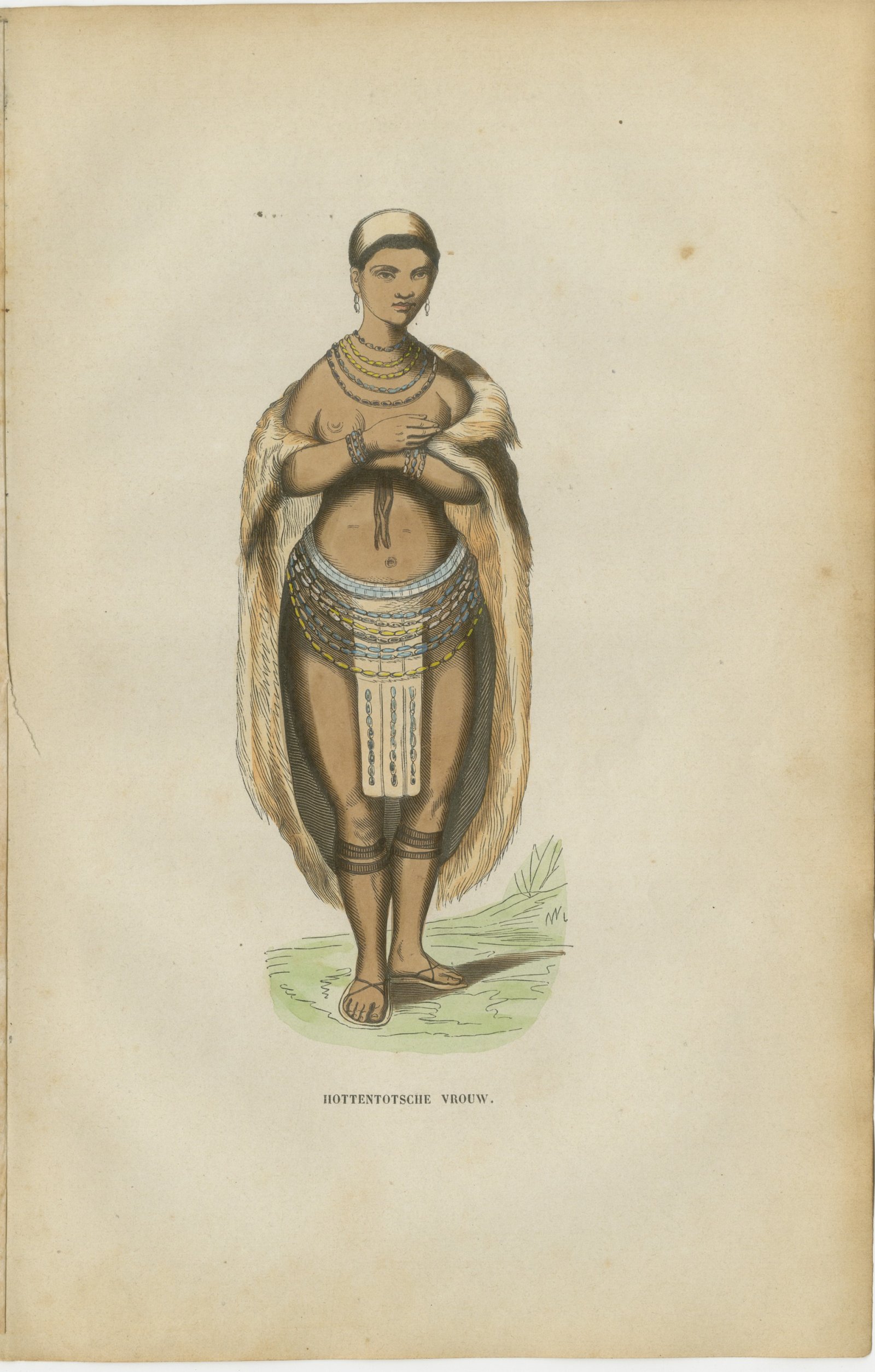
- Good. Light uneven toning, browner towards the edges. Marked handling soiling along all four edges. Foxing over much of the margin. Slight wear at the bottom right corner. Several larger brown marks.
- Wardrobe
- Far & away
- Era
- 1840 to 1870, Crinoline
- Stock no.
- BG-14289-14
What the condition grades mean
- Excellent
- Bright and clean, with no faults worth mentioning.
- Very good
- Only light signs of age, such as faint toning.
- Good
- Normal signs of age for a sheet of this period: toning, some foxing, small marks or neat old repairs.
- Fair
- Clear faults such as staining, tears or repairs, priced to match.
Every fault we see is written in the condition note, and the whole sheet is shown uncropped in the photos.
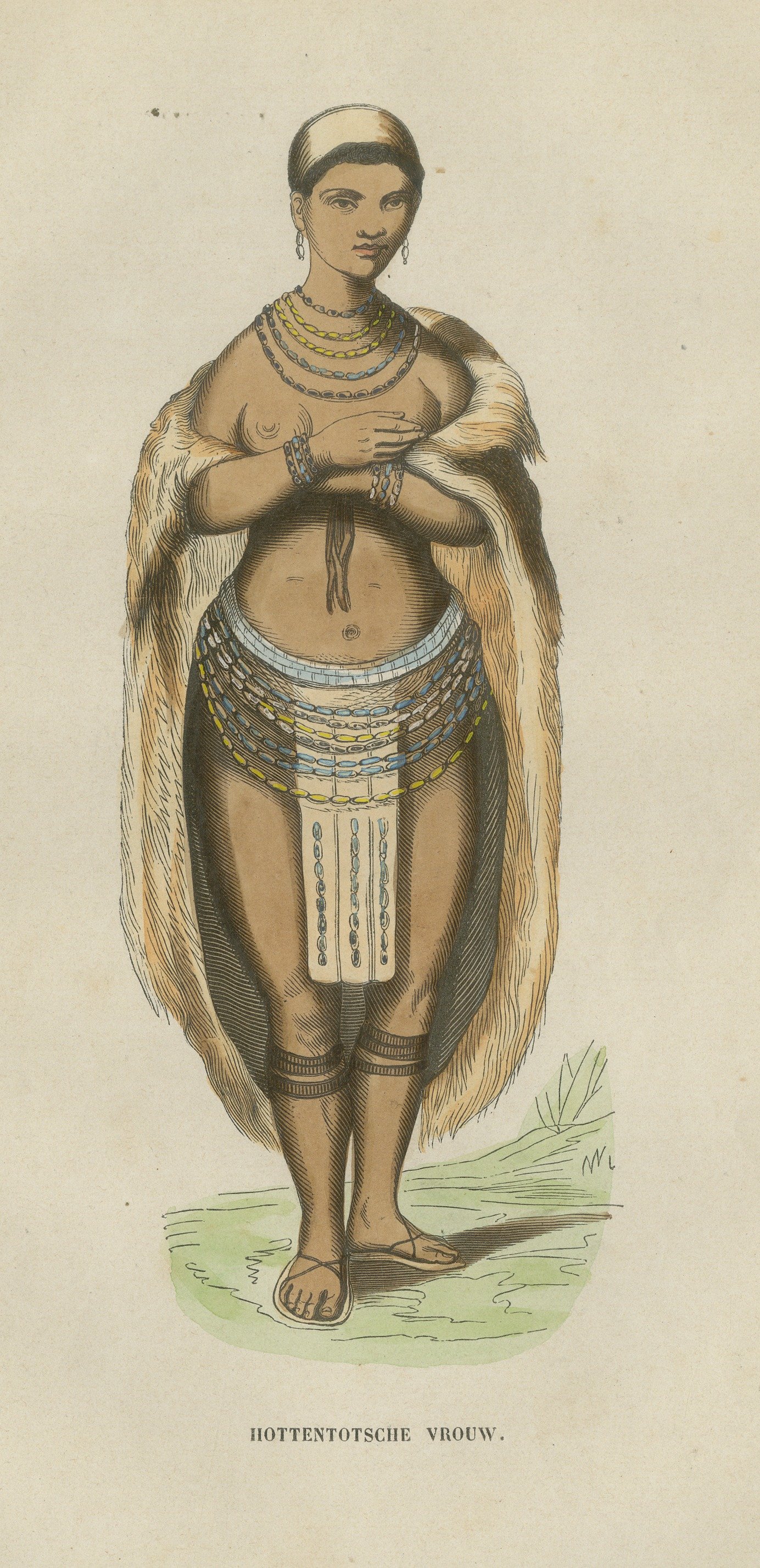
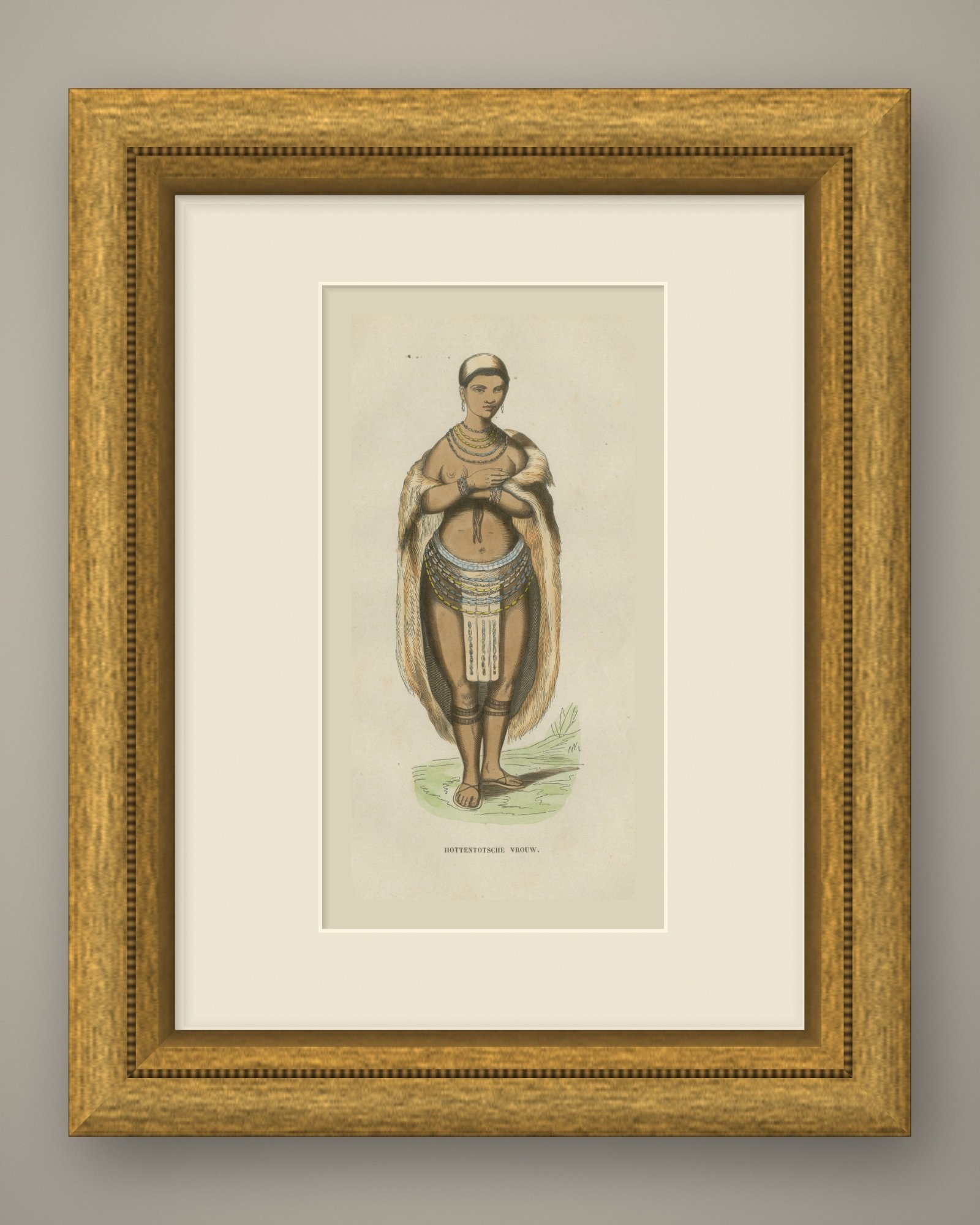
A Khoikhoi woman of southern Africa, an original antique hand colored print of 1854, the coloring applied by hand over a printed outline. The caption below the figure reads HOTTENTOTSCHE VROUW., meaning Hottentot woman; the old Dutch name for the Khoikhoi is quoted here only as printed on the plate.
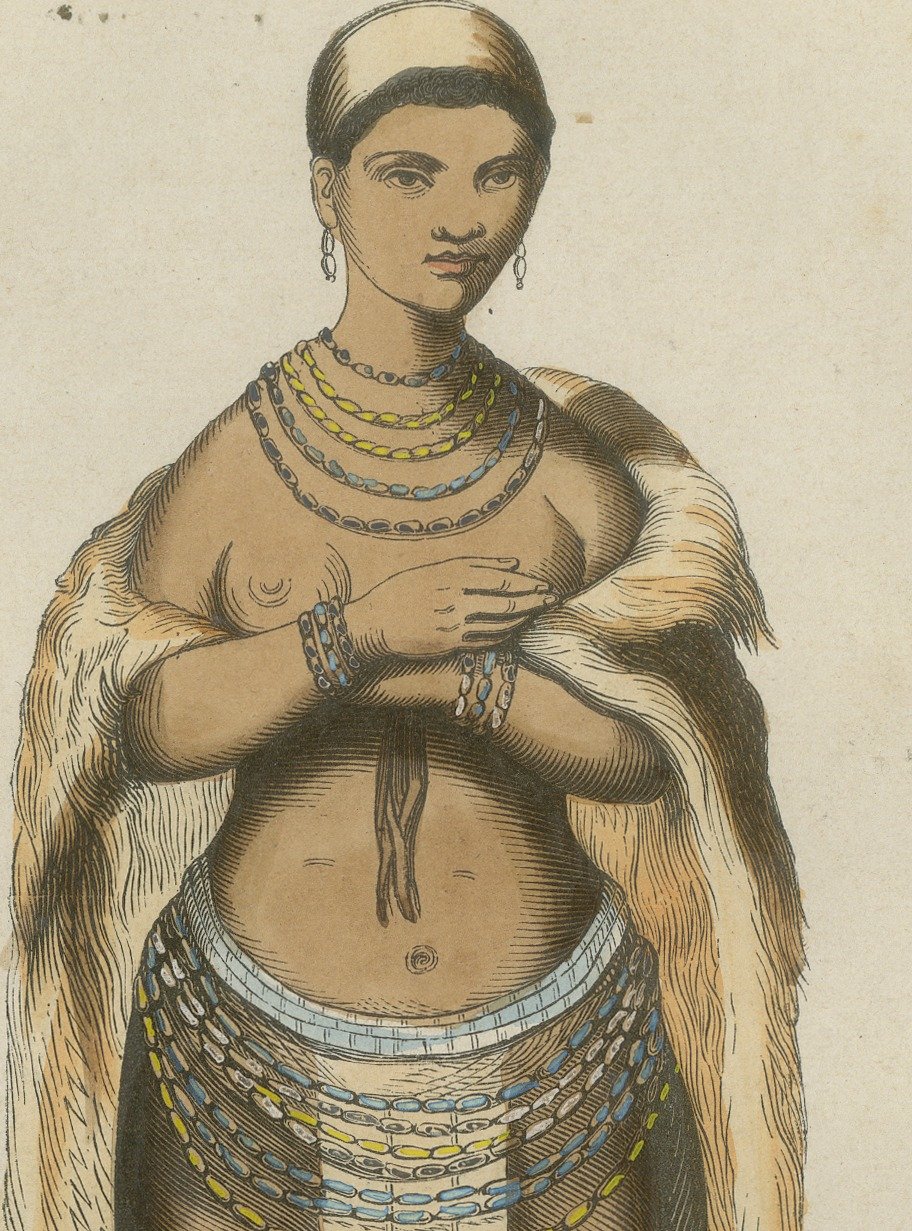
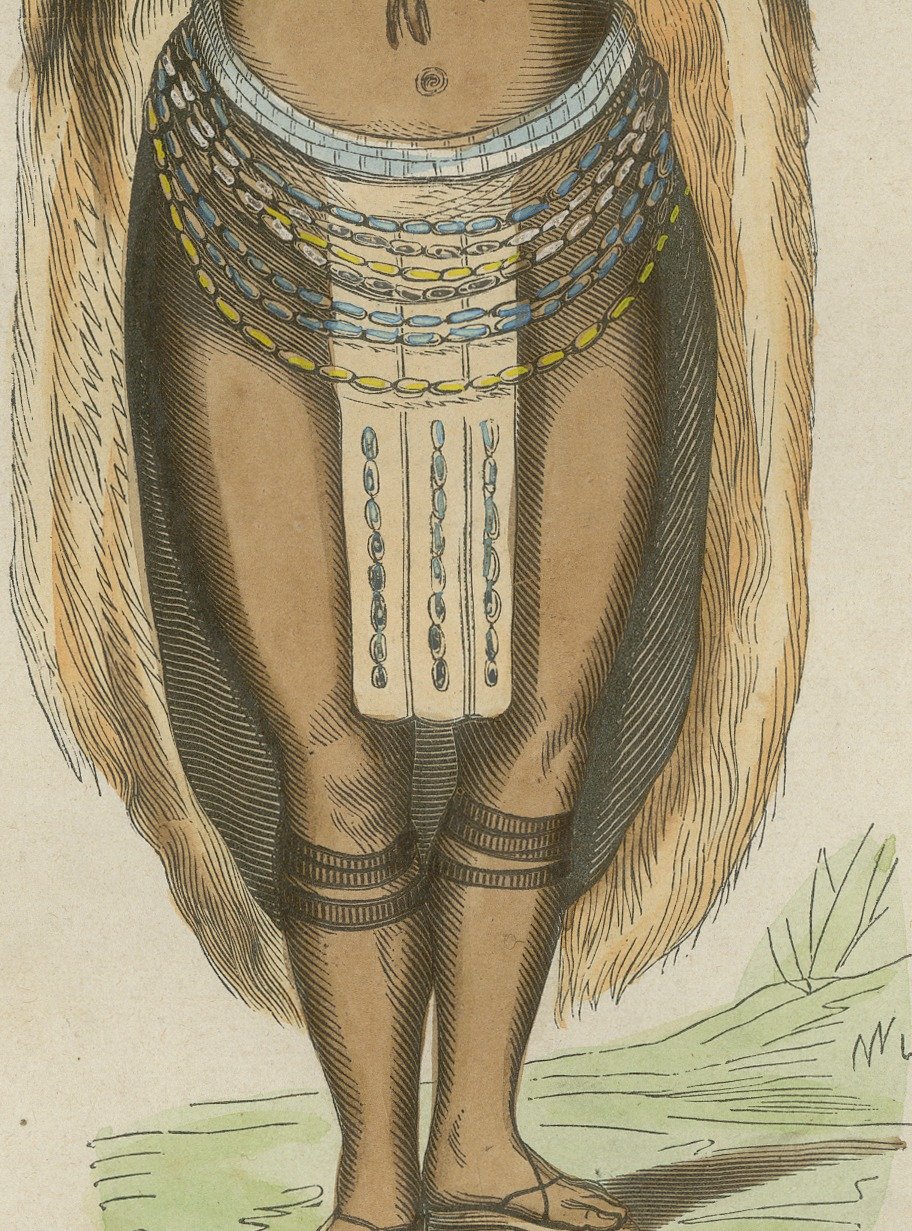
The woman stands full length, facing the viewer, on a small patch of green ground. Her hair is bound with a pale band, and she wears earrings and several strands of blue and yellow beads around her neck. Her arms are folded across her chest, with bracelets on both wrists. A long cloak of fur hangs from her shoulders to the ground. Around her hips she wears a wide girdle of many strands of beads and a pale apron hung with rows of beadwork, and she has bands below the knee and sandals on her feet.
No artist, lithographer or publisher is named on the plate, and there is no plate number above or below the image; the printed caption is the only lettering on the sheet.
The plate comes from the second volume, the Tweede Deel, of De Volken van den Aardbodem, the Dutch edition of Heinrich Berghaus's illustrated work on the peoples of the world, translated from the German by M. J. van Oven and published at Gorinchem by J. Noorduyn en Zoon in 1854. The title page of the volume announces 120 extra fine plates colored after nature. Berghaus was a German geographer, best known for his Physikalischer Atlas.
Light uneven toning, browner towards the edges. Marked handling soiling along all four edges. Foxing over much of the margin. Slight wear at the bottom right corner. Several larger brown marks.
This is an original antique print, not a modern reproduction. This item is sold unframed.