Close-ups
Framed and on the wall
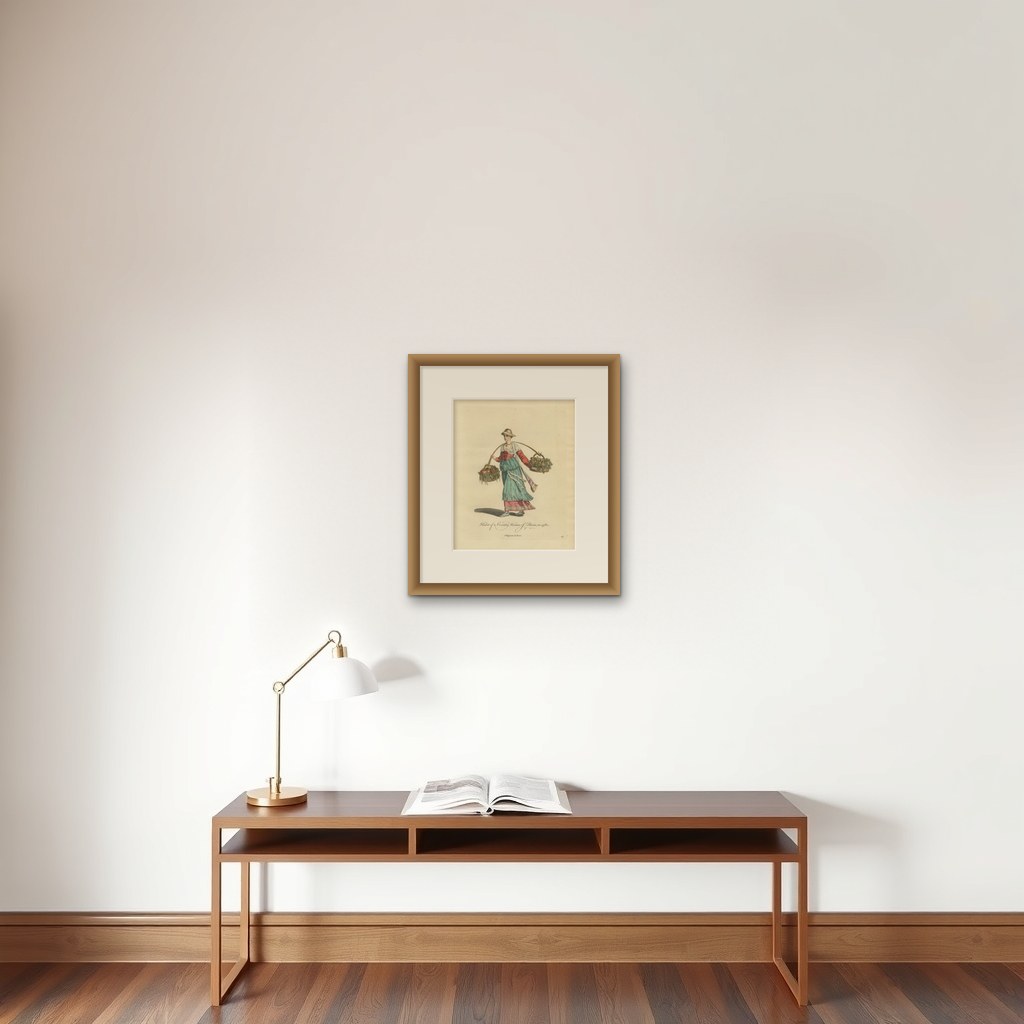

Frame and rooms are illustrations of how the print could look; the description says what is included.
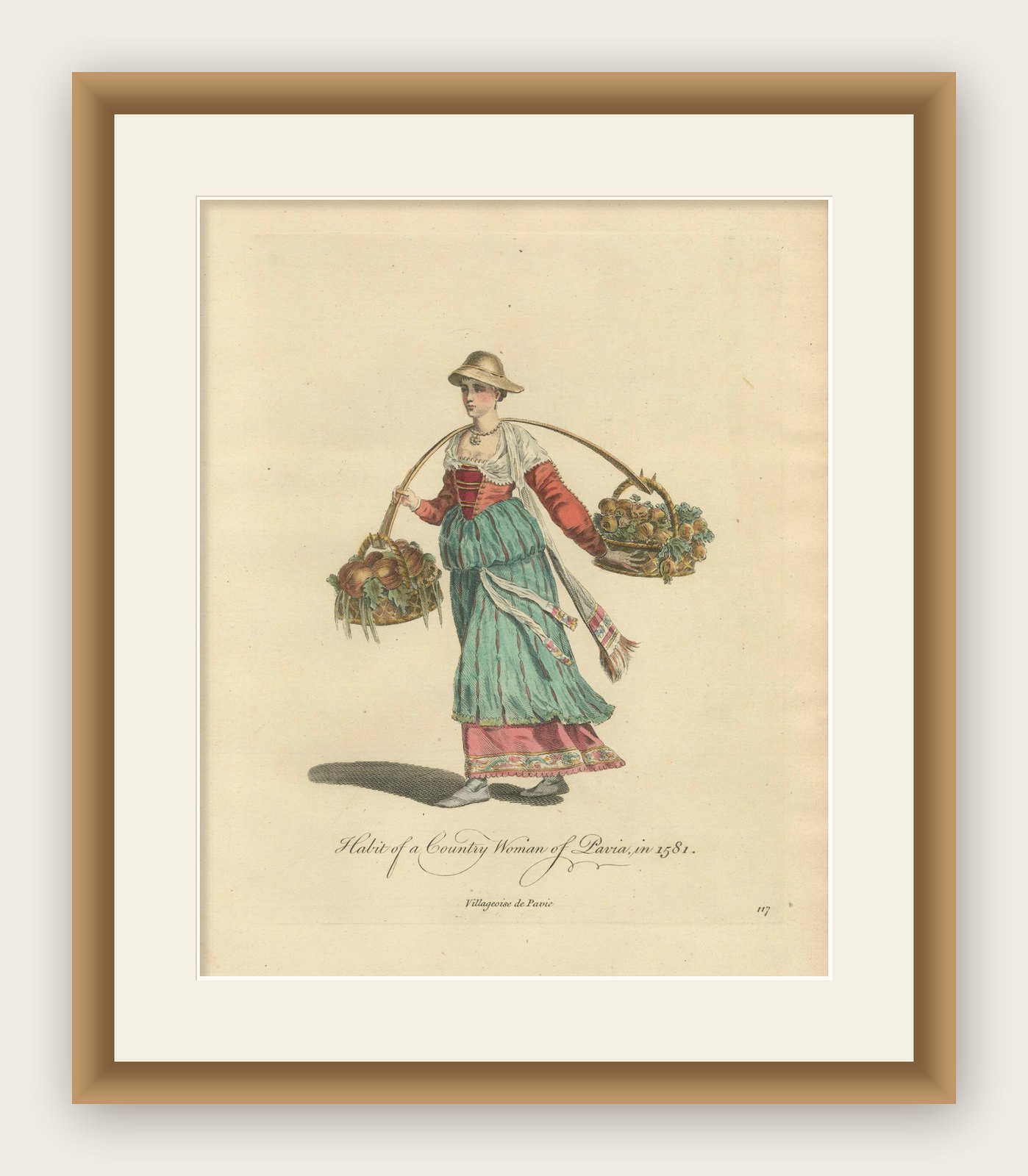
Italian Country Woman Costume Print, Pavia Peasant Dress, 1749
£230
$305 · €270
Original print, not a reproduction.
Ships worldwide from the Netherlands, flat, insured and tracked. 14-day returns. To buy, use Ask a question and we will reserve the print for you.
- Date
- 1749
- Sheet size
- 12.6 × 9.8 in (32.1 × 24.9 cm)
- Condition
- Good. Good antique condition with age-related toning, occasional foxing, and minor edge wear consistent with age. Attractive original hand coloring with a strong impression. Please study the image carefully.
- Wardrobe
- Folk finery
- Era
- 1700s, Rococo
- Stock no.
- f_50120382
Italian Country Woman Costume Print, Pavia Peasant Dress, 1749
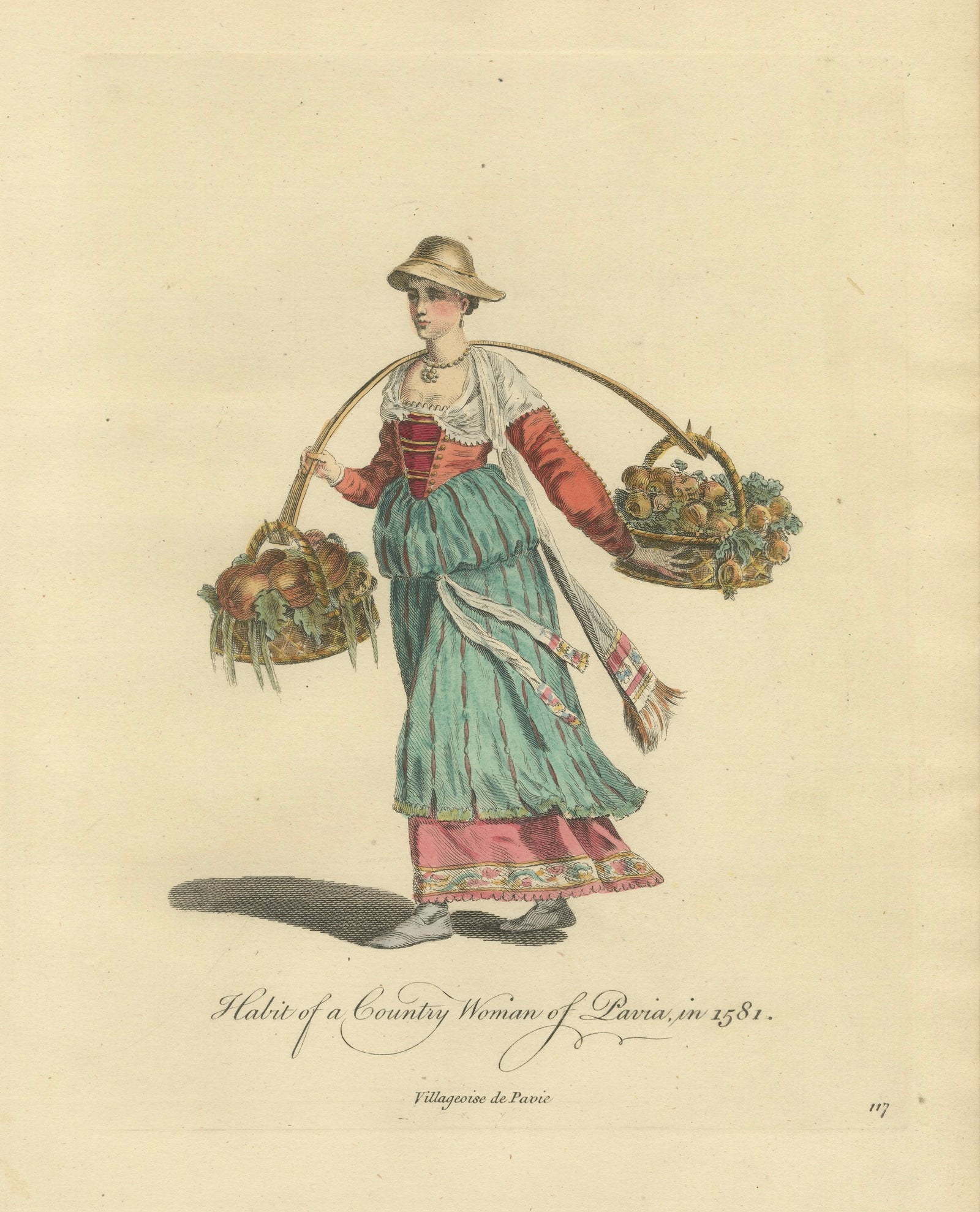
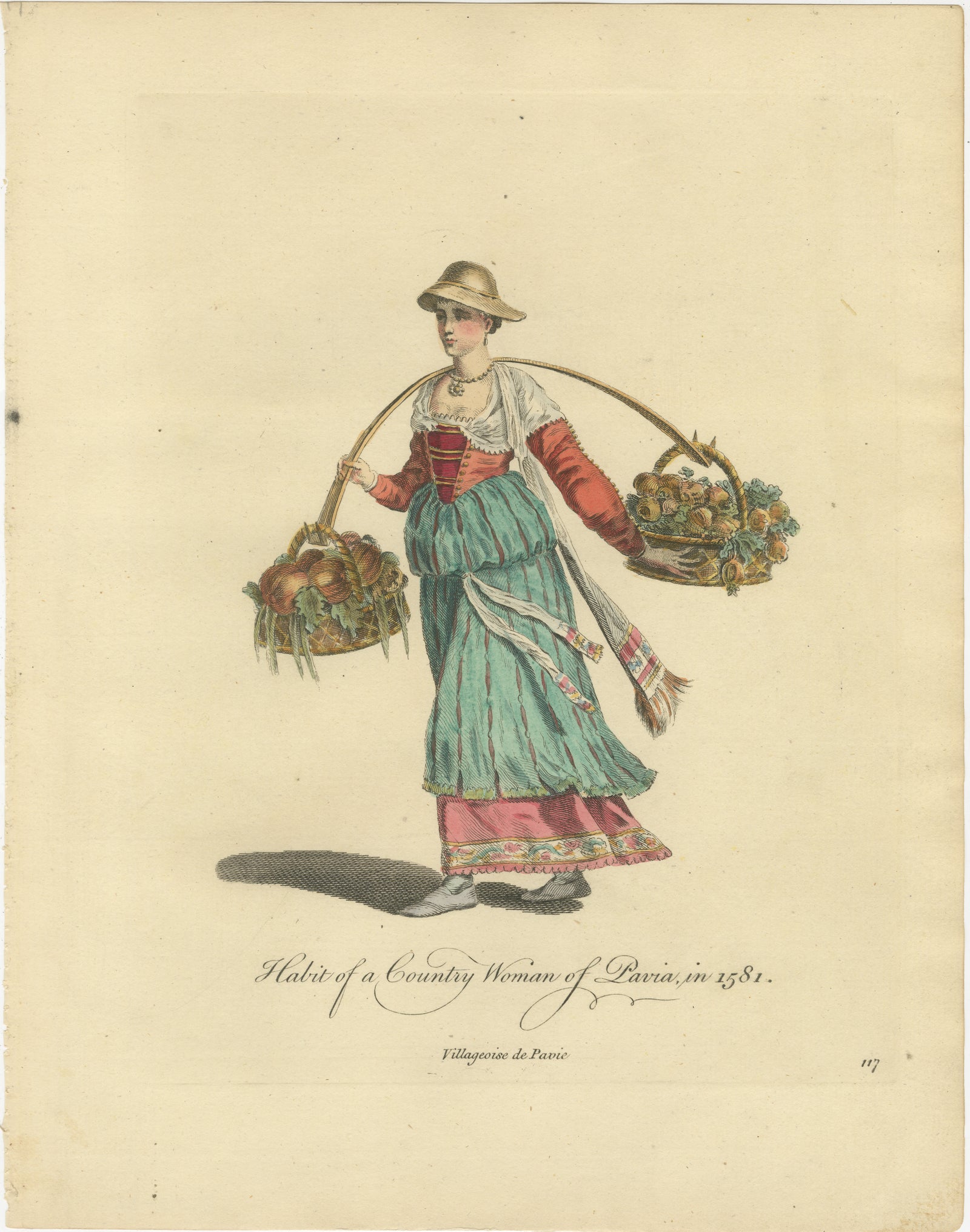
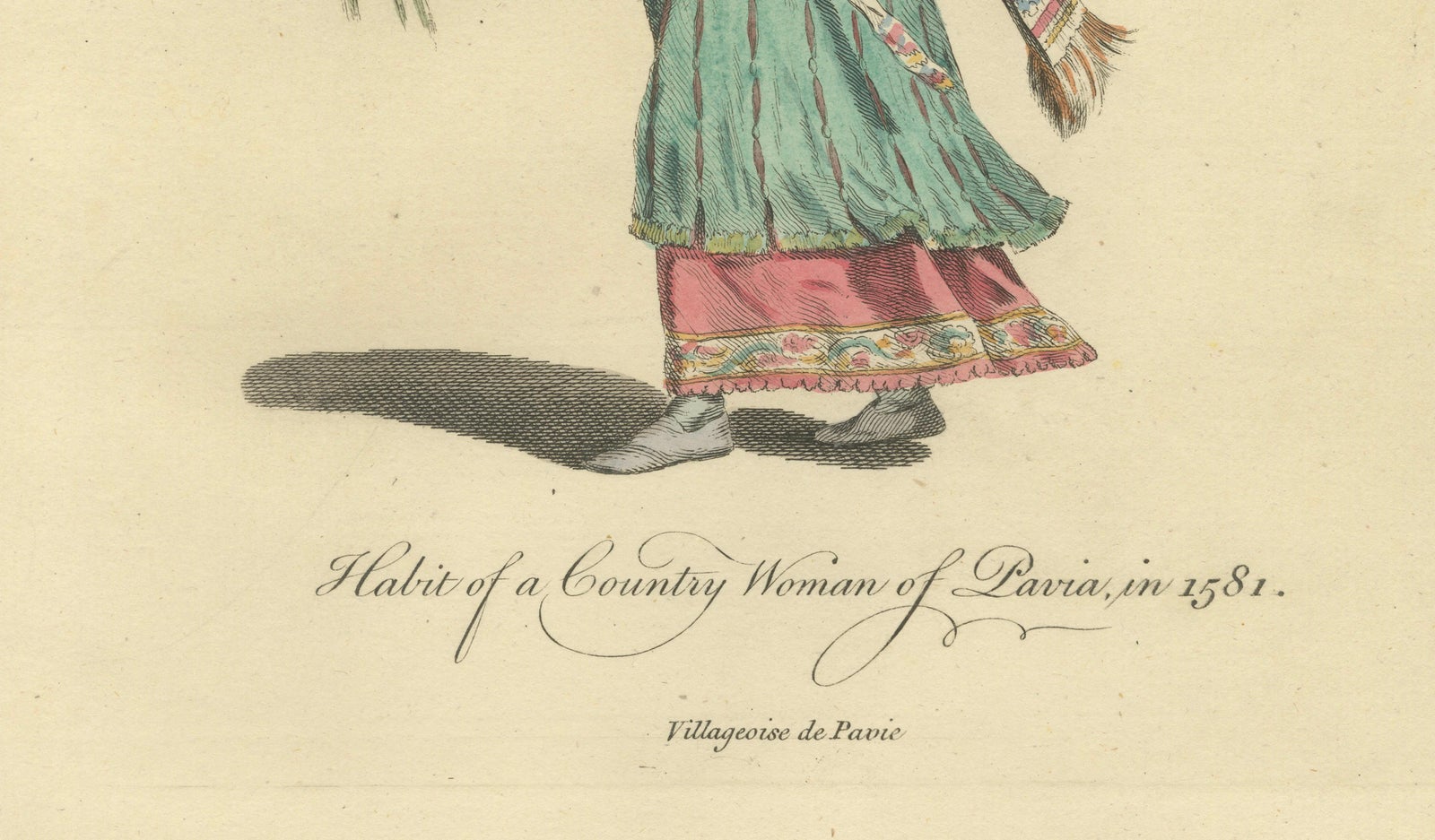
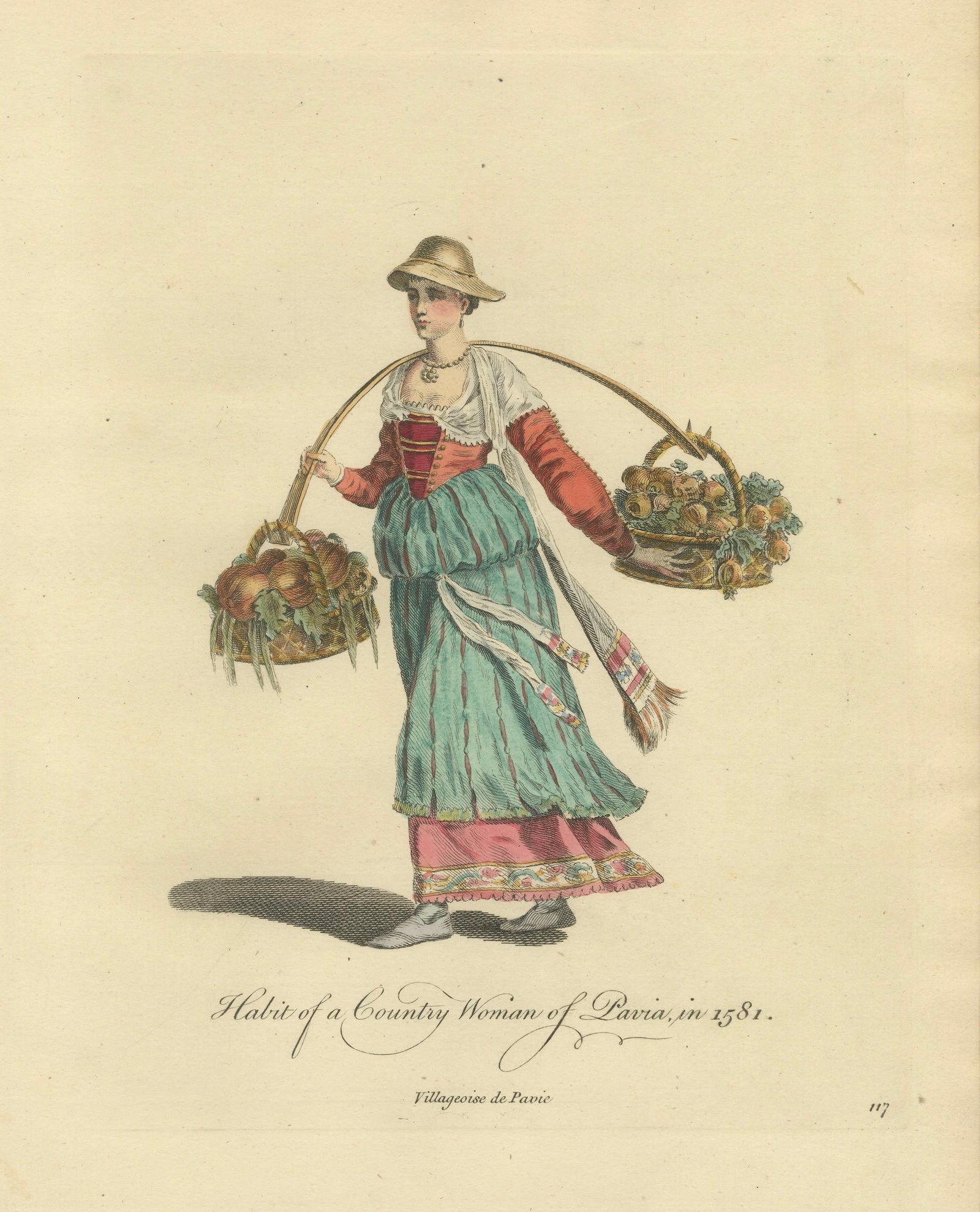
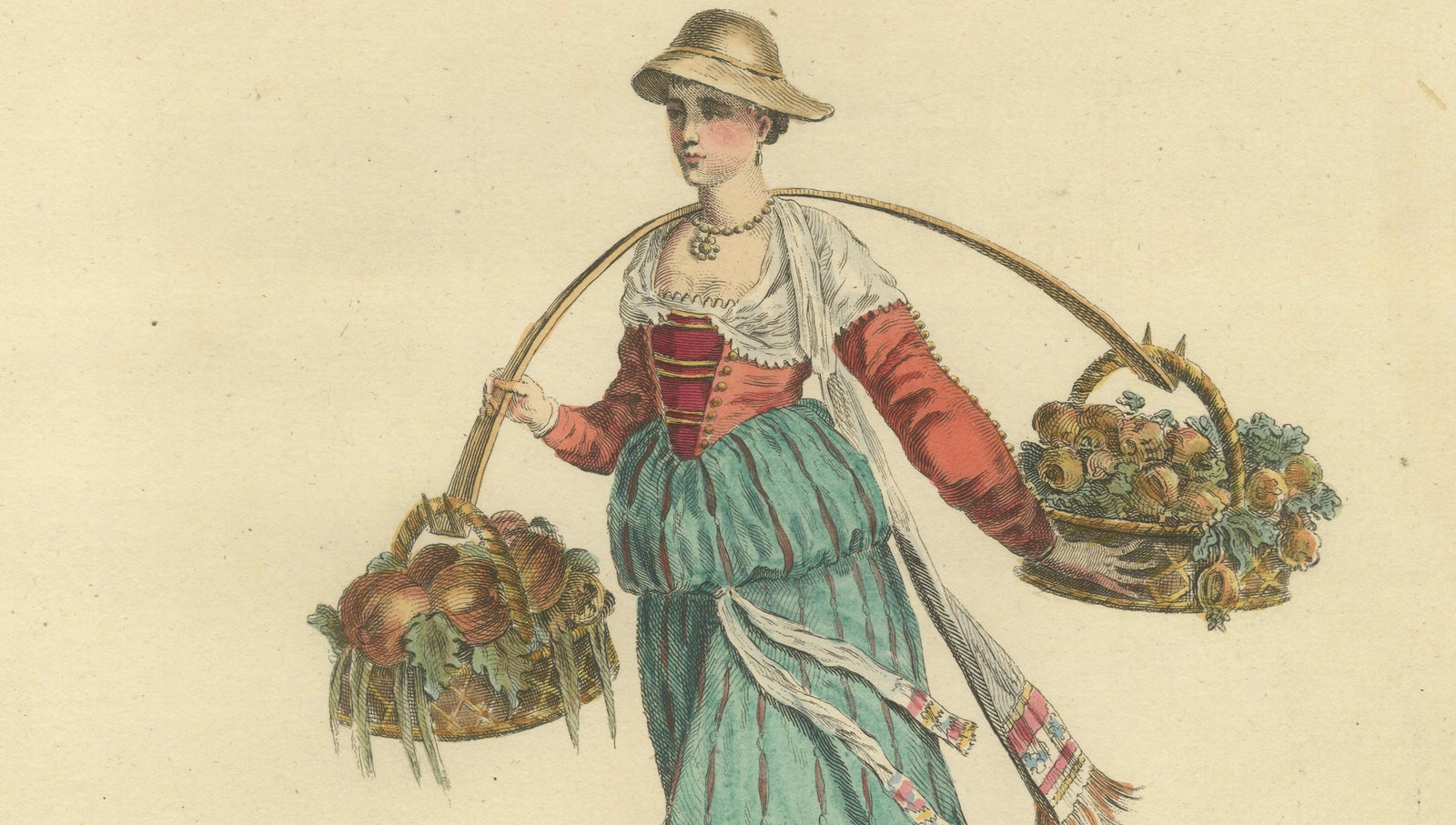
A charming and highly decorative antique costume engraving depicting a country woman from Pavia, Italy, titled “Habit of a Country Woman of Pavia, in 1581.” This elegant hand-colored print belongs to a celebrated mid-18th century European costume series published around 1749, documenting historical regional dress traditions from across Italy and Europe. The composition portrays a rural woman carrying baskets of produce suspended from a shoulder yoke, offering a vivid glimpse into agricultural life and vernacular fashion of Renaissance-era northern Italy.
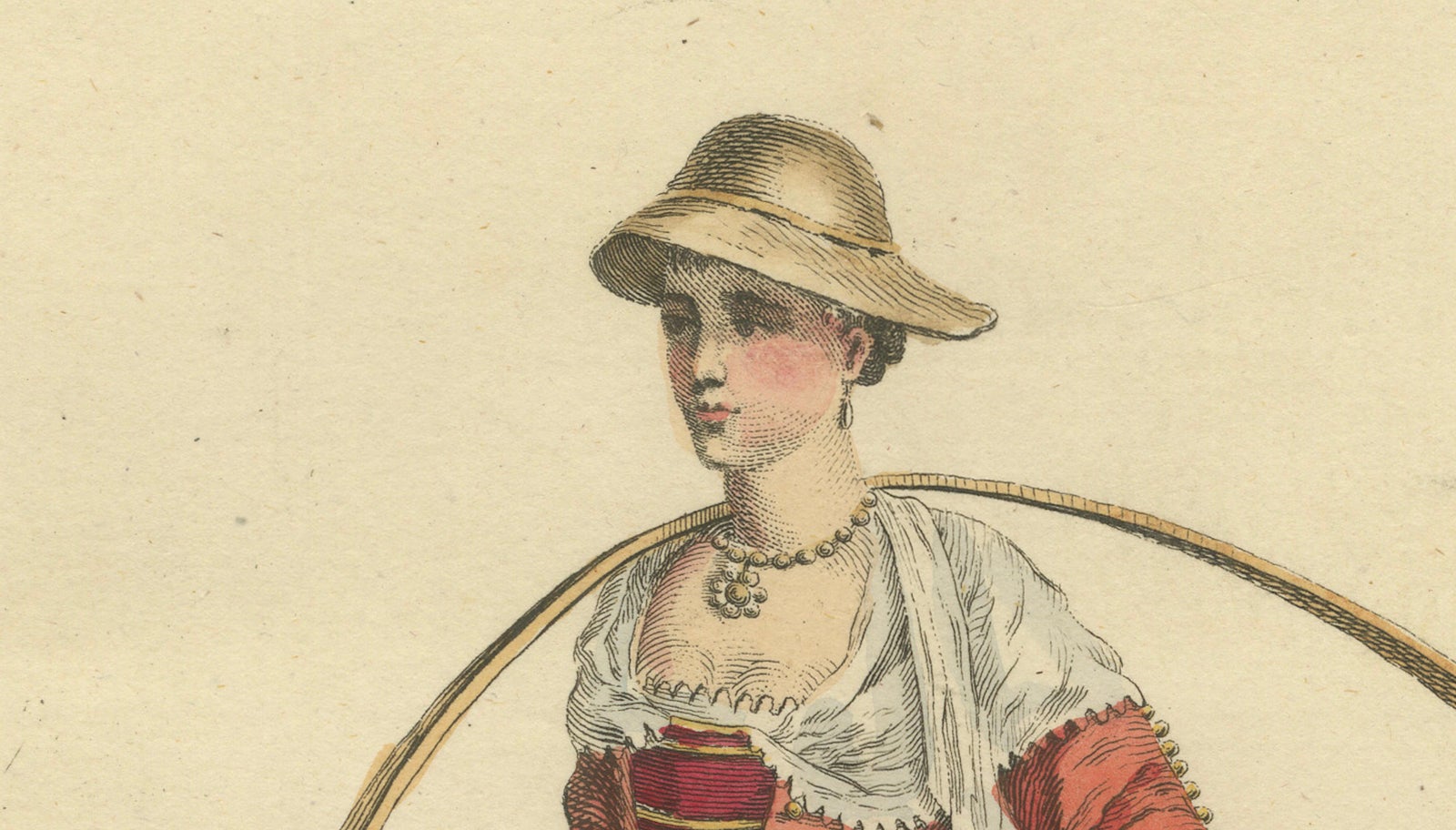
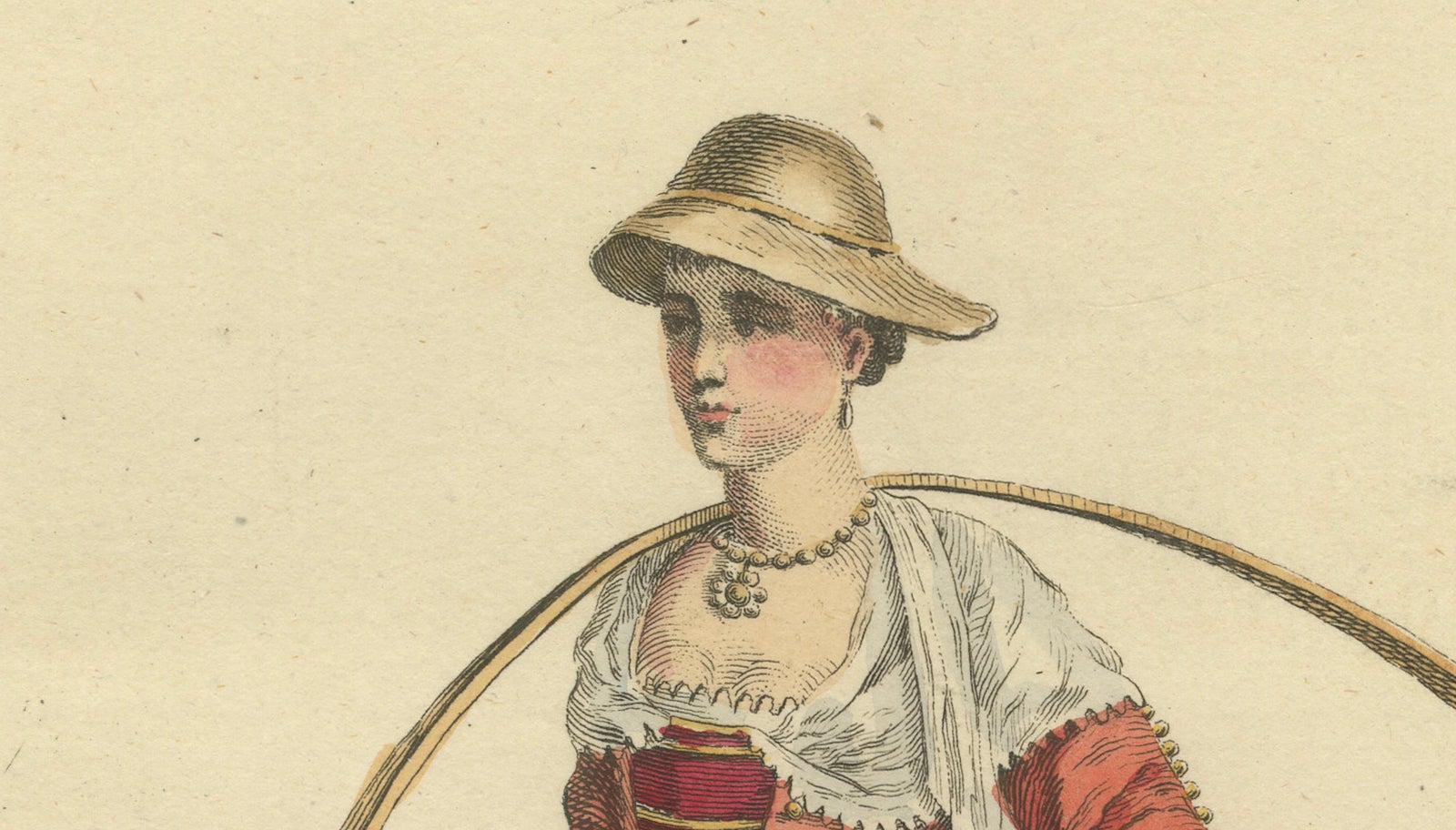
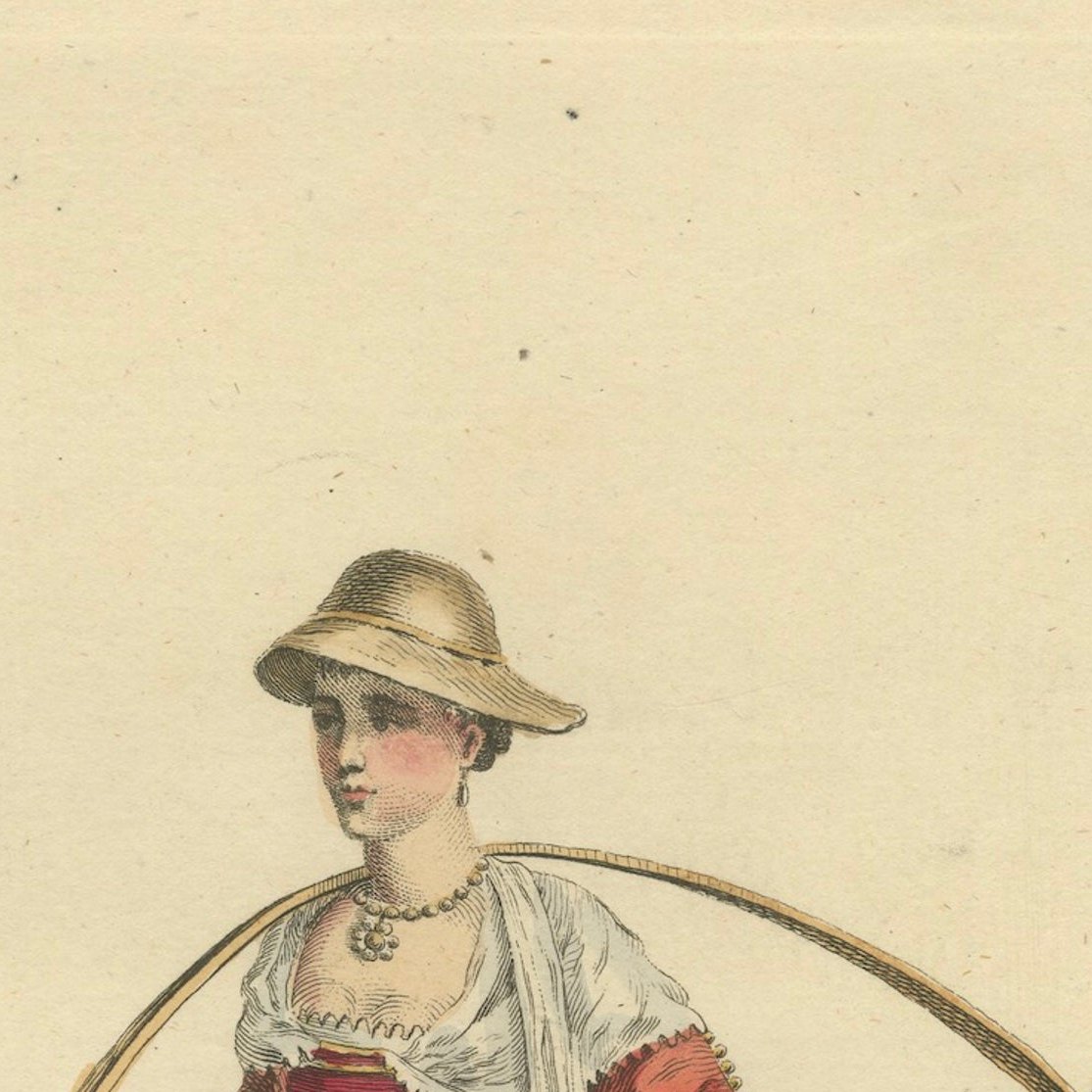
The figure is beautifully rendered in soft original hand coloring, wearing a turquoise overskirt, pink underskirt, fitted red bodice, and broad straw hat. The inclusion of baskets overflowing with vegetables and fruit adds narrative charm and makes this engraving particularly appealing compared to more formal aristocratic costume studies. Such imagery was highly prized during the 18th century by collectors, travelers, and Grand Tour audiences fascinated by the diversity of European regional customs and attire.
Pavia, located in Lombardy near Milan, was historically an important agricultural and trading center. Costume engravings like this not only documented clothing traditions but also reflected the occupations, daily routines, and social identities of local inhabitants. The simplicity and grace of the composition, combined with the large clean margins surrounding the figure, create an elegant decorative presentation ideal for framing.
This print displays exceptionally well in dark walnut, black lacquer, or lightly gilt frames with wide cream or ivory mats. Its warm colors and pastoral subject make it especially suitable for Italian interiors, farmhouse-inspired spaces, kitchens, dining rooms, or collections focused on costume history and European regional culture.
This is an original antique document, not a reproduction. All items we offer are authentic period works of art over 100 years old. The piece is sold unframed; any framed images are shown for presentation and interior inspiration only and may not always be to scale.
Condition: Good antique condition with age-related toning, occasional foxing, and minor edge wear consistent with age. Attractive original hand coloring with a strong impression. Please study the image carefully.
Technique: Hand-colored copper engraving
Maker: European School, probably French or English, circa 1749