Close-ups

Framed and on the wall


Frame and rooms are illustrations of how the print could look; the description says what is included.
Hand-Colored Engraving of Aleutian and Kurilian Traditional Attire, 1814
£205
$270 · €240
Original print, not a reproduction.
Ships worldwide from the Netherlands, flat, insured and tracked. 14-day returns. To buy, use Ask a question and we will reserve the print for you.
- Date
- 1814
- Sheet size
- 9.4 × 6.7 in (24 × 17 cm)
- Condition
- Good. Very good, given age. Light soiling General age-related toning and/or occasional minor defects from handling. Please study scan carefully.
- Wardrobe
- Far & away
- Era
- 1790 to 1840, Empire and Romantic
- Stock no.
- f_38693162
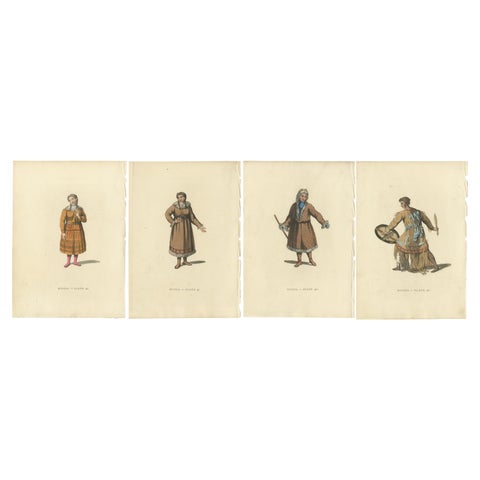
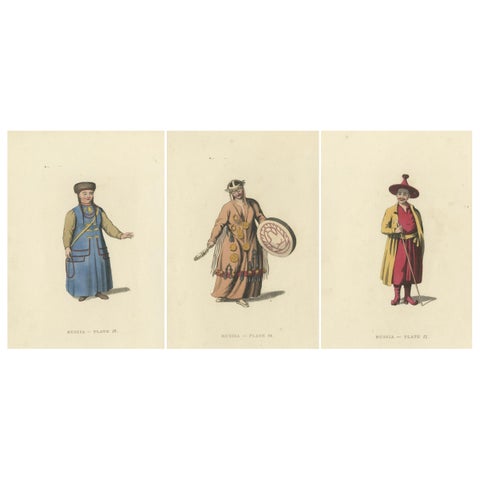
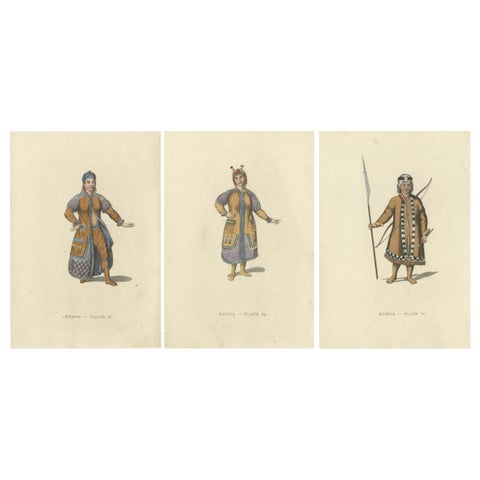
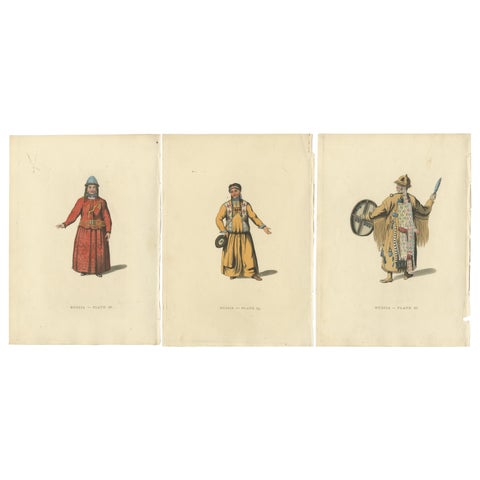
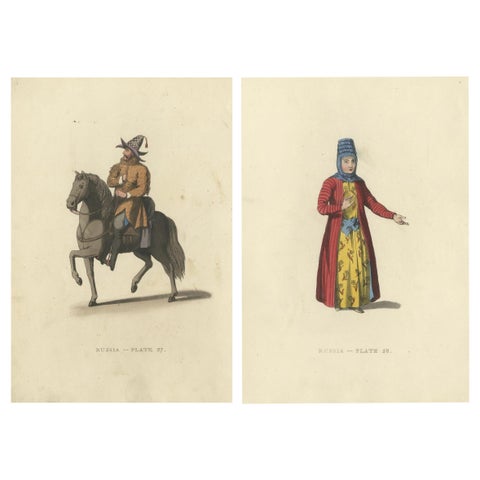
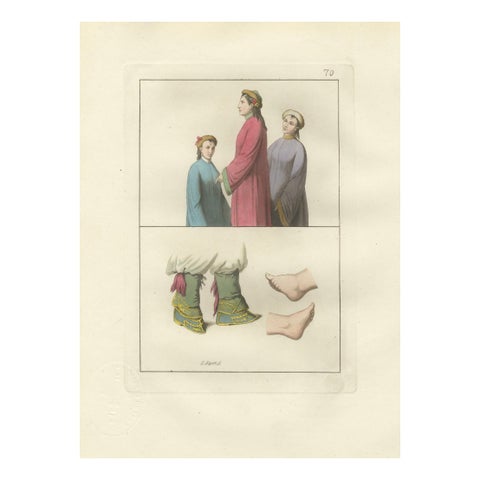
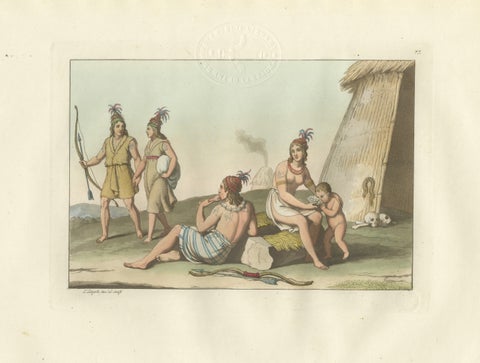
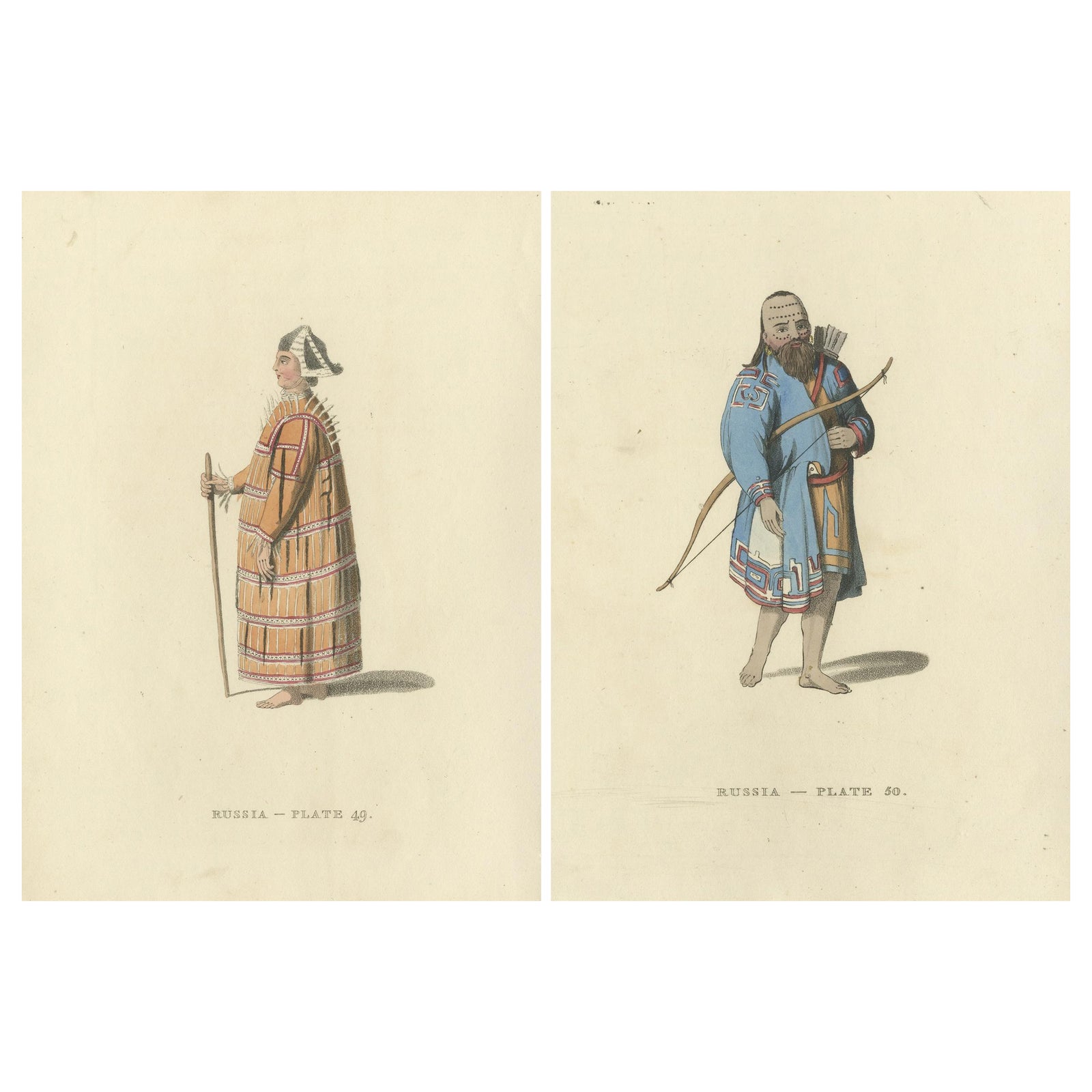
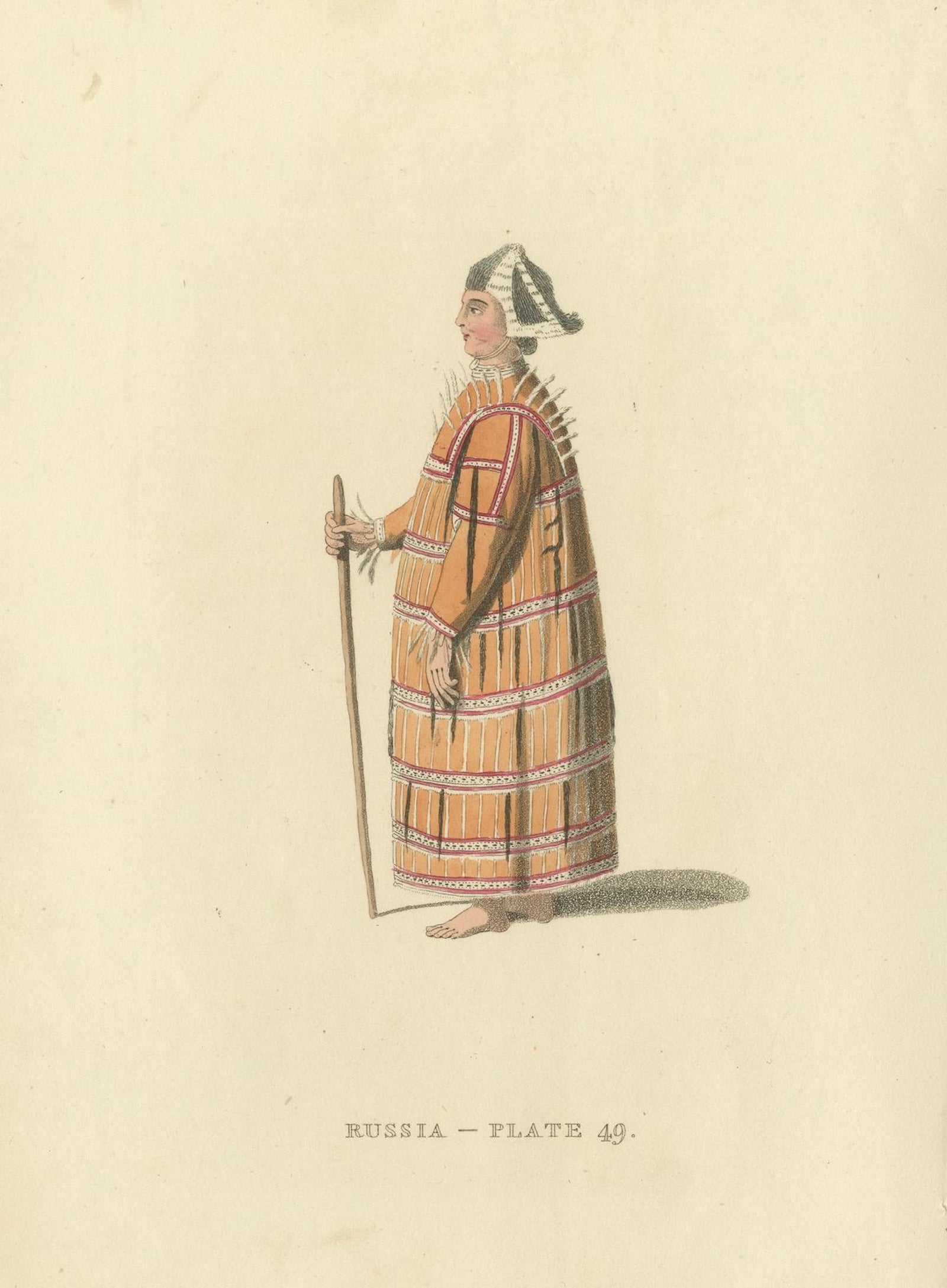
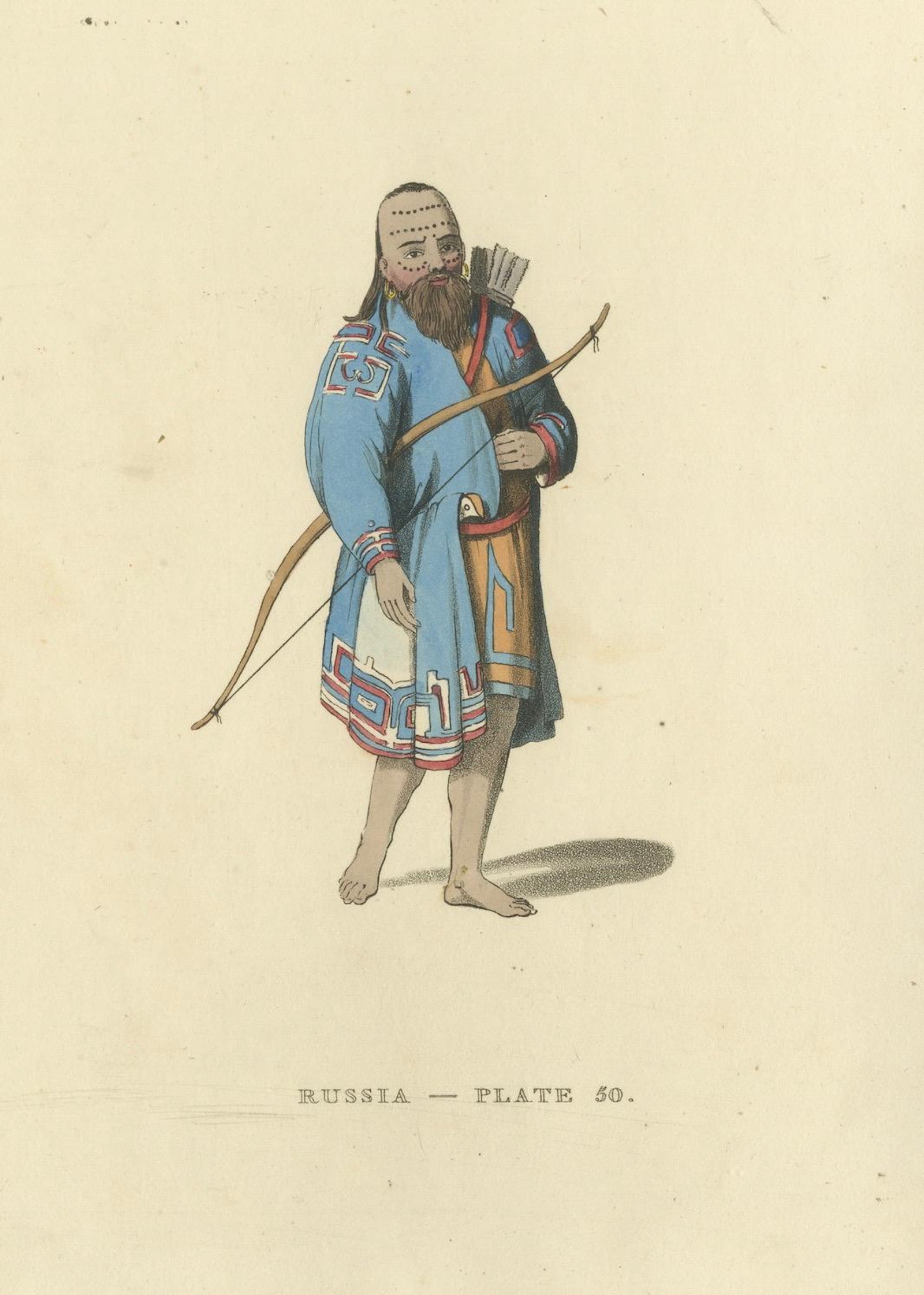
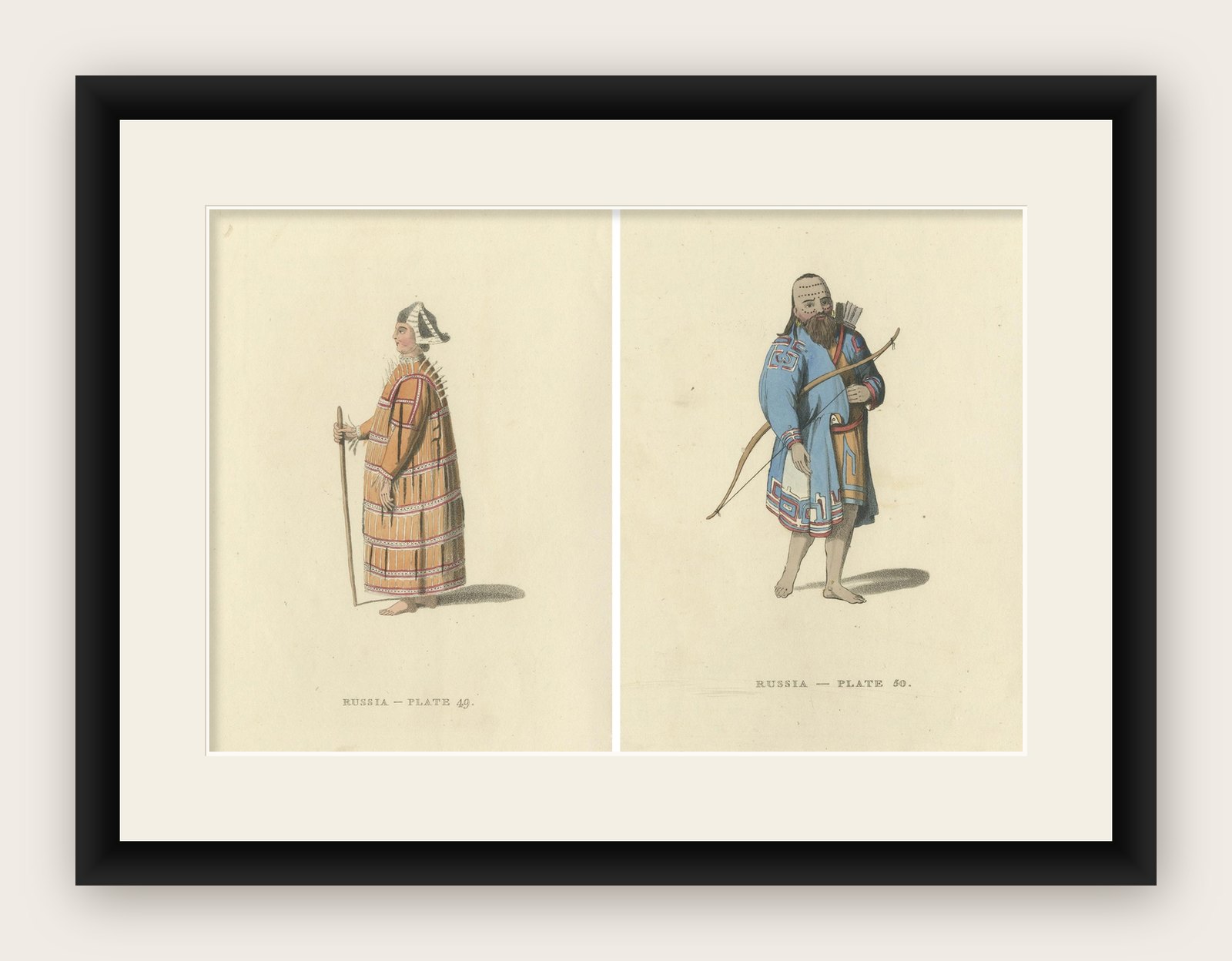
The hand-coloured images depict two individuals, presumably representative of the Aleut and Kuril ethnic groups, as part of a series titled "RUSSIA - PLATE 49" and "RUSSIA - PLATE 50," respectively.
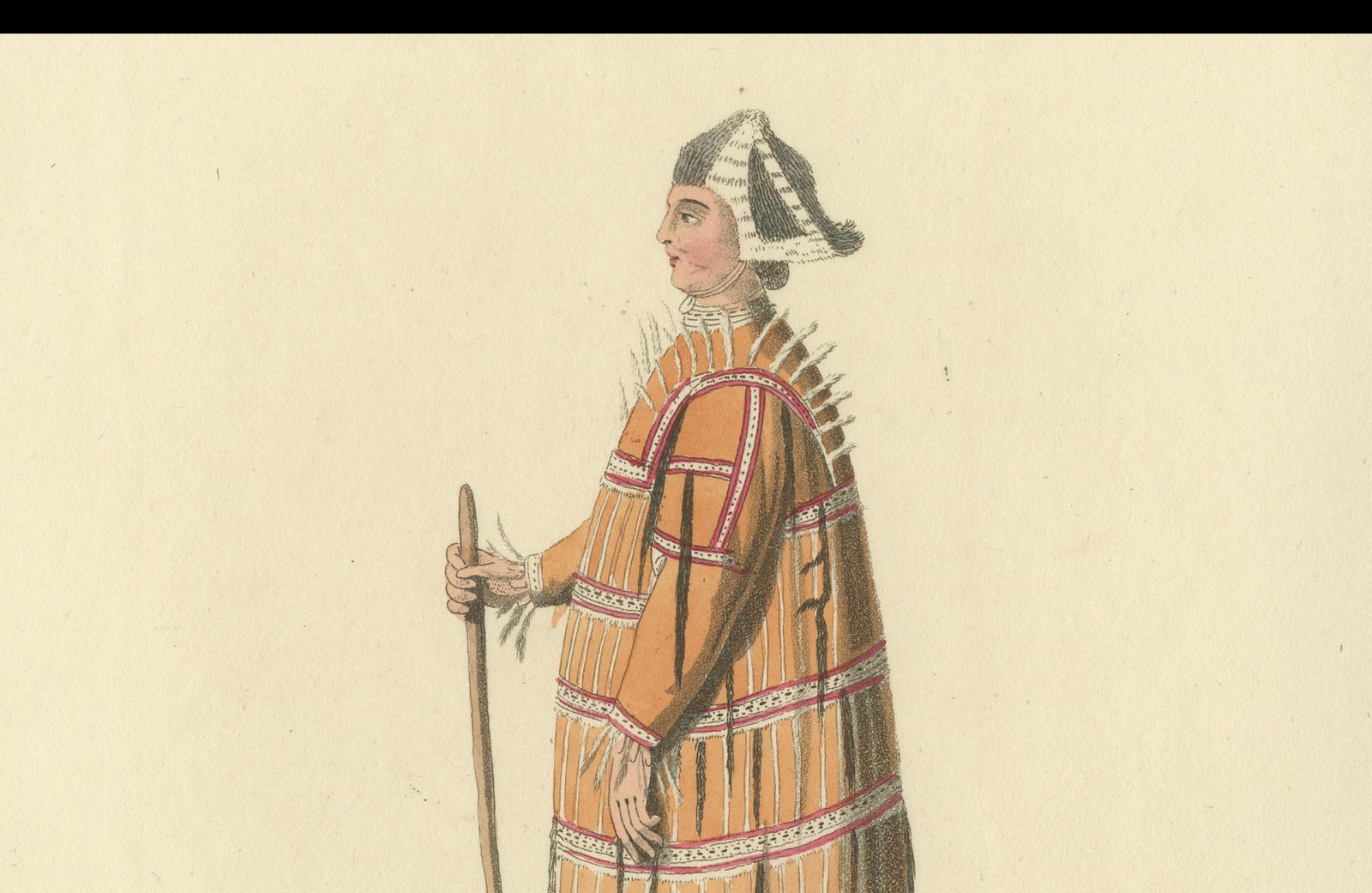
The first image (Plate 49) illustrates an Aleut individual. This person is dressed in a traditional long, robe-like garment with horizontal stripes and geometrical patterns that are rich in color, predominantly oranges, reds, blacks, and whites. The individual also wears a tall fur-trimmed hat and is holding a staff, which may indicate a tool for walking or a symbol of status. The garment's patterns and materials are likely reflective of the indigenous Aleut culture, which is known for its specialized clothing adapted to the harsh climate of the Aleutian Islands.
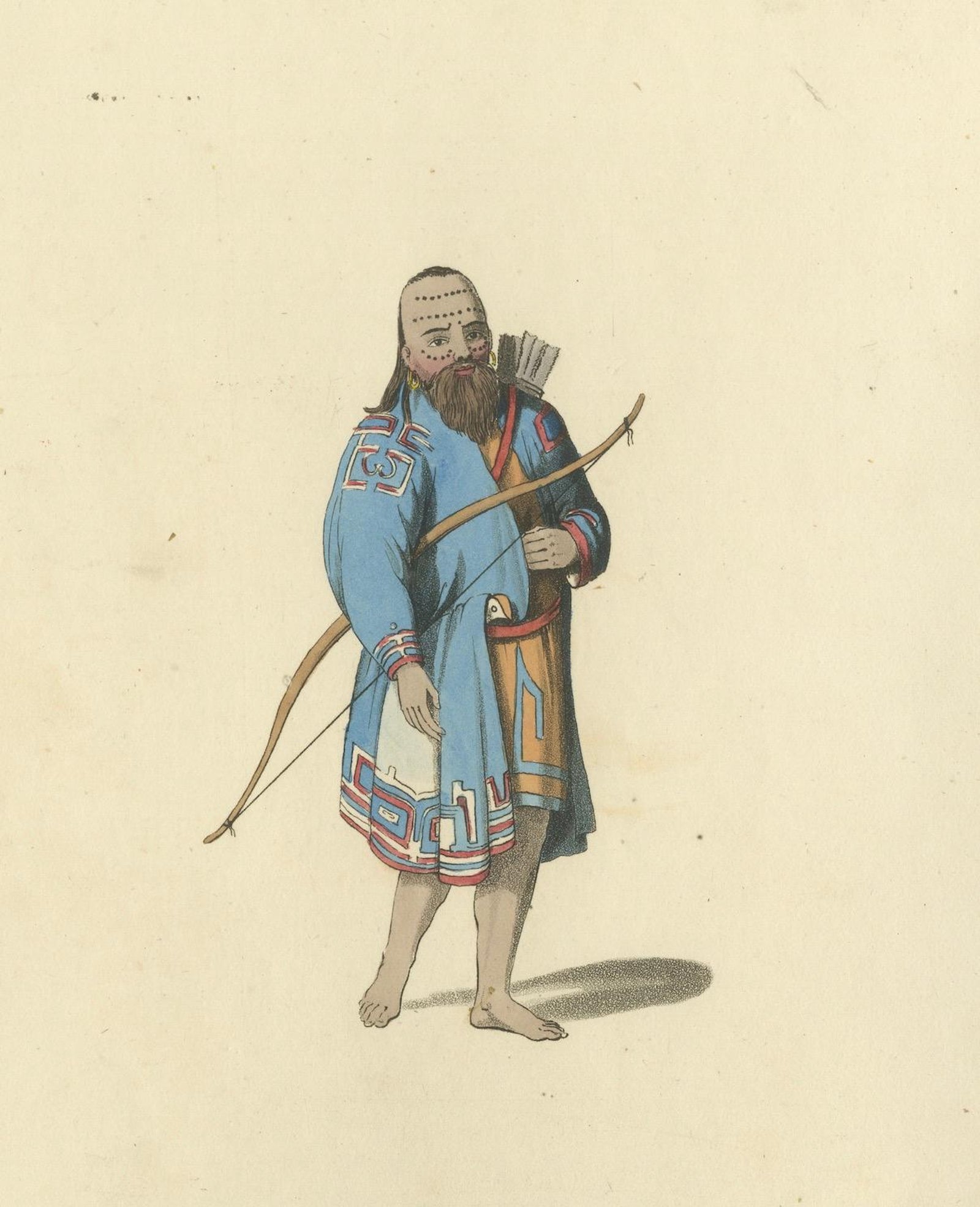
The second image (Plate 50) depicts a Kuril individual (a 'Kurilian'), which refers to the indigenous people from the Kuril Islands. This person is attired in a knee-length blue robe with red and white trim and geometric patterns. They are equipped with a bow and quiver of arrows, suggesting they're hunting practices. The robe is complemented with a sash and leggings, which have similar intricate patterns. The man also sports facial tattoos or paint, a full beard, and a headdress, which could be indicative of his cultural traditions.
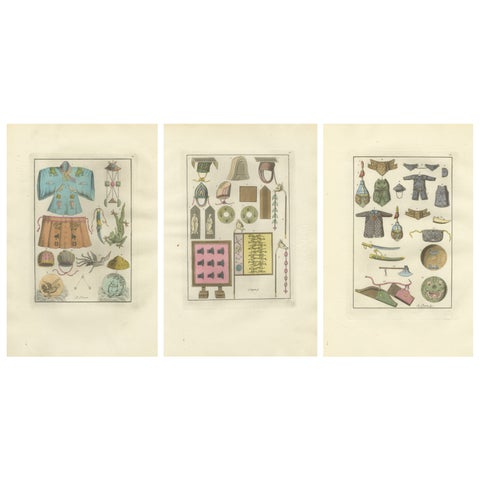
These images are from the publication "Picturesque Representations of the Dress and Manners of the Russians," which includes sixty-four colored engravings with descriptions. The writer of this work is William Alexander, and it was published by John Murray in 1814. This work aimed to illustrate and describe the traditional dress and customs of various Russian peoples, including indigenous groups, at the beginning of the 19th century. It serves as an important historical record of cultural attire and practices of that era. The detailed colored engravings were a common method of such documentation in a time before photography, intended to provide the Western audience with a visual account of distant cultures.