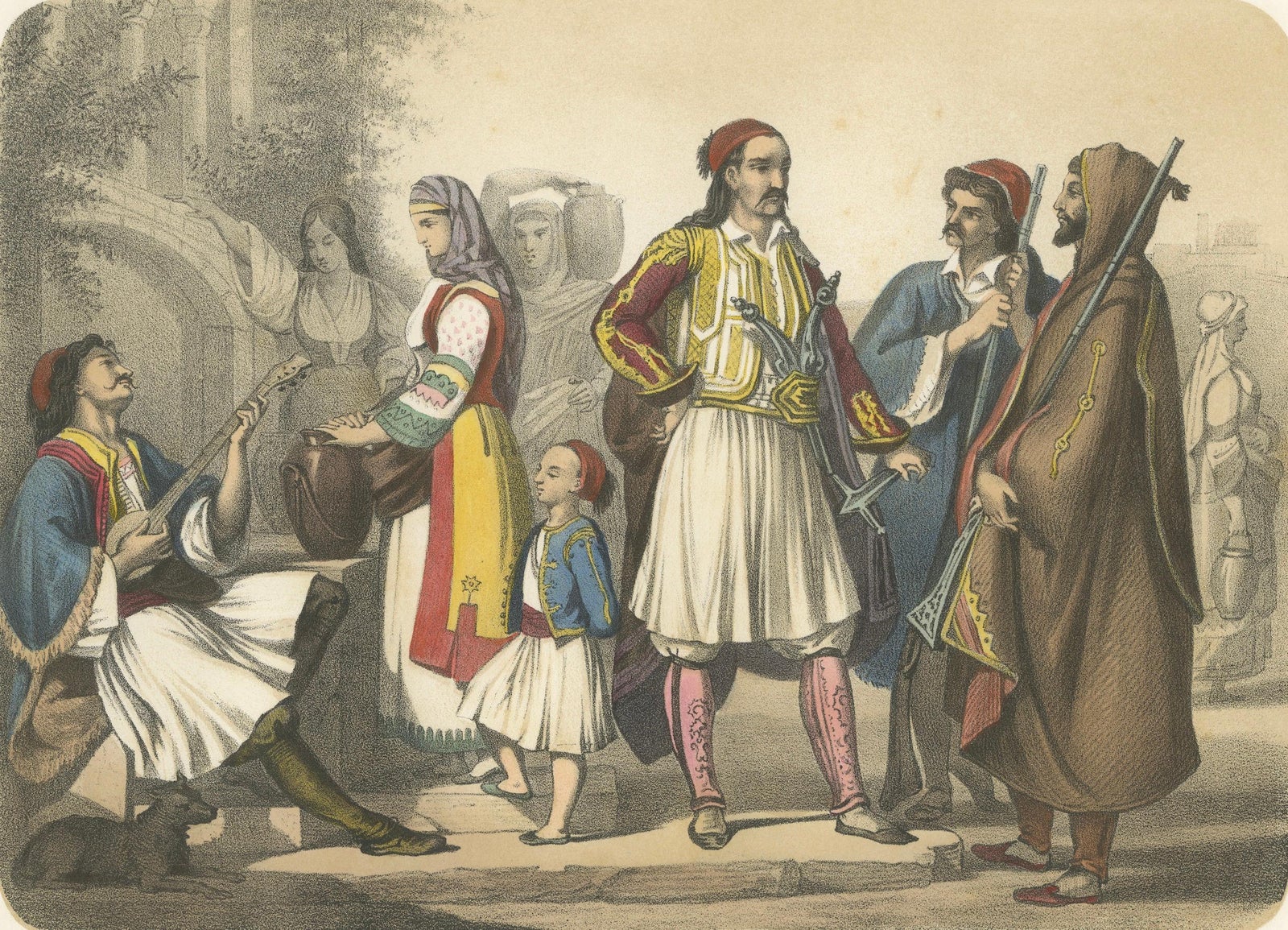
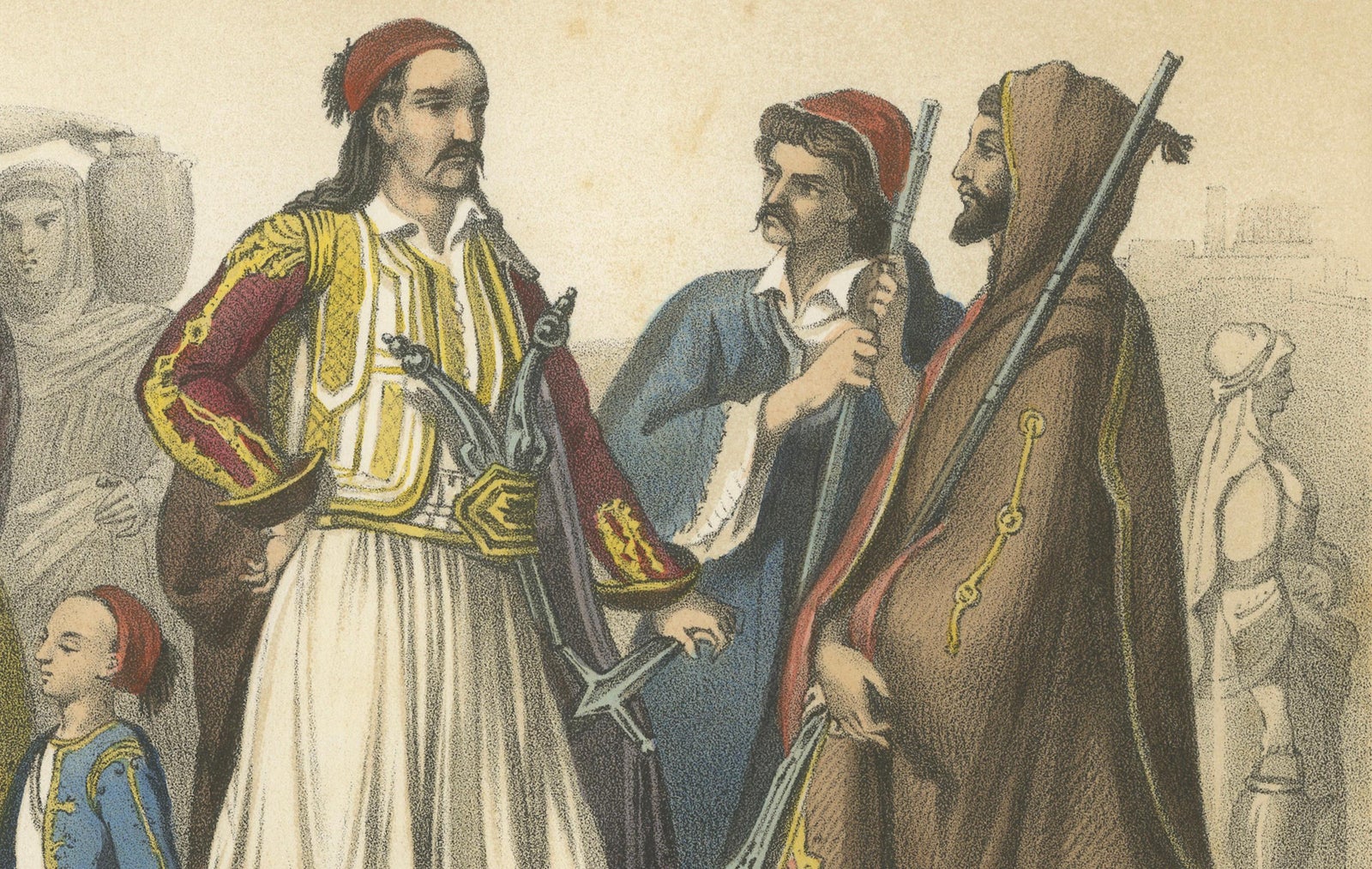
Close-ups
Framed and on the wall


Frame and rooms are illustrations of how the print could look; the description says what is included.
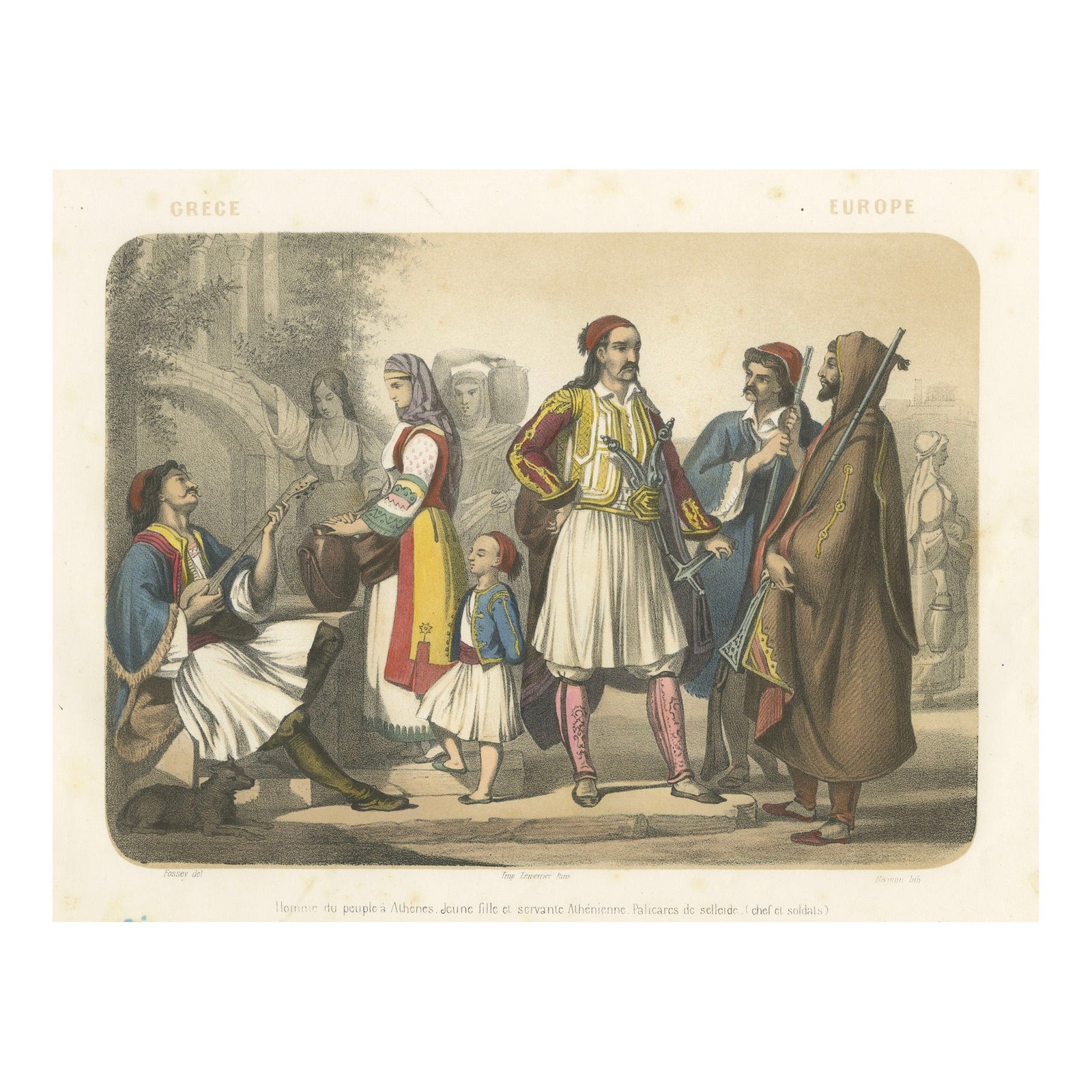
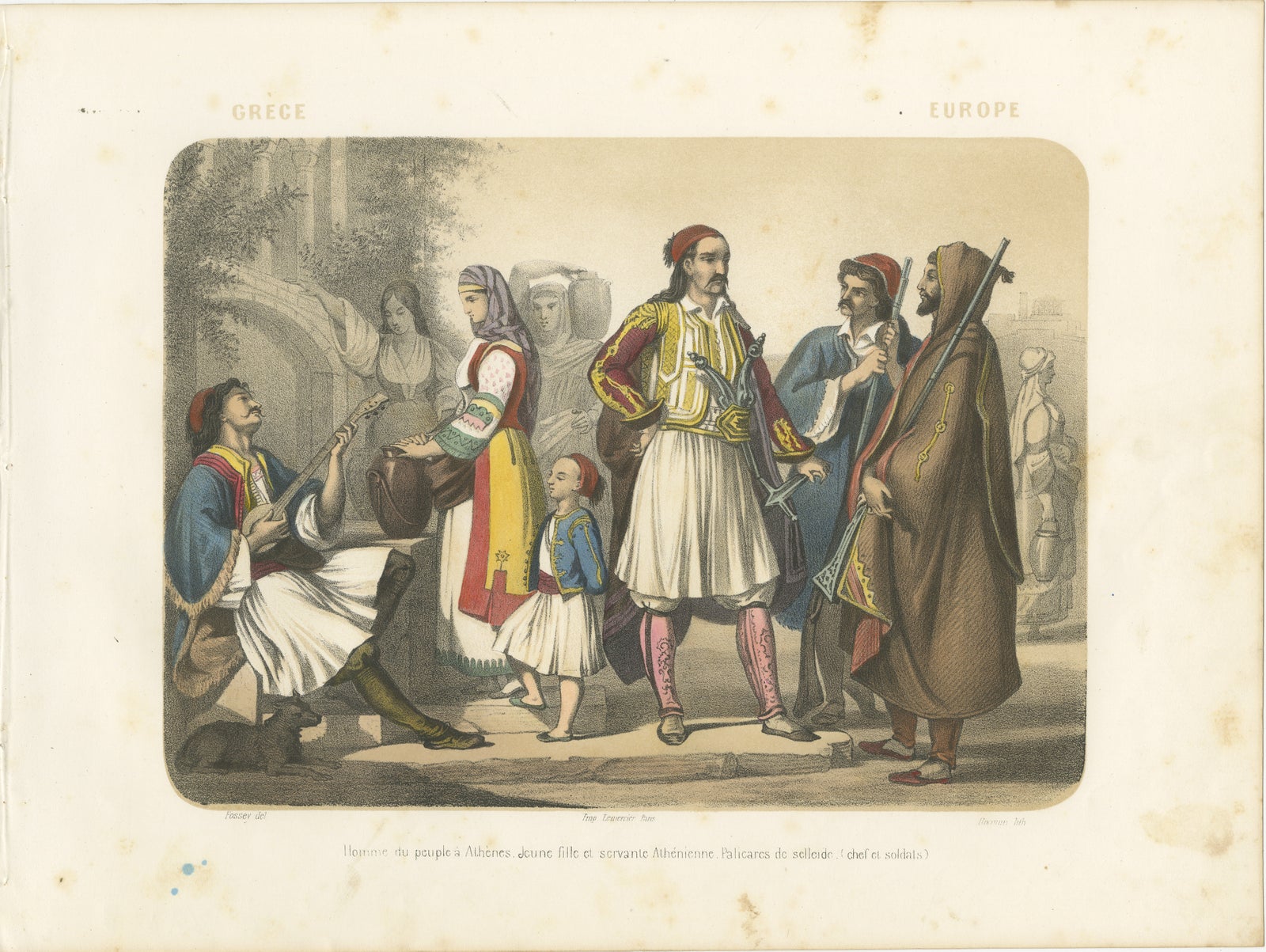
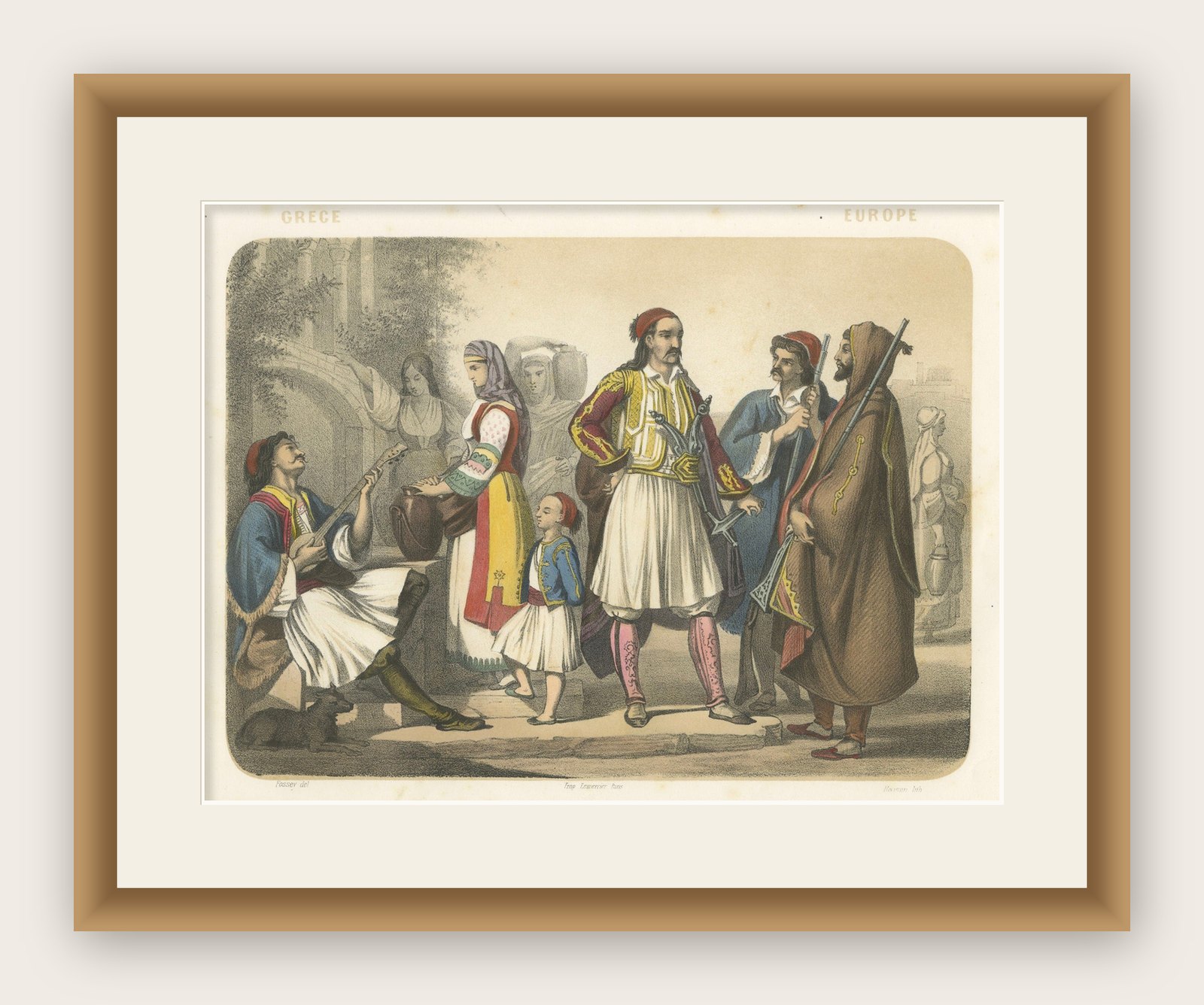
Greek Costumes, Athenians and Palicars of Selléide, c.1845
€240
$270 · £205
Original print, not a reproduction.
Ships worldwide from the Netherlands, flat, insured and tracked. 14-day returns. To buy, use Ask a question and we will reserve the print for you.
- Date
- 1845
- Sheet size
- 9.1 × 11.8 in (23 × 30 cm)
- Condition
- Good. Condition report: Good impression with bright, well-preserved colors. Minor foxing and light age toning mostly to margins, image area clean. Full margins intact.
- Wardrobe
- Folk finery
- Era
- 1840 to 1870, Crinoline
- Stock no.
- f_47418342
Title: Greek Costumes, Athenians and Palicars of Selléide, c.1845
Description:
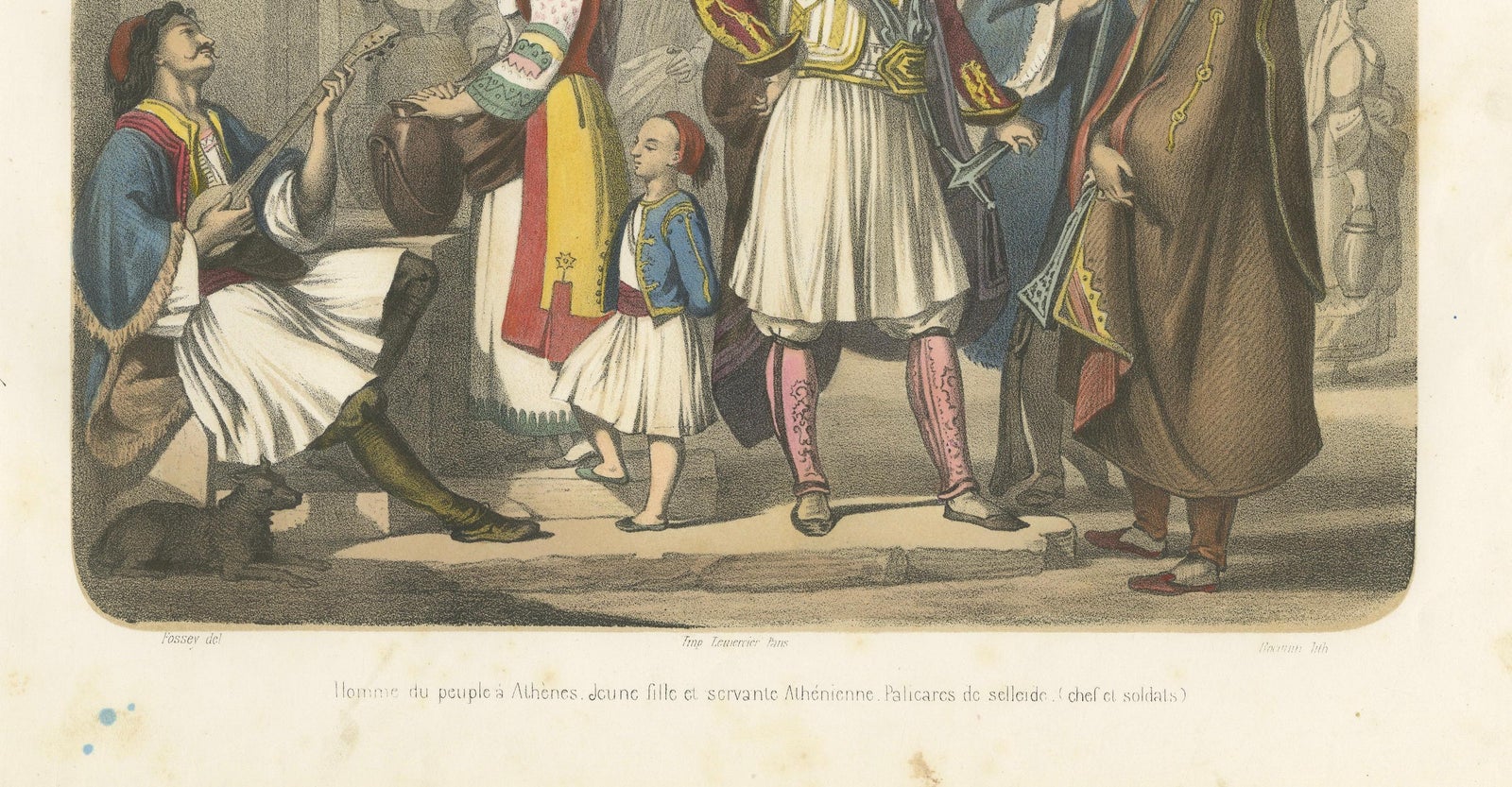
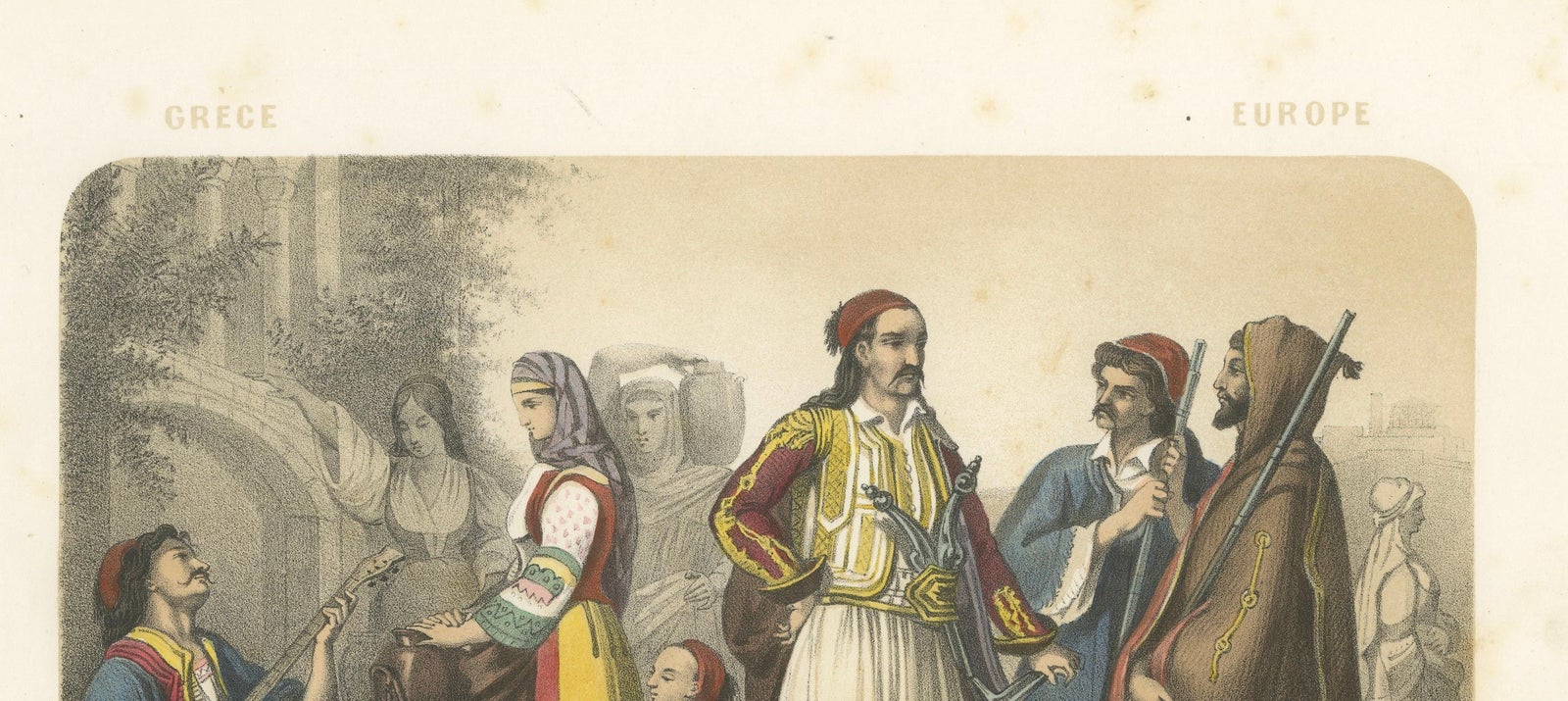
This splendid hand-colored lithograph, titled “Grèce, Europe,” originates from the 19th-century French publication Le Monde en Estampes: Types et Costumes des Principaux Peuples de l’Univers, published in Paris circa 1845–1850 by Amédée Bedelet. Drawn by Fossey, lithographed by J. Bocquin, and printed by Lemercier, this series stands among the finest visual records of global costume traditions produced in mid-19th-century France.
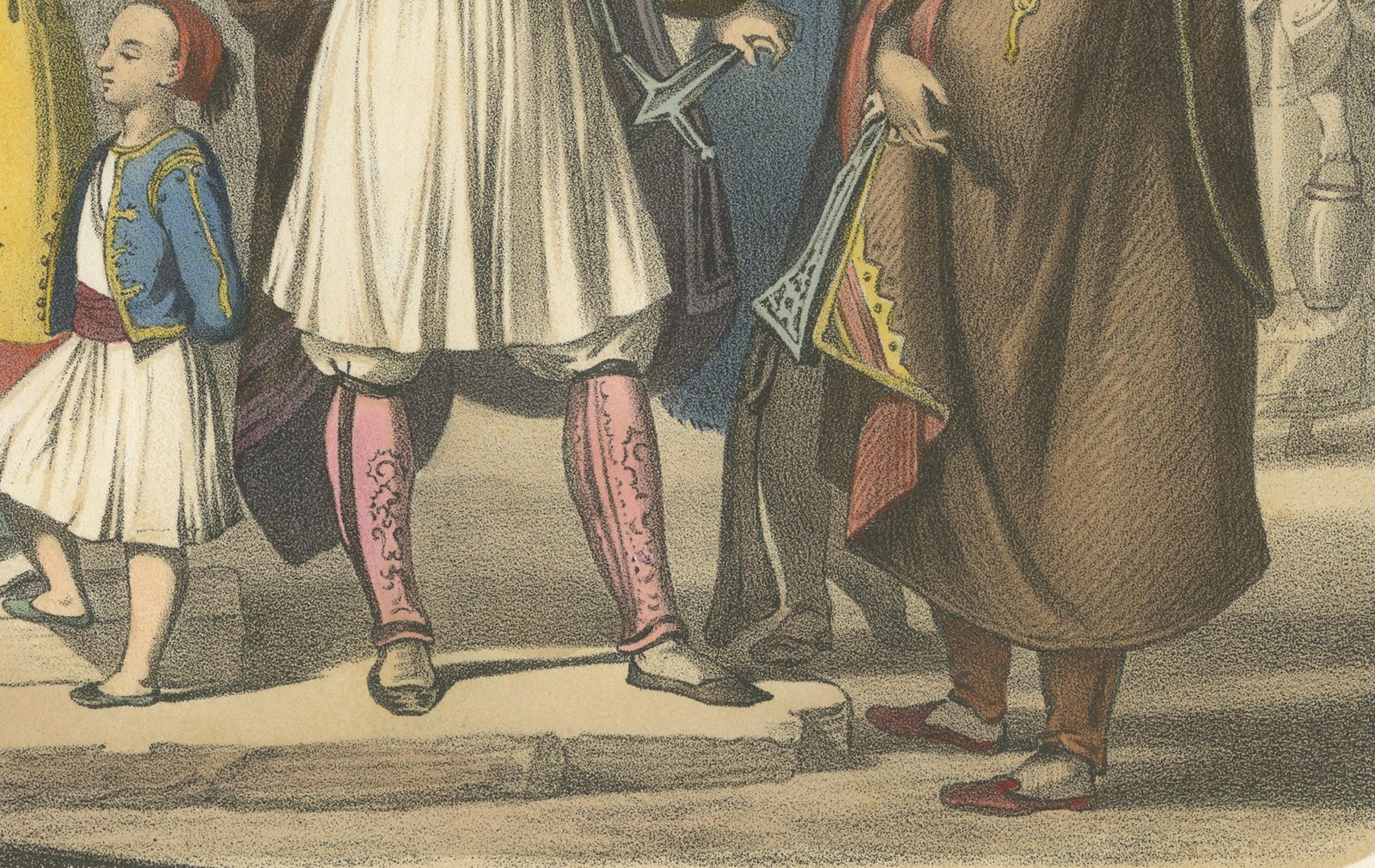
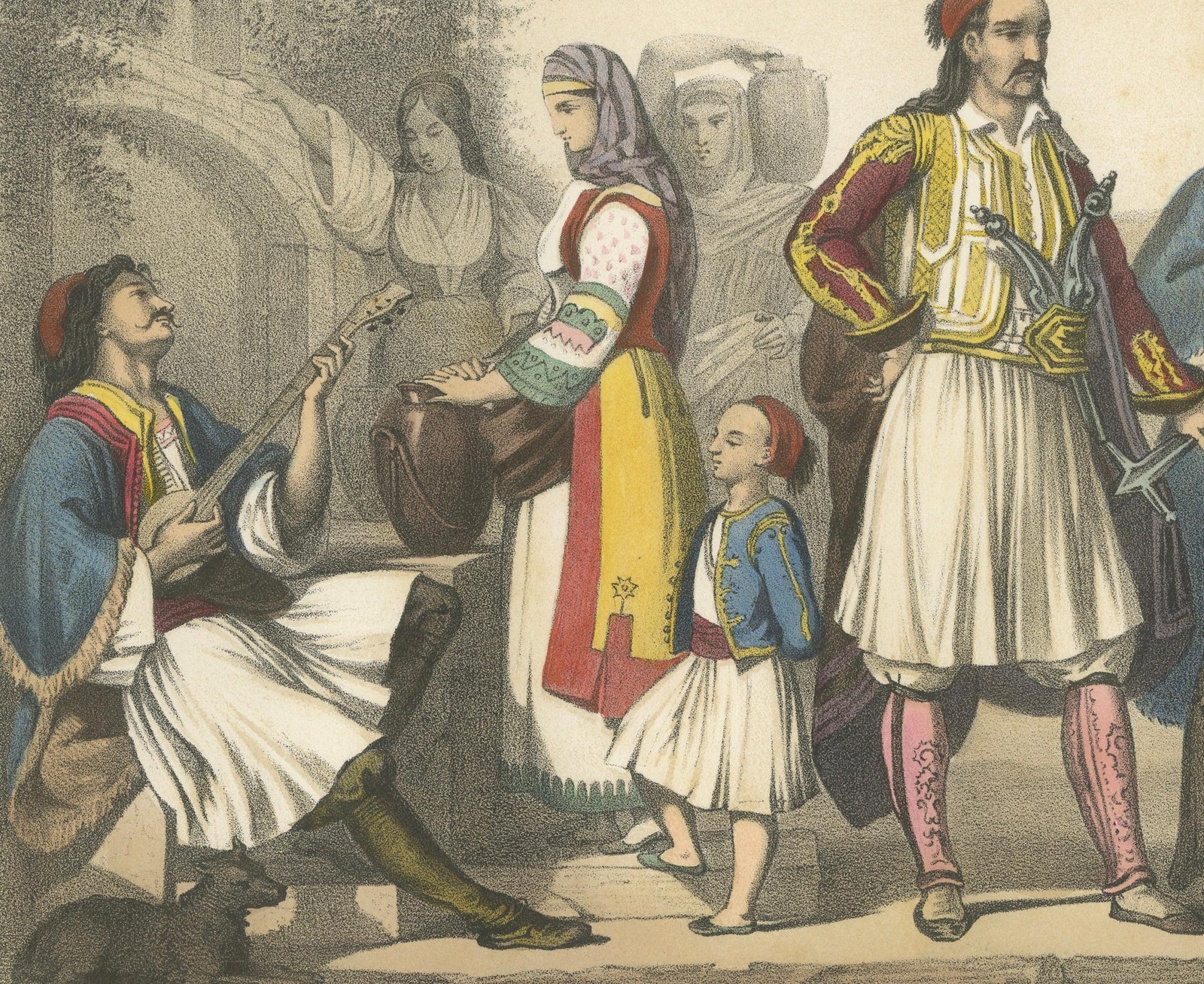
The scene vividly illustrates traditional Greek attire shortly after the country’s independence from Ottoman rule, when national dress became a proud symbol of identity and freedom. At the center stands a Palicar de Selléide (chief of soldiers), commanding in his white pleated fustanella, richly embroidered waistcoat, and red cap, while his companion soldiers, or palicars, stand beside him in matching martial dress, armed with sabers and long rifles. Their bold stances and elaborate garments evoke the heroism of the Greek War of Independence (1821–1829), celebrated in contemporary European art and literature.
To the left, a seated homme du peuple à Athènes strums a stringed instrument, serenading a young fille Athénienne carrying a water jar, her attire marked by a vibrant apron and embroidered sleeves. A small child beside her wears a miniature version of the traditional Greek costume, complete with the short white skirt. On the far right, a cloaked servante Athénienne converses quietly, her brown robe and veil suggesting modesty and devotion.
The architecture in the background, classical arches and stone walls, reinforces the link between modern Greece and its ancient heritage, while the warm palette of reds, golds, and blues infuses the image with vitality. The lithograph reflects both ethnographic interest and the Romantic fascination with Greece as the cradle of civilization and modern heroism.
Le Monde en Estampes sought to present the people of all nations through their costumes and customs, and this Greek plate stands among its most striking, combining authenticity with artistic elegance.
Condition report: Good impression with bright, well-preserved colors. Minor foxing and light age toning mostly to margins, image area clean. Full margins intact.
Framing tips: Best presented with a cream or ivory mat and a gilt or dark walnut frame. For a dramatic effect, a deep blue inner mat enhances the Greek national colors and highlights the vivid tones of the fustanella and embroidered garments.
Technique: Hand-colored lithograph
Maker: J. Bocquin after Fossey, printed by Lemercier, Paris, circa 1845