Framed and on the wall

Frame and rooms are illustrations of how the print could look; the description says what is included.
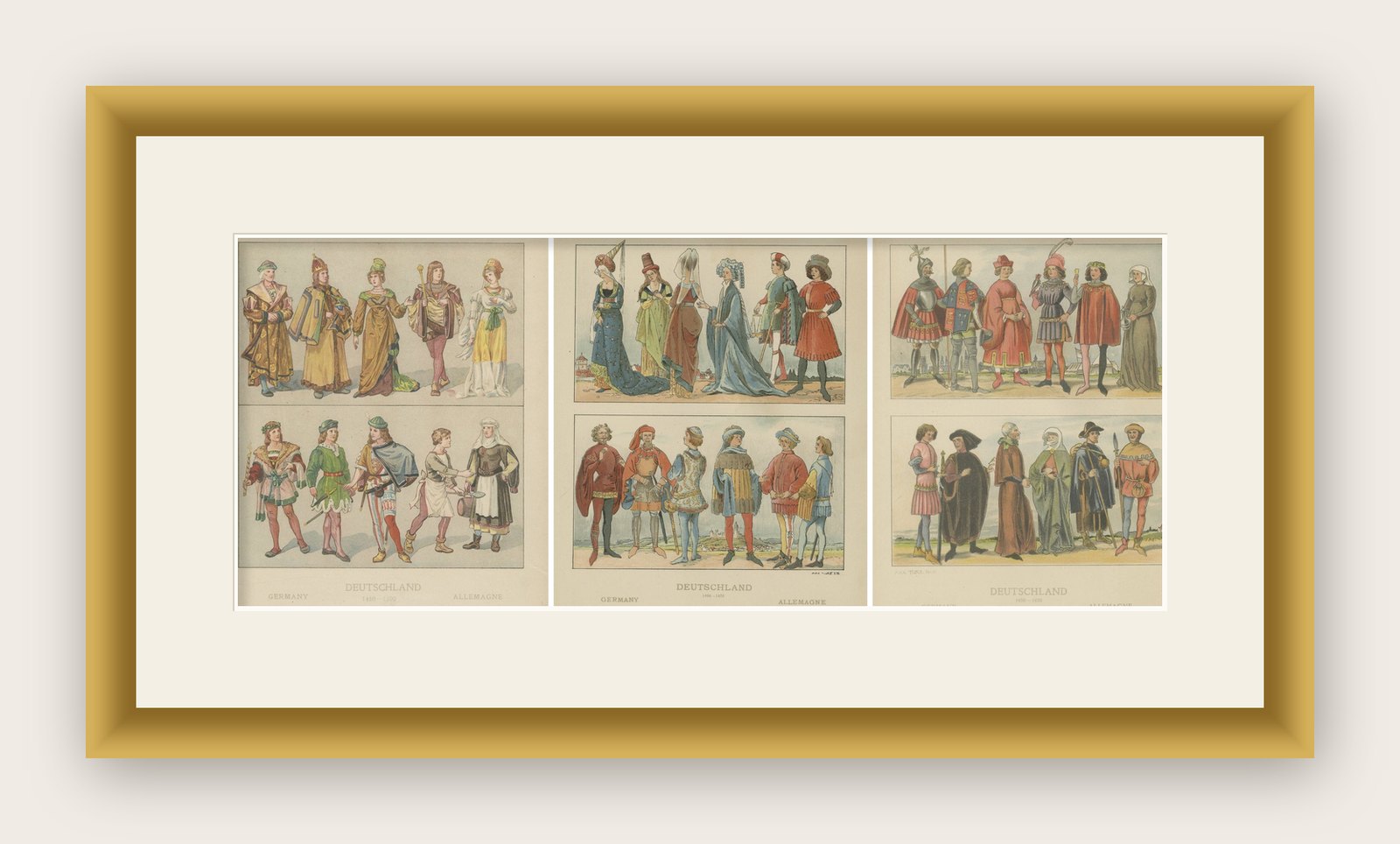
German Costume History 1450–1670, Set of Three Antique Hand-Colored Prints, 1880
$385$27030% off
€245 · £205
Original print, not a reproduction.
Ships worldwide from the Netherlands, flat or rolled, insured and tracked. 14-day returns.
- Date
- 1450
- Sheet size
- 12.4 × 9.3 in (31.5 × 23.5 cm)
- Condition
- Good. Antique condition throughout, with soft age toning, minor edge wear, and clean image areas. Colors remain bright and harmonious across the set.
- Wardrobe
- Court & couture
- Era
- 1870 to 1900, Bustle
- Stock no.
- BG-13129-80, -81, -82
What the condition grades mean
- Excellent
- Bright and clean, with no faults worth mentioning.
- Very good
- Only light signs of age, such as faint toning.
- Good
- Normal signs of age for a sheet of this period: toning, some foxing, small marks or neat old repairs.
- Fair
- Clear faults such as staining, tears or repairs, priced to match.
Every fault we see is written in the condition note, and the whole sheet is shown uncropped in the photos.
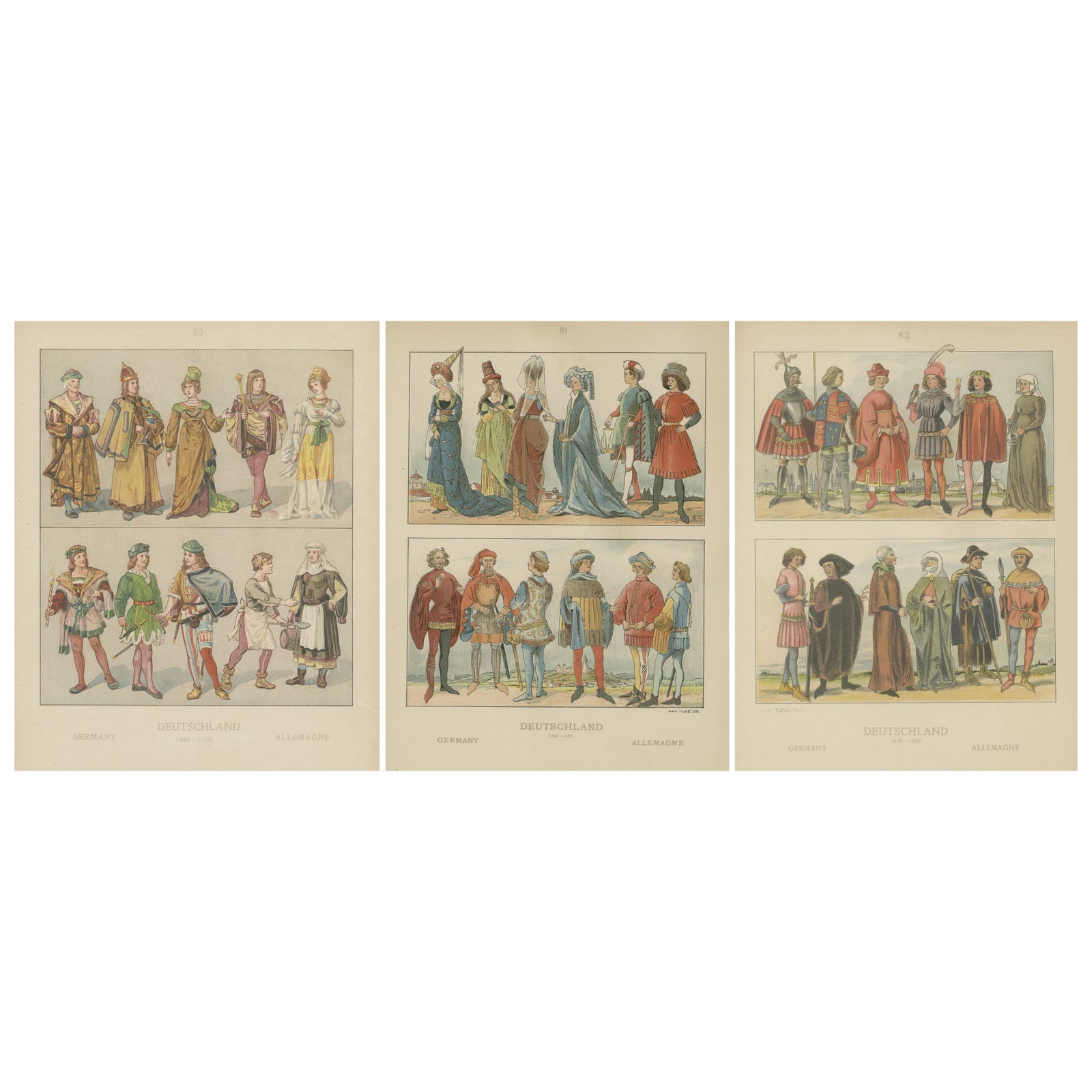
Set of Three German Costume Plates 1450–1670, Hand-Colored Antique Prints
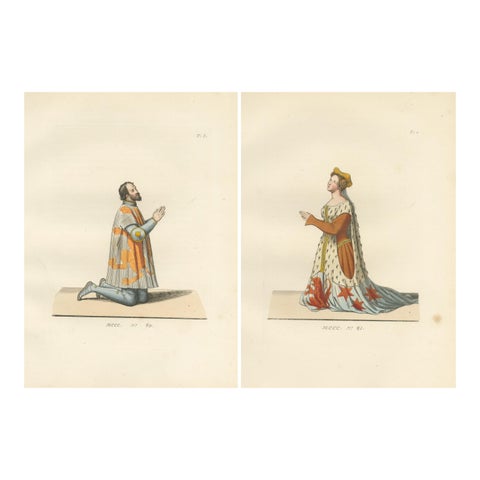
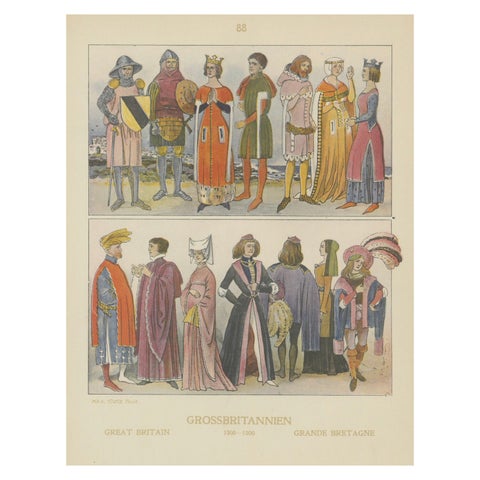
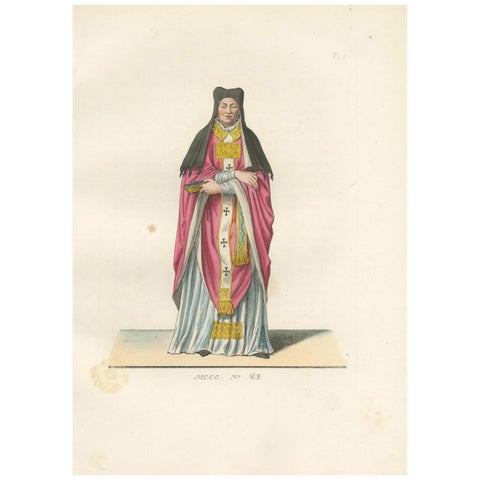
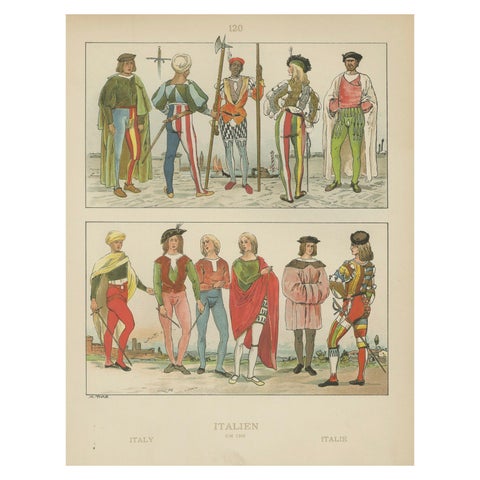
This beautifully matched set of three hand-colored costume plates presents a sweeping visual history of German dress from 1450 to 1670. Produced in the late 19th century by Ernst Wasmuth A.-G. in Berlin after designs by Max Tilke, these plates combine scholarly accuracy with strong decorative appeal. Together, they offer a rare opportunity to follow the evolution of German fashion from the final decades of the Middle Ages through the early Renaissance and into the richly layered world of early modern Europe.
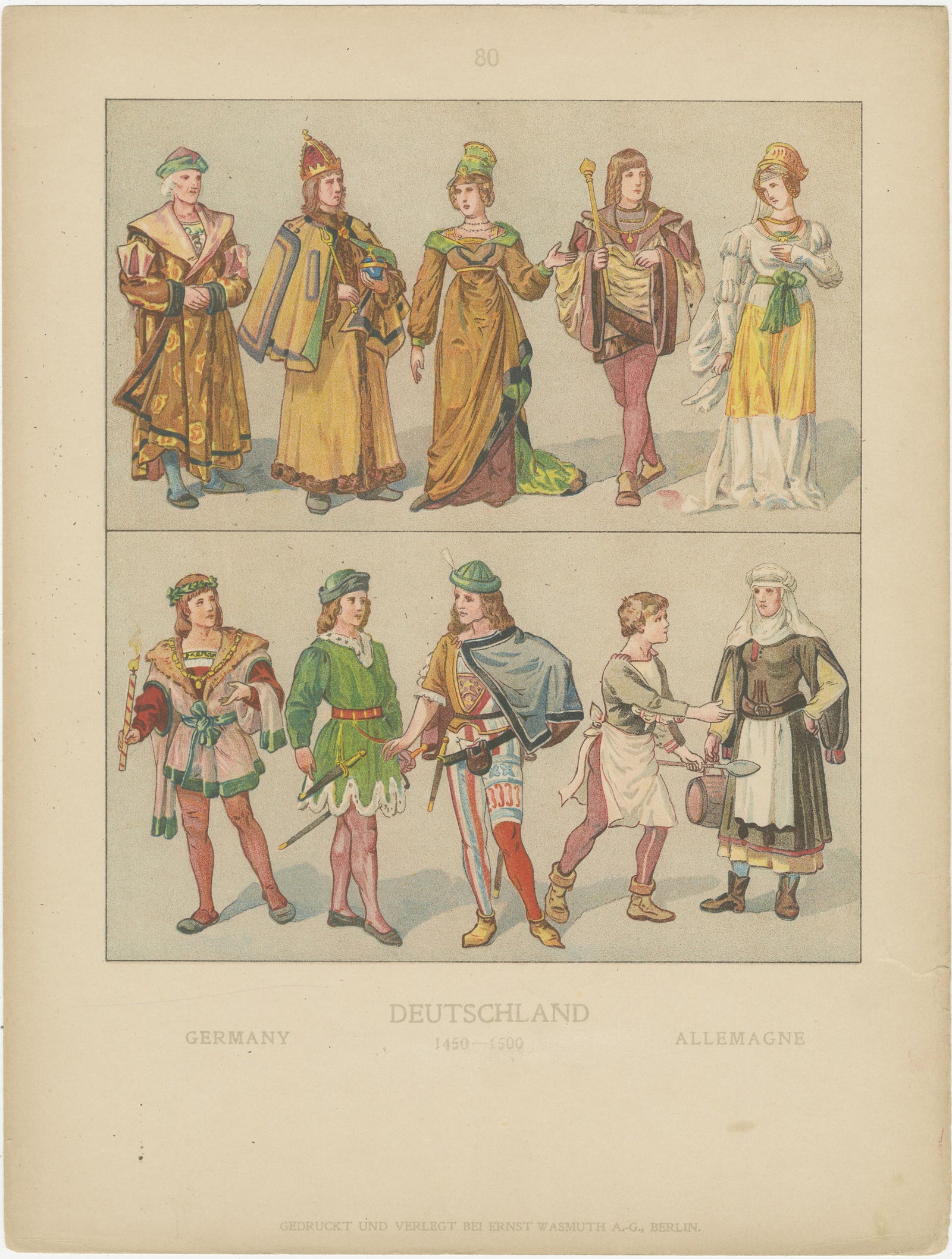
The first plate (1450–1500) captures the transition from medieval traditions to the budding Renaissance. Courtly figures appear in flowing mantles, fur-lined robes, and structured gowns, contrasted with the simpler attire of craftsmen, apprentices, and tradesmen. This plate beautifully illustrates the social diversity of late 15th-century German cities.
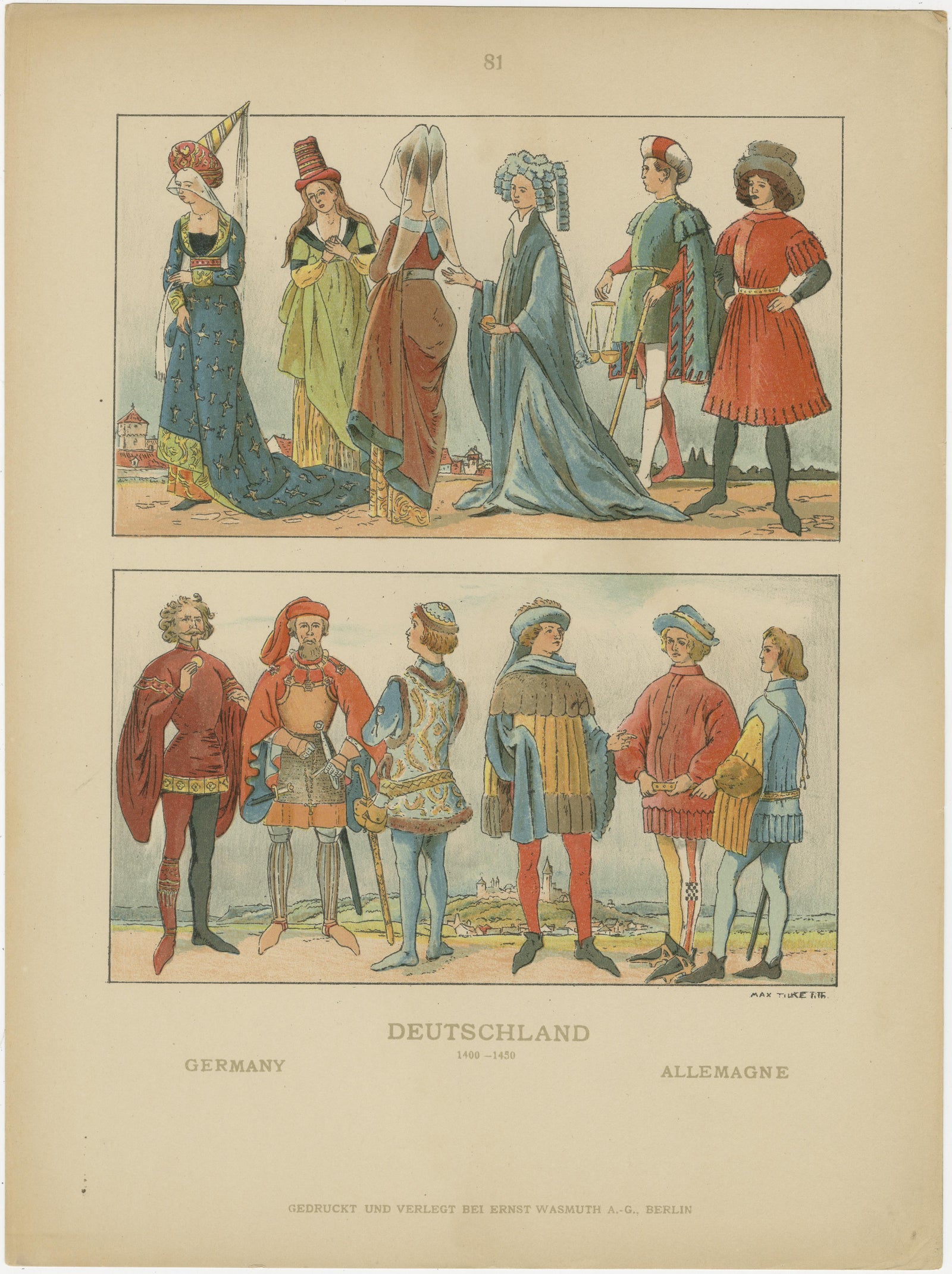
The second plate (1480–1520) shows the unmistakable influence of the early Renaissance: tall hennin headdresses, slashed fabrics, vivid doublets, and fashionable hose that defined the younger nobility and urban elite. The colors and posture of the figures reflect a society entering a period of renewed artistic and intellectual confidence.
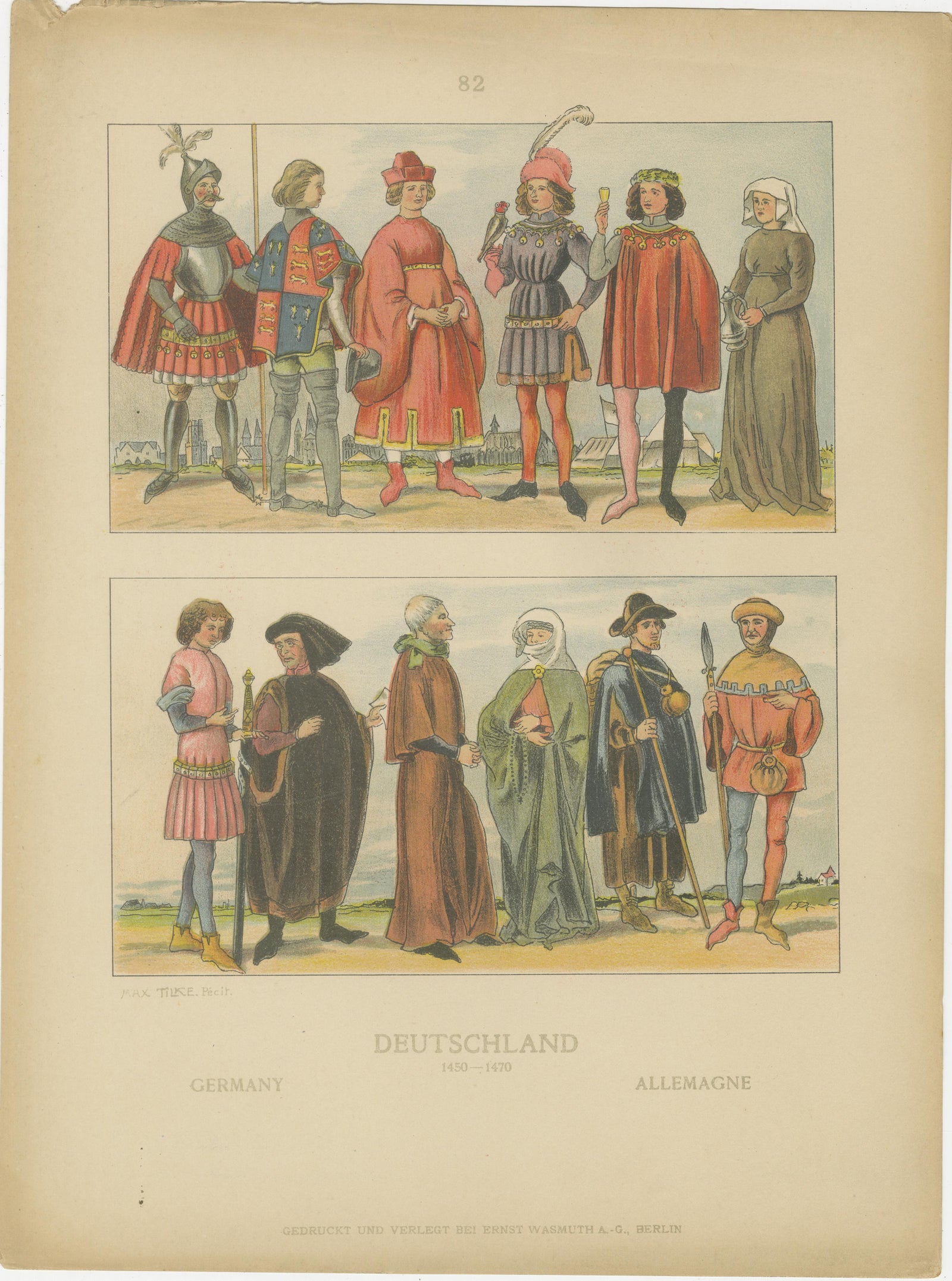
The third plate spans 1450–1670 and highlights the sophistication of fashionable dress as Germany moved into the early Baroque era. Clothing becomes more elaborate and structured, with embroidered cloaks, civic officials’ robes, scholars’ attire, and elegant dresses worn by noblewomen. This plate provides a fascinating look at heraldic display, professional identity, and the increasingly symbolic use of clothing in early modern society.
As a set, these three prints offer a visually cohesive and historically insightful narrative. They are ideal for collectors of European history, fashion historians, interior designers, or anyone seeking refined and intellectually engaging wall art. Their hand-coloring remains rich and fresh, and the ensemble works beautifully in a study, library, hallway, or any classic interior.
Framing suggestion: For the strongest display, frame the three plates in matching walnut or dark oak frames with cream or parchment mats. They can be hung side by side as a narrative sequence or stacked vertically for a dramatic architectural effect.
Technique: Hand-colored lithographs
Maker: Max Tilke, printed by Ernst Wasmuth A.-G., Berlin, c.1880