Framed and on the wall
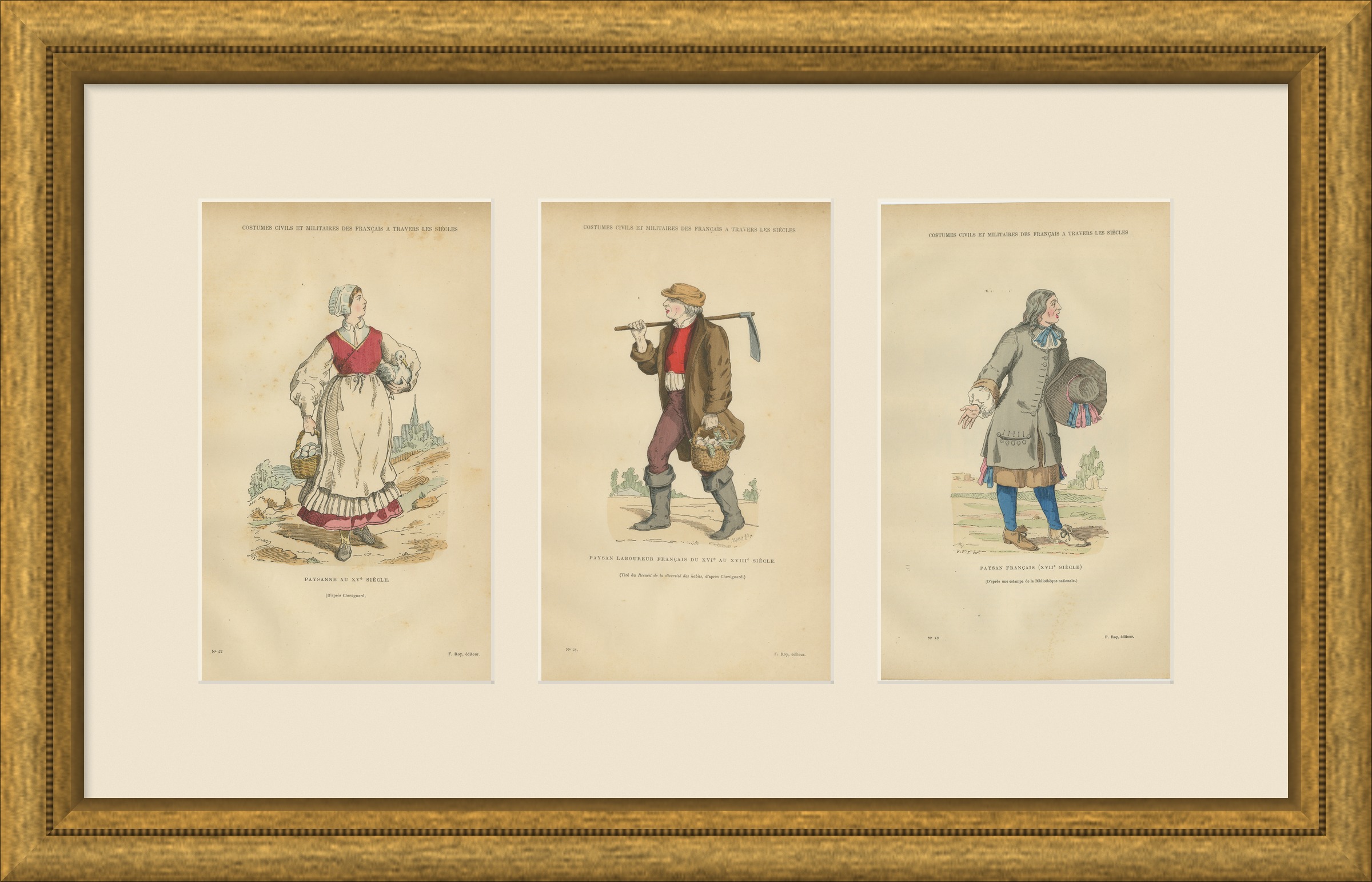
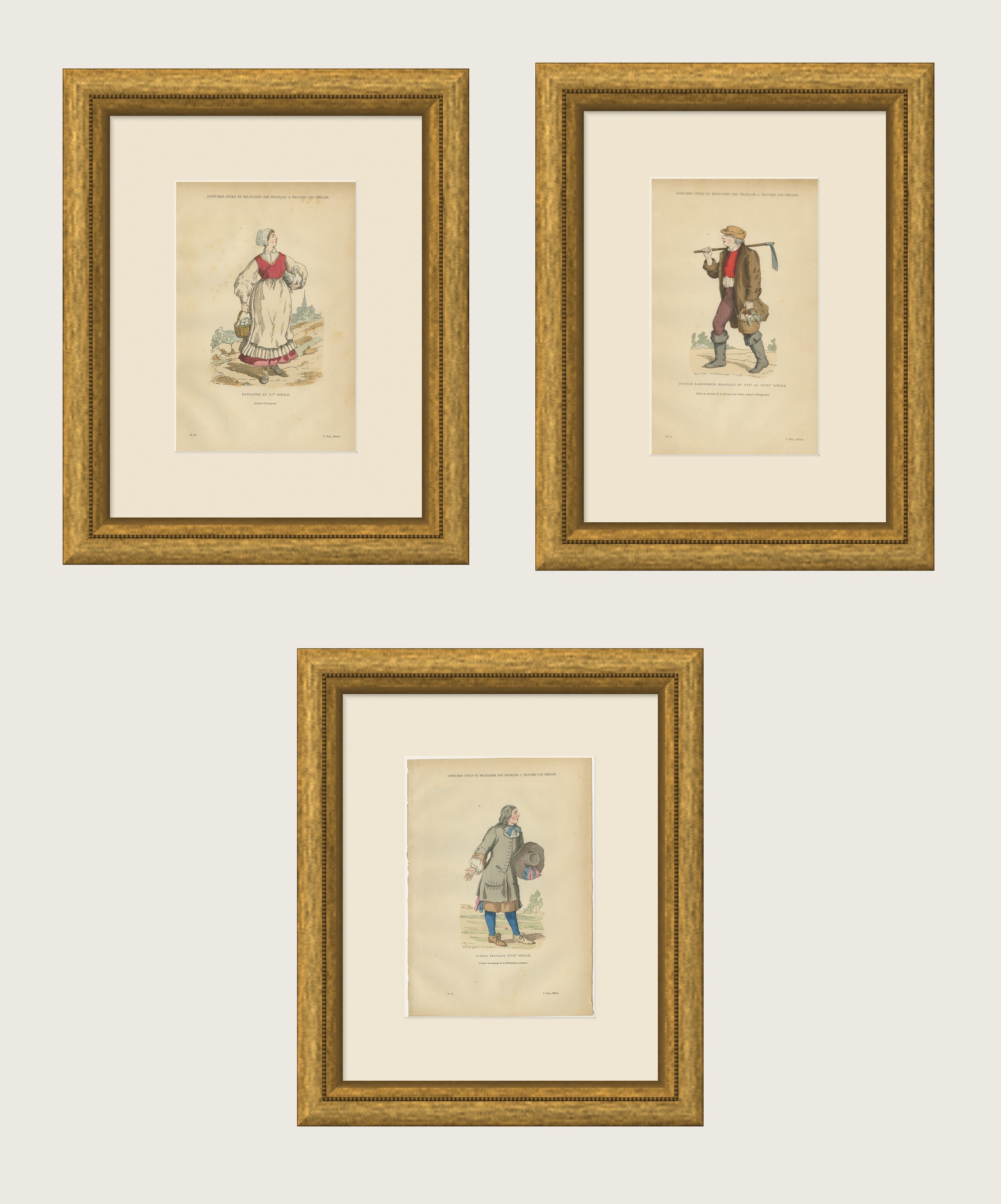
Frame and rooms are illustrations of how the print could look; the description says what is included.
French Peasants Across the Centuries, Set of Three Prints, circa 1882
£225
$300 · €270
Original print, not a reproduction.
Ships worldwide from the Netherlands, flat or rolled, insured and tracked. 14-day returns.
- Date
- circa 1882
- Sheet size
- 11.2 × 7.9 in (28.5 × 20 cm)
- Technique
- Woodcut
- Coloring
- Original hand color
- Condition
- Good. Light uneven toning, browner toward the edges. Marked handling soiling along the edges of all three sheets. Scattered foxing in the margins of all three sheets. Loss or wear at the corners of all three sheets.
- Wardrobe
- Folk finery
- Era
- 1870 to 1900, Bustle
- Stock no.
- BG-13382-43
What the condition grades mean
- Excellent
- Bright and clean, with no faults worth mentioning.
- Very good
- Only light signs of age, such as faint toning.
- Good
- Normal signs of age for a sheet of this period: toning, some foxing, small marks or neat old repairs.
- Fair
- Clear faults such as staining, tears or repairs, priced to match.
Every fault we see is written in the condition note, and the whole sheet is shown uncropped in the photos.
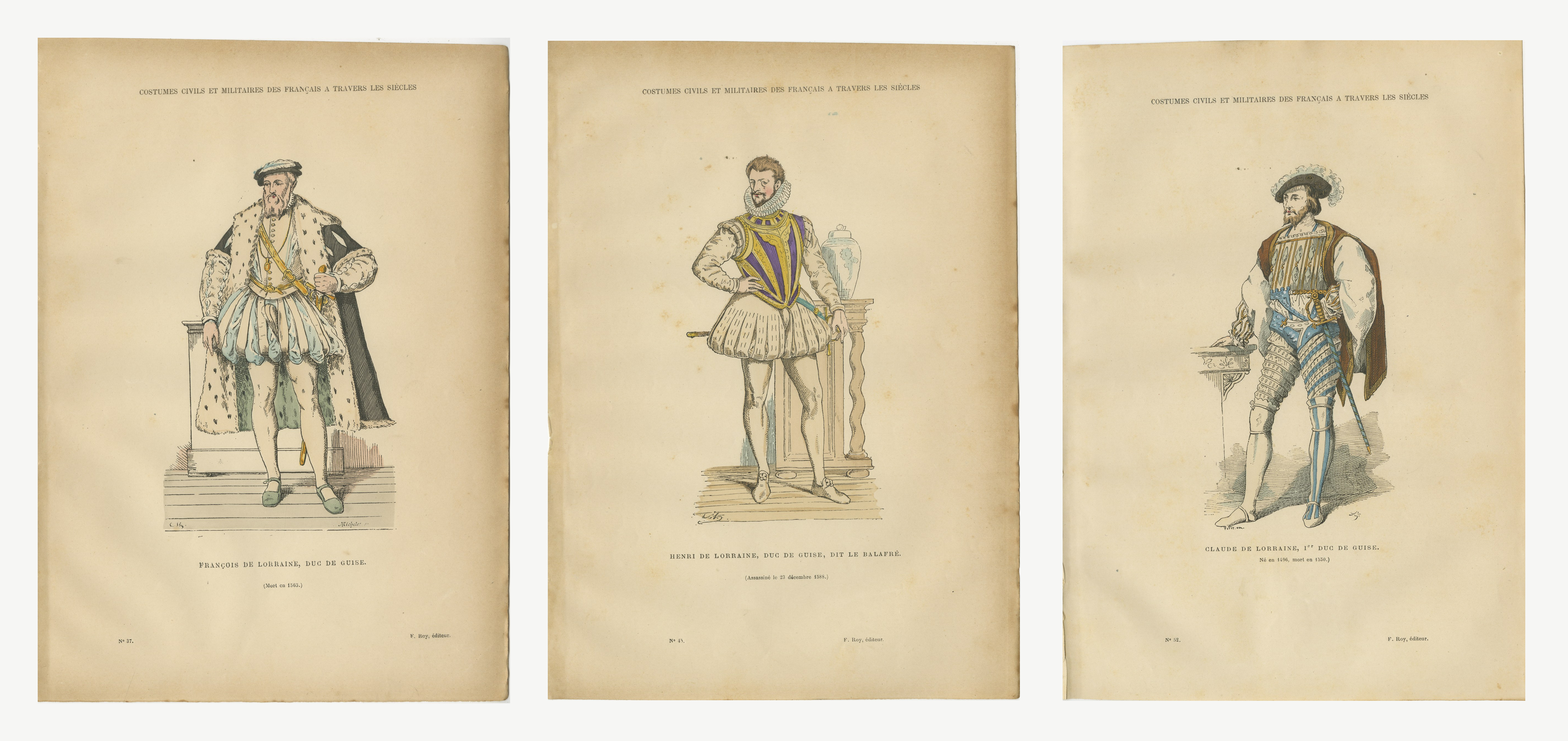
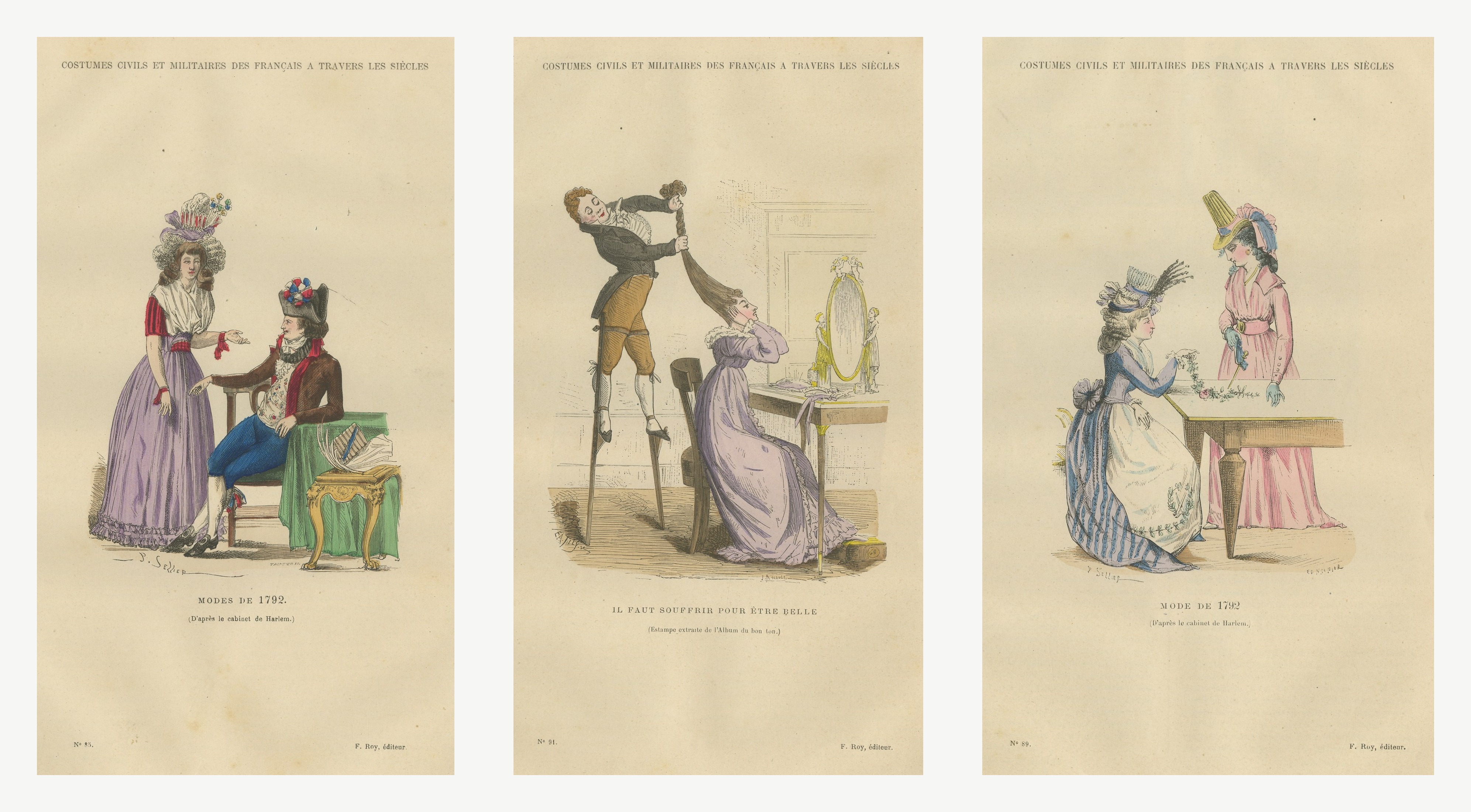
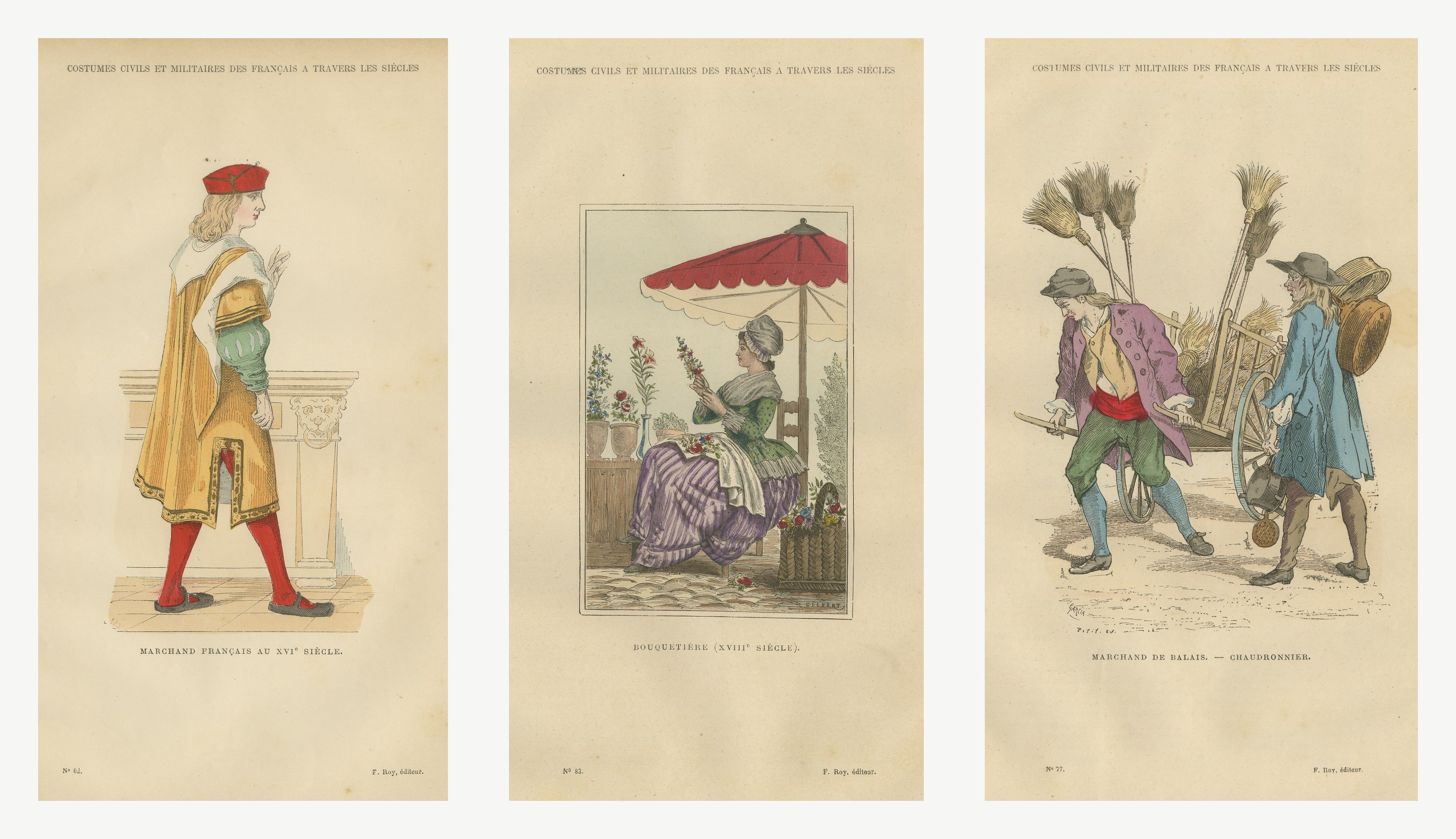
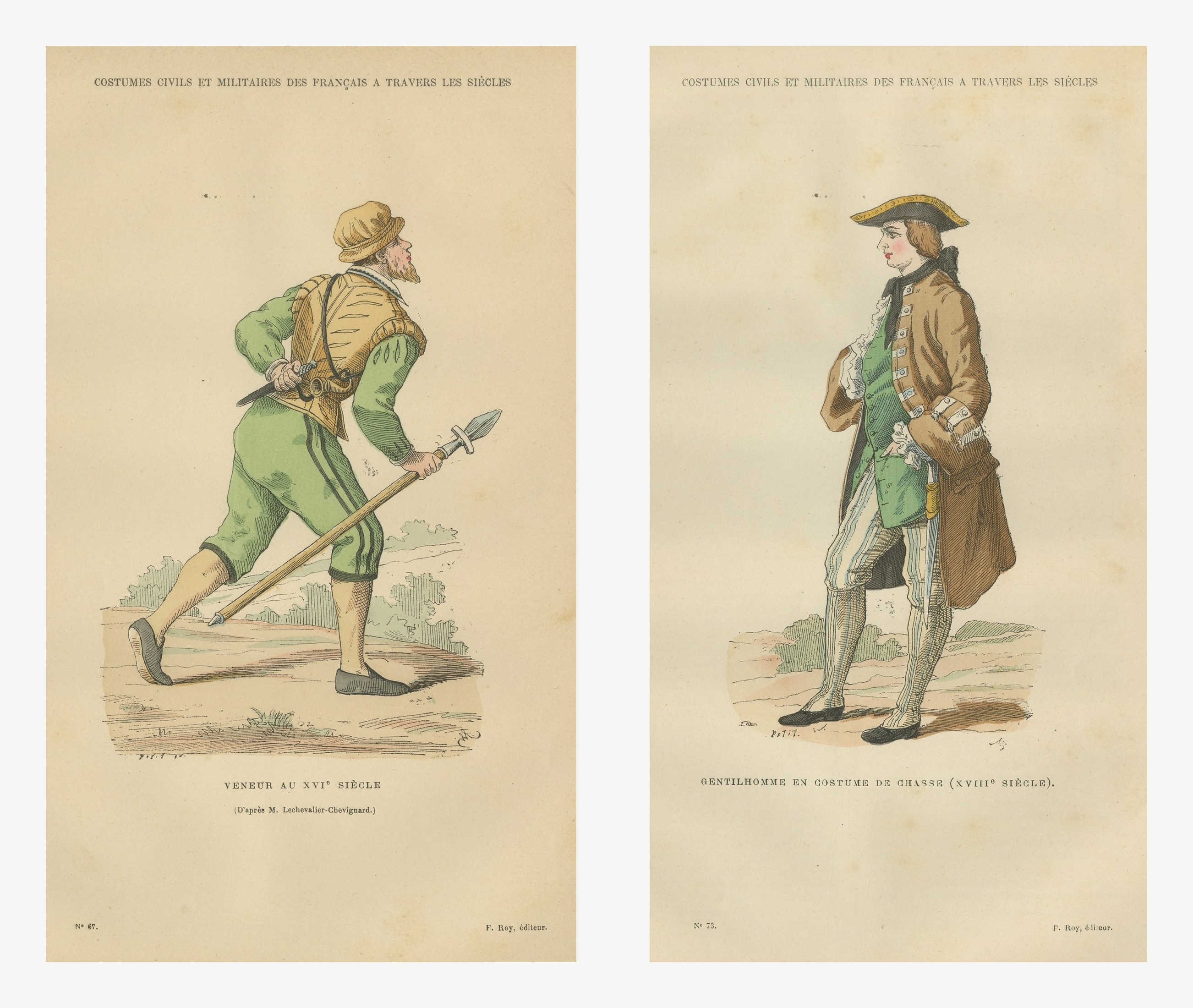
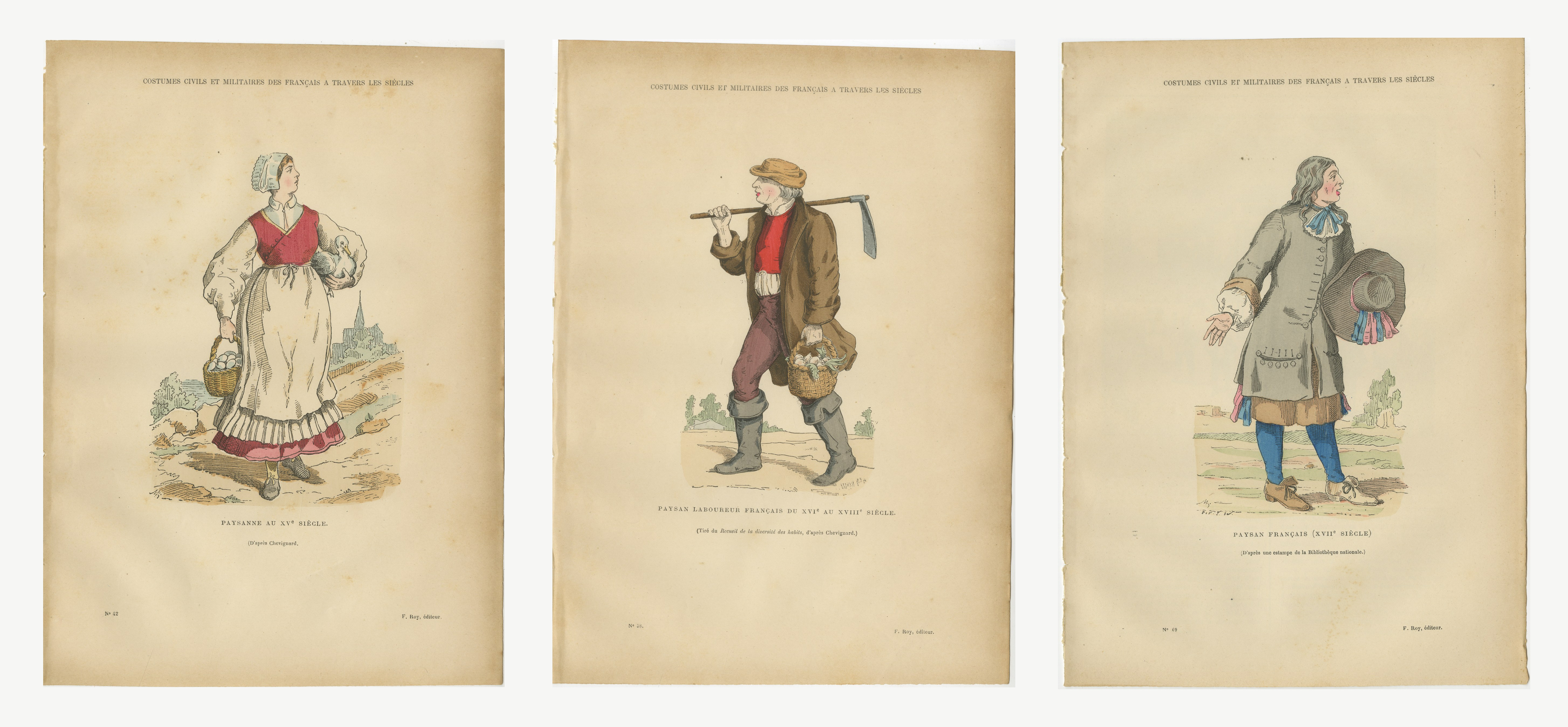
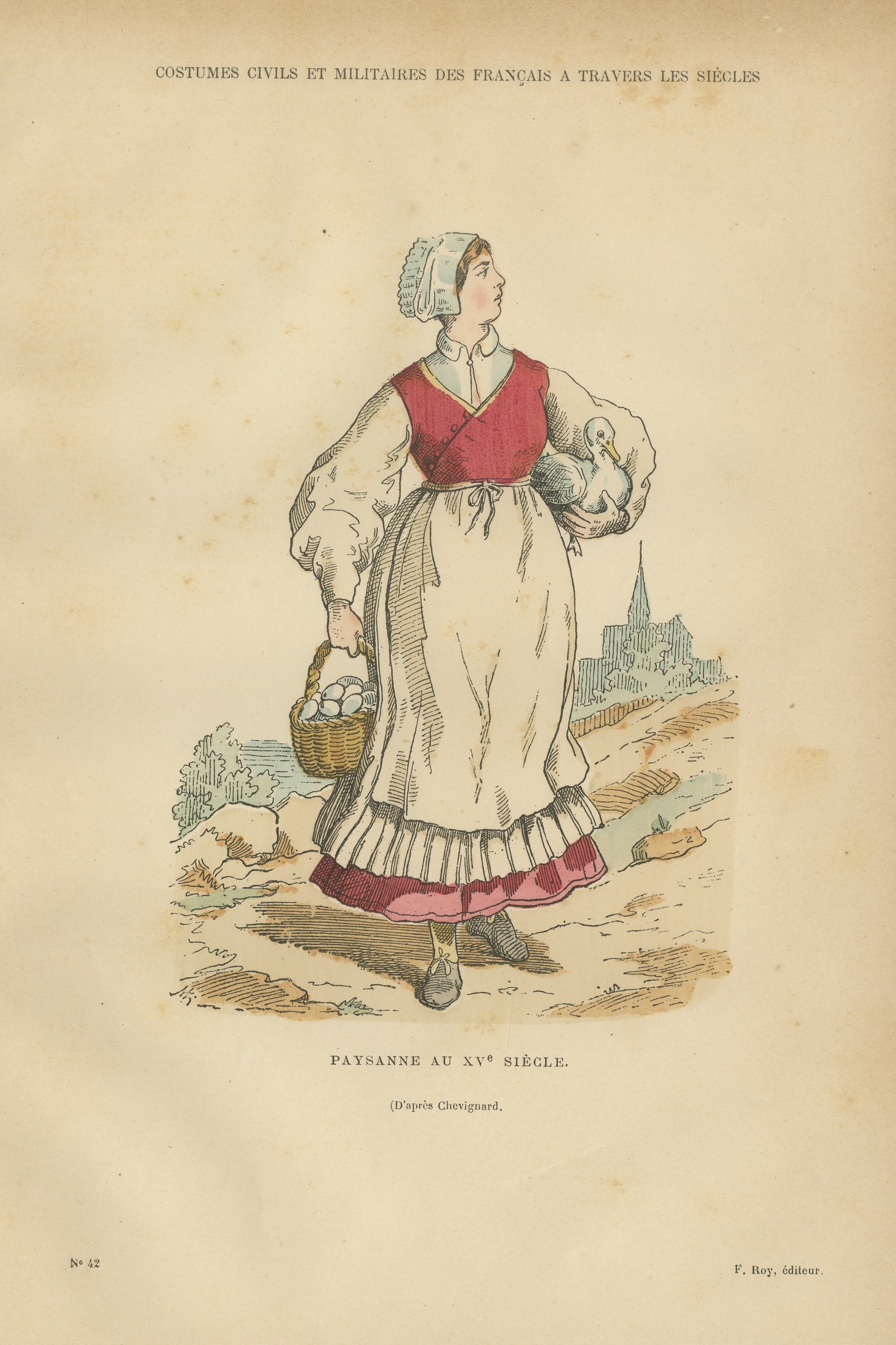
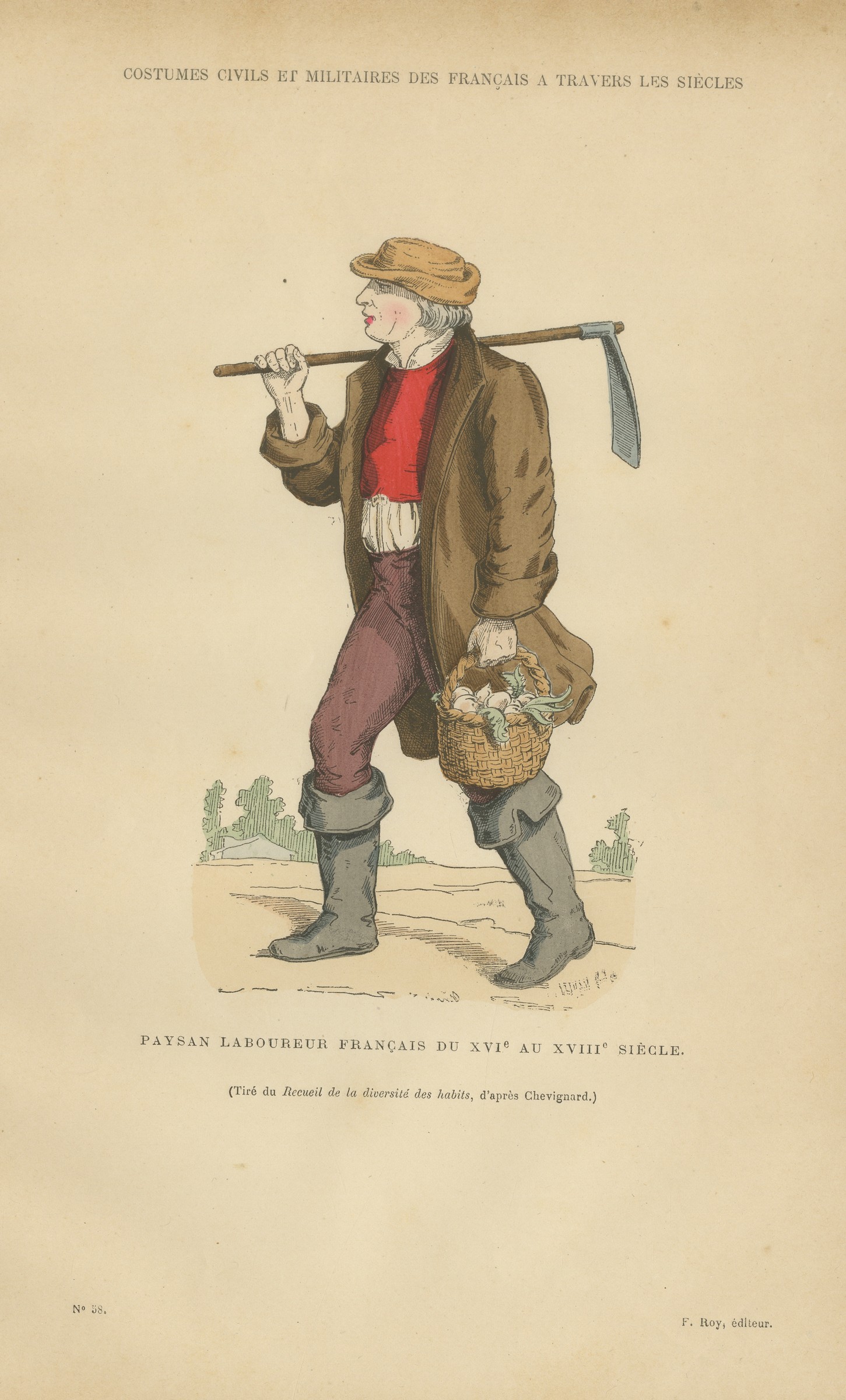
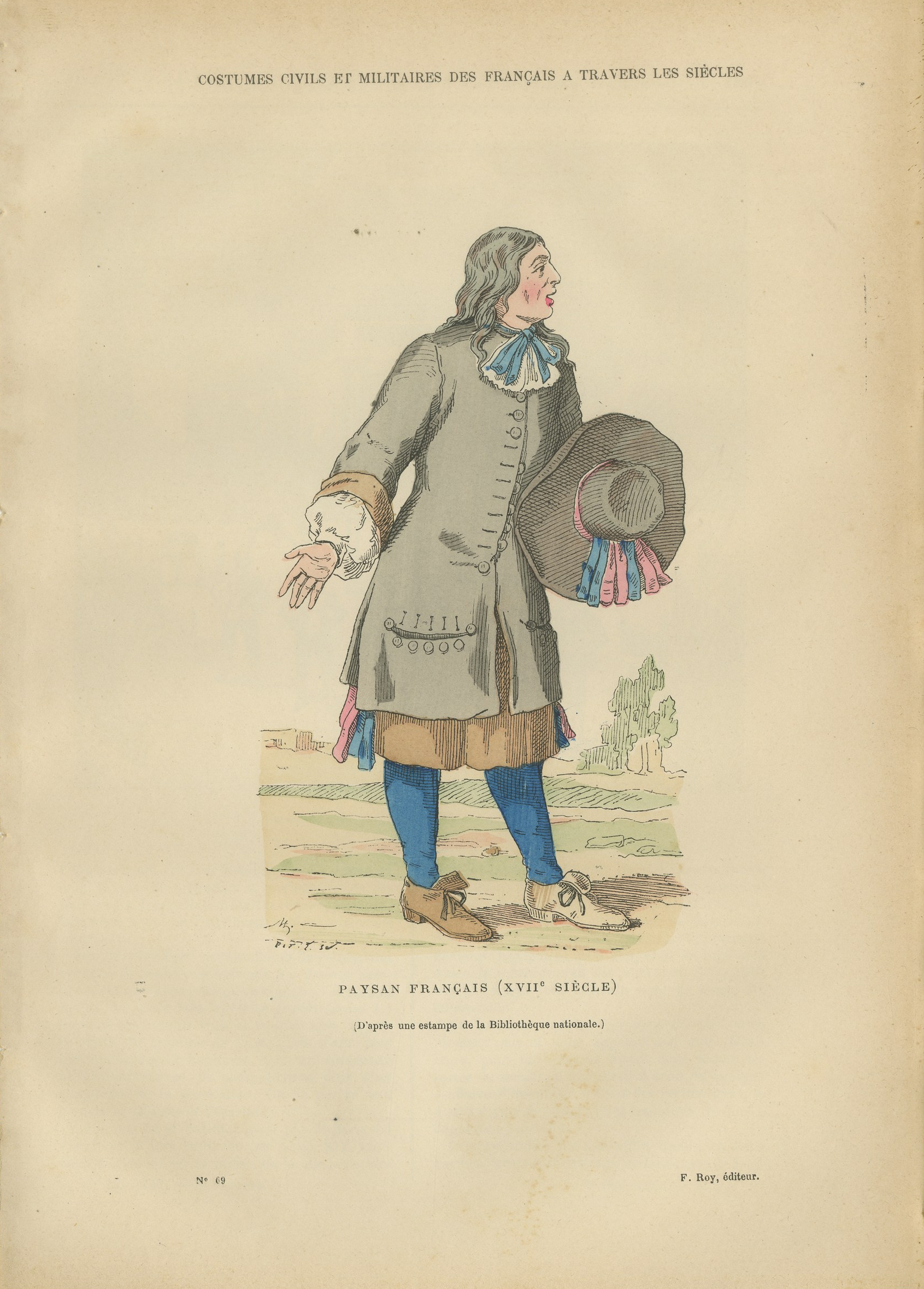
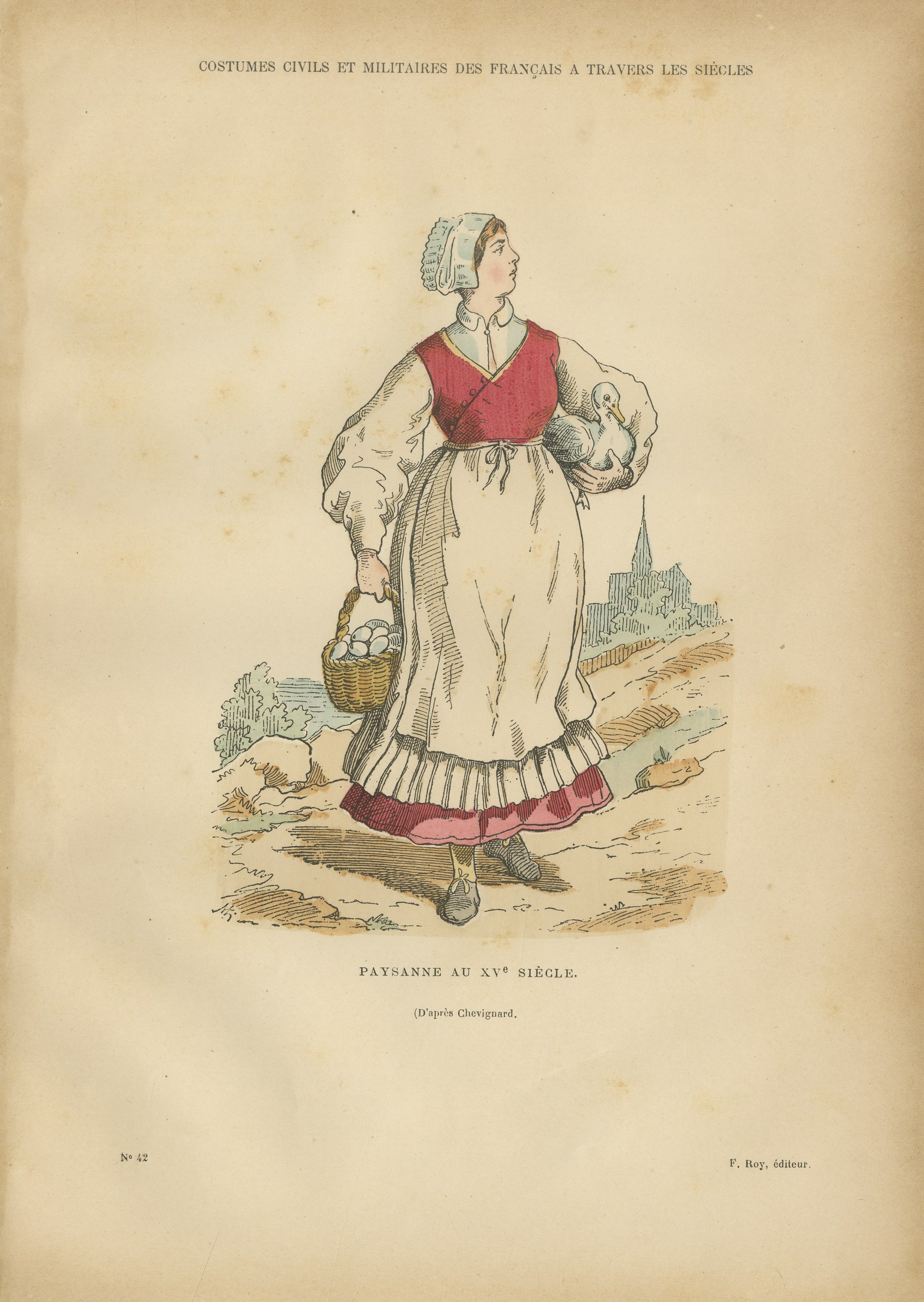
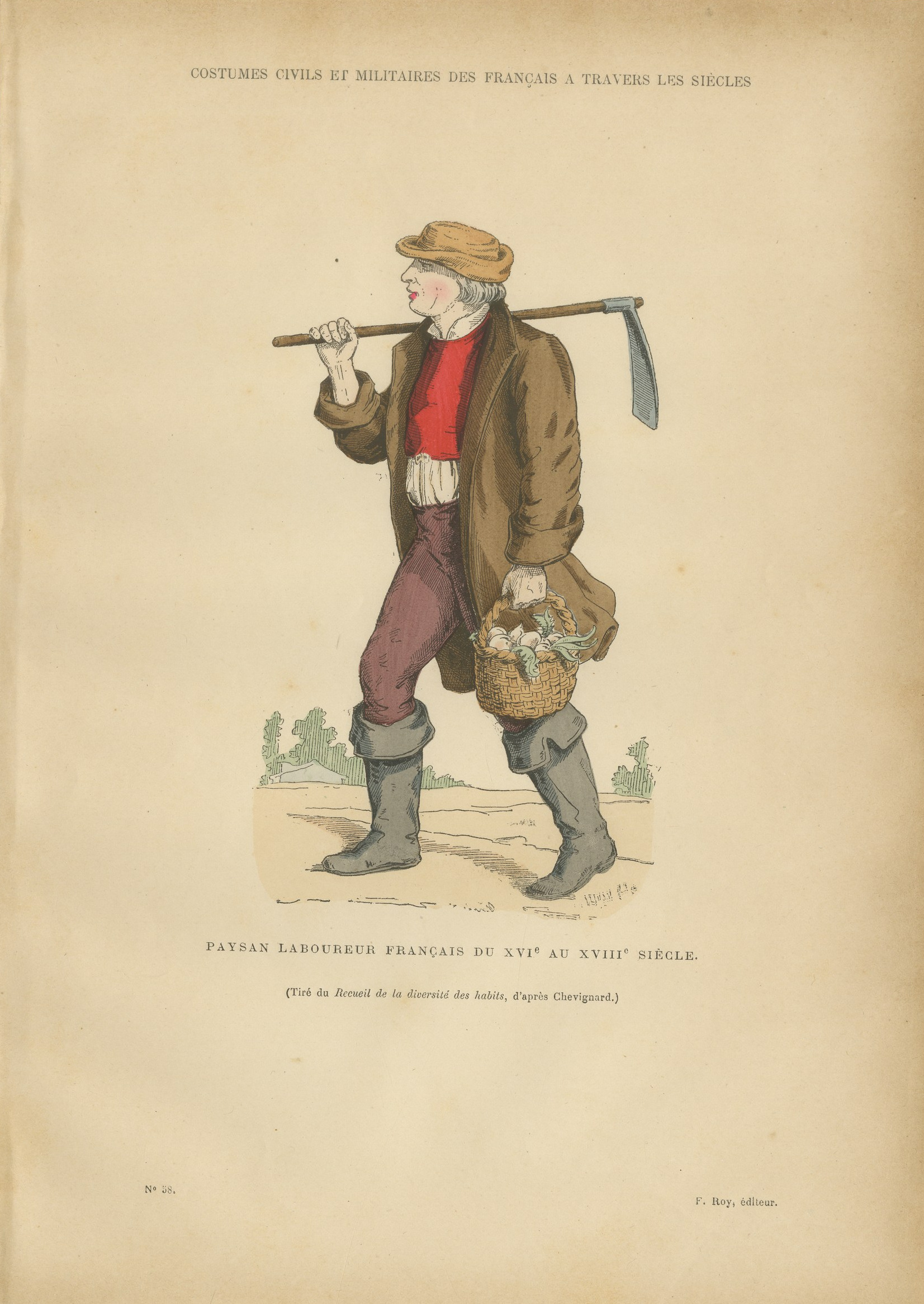
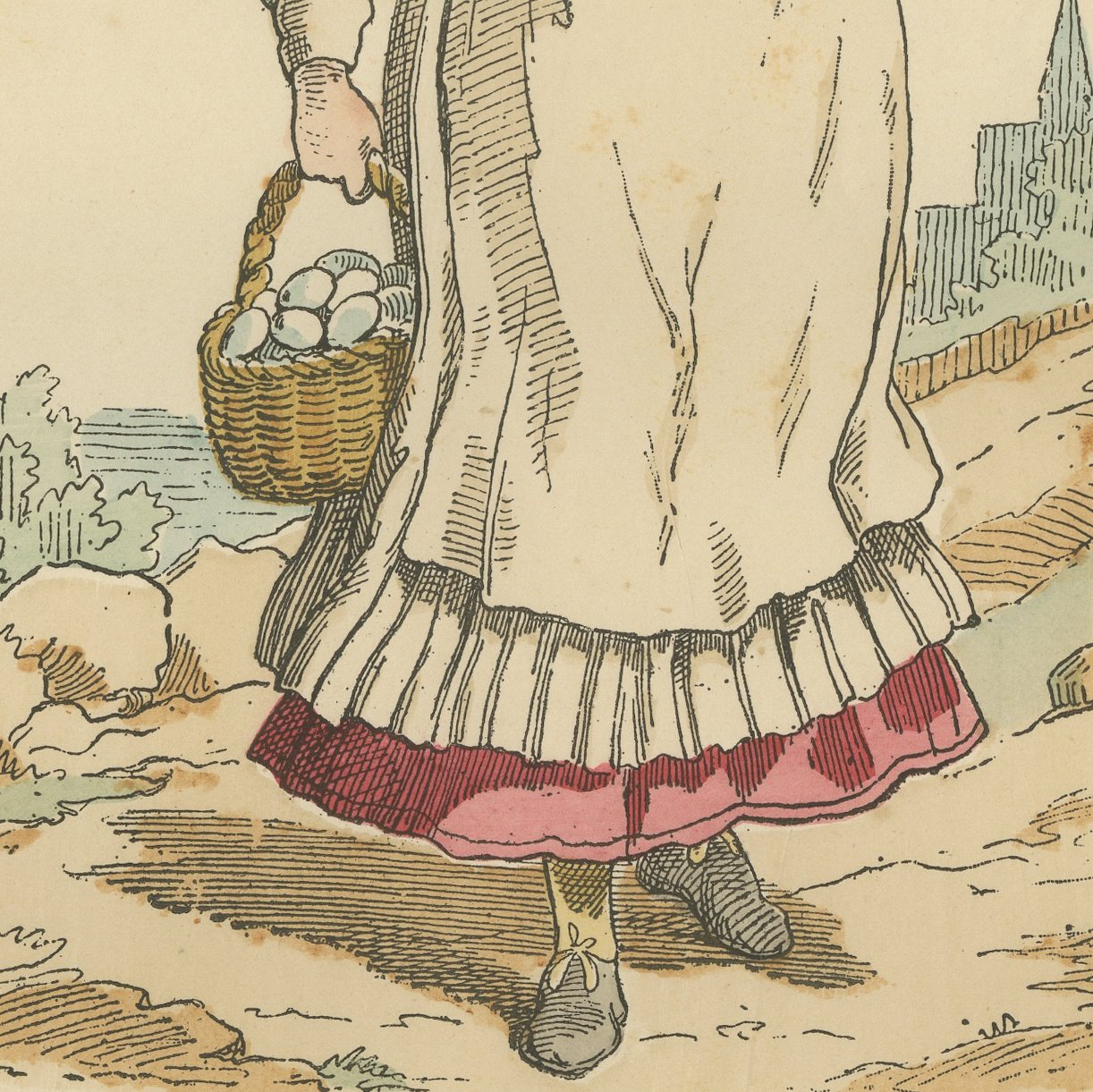
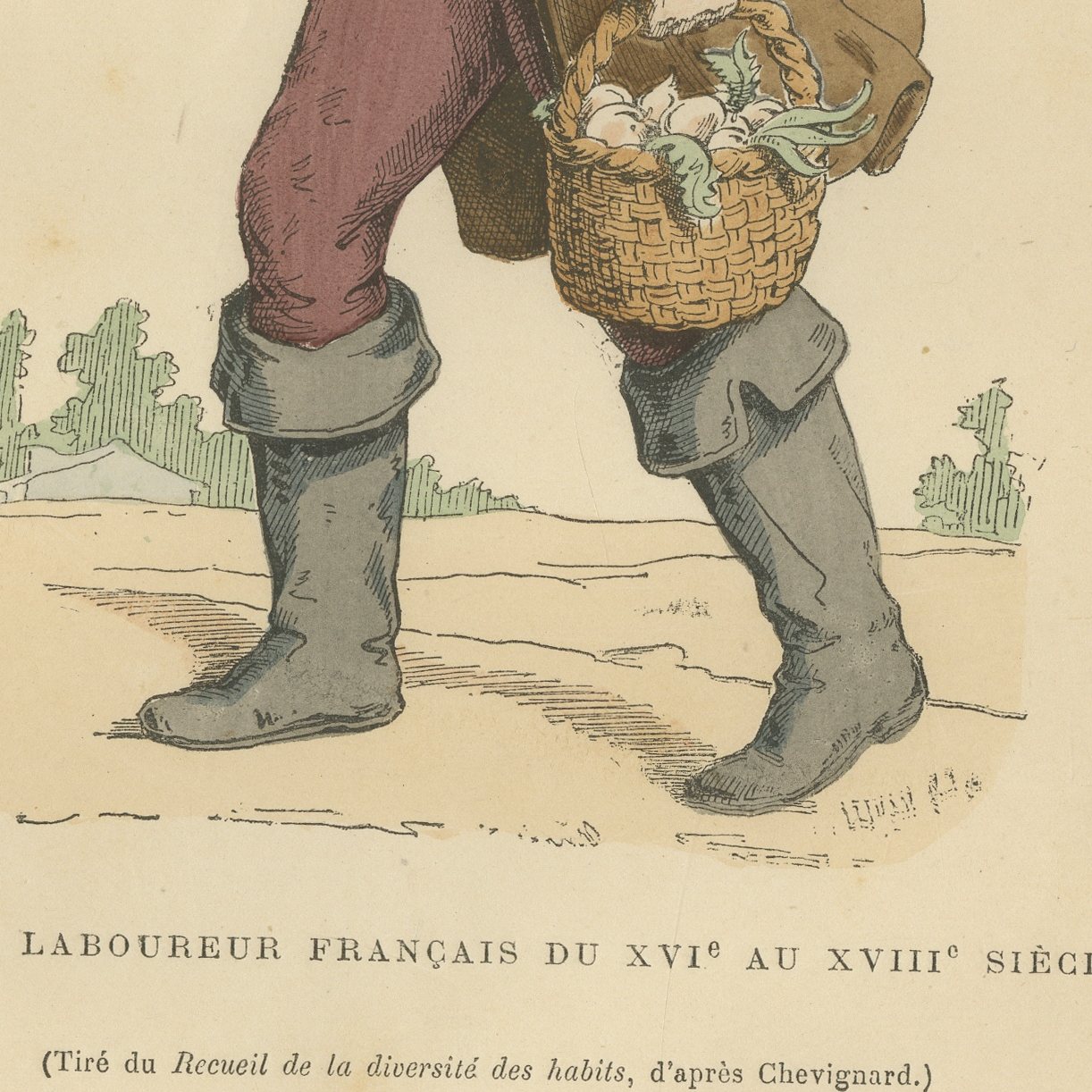
This is a set of three original antique hand-colored wood engravings, sold together as one lot, from Augustin Challamel's La France et les Francais a travers les siecles, Paris, circa 1882. The sheets are, in order: Peasant Woman of the 15th Century after Chevignard; French Plowman from the 16th to 18th Century; French Peasant of the 17th Century. A peasant woman of the fifteenth century standing in a coarse russet gown kilted over a blue underskirt, a white coif on her head and a basket on her arm, drawn after Edmond Lechevalier-Chevignard. A French plowman in a short belted smock, loose breeches and heavy shoes, a broad hat on his head and a goad in his hand, taken from the Recueil de la diversite des habits by way of Chevignard. A French peasant of the seventeenth century in a coarse coat and loose breeches with a broad hat and a staff, taken from a print in the Bibliotheque nationale.
The engraving comes from the costume suite of Augustin Challamel's La France et les Francais a travers les siecles, F. Roy, editeur, Paris, circa 1882. Almost every plate in the series cites its source in the caption, a miniature in the Bibliotheque nationale, a tapestry, a picture in the Louvre or a sheet from the Gaignieres collection, and that habit of citation is what lifts the series above the invented costume books of the same decade. The technique is wood engraving, cut on the end grain so that the block could be locked up with the type and printed together with the text, and the color is applied by hand afterwards over the printed line. The washes in this suite are flat and confident, laid in a small number of strong tones, and they cross the engraved outline here and there in the way that only hand work does.
Chevignard was the artist who did most of the original drawing for this series, and the peasant plates are where his hand shows best, because there was no portrait or manuscript to copy and the figure had to be constructed from fragments. The caption makes the point that peasant dress barely moved between the sixteenth and the eighteenth century while the court changed every decade, and this plate is the evidence offered for it. They are three original sheets sold together, and the set is never split. Framed as a set in plain wood or in gilt, the sheets give a hallway, a study or a dining room a deliberate and finished line that a single print cannot.
Light uneven toning, browner toward the edges. Marked handling soiling along the edges of all three sheets. Scattered foxing in the margins of all three sheets. Loss or wear at the corners of all three sheets.
This is an original antique print, not a modern reproduction. This item is sold unframed.