Close-ups
Framed and on the wall
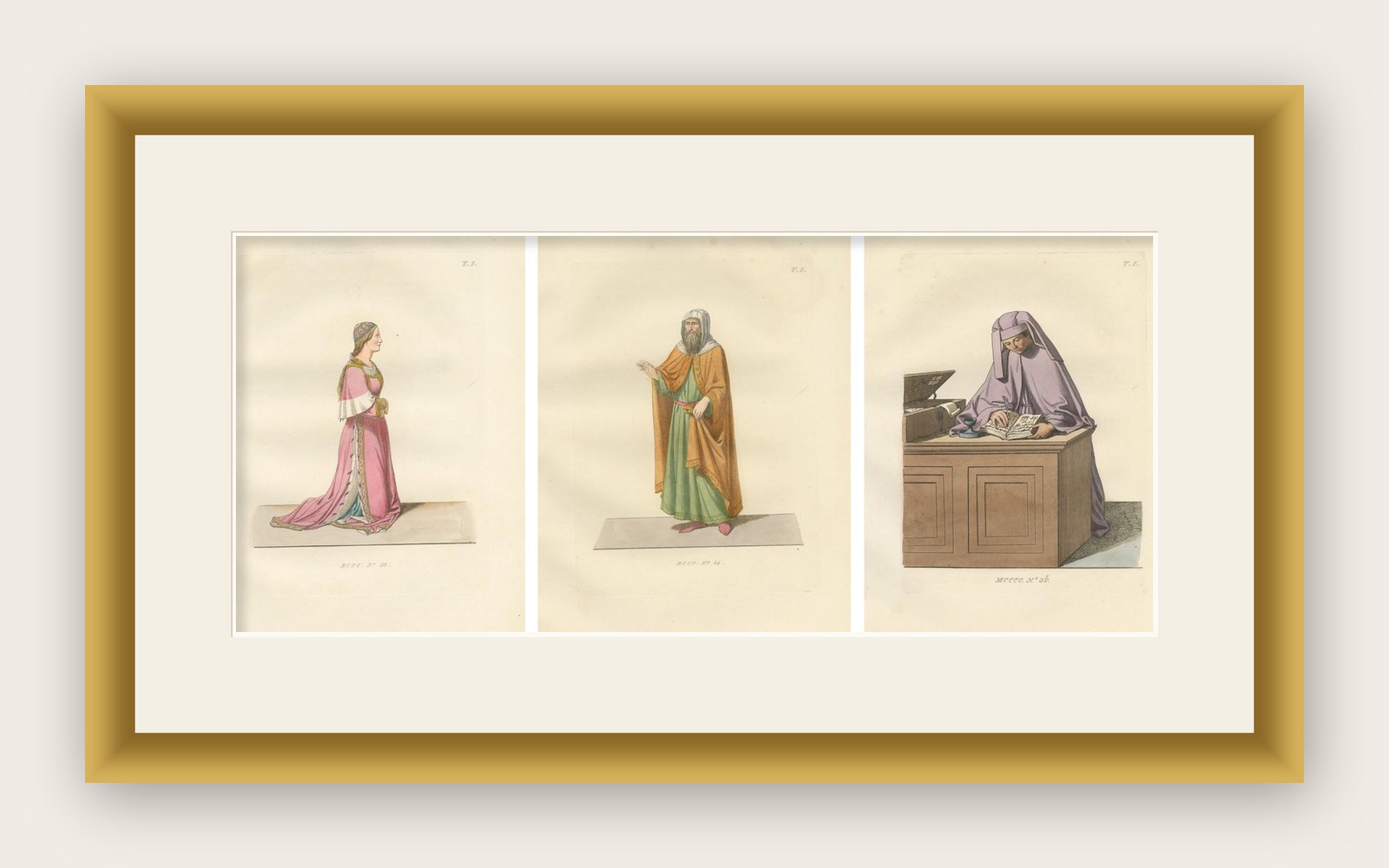


Frame and rooms are illustrations of how the print could look; the description says what is included.
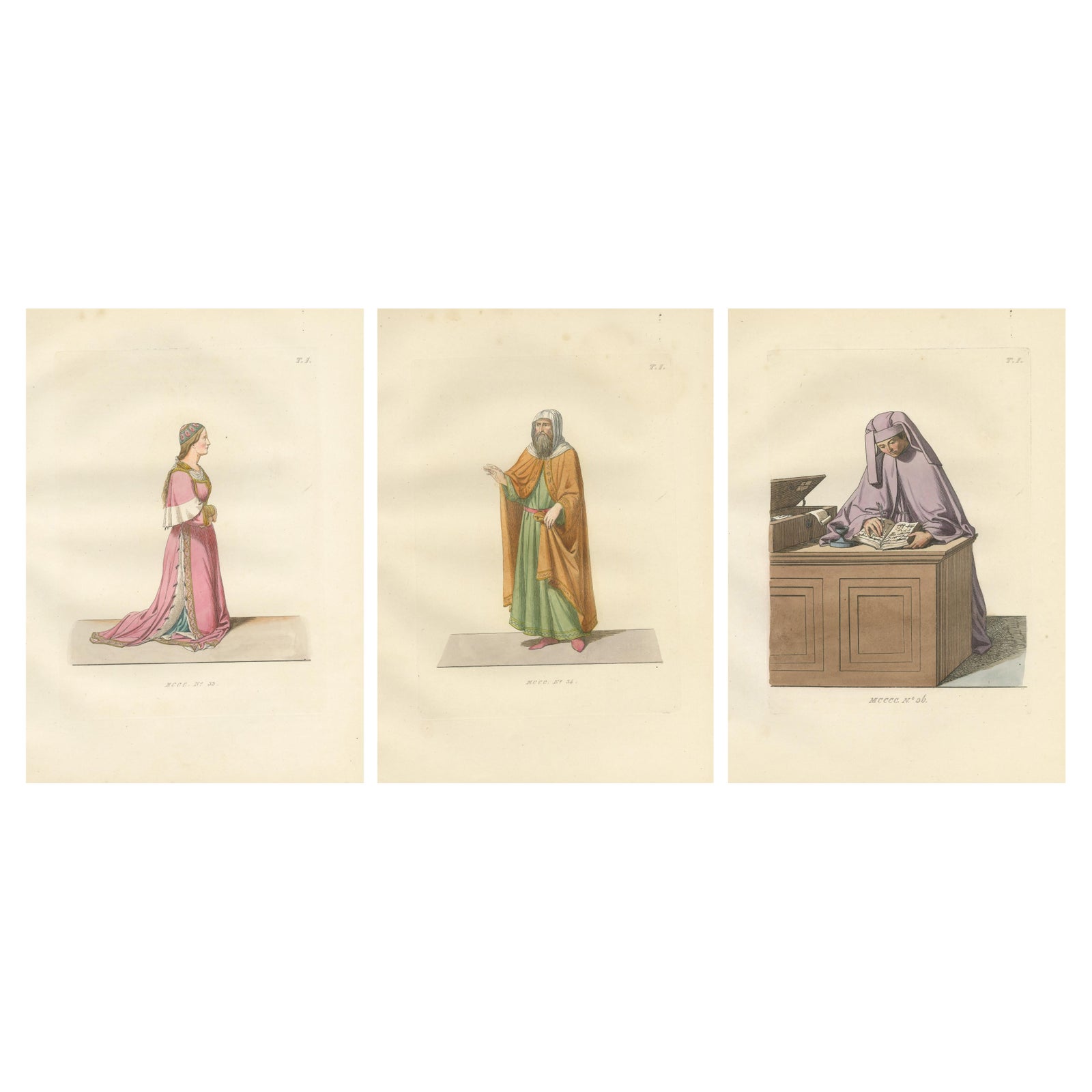
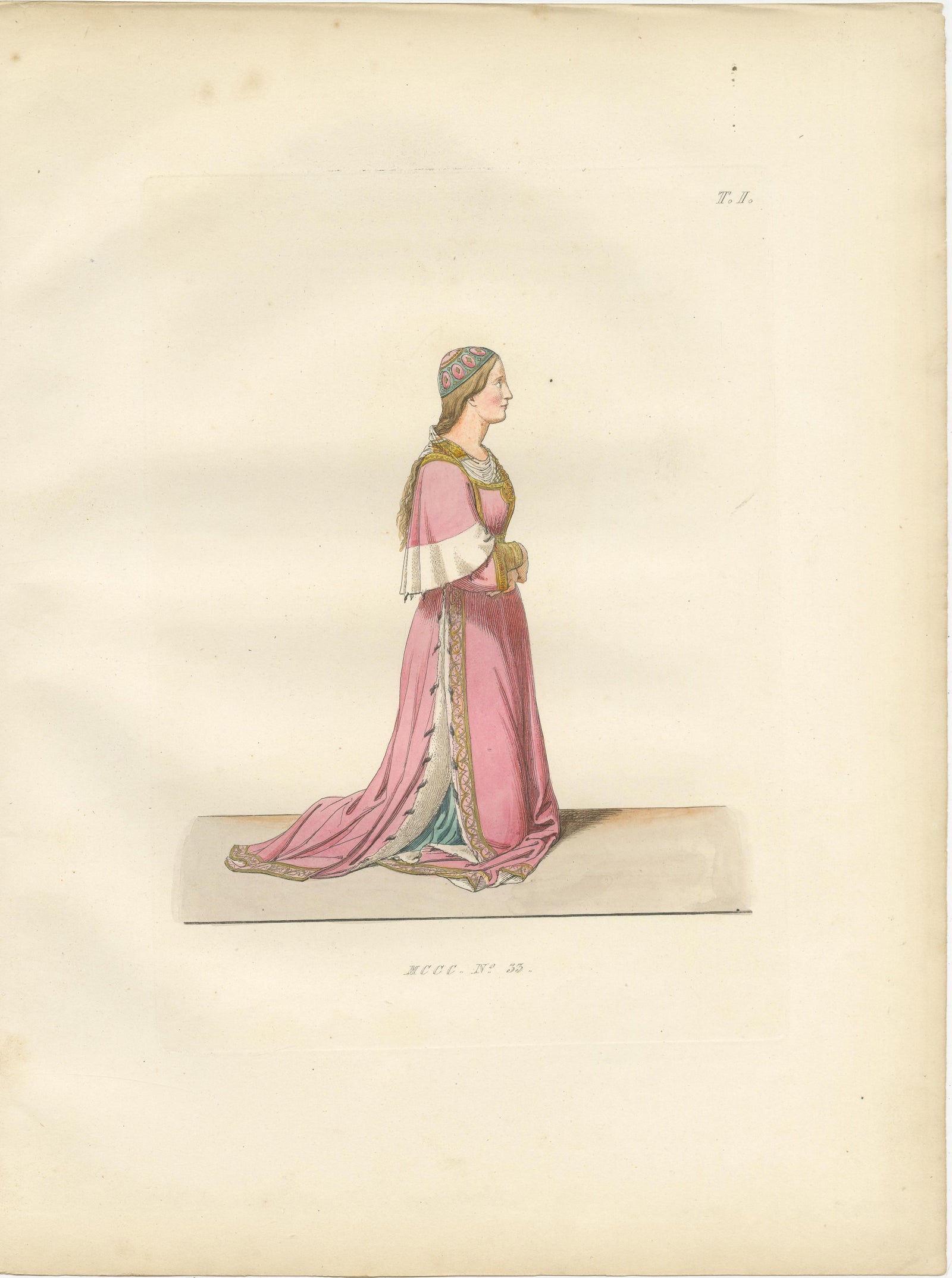
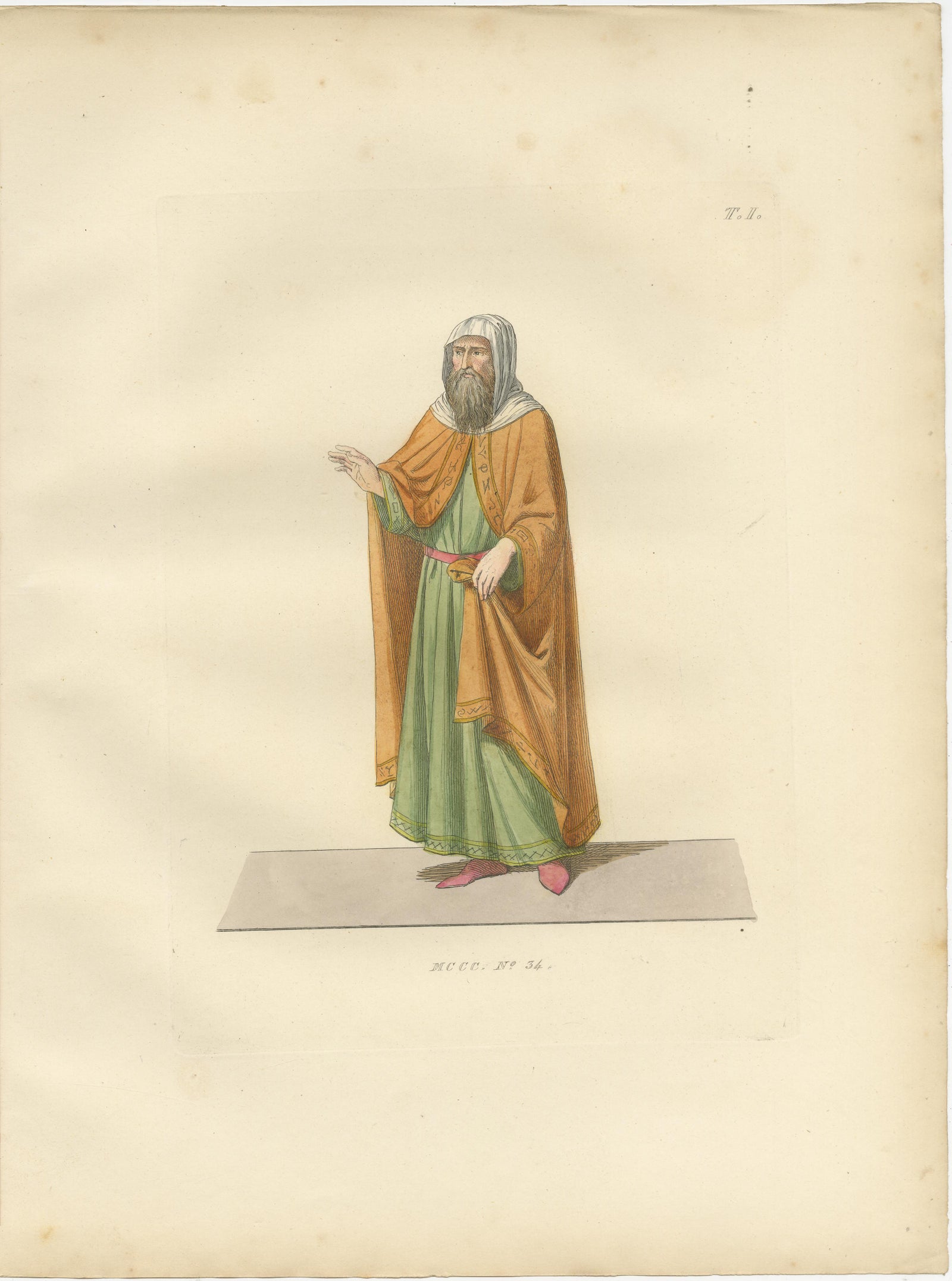
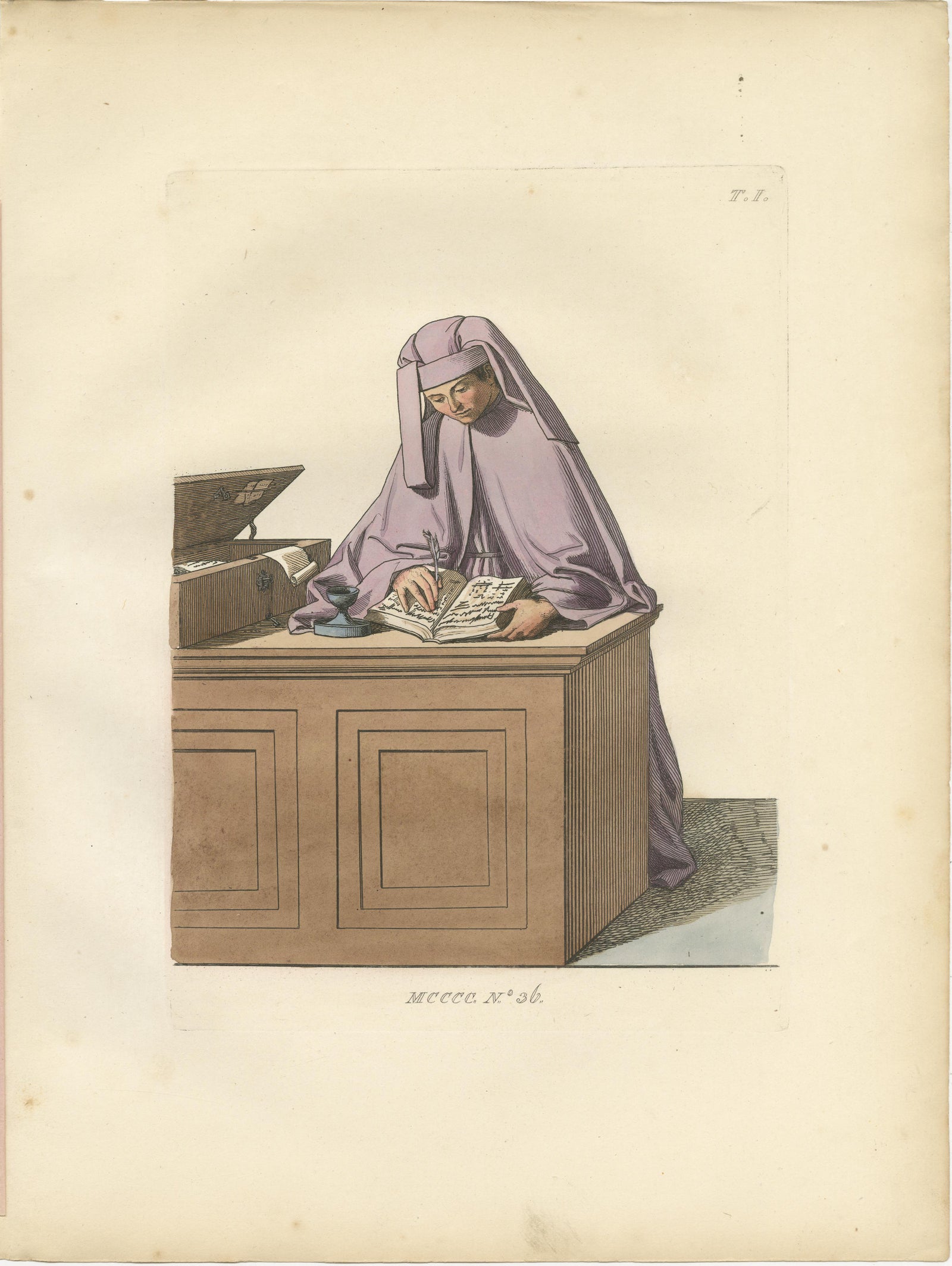
Florentine Grace, Jewish Scholar & Renaissance Notary in Costume, Print of 1845
£280
$370 · €330
Original print, not a reproduction.
Ships worldwide from the Netherlands, flat, insured and tracked. 14-day returns. To buy, use Ask a question and we will reserve the print for you.
- Date
- 1845
- Sheet size
- 11.9 × 8.8 in (30.3 × 22.3 cm)
- Condition
- Good. All prints are in very good condition. Coloring is vivid and well-preserved. Minor foxing appears mainly in the margins, with no impact on the central imagery. Paper is stable with no tears or repairs.
- Wardrobe
- Court & couture
- Era
- 1840 to 1870, Crinoline
- Stock no.
- f_45406842
Florentine Grace, Jewish Scholar, and Renaissance Notary in Costume
Description:
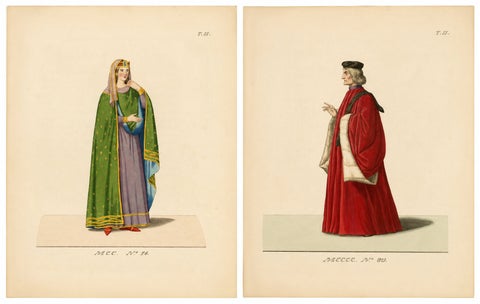
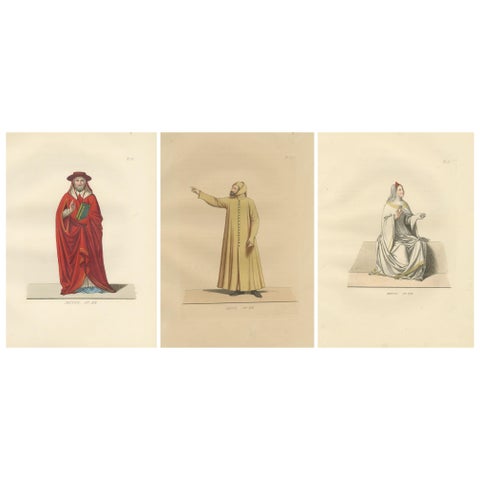
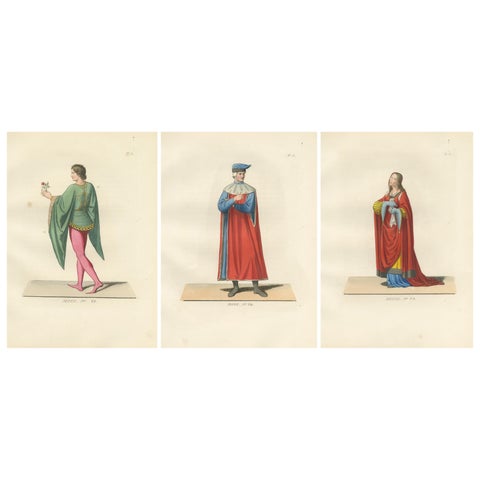
This finely curated trio of hand-colored lithographs captures three distinct facets of intellectual and social life in Renaissance Italy: the noblewoman, the Jewish elder, and the professional notary. Originally published in 1845 in a celebrated historical costume series, these plates are drawn from authentic pictorial sources and offer a rare and culturally rich portrayal of identity through dress.
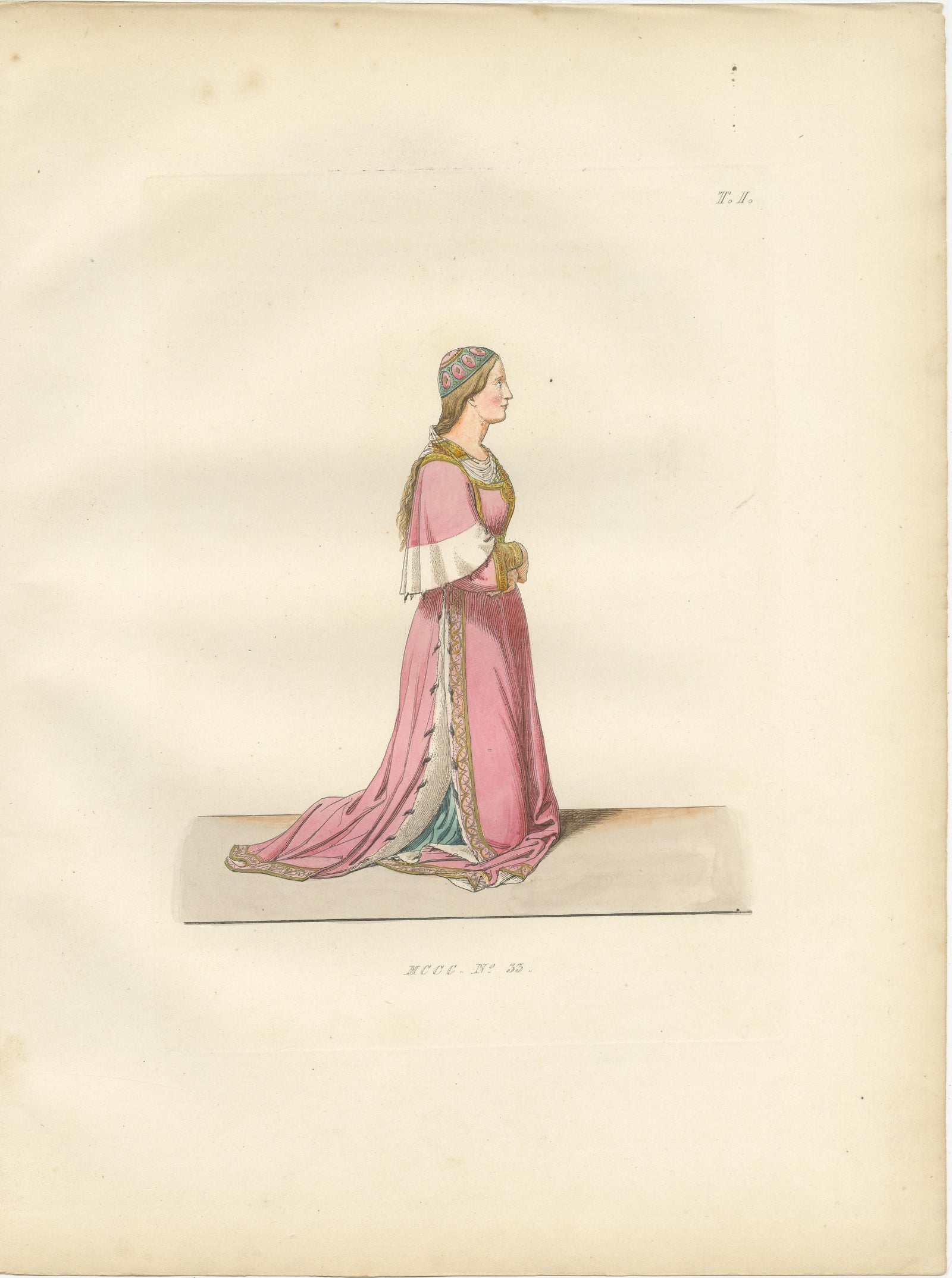
Plate No.33, titled "Jeune Florentine" (Young Florentine Woman), features a graceful figure walking in profile, her long pink gown trailing elegantly behind her. The gown is edged with elaborate golden embroidery and worn over a soft turquoise underskirt. Her hair is adorned with a delicate, gem-studded headdress. The figure exudes modest elegance and civic pride, hallmarks of upper-class Florentine women during the Quattrocento. The precision of her posture and refined garments speak to both wealth and restraint.
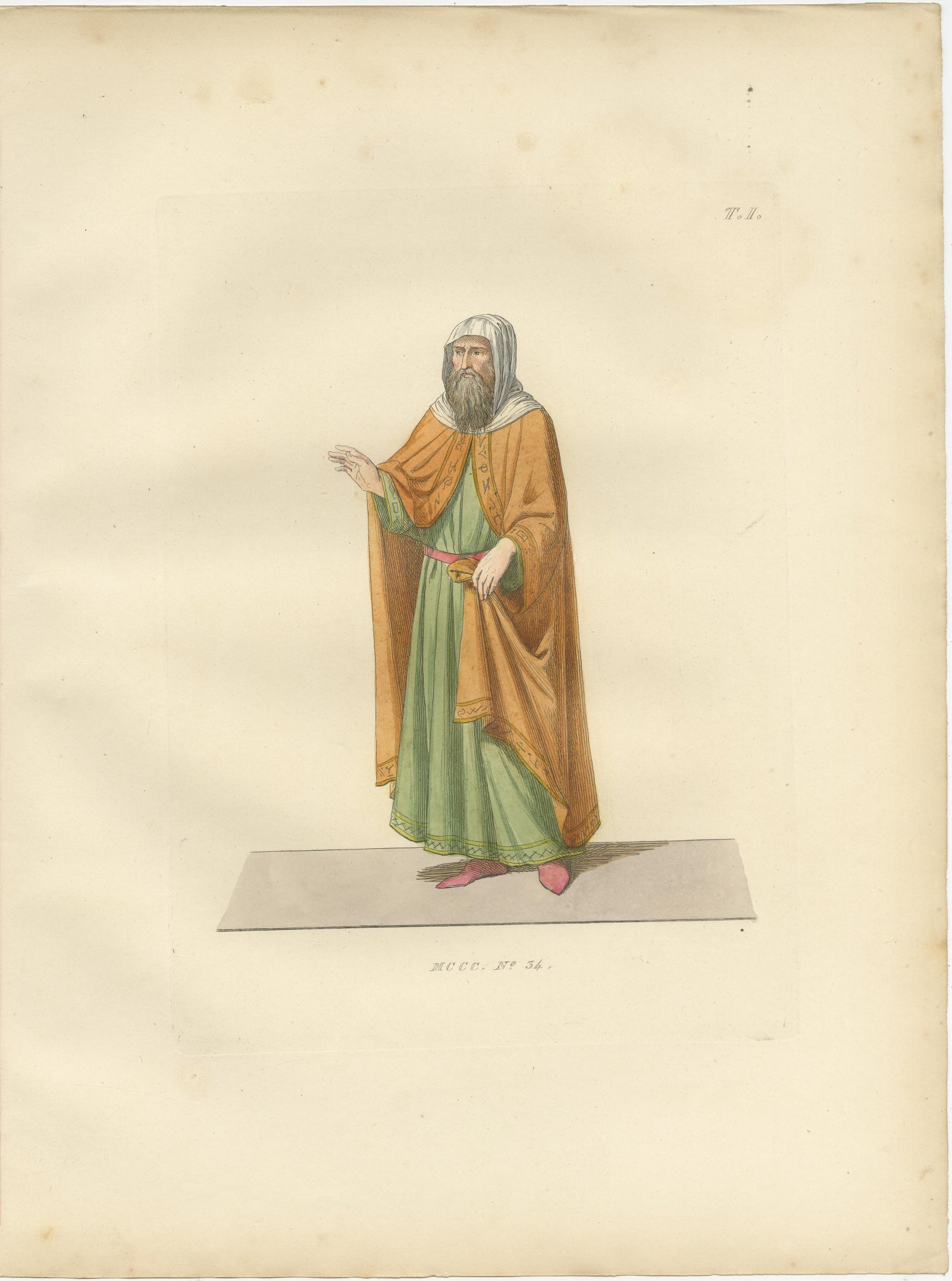
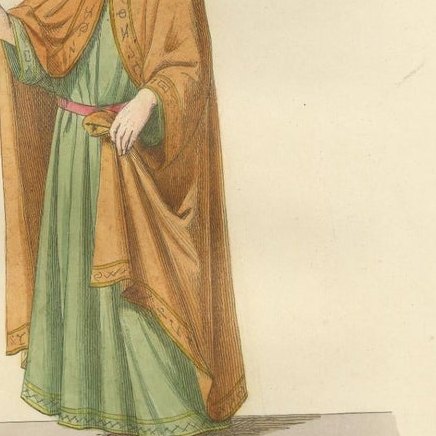
Plate No.34, "Juif" (Jew), presents a scholarly, bearded man clad in a green tunic and ochre-gold robe, cinched with a crimson sash. A hooded white cloth frames his face, suggesting a life of introspection and learning. The image captures the status of Jews in medieval Italian cities, respected for their knowledge, especially in law, medicine, and finance, while also visually marking their distinction in society through costume. His calm gesture hints at teaching or speaking, a quiet assertion of dignity and wisdom.
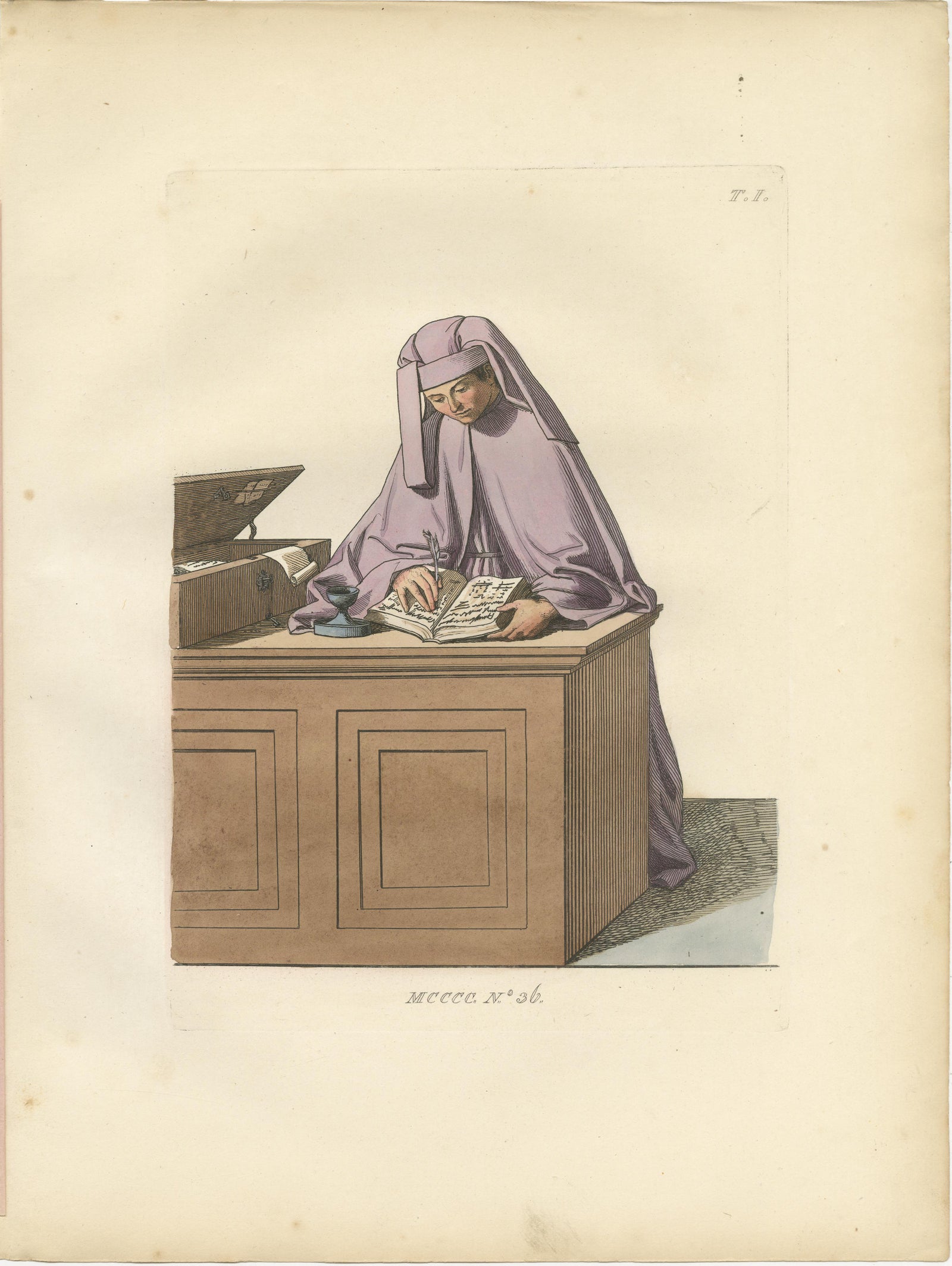
Plate No.36, "Notaire" (Notary), depicts a figure in deep concentration, seated at a writing desk. Clad in lavender robes and a soft cap, the notary is engrossed in his task, quill in hand, surrounded by scrolls and books. This evocative portrayal illustrates the importance of legal recordkeeping in Renaissance civic life. The muted coloring and strong architectural lines of the desk highlight the quiet authority of the bureaucratic class in contrast to the more flamboyant robes of nobles and clergy.
Together, these prints form a compelling triad of culture, law, and femininity. They appeal to collectors of historical costume, Judaica, and Renaissance studies, or anyone interested in the social diversity of early modern Italy.
Condition:
All prints are in very good condition. Coloring is vivid and well-preserved. Minor foxing appears mainly in the margins, with no impact on the central imagery. Paper is stable with no tears or repairs.
Framing Tips:
Frame these prints in a horizontal arrangement using neutral mats, cream or light parchment, and understated wood or gilt frames to let the subject matter speak. Consider subtle captions or labels for educational or curatorial settings. Ideal for libraries, academic offices, or gallery spaces exploring social roles in Renaissance Italy. Use UV-protective glazing to preserve the delicate coloring.