Framed and on the wall
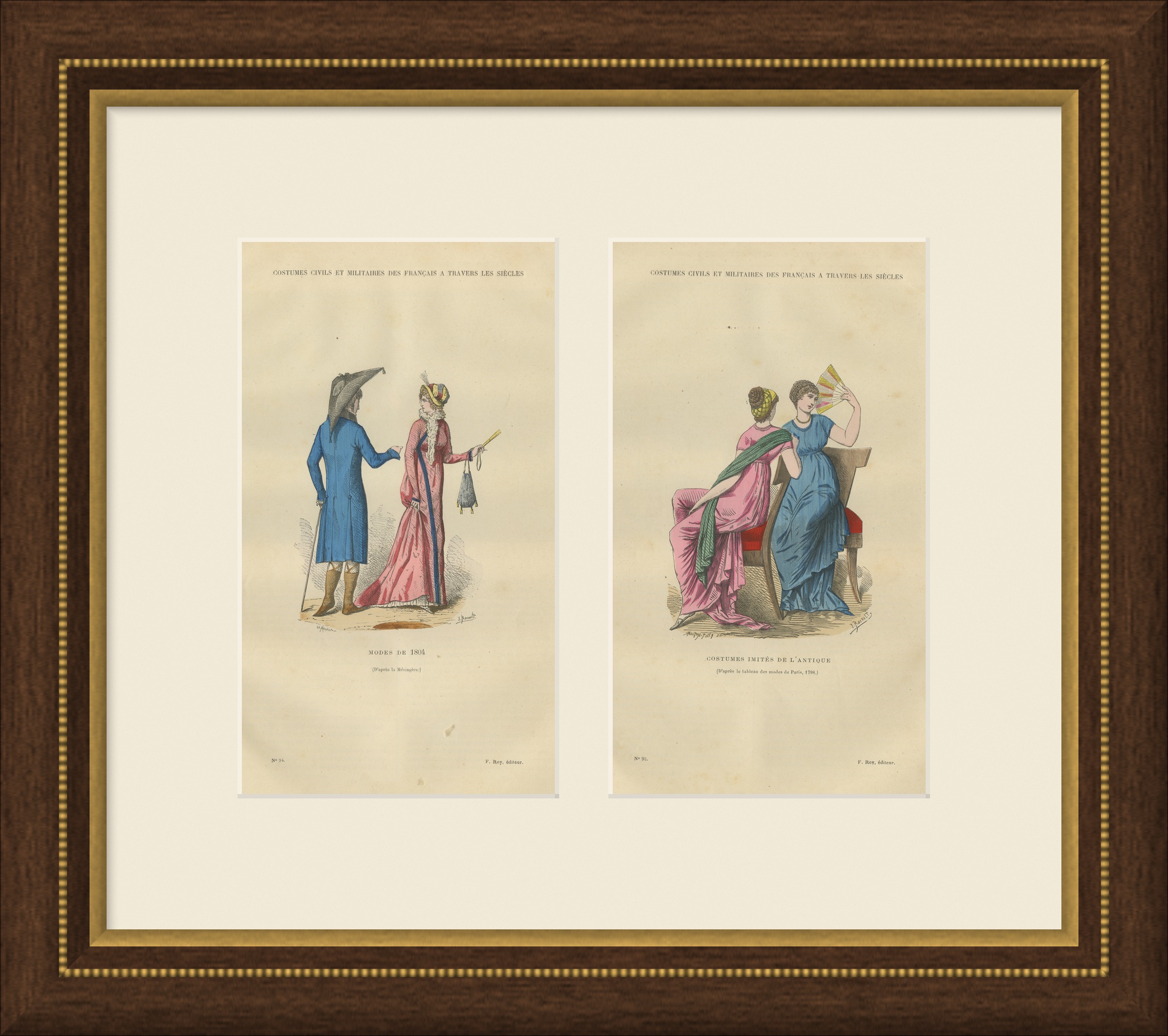
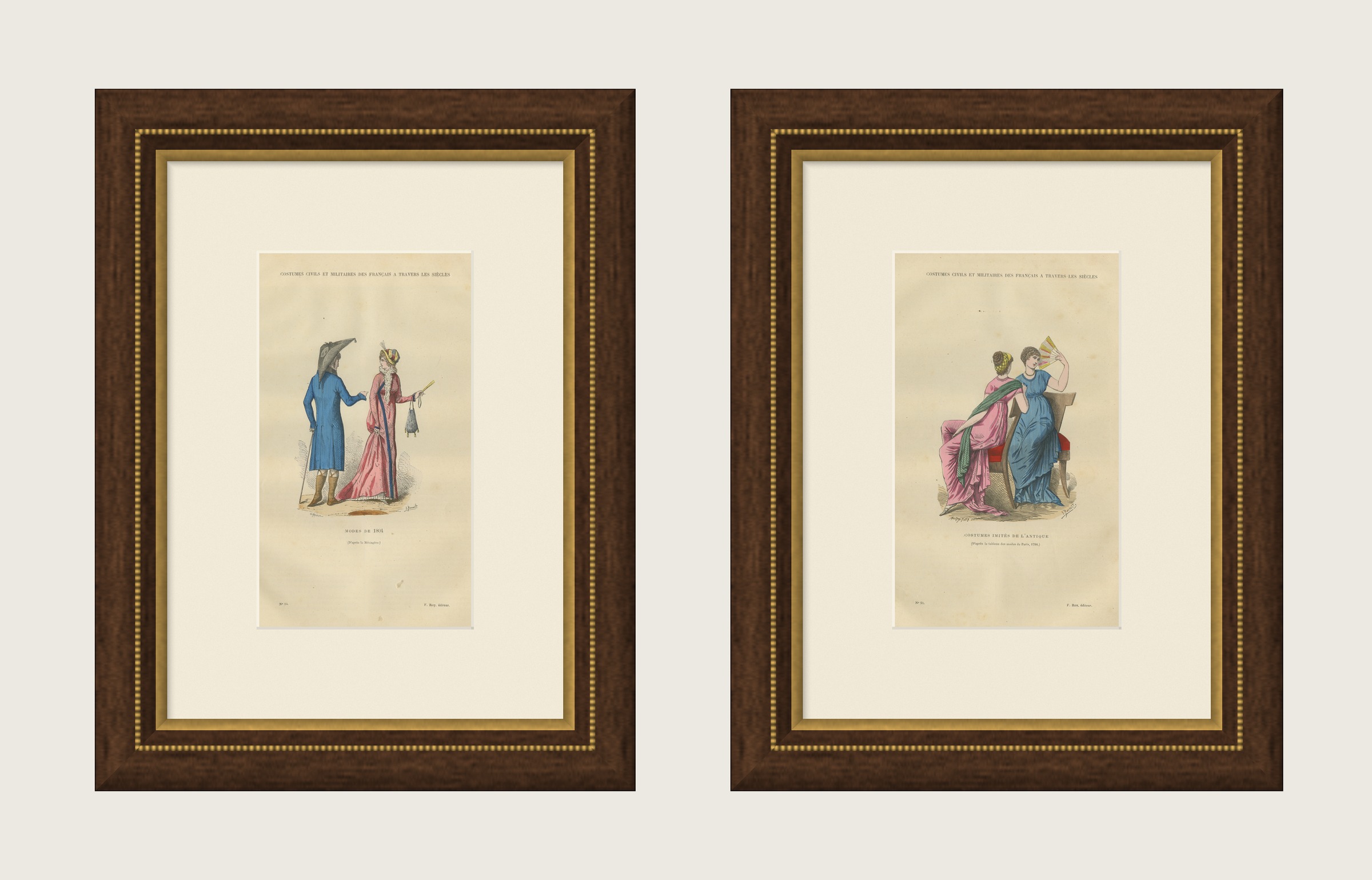
Frame and rooms are illustrations of how the print could look; the description says what is included.
Directoire and Empire Fashion, Pair of Antique French Prints, circa 1882
$300
€270 · £225
Original print, not a reproduction.
Ships worldwide from the Netherlands, flat or rolled, insured and tracked. 14-day returns.
- Date
- circa 1882
- Sheet size
- 11.2 × 7.9 in (28.5 × 20 cm)
- Technique
- Woodcut
- Coloring
- Original hand color
- Condition
- Good. Light uneven toning, browner toward the edges. Marked handling soiling along the edges of both sheets. Light foxing in the margins of both sheets. Loss or wear at the corners of both sheets.
- Wardrobe
- Court & couture
- Era
- 1870 to 1900, Bustle
- Stock no.
- BG-13382-93
What the condition grades mean
- Excellent
- Bright and clean, with no faults worth mentioning.
- Very good
- Only light signs of age, such as faint toning.
- Good
- Normal signs of age for a sheet of this period: toning, some foxing, small marks or neat old repairs.
- Fair
- Clear faults such as staining, tears or repairs, priced to match.
Every fault we see is written in the condition note, and the whole sheet is shown uncropped in the photos.
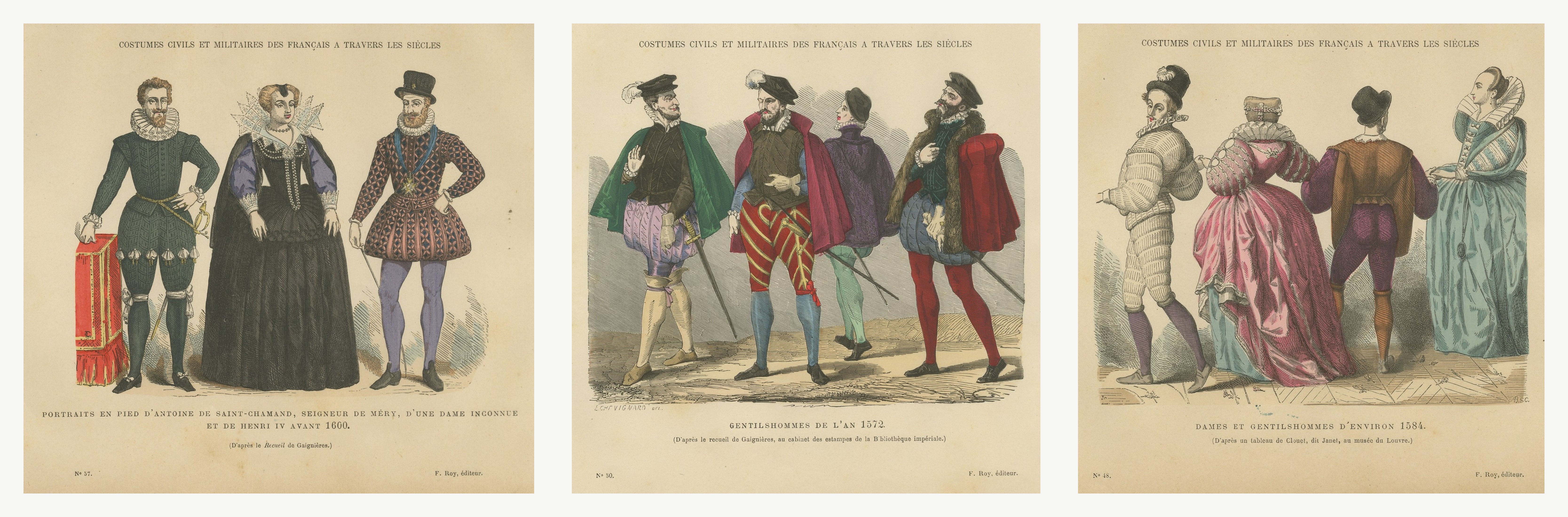
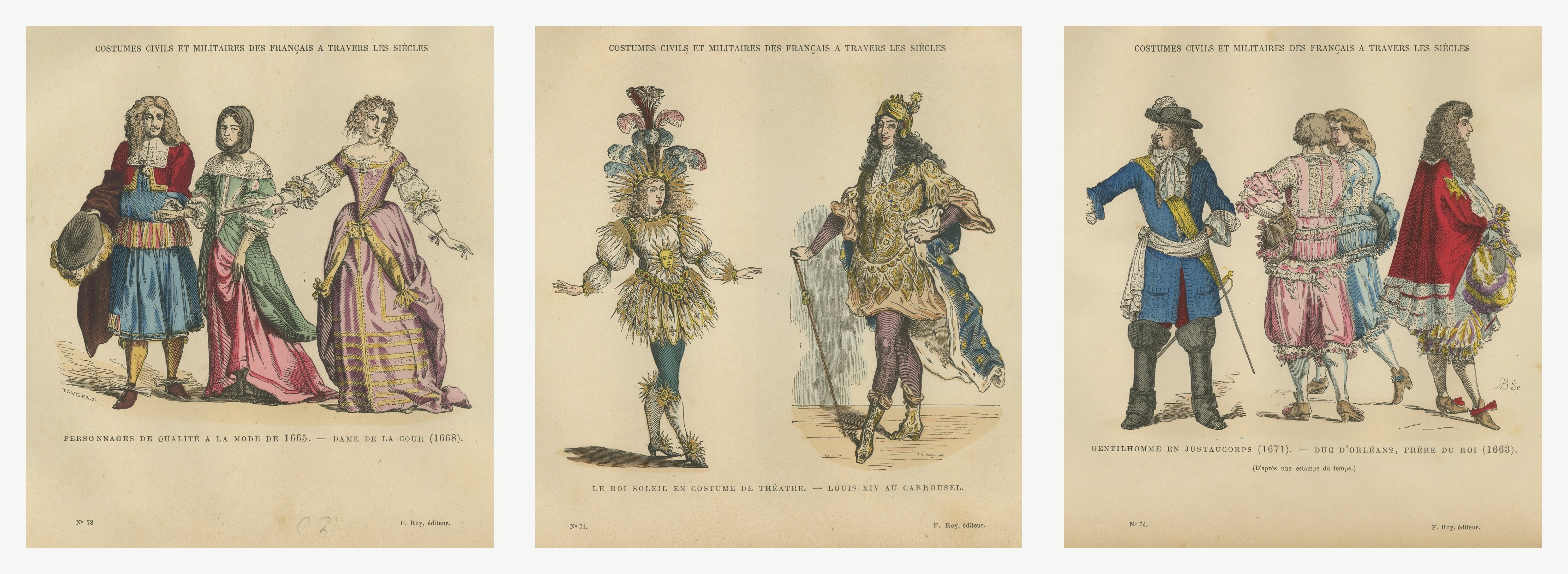
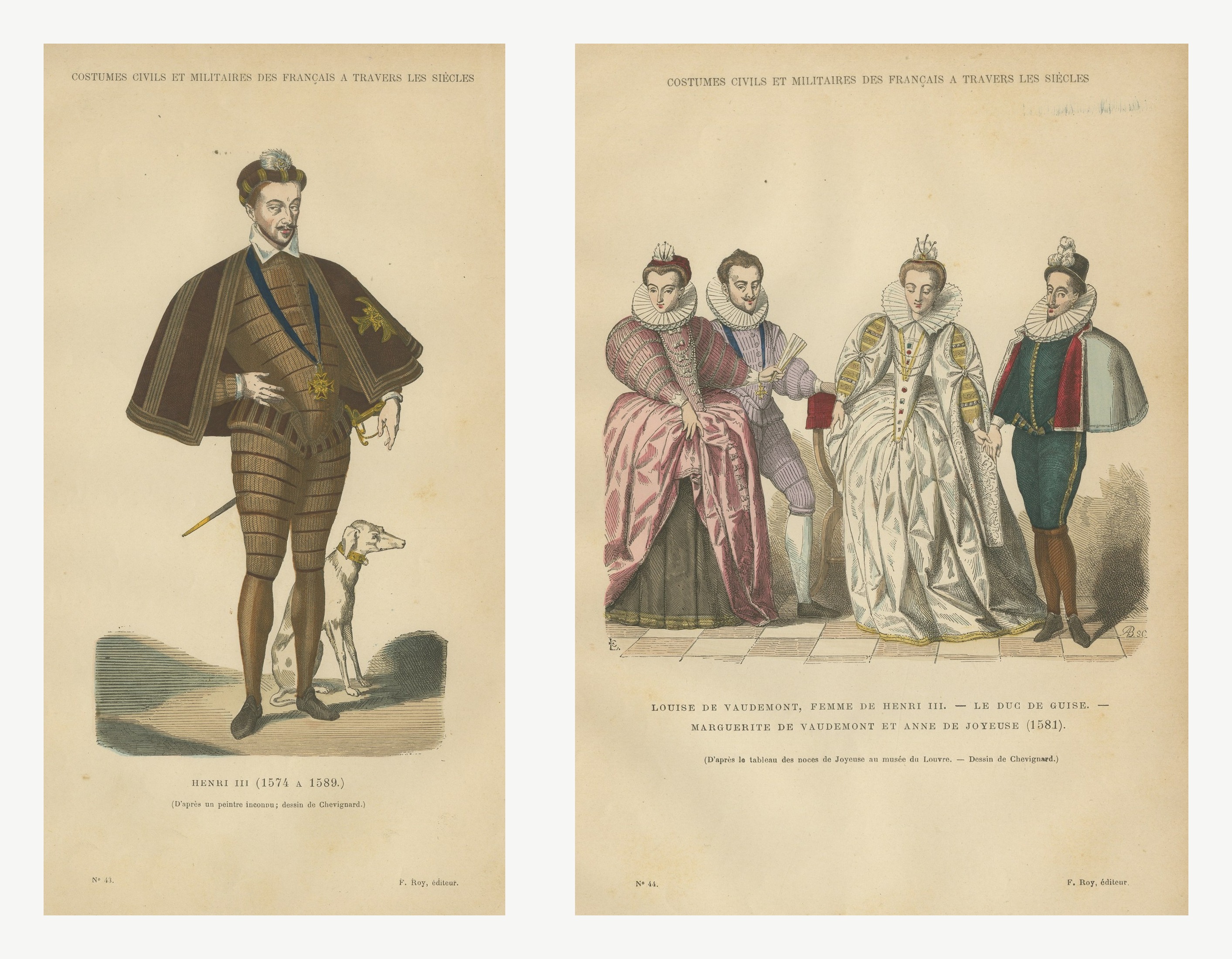
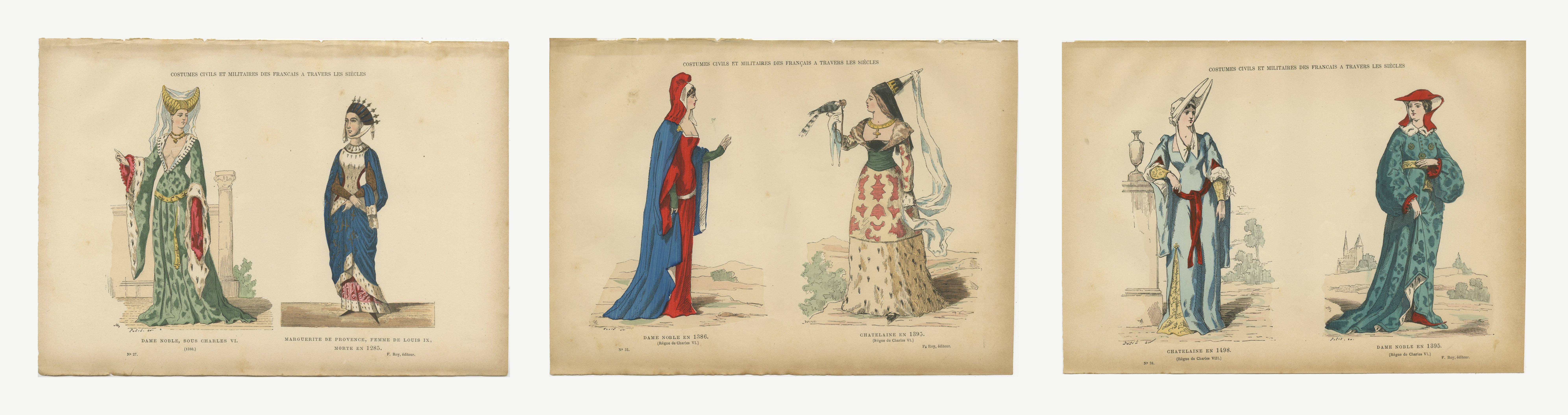
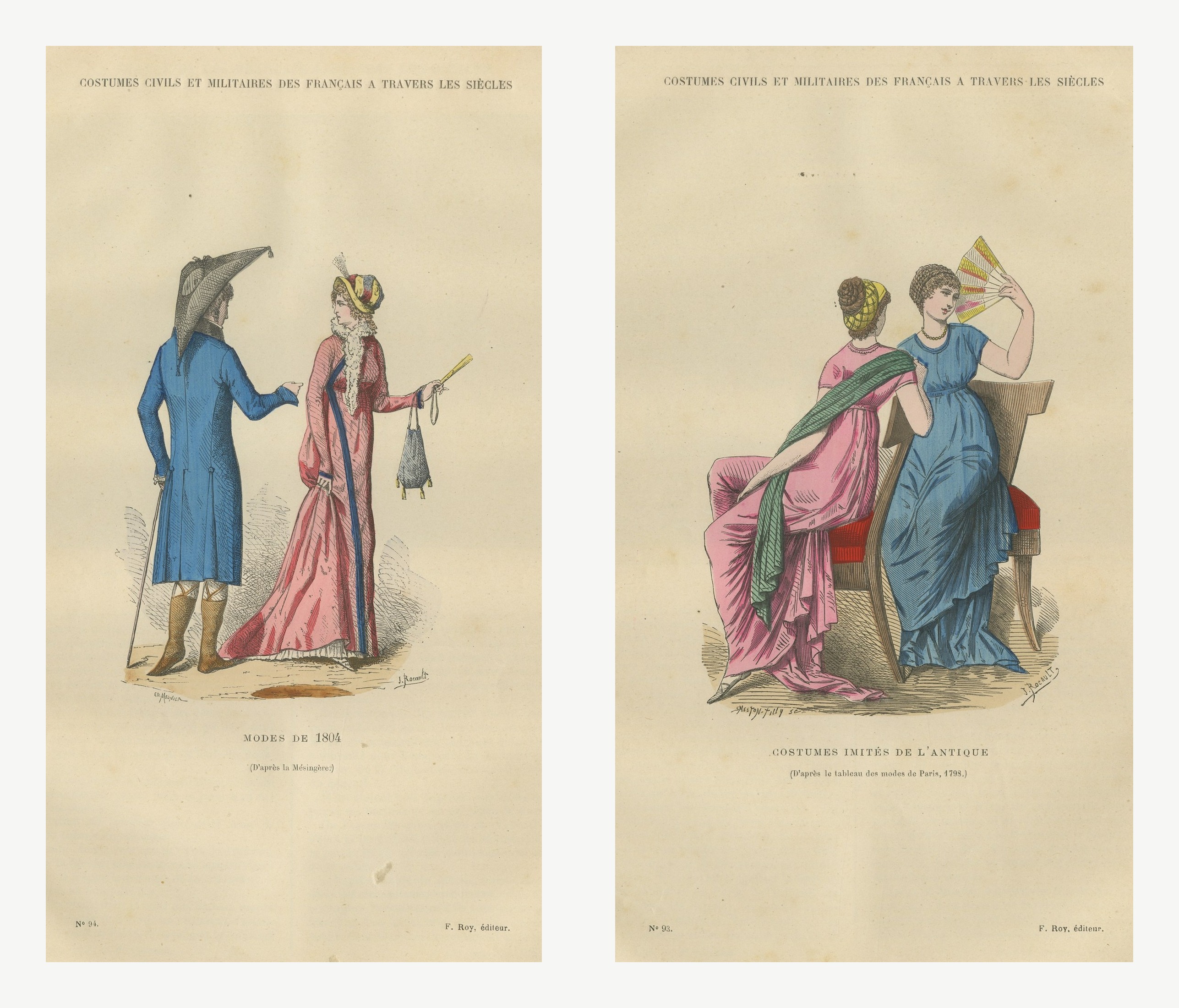
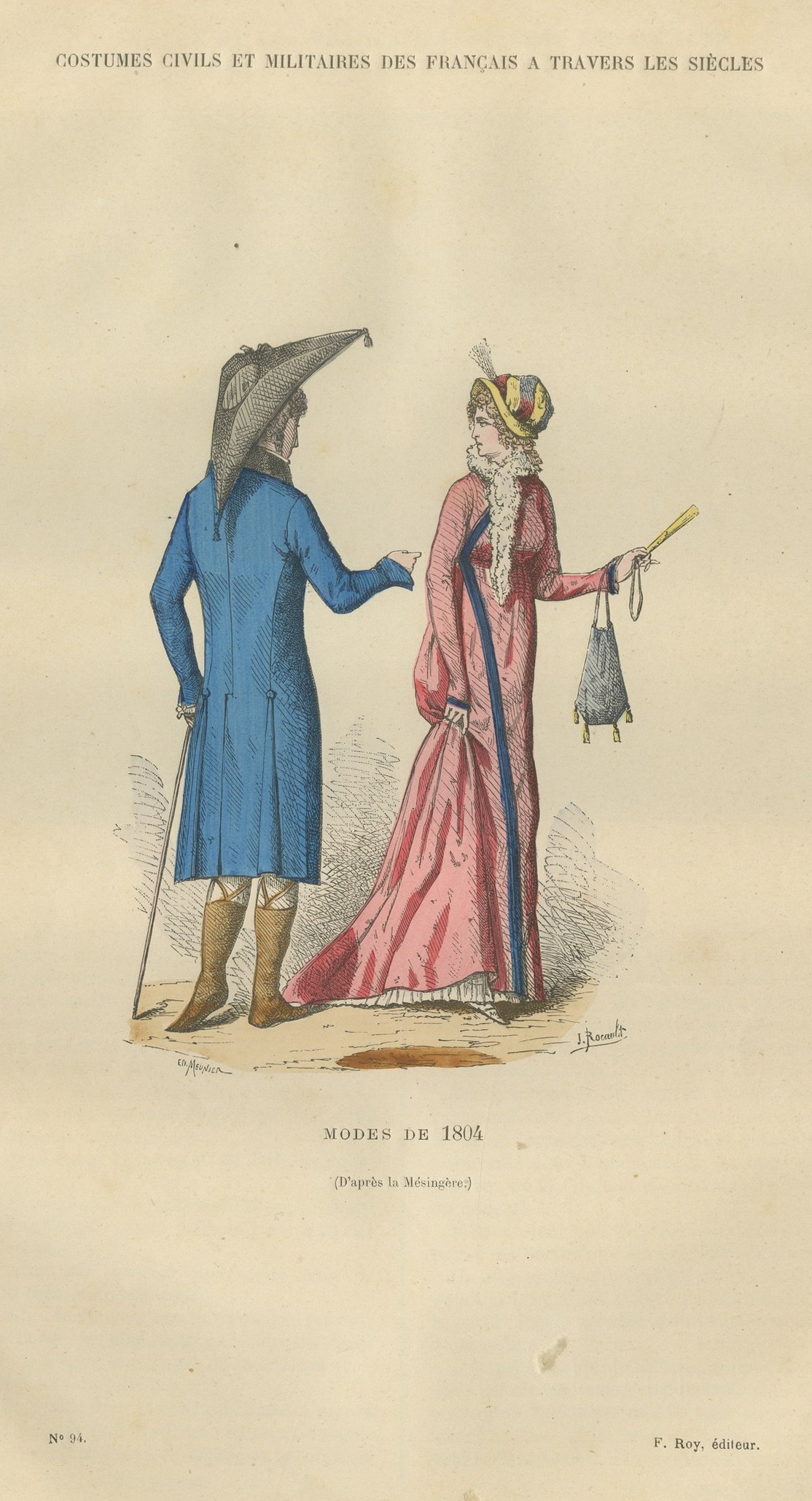
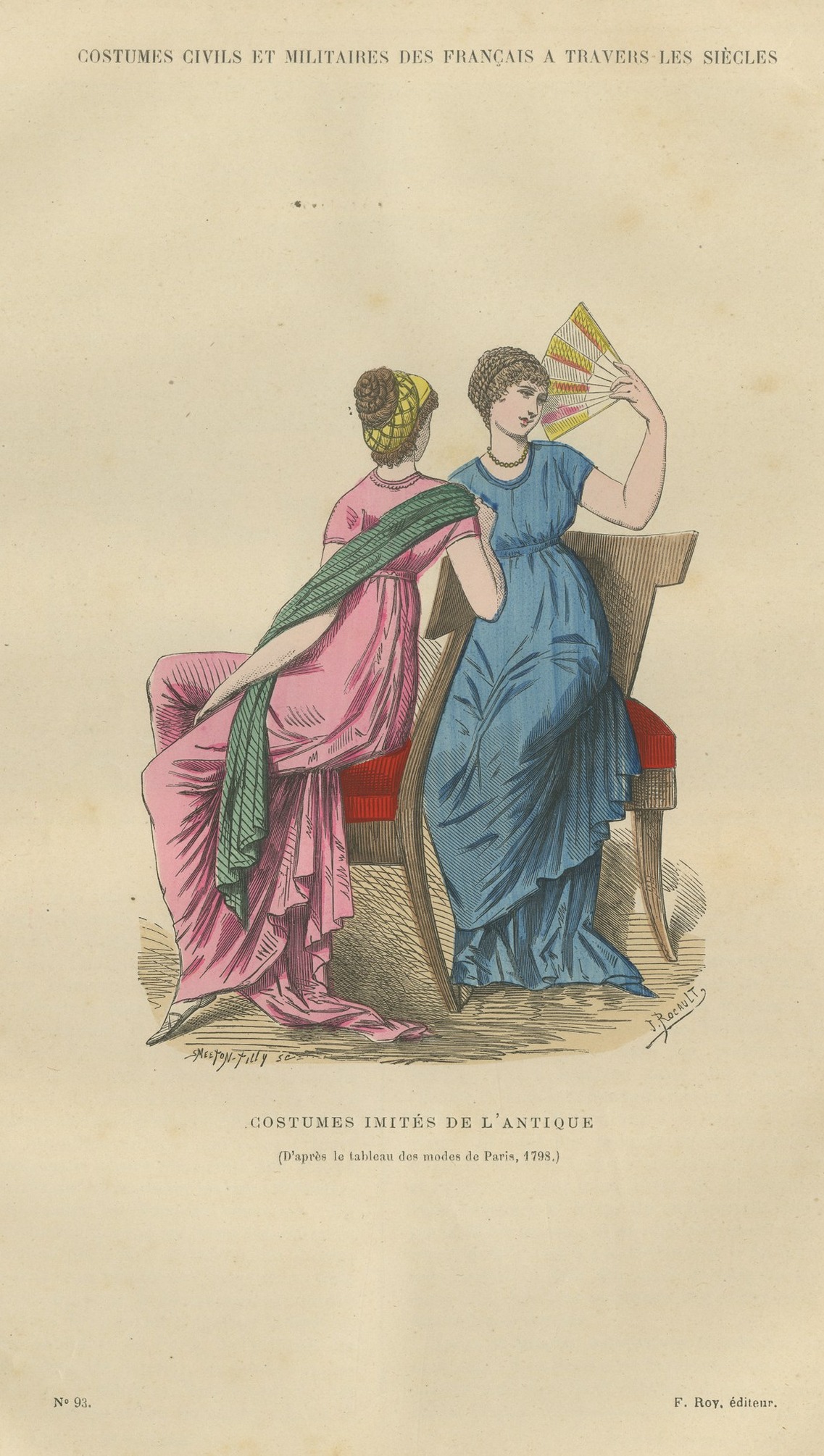
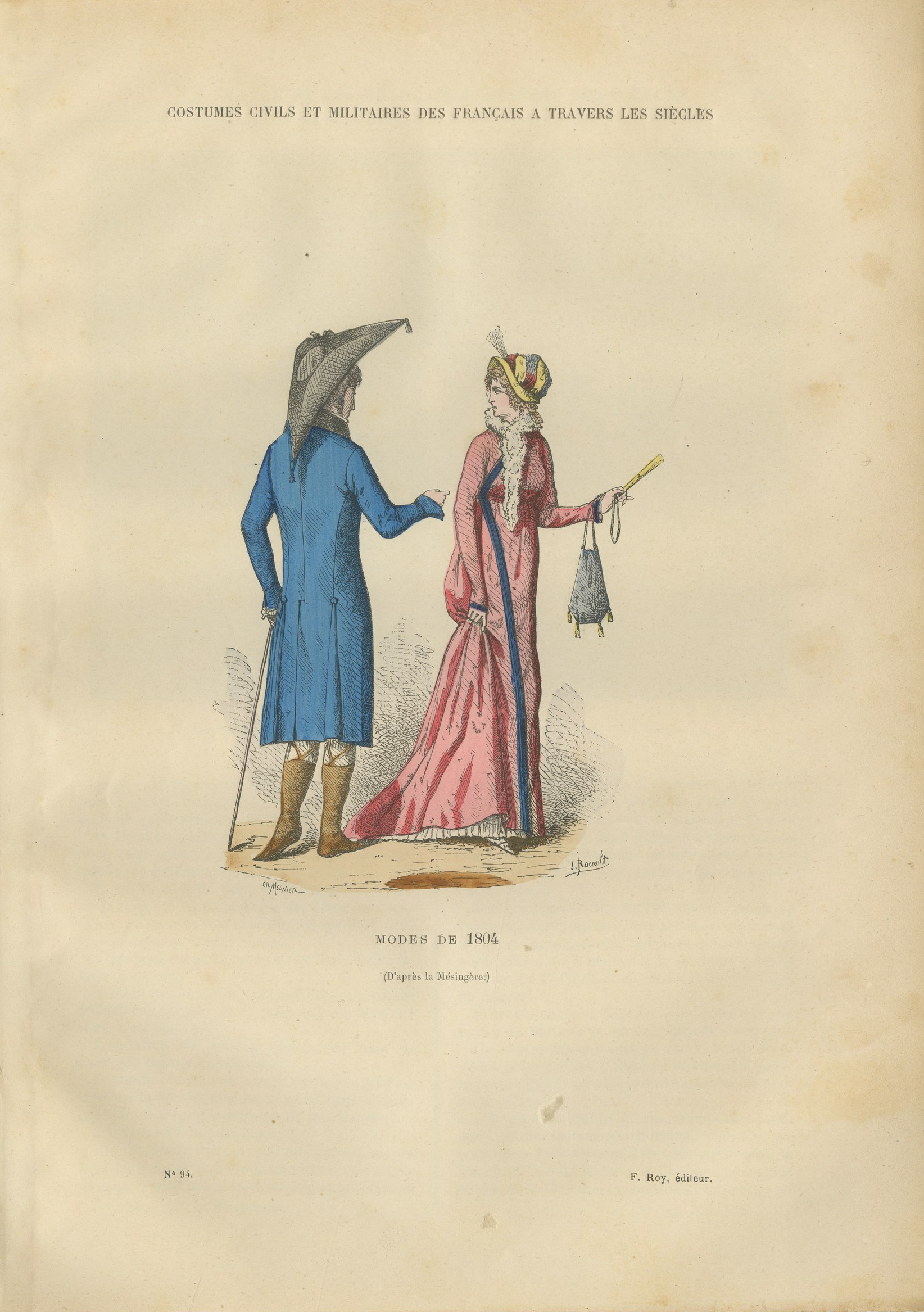
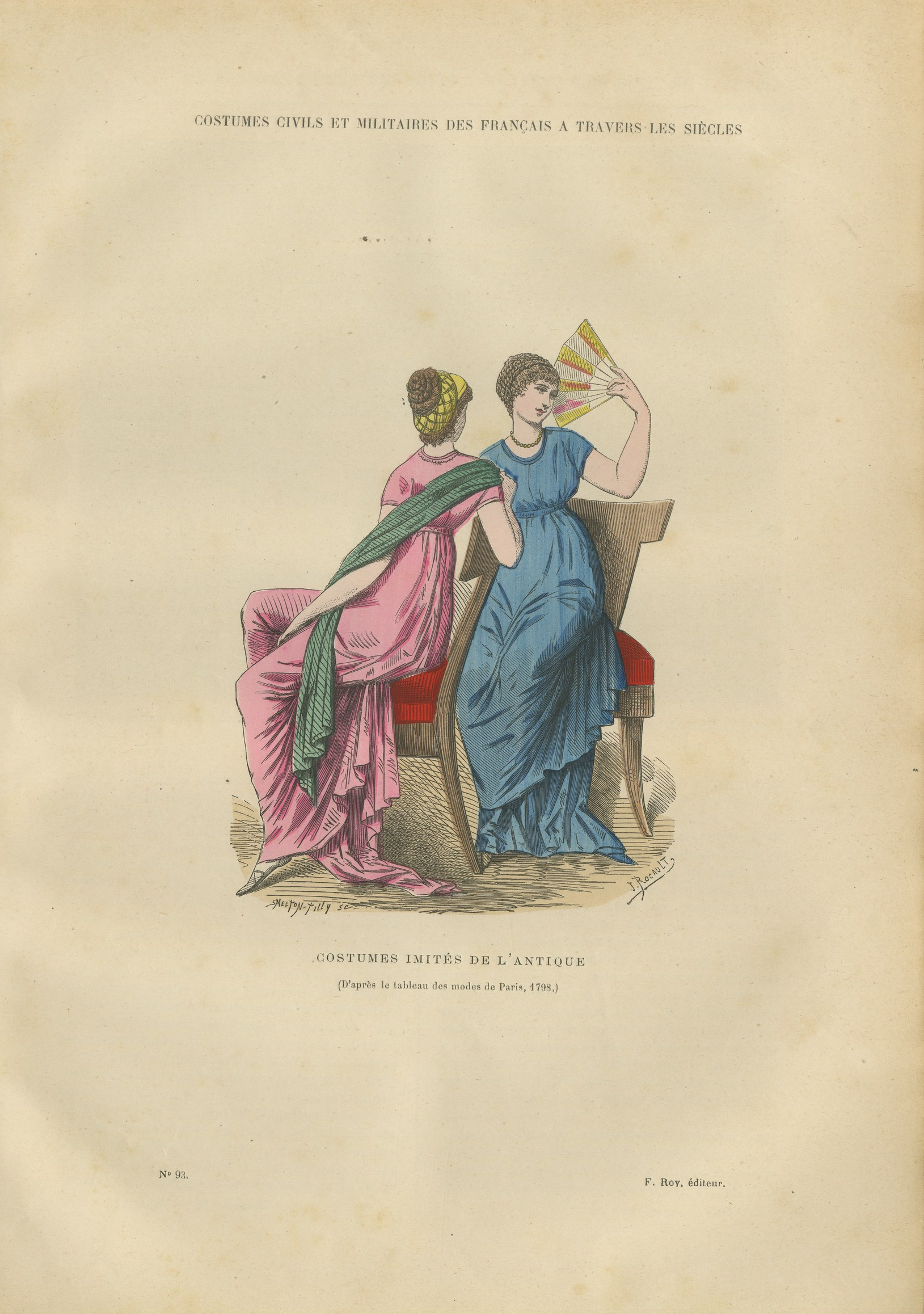
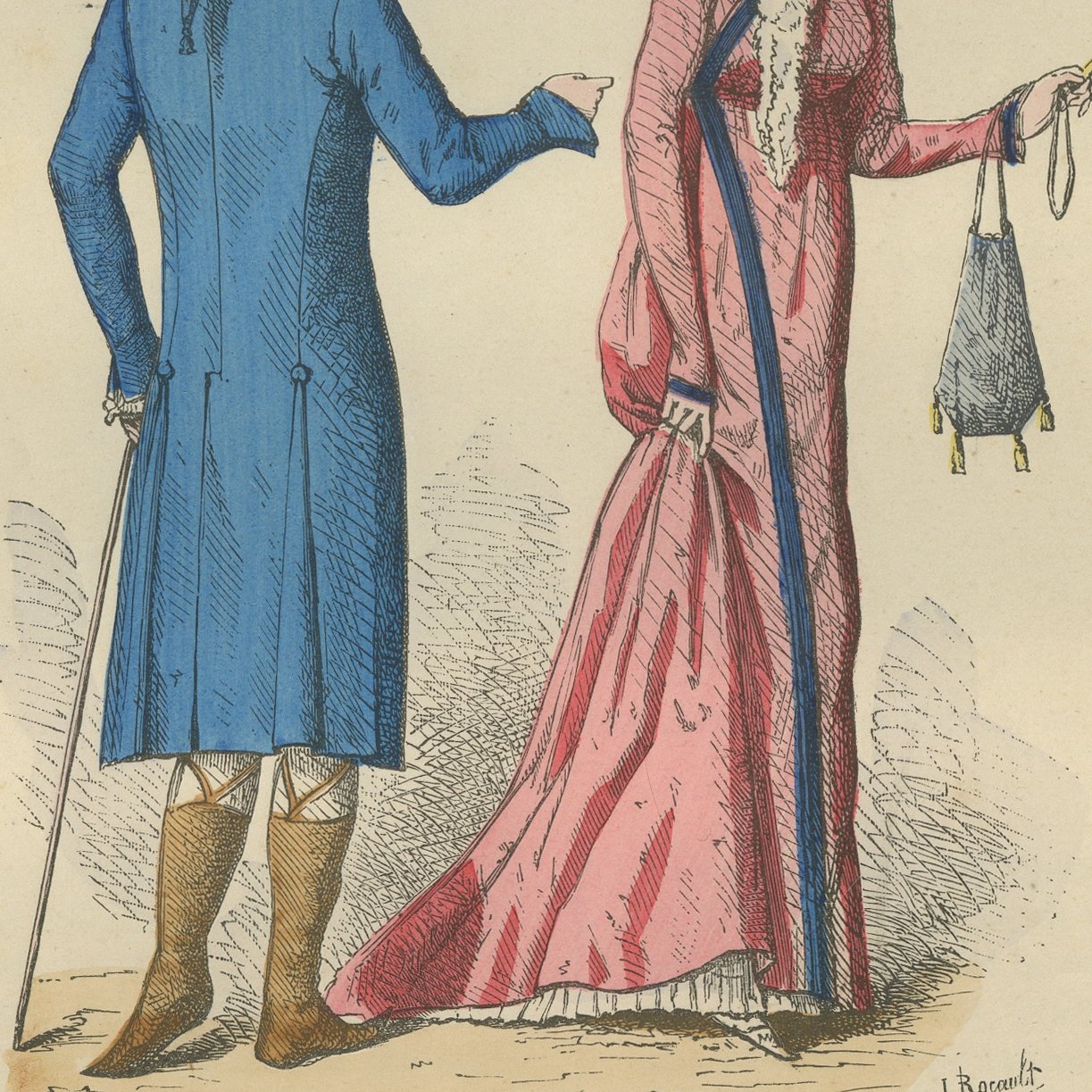
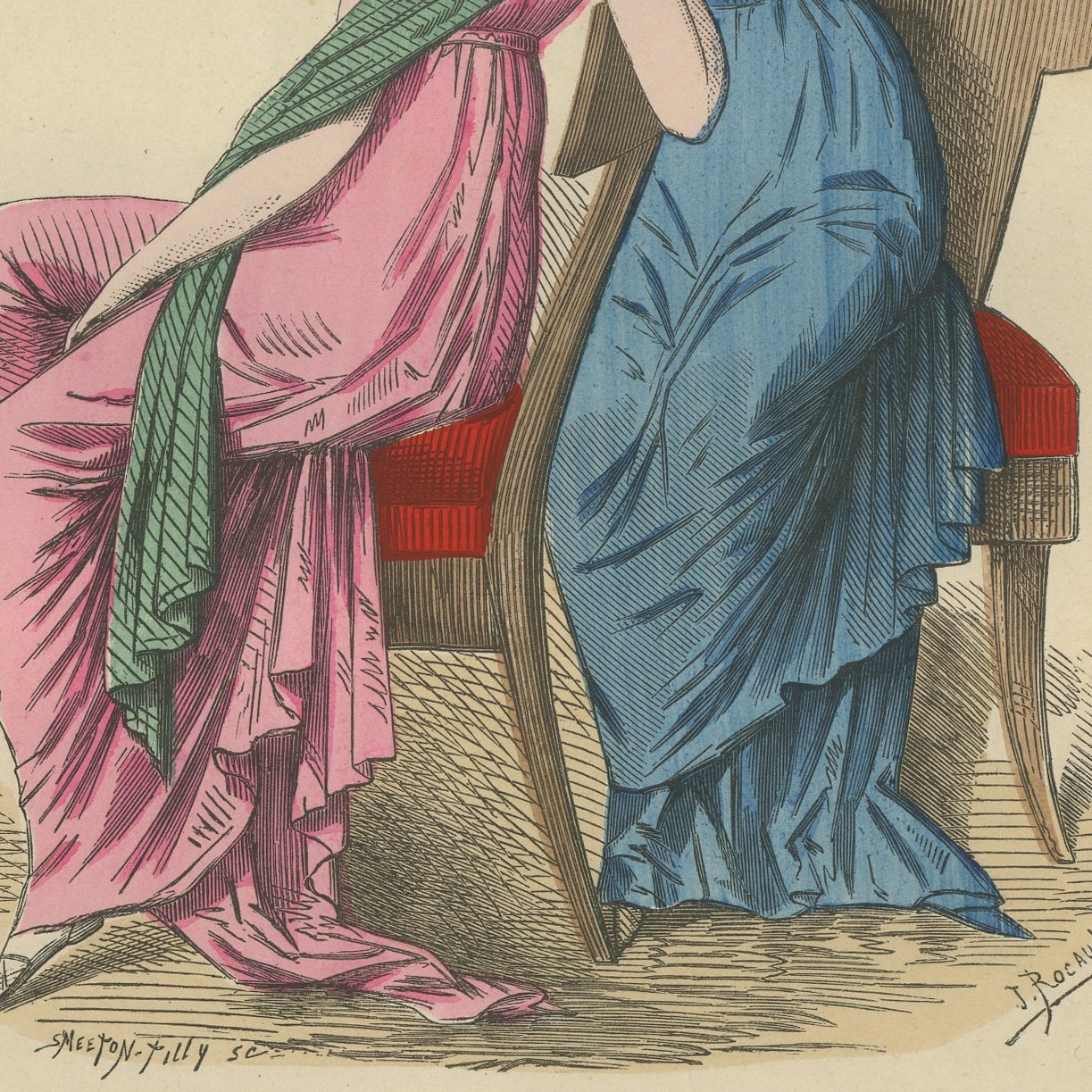
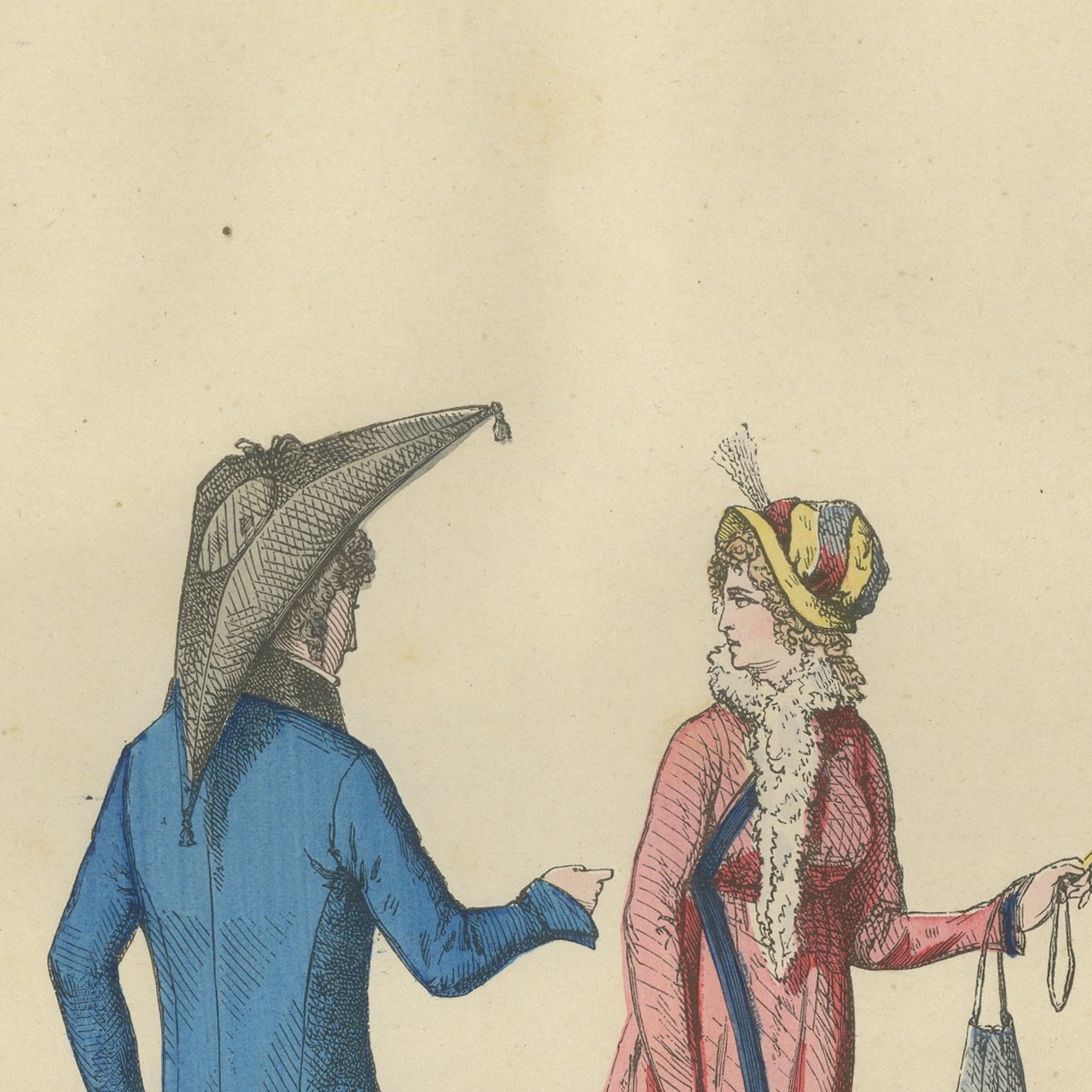
This is a set of two original antique hand-colored wood engravings, sold together as one lot, from Augustin Challamel's La France et les Francais a travers les siecles, Paris, circa 1882. The sheets are, in order: Fashions of 1804 after La Mesangere; Costumes in the Antique Taste of 1798. Fashions of 1804, a woman in a high waisted Empire gown with a long shawl and a close bonnet, drawn by Ed. Meunier after La Mesangere and engraved by J. Rouault. Two women in costumes imitated from the antique of 1798, in clinging high waisted shifts with sandalled feet and hair bound in fillets, taken from the tableau des modes de Paris.
This sheet was issued at Paris about 1882 by F. Roy, editeur, in Augustin Challamel's history of France and the French through the centuries, a work crowned by the Academie francaise. Challamel was also the author of a history of fashion in France, and the costume plates are the part of the book he cared about most. They are wood engravings, and the color has been applied by hand over the printed line, which is why the washes sit slightly across the engraved outline in places. This is a wood engraving finished by hand in watercolor. The coloring is bold rather than subtle, which suits the flat decorative drawing, and the strong yellows, reds and blues of the suite are what make these sheets work so well in a group on a wall rather than only as reference illustrations.
La Mesangere's Journal des dames et des modes is the central fashion record of the Empire, and 1804 is the year Napoleon was crowned, so the dress here is the dress of the new imperial court. Seventeen ninety eight is the high point of the neoclassical shift, the most radical change in the history of women's dress, and this plate records it from a contemporary Paris fashion sheet. They are two original sheets sold together, and the set is never split. A matched group like this is easier to place than a single sheet, because it fills a wall on its own, and the common ground and plate size mean the frames can be identical.
Light uneven toning, browner toward the edges. Marked handling soiling along the edges of both sheets. Light foxing in the margins of both sheets. Loss or wear at the corners of both sheets.
This is an original antique print, not a modern reproduction. This item is sold unframed.