Close-ups
Framed and on the wall
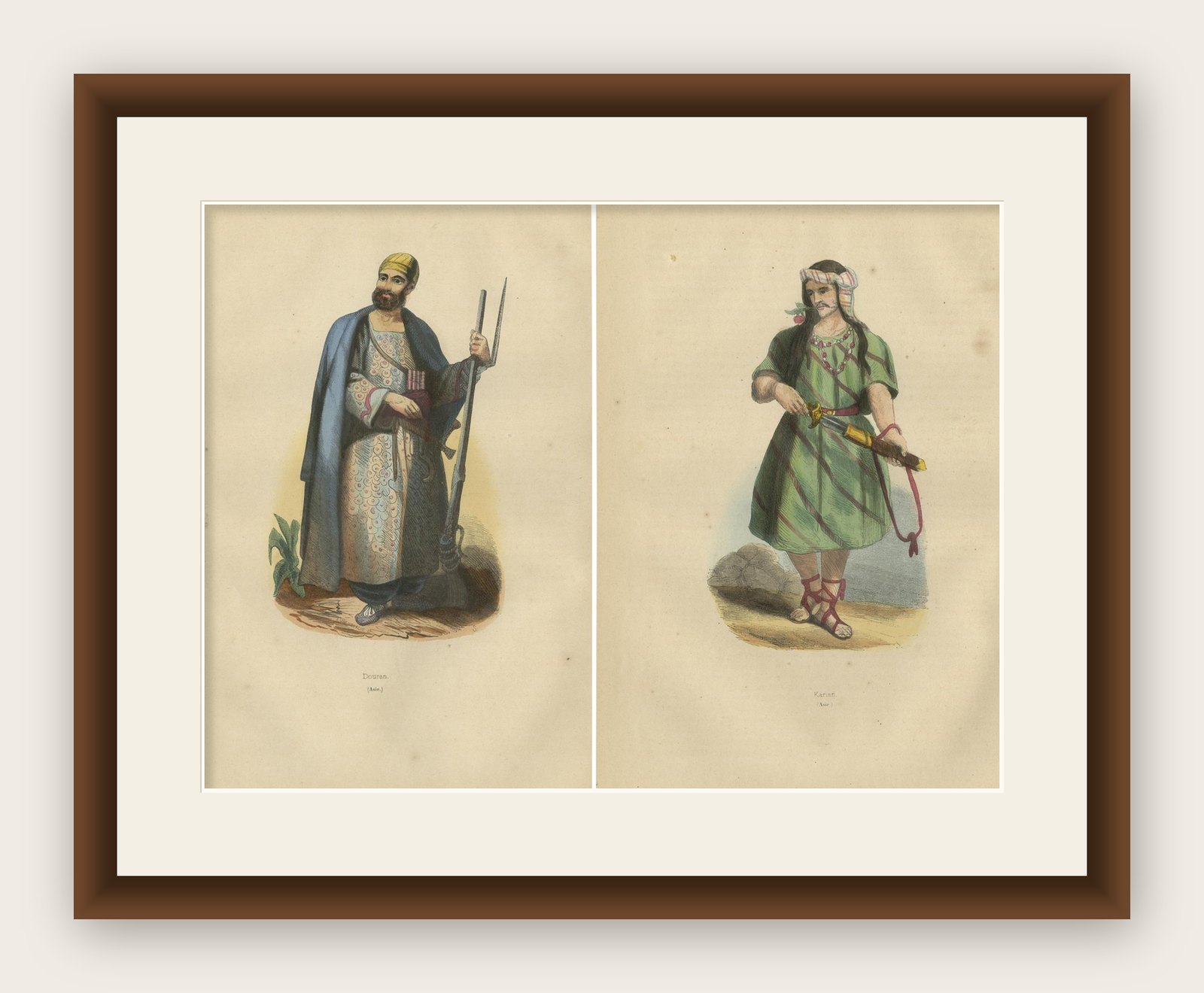


Frame and rooms are illustrations of how the print could look; the description says what is included.
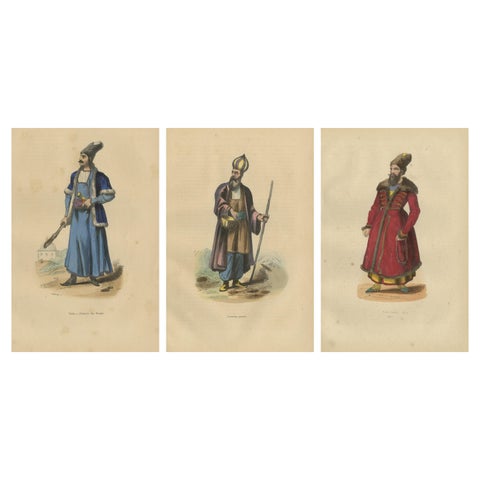
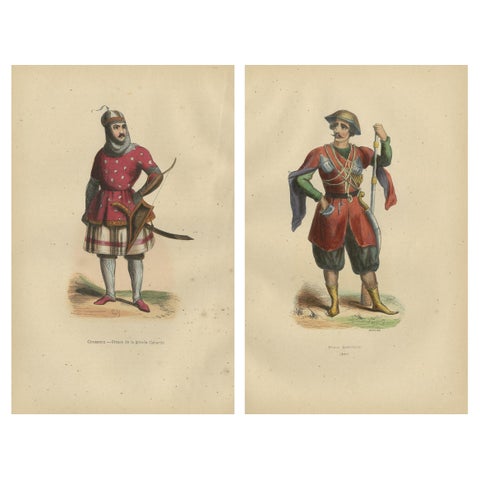
Cultural Warriors: Traditional Attire of Iranian and Afghan Tribes, 1844
€220€15430% off
$170 · £130
Original print, not a reproduction.
Ships worldwide from the Netherlands, flat or rolled, insured and tracked. 14-day returns.
- Date
- 1844
- Sheet size
- 10.1 × 6.7 in (25.7 × 17 cm)
- Condition
- Good. Given age. Faintly browned, and with some small stains. Some glue remains (from binding) in the far left margin (not affecting image). General age-related toning and/or occasional minor defects from handling. Please study the scans.
- Wardrobe
- Far & away
- Era
- 1840 to 1870, Crinoline
- Stock no.
- BG-12722-18, BG-12722-19
What the condition grades mean
- Excellent
- Bright and clean, with no faults worth mentioning.
- Very good
- Only light signs of age, such as faint toning.
- Good
- Normal signs of age for a sheet of this period: toning, some foxing, small marks or neat old repairs.
- Fair
- Clear faults such as staining, tears or repairs, priced to match.
Every fault we see is written in the condition note, and the whole sheet is shown uncropped in the photos.
Handcolored lithographs, heightened with Arabic gum on wove (vellin) paper.
From the Asia volume of “Moeurs, Usages et Costumes de tous les Peuples de Monde” by Auguste Wahlen. This was published in Paris: Poiree, Pilout, Duterte and Martinon, 1844.
Made by an anonymous engraver after ‘Auguste Wahlen’. Author: Auguste Wahlen. Various artists are responsible for the illustrations, most notably Evrard Duverger, L. Markaert and R. King.
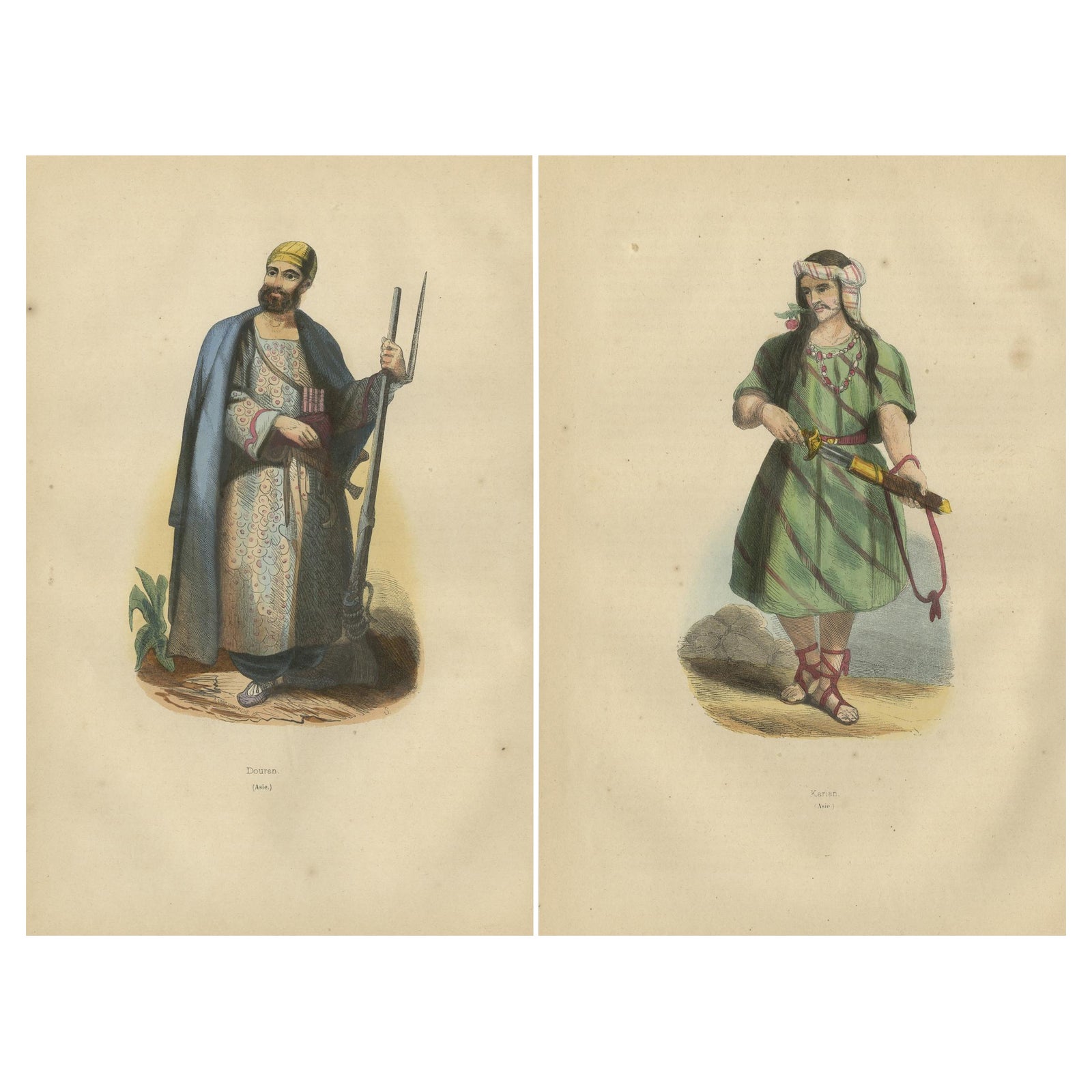
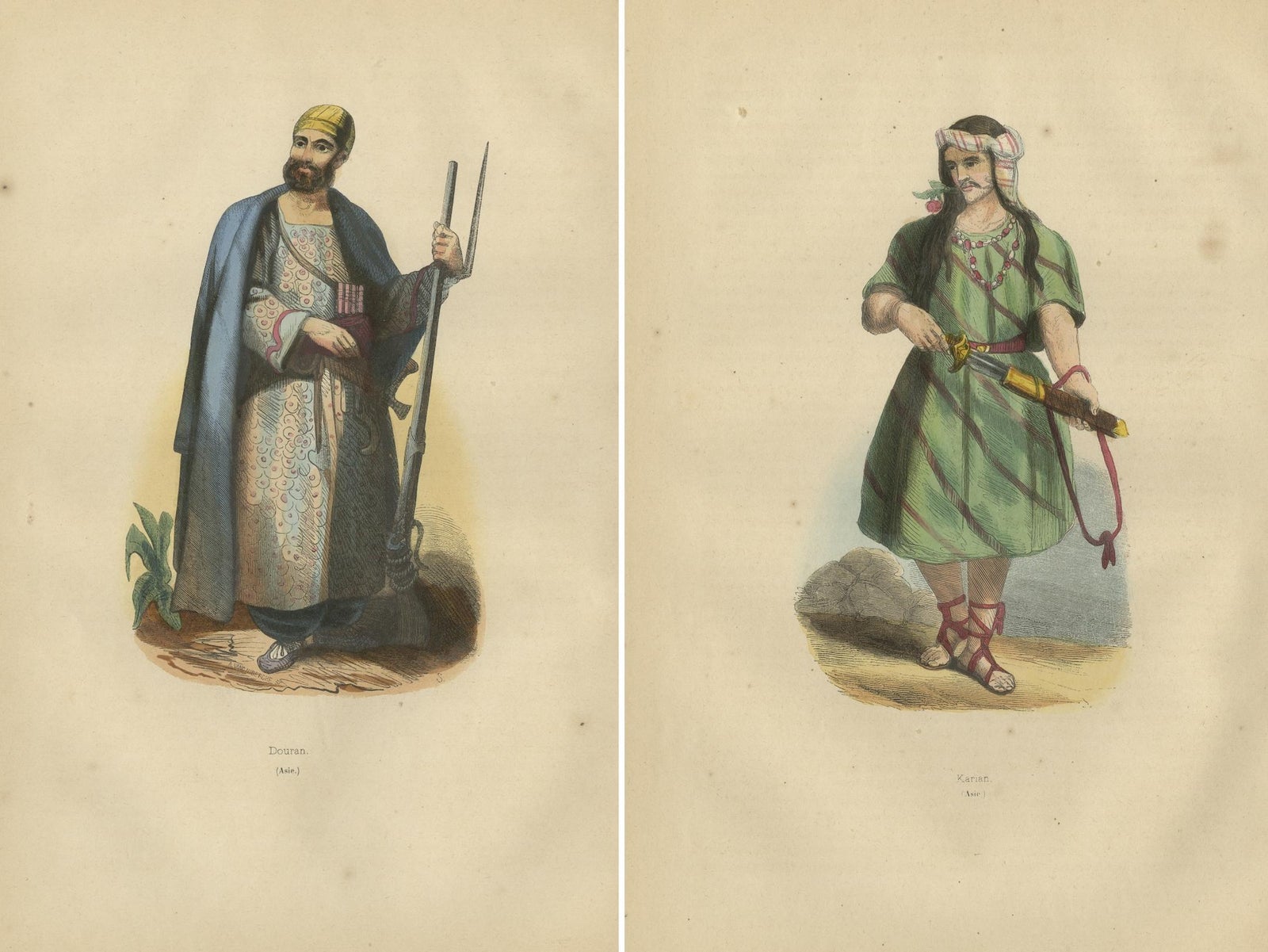
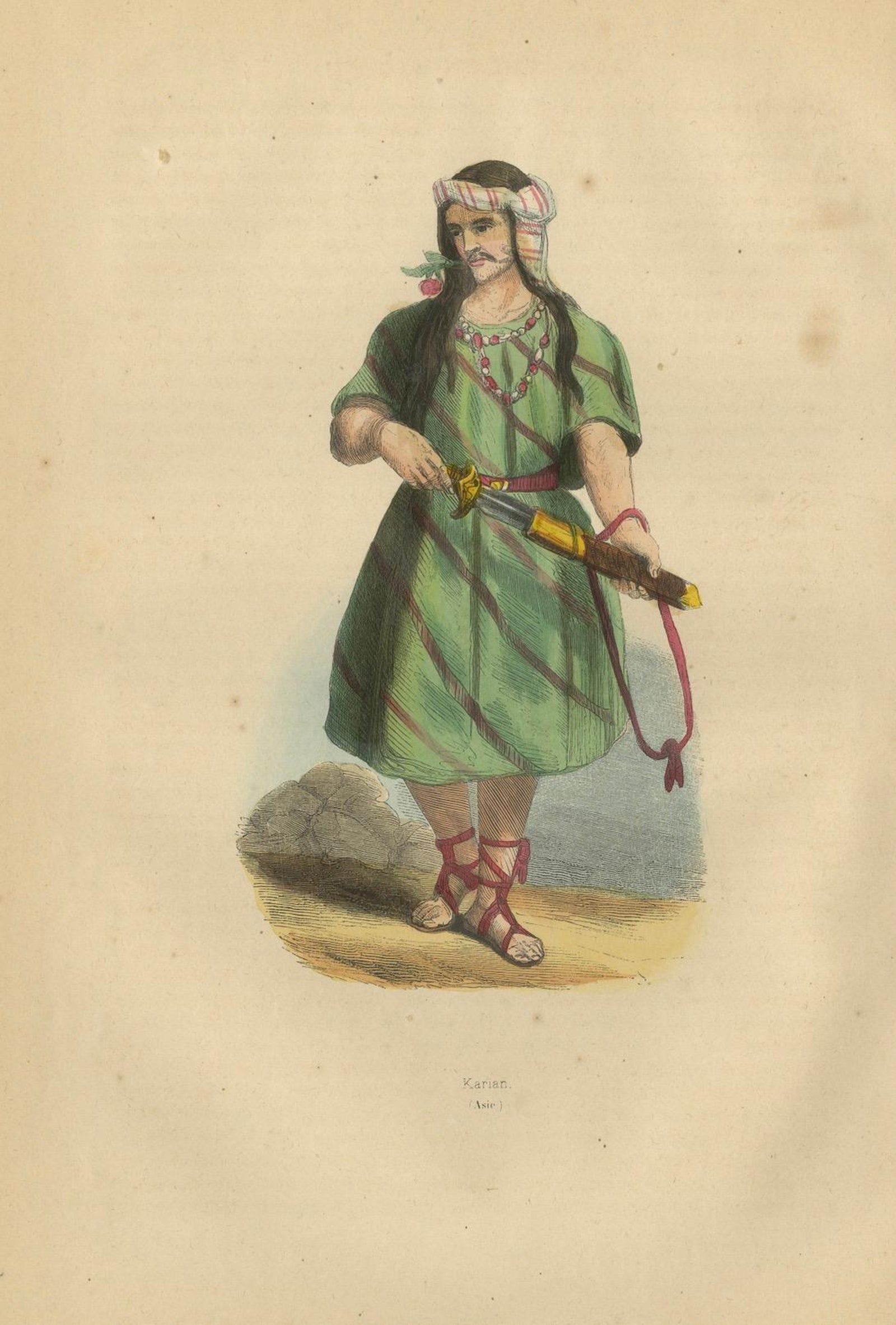
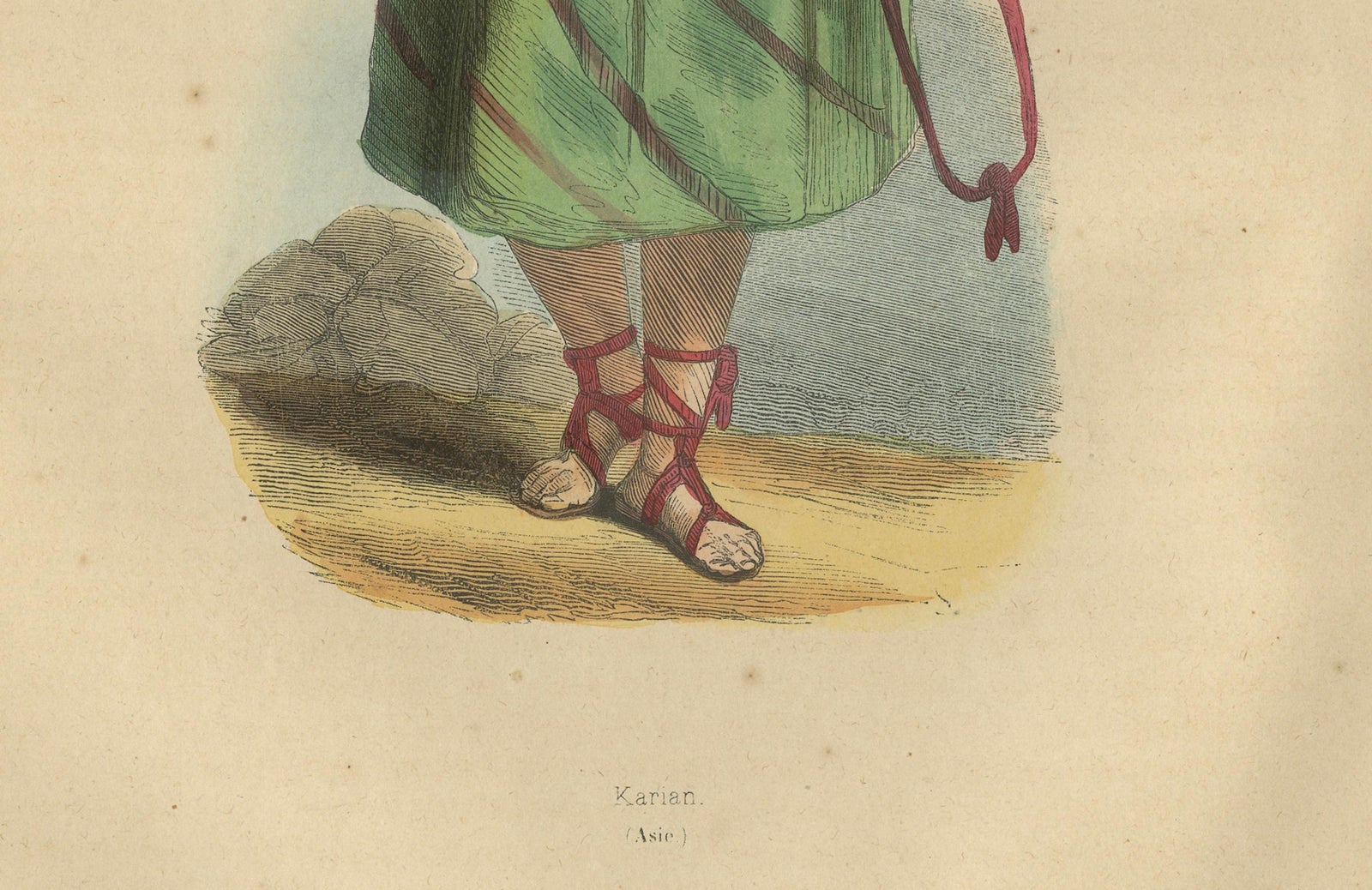
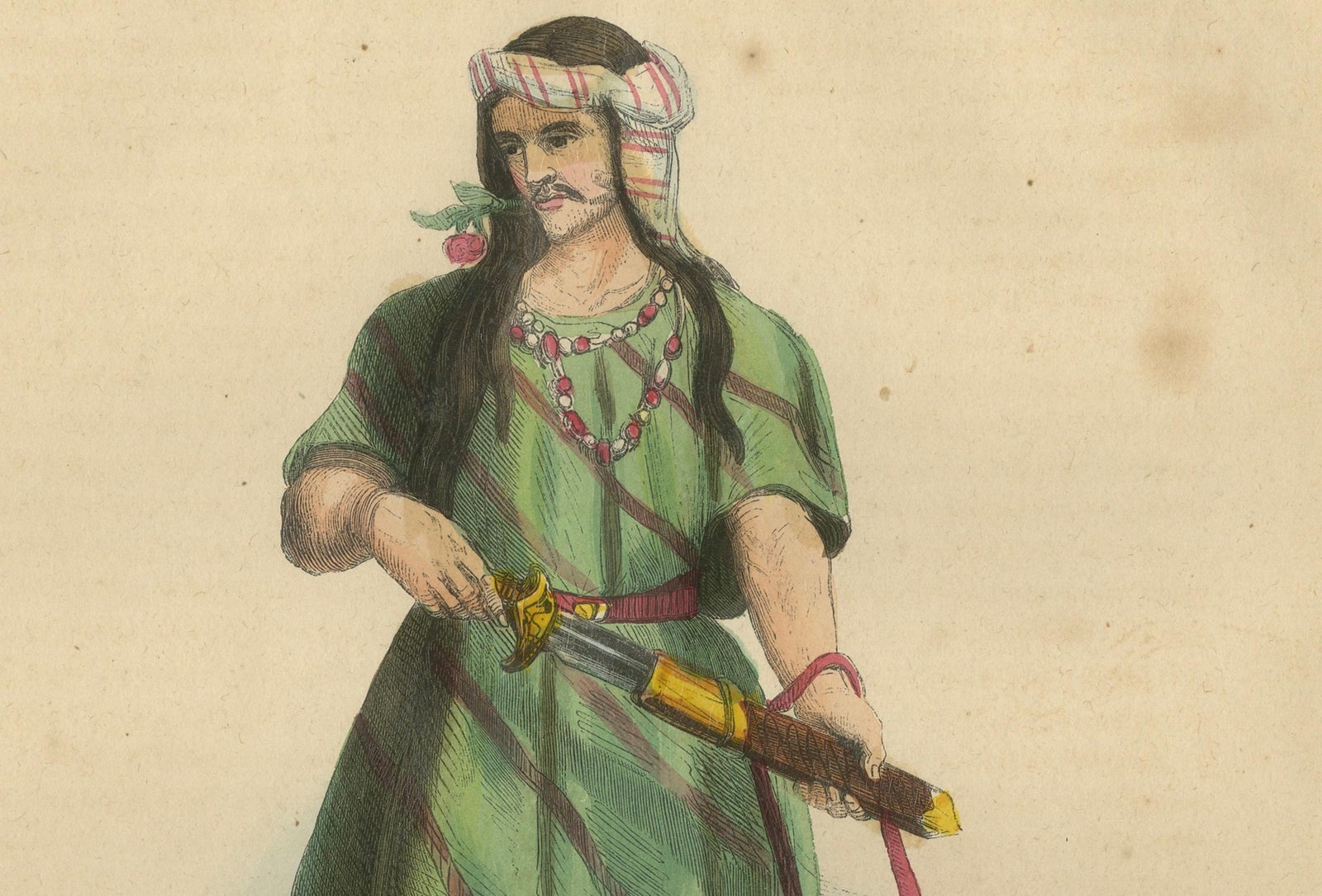
Karian, Iranian Traditional Costume
The figure labeled "Karian" is shown in traditional Iranian attire, drawing his sword, which is a typical representation of readiness and martial prowess. The costume likely includes elements like a long robe, a cummerbund, and perhaps a headpiece, indicative of the attire worn historically by men in the Hormozgan Province, specifically the Karian District. This region, located along the southern coast of Iran, has a rich history connected to trade and maritime activities due to its proximity to the Persian Gulf, which could explain the martial aspect of the attire, possibly suggesting readiness for defending against piracy or involvement in trade protection.
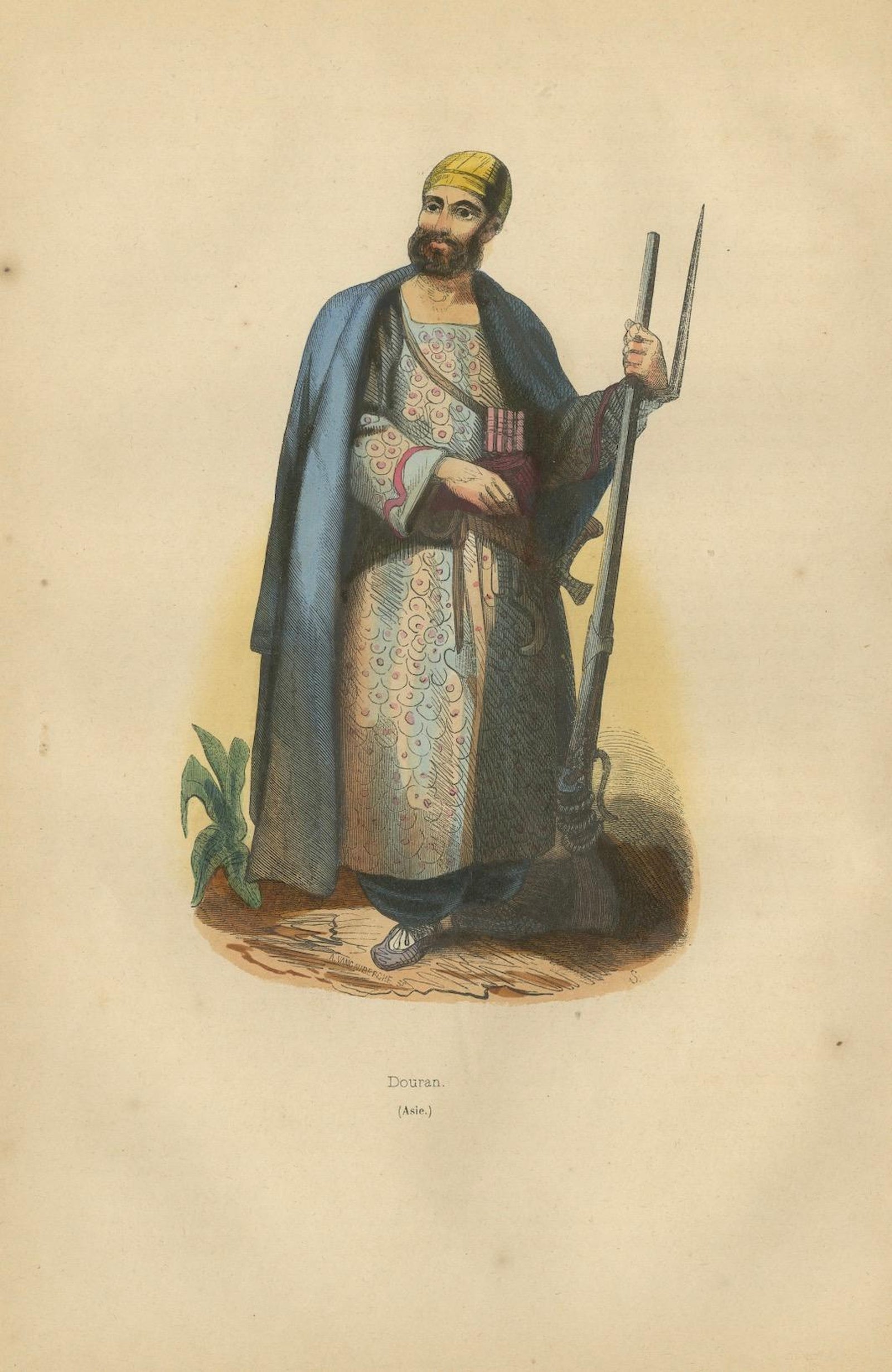
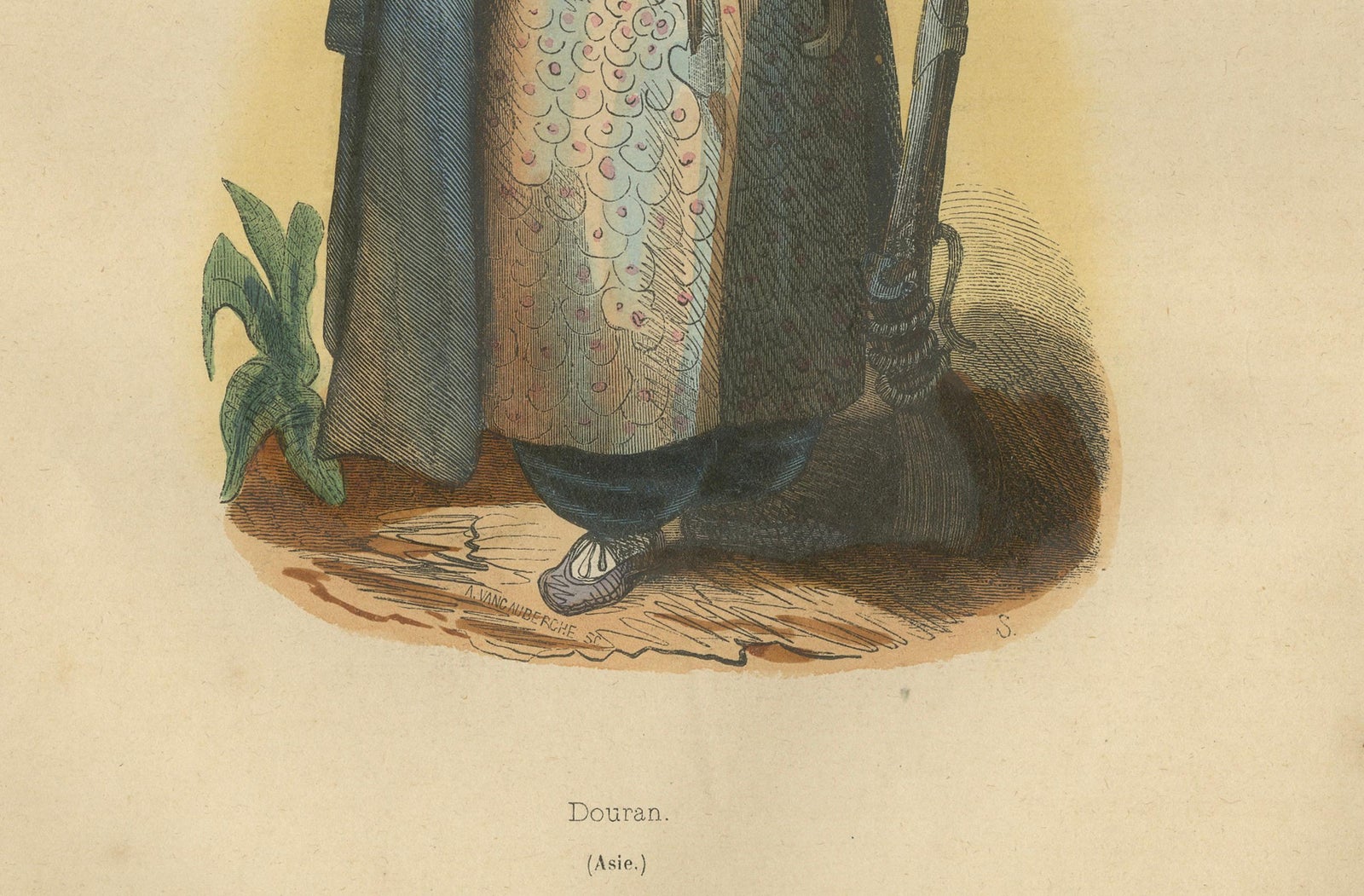
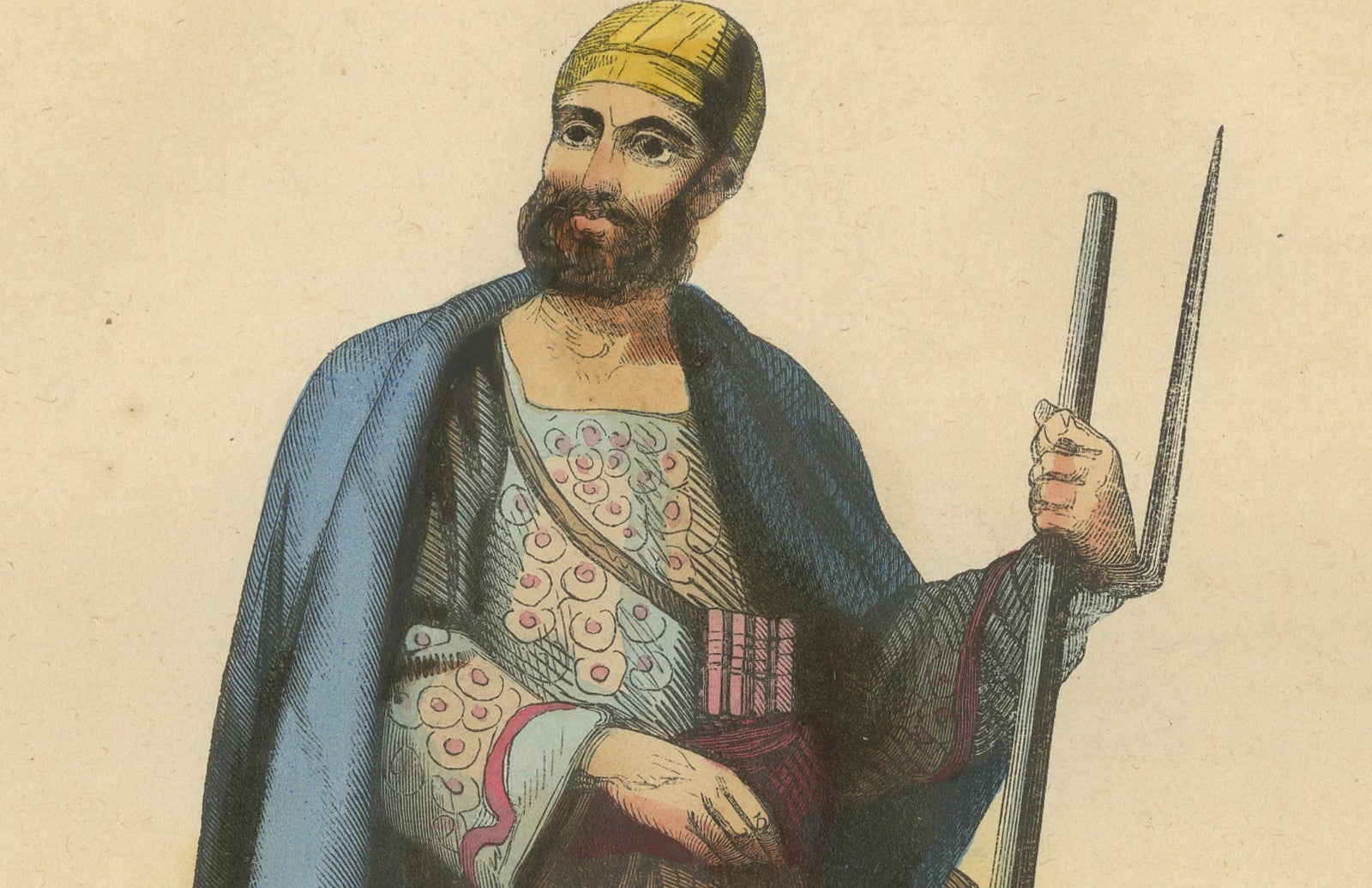
Douran, Tribesman from Afghanistan
The figure labeled "Douran" represents a member of a tribe from what is now known as Afghanistan, equipped with a musket and a sword. The traditional robes could be indicative of the ethnic Pashtun dress, known for its utility in the rugged, mountainous terrain of Afghanistan. The Douran might represent one of the many tribes in the region, historically known for their roles as fierce warriors and often involved in conflicts due to the strategic importance of the area in trade routes and military campaigns, especially during the era of the Great Game where British and Russian interests collided in Central Asia.
Historical and Cultural Significance
Both prints highlight the martial readiness and distinct cultural attire of their respective regions, showcasing the importance of self-defense and military skill in their societies. These attributes were often essential for survival and autonomy, especially in regions fraught with external pressures and internal conflicts over resources and territory.
Artistic and Ethnographic Interest
The attention to detail in these prints not only serves an aesthetic purpose but also provides ethnographic insights into the clothing, weaponry, and posture typical of men in these regions during the 19th century. For historians and cultural enthusiasts, such prints are invaluable for understanding how people from different parts of the world were perceived and represented during this period, reflecting both the realities and the exotic imaginations of European artists and audiences.
These depictions, while rooted in specific local contexts, are part of a broader European endeavor during the 19th century to catalog and depict the diversity of global cultures, often with a mix of accuracy and artistic interpretation.