Close-ups
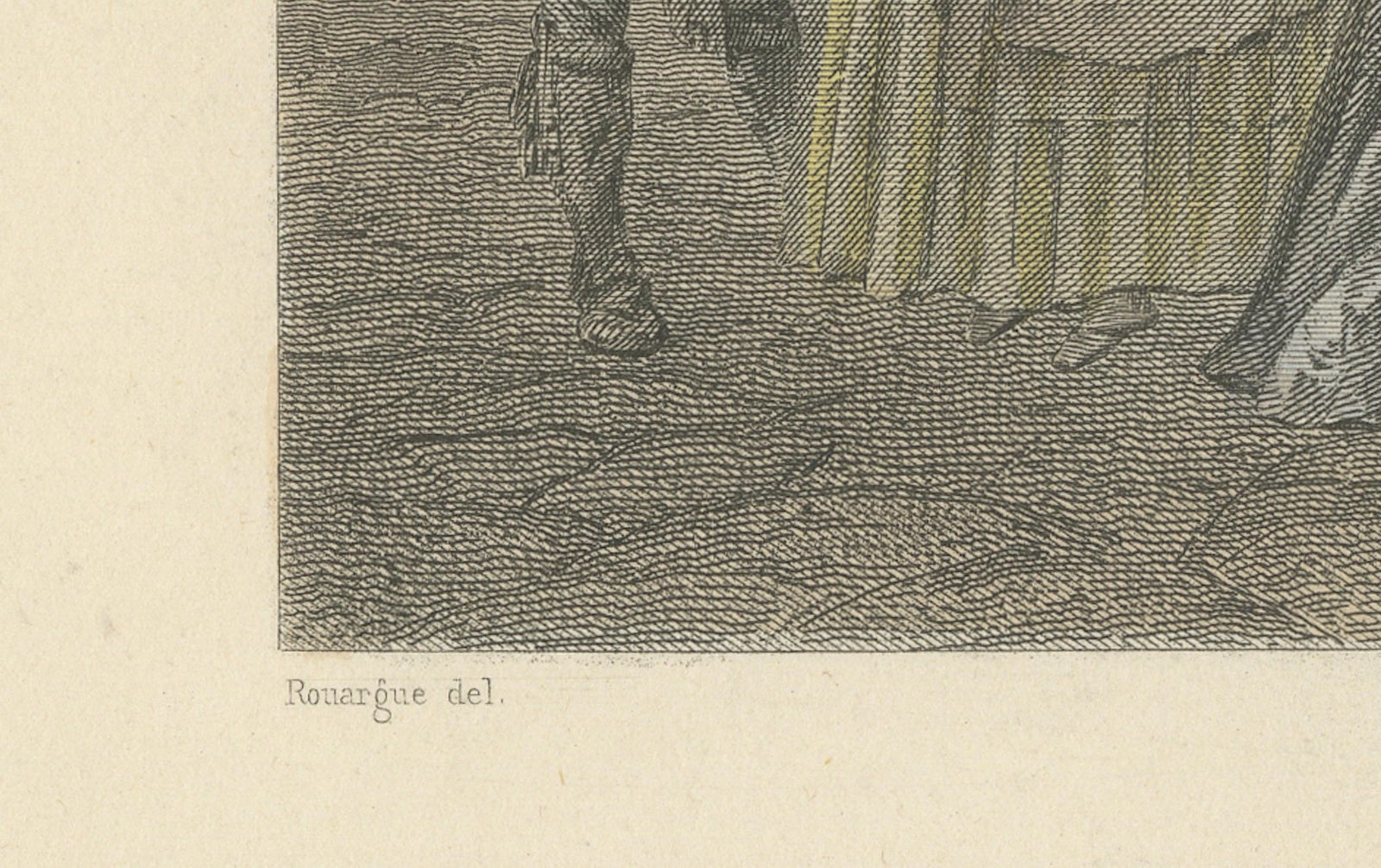
Framed and on the wall
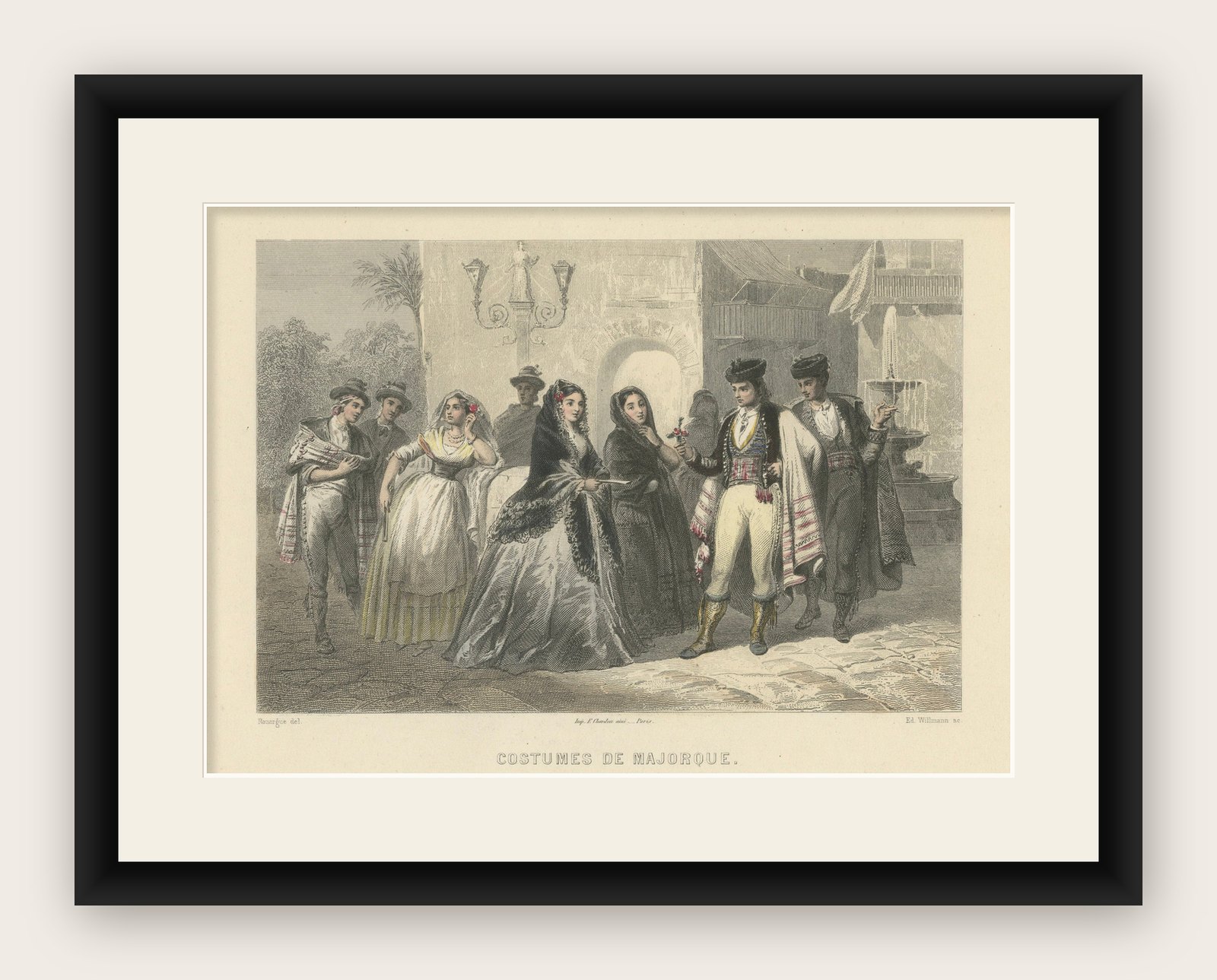

Frame and rooms are illustrations of how the print could look; the description says what is included.
Costumes of Majorca, 19th-Century Hand-Colored Engraving by Ed. Willmann
$325
€290 · £245
Original print, not a reproduction.
Ships worldwide from the Netherlands, flat, insured and tracked. 14-day returns. To buy, use Ask a question and we will reserve the print for you.
- Date
- Not stated
- Sheet size
- 13.8 × 10.2 in (35 × 26 cm)
- Condition
- Good. Good condition. Slight toning near the edges and minimal age spots in the margins. The image retains vibrant original hand-coloring with crisp lines and strong impressions. Full margins present.
- Wardrobe
- Folk finery
- Stock no.
- f_47302992
Costumes of Majorca, 19th-Century Hand-Colored Engraving by Ed. Willmann after Rouargue
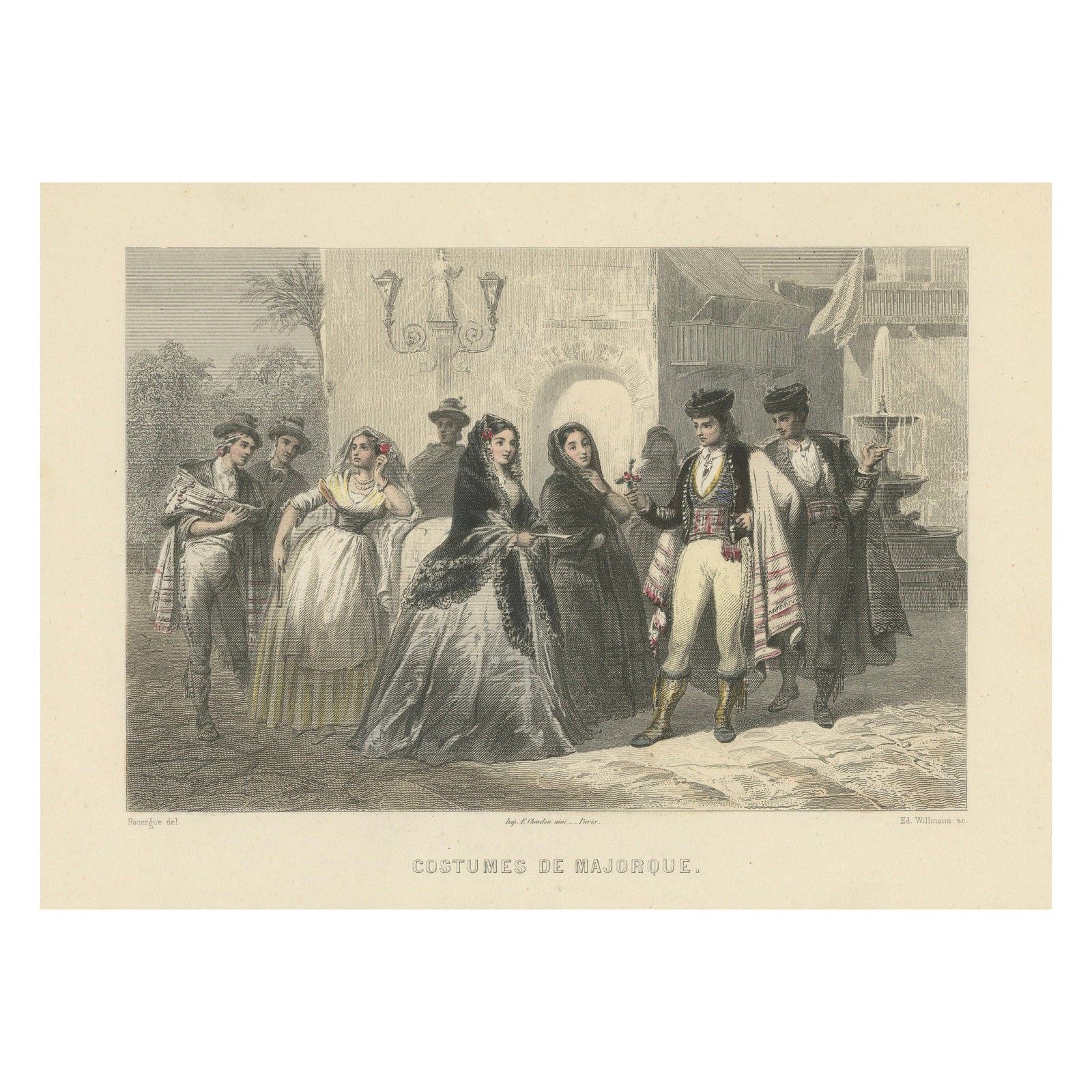
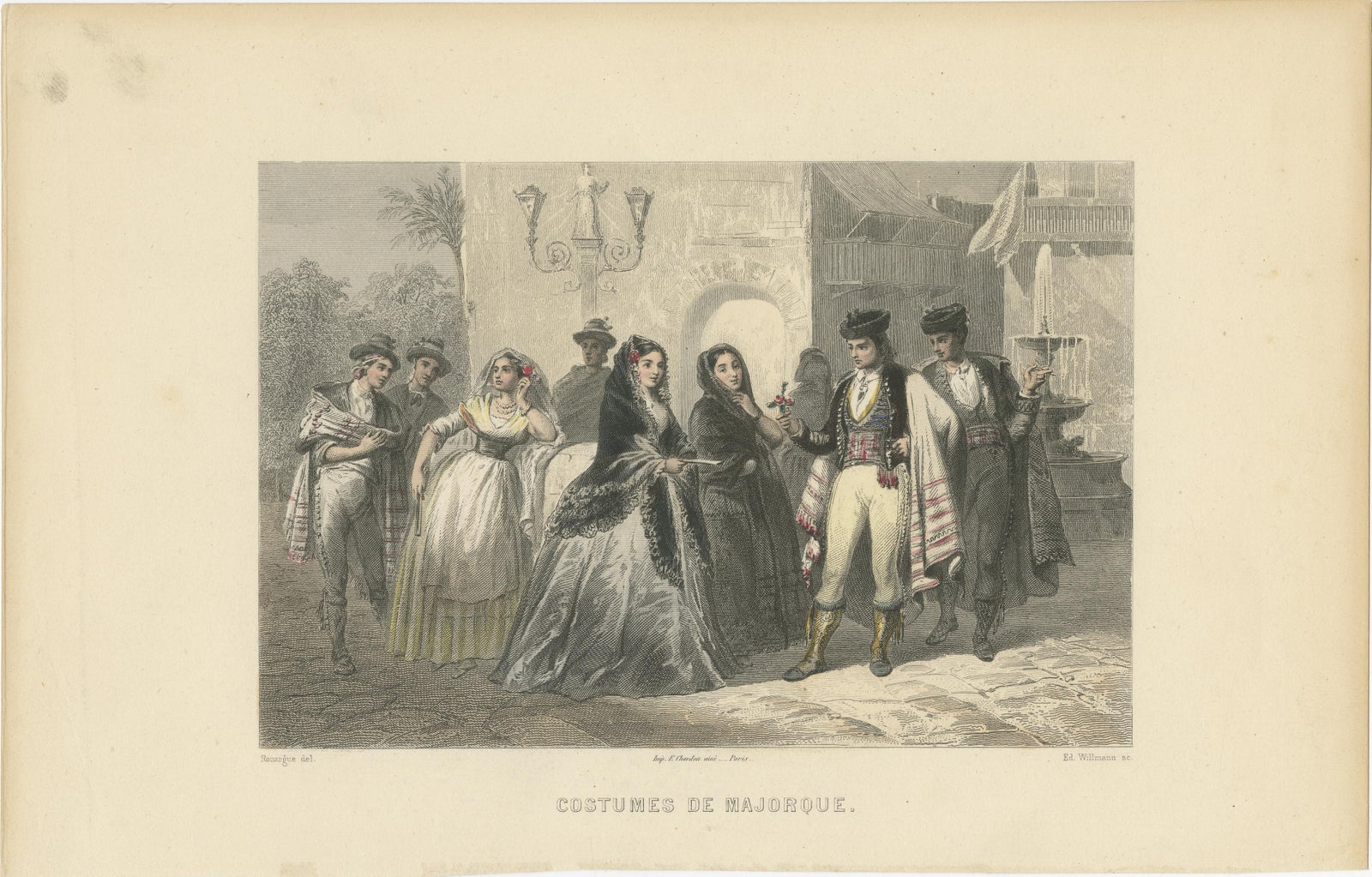
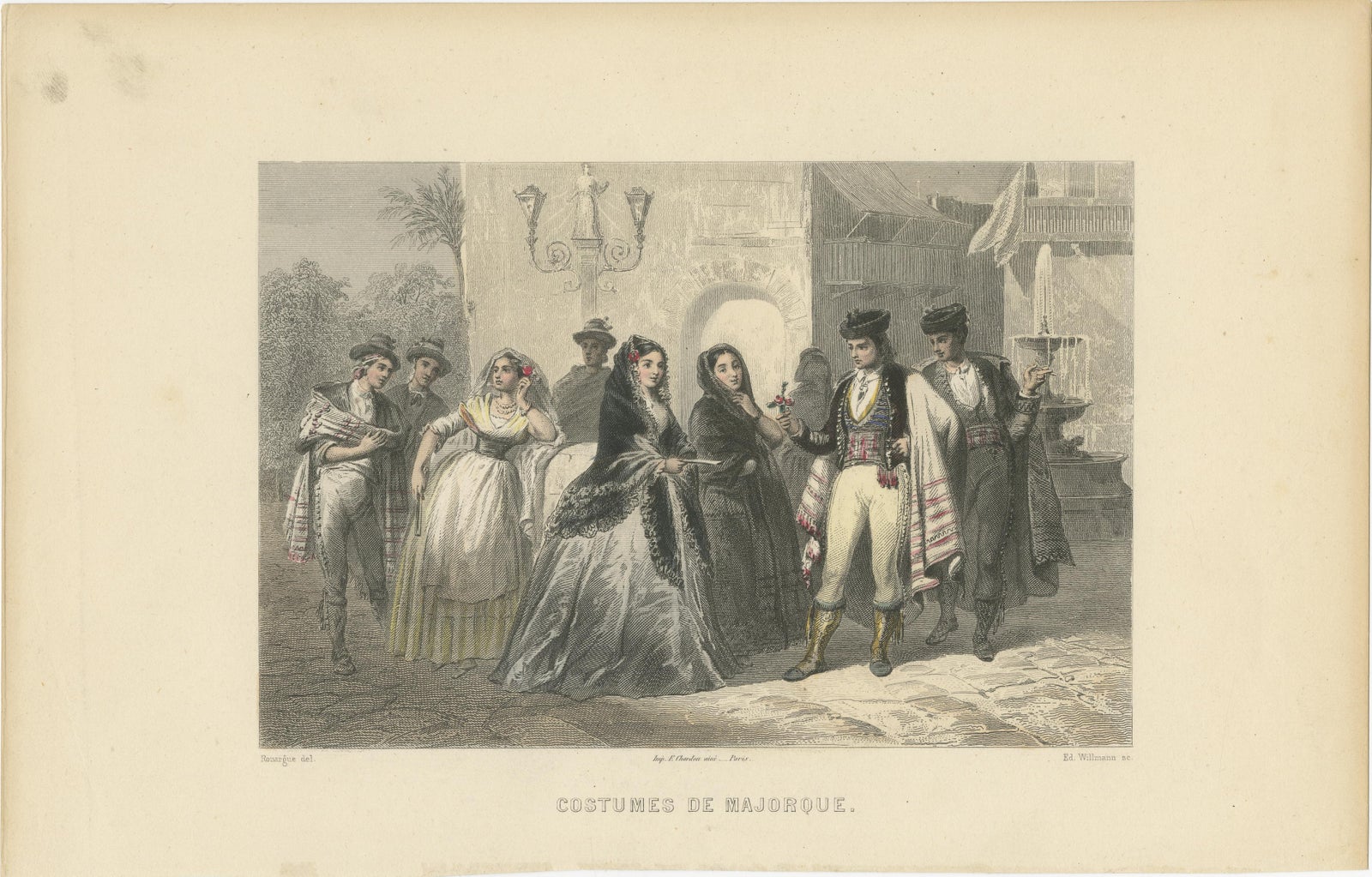
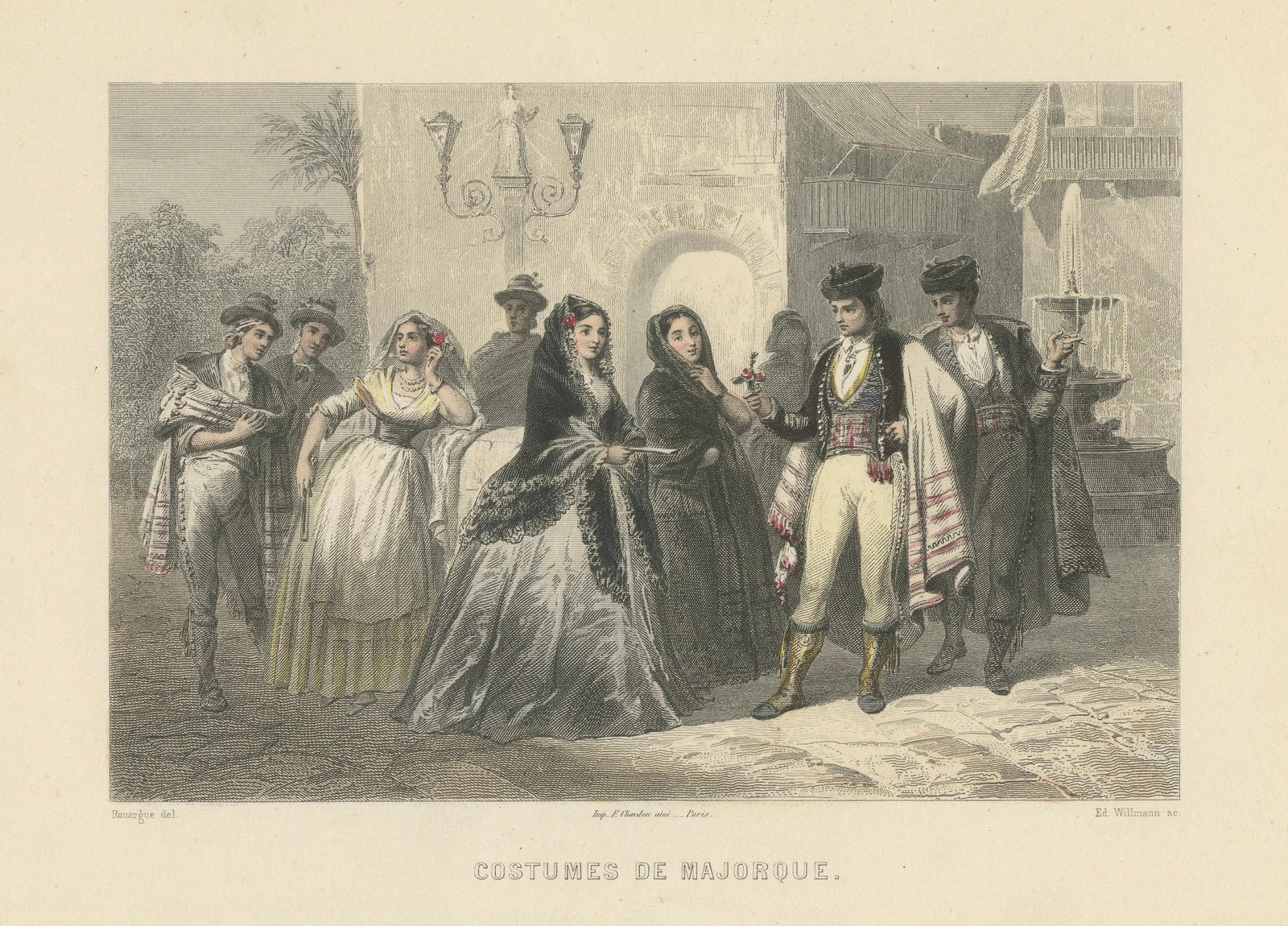
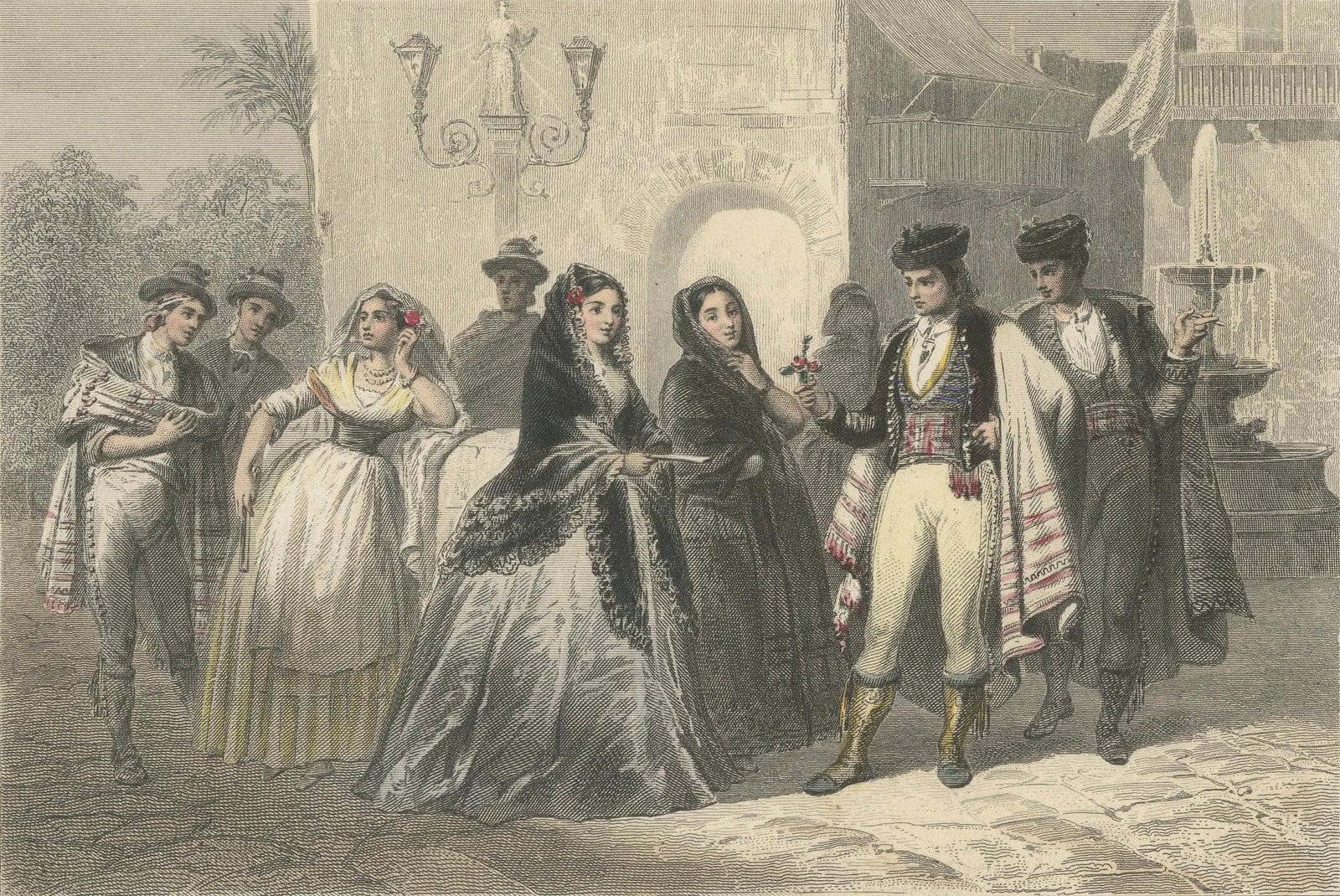
A beautifully hand-colored 19th-century engraving titled Costumes de Majorque, drawn by Rouargue, engraved by Ed. Willmann, and printed in Paris by E. Chardon aîné. This refined work portrays a lively street scene in Majorca, the largest of Spain’s Balearic Islands, capturing local men and women dressed in traditional attire. The composition is both elegant and documentary in nature, illustrating the island’s distinct clothing styles and social atmosphere during the mid-1800s.
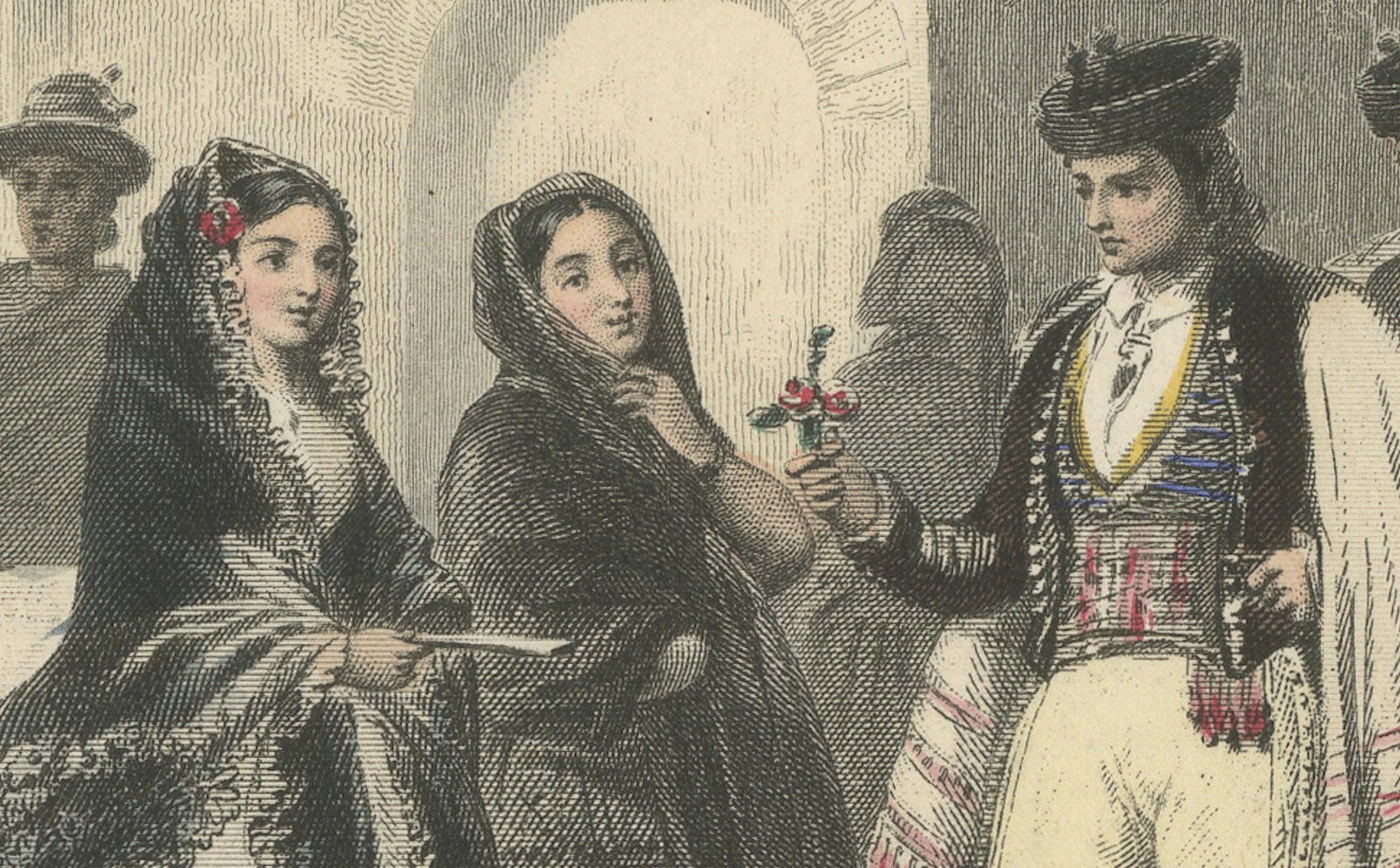
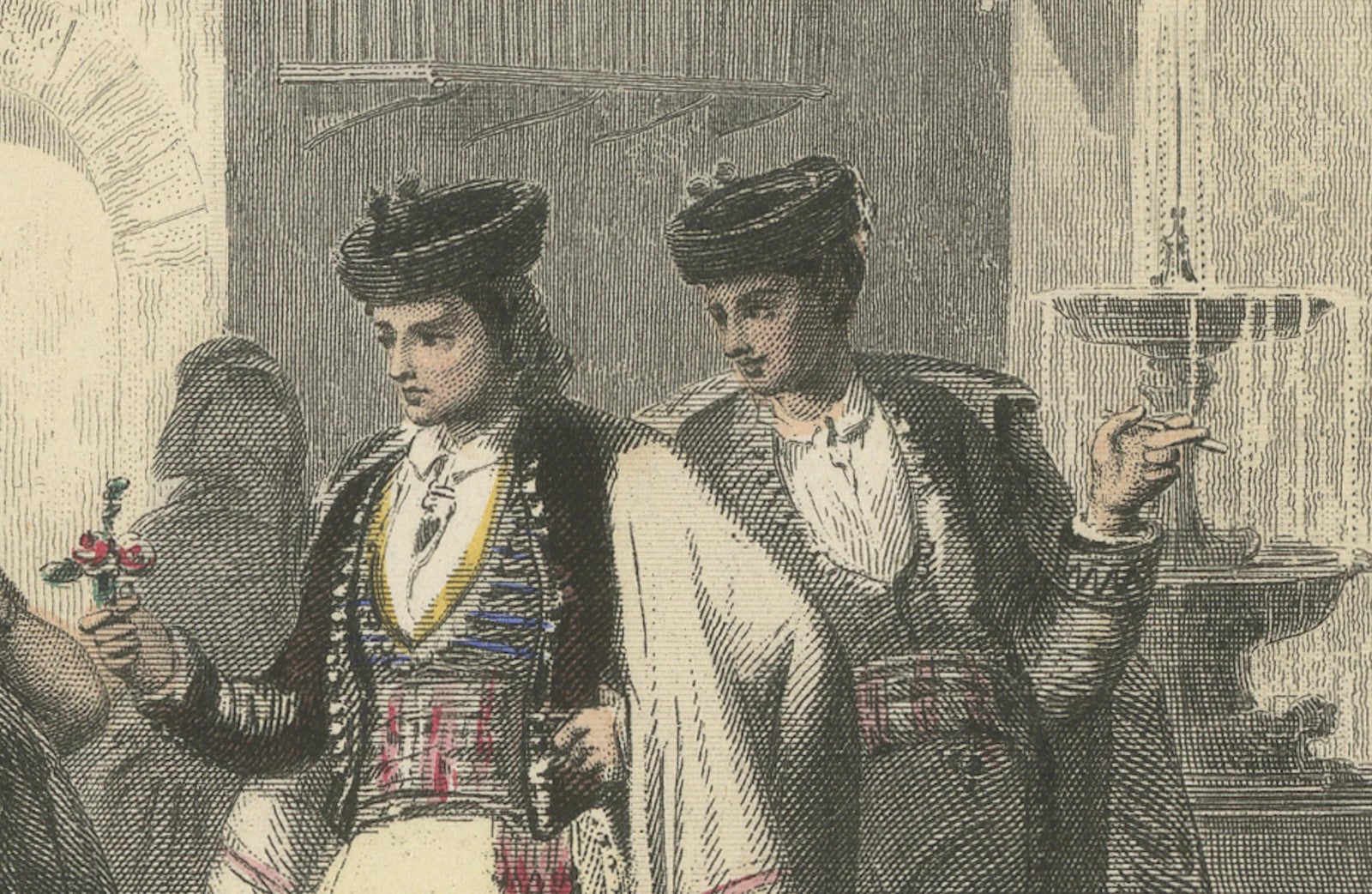
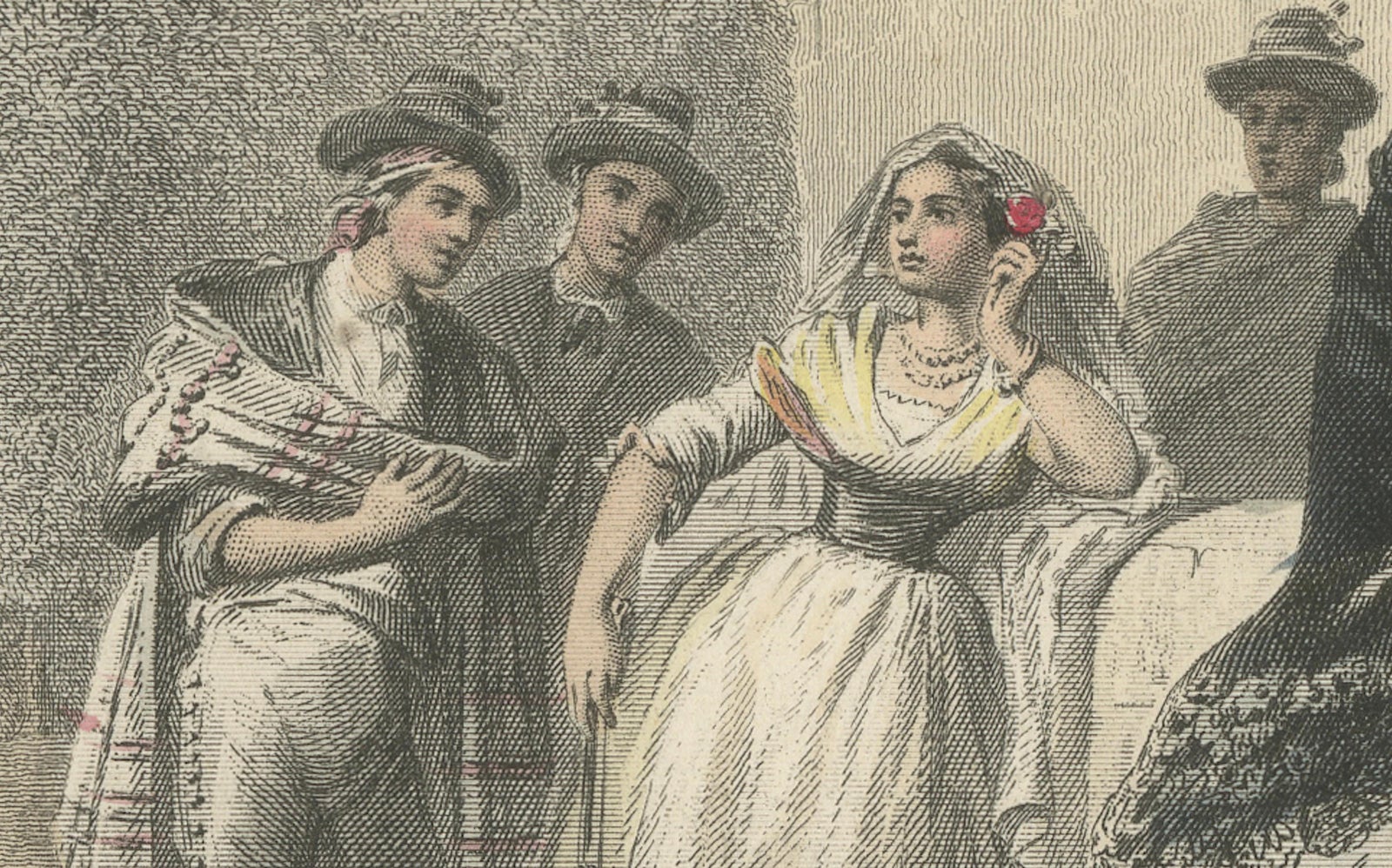
In the foreground, two women dressed in richly detailed black lace mantillas stand near two men in elaborate waistcoats and sashes, one of whom offers a flower to a young woman. Their garments are rendered with remarkable precision, from the men’s high boots and tasseled belts to the women’s embroidered shawls and veils. Behind them, townsfolk gather near a fountain and arched gateway, suggesting a lively Mediterranean square. The color palette combines delicate tones of rose, blue, ochre, and grey with careful hand-applied tinting, lending warmth and vitality to the print.
This engraving reflects the fascination of 19th-century European artists and publishers with regional costume and culture. French illustrators such as Rouargue were known for documenting local traditions with artistic flair, and this work exemplifies that balance of ethnographic interest and romantic idealization. It likely formed part of a larger series on European national costumes issued in Paris around 1840–1860, produced for collectors and travelers eager to explore continental diversity through art.
An excellent example of mid-century steel engraving with original hand-coloring, Costumes de Majorque is both a decorative and historically valuable piece. It embodies the elegance of French printmaking and the period’s interest in local character and dress. Ideal for framing, this print would make a striking addition to any collection of costume studies or travel illustrations.
Condition report:
Good condition. Slight toning near the edges and minimal age spots in the margins. The image retains vibrant original hand-coloring with crisp lines and strong impressions. Full margins present.
Framing tips:
Best displayed with a soft ivory or warm cream mat and a gilded or walnut-toned frame to enhance the warm tones of the scene. A double mat with a subtle ochre or coral inner line can complement the hand-coloring while maintaining an elegant 19th-century aesthetic.
Technique: Hand-colored steel engraving
Maker: Ed. Willmann after Rouargue, printed by E. Chardon aîné, Paris, c.1845