Close-ups
Framed and on the wall

Frame and rooms are illustrations of how the print could look; the description says what is included.
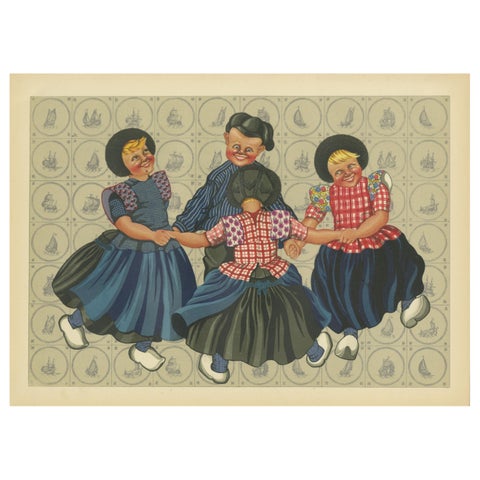
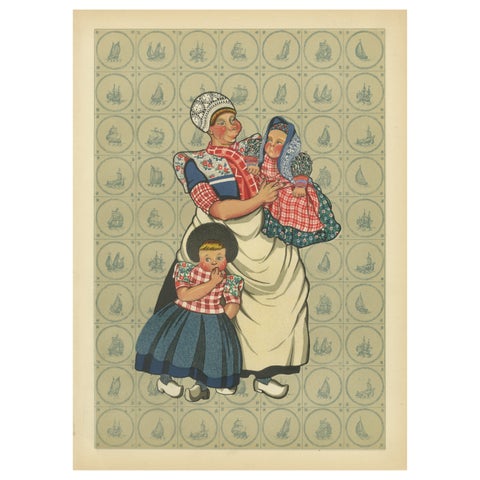
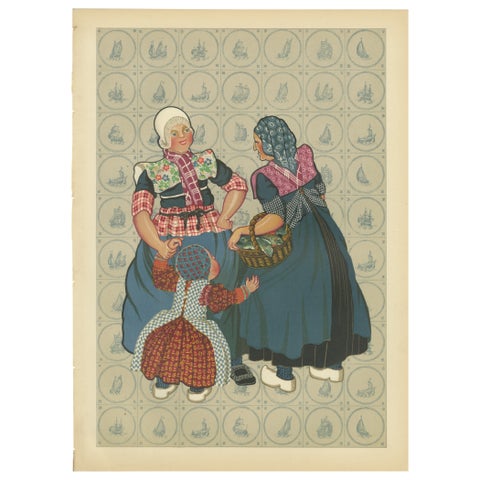
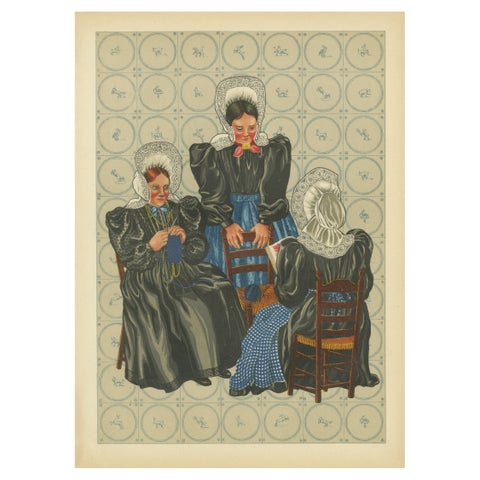
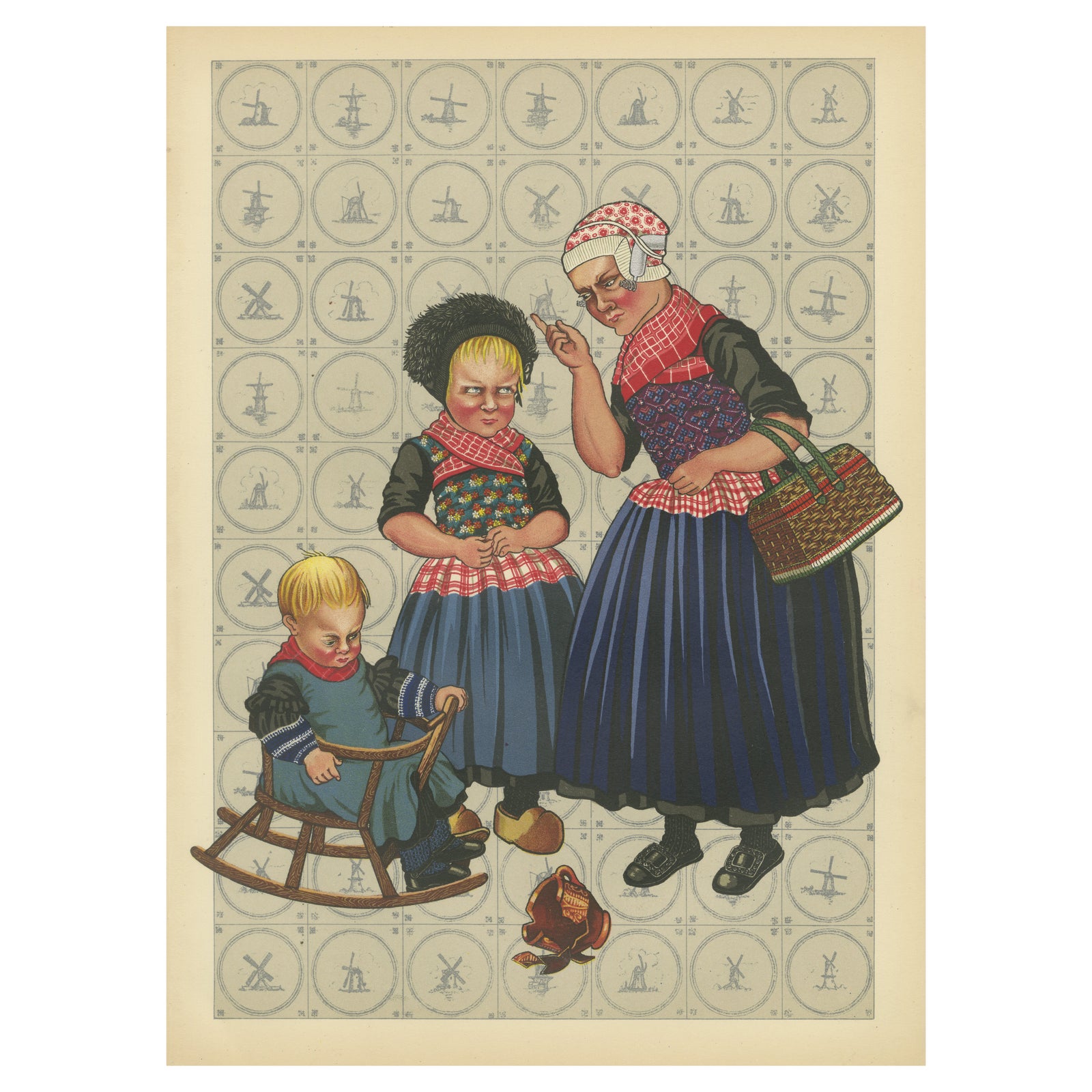
Charming Gelderland Costumes from Nunspeet and Hierden in Holland, ca. 1932
$550
€490 · £415
Original print, not a reproduction.
Ships worldwide from the Netherlands, flat, insured and tracked. 14-day returns. To buy, use Ask a question and we will reserve the print for you.
- Date
- 1932
- Sheet size
- 14.6 × 10.8 in (37 × 27.5 cm)
- Condition
- Good. The print remains in excellent condition with vibrant color retention, minor edge toning consistent with age, and no tears or foxing. It is printed on thick, high-quality paper and was produced by Vincent Brooks, Day & Son, London.
- Wardrobe
- Folk finery
- Era
- 1900 and after, Belle Époque on
- Stock no.
- f_44936872
Charming Dutch Peasant Costumes from Nunspeet & Hierden, Gelderland (c. 1932)
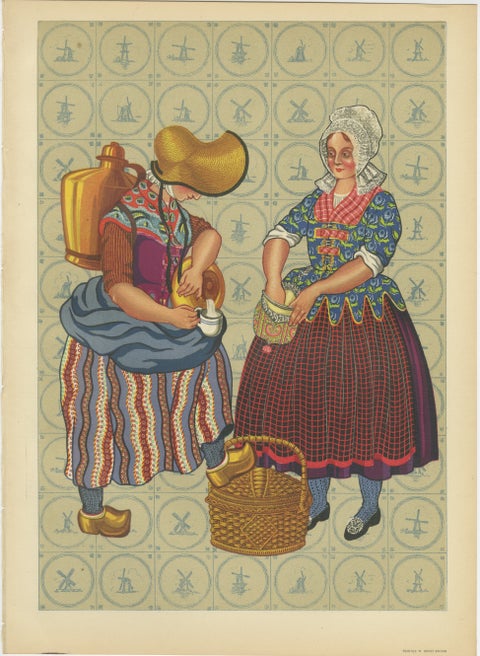
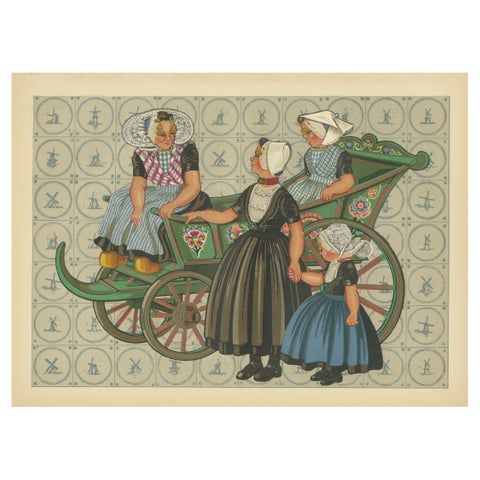
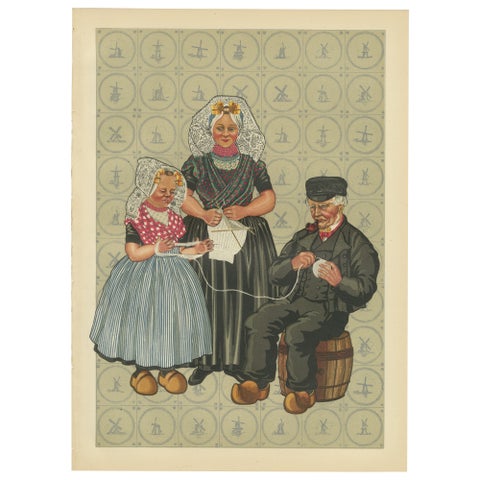
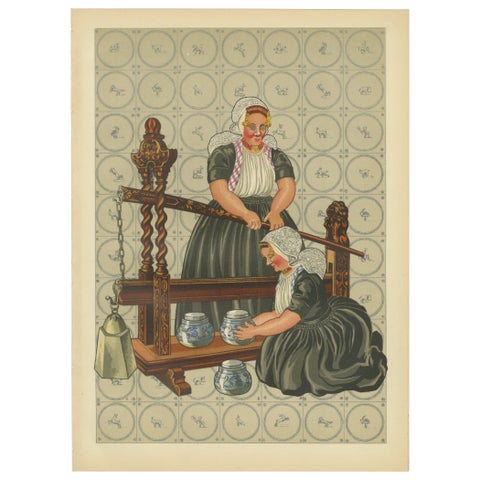
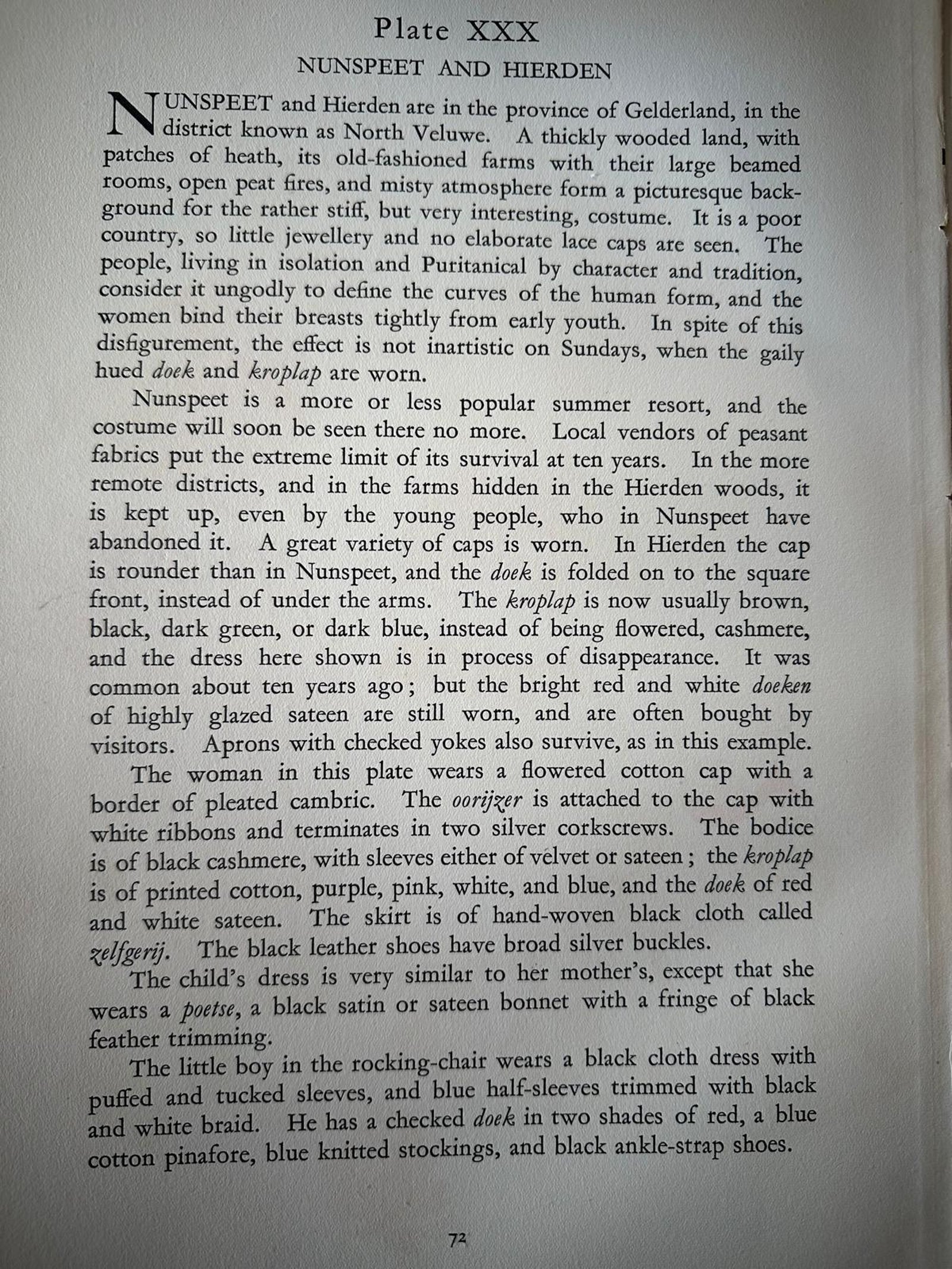
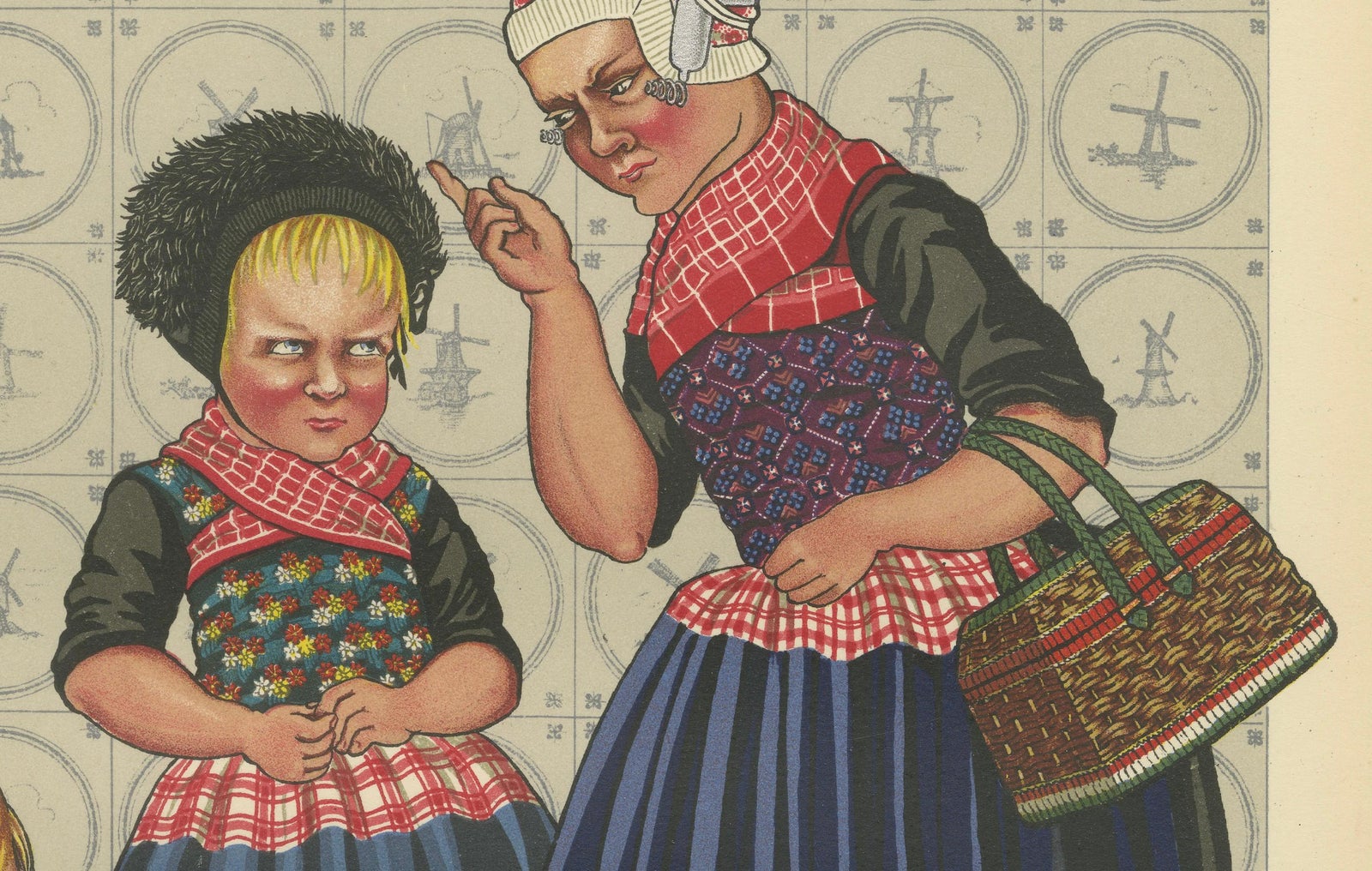
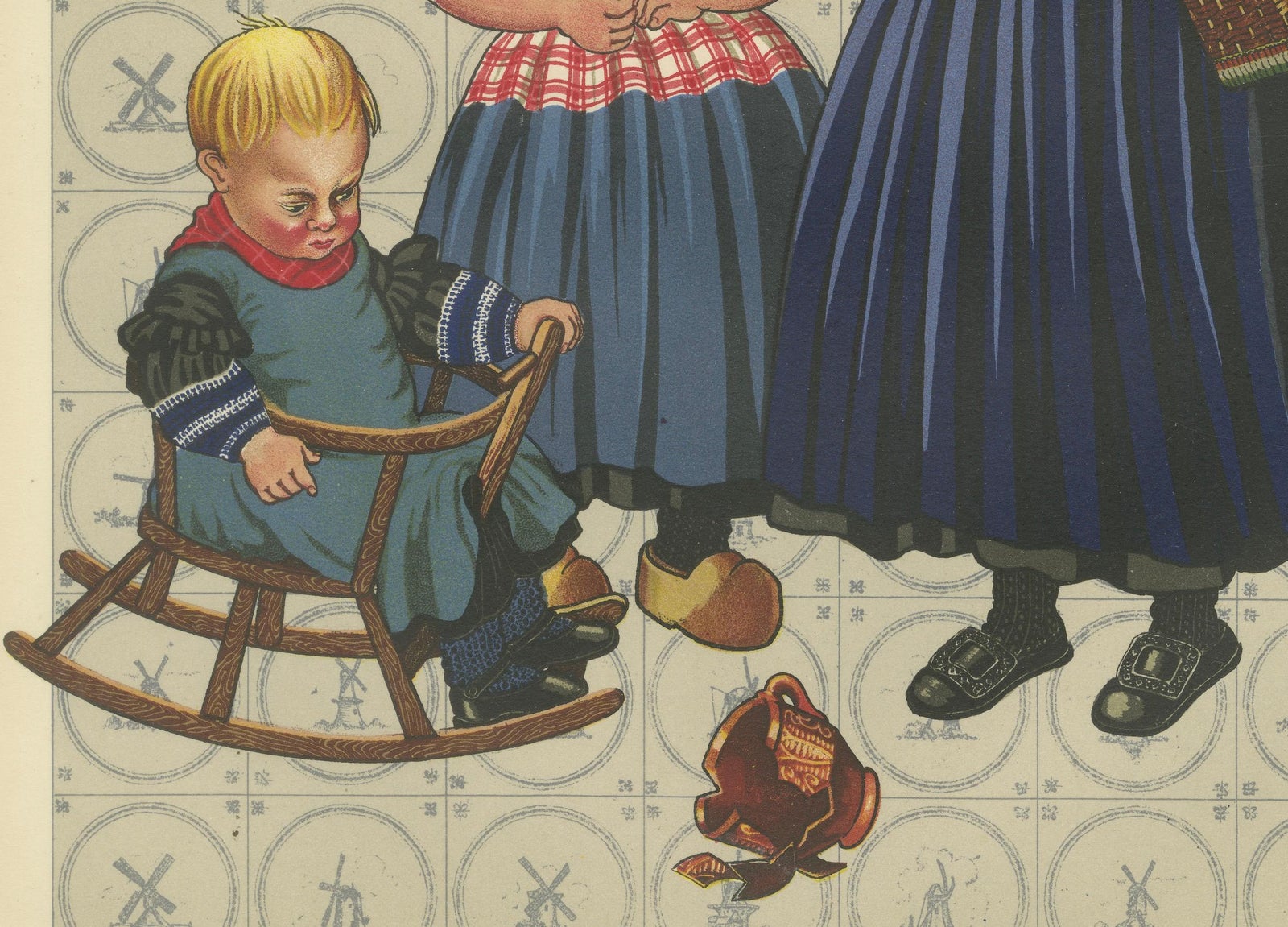
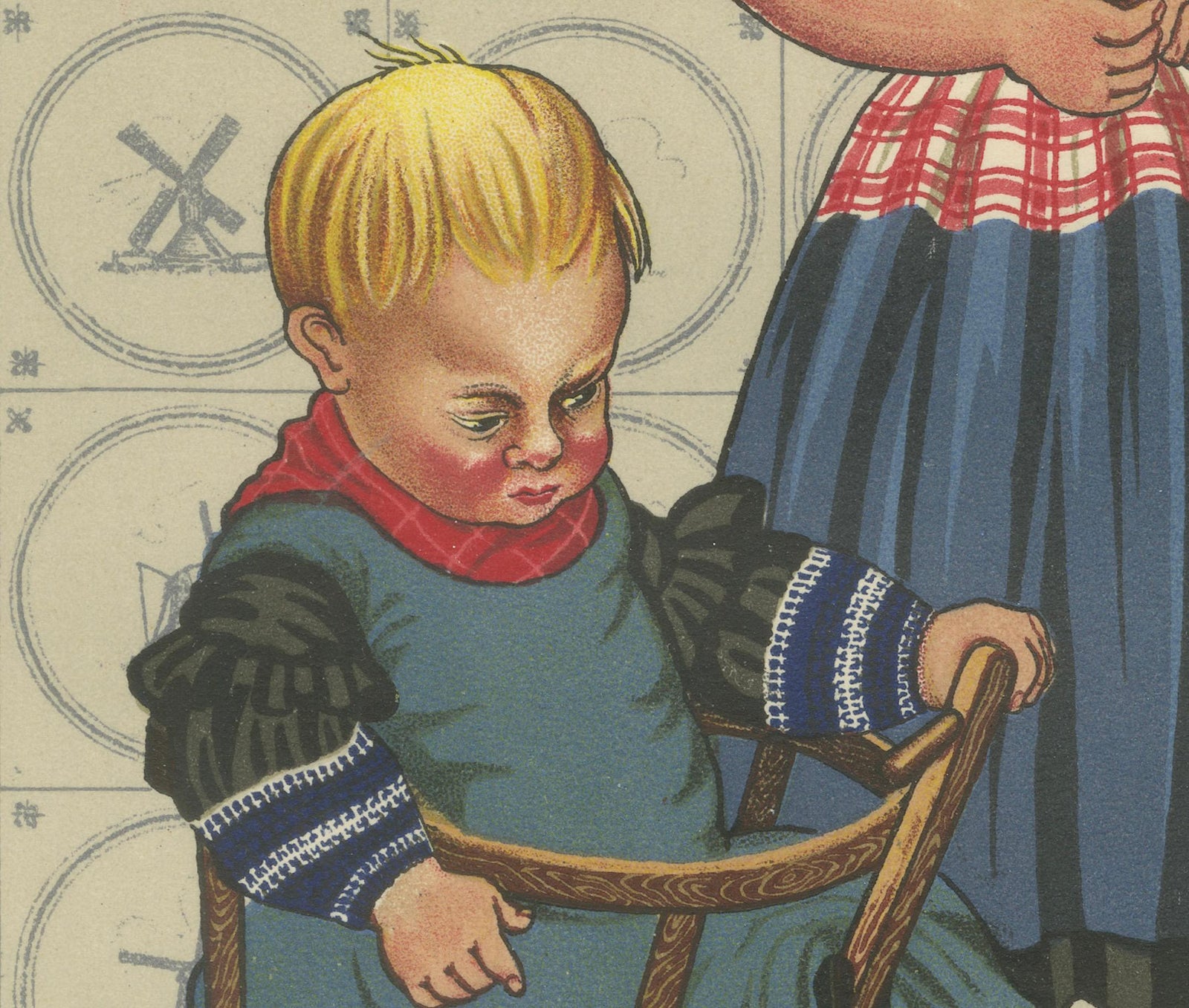
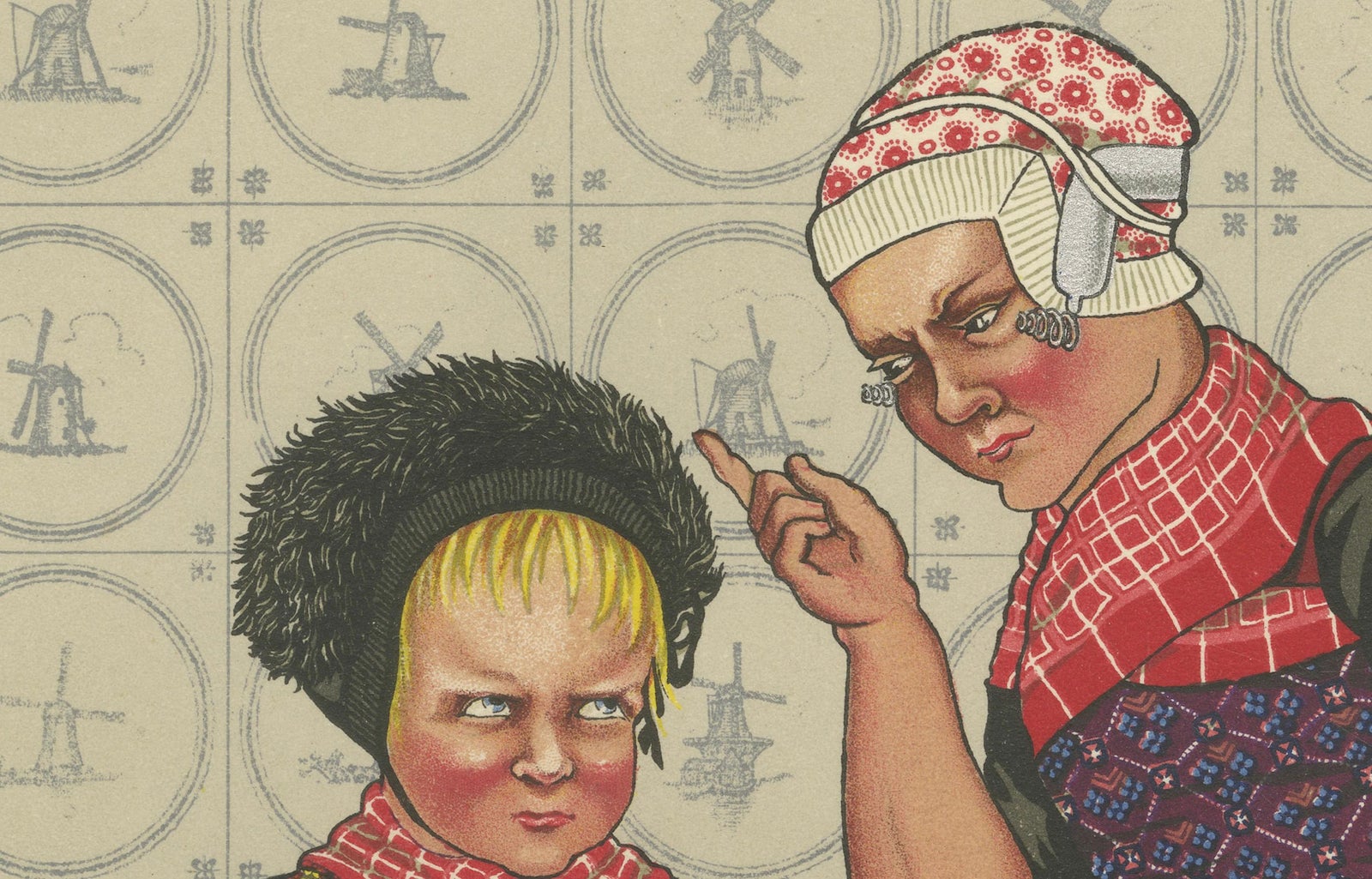
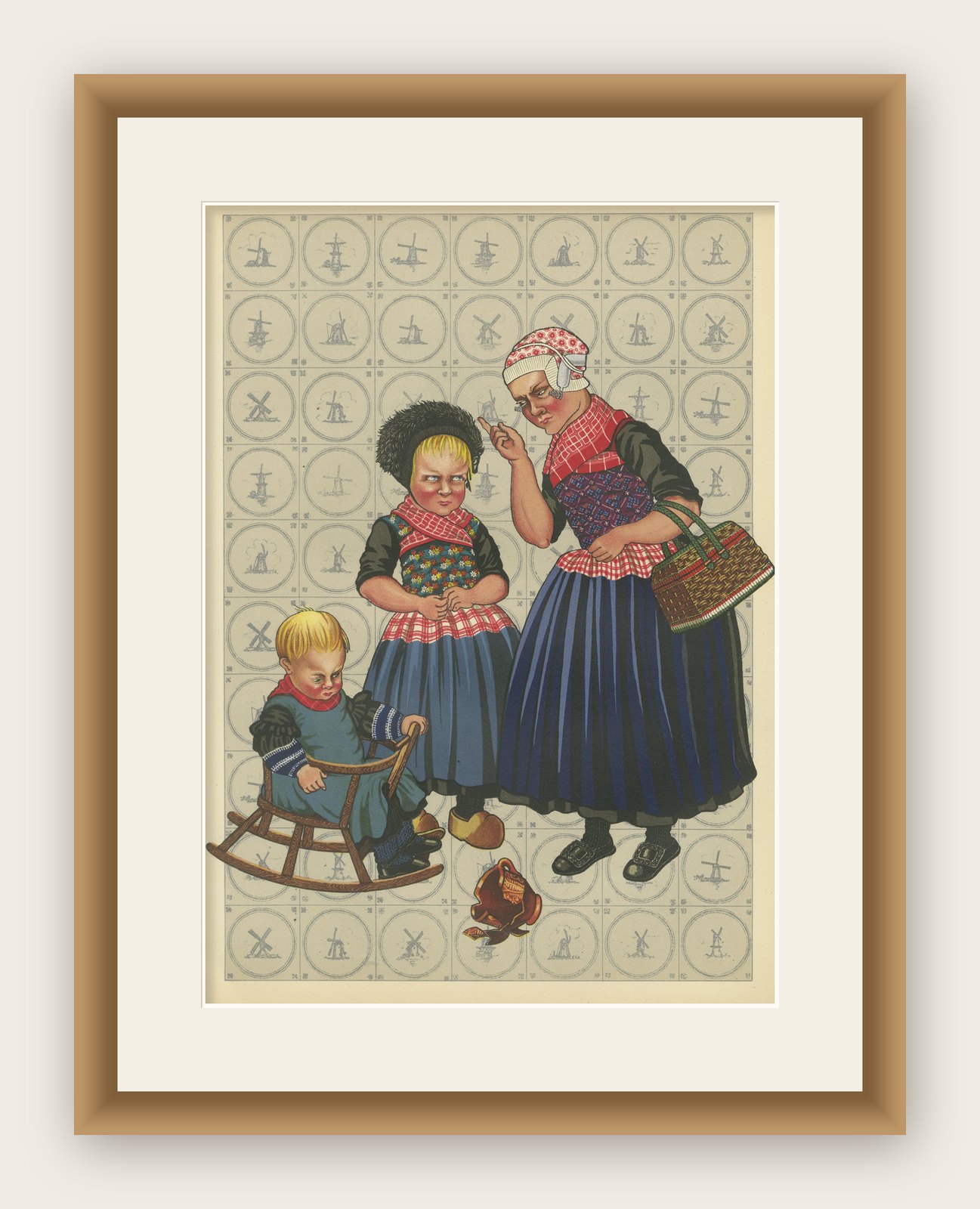
This captivating original 1932 pochoir print from *The National Costumes of Holland* by Gratiane de Gardilanne and Elizabeth Whitney Moffatt portrays traditional peasant costumes from the villages of Nunspeet and Hierden in the province of Gelderland. Rich in folkloric charm, the scene vividly captures a moment of childhood mischief: a little boy on a rocking horse spills a toy jug, while his older sister is scolded by their mother. The image is full of emotional expression and cultural nuance, providing a rare visual narrative of Dutch rural life in the early 20th century.
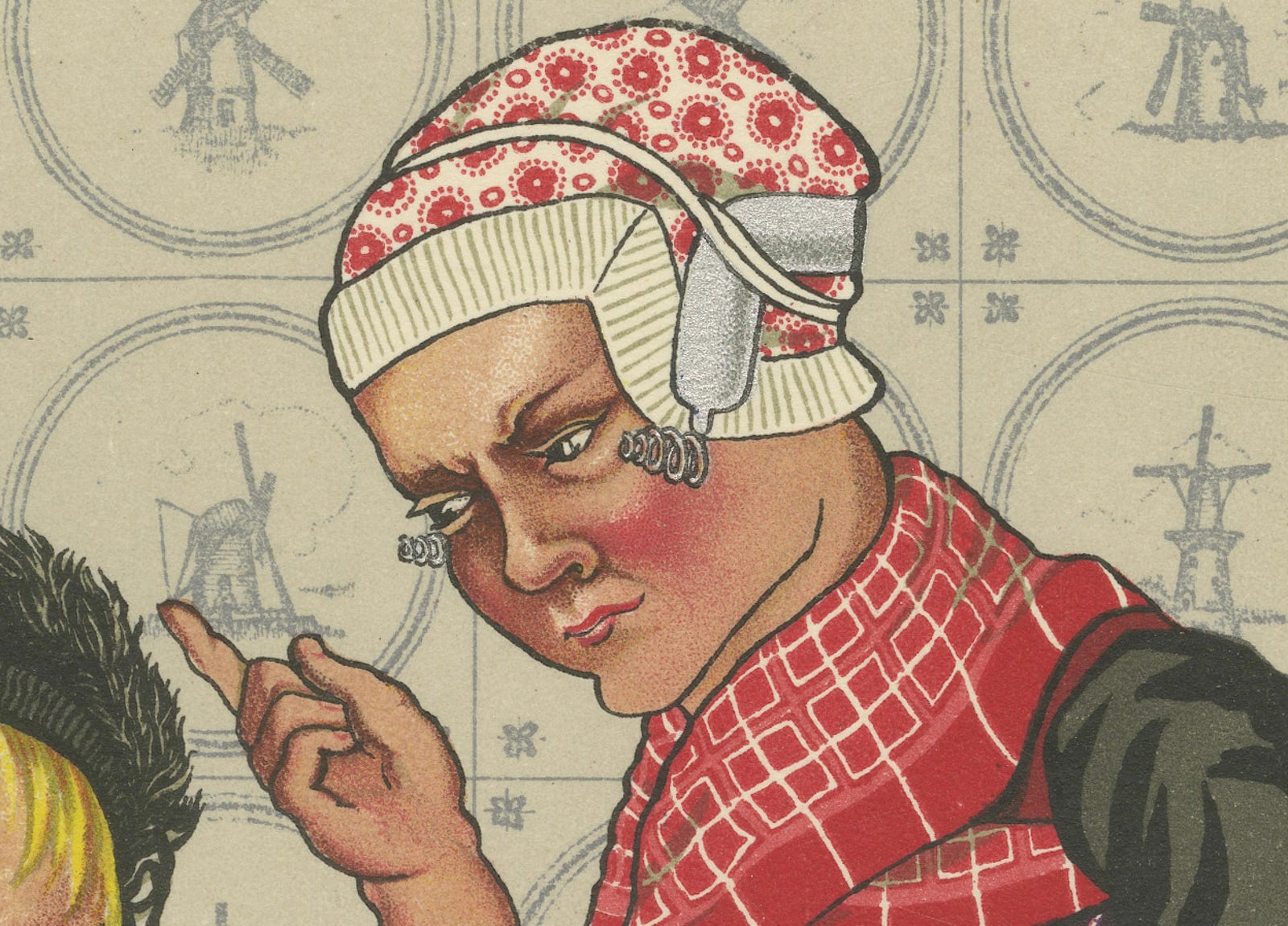
The costumes originate from a region known as North Veluwe, an area of misty forests, peat fires, and a somber Protestant ethos. These elements are reflected in the austerity of the local dress: black bonnets, simple calico prints, and little jewelry. The mother wears a flowered cotton cap with a pleated cambric border, and her *oorijzer*, a traditional silver ear-iron, is fastened with two corkscrew-tipped silver pins. Her bodice, likely of black cashmere or satin, is worn over a *kroplap* in purple, pink, and blue floral print. The *doek* (shawl) is of red and white *sateen*, and her skirt is made of hand-woven black cloth known locally as *zelfgeweijt*.
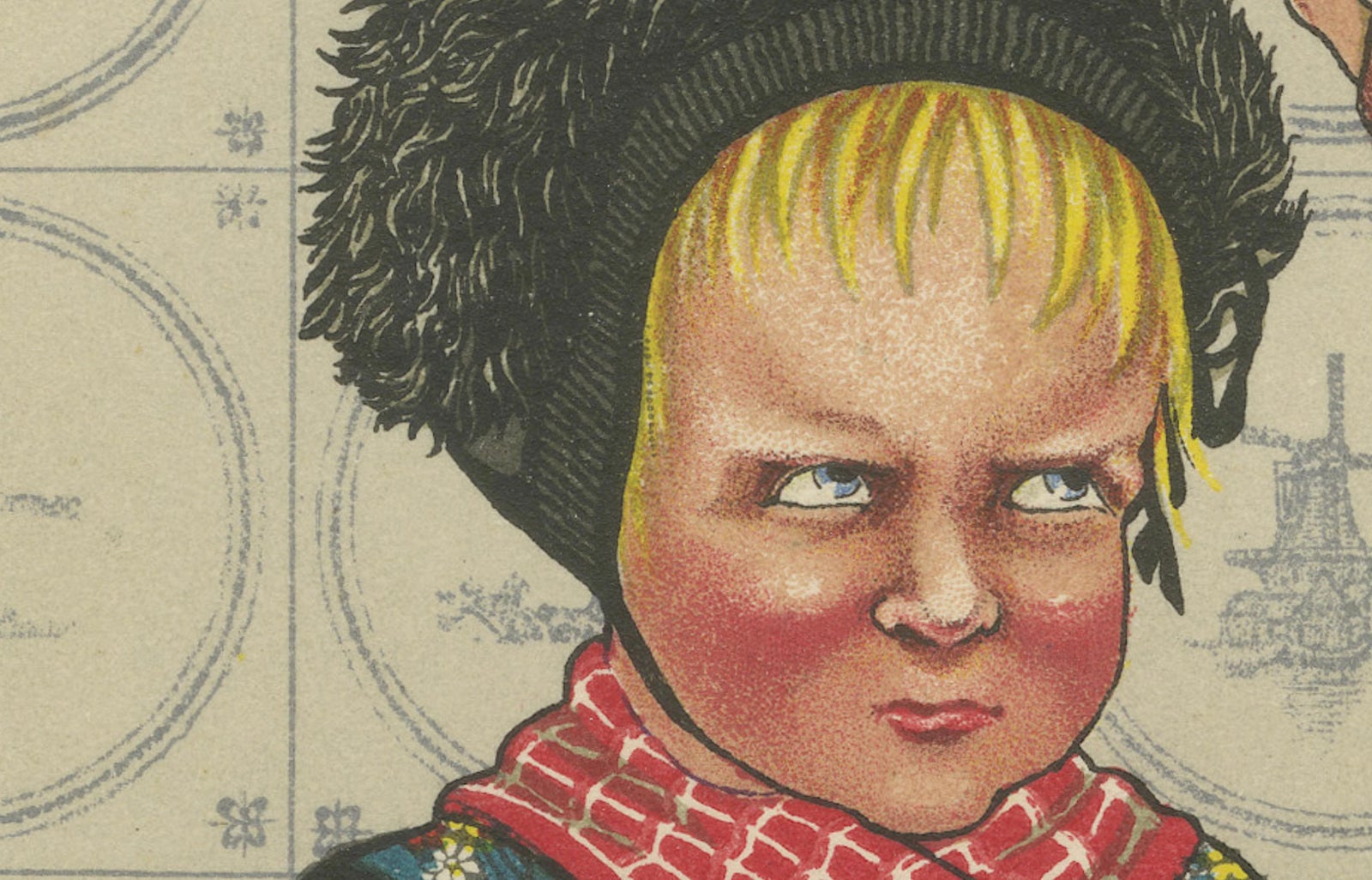
The child standing beside her wears nearly identical garments: a matching *kroplap*, a checked *doek*, and a black satin bonnet with black feather trim called a *poetse*. The child on the rocking chair wears a distinctive black frock with puffed and tucked sleeves, a blue half-sleeve insert, and a checked *doek* in red tones. He also wears a white cotton pinafore, blue woolen stockings, and black ankle-strap shoes.
This print, with its emotionally charged composition, elevates traditional costume studies into a compelling domestic narrative. It’s a striking combination of anthropological insight and artistic flair, ideal for collectors of Dutch history, costume design, or narrative illustration.
Condition:
This print is in very good condition, with bright colors and strong pochoir registration. There is minimal age toning at the edges and some minor wear to the left margin consistent with age and original binding. No foxing, tears, or stains are present on the image area.
Framing Tips:
A warm off-white or light grey mat will enhance the detailed background tiles while drawing attention to the figures' vivid garments. A simple black, dark walnut, or ebonized wood frame will provide contrast and complement the restrained elegance of the Nunspeet aesthetic. Consider non-reflective glass to preserve the surface texture and fine pigment of the pochoir process.