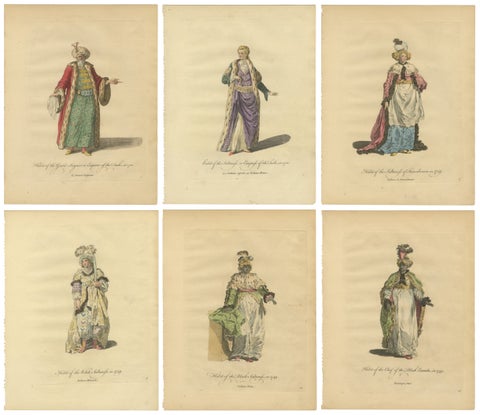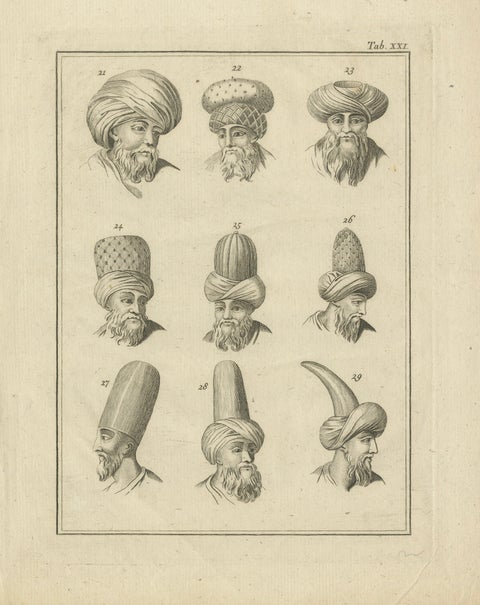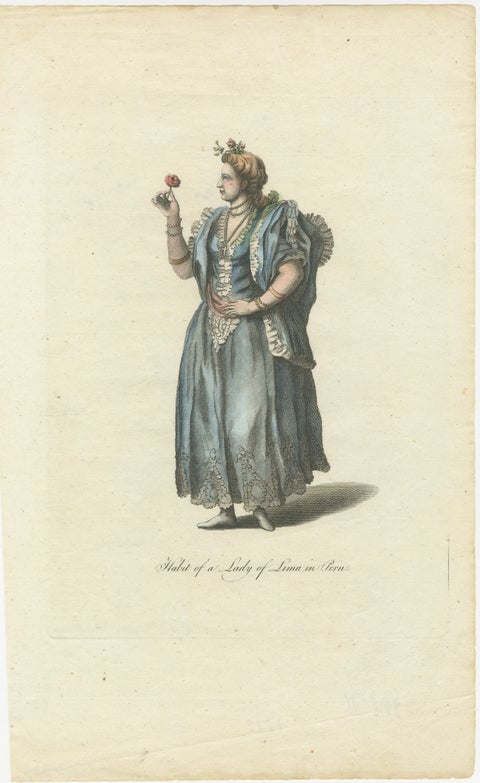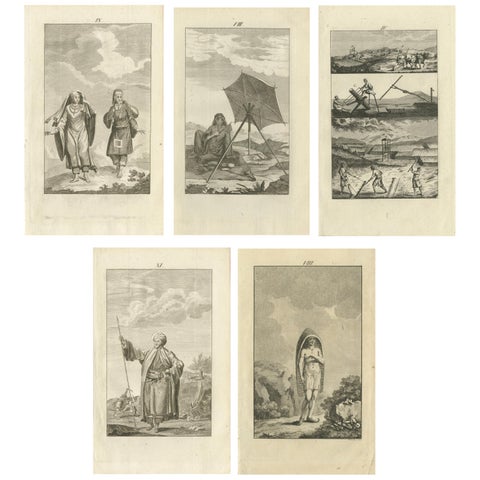
Framed and on the wall
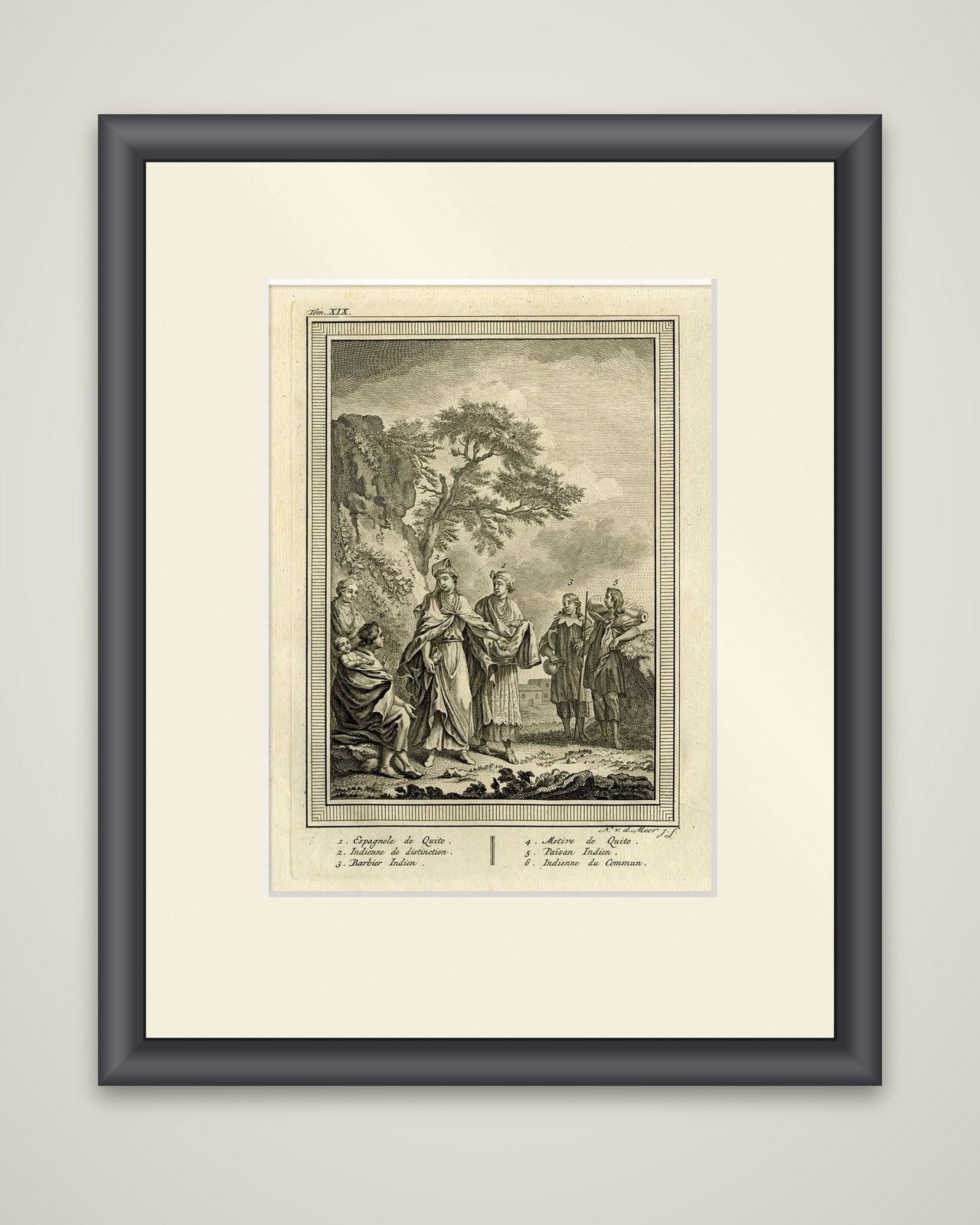
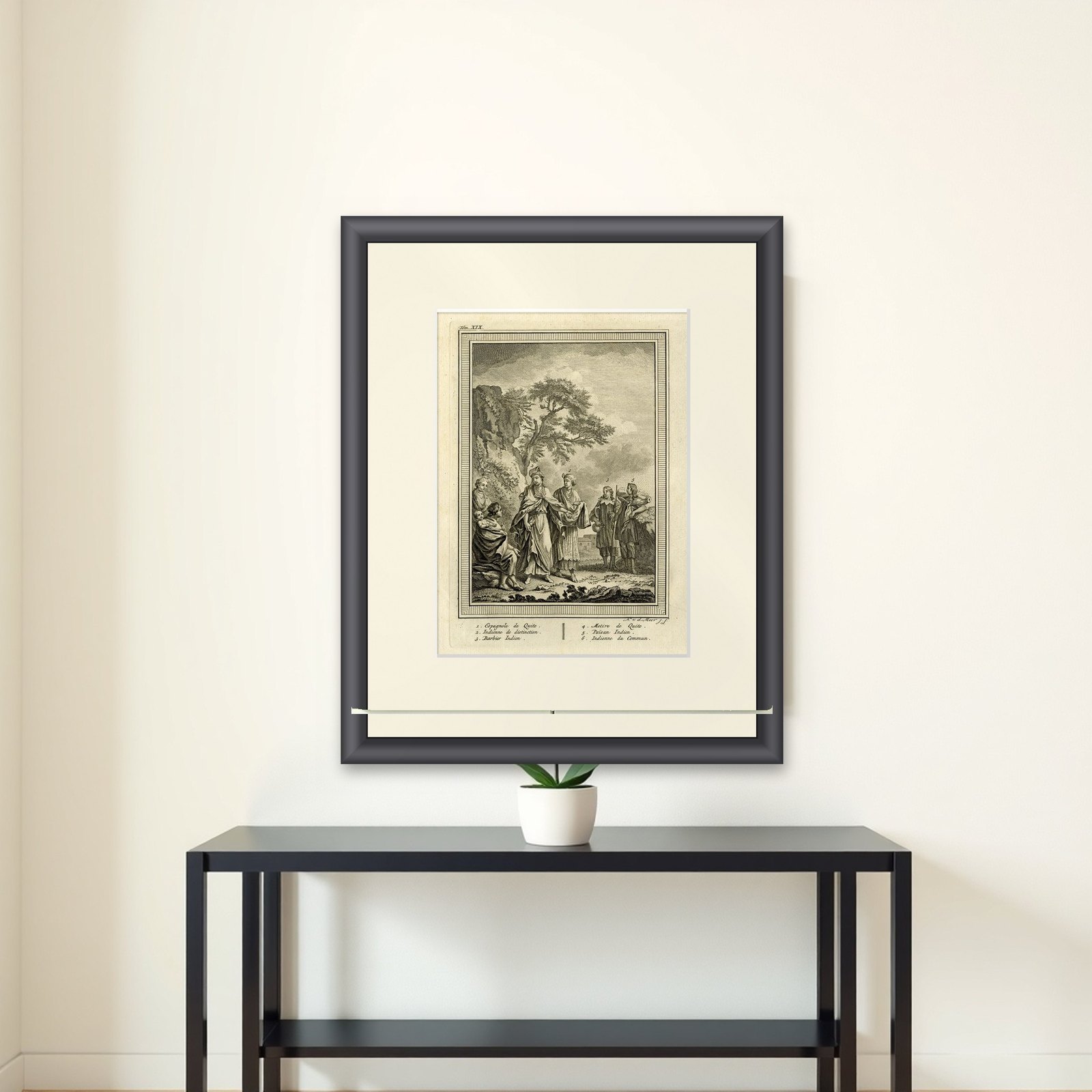
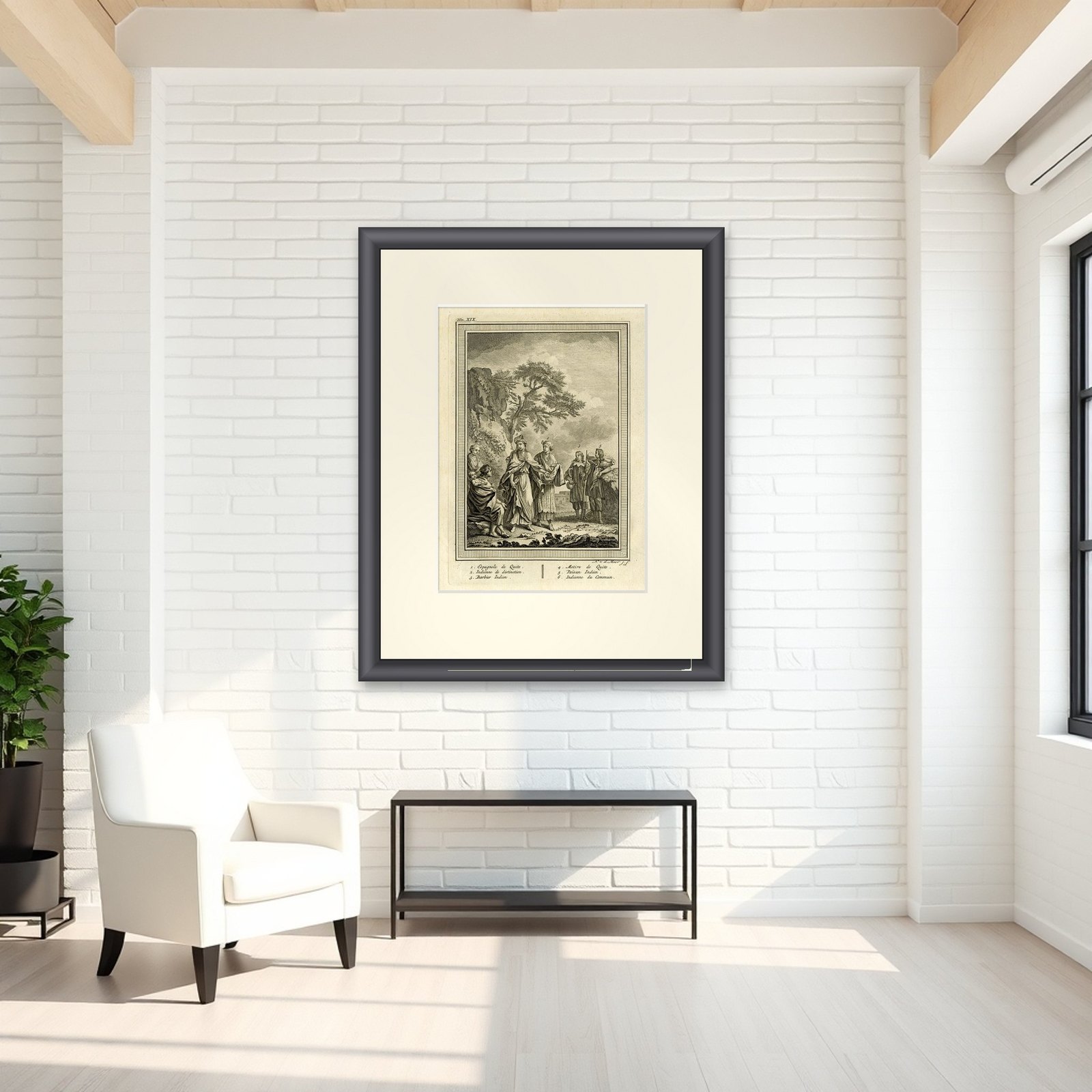
Frame and rooms are illustrations of how the print could look; the description says what is included.
Antique Print of Six South American Figures, Incl a Barber, Farmer, Etc. c.1770
$200
€180 · £155
Original print, not a reproduction.
Ships worldwide from the Netherlands, flat, insured and tracked. 14-day returns.
- Date
- 1770
- Sheet size
- 10 × 7.2 in (25.4 × 18.3 cm)
- Condition
- Good. Given age. Faint soiling in the lower margin. Right edge a little uneven. A thin crease in the top margin (from binding). General age-related toning and/or occasional minor defects from handling. Please study scan carefully.
- Wardrobe
- Far & away
- Era
- 1700s, Rococo
- Stock no.
- f_26444242
What the condition grades mean
- Excellent
- Bright and clean, with no faults worth mentioning.
- Very good
- Only light signs of age, such as faint toning.
- Good
- Normal signs of age for a sheet of this period: toning, some foxing, small marks or neat old repairs.
- Fair
- Clear faults such as staining, tears or repairs, priced to match.
Every fault we see is written in the condition note, and the whole sheet is shown uncropped in the photos.
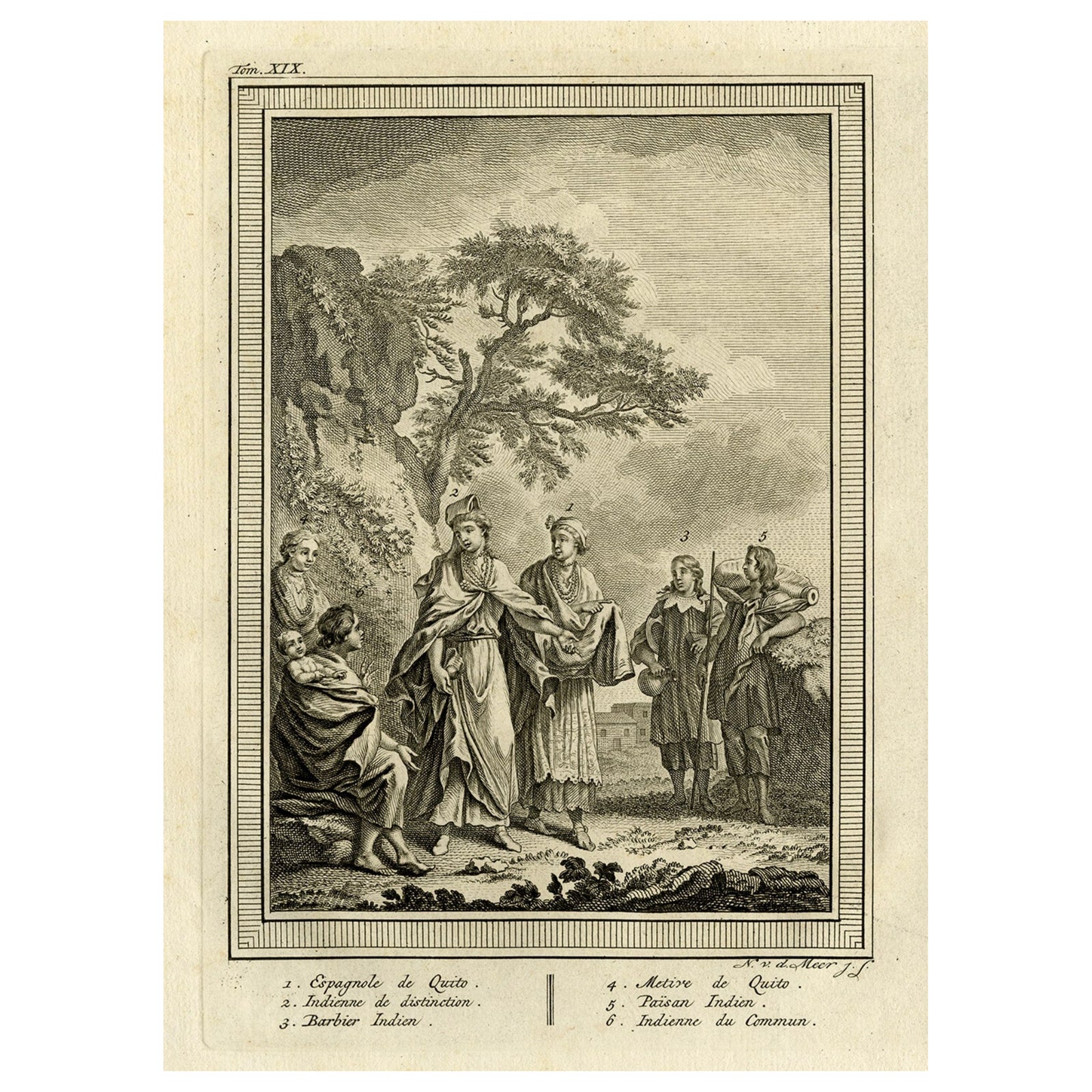
Six South American figures from Quito, an original copper engraving from a Dutch edition of Prévost's Histoire Générale des Voyages, published around 1770. The print was engraved by Noach van der Meer Junior (1741 to 1822) after an anonymous artist, with his signature lettered at the lower right and "Tom. XIX" at the upper left.
The six figures are numbered and listed in French beneath the plate: a Spanish woman of Quito, an Indian woman of distinction, an Indian barber, a mestizo of Quito ("Métive de Quito"), an Indian peasant and an Indian woman of the common sort. They are grouped in a landscape of a rocky outcrop and a spreading tree, with a building in the distance. Two women stand at the center in long cloaks, two men in knee breeches stand at the right with a staff and a water jug, and a seated woman with an infant sits at the left. A ruled and double border frames the plate.
Prévost's multivolume Histoire Générale des Voyages gathered earlier travel accounts into one collection, and the Quito costume plates come from its coverage of Peru and the Spanish colonies.