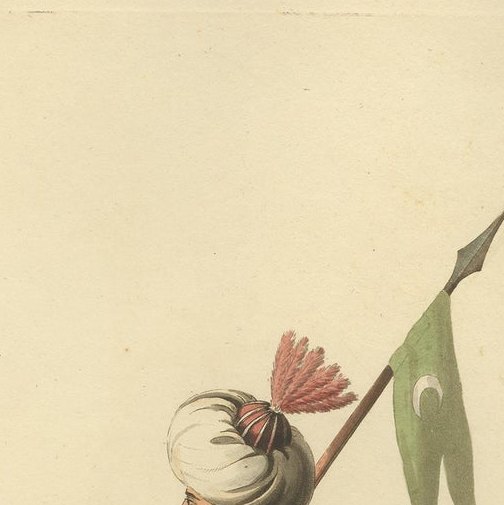
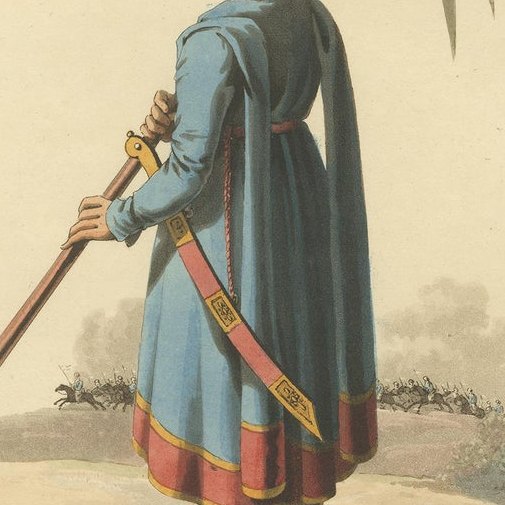
Close-ups
Framed and on the wall
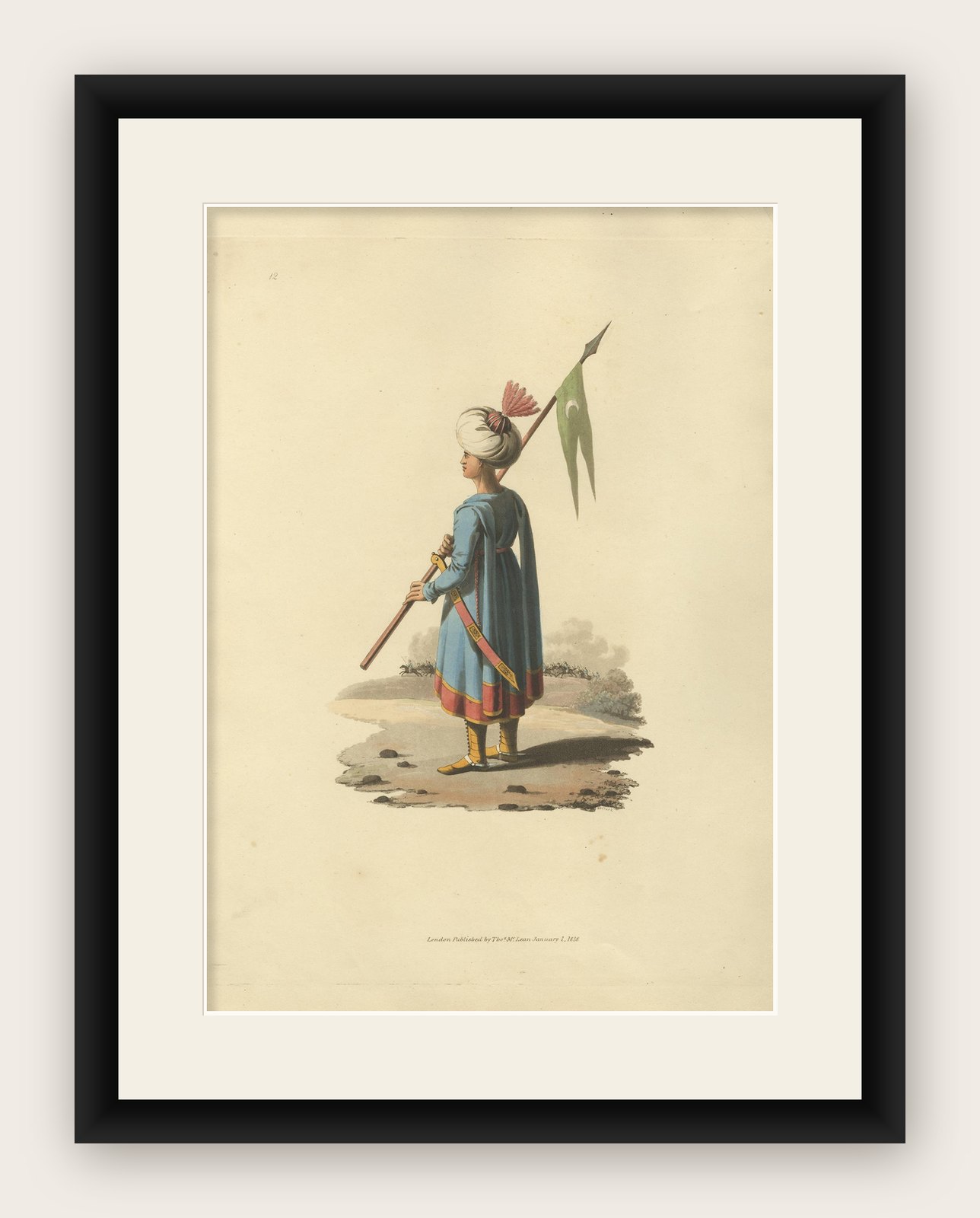




Frame and rooms are illustrations of how the print could look; the description says what is included.
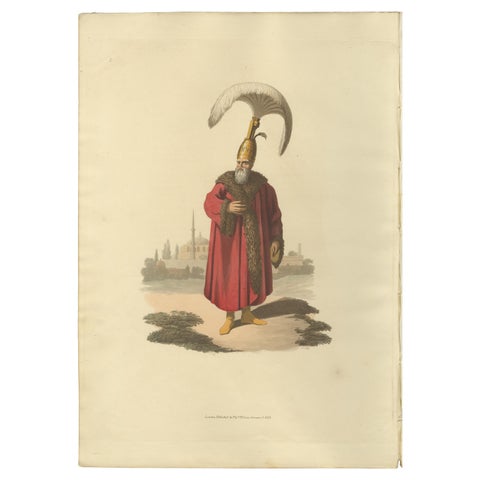
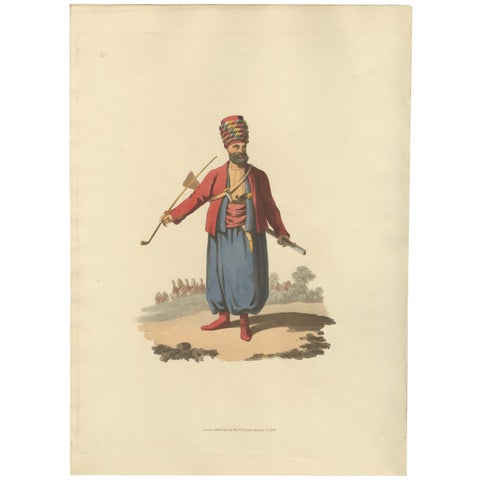
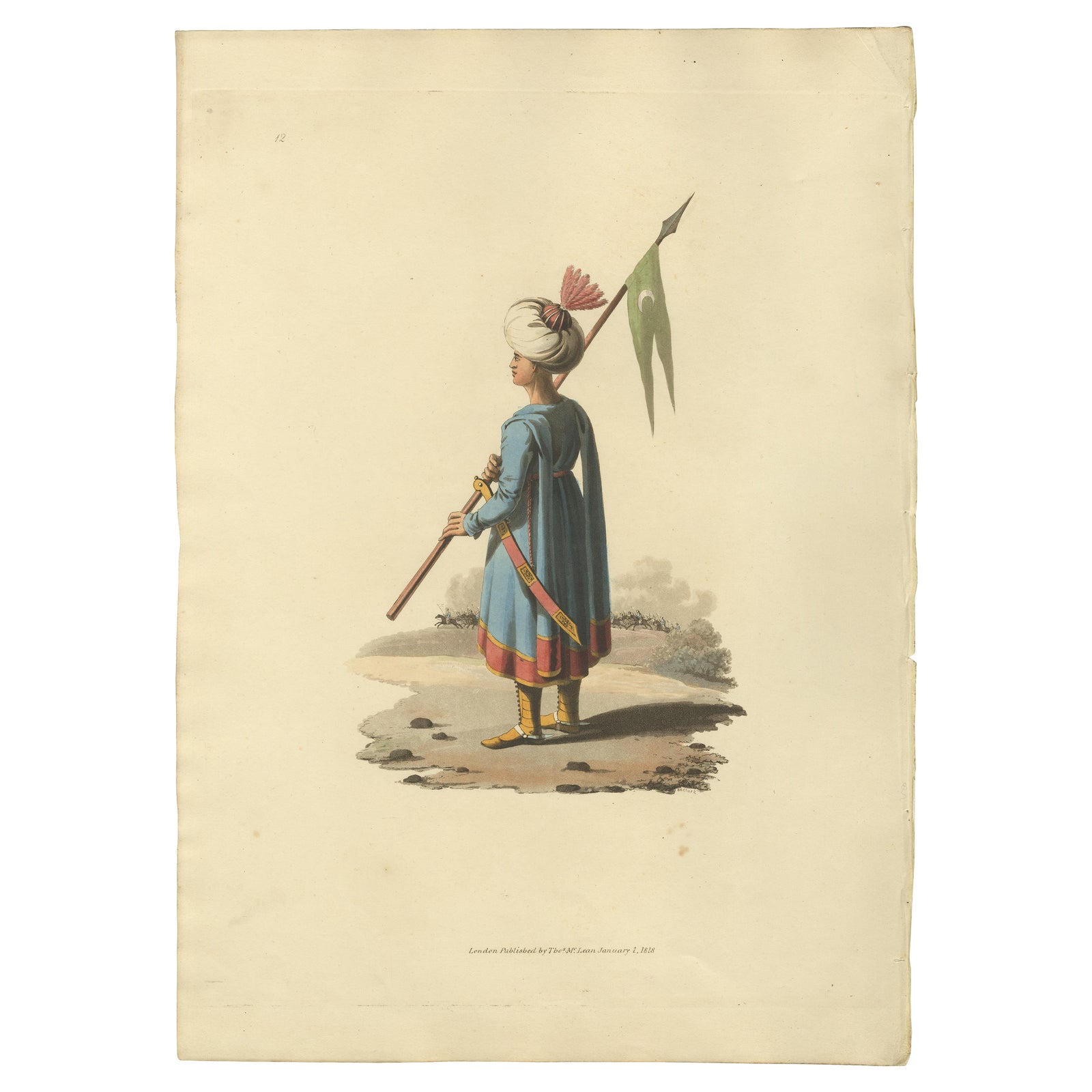
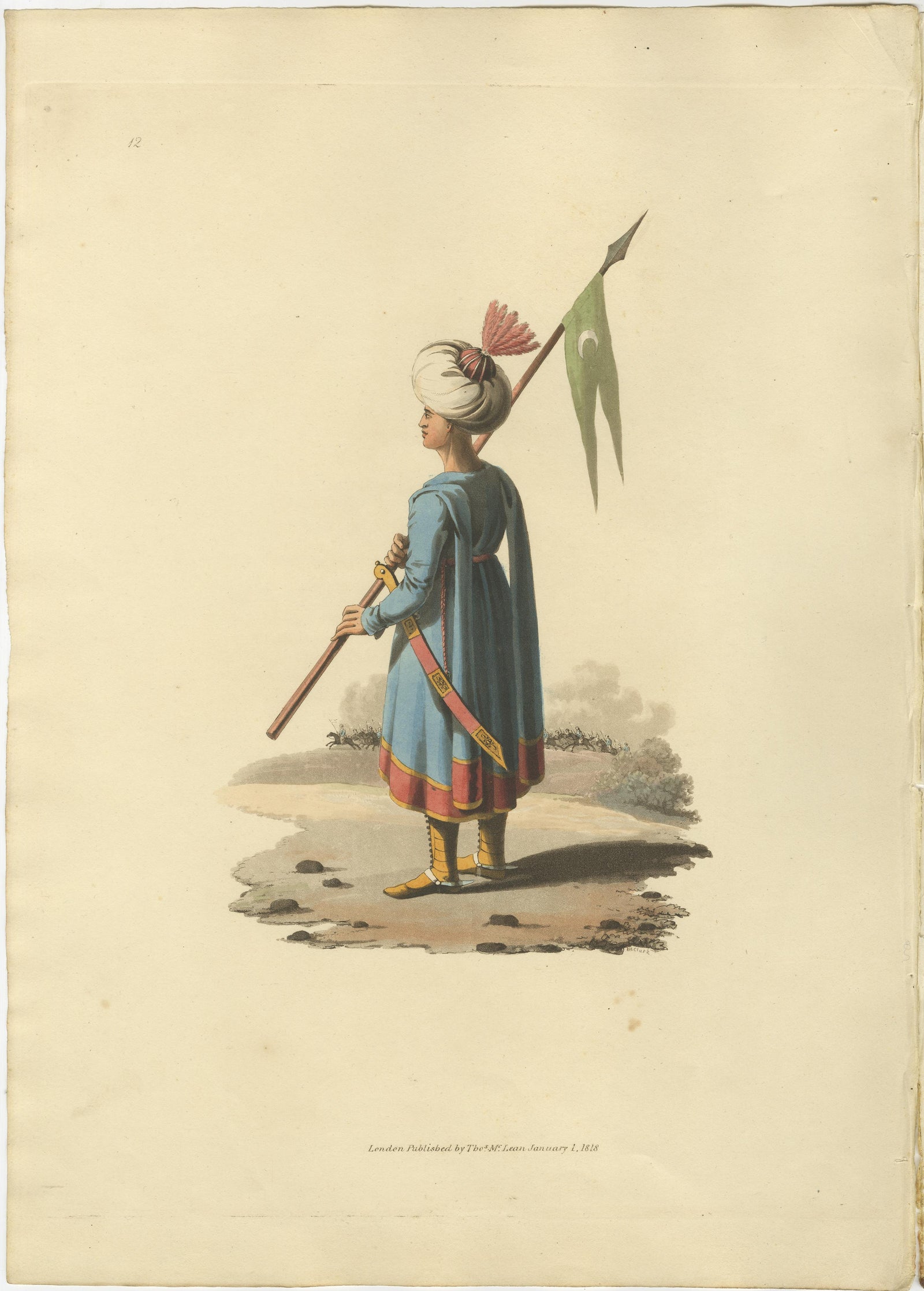
Antique Print Ensign Bearer of the Spahis, The Military Costume of Turkey, 1818
£375£26530% off
$345 · €315
Original print, not a reproduction.
Ships worldwide from the Netherlands, flat or rolled, insured and tracked. 14-day returns.
- Date
- 1818
- Sheet size
- 15 × 10.6 in (38 × 27 cm)
- Condition
- Good. Original/contemporary hand coloring. General age-related toning, some foxing. Minor wear and soiling, blank verso. Please study image carefully.
- Wardrobe
- Far & away
- Era
- 1790 to 1840, Empire and Romantic
- Stock no.
- BG-13087-12
What the condition grades mean
- Excellent
- Bright and clean, with no faults worth mentioning.
- Very good
- Only light signs of age, such as faint toning.
- Good
- Normal signs of age for a sheet of this period: toning, some foxing, small marks or neat old repairs.
- Fair
- Clear faults such as staining, tears or repairs, priced to match.
Every fault we see is written in the condition note, and the whole sheet is shown uncropped in the photos.
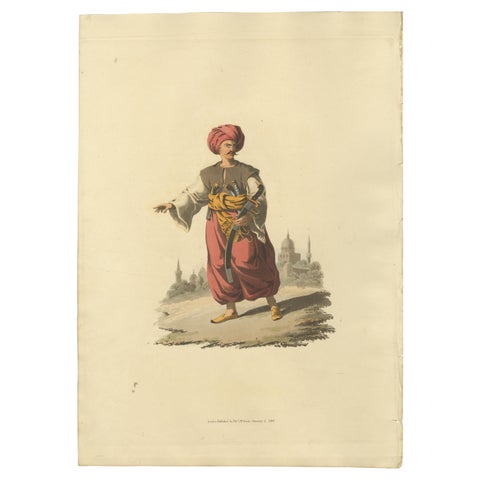
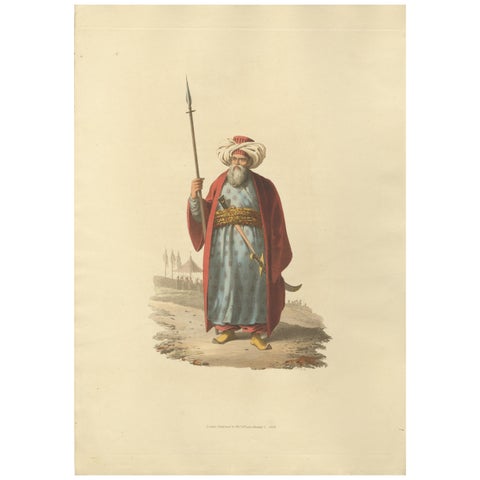
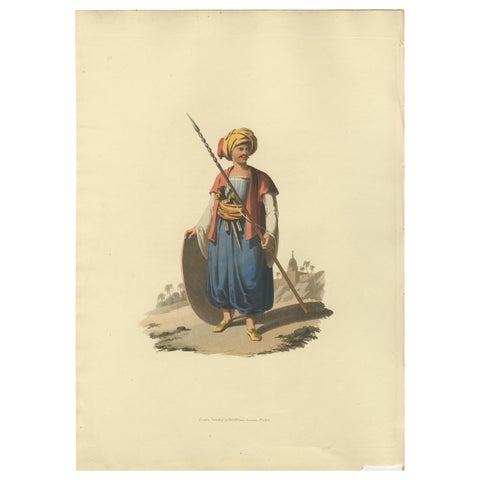
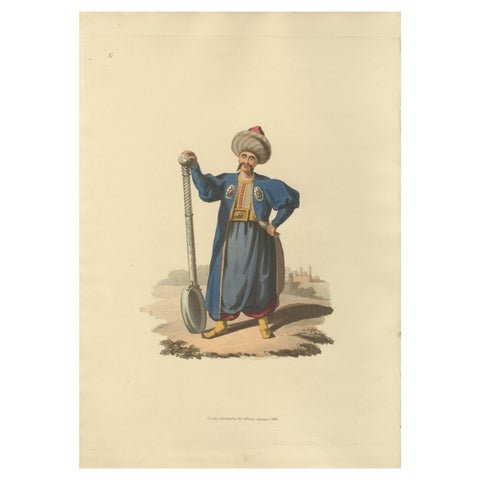
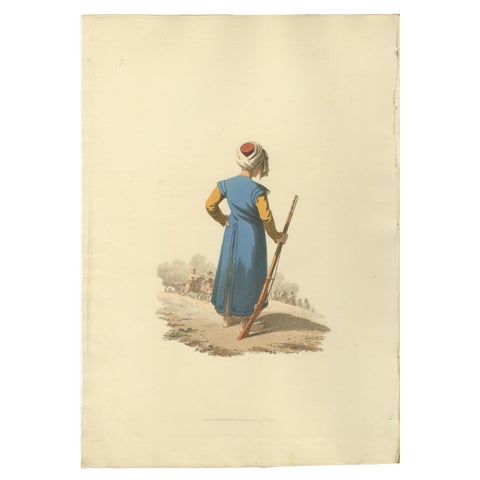
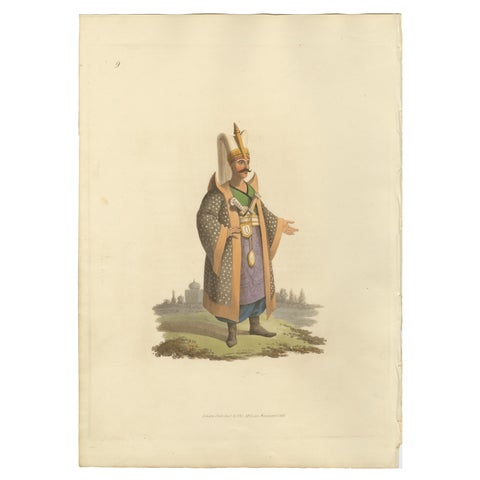
This print is from 'The Military Costume of Turkey. Illustrated by A Series of Engravings. From Drawings made on the Spot. Dedicated by Permission to His Excellency the Minister of the Ottoman Porte to his Britannic Majesty.'
London, Published by Thomas M'Lean, Haymarket, (1818). Folio. One of 29 fine handcolored aquatint plates . Very light offsetting from plate. The original accompanying text of this print is as follows:
'The Spahis do not, as the Janizaries, ascribe more honor to their kettle than their standard. The Turkish standards are large, particularly that which is denominated the Pacha’s. There are also numerous sacred banners borne by the attendants on the dervises attached to the army, which are green, as well as a great number of small flags or banderols belonging to the different corps. Each troop consisting of twenty-five or thirty men having one, it does not appear that these flags are borne under any other idea than that of exciting terror in the hearts of an enemy. A very different effect is more likely to be produced, since the great number of men thus uselessly employed considerably lessens the effective force, and has a tendency to impede the velocity and simplicity which military operations generally require. In case of defeat, the confusion created by such a multiplicity of these banderole bearers is excessive, and the consequences incalculable. The superstition which induces the wearing of talismans as a protection against dangers of every kind, becomes unavailing: and the banner bearer, overwhelmed by terrors on every side, becomes worse than useless as an appendage to an army.'