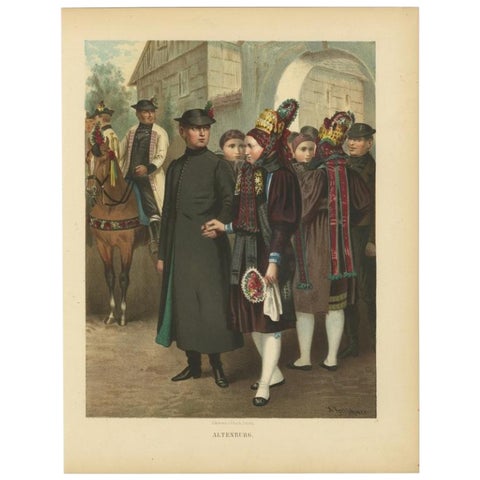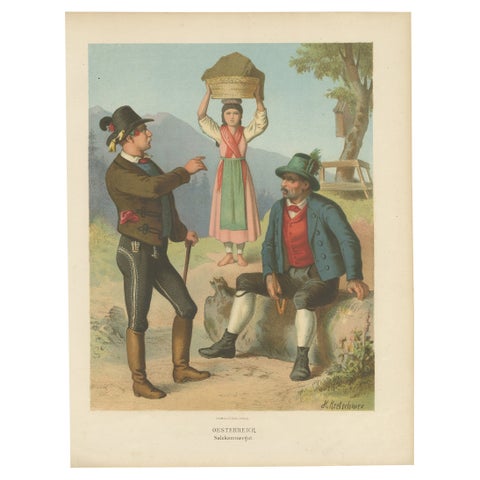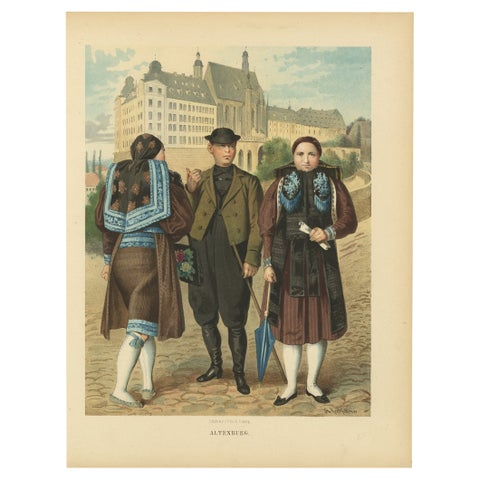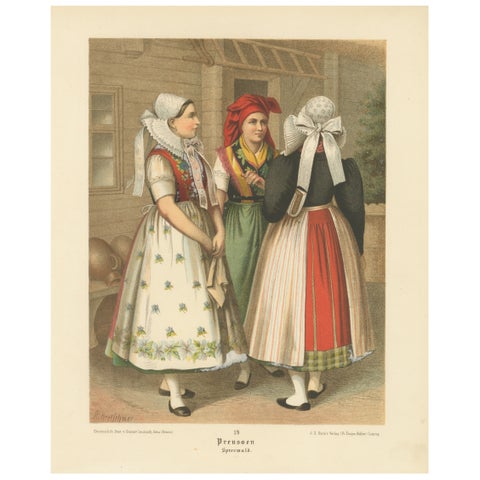
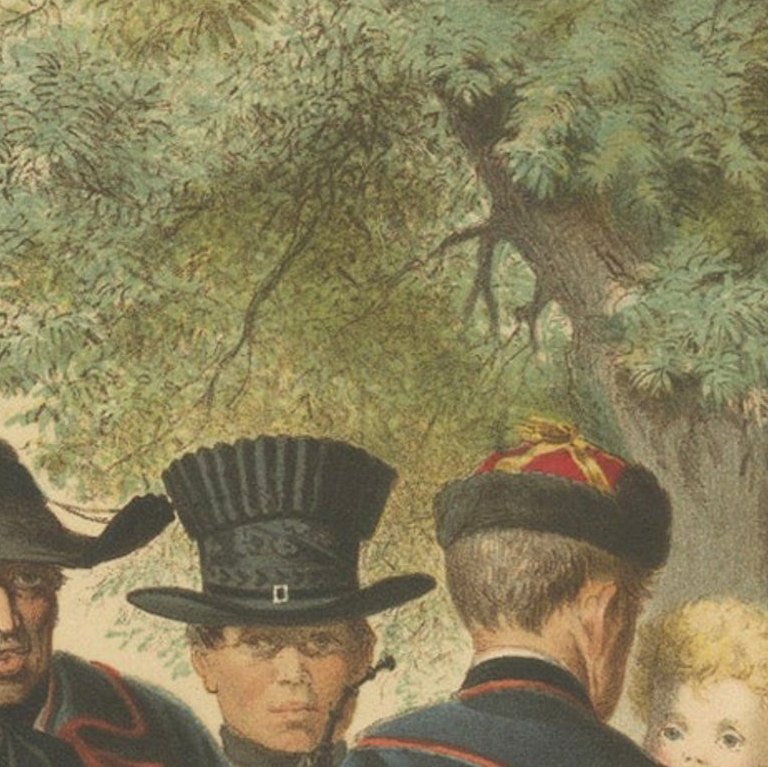
Close-ups
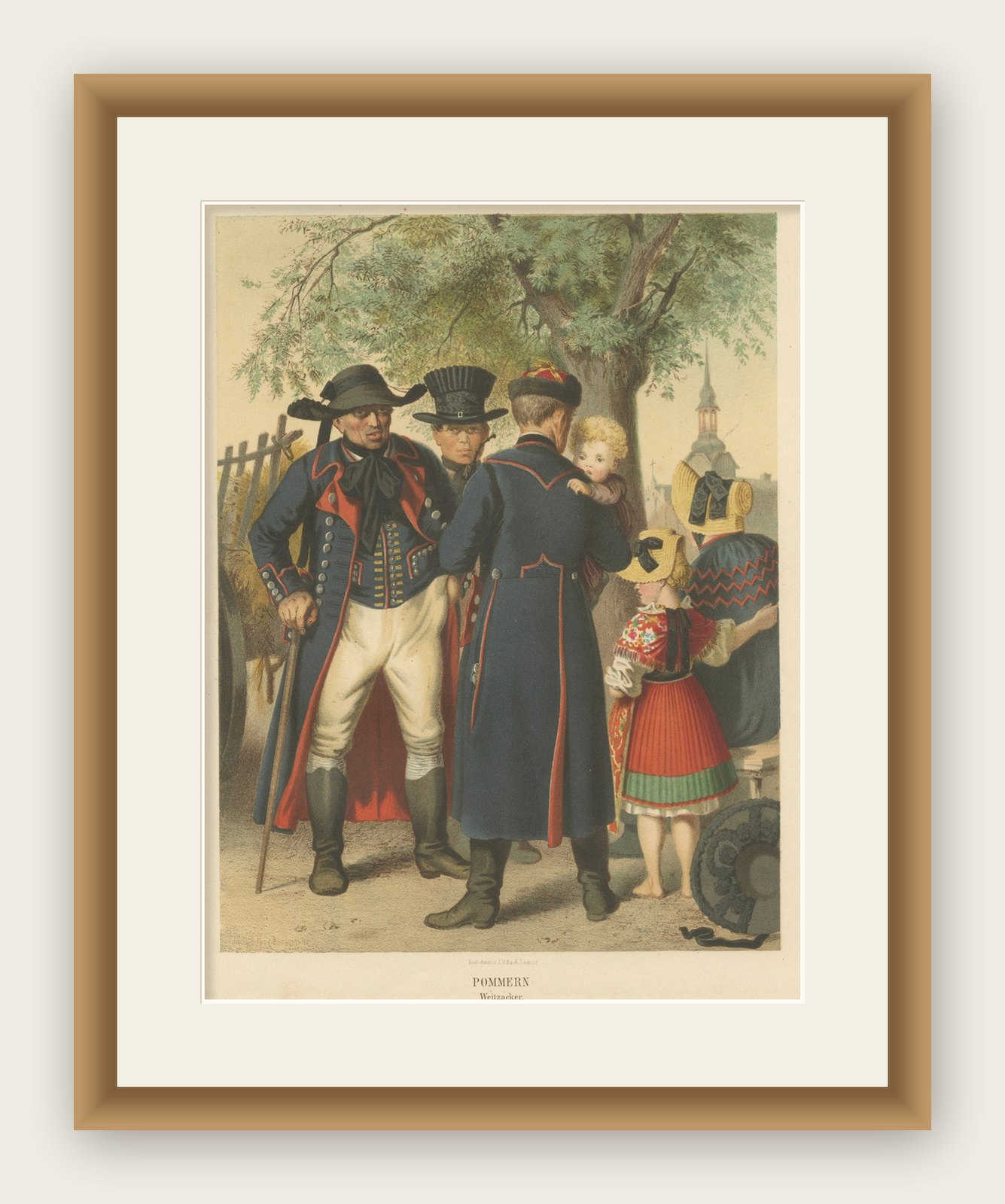
Framed and on the wall

Frame and rooms are illustrations of how the print could look; the description says what is included.
Antique Costume Print of Traditional Attire of Pomerania: Weitzacker in 1870
$240$17030% off
€154 · £130
Original print, not a reproduction.
Ships worldwide from the Netherlands, flat or rolled, insured and tracked. 14-day returns.
- Date
- 1870
- Sheet size
- 12.4 × 10 in (31.6 × 25.5 cm)
- Condition
- Good. Age-related toning. Minor wear and soiling, blank verso. Please study image carefully.
- Wardrobe
- Folk finery
- Era
- 1870 to 1900, Bustle
- Stock no.
- BG-13584-2
What the condition grades mean
- Excellent
- Bright and clean, with no faults worth mentioning.
- Very good
- Only light signs of age, such as faint toning.
- Good
- Normal signs of age for a sheet of this period: toning, some foxing, small marks or neat old repairs.
- Fair
- Clear faults such as staining, tears or repairs, priced to match.
Every fault we see is written in the condition note, and the whole sheet is shown uncropped in the photos.
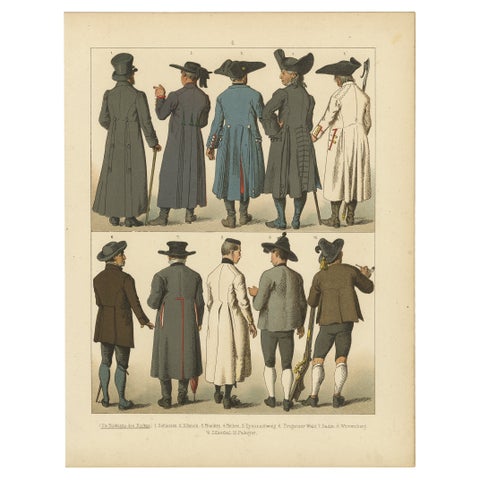
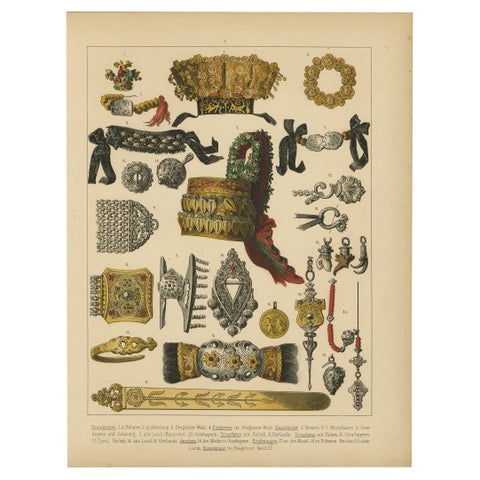
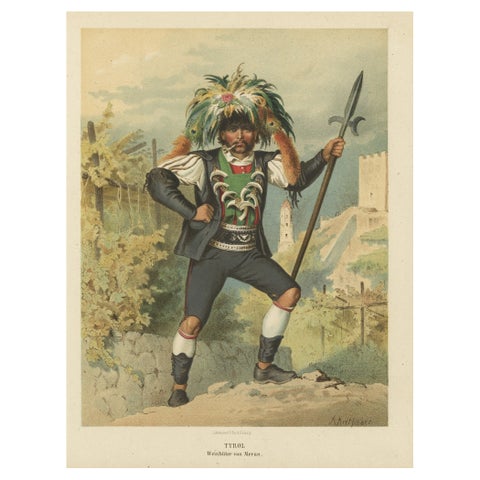
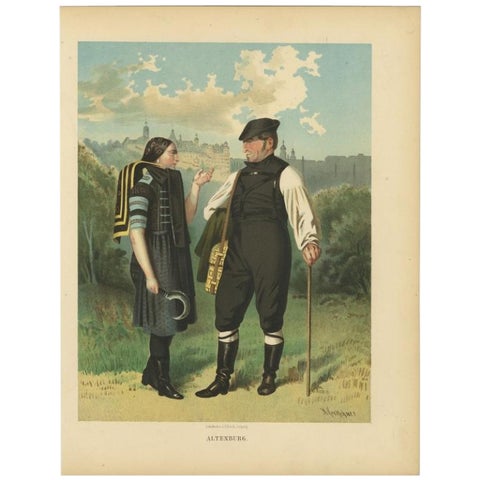
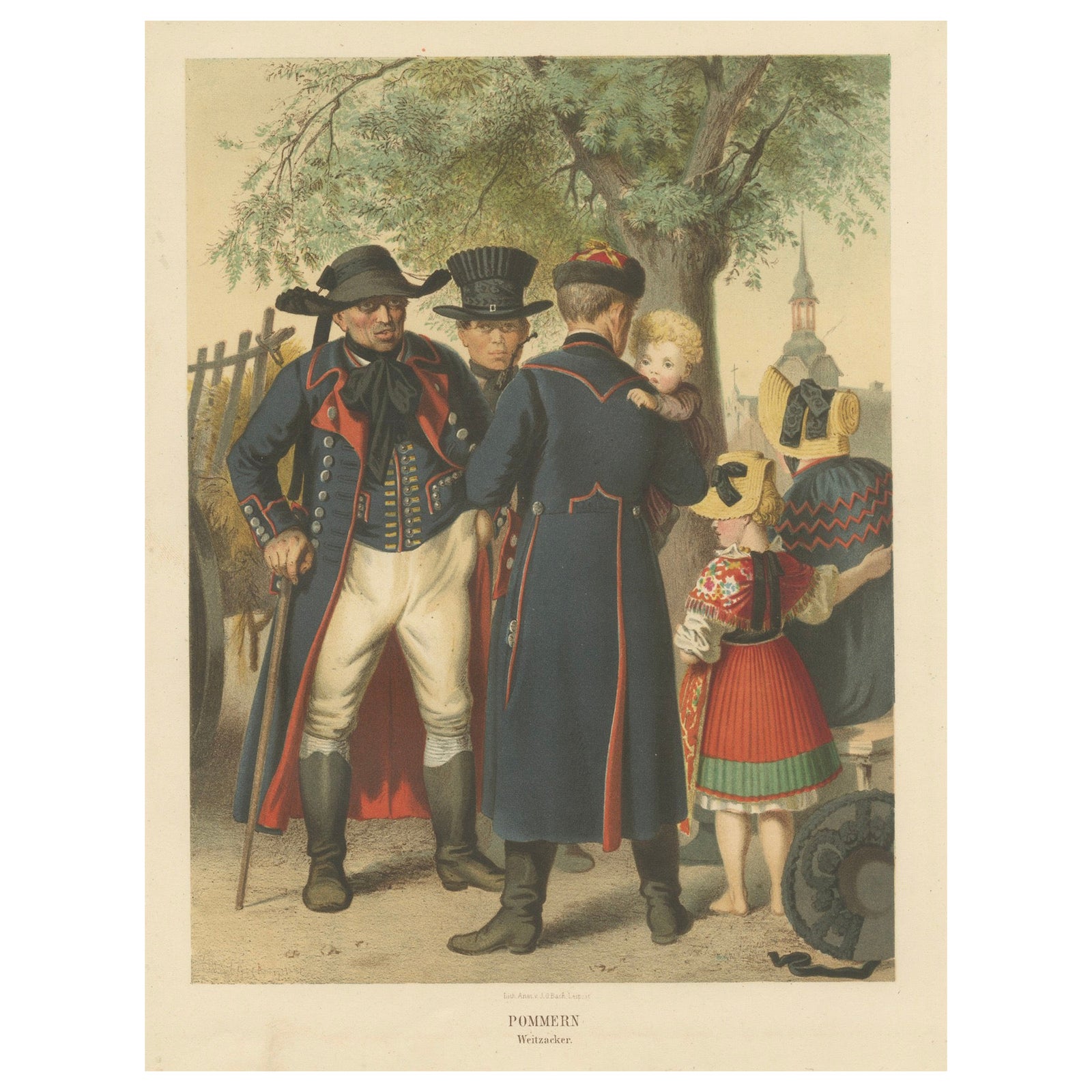
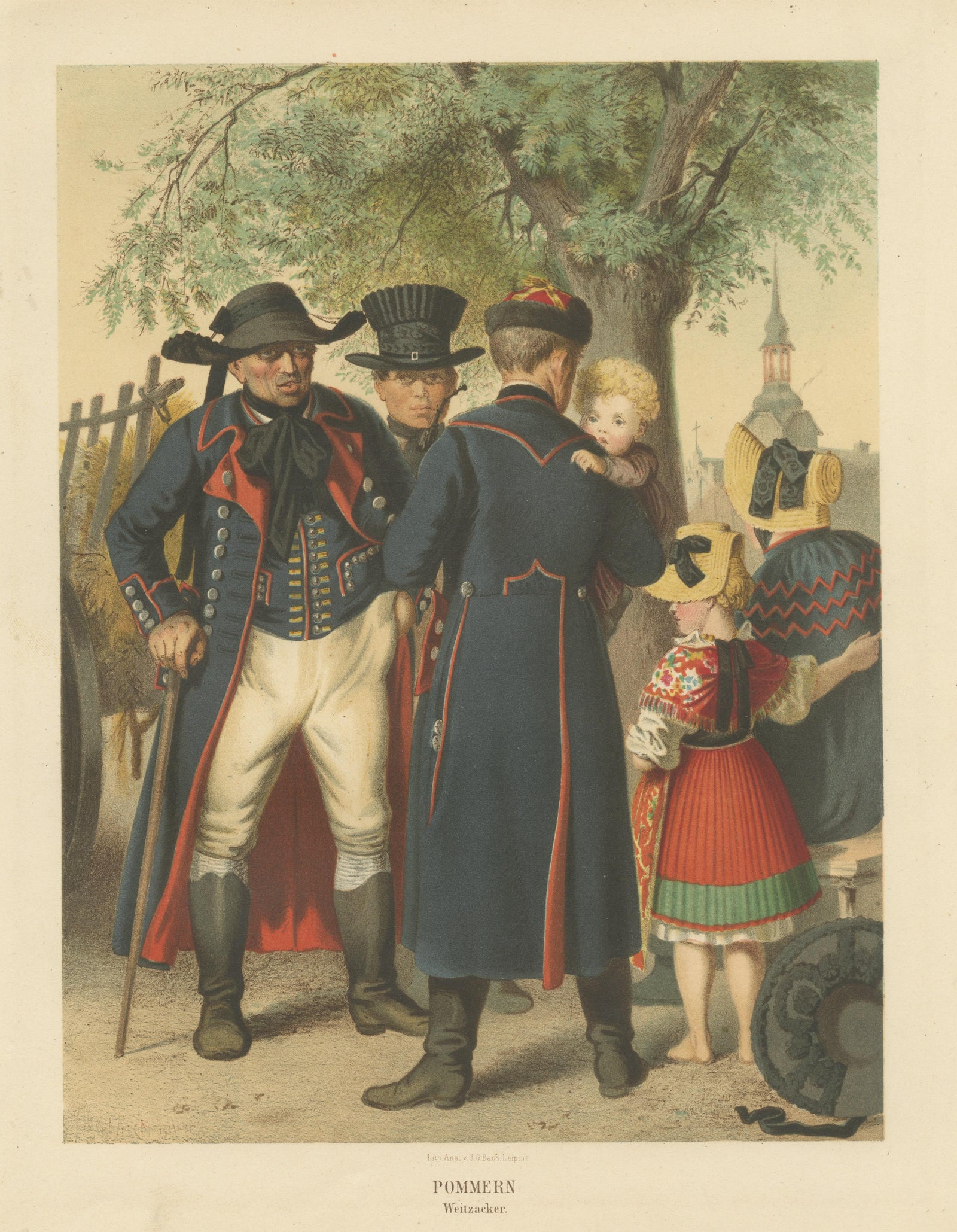
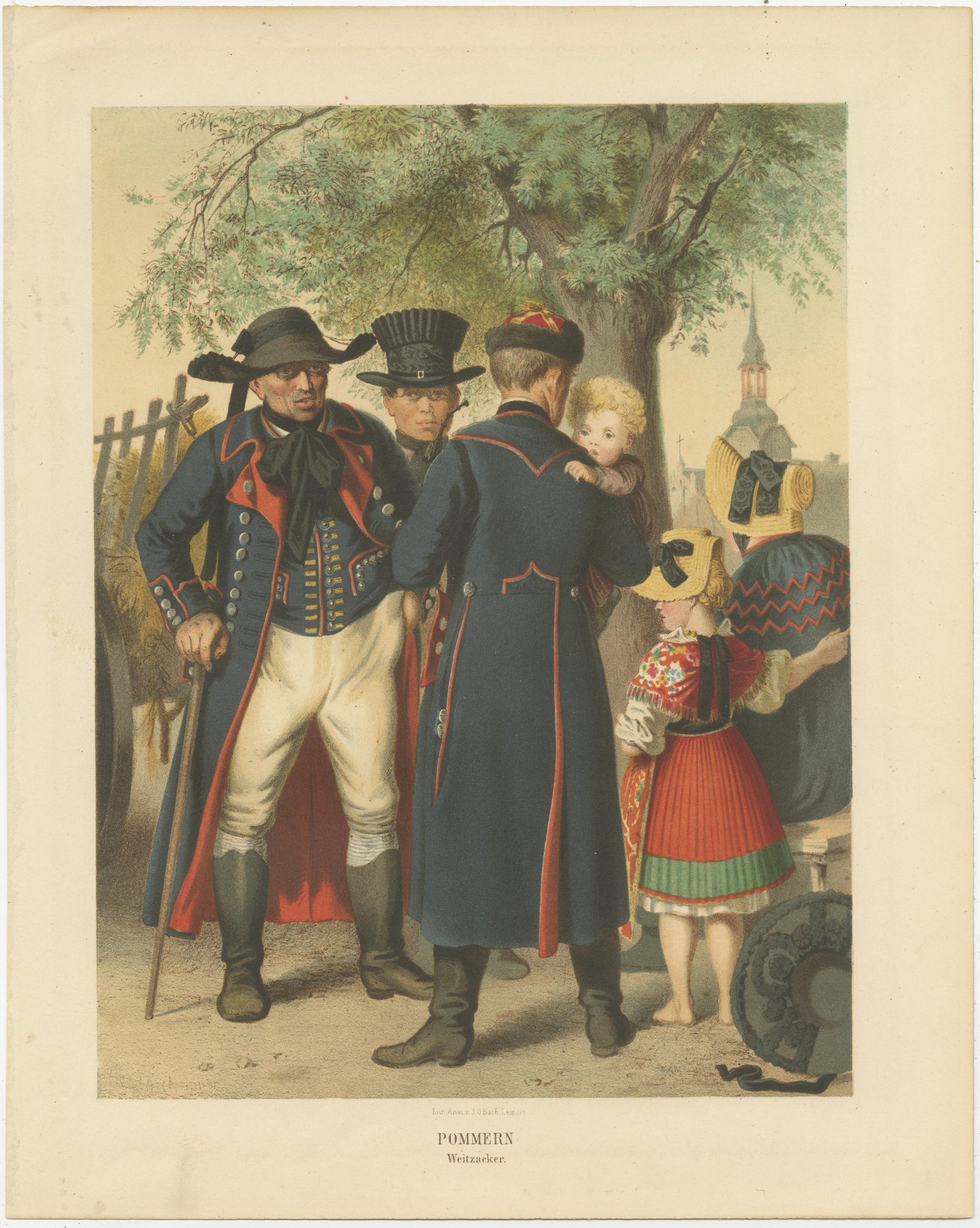
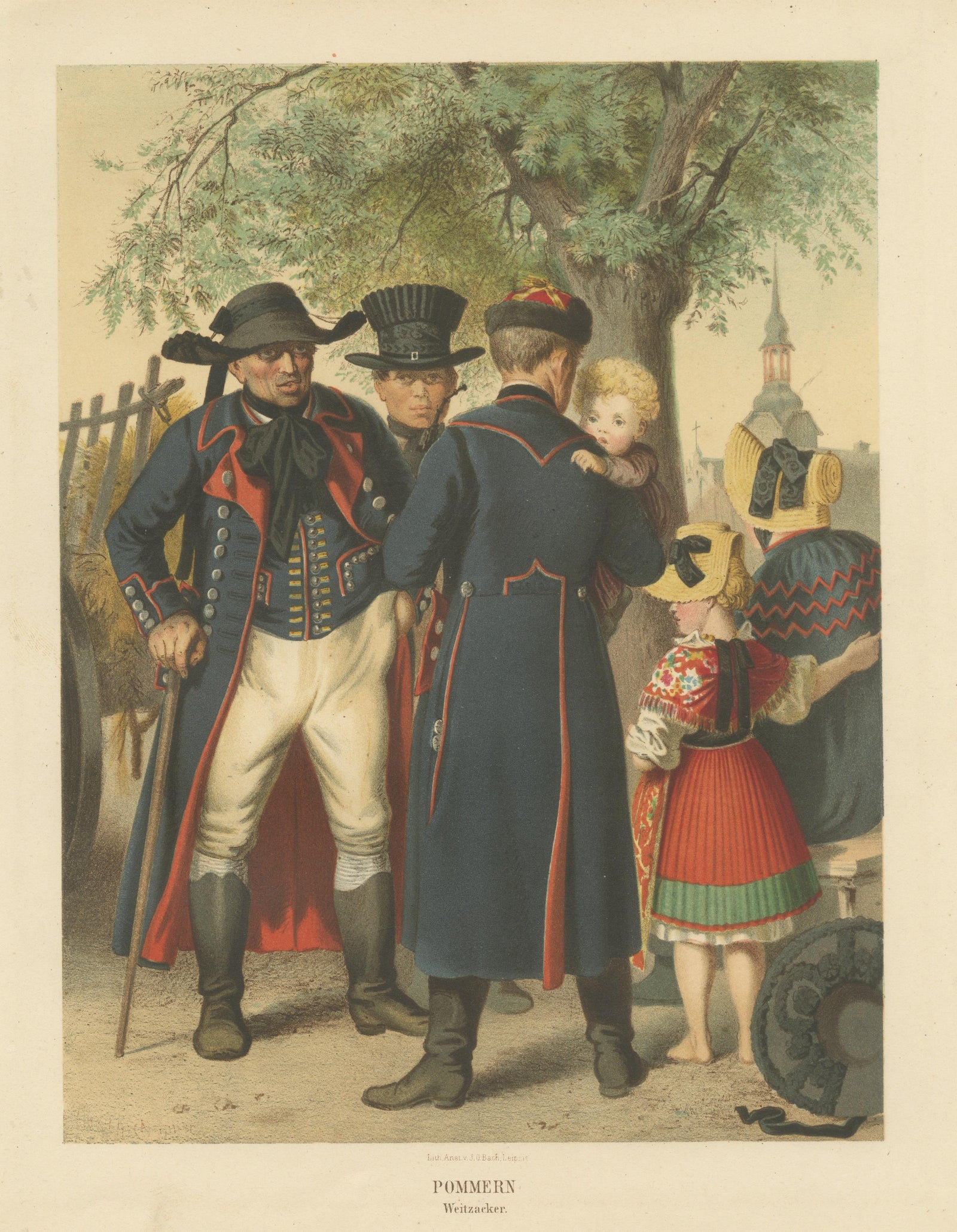
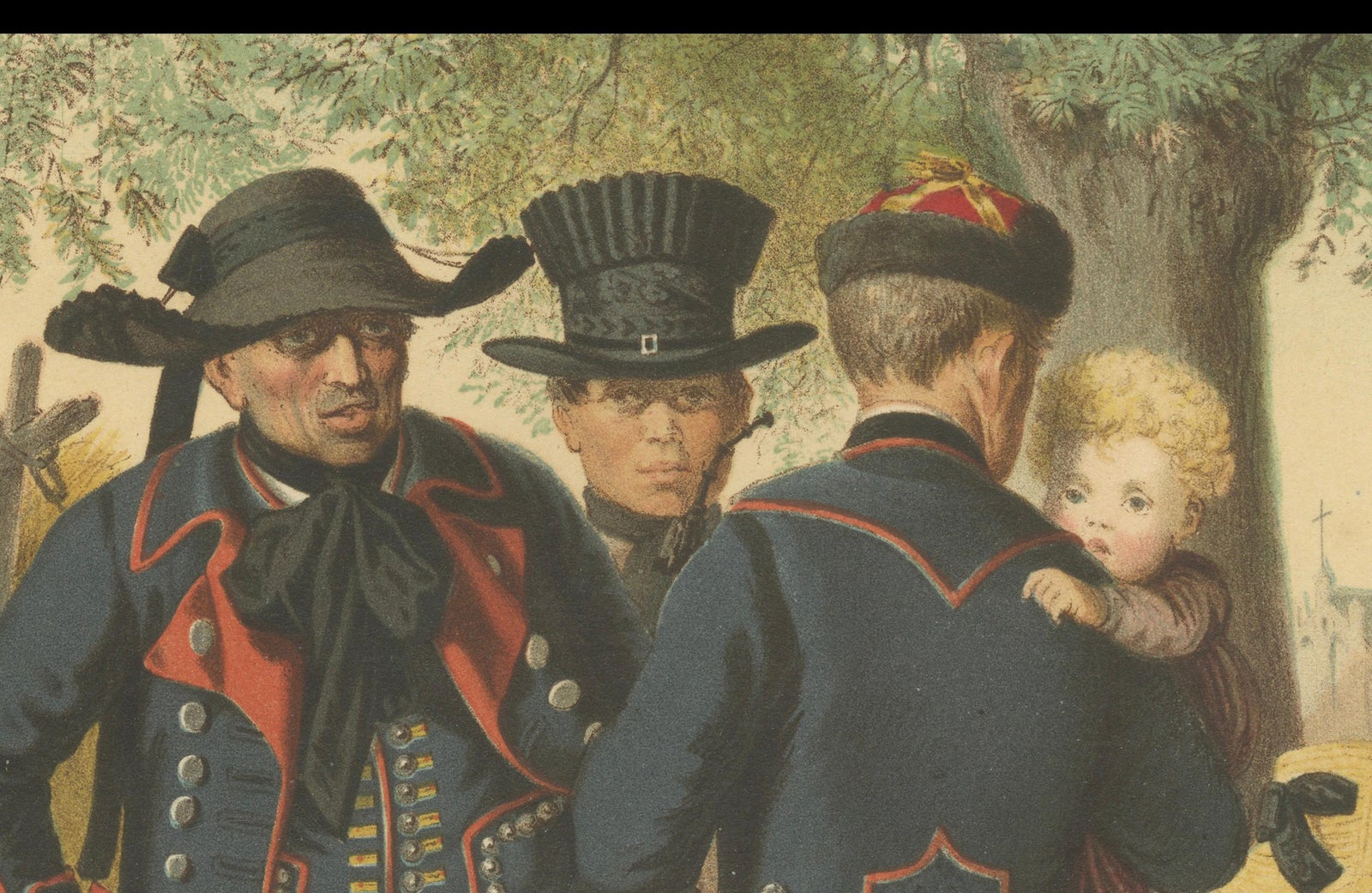
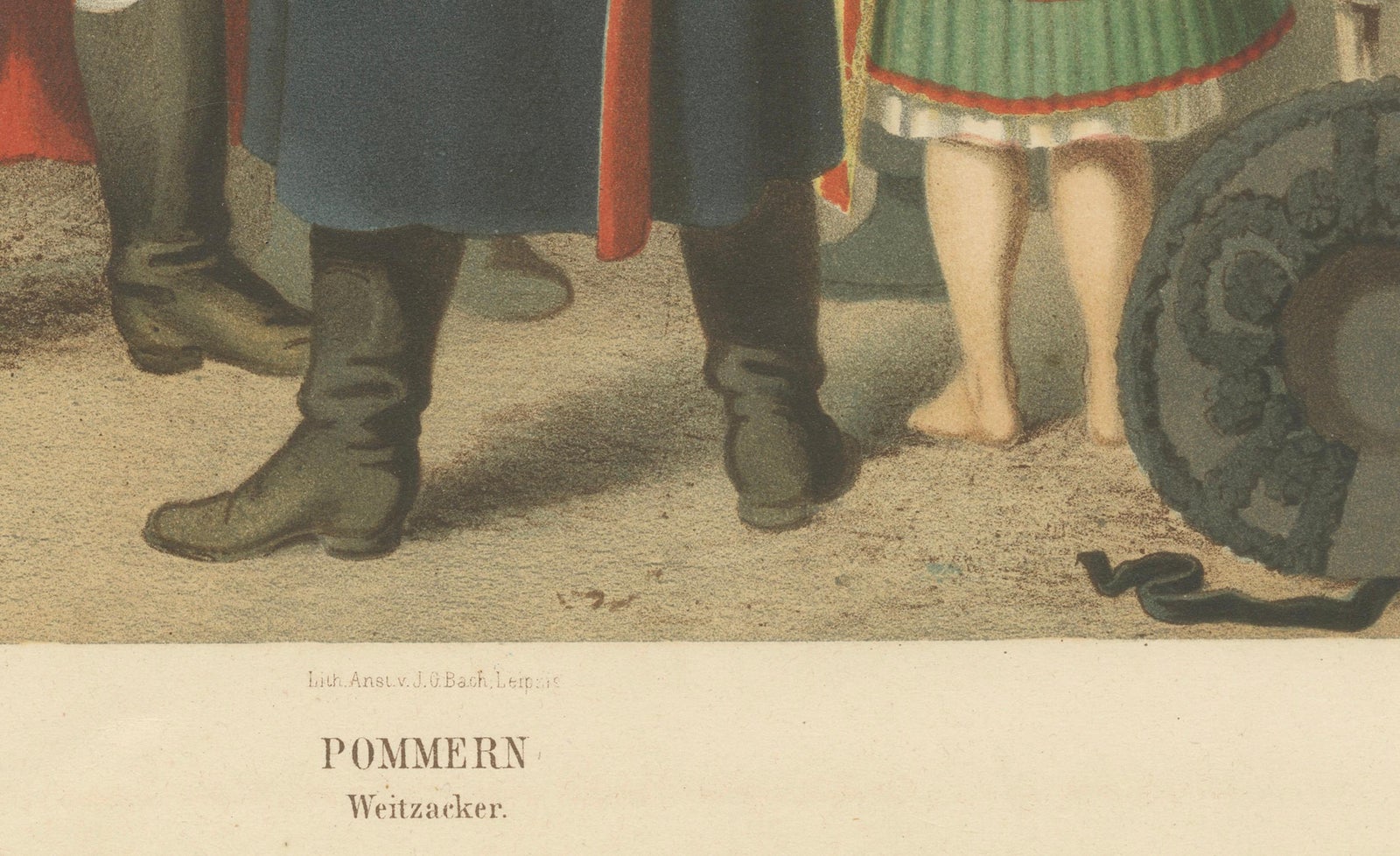
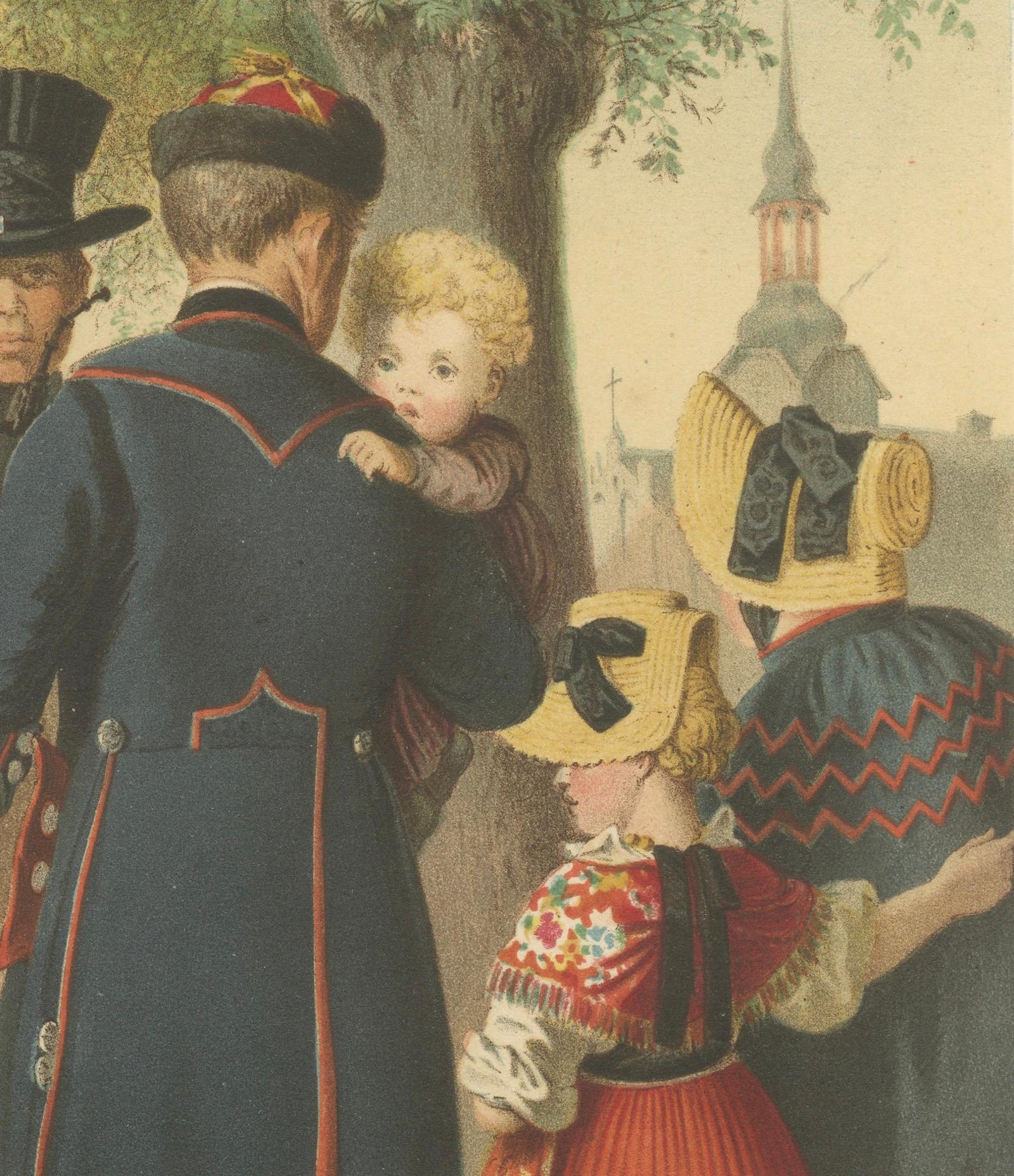
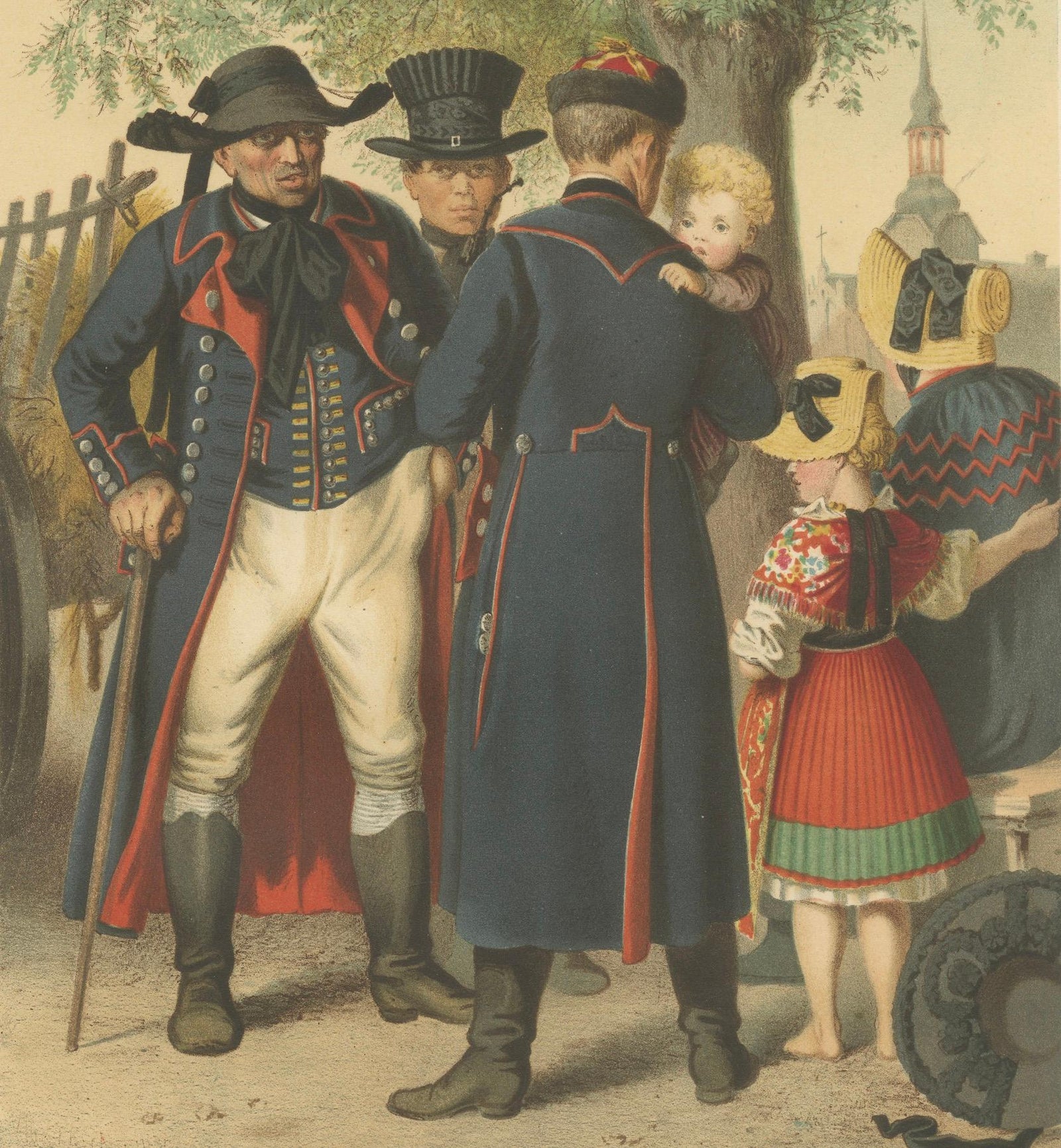
Antique print titled 'Pommern - Weitzacker'. This original antique print shows the costumes of Germany; Pomerania; Weitzacker.
Albert Kretschmer (27 February 1825, 11 July 1891) was a German professor, painter, costumes researcher and chairman of Schauspielhaus Berlin.
The print titled "Pommern - Weitzacker" showcases the traditional costumes of the Pomerania region, specifically Weitzacker in Germany. The work originates from "Deutsche Volkstrachten. Original-Zeichnungen mit erklärendem Text" ("German National Costumes. Original Drawings with Explanatory Text"), which was published by Albert Kretschmer in Leipzig in 1870.
Albert Kretschmer was renowned for his detailed research and depiction of historical costumes and was a significant figure in the documentation of cultural and traditional attire. His works are highly valued for their historical accuracy and artistic merit, providing insight into the regional clothing styles of 19th-century Germany.
This particular print would have been part of Kretschmer's broader efforts to capture and preserve the diverse sartorial heritage of Germany, and it serves as an important visual record of the traditional dress in Pomerania during that period. The illustration is not just a representation of clothing but also conveys a sense of the social interactions and cultural context of the era.