Close-ups
Framed and on the wall
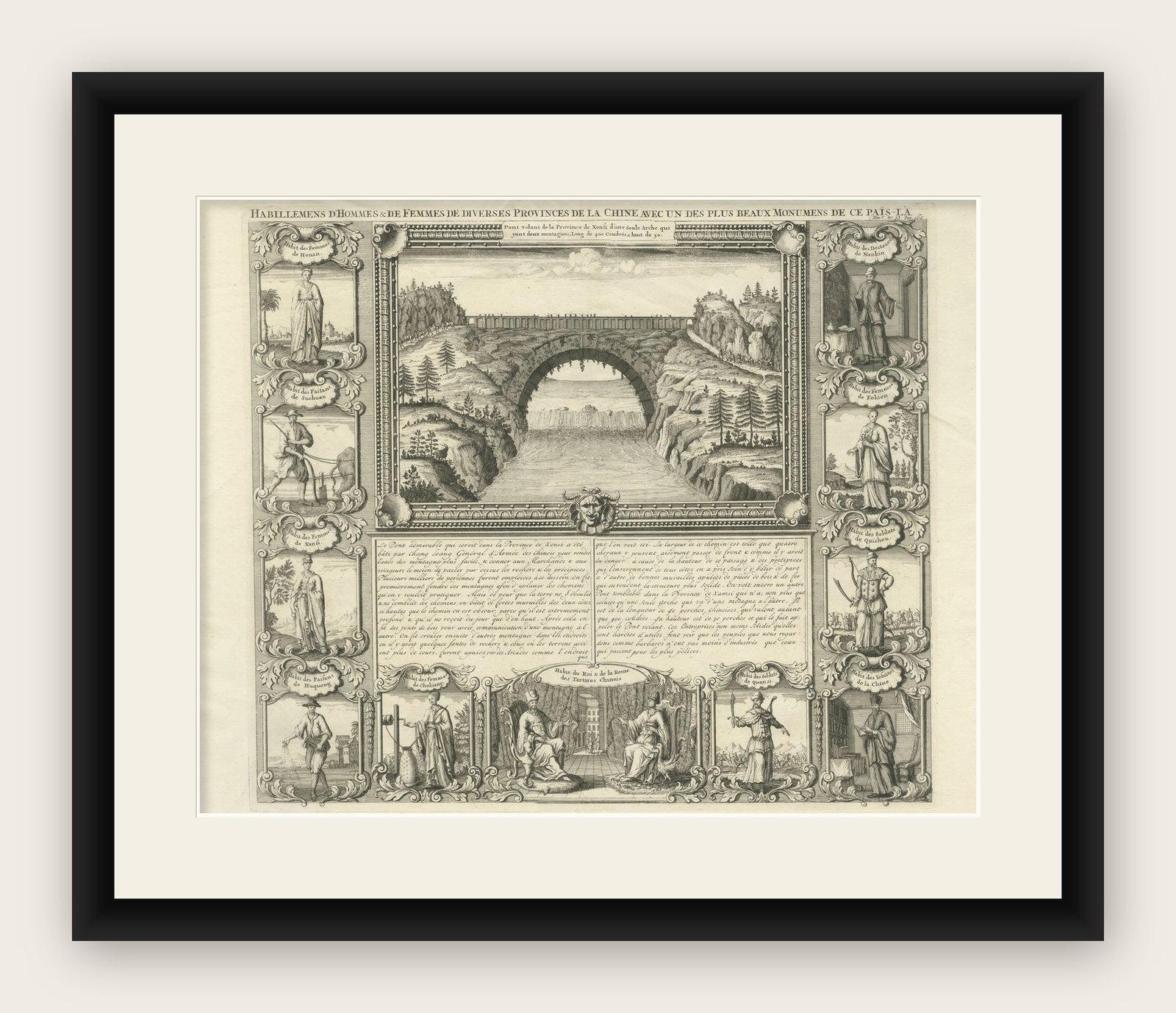
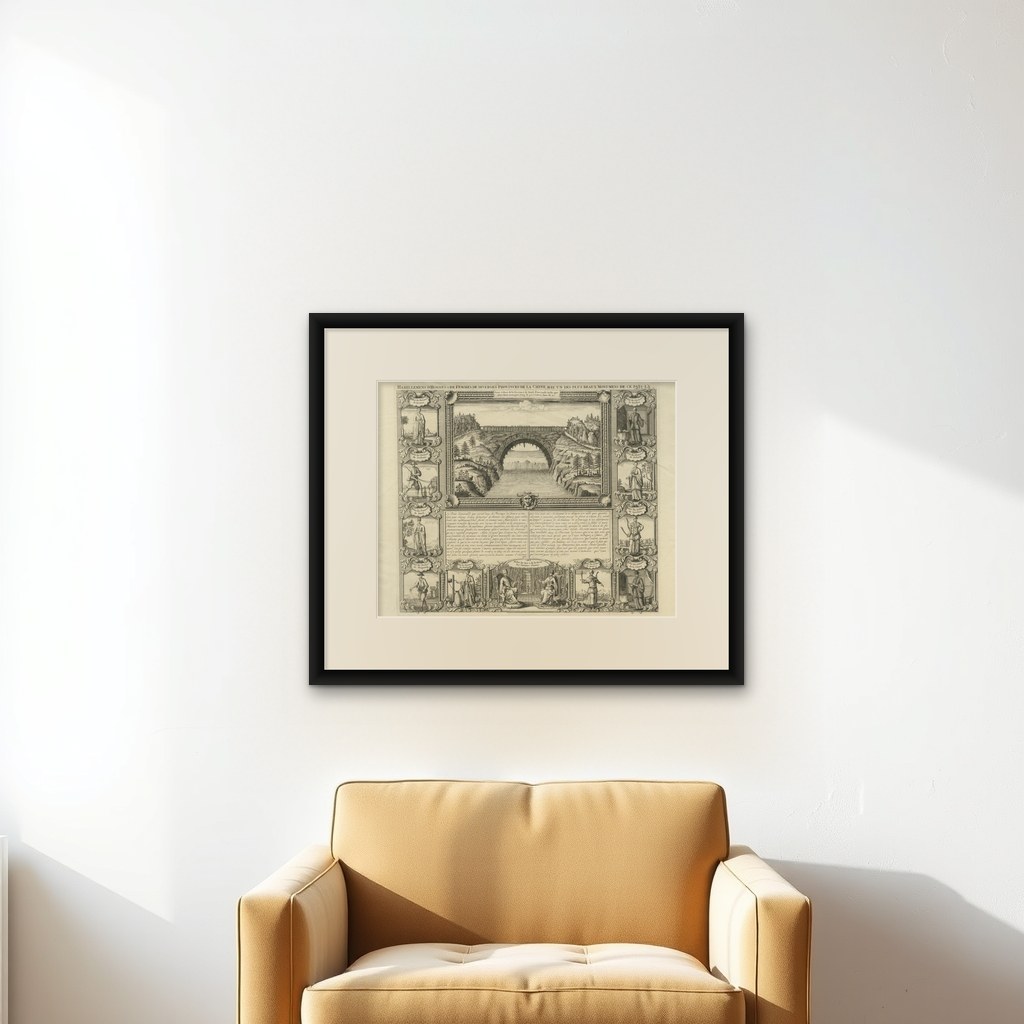

Frame and rooms are illustrations of how the print could look; the description says what is included.
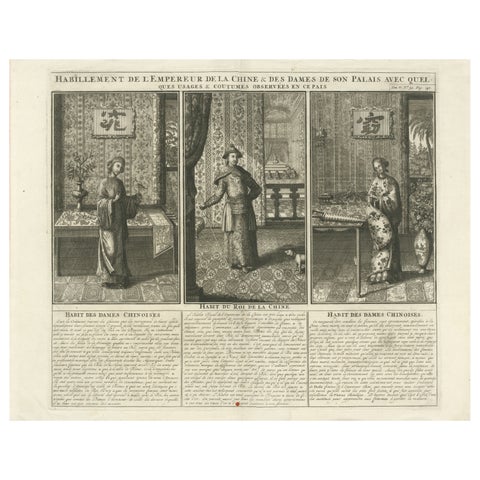
Antique China Costume & Xensi Bridge Engraving, Chatelain, 1719
€439
$495 · £375
Original print, not a reproduction.
Ships worldwide from the Netherlands, flat, insured and tracked. 14-day returns. To buy, use Ask a question and we will reserve the print for you.
- Date
- 1719
- Sheet size
- 16.1 × 19.7 in (41 × 50 cm)
- Condition
- Good. Good antique condition consistent with early 18th-century copper engravings. Age-related toning present. Margins show light handling wear. Plate impression visible. Overall strong, well-preserved example.
- Wardrobe
- Far & away
- Era
- 1700s, Rococo
- Stock no.
- f_48954872
Antique China Costume & Xensi Bridge Engraving, Chatelain, 1719
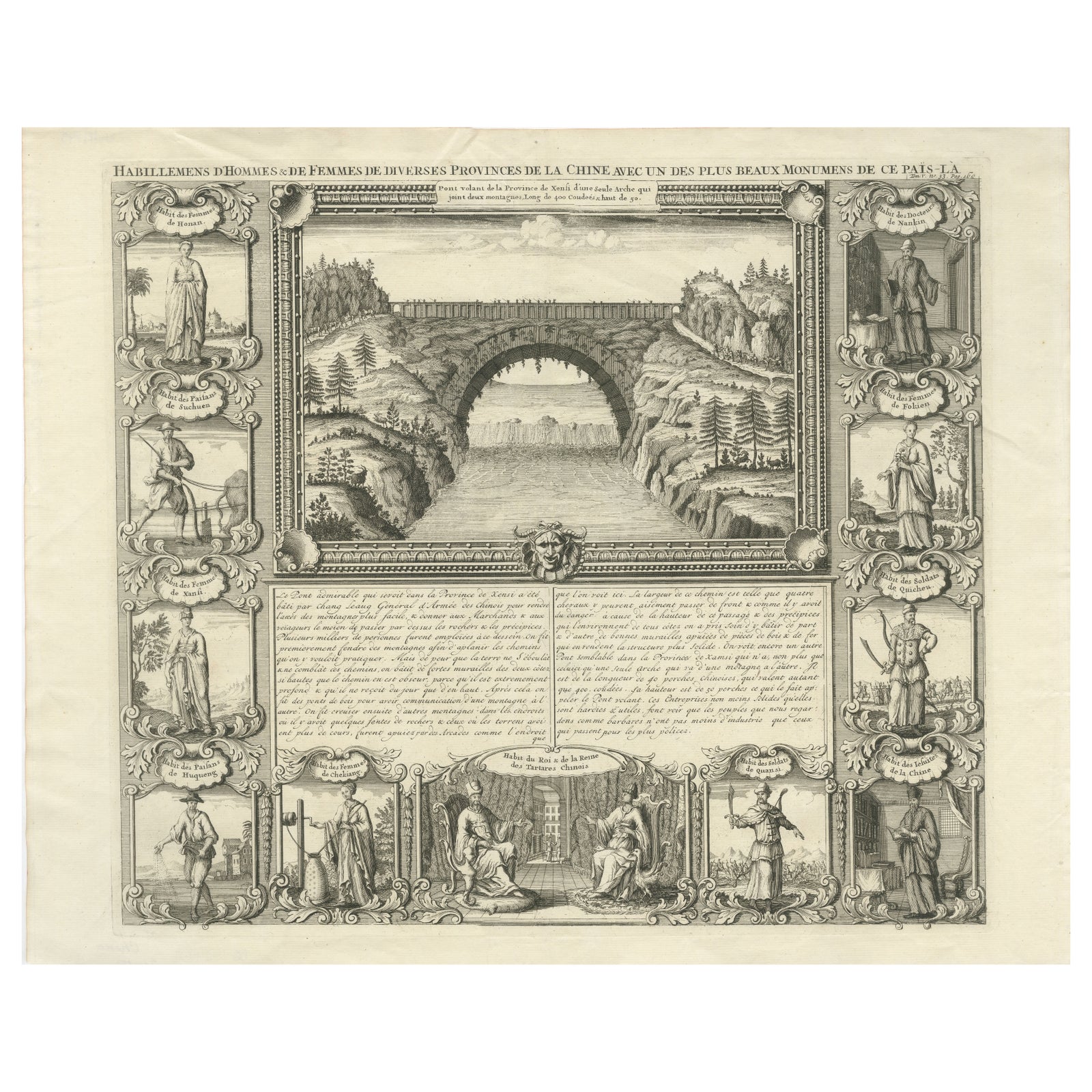
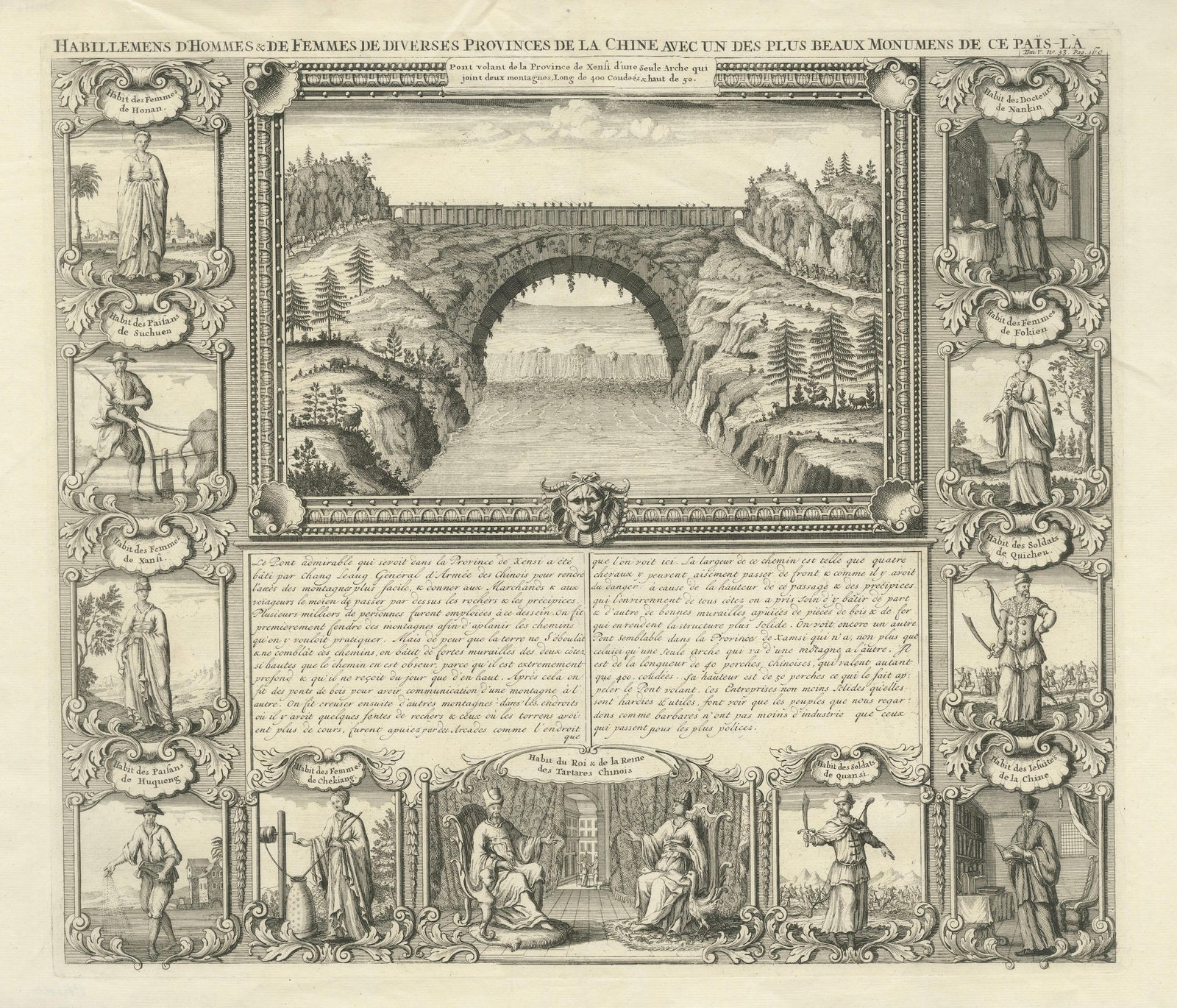
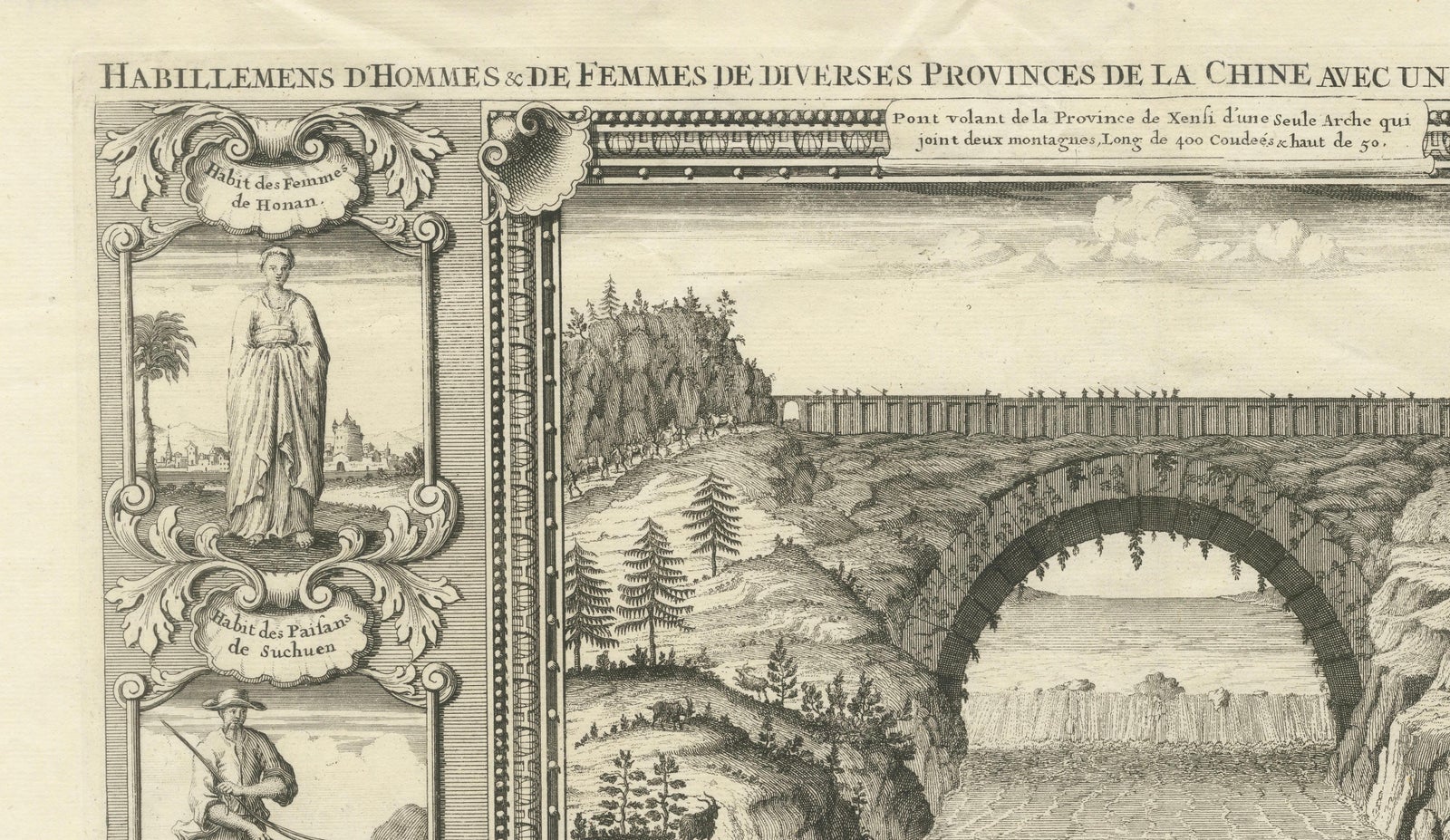
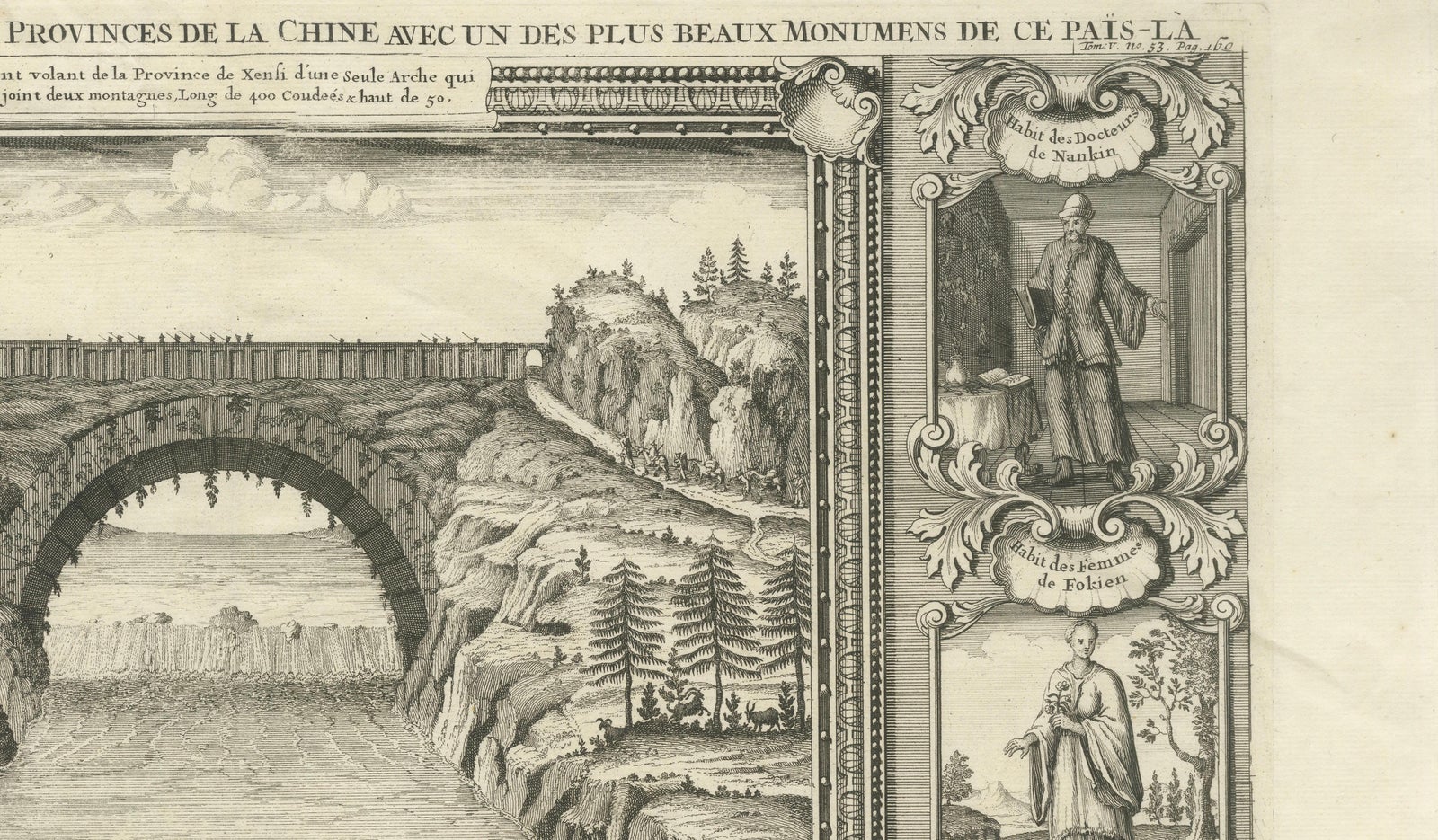
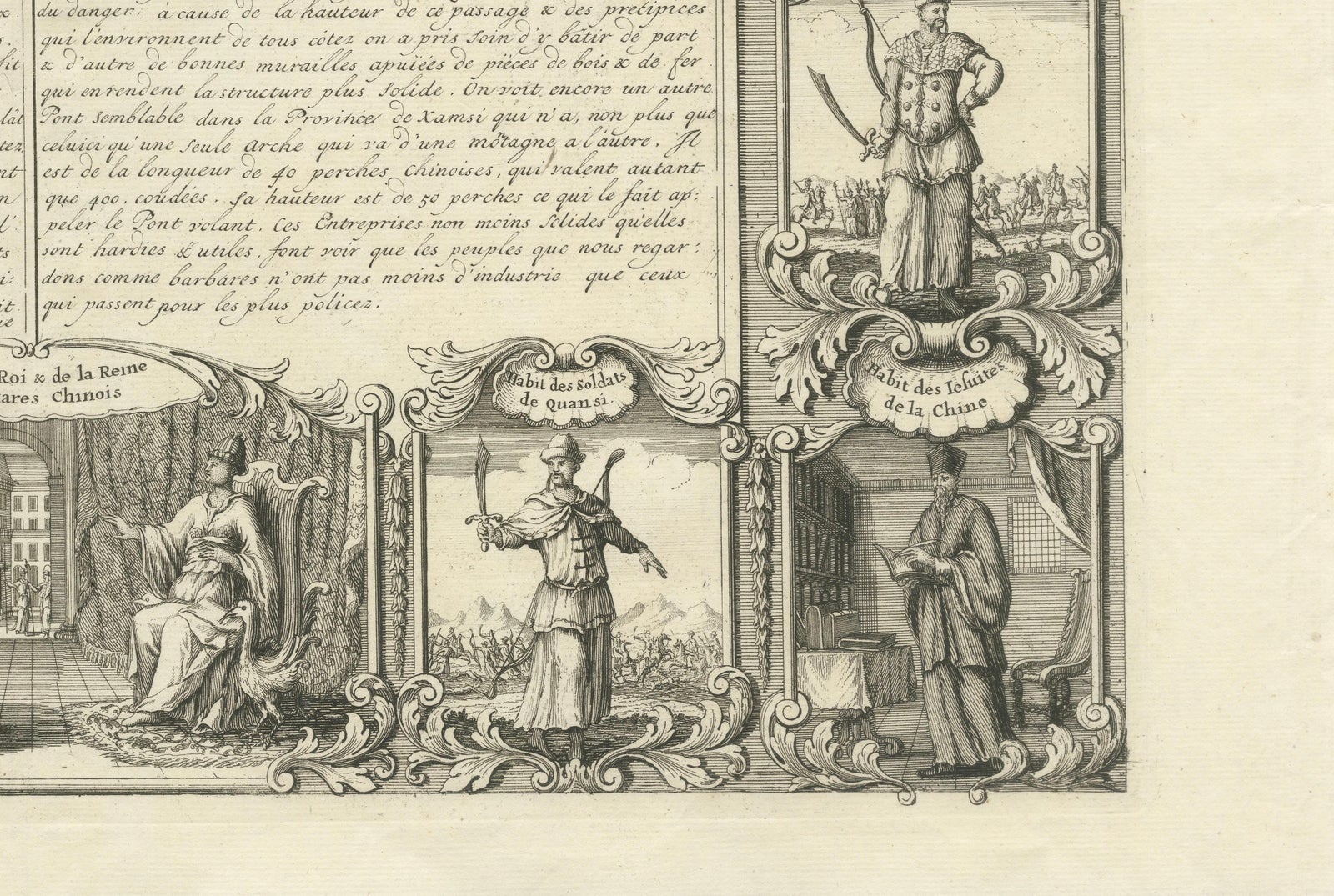
This impressive large-format copper engraving titled “Habillemens d'Hommes et Femmes de Diverses Provinces de la Chine” was published in 1719 by Henri Abraham Chatelain as part of his monumental Atlas Historique. The print represents one of the most visually ambitious ethnographic plates from the early 18th century, combining landscape, architecture, and costume studies within a richly ornamented Baroque framework.
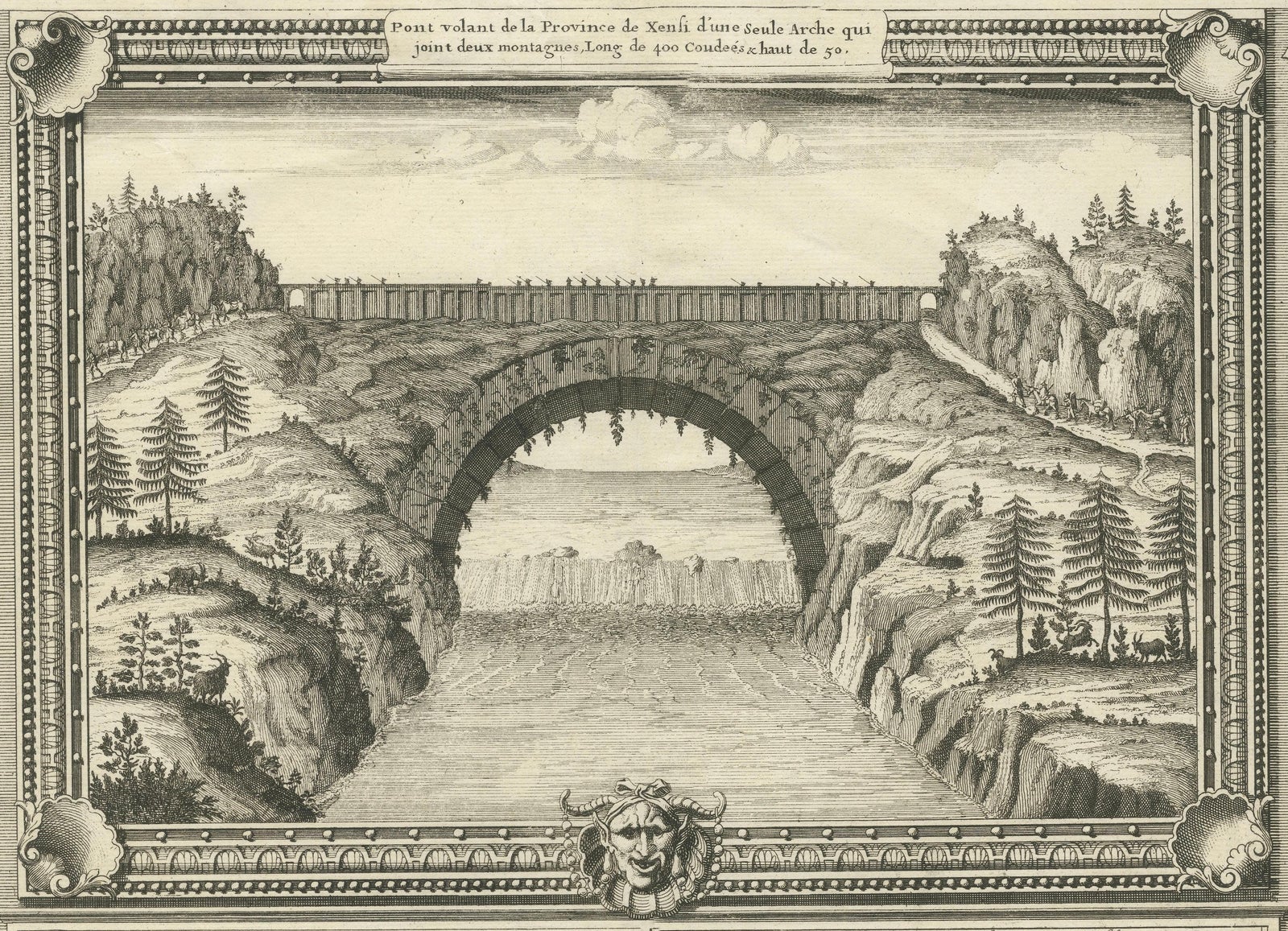
The central composition depicts the celebrated “flying bridge” of Xensi (Shaanxi) Province, described in the subtitle as a single-arch structure connecting two mountains across a dramatic gorge through which a river flows. The engraved landscape is rendered with depth and theatrical perspective: steep rocky cliffs descend toward the water, pine trees punctuate the slopes, and the monumental stone arch dominates the middle ground. The architectural feat is presented as one of the most beautiful monuments of China, reflecting European fascination with engineering marvels in distant lands.
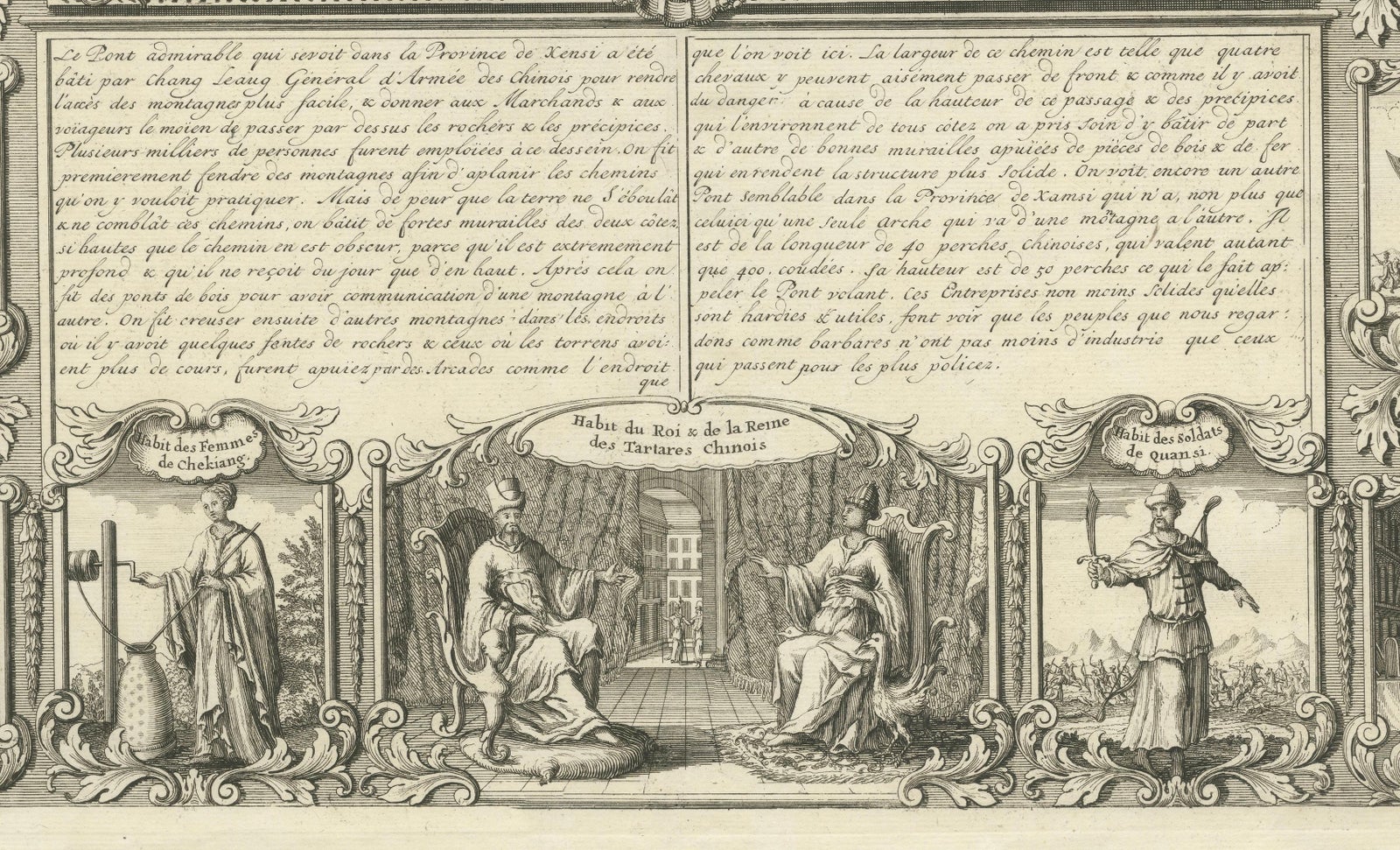
Surrounding this grand central view are eleven finely engraved vignettes depicting men and women in provincial dress from various regions of China. Each figure stands within an ornate cartouche, identified in French, representing a wide range of social roles and regional identities. These costume studies reflect early Enlightenment attempts to catalogue global cultures visually. While filtered through European interpretation, they remain important documents of how Asia was understood and presented in early 18th-century Europe.
Chatelain’s Atlas Historique was among the most comprehensive illustrated encyclopedic works of its time, blending geography, religion, politics, and ethnography. Plates such as this were designed not only to inform but to impress, functioning as both intellectual documents and decorative statement pieces. The elaborate Baroque border unifies the sheet, creating a dramatic visual frame that enhances its suitability for display.
Decoratively, this engraving performs exceptionally well in sophisticated interiors. The architectural symmetry, intricate linework, and balanced composition allow it to function as a strong focal point, particularly within collections of antique maps, travel engravings, or chinoiserie-themed walls. The scale gives it commanding wall presence.
These are original print(s) from the year of publication, not later reproductions. The print is offered unframed, enabling custom framing to personal or interior preferences. Any framed images shown are for visual inspiration only.
Condition report: Good antique condition consistent with early 18th-century copper engravings. Age-related toning present. Margins show light handling wear. Plate impression visible. Overall strong, well-preserved example.
Framing tips: A dark walnut or ebonized frame with a wide ivory mat will enhance the engraving’s Baroque ornamentation and architectural drama. Museum-quality UV-protective glass is recommended to preserve the paper and fine engraved detail.
Technique: Copperplate engraving
Maker: Henri Abraham Chatelain, Amsterdam, 1719