Close-ups
Framed and on the wall
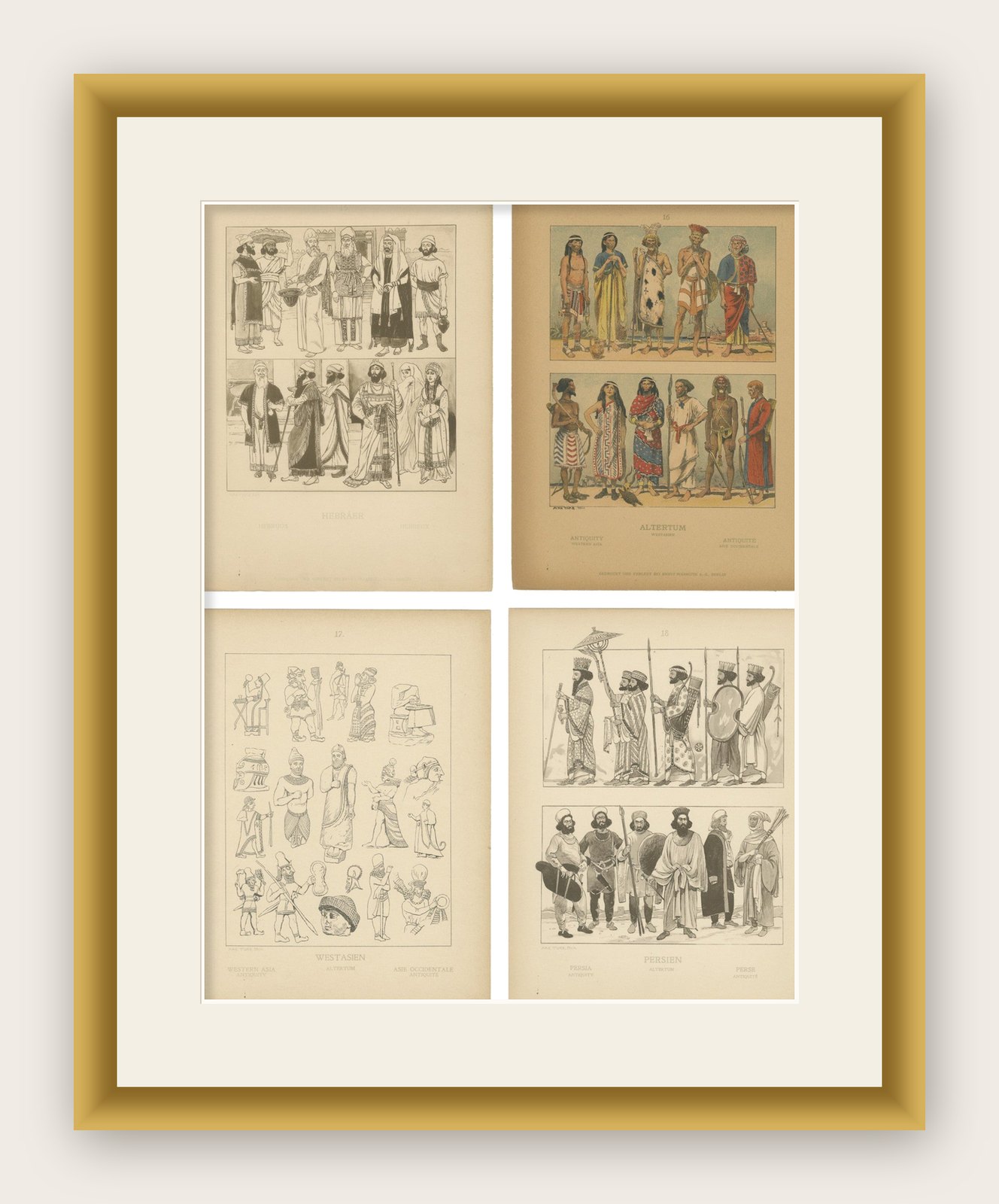
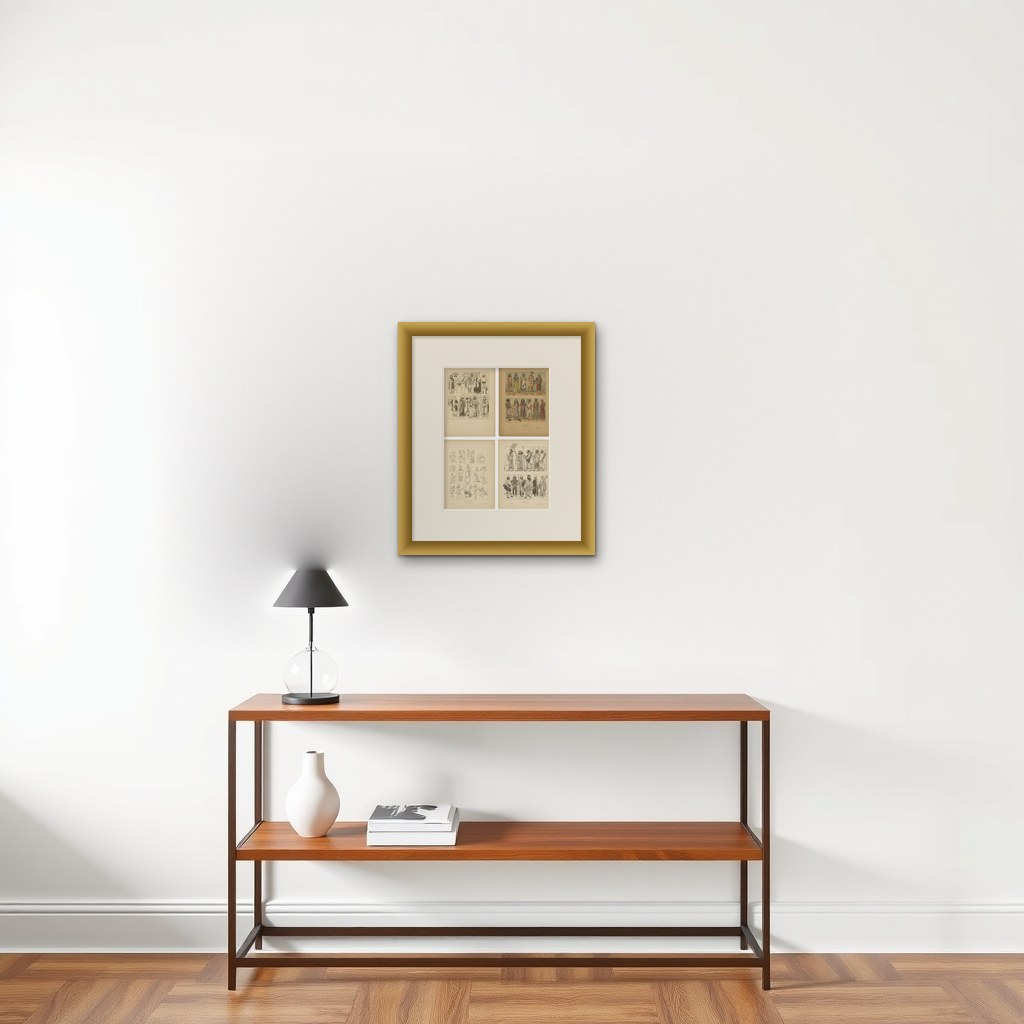

Frame and rooms are illustrations of how the print could look; the description says what is included.
Ancient Western Asia and Persia Costume Plates by Max Tilke, c.1900
$365$25530% off
€231 · £195
Original print, not a reproduction.
Ships worldwide from the Netherlands, flat or rolled, insured and tracked. 14-day returns.
- Date
- 1900
- Sheet size
- 12.4 × 9.3 in (31.5 × 23.5 cm)
- Condition
- Good. Good condition overall. Light age toning and occasional small foxing spots in the margins, typical for Wasmuth publications. Image areas clean with strong lines and color. No tears affecting the printed scenes. Suitable for immediate framing.
- Wardrobe
- Court & couture
- Era
- 1900 and after, Belle Époque on
- Stock no.
- BG-13129-15, -16, -17, -18
What the condition grades mean
- Excellent
- Bright and clean, with no faults worth mentioning.
- Very good
- Only light signs of age, such as faint toning.
- Good
- Normal signs of age for a sheet of this period: toning, some foxing, small marks or neat old repairs.
- Fair
- Clear faults such as staining, tears or repairs, priced to match.
Every fault we see is written in the condition note, and the whole sheet is shown uncropped in the photos.
Set of 4 Antique Near Eastern Costume Plates by Max Tilke, c.1900
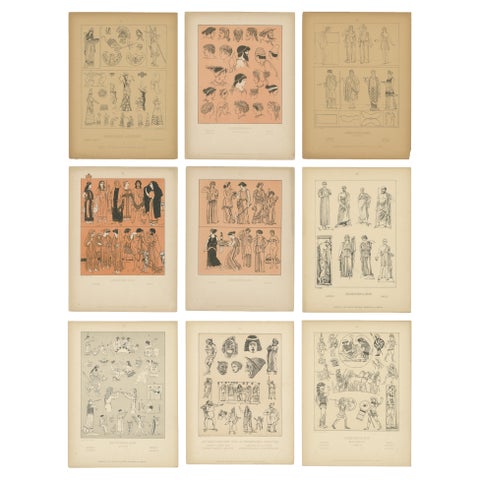
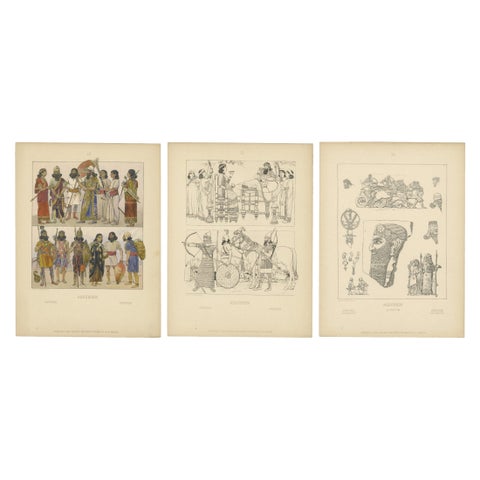
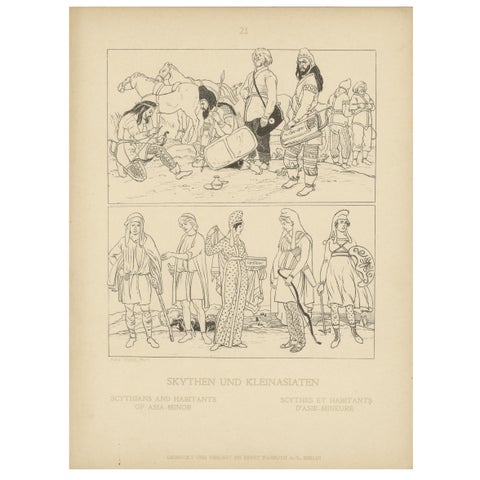
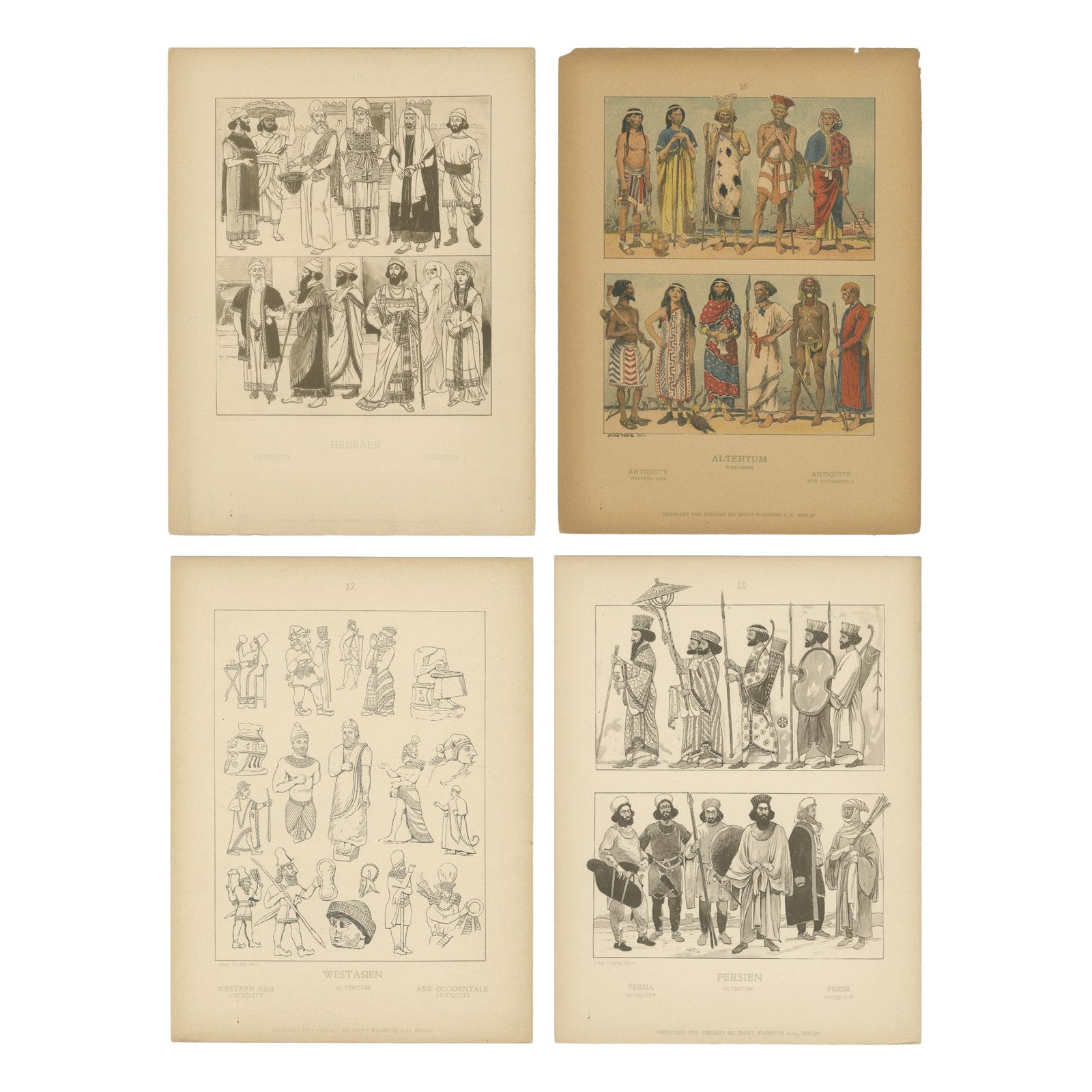
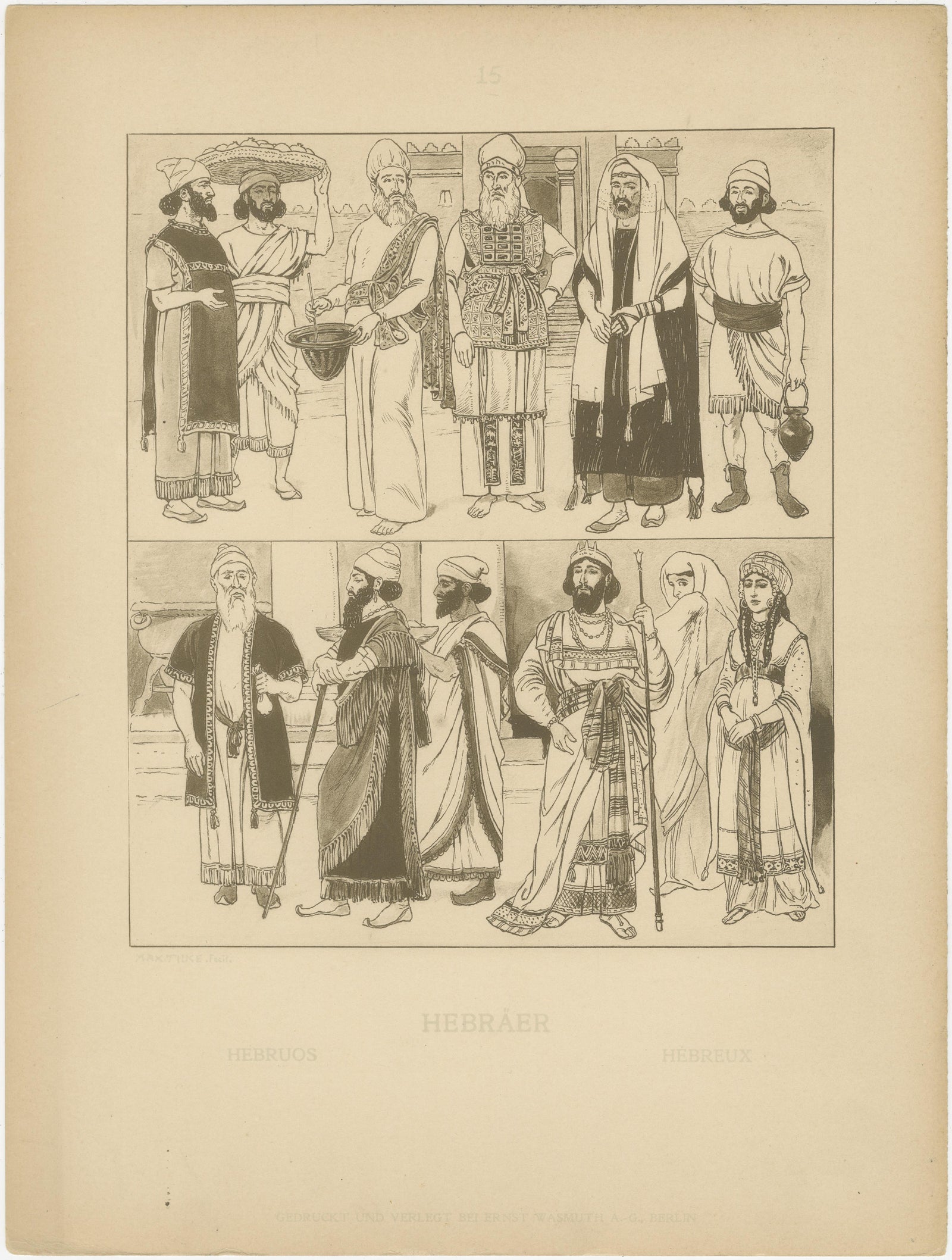
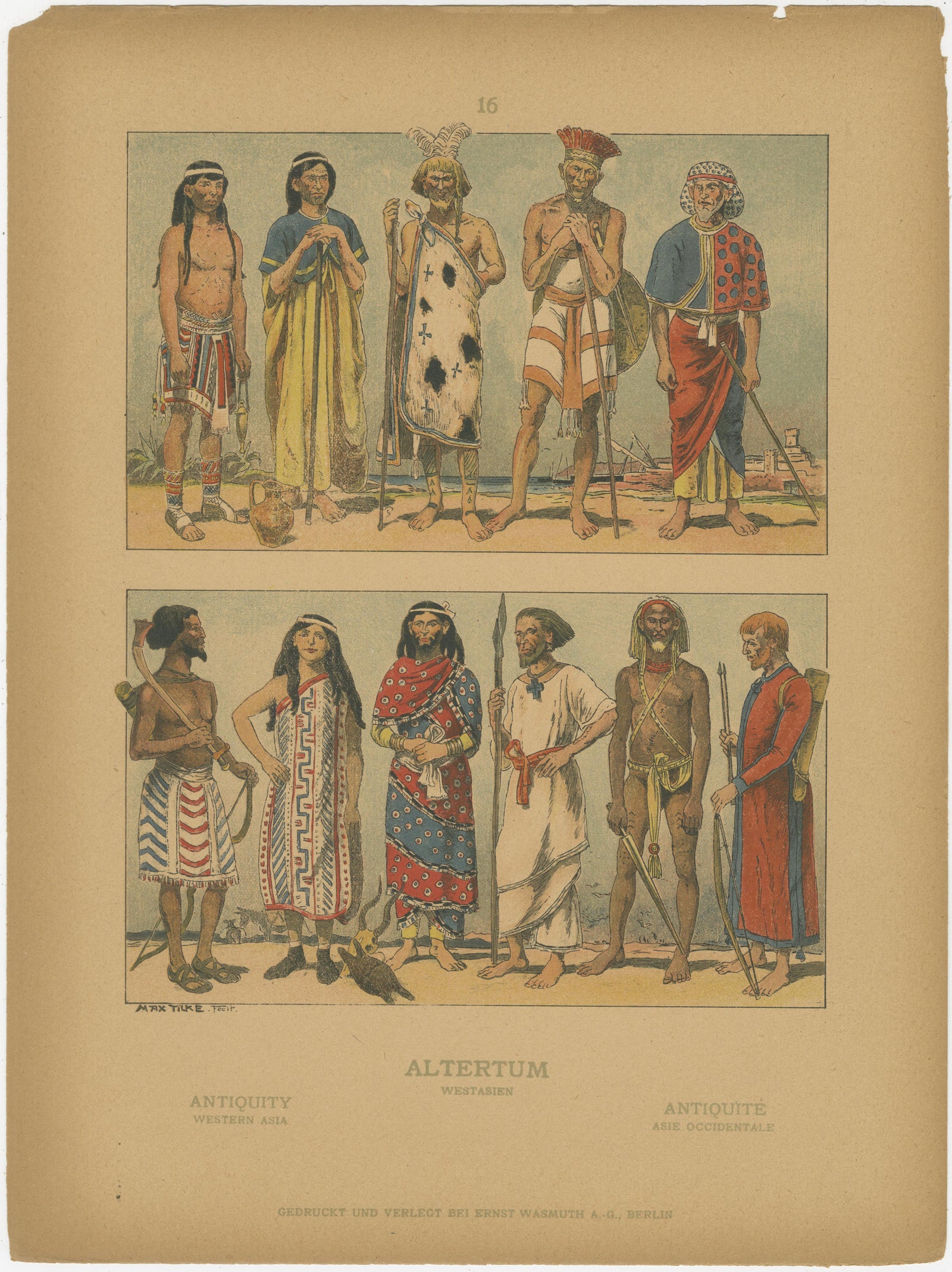
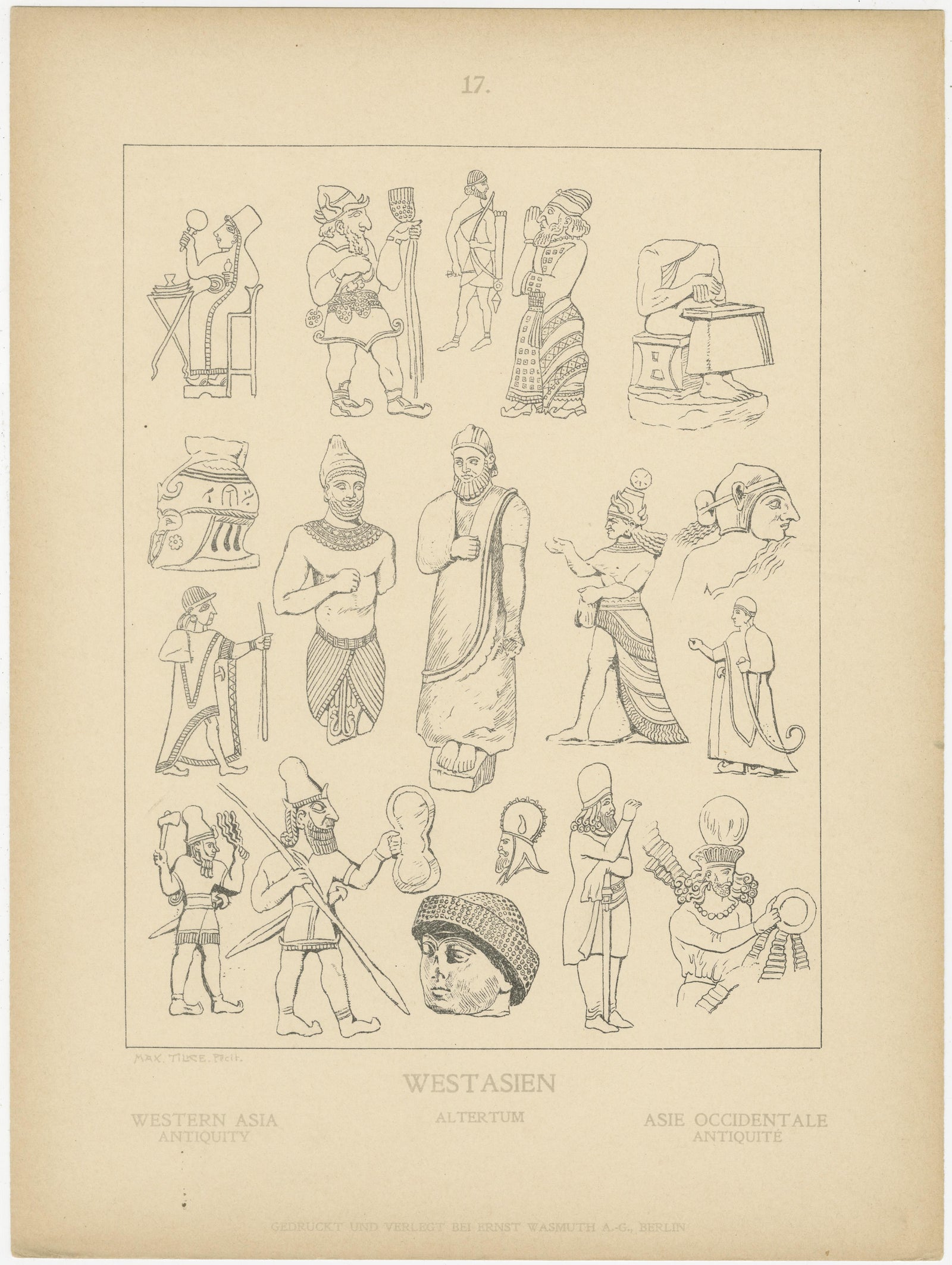
This fine set of four antique plates presents an elegant and historically accurate overview of ancient Near Eastern dress and culture. Created by the noted ethnographic artist and costume historian Max Tilke and published by Ernst Wasmuth A.-G., Berlin, around 1900, the group includes plates depicting the Hebrews, Western Asia in both color and monochrome, and Persia. Together they form a coherent visual study of ancient civilizations known from archaeological discoveries across the Near East.
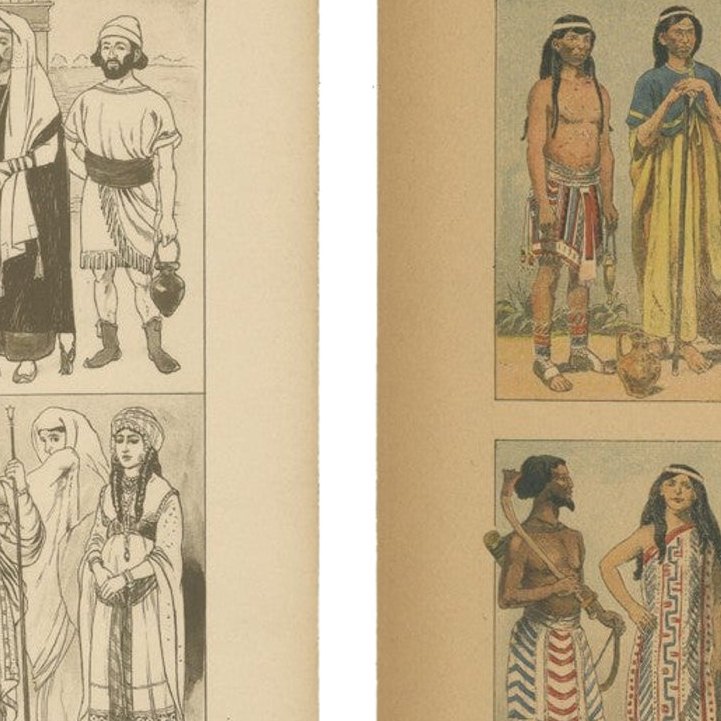
The plate of the Hebrews shows priests, elders, and figures in ceremonial garments, with detailed robes, headdresses, and symbolic textiles that reflect the clothing styles described in Biblical and early Near Eastern sources. The figures are rendered with characteristic Tilke clarity, making the plate appealing to collectors of Judaica and ancient history.
The color plate of Western Asia is richly chromolithographed and depicts a variety of ethnic groups, warriors, dignitaries, and travelers wearing patterned robes, sashes, weapons, and regional headdresses. The warm palette echoes the colors preserved in surviving wall paintings and architectural fragments.
The monochrome companion plate illustrates additional figures, decorative motifs, relief carvings, and characteristic hairstyles, items of dress, and weaponry from Assyria, Anatolia, the Levant, and related regions. It serves as a useful visual glossary of cultural details.
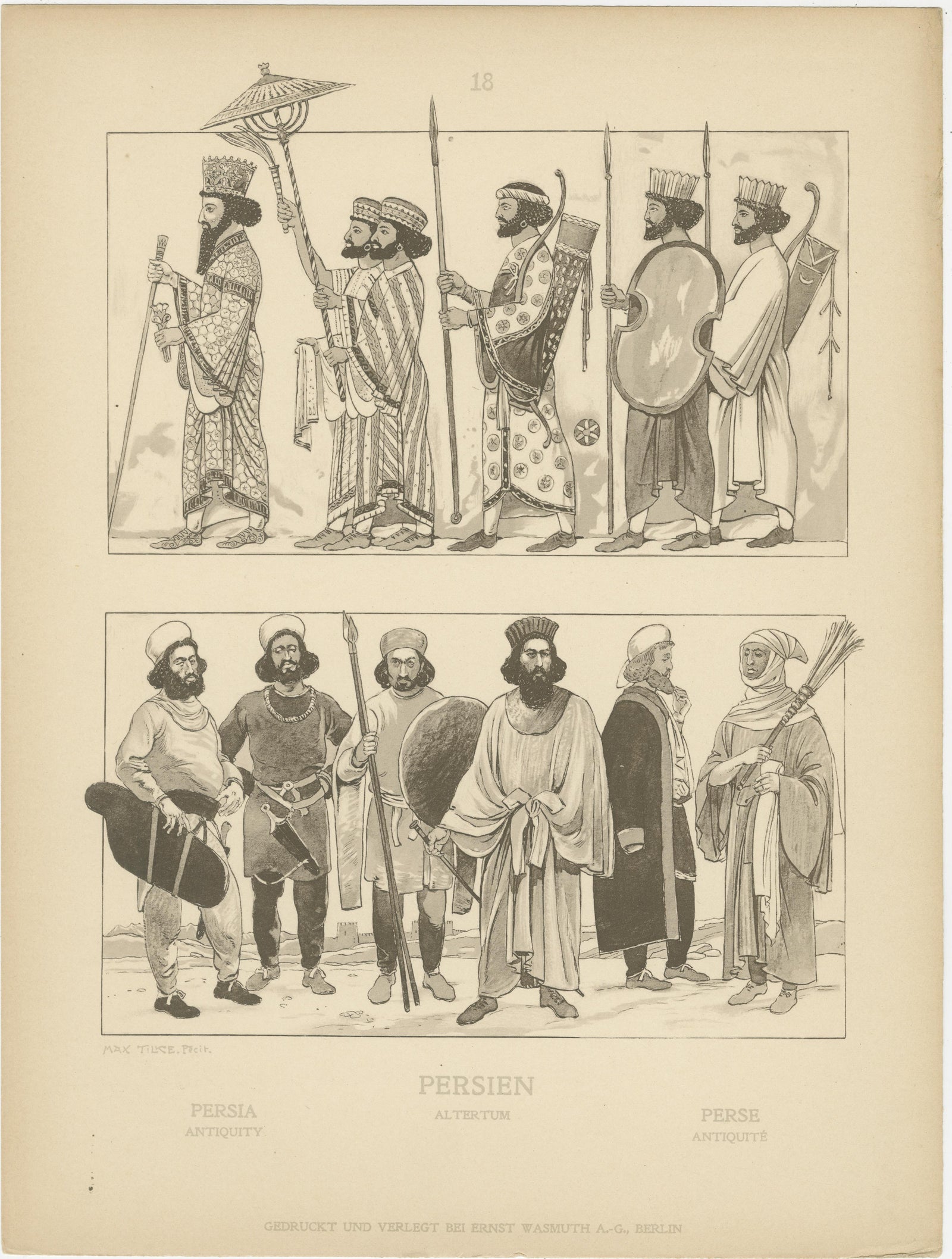
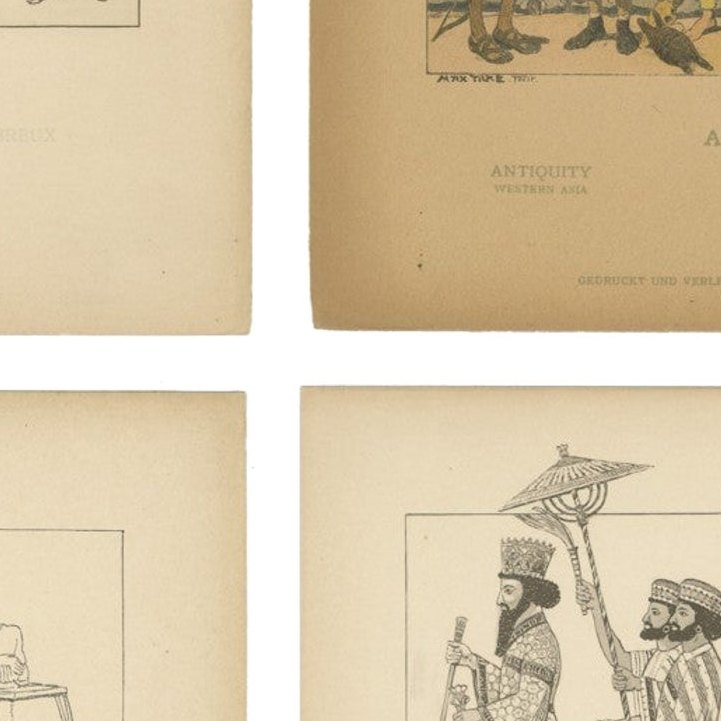
The Persia plate portrays noble figures, guards, and ceremonial attendants inspired by archaeological reliefs from Persepolis and other major Persian sites. Tall headdresses, patterned robes, and distinctive courtly garments identify the plate immediately as belonging to the Achaemenid tradition.
As a complete four-plate group, the set provides a balanced and decorative representation of Near Eastern material culture. These plates are ideal for framing together in a 2×2 grid or arranged individually in a study, library, office, or gallery interior. Their combination of scholarly value and strong visual appeal makes them equally suitable for collectors of ancient history and interior designers seeking refined, historically grounded artwork.
Condition report:
Good condition overall. Light age toning and occasional small foxing spots in the margins, typical for Wasmuth publications. Image areas clean with strong lines and color. No tears affecting the printed scenes. Suitable for immediate framing.
Framing tips:
These four plates frame beautifully as a matching set. For a modern interior, use slim black frames with warm ivory mats. For a classical look, antique-gold frames complement the tones of the color plate. A 2×2 grid creates a strong, museum-style presentation. Clean, matching borders enhance the scholarly character of the set.
Technique: Lithograph and chromolithograph
Maker: Max Tilke, Ernst Wasmuth A.-G., Berlin, c.1900